绿色低碳

Search documents
预计雅江工程用钢量远超三峡工程 推动钢铁工业占据全球价值链顶端
Xin Lang Cai Jing· 2025-08-04 04:04
Core Insights - The Yarlung Tsangpo River hydropower project is expected to drive a total demand for special steel in China ranging from 4 million to 6 million tons, which is approximately 1.2% of the national crude steel output in 2024 [1] - High-end special steel will be the main focus for the Yarlung Tsangpo project, with specific demand for high-strength, long-life materials that exhibit properties such as tear resistance, corrosion resistance, and durability against extreme environmental conditions [1][2] Demand Characteristics - The core categories of steel required include medium and thick plates, high-grade silicon steel, stainless steel, and corrosion-resistant high-strength structural steel [1] - The project will require steel that can withstand extreme conditions, such as maintaining high toughness at -40°C and having a corrosion resistance lifespan of over 50 years, which is a 30% improvement over the standards set by the Three Gorges project [1][2] Industry Challenges - The project presents unprecedented challenges to steel performance and supply chains, necessitating breakthroughs in four key areas: environmental adaptability, supply chain and logistics, green low-carbon constraints, and comprehensive upgrades to technical standards [2] - The carbon footprint requirement for structural steel is set to be 35% lower than the industry average, pushing steel companies to accelerate short-process transformations [2] Phased Demand Release - Steel demand will be released in three phases over a ten-year construction period: - Initial phase (2025-2027) focusing on rebar and engineering machinery steel - Mid-phase (2028-2030) where demand for medium and thick plates peaks - Long-term phase (post-2035) driven by the migration of green electricity industries [2] Global Impact - The Yarlung Tsangpo hydropower project is expected to reshape global hydropower steel technology standards and position China's steel industry at the forefront of the global value chain in terms of green low-carbon and high-end manufacturing [2]
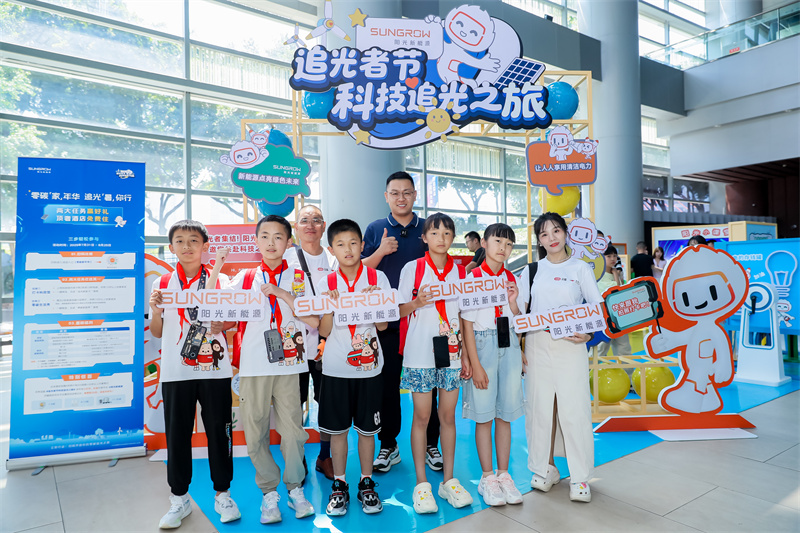
阳光新能源“追光者节·科技追光之旅”闪耀山城,点燃青少年绿色科技梦想
Cai Fu Zai Xian· 2025-08-04 03:11
Core Viewpoint - The "Chasing Light Festival: Technology Chasing Light Journey" is a pioneering immersive science popularization exhibition on new energy power stations, launched by Sunshine New Energy in collaboration with the China Association for Science and Technology, aimed at educating the public, especially youth, about renewable energy technologies [2][4][9]. Group 1: Event Overview - The event features an interactive and experiential learning model, allowing participants to understand the principles of new energy generation through hands-on activities and VR displays [4][7]. - The exhibition includes four main dimensions: exhibition displays, interactive experiences, science popularization lectures, and expert talks, showcasing various applications of solar, wind, and energy storage power stations [7][9]. Group 2: Industry Context - Under the "dual carbon" goals, China has established the world's largest clean power system, with renewable energy sources like solar and wind becoming significant contributors, accounting for one-third of electricity consumption [9]. - Sunshine New Energy is a leading global developer of new energy power stations, ranking first in solar power station development, and is actively contributing to the green transformation of the Chongqing region [9][11]. Group 3: Future Plans - The "Chasing Light Festival" will tour nine cities, including Beijing, Hangzhou, and Wuhan, aiming to inspire youth interest in renewable energy and enhance public understanding of its applications [11][13]. - The event will continue throughout the summer, inviting citizens, especially young people, to engage in the exploration of renewable energy technologies [13].

新兴产业“抢人”现代服务业“吸才”——产业变革下的就业市场新动向
Zhong Guo Chan Ye Jing Ji Xin Xi Wang· 2025-08-04 02:11
Group 1: Employment Trends - In the first half of the year, 6.95 million new urban jobs were created, achieving 58% of the annual target, indicating overall stability in the employment situation [1] - The demand for talent in emerging industries and modern service sectors is increasing, reflecting a significant impact of industrial development on employment [1][3] - The shift from "demographic dividend" to "talent dividend" is evident, with a growing demand for high-tech and high-value-added positions [3] Group 2: Emerging Industries - The demand for composite talents in fields such as humanoid robotics and low-altitude economy is surging, with job postings in humanoid robots, new materials, and smart hardware increasing by 398.1%, 72.1%, and 50.3% year-on-year, respectively [2] - Companies like EX Robotics and WoFei ChangKong are actively seeking talent in mechanical automation, artificial intelligence, and supply chain management [2] Group 3: Service Sector Opportunities - The pet medicine sector is experiencing a talent shortage, with companies like Jiangxi Ruide Pharmaceutical Co., Ltd. needing professionals in product development and analysis, constituting about 30% of their workforce [4] - The modern service industry is witnessing rapid growth in job demand, particularly in pet services, automotive aftermarket, elderly care, and online life services, with pet services leading at a 72.2% increase in job postings [4] Group 4: Policy Support - The government is implementing policies to support employment growth along the industrial chain, including a series of incentives and skills training programs [5][6] - The Ministry of Human Resources and Social Security has introduced measures that have effectively reduced labor costs for enterprises by over 90 billion yuan through unemployment insurance rate reductions and other subsidies [6] - Continuous support for vocational skills training in key sectors is planned, with a target of subsidizing over 10 million training sessions annually for the next three years [6]
2025光伏企业绿色低碳评价报告
公众环境研究中心· 2025-08-03 09:17
Investment Rating - The report does not explicitly provide an investment rating for the solar photovoltaic industry Core Insights - The photovoltaic industry in China has seen significant growth, with a total installed capacity exceeding 1.48 billion kilowatts, surpassing thermal power for the first time [7][22] - The report highlights the need for the photovoltaic industry to enhance its low-carbon transformation and environmental performance, as it still faces challenges related to carbon emissions and resource consumption [7][11][17] Summary by Sections Background - China leads global renewable energy growth, contributing nearly 64% of the world's new capacity in 2024, with a total installed capacity reaching 1.889 billion kilowatts [18][22] - The renewable energy sector is expected to grow at an annual rate of 16.6% to meet global climate goals by 2030 [25] Evaluation of Photovoltaic Industry - The evaluation project initiated by IPE and PECC includes 55 photovoltaic-related companies, assessing their environmental performance and carbon emissions [7][31] - The evaluation uses the CITI and CATI indices to quantify the companies' green supply chain management and climate action [8][35] Key Findings - Renewable energy utilization among photovoltaic companies has significantly increased, with 40 companies reporting a total of 57.1 million megawatt-hours of renewable energy used in 2024, leading to a reduction of over 32.55 million tons of CO2 equivalent [10][54] - Despite improvements, carbon emissions remain high, with 44 companies reporting a total of 105 million tons of CO2 equivalent emissions from their operations [11][54] - The report indicates that while many companies are setting renewable energy targets, the overall progress in decarbonizing the supply chain is still limited [12][54] Recommendations - The report suggests that photovoltaic companies should focus on enhancing their green competitiveness and accelerating their low-carbon transformation to contribute to global energy transition efforts [17][28]





政策助力、制度创新……感受长三角一体化发展的“温度与速度”
Yang Shi Wang· 2025-08-02 11:30
Group 1 - Shanghai is positioned as a key international innovation center in China, driving a wave of technological innovation across the Yangtze River Delta region [1][3] - The legislative decision to promote collaborative technological innovation among Shanghai, Jiangsu, Zhejiang, and Anhui was passed, with 19 measures effective from September 1, aimed at fostering cooperation in technology cultivation, innovation platform construction, core technology research, and resource sharing [3][5] - The establishment of an innovation corridor among cities along the Shanghai-Nanjing route is projected to achieve a GDP exceeding 15.1 trillion yuan by 2024, enhancing resource integration [5][7] Group 2 - Institutional innovations are facilitating smoother collaboration in technological innovation across the Yangtze River Delta, with the construction of the Xicen Innovation Center and the establishment of a cross-provincial high-tech zone [5][7] - A project involving a green low-carbon concept verification center has received over 200 orders, showcasing a collaborative model where R&D is conducted in Shanghai while production is based in the Yangtze River Delta [7] - By the end of 2024, the transaction volume of technology contracts among the four regions is expected to increase by 145% compared to 2021, indicating a strengthening of the innovation ecosystem [7] Group 3 - The construction of intercity railways is underway to enhance connectivity between cities, facilitating smoother commuting experiences [9][10] - The Nanjing-Ma'anshan intercity railway will reduce commuting time to 30 minutes, addressing the needs of commuters traveling between these cities [10]
直面风雨、迎接挑战、求新求变——中国外贸韧性强活力足
Ren Min Ri Bao Hai Wai Ban· 2025-08-02 00:29
Core Insights - The China Council for the Promotion of International Trade (CCPIT) reported a 13.31% year-on-year increase in the issuance of various certificates, totaling 3.8887 million from January to June 2023, indicating resilience and vitality in China's foreign trade despite challenges [1] - The RCEP certificates issued amounted to $4.415 billion, with a 27.93% increase in value and a 27.70% increase in the number of certificates issued, showcasing the benefits of free trade agreements for enterprises [1] - The CCPIT has facilitated the participation of over 23,000 enterprises in international exhibitions, with a total exhibition area of 382,000 square meters, reflecting a strong push for enterprises to explore diverse international markets [3] Trade Policy Implementation - The CCPIT has actively promoted the implementation of policies to stabilize foreign trade, assisting enterprises in securing orders and expanding markets [2] - The organization has approved 1,418 international trade exhibition projects, with a planned exhibition area of 826,000 square meters, demonstrating a commitment to enhancing international trade engagement [3] Market Expansion - There is a notable trend of enterprises expanding into emerging markets such as ASEAN, the Middle East, and Latin America, with participation from these regions increasing by 8.5 percentage points compared to the previous year [4] - The Brazilian International Auto Parts Exhibition attracted over 300 Chinese enterprises, highlighting the growing presence of Chinese companies in international trade events [4] Industry Focus - The CCPIT has emphasized the participation of enterprises in emerging industries such as new energy and electronic information, with 850 Chinese companies attending the European International Smart Energy Exhibition, showcasing China's advancements in these sectors [5] - The organization aims to enhance the quality and diversity of participating enterprises, contributing to the export of high-tech and high-value-added products [5] Legal Support for Enterprises - The CCPIT has seen a 16.43% increase in foreign-related disputes, with 404 cases accepted in the first half of the year, indicating a growing need for legal support in international trade [6] - The organization has provided extensive legal services, including handling over 43,000 commercial mediation cases and answering 18,500 inquiries through its legal platform [6]
中国外贸韧性强活力足
Ren Min Ri Bao Hai Wai Ban· 2025-08-01 22:00
Group 1 - Hebei Province's Handan City Yongnian District is accelerating the cultivation of new productive forces in the industrial park through advanced technology introduction, production process optimization, and digital transformation [2] - In the first half of the year, the national trade promotion system issued a total of 3.8887 million certificates, a year-on-year increase of 13.31%, reflecting the resilience and vitality of China's foreign trade [2] - The RCEP certificates issued amounted to $4.415 billion, with a year-on-year growth of 27.93%, indicating a strong digitalization and convenience in the certification process [2] Group 2 - The China Council for the Promotion of International Trade (CCPIT) is actively helping enterprises expand overseas markets, approving 1,418 overseas trade exhibition projects in the first half of the year [3] - The number of participating enterprises in emerging markets such as ASEAN and Latin America has increased, with a total participation rate of 39.8%, up 8.5 percentage points from the previous year [4] - The participation of Chinese enterprises in international technology exhibitions, particularly in sectors like renewable energy and electronic information, has seen a significant increase, with 850 Chinese companies participating in the European International Smart Energy Exhibition [5] Group 3 - The number of foreign-related cases received by the CCPIT's arbitration committee increased by 16.43% year-on-year, indicating a rise in disputes faced by enterprises [6] - The CCPIT is committed to enhancing trade facilitation and providing legal services to support enterprises in navigating challenges in international trade [6]
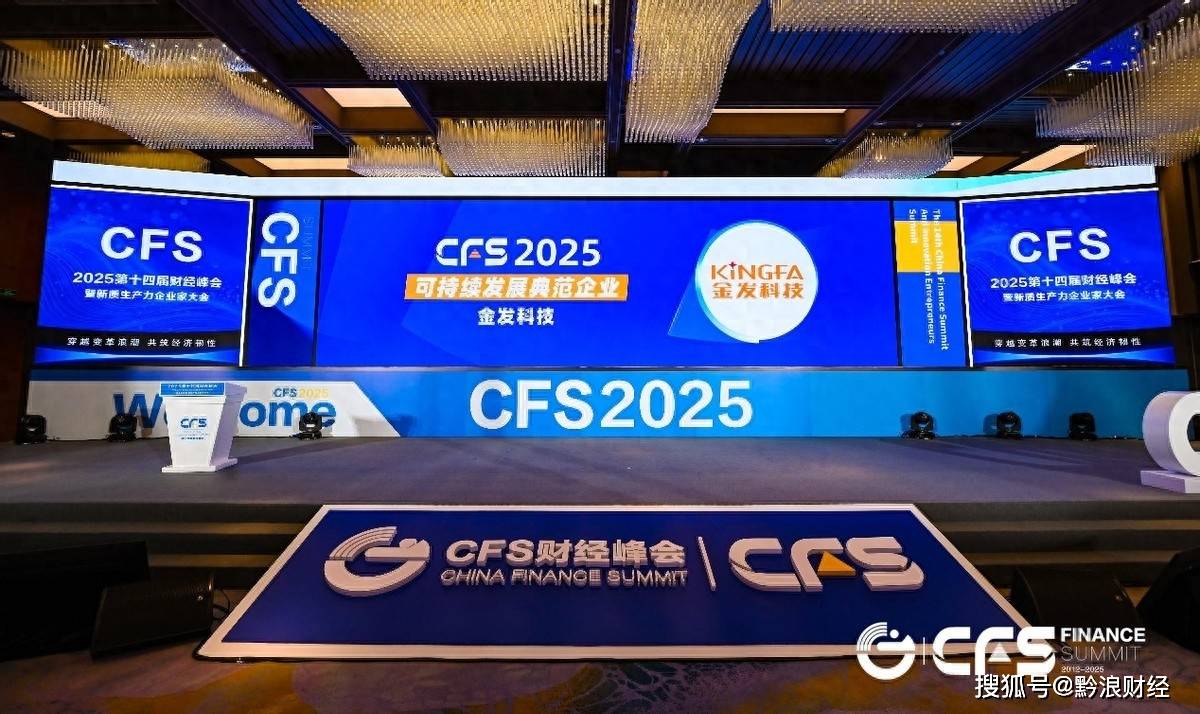
金发科技荣获CFS第十四届财经峰会暨2025新质生产力企业家大会“2025 可持续发展典范企业”大奖
Sou Hu Cai Jing· 2025-08-01 06:01
Group 1 - The CFS 14th Financial Summit and 2025 New Quality Productivity Entrepreneur Conference will be held in Shanghai on July 16-17, 2025, focusing on the theme "Navigating the Waves of Change, Building Economic Resilience" [1] - The summit aims to explore the development paths of the Chinese and global economies under new circumstances, gathering over 1,000 representatives from business, government, and academia, with more than 200 top speakers and media participation from over 300 outlets [1] - The event will feature various activities, including an opening ceremony, high-level forums, a tribute ceremony, and a brand innovation exhibition, highlighting the spirit and innovation of contemporary entrepreneurs [1] Group 2 - Jinfa Technology was awarded the "2025 Sustainable Development Model Enterprise" at the summit, recognizing its achievements in sustainable development and ESG practices [3] - The award reflects the industry's acknowledgment of Jinfa Technology's efforts in promoting green and low-carbon transformation, building a circular economy, and fulfilling social responsibilities [3] Group 3 - Jinfa Technology plans to increase R&D investment and strengthen partnerships with universities and research institutions to overcome key technological challenges in sustainable development [5] - The company aims to enhance its global supply chain and local operational capabilities to meet the demand for sustainable materials, while also developing "smart manufacturing + green low-carbon" benchmark factories [5] - Jinfa Technology is committed to social responsibility, focusing on employee development and participating in social welfare initiatives to promote harmonious societal development [5] Group 4 - Looking ahead, Jinfa Technology will continue to adhere to the green development philosophy, driven by technological innovation, and deepen its strategic layout in bio-based materials and high-performance recycled materials [7] - The company aims to accelerate the R&D and application of new products, promoting the industry's transition towards green, low-carbon, and circular economies [7] - Jinfa Technology is dedicated to enhancing its influence and leadership in sustainable development, contributing to the industry's green transformation and global sustainability goals [7]

照明标准化迈入“十五五”新征程
Xiao Fei Ri Bao Wang· 2025-08-01 02:43
Core Viewpoint - The lighting industry in China is undergoing a transformation towards high-quality development, driven by standardization efforts and technological innovation, aiming to meet the evolving needs of consumers and enhance international competitiveness [2][3][4]. Group 1: Standardization and Development - The Chinese lighting industry has established standards for mercury content in fluorescent lamps and has developed international standards for testing, reflecting a commitment to high-quality development [1]. - Since the "14th Five-Year Plan," the China Light Industry Federation has made significant strides in standardization, which plays a crucial role in the industry's transformation and upgrading [2]. - The National Lighting Electrical Standardization Technical Committee has been recognized for its contributions to standardization, with a focus on optimizing existing standards and developing new ones in smart lighting and green technology [3]. Group 2: International Influence and Collaboration - The lighting standardization committee has gained international recognition, with experts holding key positions in global organizations, enhancing China's influence in international standard-setting [4]. - The committee has led the development and revision of several international standards, aligning domestic technology with global requirements [4]. - Efforts are being made to establish expert groups in emerging fields such as smart lighting and sustainable practices, ensuring that China's standards meet international expectations while addressing local industry needs [4]. Group 3: Future Directions and Goals - The China Light Industry Federation has outlined five key actions for the "15th Five-Year Plan," focusing on optimizing the standard system and ensuring comprehensive coverage of mandatory national standards in key areas [5]. - The lighting industry is shifting from basic lighting needs to a focus on health and quality, with standardization efforts aimed at creating a comprehensive and advanced standard system [5]. - The goal is to transition the industry from mere product manufacturing to providing comprehensive lighting environment services, thereby supporting high-quality development [5].
严重缺人!人才缺口近百万,入行年薪可达25万
中国基金报· 2025-08-01 01:28
Core Viewpoint - The demand for "green collar" talent in the "dual carbon" field is approaching one million, highlighting a significant talent gap as only about 100,000 professionals are currently employed in this area [2][6][7]. Group 1: Definition and Scope of "Green Collar" Jobs - "Green collar" jobs encompass various occupations characterized by environmental, low-carbon, and circular economy features, with 134 green professions identified in the 2022 version of the National Occupational Classification [5]. - New green professions, such as energy storage station operation managers and wind turbine blade maintenance workers, have emerged, reflecting the growing importance of green jobs in the economy [5]. Group 2: Talent Demand and Employment Opportunities - The demand for talent in the "dual carbon" sector is projected to reach nearly one million, with a notable shortage of technical, management, and consulting professionals [7]. - The income for "green collar" jobs varies by region and experience, with entry-level positions earning between 100,000 to 250,000 yuan annually, while senior positions can earn significantly more [7]. - A Deloitte China study predicts that proactive green transformation could create 38 million jobs by 2050, primarily in low-carbon industries [7]. Group 3: Factors Driving Young People to Choose "Green Collar" Careers - The rise of "green collar" jobs is attributed to national strategic deployments in renewable energy, green manufacturing, and environmental technology, creating new employment opportunities [9]. - Technological innovation and digital transformation are injecting vitality into the industry, further driving the demand for talent [10]. - Young individuals are increasingly drawn to "green collar" careers due to a strong interest in environmental sustainability and the promising career prospects supported by policy incentives [10]. Group 4: Need for Composite Talent Development - The demand for specialized talent in the "dual carbon" field extends across various industries, necessitating a blend of technical skills and a deep understanding of green compliance and ESG frameworks [13]. - The introduction of new academic programs, such as "Carbon Neutrality Science and Engineering," aims to cultivate composite professionals capable of bridging technology and sustainability [13]. - Collaboration between academia and industry is essential for talent development, alongside the need for retraining existing employees to enhance the attractiveness of "green collar" careers [13]. Group 5: Case Study of Energy Storage Station Operation - The role of energy storage station operation managers involves both on-site maintenance and online monitoring, ensuring the safe and efficient operation of energy storage systems [15][16]. - Continuous training and the establishment of industry standards are crucial for the healthy development of the energy storage operation profession [16].