智能化

Search documents
周观点 | 赛力斯宣布境外上市进展 T链机器人催化密集【民生汽车 崔琰团队】
汽车琰究· 2025-09-28 10:18
Core Viewpoint - The automotive industry is experiencing significant changes driven by policies and market dynamics, with a focus on the growth of new energy vehicles and the impact of various subsidy programs on consumer demand [4][13][46]. Weekly Data - In the third week of September 2025, passenger car sales reached 516,000 units, up 13.4% year-on-year and 12.6% month-on-month. New energy vehicle sales were 300,000 units, up 31.9% year-on-year and 10.6% month-on-month, with a penetration rate of 58.2%, down 1.0 percentage points from the previous month [2][46]. Market Performance - The automotive sector underperformed the market, with the A-share automotive sector declining by 1.2% from September 22 to September 26, ranking 19th among sub-industries. Sub-sectors such as automotive parts, motorcycles, passenger cars, and commercial vehicles all saw declines ranging from 0.9% to 8.4% [3][35]. Investment Recommendations - The focus is on high-quality domestic brands that are accelerating in smart technology and globalization, with recommendations including Geely, Xiaopeng, Li Auto, BYD, Xiaomi, and others [4][16][19]. New Developments - Chery Automobile successfully listed on the Hong Kong Stock Exchange, raising HKD 9.14 billion, marking the largest IPO for a car company this year. Seres announced significant progress in its overseas listing plans, aiming to issue up to 331 million shares on the Hong Kong Stock Exchange [5][13]. - New models launched include the AITO M7, priced between CNY 279,800 and CNY 359,800, and the Ideal i6 SUV at a uniform price of CNY 249,800. BYD's second-generation Qin PLUS and Geely's Galaxy Star Yao 6 also saw new pricing strategies [5][13]. Policy Impact - The continuation of the vehicle replacement subsidy policy is expected to stimulate demand, with the inclusion of vehicles meeting the National IV emission standards in the subsidy program. The subsidy for scrapping and replacing eligible vehicles remains at CNY 20,000 for new energy vehicles and CNY 15,000 for fuel vehicles [15][41][42]. Robotics Sector - Tesla's upcoming Optimus V3 robot is anticipated to be a significant catalyst, with production targets set for hundreds of prototypes by the end of 2025 and a goal of reaching a million units in five years. The focus is on hardware advancements and the ongoing process of domestic robot manufacturers moving towards IPOs [6][20][21]. Liquid Cooling Technology - The liquid cooling market is projected to grow at a compound annual growth rate of 27.6% from 2024 to 2030, driven by the increasing demand for high-performance computing and AI technologies. Liquid cooling is becoming essential for high-density data center applications [23][25]. Motorcycle Market - The market for large-displacement motorcycles is expanding, with sales of 250cc and above motorcycles reaching 84,000 units in August 2025, up 23.6% year-on-year. Key players recommended include Chunfeng Power and Longxin General [26][28]. Heavy Truck Market - The heavy truck market is recovering, with sales of 92,000 units in August 2025, a year-on-year increase of 46.6%. The expansion of the scrappage subsidy program is expected to further stimulate demand [29][30].




智领未来·济世新篇丨宏济堂智慧中药房端到端AI数智工厂启航
Qi Lu Wan Bao· 2025-09-28 10:03
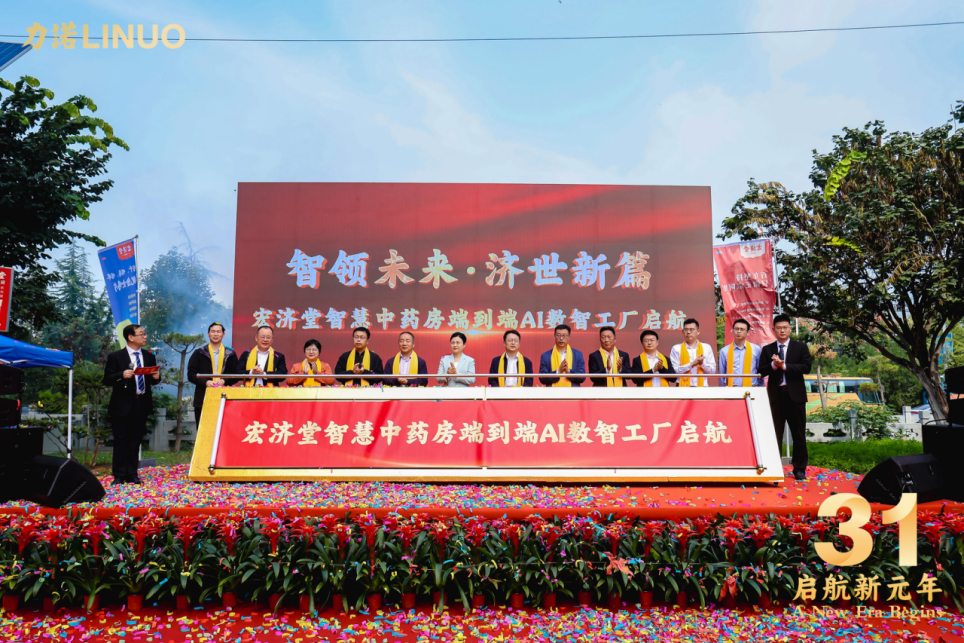
Core Viewpoint - The launch of the AI-driven smart factory by Hongjitang marks a significant milestone in the digital and intelligent transformation of traditional Chinese medicine, aiming to set a new benchmark for smart production in the industry [1] Group 1: Technological Innovation - The smart factory integrates AI technologies, achieving a new breakthrough in "manufacturing intelligence" by implementing an AI prescription analysis system, intelligent dispensing models, and AI models for pill production [3] - The factory's automation rate has significantly increased to 91%, enhancing production efficiency while ensuring product quality and stability, thus achieving a dual improvement in efficiency and quality [3] Group 2: Drug Safety and Quality Control - A comprehensive digital traceability system has been established, covering the entire lifecycle from herb planting to patient medication, utilizing advanced industrial internet and blockchain technologies [4] - The system automatically collects and associates 35 key traceability indicators, allowing patients to scan a QR code for real-time access to information about the source of medicinal materials and quality inspection reports [4] Group 3: Sustainable Development - The project adopts a green low-carbon development approach, including an energy recycling system that effectively reuses steam generated during the cooking process [5] - The implementation of an efficient drone delivery system significantly improves delivery times, especially for emergency medications, with a time reduction of 83% compared to traditional methods [5] - These green initiatives are projected to reduce carbon emissions by approximately 86 tons annually, establishing a sustainable development model in the traditional Chinese medicine industry [5] Group 4: Service Innovation - The launch event included a live demonstration of low-altitude delivery services in collaboration with Guang'anmen Hospital and Jinan Hospital, enhancing the efficiency of drug delivery, particularly for emergency and elderly patients [7] - This initiative represents a new scenario for smart delivery in traditional Chinese medicine, showcasing Hongjitang's commitment to innovation in healthcare services [7] Group 5: Future Outlook - Hongjitang aims to continue leveraging cutting-edge technologies such as AI and big data to promote the modernization, intelligence, and internationalization of traditional Chinese medicine [7]
聚焦前沿 联动未来 | 2025高分子材料产融大会暨化工产业金融智库第五次年会,将在西安召开
Zhong Guo Hua Gong Bao· 2025-09-28 09:37
Core Viewpoint - The polymer materials industry is a crucial foundational sector of the national economy and a leading industry for a country, driven by national policy support, market demand, and technological innovation, leading to increased investor interest [1] Group 1: Event Overview - The "2025 Polymer Materials Industry and Finance Conference" will be held from October 29-31 in Xi'an, focusing on technological breakthroughs, application upgrades, and capital empowerment [1] - The event is organized by multiple entities including China Chemical News, local government bodies, and supported by various companies and media [1][5] Group 2: Conference Themes and Content - The conference will cover several modules including industry policy analysis, technological advancements, investment analysis, and high-level dialogues on the future of the industry [2][3] - Key topics include national policies on new materials, opportunities and challenges in polymer materials, and the outlook for the "14th Five-Year Plan" in chemical new materials [1][2] Group 3: Technological Advances - Innovations in high-performance engineering plastics, new thermoplastic elastomers, and advancements in high-end polyolefins are highlighted [3] - The emergence of smart polymers and sustainable materials is emphasized, with applications in various fields such as renewable energy and healthcare [3][4] Group 4: Investment and Collaboration - The conference aims to facilitate investment opportunities and collaboration between technology, industry, and finance through the integration of innovation, industry, and capital chains [4][5] - Specific focus will be on the PEEK material industry, including market analysis, technological advancements, and application potential in sectors like robotics and aerospace [4] Group 5: Participants and Registration - Attendees will include industry experts, government officials, and representatives from new materials companies and investment firms [5] - Registration fee is set at 3300 yuan per person, covering conference materials and related costs [6]
自主车企加码燃油车智能化
第一财经· 2025-09-28 09:06
Core Viewpoint - The traditional fuel vehicle market is undergoing a transformation focused on "intelligentization" to compete with the rising penetration of electric vehicles, with major automakers like Geely and Chery launching new fuel models that enhance smart driving and cockpit technologies [3][4]. Group 1: Industry Trends - The penetration rate of new energy vehicles is increasing, prompting traditional fuel vehicles to enhance their smart features to close the experience gap with electric vehicles [3]. - Recent data from the Ministry of Industry and Information Technology shows significant improvements in the intelligent configurations of newly launched fuel models, particularly in smart driving, smart cockpit, and vehicle networking [3][4]. Group 2: Company Strategies - Chery has launched its "China New Fuel" strategy with the introduction of the Tiggo 9X and Tiggo 9 models, while Geely has unveiled the new "China Star" series, integrating AI models and advanced driving systems [3][4]. - Geely's sales manager emphasized the complexity of fuel vehicle usage scenarios, indicating that users expect fuel vehicles to have smart driving capabilities comparable to electric vehicles [4]. - Chery's executive vice president stated that the key to maintaining competitiveness in fuel vehicles lies in technological upgrades [4]. Group 3: Market Performance - In August, domestic traditional fuel passenger vehicle sales reached 902,000 units, marking a year-on-year increase of 13.5%, with three consecutive months of growth [4]. - Geely's total sales exceeded 1.4 million units in the first half of the year, with the "China Star" series fuel vehicles experiencing a 21% year-on-year increase in sales, accumulating over 1.62 million users [4].

民生证券-汽车和汽车零部件行业周报:赛力斯宣布境外上市进展T链机器人催化密集-250928
Xin Lang Cai Jing· 2025-09-28 09:03
Group 1 - The core viewpoint highlights the performance of the automotive sector, with passenger car sales reaching 516,000 units in the week of September 15-21, 2025, representing a year-on-year increase of 13.4% and a month-on-month increase of 12.6% [1] - New energy vehicle sales for the same week totaled 300,000 units, showing a year-on-year growth of 31.9% and a month-on-month increase of 10.6%, with a penetration rate of 58.2%, down 1.0 percentage points from the previous month [1] - The automotive sector underperformed the market, with a decline of 1.2% in the A-share automotive sector during the week of September 22-26, ranking 19th among Shenwan sub-industries, while the CSI 300 index rose by 0.8% [1] Group 2 - Key investment recommendations for passenger vehicles include companies such as Geely Automobile, Xpeng Motors, Li Auto, BYD, Xiaomi Group, Seres, Top Group, New Spring Co., Hu Guang Co., and Chuanfeng Power [2] - In the components sector, recommendations focus on intelligent driving and include companies like Top Group, Bertley, Yinlun Co., Junsheng Electronics, Hu Guang Co., Haoneng Co. (rights protection), New Spring Co., Aikodi, Shuanghuan Transmission, and Longsheng Technology [2] - For motorcycles, the recommendation is to focus on leading companies in the large-displacement segment, specifically Chuanfeng Power and Longxin General [2] Group 3 - The tire sector recommendations include Sailun Tire and Senkiren [3] - In the heavy truck segment, the recommendation is for China National Heavy Duty Truck Group, driven by the increasing demand for natural gas heavy trucks [4]
汽车和汽车零部件行业周报20250928:赛力斯宣布境外上市进展,T链机器人催化密集-20250928
Minsheng Securities· 2025-09-28 09:02
Investment Rating - The report maintains a positive investment rating for the automotive and automotive parts industry, particularly focusing on quality domestic brands and emerging technologies [5]. Core Viewpoints - The automotive industry is undergoing significant transformation driven by smart electric vehicles and autonomous driving technologies, with a recommendation to focus on key players such as BYD, Geely, Xpeng, and others [10][11]. - The report highlights the importance of the T-chain in the robotics sector, particularly with Tesla's upcoming Optimus V3, which is expected to significantly impact the market [12][16]. - The report emphasizes the growth potential in the liquid cooling market, driven by the increasing demand for high-performance computing and AI technologies [20][22]. Summary by Sections Weekly Overview - The automotive sector underperformed the market, with a decline of 1.2% in the A-share automotive sector from September 22 to September 26, ranking 19th among sub-industries [32]. - Passenger car sales for the third week of September 2025 reached 516,000 units, a year-on-year increase of 13.4% and a month-on-month increase of 12.6% [44]. Passenger Vehicles - The report suggests that the continuation of vehicle replacement policies will stimulate domestic demand, with a focus on quality domestic brands like Geely, Xpeng, and BYD [13]. - The introduction of new models, such as the AITO M7 and Li Auto i6, is expected to drive sales growth in the high-end market segment [11][14]. Robotics - The report identifies the T-chain as a core focus area, with significant developments expected from Tesla's Optimus V3, which aims to produce hundreds of prototypes by the end of 2025 [12][16]. - The report also notes the acceleration of the domestic robotics sector's IPO processes, which could serve as a catalyst for market sentiment [19]. Liquid Cooling - The global liquid cooling market is projected to grow at a compound annual growth rate of 27.6% from 2024 to 2030, driven by the demand for high-performance computing [20]. - Liquid cooling technology is becoming essential for data centers, especially as AI computing power increases [22]. Motorcycles - The motorcycle market is experiencing rapid growth, particularly in the mid to large displacement segments, with sales of 250cc and above motorcycles reaching 84,000 units in August 2025, a year-on-year increase of 23.6% [23][24]. - The report recommends focusing on leading companies in the mid to large displacement motorcycle segment, such as Chunfeng Power and Longxin General [24]. Heavy Trucks - The heavy truck market is seeing a resurgence in demand, with sales of 92,000 units in August 2025, a year-on-year increase of 46.6% [26]. - The expansion of vehicle replacement subsidies is expected to further stimulate demand in the heavy truck sector [27]. Tires - The tire industry is benefiting from strong domestic and international demand, with leading companies expected to continue expanding their global presence [28][30]. - The report highlights the importance of technological advancements and product optimization in maintaining competitiveness in the tire market [29].

最年长又最年轻 ,中国长安汽车如何“老树发新芽”
Guan Cha Zhe Wang· 2025-09-28 09:01
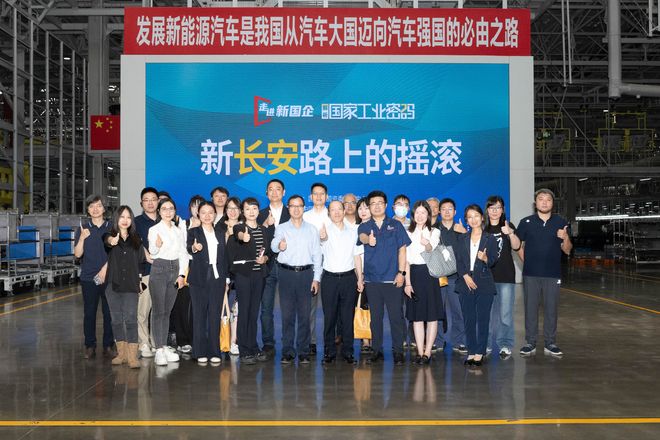
Core Viewpoint - China Changan Automobile Group has been established as a state-owned enterprise under the direct management of the State-owned Assets Supervision and Administration Commission, marking a significant strategic deployment for national development and state-owned enterprise reform [1][3]. Group 1: Historical Context and Strategic Goals - Changan Automobile has a rich history of 163 years, evolving from a military factory during wartime to a modern automotive leader, aligning closely with national strategies [1][3]. - The company aims to become a world-class automotive group with global competitiveness and independent core technologies, as emphasized by its leadership [3][6]. Group 2: Challenges and Adaptation - Changan faces three main challenges: adapting a long-standing enterprise to modern demands, navigating fierce market competition, and maintaining long-term growth while ensuring efficiency and market share [3][6]. - The company emphasizes the importance of technological innovation, quality, user responsibility, and passionate leadership to overcome these challenges [3][4]. Group 3: Sales and Production Goals - For 2024, Changan targets total vehicle sales of 3 million units, including 1 million new energy vehicles (NEVs), with a cumulative sales goal of 30 million units since its establishment [7][8]. - The company plans to achieve a production and sales scale of 5 million vehicles by 2030, with NEVs accounting for over 60% of sales and overseas sales exceeding 30% [7][8]. Group 4: Strategic Initiatives - Changan is advancing three major plans: the "Shangri-La" plan for new energy, the "Beidou Tianzhu" plan for intelligence, and the "Haina Baichuan" plan for globalization, aiming to fulfill its vision of becoming a world-class automotive group [8][10]. - The company will invest 200 billion yuan over the next decade to enhance electric and intelligent transformation, focusing on core technologies and establishing a comprehensive innovation system [10][11]. Group 5: Global Expansion and Brand Strategy - Changan is implementing a global "152" strategy, establishing a presence in five major overseas markets and planning 20 overseas factories, with 9 already operational [11][12]. - The company is focusing on brand differentiation and positioning to avoid internal competition and resource wastage, ensuring clarity in brand strategy across its three new energy brands: Avita, Deep Blue, and Changan Qiyuan [13][15].

2030年新能源车渗透率或达70%,中外车企“双向奔赴”趋势正形成 这场行业大会释放了这些信号!
Mei Ri Jing Ji Xin Wen· 2025-09-28 08:37
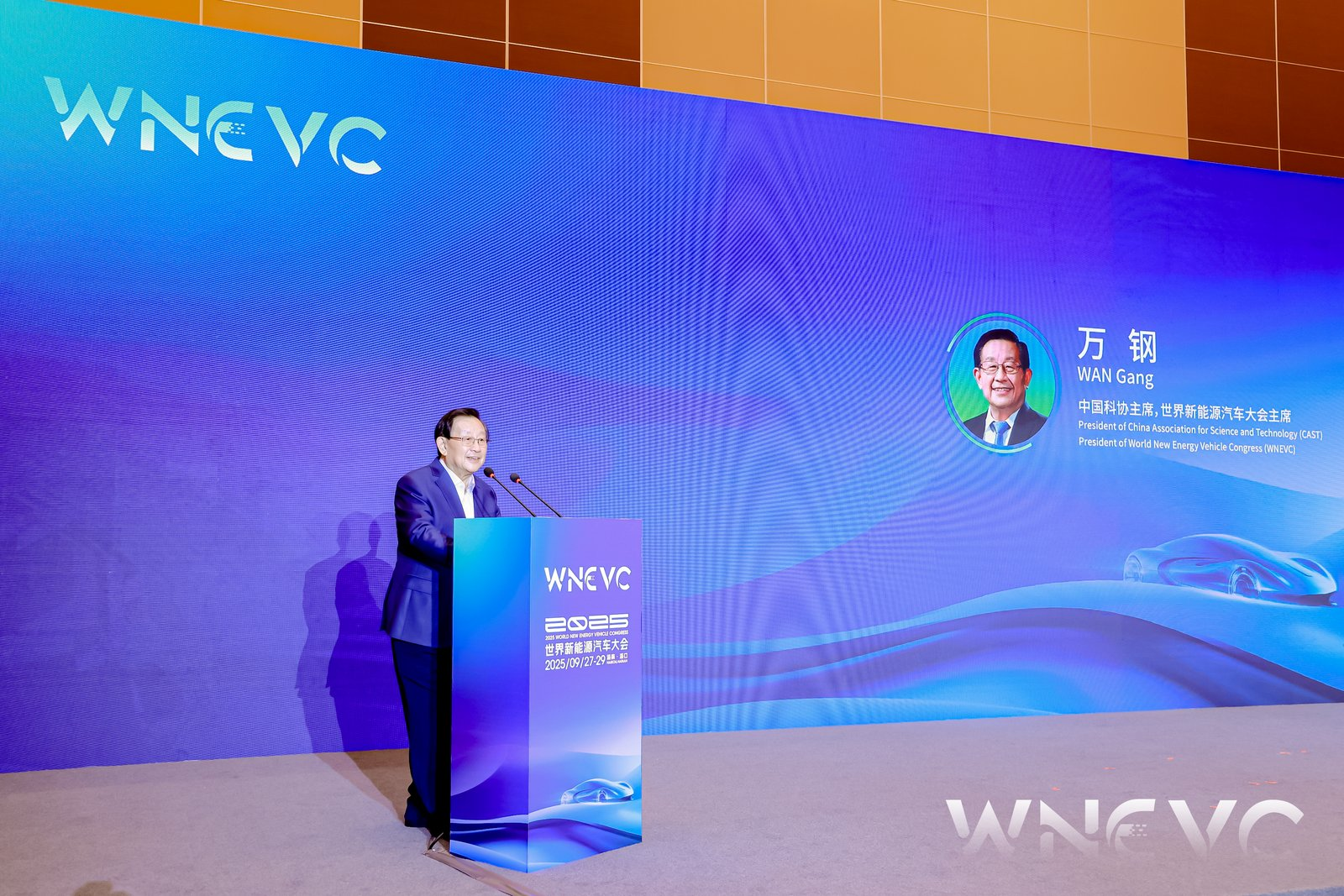
Core Insights - The global electric vehicle (EV) market is experiencing steady growth, driven by the electrification, intelligence, and low-carbon transformation of the automotive industry, alongside coordinated infrastructure development [1] - The 2025 World New Energy Vehicle Conference emphasized the importance of fostering new industrial value growth and enhancing international cooperation among automotive enterprises [1] Industry Growth and Projections - In the first eight months of this year, China's wholesale sales of new energy passenger vehicles reached approximately 8.931 million units, marking a year-on-year increase of 33.5% [1] - The penetration rate of domestic new energy vehicle manufacturers reached 52.2% in August, an increase of 3.3 percentage points compared to the same period in 2024 [1] - By 2030, the domestic new energy penetration rate is expected to reach 70%, with a market structure of 4:4:2 for BEV, XEV, and ICE vehicles respectively [2][3] Technological and Infrastructure Development - The industry is focusing on breakthroughs in core technologies such as batteries, chips, and software, as well as promoting green intelligent processes and recycling systems [2] - Infrastructure development is crucial, with plans to accelerate the layout of distributed renewable energy generation and hydrogen refueling along highways to support commercial vehicle growth [2] International Cooperation and Market Dynamics - The establishment of the World New Energy Vehicle Development Organization aims to facilitate international collaboration in technology, cost, and ecological aspects of the EV industry [3] - The trend of mutual learning and cooperation between domestic and foreign automotive companies is emerging, with a focus on maintaining a multilateral trade system and addressing challenges such as trade barriers and supply chain resilience [4][5] Localization Strategies of Foreign Companies - Foreign automakers are increasingly focusing on localization in China, with companies like Porsche and BMW adapting their product strategies to meet diverse market demands [6][7] - Toyota has established a comprehensive localized R&D system in China, enhancing its ability to respond quickly to market needs and ensuring environmentally friendly production of key components [7]

2030年新能源车渗透率或达70% 中外车企“双向奔赴”趋势正形成这场行业大会释放了这些信号!
Mei Ri Jing Ji Xin Wen· 2025-09-28 08:30
Core Viewpoint - The global electric vehicle (EV) market is experiencing steady growth, driven by the electrification, intelligence, and low-carbon transformation of the automotive industry, alongside coordinated infrastructure development [1] Industry Development - The 2025 World New Energy Vehicle Conference, themed "Industrial Transformation and Sustainable Development," showcased over 50 global EV companies and highlighted advancements in battery technology, autonomous driving, and automotive chips [1] - From January to August 2023, domestic wholesale sales of new energy passenger vehicles in China reached approximately 8.931 million units, marking a year-on-year increase of 33.5% [1] Market Projections - By 2030, it is anticipated that the penetration rate of new energy vehicles in China will reach 70%, with a market structure of 4:4:2 for BEV, XEV, and ICE vehicles respectively [2][3] - The global penetration rate of new energy vehicles is expected to rise from 25% in 2025 to 40% [3] Global Collaboration - The establishment of the World New Energy Vehicle Development Organization (WNEVDO) aims to facilitate international cooperation in technology, cost, and ecological aspects of the EV industry [3] - The automotive industry requires global collaborative design to significantly reduce costs, and the trend of global collaboration remains strong [4] Domestic and Foreign Cooperation - The Chinese government has lifted restrictions on foreign investment in the EV sector, promoting collaboration between domestic and foreign companies [5] - Chinese automakers are deepening their localization strategies abroad, with companies like GAC planning significant investments in multiple countries to enhance local production capabilities [7] Foreign Automaker Strategies - Foreign automakers are focusing on localization in China, with companies like Porsche and BMW adapting their product strategies to meet diverse market demands [8][9] - Toyota has established a comprehensive localized R&D system in China to quickly respond to market needs and ensure environmentally friendly production of key components [10]
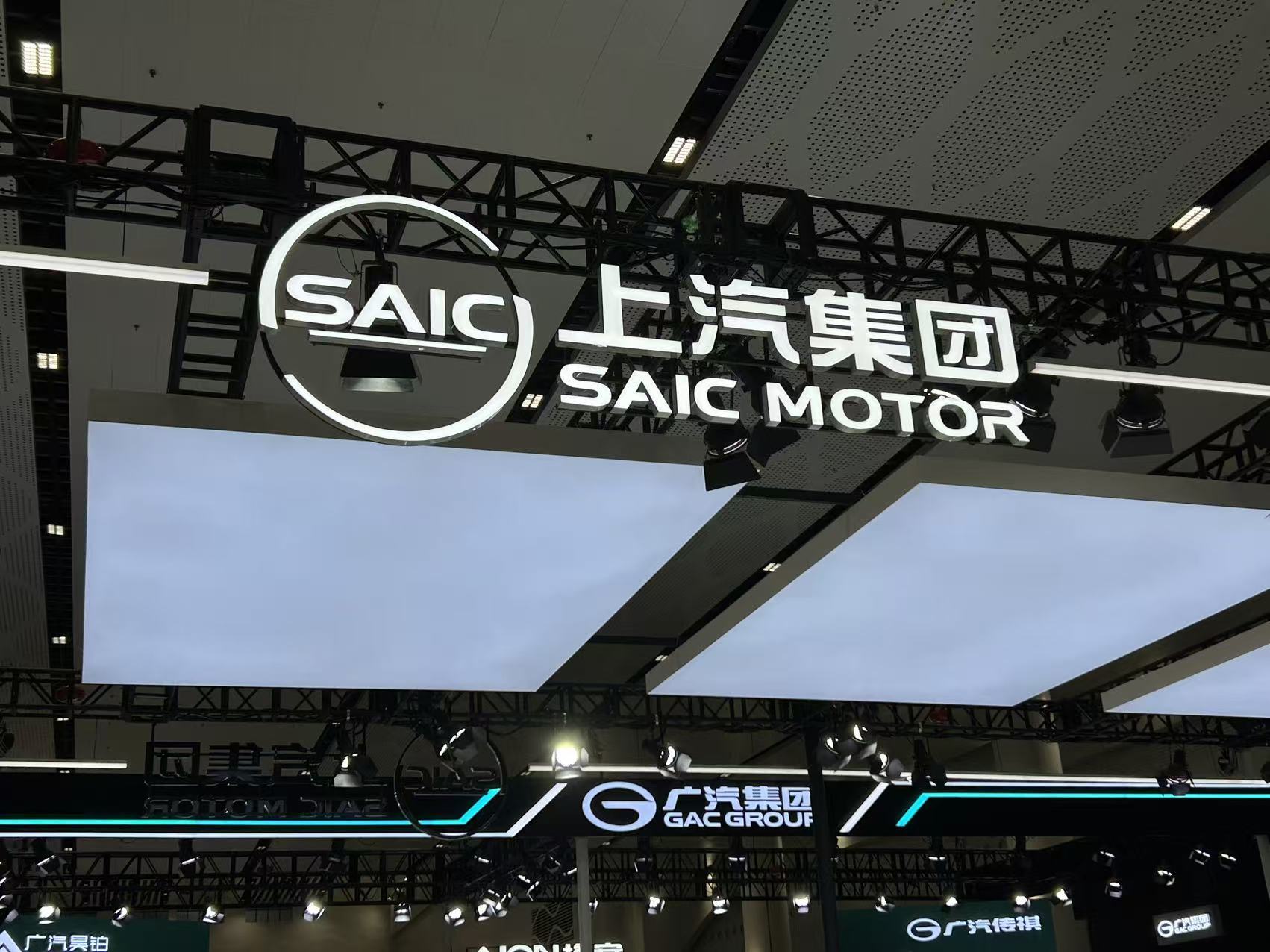
2030年新能源车渗透率或达70%,中外车企“双向奔赴”趋势正形成⋯⋯这场行业大会释放了这些信号!
Mei Ri Jing Ji Xin Wen· 2025-09-28 08:20
Group 1 - The global electric vehicle (EV) market is experiencing steady growth, with a focus on electrification, intelligence, and low-carbon transformation in the automotive industry [1][2] - The 2025 World New Energy Vehicle Conference showcased over 50 global EV companies and highlighted significant advancements in battery technology, autonomous driving, and automotive chips [2] - From January to August 2023, China's wholesale sales of new energy passenger vehicles reached approximately 8.931 million units, marking a year-on-year increase of 33.5% [2] Group 2 - By 2030, the penetration rate of new energy vehicles in China is expected to reach 70%, with a projected sales ratio of BEV (Battery Electric Vehicles), XEV (Plug-in Hybrid Electric Vehicles), and ICE (Internal Combustion Engine) at 4:4:2 [3][4][6] - The establishment of the World New Energy Vehicle Development Organization (WNEVDO) aims to promote international cooperation in technology, cost, and ecological aspects of the EV industry [6] Group 3 - The trend of mutual learning and cooperation between Chinese and foreign automotive companies is emerging, with China lifting restrictions on foreign investment in the EV sector [7] - Chinese automakers are deepening their localization strategies abroad, with companies like GAC planning significant investments in multiple countries to enhance local production capabilities [8] Group 4 - Foreign automakers are focusing on localization in China, with companies like Porsche and BMW adapting their product strategies to meet diverse market demands [9][11][12] - Toyota has established a comprehensive localized R&D system in China, which is crucial for responding quickly to market needs and ensuring environmentally friendly production of key components [12]