人工智能泡沫

Search documents
Bofa_Hartnett:2026年最佳交易是做空超科技巨头债券
2025-11-16 15:36
Summary of Key Points from Conference Call Industry and Company Involved - The discussion primarily revolves around the **technology sector**, particularly focusing on **large tech companies** and their debt situations, including **Meta** and **Oracle** [1][2][5][8]. Core Insights and Arguments - **Debt Bubble in AI**: The market is witnessing a significant debt bubble related to artificial intelligence, with projections indicating that over **$5 trillion** will be spent in the next five years. This has led to concerns that large tech companies will soon exhaust their cash flows and will need to issue over **$1 trillion** in new debt, including **$800 billion** in private credit [1][2]. - **Market Reaction**: By early November, the issuance of new debt by companies like Meta and Oracle prompted a reevaluation of the sustainability of the AI bubble, raising questions about its credibility [2]. - **Credit Default Swaps (CDS)**: Oracle's CDS surged above **100 basis points**, indicating rising concerns about its creditworthiness, which had been flagged earlier in October [5][7]. - **Credit Spread Indicators**: Hartnett highlighted that the widening credit spreads in the tech sector and junk bonds are critical indicators of the impending collapse of the AI bubble. The tech sector's credit spreads were at historical lows but have since nearly doubled due to market fears [7][8]. - **Financial Conditions**: The current financial environment is characterized by a peak in liquidity, with expectations that credit spreads will widen further as the funding for AI capital expenditures becomes insufficient [8][20]. - **Consumer Borrowing Costs**: Despite a generally loose financial environment, consumer borrowing costs remain high, with credit card rates at **20%** and mortgage rates exceeding **6%**. This disparity indicates that the benefits of monetary easing have not reached the average consumer [10][12]. - **Future Predictions**: Hartnett anticipates that the financial conditions will tighten, leading to a potential market downturn. He suggests that the best strategy for 2026 would be to short large tech company bonds while going long on commodities and small-cap stocks [15][20][21]. Other Important but Overlooked Content - **Political Implications**: Hartnett predicts that the ability to address affordability issues will be crucial in the upcoming midterm elections, linking CPI trends to political support for figures like Trump [29][30]. - **Sector Performance**: There are warnings about early cyclical sectors such as real estate and retail not performing well despite expectations of lower interest rates and rising PMI, indicating potential negative impacts from AI on employment [29]. - **Global Economic Factors**: The discussion also touches on how global economic conditions, including the performance of international PMI markets, could influence U.S. small-cap stocks and overall market dynamics [27][24]. This summary encapsulates the critical insights and arguments presented in the conference call, highlighting the precarious state of the technology sector amidst rising debt levels and the implications for future market performance.

AI巨头拟500亿美元入局AI基建
21世纪经济报道· 2025-11-15 23:31
Core Insights - The article highlights the significant investment shift towards AI infrastructure, with Anthropic announcing a $50 billion investment to build a nationwide AI infrastructure network in the U.S. [1] - This investment, while substantial, is dwarfed by competitors like OpenAI, which plans to invest approximately $1.4 trillion over the next eight years, and Meta, which will invest $600 billion in the next three years [1][5] Group 1: Anthropic's Investment and Strategy - Anthropic, founded in 2021 by former OpenAI researchers, aims to establish a strong presence in AI infrastructure with its $50 billion investment, partnering with Fluidstack for GPU cluster deployment [3][5] - The new data centers will support Anthropic's rapid business growth and long-term R&D needs, positioning the company as a key player in the U.S. AI infrastructure sector [3] - Anthropic's client base has grown significantly, with over 300,000 enterprise customers, and the number of high-revenue clients has surged nearly sevenfold in the past year [5] Group 2: Competitive Landscape and Market Trends - The article notes that the current AI infrastructure investment trend reflects a broader competition among major tech companies, with significant commitments from Amazon, Google, Microsoft, and Meta [6][9] - According to a Morgan Stanley report, global investments in AI and data center infrastructure are expected to reach $5 trillion, aimed at building new data centers and upgrading power grids [6] Group 3: Concerns and Comparisons to Past Bubbles - The rapid expansion of AI infrastructure raises concerns about sustainability and potential market bubbles, particularly regarding electricity supply and the high capital expenditures of tech companies [8][10] - Comparisons are drawn between the current AI investment climate and the internet bubble of the early 2000s, although current tech giants have healthier cash flows, providing them with more room for error [10]



突发,金价大跳水
中国能源报· 2025-11-15 04:06
Group 1: Gold Market - International gold prices fell on November 14, with the December gold futures closing at $4094.20 per ounce, a decrease of 2.39%. However, gold prices increased by 2.10% over the week [2][5]. Group 2: Oil Market - Oil prices rose due to geopolitical risks stemming from Ukraine's attacks on Russian oil infrastructure, which halted oil exports from the Black Sea. The December light crude oil futures increased by 2.39%, while January Brent crude futures rose by 2.19%. Over the week, U.S. oil prices increased by 0.57%, and Brent oil prices rose by 1.19% [5]. Group 3: Stock Market - The U.S. stock indices showed mixed performance, with the Dow Jones increasing by 0.34%, the S&P 500 rising by 0.08%, and the Nasdaq declining by 0.45%. Concerns over an AI market bubble and high valuations in tech stocks led to significant sell-offs, particularly in cloud computing stocks like Oracle [6][8]. - European stock indices also faced declines, with the FTSE 100 dropping by 1.11%, the CAC 40 falling by 0.76%, and the DAX decreasing by 0.69%. Major tech stocks experienced widespread selling, contributing to the overall downturn [10].

猛烈抛售!人工智能突发重大利空!
天天基金网· 2025-11-15 03:10
Core Viewpoint - The article highlights growing concerns about an "AI bubble," with warnings from prominent financial figures about potential significant personal losses for investors in the AI sector [3][5][6]. Group 1: Warnings from Financial Experts - Mohamed El-Erian, Chief Economic Advisor at Allianz, cautioned that investors should prepare for substantial personal losses in the AI field, predicting numerous "credit accidents" [5]. - El-Erian described the current market as experiencing a "rational bubble," where excessive investment driven by high returns could lead to significant losses, similar to past speculative periods like the internet bubble [5][6]. - Concerns about high valuations in the AI sector have been echoed by CEOs from Goldman Sachs and Morgan Stanley, indicating a potential market correction as major tech companies reach historical valuation peaks [6][7]. Group 2: Investor Behavior and Market Trends - Foreign investors have withdrawn nearly $4.6 billion from the South Korean stock market this month, making it one of the most severely sold markets in the region, while also net selling $2.3 billion in Japanese stocks [3]. - There is a growing sentiment among corporate executives regarding the overvaluation of AI companies, with some firms being valued highly despite having no revenue [7][8]. Group 3: Capital Expenditure and Revenue Concerns - A report from Accel predicts that new AI data centers will require approximately $4 trillion in capital expenditure by 2030, with an estimated $3.1 trillion in revenue needed to offset this spending [8]. - Major tech companies like Nvidia and OpenAI have announced multi-billion dollar deals to develop data center capacity, reflecting the increasing demand for AI infrastructure [8][9]. Group 4: Long-term Outlook and Industry Sentiment - Despite concerns about an AI bubble, there remains optimism about the long-term potential of AI technology, with executives acknowledging the revolutionary nature of AI while also recognizing the associated risks [9][10]. - The demand for AI adoption among enterprises is high, with many companies actively seeking to integrate AI into their operations [10].
突然,猛烈抛售!人工智能,重大利空!
券商中国· 2025-11-15 02:19
Core Viewpoint - The article warns about the potential "AI bubble," highlighting concerns from various financial experts and corporate leaders regarding overvaluation and the risks of significant personal losses for investors in the AI sector [1][3][5]. Group 1: Warnings from Experts - Mohamed El-Erian, Chief Economic Advisor at Allianz, cautions that investors should prepare for substantial personal losses in the AI field and anticipates numerous "credit accidents" [2][3]. - El-Erian describes the current market as experiencing a "rational bubble," where excessive investment driven by high returns may lead to significant losses, similar to past speculative periods like the internet bubble [3][4]. - Concerns about high valuations are echoed by leaders from Goldman Sachs and Morgan Stanley, who warn of potential market corrections as major tech companies reach historical valuation peaks [4]. Group 2: Corporate Concerns - Increasingly, corporate executives express worries about the "AI bubble," with DeepL's CEO noting that valuations appear exaggerated and signs of a bubble are emerging [5]. - Picsart's CEO highlights the issue of AI companies being valued highly despite lacking revenue, indicating a disconnect between valuation and actual financial performance [5]. - A report from Accel predicts that new AI data centers will require approximately $4 trillion in capital expenditure by 2030, necessitating around $3.1 trillion in revenue to offset these costs, raising concerns about sustainability [5]. Group 3: Market Sentiment and Future Outlook - Despite concerns about the AI bubble, the tech industry remains optimistic about AI's long-term potential, with Lyft's CEO acknowledging the revolutionary nature of AI while also recognizing the risks involved [6]. - Executives anticipate strong demand for AI adoption among businesses, indicating a significant interest in integrating AI technologies into operations [6].

关税突发!降息,大消息!美股突变!
Sou Hu Cai Jing· 2025-11-14 16:02
Group 1 - US stock market opened lower, with the Dow Jones Industrial Average down over 0.7%, while the Nasdaq Composite turned positive [2] - The Swiss Federal Council announced a reduction in US tariffs on Swiss products from 39% to 15%, following trade negotiations [3][4] - The Federal Reserve official Schmidt expressed concerns that further rate cuts could have lasting impacts on inflation, indicating a cautious approach to policy decisions [4] Group 2 - Short-term interest rate futures indicate a decrease in the likelihood of a rate cut by the Federal Open Market Committee (FOMC) on December 10, dropping from 67% to 47% [5] - Market volatility has increased due to lowered expectations for a December rate cut and concerns over an artificial intelligence bubble [5]
刚刚!黄金跳水,美股低开
Zhong Guo Zheng Quan Bao· 2025-11-14 15:08
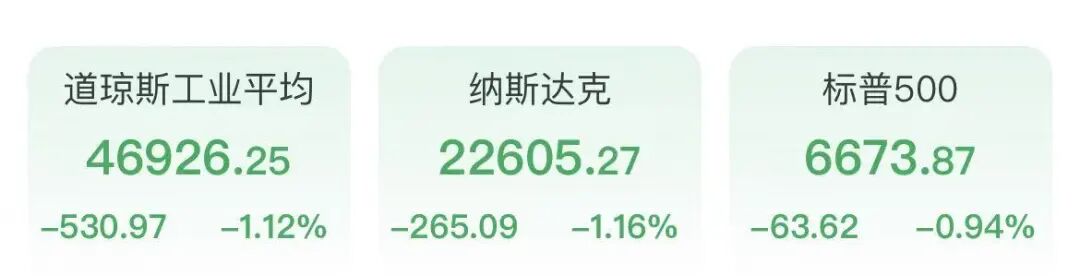
Market Overview - US stock indices opened significantly lower, with the Dow Jones down 1.12%, Nasdaq down 1.16%, and S&P 500 down 0.94% as of 22:37 Beijing time [1] - Major US tech stocks led the decline, with the Tech Giants Index down 1.15%. Tesla fell over 2%, while Nvidia, Google, and META each dropped over 1% as of 22:38 Beijing time [2] Precious Metals - Spot gold experienced a sharp decline of 2.83%, while spot silver plummeted 3.53%. COMEX gold fell by 3.4%, and COMEX silver dropped over 5% [2] - Current prices for precious metals include: - London Gold: 4053.09 (-2.83%) - London Silver: 50.44 (-3.53%) - COMEX Gold: 4051.90 (-3.40%) - COMEX Silver: 50.275 (-5.44%) [3] Market Sentiment and Federal Reserve Outlook - Market analysts attribute the significant downturn in overseas stock and precious metals markets to several factors: 1. Hawkish signals from Federal Reserve officials have reduced expectations for a rate cut in December [5] 2. Ongoing government shutdown in the US has led to missing economic data, complicating monetary policy decisions [5] 3. Increasing concerns regarding an artificial intelligence bubble [5] - Multiple Federal Reserve officials have expressed caution regarding the likelihood of a rate cut in December, with current market expectations placing the probability of a cut below 50% [5] - Notable comments from Federal Reserve officials include: - Mary Daly stated it is too early to determine if a rate cut will occur before the December meeting, emphasizing the importance of upcoming data [6] - Neel Kashkari expressed a wait-and-see approach due to economic resilience and high inflation [6] - Beth Hammack raised concerns that further rate cuts could undermine the Fed's credibility in achieving the 2% inflation target [7]
全球股市和贵金属市场受挫:12月降息预期转淡
Sou Hu Cai Jing· 2025-11-14 14:12
本文由 AI 算法生成,仅作参考,不涉投资建议,使用风险自担 【11月14日全球股市和贵金属市场受挫】11月14日,美联储官员鹰派信号浇灭市场对美国12月降息希 望,混乱数据日历和人工智能泡沫担忧,令全球股市和贵金属市场周五重创。从东京到巴黎、伦敦的蓝 筹股市场大幅下跌,英国市场因对预算案新担忧加剧痛苦。美国股指期货预示华尔街股市开盘黯淡,周 四已大幅下挫。 CIBC Markets外汇策略主管称,12月降息预期回到五五开,加上人工智能泡沫担忧, 破坏市场情绪稳定,本月市场情绪反复无常。白宫粉碎市场对美国状况很快清晰的希望,称10月美国失 业数据可能无法获得,加剧美联储暂停行动的看法。 ...
美联储鹰派言论浇灭降息希望 全球市场遭遇“黑色星期五”
Ge Long Hui A P P· 2025-11-14 13:31
格隆汇11月14日|美联储官员发出的鹰派信号浇灭了市场对美国12月降息的希望,再加上仍然混乱的数 据日历以及对人工智能泡沫的担忧,全球股市和贵金属市场周五遭遇重创。从东京到巴黎和伦敦的蓝筹 股市场均大幅下跌,对英国即将发布的预算案的新担忧加剧了英国市场的痛苦。美国股指期货预示着华 尔街股市将迎来黯淡的开盘,此前它们在周四已大幅下挫。 CIBC Markets外汇策略主管Jeremy Stretch 表示:"我们对12月降息的预期又回到了五五开,这一点,再加上对人工智能泡沫的担忧,已经破坏了 市场情绪的稳定,本月市场情绪已变得反复无常。"与此同时,白宫粉碎了市场对美国经济状况很快会 更加清晰的希望,称10月份的美国失业数据可能永远无法获得,这加剧了美联储可能会暂停行动直到获 得更多明确信息的看法。 ...
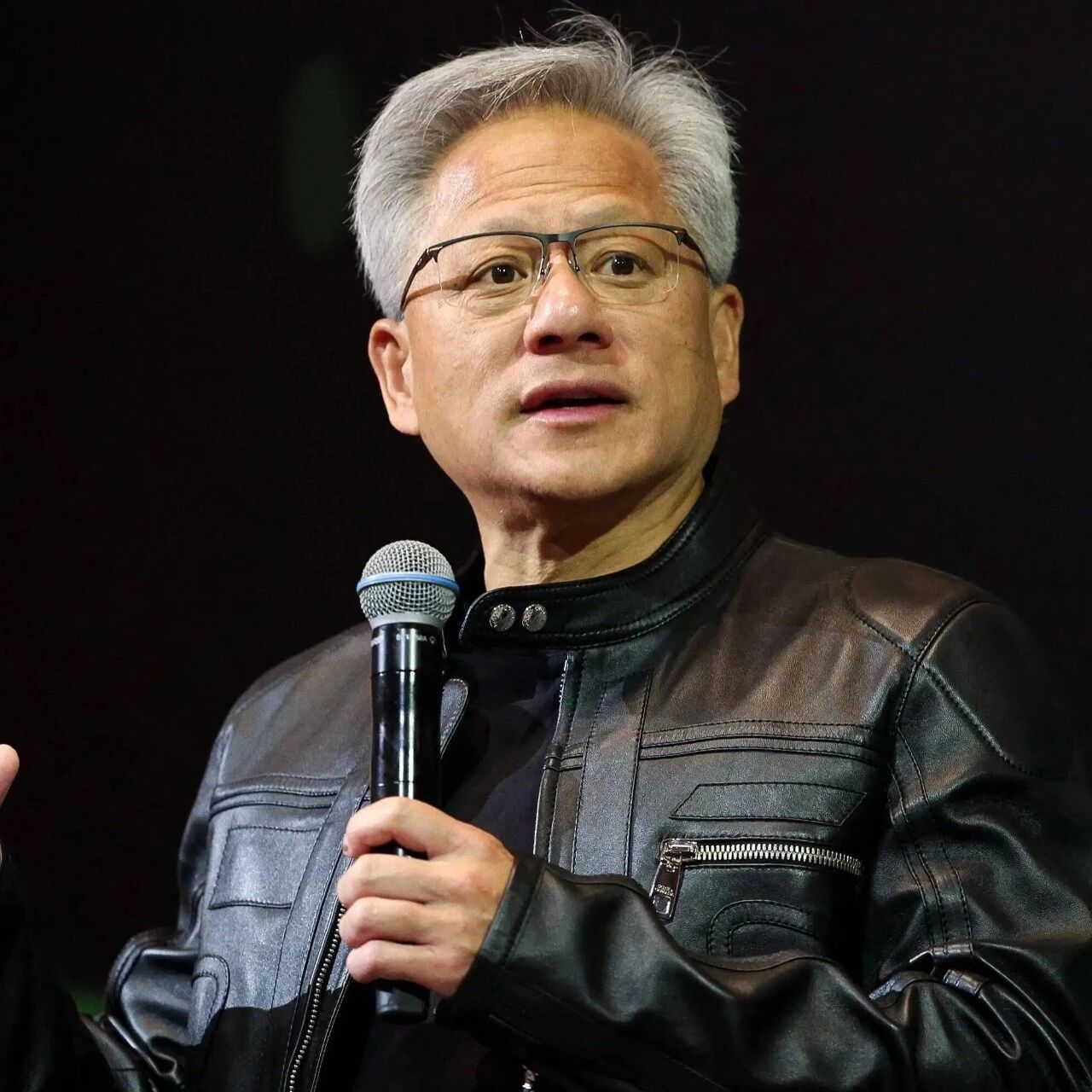
黄仁勋是否说过“中国会赢”,也许已经不那么重要
美股研究社· 2025-11-14 10:39
Core Viewpoint - The article discusses the contrasting paths of AI development in China and the US, highlighting China's potential to challenge the prevailing narrative dominated by Silicon Valley giants like OpenAI and Nvidia, particularly in terms of cost efficiency and innovation [4][6][24]. Group 1: AI Competition Landscape - Huang Renxun's statement about China potentially winning the AI race has sparked significant discussion, emphasizing the need for the US to accelerate its efforts in AI development [4][5]. - The article outlines two distinct paths in AI development: the high-cost, high-expectation model of US companies like Nvidia and OpenAI versus the efficiency-driven approach of Chinese firms such as DeepSeek and MiniMax [6][24]. - Chinese AI companies are seen as capable of "bursting" the AI bubble by focusing on practical applications and cost-effective solutions, suggesting that innovation can thrive without excessive spending [7][24]. Group 2: Market Dynamics and Valuation - Concerns about an "AI bubble" are growing, with significant investments in infrastructure raising questions about the sustainability of high valuations in the sector [10][24]. - A report from Jefferies indicates that between 2023 and 2025, China's major cloud providers will spend $124 billion, which is 82% less than their US counterparts, while maintaining competitive performance in AI models [10][24]. - The article highlights that Chinese AI companies are achieving high returns on investment (ROI), with MiniMax's training costs being significantly lower than those of comparable US models, indicating a potential undervaluation of Chinese firms [24][29]. Group 3: Technological Advancements - Chinese AI firms are rapidly innovating, with models like MiniMax M2 demonstrating superior performance at a fraction of the cost of US counterparts, leading to increased adoption among developers [18][22]. - The emergence of open-source models from Chinese companies is reshaping the competitive landscape, challenging the traditional closed-source model prevalent in Silicon Valley [24][28]. - MiniMax's annual recurring revenue (ARR) has reached $100 million, showcasing the successful transition from model development to product commercialization [29]. Group 4: Future Outlook - The article suggests that the narrative in the AI sector may shift from "scaling limits" to "efficiency limits," with Chinese companies poised to lead in this new paradigm [30][31]. - Long-term confidence in Chinese AI development is emphasized, as companies continue to refine their strategies and technologies to maximize output and minimize costs [31].