
先进制造

Search documents
五年规划回眸与展望(一):上市公司量质齐升,投资价值持续彰显
Ping An Securities· 2025-10-21 13:25
Policy Background - During the "14th Five-Year Plan" period, the capital market reform deepened, emphasizing the improvement of the quality of listed companies [6][7] - The new "National Nine Articles" and over 60 supporting rules in 2024 further solidified the regulatory framework for enhancing the quality of listed companies [6][7] - The regulatory framework focuses on three main aspects: strict entry standards for listings, rigorous delisting supervision, and enhanced ongoing regulation to guide companies in improving investment value and shareholder returns [6][7] Market Review Total Structure - The number of listed companies and total market capitalization in A-shares increased by over 30% compared to the "13th Five-Year Plan" period, with the number of new companies in emerging industries exceeding 70% [11][12] - By September 2025, the total number of A-share listed companies reached 5,436, with a total market capitalization of 105.8 trillion yuan, marking a 30% and 33.2% increase respectively from the end of the "13th Five-Year Plan" [11][12] - The market's survival of the fittest mechanism was strengthened, with 207 companies delisted during the "14th Five-Year Plan," four times the number during the previous period [11][12] Operating Quality - A-share companies saw significant improvements in revenue quality, with total revenue and net profit increasing by 43.7% and 38.0% respectively compared to the "13th Five-Year Plan" [15][18] - The proportion of operating income to total profit rose from 57.8% at the end of the "13th Five-Year Plan" to 68.1% by mid-2025, indicating healthier profit structures [15][17] - R&D expenditures doubled during the "14th Five-Year Plan," reaching 7.3 trillion yuan, with the intensity of R&D spending as a percentage of revenue increasing from 2.5% to 3.1% [18][19] Shareholder Returns - A-share companies distributed a total of 9.2 trillion yuan in cash dividends during the "14th Five-Year Plan," a 49.4% increase from the previous period, with approximately 70% of companies implementing dividends [23][24] - The total amount of share buybacks reached 594.14 billion yuan, representing a 148.3% increase compared to the "13th Five-Year Plan" [23][24] Future Outlook - The quality of listed companies is expected to continue improving, creating more investment opportunities driven by market reforms and industrial upgrades [26][28] - The capital market is anticipated to follow the high-quality development path outlined by the new "National Nine Articles," enhancing support for technology innovation and improving corporate governance and investor return mechanisms [26][28] - Key sectors to watch include AI and advanced manufacturing, particularly leading companies with advantages in operational quality and technological innovation [28]
先进制造投资火热,沃兰特航空完成数亿元B轮融资
2 1 Shi Ji Jing Ji Bao Dao· 2025-10-21 09:58
Group 1: Investment Trends - The advanced manufacturing sector is experiencing significant investment interest, with multiple financing cases reported in the past week [1][3] - The artificial intelligence sector is also attracting substantial investment, with a notable number of financing events [1][3] Group 2: Financing Overview - From October 13 to October 19, there were 29 financing events in the domestic primary market, with a total disclosed amount of approximately 2.265 billion RMB [1][2] - The advanced manufacturing sector completed 9 financing rounds, totaling around 1.16 billion RMB, while the artificial intelligence sector had 6 financing rounds amounting to approximately 350 million RMB [3] Group 3: Regional Distribution - The majority of financing cases were concentrated in Beijing (8 cases), Shanghai (6 cases), Guangdong (4 cases), and Zhejiang (4 cases) [4] Group 4: Active Investment Institutions - Notable active investment institutions included Shunxi Fund, GF Xinde, and Qiming Venture Partners, each completing 2 financing rounds primarily in the technology and manufacturing sectors as well as healthcare [6] Group 5: Company-Specific Financing - VOLANT completed a B round financing of several hundred million RMB, led by Huaying Capital, with participation from new investors including SAIC Capital [27] - Beijing Lingchuang Medical Valley completed nearly 200 million RMB in B round financing, led by Shunxi Fund and Yizhuang Guotou [9][10] - Velotric, a brand under Shenzhen Weile Technology, announced the completion of B round financing led by Shunwei Capital [7] - Anten completed angel round financing, with funds aimed at product development and research [8] - Huadao Biopharma successfully completed over 100 million RMB in D++ round financing, led by Boai New Open Source [15]


先进制造投资火热,沃兰特航空完成数亿元B轮融资|投融资周报
2 1 Shi Ji Jing Ji Bao Dao· 2025-10-21 09:52
Group 1 - The advanced manufacturing and artificial intelligence sectors are experiencing significant investment activity, with advanced manufacturing attracting 9 financing rounds totaling approximately 1.16 billion RMB and AI securing 6 rounds amounting to about 350 million RMB [2] - The total number of financing events in the domestic primary market from October 13 to October 19 was 29, with 20 disclosing amounts, summing up to around 2.265 billion RMB [1][2] Group 2 - The most active regions for financing were Beijing, Shanghai, Guangdong, and Zhejiang, with 8, 6, 4, and 4 financing events respectively [3] - Notable active investment institutions included Shunxi Fund, GF Xinde, and Qiming Venture Partners, each completing 2 financing rounds primarily in technology, manufacturing, and healthcare sectors [4] Group 3 - Velotric, a brand under Shenzhen Weile Technology Co., Ltd., completed a B round of financing led by Shunwei Capital [5][6] - Beijing Lingchuang Medical Valley Technology Development Co., Ltd. announced nearly 200 million RMB in B round financing, co-led by Shunxi Fund and Yizhuang Guotou [9][10] - Huadao Biopharmaceutical Co., Ltd. successfully completed over 100 million RMB in D++ round financing led by Boai New Open Source [15][16] Group 4 - VOLANT, a developer of electric vertical takeoff and landing aircraft, completed a B round financing of several hundred million RMB led by Huaying Capital [28][29] - Tianjin Shexu Technology Co., Ltd. secured several million RMB in Pre-B round financing, with funds allocated for R&D and market promotion [22][23] - Hunan Yanhe Technology Co., Ltd. announced over 100 million RMB in A round financing, aimed at building production lines for perovskite solar cells [52][53]
第138届广交会首期“含智量”“含外量”双升 新产品吸引全球目光
Yang Shi Xin Wen· 2025-10-21 07:55
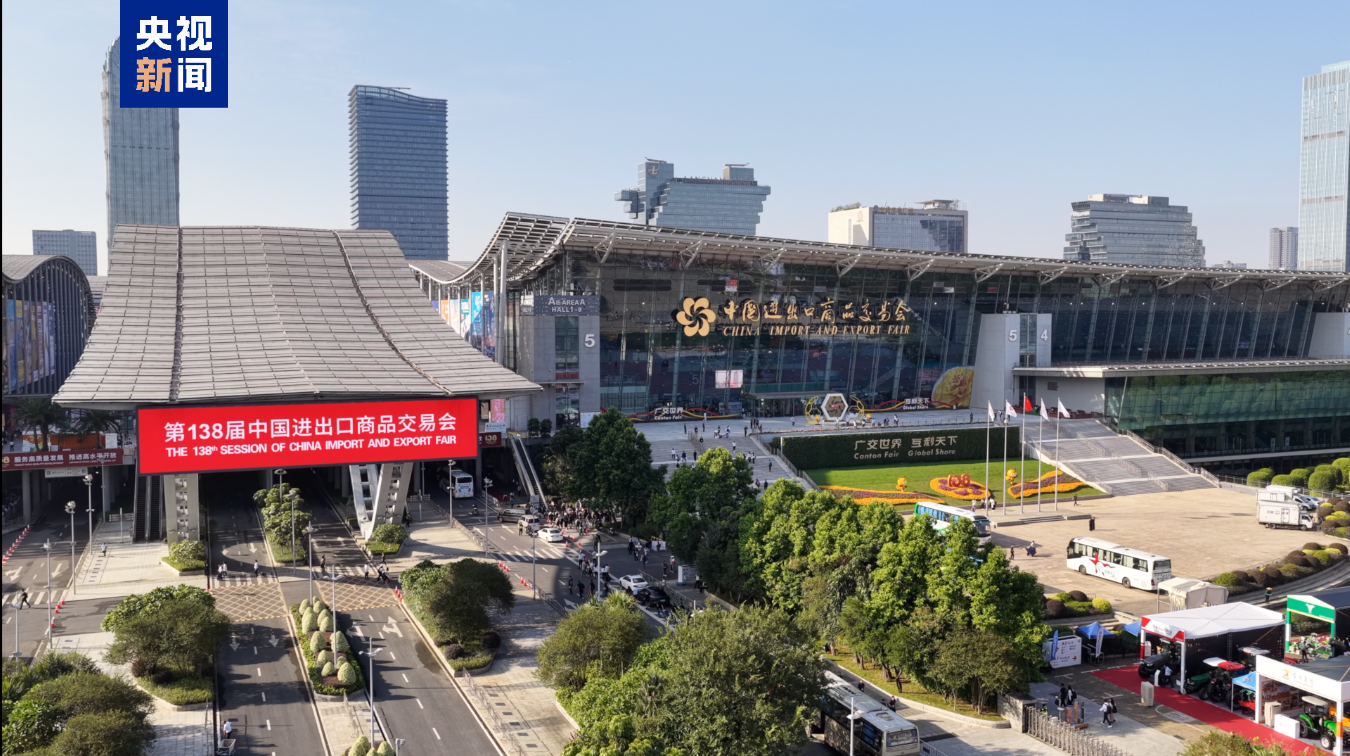
Core Insights - The 138th Canton Fair successfully held its first phase from October 15 to 19, focusing on "advanced manufacturing" and highlighting three key aspects: "new, intelligent, and green" [1][3] - The fair showcased a record number of high-quality enterprises and innovative indicators, reflecting the vitality of China's manufacturing sector [1][5] Group 1: Exhibition Highlights - A total of 850,000 exhibits were presented, with new products, intelligent products, green low-carbon products, and products with independent intellectual property rights accounting for 16%, 15%, 25%, and 31% respectively [3] - The number of entries for the Canton Fair Design Innovation Award (CF Award) reached a new high, with intelligent products like bionic hands increasing by 30% [3] - Key products included precision machining tools, AI wearable devices, green energy-saving appliances, and service robots, which became central to the fair [3] Group 2: Exhibitor Quality - Among the 12,000 participating enterprises, over 5,600 were recognized as high-tech, specialized, or champions in their fields, with more than 4,000 emerging companies in sectors like new energy vehicles and intelligent manufacturing [5] - 66% of the exhibitors adopted new technologies and models such as industrial internet, artificial intelligence, 5G, and green production [5] - The fair emphasized intellectual property protection and provided exhibition proof services to safeguard innovative achievements [5] Group 3: International Participation - Over 157,000 overseas buyers from 222 countries and regions attended, marking a 6.3% increase compared to the previous session, setting a historical high for the same period [5] - Notable growth in participation was observed from buyers in the EU, the US, and Belt and Road Initiative countries [5] - 118 overseas business organizations and 185 leading procurement companies participated, with increases of 8% and 10.7% respectively [5] Group 4: Service Innovations - The fair introduced various practical activities, including foreign trade product promotion and themed forums, to assist enterprises in market expansion [7] - Smart navigation was utilized by 214,000 attendees, and the introduction of QR code identification significantly improved processing speed [7] - The second phase of the Canton Fair will take place from October 23 to 27, focusing on "quality home goods" with an exhibition area of 515,000 square meters and approximately 25,000 booths [7]
吴庆文会见新加坡科研局总裁马健德
Su Zhou Ri Bao· 2025-10-21 00:39
Group 1 - The meeting between Wu Qingwen, the Mayor of Suzhou, and Ma Jiande, President of the Singapore Science and Technology Agency, highlights the importance of collaboration in advancing economic and social development through scientific innovation [1][2] - The Singapore Science and Technology Agency has been instrumental in assisting 37 Singaporean tech companies to enter the Suzhou Industrial Park since the establishment of the new research enterprise cooperation center in 2019 [1] - Wu Qingwen emphasized the alignment of key focus areas such as advanced manufacturing, health and wellness, digital economy, and sustainable development between the agency and Suzhou's industrial direction, indicating significant potential for future cooperation [1] Group 2 - Ma Jiande expressed confidence in the future collaboration, aiming to deepen cooperation and expand areas of partnership, leveraging the new research enterprise cooperation center to attract more Singaporean companies to Suzhou [2] - The goal is to help Suzhou build an international and open innovation system, positioning it as a pioneer in open innovation cooperation between China and Singapore [2]
常州,一个靠谱的“制造搭子”是怎样炼成的?
3 6 Ke· 2025-10-20 08:27
Core Viewpoint - Changzhou, with over 3,200 years of history, has deeply ingrained the concept of "precision manufacturing" into its industrial and cultural fabric, showcasing its advanced manufacturing capabilities through various initiatives and projects [1][3][4]. Economic Performance - In 2024, Jiangsu Province achieved a GDP of 137,008 billion, ranking second nationally, with a GDP increment of 6,084 billion, the highest in the country [4][5]. - Changzhou's GDP reached 10,813.6 billion in 2024, surpassing Yantai and ranking 25th among cities nationwide, with a growth rate of 6.1%, the highest in southern Jiangsu [4][5]. Manufacturing Industry Strength - Changzhou is recognized as an "Industrial Manufacturing Star City," contributing significantly to the economic growth of Jiangsu Province and the Yangtze River Delta region [3][4]. - The city has a robust manufacturing sector, with 11,000 manufacturing entities, and has seen a 6% year-on-year increase in new manufacturing businesses in the first half of the year [7][8]. Industry Diversification - Changzhou's manufacturing landscape includes over 40 industrial clusters, particularly in new energy and robotics, with significant contributions to the province's electric vehicle production [6][8]. - The city has a comprehensive industrial system, covering 33 of the 41 national industrial categories, with a manufacturing value-added ratio of approximately 40.8% [6][8]. Investment and Innovation - Changzhou has attracted significant investments from major companies like CATL and Ideal Auto, leveraging its established industrial clusters and talent pool [11][14]. - The local government has initiated various funds and strategic partnerships to support innovation and the growth of manufacturing enterprises, with a focus on digital transformation and smart manufacturing [17][18][20]. Future Development Plans - In September 2024, Changzhou released a plan to cultivate future industries, targeting a total output value exceeding 400 billion by 2030, with specific focus areas including artificial intelligence, new energy storage, and compound semiconductors [22][24]. - The city aims to enhance its manufacturing sector's high-end and intelligent development through substantial financial investments and infrastructure improvements, including the establishment of a "Changzhou Computing Center" [24][25].

A股收评 | 指数集体反弹!成交继续缩量 市场风格继续轮动
智通财经网· 2025-10-20 07:22
今日三大指数集体反弹,创业板指涨幅领先,市场风格继续轮动,算力等科技题材反弹,银行等红利资 产调整。今日市场继续缩量,全天成交仅1.7万亿,两市上涨个股超4000只。 市场分析认为,三大利好消息提振市场: 1、重磅经济数据出炉。我国前三季度GDP同比增长5.2%,国家统计局表示,前三季度经济运行稳中有 进,高质量发展取得积极成效。 2、贸易紧张局势缓和。中美经贸牵头人举行视频通话,双方同意尽快举行新一轮磋商,此外,特朗普 在最新采访中继续释放缓和信号。 3、科技股迎密集利好。兴业证券研报称,海外大客户近期上修2026年1.6T光模块采购计划;10月份以 来国内高校芯片领域科研成果井喷;瑞银将中国科技股评级上调至"最具吸引力"。 盘面上,科技股大幅反弹,其中,CPO等算力硬件领涨,剑桥科技等多股涨停,"易中天"股价大幅拉 升;半导体一度冲高,三孚股份4连板;机器人板块再度走强,大洋电机等涨停;此外,消费电子、脑 机接口、量子科技等方向均有所表现。其他热点方面,冰雪产业概念午后走强,长白山、大连圣亚涨 停;海南自贸概念继续活跃,海汽集团涨停;固态电池概念拉升,海科新源20%涨停。下跌方面,贵金 属等有色金属板块走 ...
A股市场缩量调整后或如何演绎?
ZHONGTAI SECURITIES· 2025-10-20 06:34
Report Summary 1. Report Industry Investment Rating No information provided in the content. 2. Core Viewpoints of the Report - The recent volume contraction in the A-share market is a result of technical corrections in over - rising sectors, cautious market sentiment due to Sino - US relations and external uncertainties, and a slowdown in incremental funds. However, it is not a trend reversal. Policy and fundamental factors are expected to boost market confidence, and trading volume may gradually recover [7][8][10]. - It is recommended to continue focusing on two main investment lines: the non - ferrous metals sector and leading stocks in science and technology growth sectors such as semiconductors and artificial intelligence [10]. 3. Summary by Relevant Catalogs Market Review - **Market Performance**: Most major A - share indices rose last week, with the Shanghai 50 having the largest increase (weekly return of - 0.24%). Among major industries, the financial and energy indices performed relatively well (weekly returns of 1.91% and 1.63% respectively), while the information technology and telecommunications service indices performed poorly (weekly returns of - 6.70% and - 4.79% respectively). Among the 30 Shenwan primary industries, 4 industries rose, with banks, coal, and food and beverage having larger increases of 4.89%, 4.17%, and 0.86% respectively; electronics, media, and automobiles had larger declines of 7.14%, 6.27%, and 5.99% respectively [11][16][18]. - **Trading Heat**: The average daily trading volume of the Wind All - A Index last week was 2192.852 billion yuan (previous value: 2602.982 billion yuan), at a relatively high historical level (93.40% of the three - year historical quantile) [21]. - **Valuation Tracking**: As of October 17, 2025, the valuation (PE_TTM) of the Wind All - A Index was 21.96, a decrease of - 0.51 from the previous week, at the 89.20% quantile of the past 5 - year history. Among the 30 Shenwan primary industries, 4 industries saw valuation (PE_TTM) recoveries [26]. Market Observation - **Analysis of Volume Contraction Adjustment**: Last week, the trading volume of major A - share indices declined comprehensively, especially in small - cap and ChiNext and STAR Market sectors. The decline in trading volume was mainly due to technical corrections in over - rising sectors, cautious market sentiment caused by Sino - US relations and external uncertainties, and a slowdown in incremental funds, including cautious northbound funds, cooling margin trading, and increased shareholder reduction pressure [7]. - **Positive Factors**: The upcoming Fourth Plenary Session of the 20th Central Committee may bring continuous policy support in areas such as artificial intelligence and advanced manufacturing. As the third - quarter earnings reports are intensively disclosed, corporate profit situations are becoming clearer, with 82.54% of the 126 companies that have released earnings forecasts reporting positive news. These factors may attract off - market funds to re - enter the market and increase trading volume [8]. - **Investment Recommendations**: Despite the volume contraction adjustment last week, it is not a trend reversal. It is recommended to focus on the non - ferrous metals sector and leading stocks in science and technology growth sectors such as semiconductors and artificial intelligence [10]. Economic Calendar - **Domestic Economic Data**: Key domestic economic data to be released this week include China's unemployment rate, year - on - year growth rate of total retail sales of consumer goods, year - on - year growth rate of quarterly GDP, 1 - year loan prime rate (LPR), and cumulative year - on - year growth rate of urban fixed - asset investment [28]. - **Domestic Important Events**: The National Bureau of Statistics of China will hold a press conference on the economic operation situation [28]. - **Overseas Economic Data**: Overseas economic data to be released include the year - on - year growth rate of US industrial output, unadjusted year - on - year CPI in the US, and Markit composite PMI [28]. - **Overseas Important Events**: Michael Barr, the Vice Chairman of the Federal Reserve for Financial Supervision, will give a speech [28].
第138届广交会一期境外采购商线下到会超15.7万人
Bei Jing Shang Bao· 2025-10-20 04:36
第138届广交会分三期在广州举办,第一期以"先进制造"为主题,展览总面积52万平方米,展位数量超 2.5万个,参展企业约1.2万家,拥有国家级高新技术企业、制造业单项冠军、专精特新"小巨人"等称号 优质特色企业超5500家,比上届增加400家,占本届广交会优质特色企业总数的55%。 北京商报讯(记者张绪旺)第138届广交会第一期于10月19日闭幕,据承办方中国对外贸易中心统计,境 外采购商累计线下参会约15.79万人,来自全球222个国家和地区,环比增长6.3%。 ...
A股午评 | 创业板指半日涨2.49% 科技股大幅反弹 贵金属板块走弱
智通财经网· 2025-10-20 03:44
10月20日,A股、港股全线反攻,A股市场逾4200股飘红,半日成交额1.16万亿,较上个交易日缩量165 亿。截至午间收盘,沪指涨0.69%,深成指涨1.38%,创业板指涨2.49%。港股方面,恒生指数涨逾 2%,恒生科技指数一度大涨近4%。 市场分析认为,三大利好消息提振市场: 3、科技股迎密集利好。兴业证券研报称,海外大客户近期上修2026年1.6T光模块采购计划;10月份以 来国内高校芯片领域科研成果井喷;瑞银将中国科技股评级上调至"最具吸引力"。 盘面上,科技股大幅反弹,其中,CPO等算力硬件领涨,剑桥科技等多股涨停,"易中天"股价大幅拉 升;半导体板块走高,存储芯片方向领涨,三孚股份4连板;机器人板块再度走强,大洋电机等涨停; 此外,消费电子、脑机接口、量子科技等方向均有所表现。其他热点方面,海南自贸概念延续上周强 势,海汽集团涨停;煤炭股继续活跃,大有能源7天6板;固态电池概念拉升,海科新源20%涨停;商业 航天、卫星导航板块冲高,星网宇达涨停。下跌方面,贵金属板块走弱,湖南白银跌停,中药、银行等 板块飘绿。 展望后市,中泰证券认为,政策面、基本面多重因素交织,有望提振资金信心,建议继续关注有色 ...
