
数智化

Search documents
携手百年老店!麦德龙、多点在新加坡引发关注,优质商品+先进科技或成“出海”新范例
Jin Rong Jie· 2026-01-09 01:28
Group 1 - Metro's private label, "Mai Zhen Xuan," has launched in Singapore's century-old retail company CSS, attracting significant attention from local consumers with its safe, delicious, and healthy products [1] - The products launched include award-winning items such as "Mai Zhen Xuan Honey Crispy Peanuts," "Mai Zhen Xuan Mustard Salmon," and "Mai Zhen Xuan Caramel Banana Crisps" [1] - Metro collaborates with Duopoint to support CSS's strategic transformation through "digital intelligence + supply chain" [1] Group 2 - In 2026, the International Flavor Evaluation Institute announced that eight products from Metro's Mai Zhen Xuan won awards, including the highest honor, the three-star medal for "Mai Zhen Xuan Caramel Banana Crisps" and "Mai Zhen Xuan Yogurt" [3] - Over the past three years, from 2024, a total of 18 products from Mai Zhen Xuan have received awards, with five products achieving the three-star medal [3] - Metro is known for its strict food safety and quality standards, being the only company in China with all stores certified by HACCP, and has also obtained BRCGS dual system certifications [3] Group 3 - In 2019, Wumart became the controlling shareholder of Metro China, and the collaboration has expanded online channels while maintaining Metro's high standards [5] - The entry of Metro and Duopoint into the Singapore market is expected to serve as a model for Chinese companies going abroad, leveraging quality products and advanced technology [5]


闲置物品循环增值了啥
Xin Lang Cai Jing· 2026-01-09 00:10
Group 1 - The core viewpoint of the articles emphasizes the rapid growth of the second-hand goods market in China, with a projected transaction volume of 1.69 trillion yuan in 2024, reflecting a year-on-year growth of 28% and a six-year average compound annual growth rate of 12% [1] - The circulation of idle goods not only represents industrial growth but also achieves broader "value addition," as items that would otherwise be discarded can continue to be used and appreciated through second-hand transactions [1] - The efficiency enhancement in various industries is highlighted, with companies adopting models that combine online and offline sales, ensuring quality assurance and improving customer experience, thus driving foot traffic and transaction efficiency [1] Group 2 - The articles discuss the integration of new development concepts into everyday life, emphasizing the importance of updating ideologies to promote green development and environmental contributions through the circulation of idle goods [2] - The concept of "统筹" (coordination) is identified as a key theme in recent practices, showcasing how markets can adapt to both domestic and international demands while enhancing economic quality through innovation and structural reforms [2] - The transformation of consumer attitudes towards idle goods reflects broader changes in quality, efficiency, and motivation, which are essential drivers of high-quality development [3]
培育符合职教需求的“双师型”队伍
Xin Lang Cai Jing· 2026-01-08 22:05
Core Viewpoint - The vocational education sector in China is undergoing significant transformation driven by digitalization and intelligence, necessitating the development of a "dual-teacher" workforce to meet new productivity demands and support regional economic upgrades [1][6]. Current Situation: Structural Contradictions and Transformation Pains - By 2022, over 50% of vocational college professional teachers were expected to be "dual-teachers," but some institutions still have around 30% [2]. - There is an imbalance in "dual-teacher" capabilities, and collaboration between vocational colleges and enterprises often remains superficial, leading to a disconnect between teaching content and industry needs [2]. Path Exploration: Multi-Dimensional Collaboration to Build a "Dual-Teacher" Training Ecosystem - Vocational colleges should establish deep partnerships with enterprises to create a "practice-feedback-optimization" loop for "dual-teacher" training [3]. - Initiatives like "teacher enterprise practice positions" can enhance teachers' practical experience, integrating real projects into the curriculum [3]. Digital Empowerment: Building an Intelligent Support System for "Dual-Teacher" Capability Enhancement - Digital technologies offer new pathways for training "dual-teachers," including the establishment of hybrid training platforms and the use of virtual simulation technologies [4]. - Data analytics can personalize training content, while digital records of teachers' experiences can support career advancement [4]. Policy Incentives: Establishing a Long-Term Guarantee Mechanism for "Dual-Teacher" Development - A robust policy incentive system is essential for building a stable "dual-teacher" workforce, including clear standards for "dual-teacher" capabilities and performance assessments [5]. - Initiatives such as special funds for "dual-teacher" development can motivate teachers to enhance their skills and participate in academic activities [5]. Future Outlook: Empowering Vocational Education Modernization through "Dual-Teacher" Workforce - The construction of a "dual-teacher" workforce is crucial for the high-quality development of vocational education, requiring a collaborative mechanism involving government, institutions, enterprises, and digital empowerment [6]. - The focus on enhancing "dual-teacher" capabilities will help create a robust teaching staff that meets the demands of modern production and fosters skilled professionals [6].
广西做优做强工业经济 形成十大千亿元级支柱产业
Jing Ji Ri Bao· 2026-01-08 21:43
Group 1 - The core viewpoint of the articles highlights Guangxi's commitment to implementing the "Industrial Strong Guangxi" strategy, focusing on expanding investment, optimizing structure, and enhancing efficiency in the industrial economy [1][2] - During the "14th Five-Year Plan" period, Guangxi's industrial economy is expected to achieve significant growth, with the total industrial output value projected to reach 2.7 trillion yuan by 2025, an increase of 900 billion yuan over five years [1] - The industrial added value is anticipated to account for over 27% of the regional GDP, marking an increase of nearly 4 percentage points over five years, establishing the industrial sector as a cornerstone of economic development in the region [1] Group 2 - Guangxi has established ten pillar industries, with the non-ferrous metal industry expected to double its output value to over 450 billion yuan by 2025, while the steel and food industries are projected to exceed 300 billion yuan [1] - The region is also focusing on digital and green transformation, with over 5,000 enterprises implementing smart upgrades and nearly 10,000 completing digital diagnostics during the "14th Five-Year Plan" [1] - Guangxi aims to enhance high-quality industrial development by integrating artificial intelligence with manufacturing, promoting technological and industrial innovation, and improving the green low-carbon development system [2]
造纸轻工周报 2025/12/29-2026/01/03:智能眼镜首次纳入国补;关注造纸策略、京东工业、伟易达深度报告-20260108
Shenwan Hongyuan Securities· 2026-01-08 07:05
Investment Rating - The report indicates a positive investment outlook for the smart glasses and smart home sectors, as well as for the paper industry, personal care, pet products, and export-oriented companies [5][6][8]. Core Insights - The report highlights the implementation of a large-scale equipment update and a consumption upgrade policy for smart glasses and smart home products, which is expected to accelerate market penetration and benefit quality suppliers [6][7]. - The paper industry is projected to see a supply-demand improvement, with a focus on the potential impact of anti-involution policies and marginal demand changes contributing to cyclical elasticity [8][9]. - The personal care sector is recommended for bottom-fishing opportunities, with specific companies identified for their growth potential [11]. - The pet products sector is noted for its growth trajectory and global expansion, with strong recommendations for specific companies [13]. - The export market is expected to benefit from a potential U.S. interest rate cut, which may stimulate furniture consumption and enhance the competitive landscape for Chinese companies [14][15]. Summary by Sections Smart Glasses and Smart Home - The introduction of subsidies for smart glasses is expected to lower consumer costs and enhance market penetration, with major manufacturers launching new AI glasses products [6][7]. - Smart home products are also included in the subsidy program, with various categories expected to benefit from consumer incentives [7]. Paper Industry - The report outlines a new investment strategy for the paper industry, emphasizing the integration of wood pulp and paper production, with a focus on improving supply-demand dynamics [8][9]. - Specific segments such as cultural paper and boxboard are highlighted for their unique supply-demand characteristics, with recommendations for companies that exhibit strong performance in these areas [10]. Personal Care - Companies like Baiya, Dengkang Oral Care, and Zhongshun Jierou are identified as key players in the personal care sector, with strategies focused on national expansion and product upgrades [11][12]. Pet Products - The report emphasizes the growth potential in the pet products sector, recommending companies like Yiyi and Yuanfei Pet for their strong domestic and international performance [13]. Export Market - The report notes that U.S. interest rate cuts could boost furniture consumption, with a focus on companies like Xiangxin Home, Yongyi, and Jiayi for their export capabilities [14][15]. High Dividend Safety Margin Assets - The report identifies several companies in the packaging and home furnishing sectors with stable dividend yields and strong market positions, including Yongxin, Yutong Technology, and Huawang Technology [18][19][20].


造纸轻工周报:智能眼镜首次纳入国补,关注造纸策略、京东工业、伟易达深度报告-20260108
Shenwan Hongyuan Securities· 2026-01-08 06:42
Key Insights - The report highlights the implementation of a large-scale equipment update and consumer product replacement policy in 2026, focusing on smart glasses and smart home products [5][6] - The paper industry is expected to see a trend of supply-demand improvement, with a focus on the potential impact of anti-involution policies and marginal demand changes [8][10] - The personal care sector is recommended for bottom-fishing investments, with specific attention to companies like Baiya, Dengkang Oral Care, and Zhongshun Jierou [12][13] - The pet products sector is positioned for growth, with recommendations for Yiyi and Yuanfei Pet, emphasizing their global expansion and rapid development of domestic brands [14] - Export dynamics are influenced by short-term currency fluctuations and long-term expectations of US interest rate cuts boosting furniture consumption, with a focus on quality export stocks [15][16] - High dividend safety margin assets are highlighted, particularly in the packaging and home furnishing sectors, with companies like Yongxin, Yutong, and Kuka Home being noted for their stability [19][24] Industry Insights - Smart Glasses: The inclusion of smart glasses in national subsidies is expected to accelerate industry penetration, with a subsidy of 15% on products priced under 6000 yuan [6][7] - Paper Industry: The new investment strategy emphasizes integrated forest-pulp-paper operations, with a focus on cost support for paper prices and gradual supply-demand improvements [10][11] - Personal Care: Companies are focusing on product structure upgrades and national expansion, with a strong emphasis on profitability recovery [12][13] - Pet Products: The sector is experiencing robust growth, with companies like Yiyi and Yuanfei Pet capitalizing on both domestic and international markets [14] - Export Sector: The report notes a shift towards global operations for Chinese companies, with a focus on design and supply chain advantages [15][16] - Home Furnishing: The industry is expected to benefit from improved real estate policies, with a focus on high dividend companies as a safe investment [24][25]
回顾2025中国会展这一年
Xin Lang Cai Jing· 2026-01-08 03:31
Group 1: International Standards and Awards - The International Organization for Standardization (ISO) officially released ISO 25639-1:2025, defining "Exhibition" to include both online and offline formats, marking a significant recognition of China's innovative model in supply chain collaboration [1] - China Pavilion won the gold award in the display category at the 2025 Osaka World Expo, marking the first time China has received this award at an overseas comprehensive expo [2] Group 2: Trade Fairs and Exhibitions - The 137th Canton Fair attracted 288,900 overseas buyers from 219 countries, a 17.3% increase year-on-year, with on-site intended export transactions reaching $25.44 billion, up 3% [2] - The third China International Supply Chain Promotion Expo featured 651 enterprises from 75 countries, showcasing 152 new products and technologies, a 67% increase from the previous edition [3] - The 2025 China International Service Trade Fair attracted over 280,000 attendees, with nearly 2,000 enterprises participating offline and 5,600 online, achieving an internationalization rate of over 20% [4] - The 138th Canton Fair saw over 310,000 overseas buyers, breaking the 300,000 mark for the first time, with 31,400 enterprises participating, a historical high [5] - The eighth China International Import Expo achieved a record intended transaction of $83.49 billion, with 92,200 attendees, both figures marking historical highs [6] Group 3: Innovation and Sustainability - The third Supply Chain Expo emphasized a "green, environmentally friendly, and sustainable" exhibition concept, showcasing sustainable factory models and promoting global supply chain green development [3] - The 2025 Service Trade Fair highlighted digital intelligence as a core focus, featuring over 190 new products, including smart construction equipment [4] - The fourth Global Digital Trade Expo focused on "Artificial Intelligence + Digital Trade," with over 330 AI companies participating and launching numerous cutting-edge technology products [4]
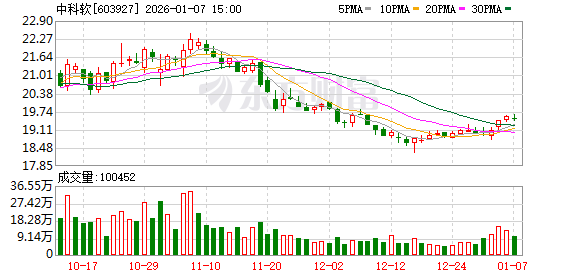
中科软:公司在高性能计算中心建设中主要涉及系统集成及其服务业务
Zheng Quan Ri Bao· 2026-01-07 13:41
Core Viewpoint - The company focuses on system integration and service business in high-performance computing center construction, which has relatively low gross margins [2] Group 1: Business Focus - The company's software development primarily targets industry application software, positioned at the downstream of the computing power industry chain [2] - The company has established ecological cooperation with multiple computing power platforms and infrastructure manufacturers to deliver intelligent solutions to downstream industry clients, leveraging demand from sectors such as insurance, government, and healthcare [2]

世界中餐联发布社区餐饮报告:数智化、品质化成未来趋势
Xin Jing Bao· 2026-01-07 12:29
Core Insights - The report indicates that China's community dining has evolved from traditional "snack shops" and "small restaurants" to a composite model of "dine-in + takeout + delivery + community retail" [1] - Key future trends for community dining include deep integration of digital intelligence, health and quality upgrades, and supply chain collaboration and integration [1] Industry Overview - Community dining in China primarily consists of Chinese fast food, light meals, snacks, and light formal dining, catering to residents' daily needs for quick meals [2] - The rise of community baking, coffee and tea drinks, and ready-to-eat foods reflects an increase in upgraded consumption patterns [2] - "All-day operation" is a characteristic of community dining, with businesses maximizing space utilization by offering a variety of meal options throughout the day [2] Product Design and Target Demographics - The product design in community dining should cover all age groups, catering to children (nutritious meals), youth (quick meals), middle-aged (quality light meals), and seniors (healthy soft food), effectively serving as a "community canteen" [2] Challenges and Opportunities - The community dining sector benefits from stable demand, ongoing policy support, high "familiar economy" engagement, and active model innovation [2] - Challenges include balancing public welfare and profitability, limitations in customer base and taste preferences, and a shortage of professional operational talent [2] - The future mechanism of "government guidance, market leadership, and social participation" is expected to solidify, with brands that have clear business models and self-sustaining capabilities becoming more competitive [2]
2025年12月中国物流业景气指数为52.4%,再创新高
Xin Hua Cai Jing· 2026-01-07 00:06
Core Insights - The logistics industry in China is showing positive growth, with the Logistics Performance Index (LPI) reaching 52.4% in December 2025, marking a 1.5 percentage point increase from the previous month, the highest level of the year [1] - Key indicators such as business volume index, equipment utilization index, new orders index, capital turnover index, and employment index are all in the expansion zone and have shown month-on-month recovery [1] Group 1: Demand Drivers - The three main drivers of logistics demand are bulk energy, advanced manufacturing, and consumer spending [2] - The energy supply work for the winter has strengthened the transportation of key materials like gasoline, diesel, grain, and cotton [2] - The manufacturing sector has seen significant growth in logistics demand for new energy vehicles, integrated circuits, high-end pharmaceuticals, and smart equipment, driven by industrial upgrades [2] - Online retail sales of physical goods reached 11.8 trillion yuan in the first 11 months of 2025, a year-on-year increase of 5.7%, accounting for 25.9% of total retail sales, supporting the high performance of express and e-commerce logistics [2] Group 2: Yearly Overview - The average LPI for the entire year of 2025 was 50.8%, with a quarterly upward trend: Q1 at 50.2%, Q2 at 50.8%, Q3 at 50.9%, and Q4 at 51.3%, indicating continuous optimization of momentum and growth in operational resilience [2] - The logistics industry is expected to maintain its position as the world's largest market for ten consecutive years, with express delivery volumes surpassing 180 billion pieces, averaging nearly 550 million pieces daily [2] Group 3: Technological Advancements - The deep application of digital and intelligent technologies is reshaping the operational model of the logistics industry [3] - In the road freight sector, efficiency improvements are evident, with platforms enabling cost savings and significant time efficiency [3] - The use of artificial intelligence, big data, and cloud computing allows for precise matching and intelligent scheduling, drastically reducing average shipping times from 2.27 days to 0.42 days [3] Group 4: Future Outlook - The overall logistics operation in 2025 is expected to remain stable with progress, as indicated by a high business activity expectation index of 54.9% [4] - The logistics industry will continue to deepen its transformation towards digitalization, greening, and integration, enhancing supply chain resilience and security to support high-quality development [4]