
结构性货币政策工具

Search documents
央行2026年政策定调 降准降息可期
Sou Hu Cai Jing· 2026-01-06 16:33
[ 曾刚认为,在现行框架下,央行的流动性工具主要针对商业银行,非银机构只能通过银行间接获得流 动性支持,或者依赖自身的资产变现能力。这种间接机制在常态下可以运作,但在市场压力情景下,可 能因为银行的风险规避行为而失效。 ] 2026年中国人民银行工作会议于1月5日至6日召开,会议部署全年七大重点工作,围绕货币政策实施、 金融服务实体经济、风险防控、金融改革开放等核心领域明确行动路径。 央行明确2026年七大重点工作。 其中,在货币政策方面,会议强调,把促进经济高质量发展、物价合理回升作为货币政策的重要考量, 灵活高效运用降准降息等多种货币政策工具。 业内专家认为,适度宽松的货币政策将兼顾总量调节与结构优化,人民币汇率有望维持温和升值态势, 但考虑到潜在的不确定性,市场不宜押注单边行情。 适度宽松的货币政策 2026年适度宽松的货币政策将有两个主要方向:首先是总量政策,其次是结构性政策。 会议明确,2026年继续实施适度宽松的货币政策,将促进经济高质量发展、物价合理回升作为核心考 量,灵活高效运用降准降息等多种货币政策工具,保持流动性充裕,保持社会融资条件相对宽松,引导 金融总量合理增长、信贷投放均衡,使社会融 ...
聚焦中国人民银行2026年任务清单
Sou Hu Cai Jing· 2026-01-06 14:41
金融如何为经济稳定增长提供有力支撑——聚焦中国人民银行2026年任务清单 谢光启介绍,中国人民银行将健全市场化的利率形成、调控和传导机制,理顺政策利率向各类市场利率 的传导关系,促进社会综合融资成本低位运行。做好政策沟通和预期引导,加强货币政策和财政、产业 等政策在需求管理、结构调整方面的协调配合,进一步畅通传导机制。 支持符合条件的外资金融机构在华参与新业务试点,完善境内外市场互联互通,完善人民币跨境使用政 策安排……来自会议的信息显示,我国金融高水平开放稳步拓展。 2026年是"十五五"开局之年,金融如何为经济稳定增长、高质量发展提供有力支撑?1月5日至6日召开 的2026年中国人民银行工作会议释放一系列政策信号。 中国人民银行表示,2026年继续实施适度宽松的货币政策,加大逆周期和跨周期调节力度,提升金融服 务实体经济高质量发展质效,着力扩大内需、优化供给,防范化解风险、稳定社会预期,为经济稳定增 长、高质量发展和金融市场稳定运行营造良好的货币金融环境。 作为宏观调控的主要政策工具,货币政策对经济运行具有深刻影响。围绕货币政策,中国人民银行工作 会议作出一系列部署:"把促进经济高质量发展、物价合理回升作 ...
降准降息可期!央行2026年政策定调 非银流动性机制有望破题
Di Yi Cai Jing· 2026-01-06 13:04
Monetary Policy - The People's Bank of China (PBOC) has set a focus on promoting high-quality economic development and reasonable price recovery as key considerations for monetary policy in 2026, utilizing various tools such as reserve requirement ratio (RRR) cuts and interest rate reductions flexibly and efficiently [1][2] - The 2026 monetary policy will have two main directions: aggregate policy and structural policy, aiming to maintain ample liquidity and relatively loose social financing conditions to align the growth of social financing and money supply with economic growth and price level expectations [2][3] Exchange Rate Management - The PBOC aims to maintain the stability of the RMB exchange rate at a reasonable and balanced level while preventing excessive fluctuations, with the RMB showing a strong recovery at the beginning of 2026 [4][5] - Analysts expect a moderate appreciation of the RMB in 2026, supported by a weak US dollar trend and external conditions being relatively favorable [4][6] Financial Risk Prevention - The PBOC has prioritized the resolution of financial risks in key areas, including financing platform debts and small financial institutions, and proposed mechanisms to provide liquidity support to non-bank financial institutions under specific scenarios [7][8] - The exploration of liquidity support mechanisms for non-bank institutions is seen as a proactive response to potential systemic risks, given the increasing scale and importance of these institutions in the financial system [7][8]


央行重磅会议定调2026年工作重点,货币政策延续适度宽松基调
Xin Lang Cai Jing· 2026-01-06 11:22
Core Viewpoint - The People's Bank of China (PBOC) is set to continue implementing a moderately accommodative monetary policy in 2026, focusing on promoting high-quality economic development and reasonable price increases while ensuring ample liquidity and balanced credit allocation [1][5]. Monetary Policy Implementation - The PBOC plans to utilize various monetary policy tools, such as reserve requirement ratio (RRR) cuts and interest rate reductions, to maintain a relatively loose financing environment and align the growth of social financing and money supply with economic growth and price level expectations [1][5]. - The central bank aims to enhance the dual function of monetary policy tools, focusing on both total volume and structure, to support stable economic growth and reasonable price recovery [1][5]. Interest Rates and Financial Support - It is anticipated that deposit rates and policy rates will further decline in 2026, with the Loan Prime Rate (LPR) expected to stabilize or decrease slightly [2][6]. - The PBOC will emphasize the use of structural monetary policy tools to direct financial resources towards technology innovation, green development, and consumption stimulation [2][6]. Financial Stability and Risk Management - The central bank will work on mitigating financial risks in key areas, including supporting the resolution of financing platform debt risks and enhancing risk identification and early correction in small and medium-sized financial institutions [3][7]. - The PBOC will strengthen macro-prudential management and financial stability tools, improve financial market monitoring indicators, and explore mechanisms for providing liquidity to non-bank institutions under specific scenarios [3][7]. Enhancing Financial Services - The PBOC aims to improve the quality and efficiency of financial services for high-quality economic development, further refine the policy framework of the "Five Major Articles," and enhance the evaluation of financial service effectiveness [2][6]. - There will be a focus on optimizing the design and management of structural monetary policy tools to support key areas such as domestic demand expansion, technology innovation, and small and micro enterprises [2][6].
央行:高质量建设和发展债券市场“科技板”
Zheng Quan Shi Bao Wang· 2026-01-06 10:02
Core Viewpoint - The People's Bank of China emphasizes enhancing financial services to support high-quality economic development in 2026 [1] Group 1: Financial Services Enhancement - The meeting focuses on improving the effectiveness of financial services for the real economy [1] - A comprehensive policy framework known as the "Five Major Articles" will be further refined and implemented [1] - There will be an emphasis on evaluating financial service outcomes and enhancing the professionalism and precision of financial services [1] Group 2: Monetary Policy Tools - The structure of monetary policy tools will be improved, with a focus on optimizing tool design and management [1] - Financial support will be strengthened for key areas such as expanding domestic demand, technological innovation, and small and micro enterprises [1] Group 3: Bond Market Development - The development of a "Technology Board" within the bond market will be prioritized for high-quality construction [1] Group 4: Credit Support Initiatives - The use of loans for consumer services and pension-related financing will be promoted to increase credit in the consumer sector [1] - Management of re-loans and rediscounting for agricultural and small enterprises will be optimized to enhance financial institutions' capabilities in serving small and micro enterprises [1] Group 5: Supply Chain Financing - There will be a focus on strengthening the regulatory framework for key supply chain financing information service platforms [1]
着眼于2026年经济“开门红”,哪些政策可能靠前发力?
Xin Lang Cai Jing· 2026-01-06 02:07
Core Viewpoint - The Chinese government is set to implement a more proactive fiscal policy and moderately loose monetary policy in 2026, with a focus on early fiscal actions compared to a cautious approach to further monetary easing [1][7]. Fiscal Policy - The National Fiscal Work Conference outlined five key areas for a more proactive fiscal policy, including expanding fiscal expenditure, optimizing government bond tools, improving transfer payment efficiency, continuously optimizing expenditure structure, and enhancing fiscal-financial collaboration [1][7]. - The Ministry of Finance announced a new policy regarding the value-added tax on personal housing sales, which stipulates a 3% tax for properties sold within two years and exemption for those sold after two years [1][7]. Monetary Policy - The People's Bank of China (PBOC) held a meeting indicating a continuation of the central economic work meeting's stance on monetary policy, without explicitly mentioning flexible use of reserve requirement ratio (RRR) cuts or interest rate reductions [1][7]. - Analysts suggest that the PBOC will rely more on structural tools, with a possibility of RRR cuts and interest rate reductions in the first quarter of 2026 [2][9]. Equipment Update and Consumption Policies - The State Development and Reform Commission and the Ministry of Finance announced a large-scale equipment update and consumption "trade-in" policy for 2026, optimizing the previous year's policies [2][9]. - The subsidy for household appliances has been narrowed from 12 categories to 6, focusing on energy-efficient products, while the automotive subsidies will shift from fixed amounts to a percentage of the vehicle price [3][10]. Special Bonds and Investment - The issuance of special bonds is expected to be expedited, with applications for 2026 being submitted two months earlier than in 2025, aiming for early effectiveness in infrastructure investment [4][10]. - Analysts noted that approximately 1.4 trillion yuan of bond funds issued in the first 11 months of 2025 had not yet resulted in actual expenditures, indicating ample fiscal resources for the upcoming year [4][10]. Economic Outlook - The proactive fiscal measures are expected to support economic growth, with early issuance of special bonds likely to create a peak in funding in the first quarter of 2026 [4][10]. - The PBOC is anticipated to adopt a cautious approach to traditional monetary easing, focusing instead on flexible liquidity management tools to maintain financial stability while supporting growth [5][11].
央行公布
证券时报· 2026-01-05 14:06
Core Viewpoint - The People's Bank of China (PBOC) has released liquidity injection data for December 2025, indicating a mixed approach to monetary policy with both net injections and withdrawals across various tools. Group 1: Central Bank Lending - The Standing Lending Facility (SLF) had a net injection of 7.1 billion yuan [1] - The Medium-term Lending Facility (MLF) saw a net injection of 100 billion yuan [1] - The Pledged Supplementary Lending (PSL) experienced a net withdrawal of 5.6 billion yuan [1] - Other structural monetary policy tools had a net injection of 159.4 billion yuan [1] Group 2: Open Market Operations - The 7-day reverse repurchase agreements had a net injection of 81.9 billion yuan [1] - Other term reverse repurchase agreements had a net injection of 400 billion yuan [1] - The net injection from open market treasury bond transactions was 50 billion yuan [1] - The central treasury cash management had a net injection of 10 billion yuan [1]
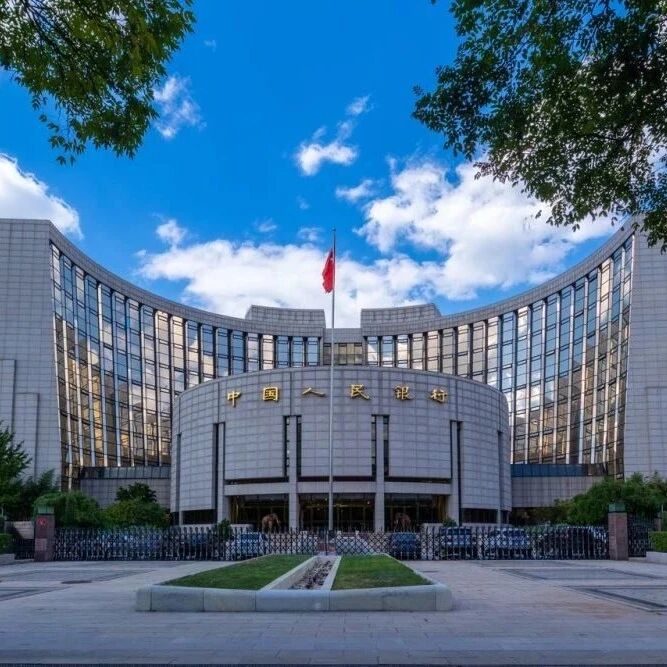
2026年货币政策延续“适度宽松”:短中长期多层次流动性调节更趋精准 政策利率或有1-2次降息空间
Xin Hua Cai Jing· 2026-01-04 07:14
Core Viewpoint - In 2025, China's monetary policy returned to a stance of "moderate easing," focusing on guiding expectations and improving transmission channels, with a more precise and prudent approach to operations [1][6]. Group 1: Monetary Policy Overview - The liquidity management system in 2025 was characterized by a multi-layered approach, utilizing tools such as reverse repos, medium-term lending facilities (MLF), and government bond transactions [2]. - The People's Bank of China (PBOC) adjusted the MLF bidding model to a "fixed quantity, interest rate bidding, multiple price bidding" format, which further diminished the policy interest rate's anchoring role [2]. - The net MLF issuance in 2025 reached 1.161 trillion yuan, with a total net liquidity injection of 4.961 trillion yuan [2]. Group 2: Interest Rate Adjustments - The PBOC implemented a downward adjustment of 0.25 percentage points on structural monetary policy tool rates and a comprehensive reserve requirement ratio cut of 0.5 percentage points, effectively reducing the overall financing costs [3]. - The average interest rate for newly issued corporate loans was approximately 3.1% in November, down about 30 basis points year-on-year, while the rate for personal housing loans was also around 3.1%, down 3 basis points year-on-year [3]. - The frequency and magnitude of interest rate cuts in 2025 were lower than in 2024, with only one reduction of 10 basis points for the 7-day reverse repo rate [3]. Group 3: Structural Support and Focus Areas - The monetary policy continued to emphasize support for key sectors, including technology innovation and small enterprises, with increased quotas for re-lending aimed at these areas [3][8]. - The third quarter report indicated that loans for technology, green projects, and inclusive finance grew faster than the overall loan growth rate [3]. - The focus on structural monetary policy tools is expected to persist, with significant investments anticipated in technology and consumer sectors [8]. Group 4: Future Outlook for 2026 - The monetary policy for 2026 is expected to maintain a "moderate easing" stance, with an emphasis on precise support and collaboration with fiscal policies [5][6]. - Analysts predict that the social financing scale in 2026 may exceed that of 2025, driven by increased government debt financing [7]. - There is potential for 1-2 rate cuts in 2026, with a possible reduction of 10-20 basis points, while the focus will remain on maintaining a reasonable interest rate relationship [7][8].
货币政策延续适度宽松基调 发力更重精准与协同
Xin Lang Cai Jing· 2026-01-02 19:32
Core Viewpoint - The People's Bank of China (PBOC) is committed to maintaining a moderately accommodative monetary policy in 2025, aiming to support economic recovery and stability in the financial market as it prepares for the 14th Five-Year Plan's conclusion and the 15th Five-Year Plan's initiation [1][2]. Group 1: Monetary Policy Implementation - In 2025, the PBOC implemented a 0.5 percentage point reserve requirement ratio (RRR) cut, injecting approximately 1 trillion yuan of long-term liquidity into the financial market [2]. - The one-year Loan Prime Rate (LPR) and the five-year LPR both decreased by 10 basis points, aimed at reducing financing costs for the real economy [2]. - The average interest rate for new corporate loans was about 3.1% in November 2025, down approximately 30 basis points year-on-year, indicating the effectiveness of the monetary policy measures [2]. Group 2: Focus on Economic Growth - Experts believe that the monetary policy in 2025 effectively targeted stable growth and recovery, laying a solid financial foundation for high-quality development [1][3]. - The central economic work conference emphasized the need for continued implementation of a moderately accommodative monetary policy in 2026, focusing on stabilizing economic growth and ensuring reasonable price recovery [3][4]. Group 3: Structural Policy Tools - The PBOC enhanced existing tools and created new ones to guide financial resources towards key sectors and weak links in the economy, such as increasing the quota for agricultural and small business loans by 300 billion yuan [6]. - The introduction of a 500 billion yuan "service consumption and elderly care re-loan" aims to boost credit support for service consumption and elderly care [6]. - The focus for 2026 will be on supporting domestic demand, technological innovation, and small and micro enterprises, aligning with the goals of the 15th Five-Year Plan [6][7]. Group 4: Policy Coordination and Innovation - The integration of incremental and stock policies reflects a mature monetary policy framework, shifting from reliance on single policy measures to a comprehensive approach [5]. - The PBOC is expected to continue innovating tools and possibly lower operational rates to enhance financial institutions' willingness and capacity to support key sectors [7]. - The emphasis on policy coordination and precision is crucial for addressing complex economic conditions and ensuring effective monetary policy transmission [4][5].
央行四季度货币政策例会释放诸多积极信息
Guo Ji Jin Rong Bao· 2025-12-31 06:18
Group 1 - The core viewpoint of the recent central bank meeting is the commitment to maintain an accommodative monetary policy to support the ongoing economic recovery in China [1][2]. - The meeting emphasized the implementation of a moderately loose monetary policy, utilizing tools such as open market operations and reserve requirement ratio cuts to ensure ample liquidity in the banking system [1]. - The central bank aims to enhance counter-cyclical and cross-cyclical adjustments to align monetary credit growth with economic growth targets, indicating a supportive environment for economic rebound in the upcoming phases [1]. Group 2 - Structural policy tools will continue to be emphasized, with increased financial credit support directed towards key industries and sectors, including technology innovation, manufacturing upgrades, green development, inclusive finance, and pension finance [2]. - The meeting highlighted the importance of balancing interest rate policies with funding efficiency, aiming to improve the market-based interest rate formation mechanism and enhance the effectiveness of monetary policy transmission [2]. - There will be a focus on the synergy between monetary and fiscal policies, leveraging tools like fiscal interest subsidies and risk compensation to better support small and medium-sized enterprises and technological innovation [2].