
绿色消费

Search documents
商务部部署2026年内外贸工作:提振消费仍是首位
Hua Xia Shi Bao· 2026-01-12 11:53
Group 1: Economic Growth and Consumer Spending - In the first year of the 14th Five-Year Plan, consumption is highlighted as the main driver of economic growth, with a focus on implementing special actions to boost consumption and creating the "Buy in China" brand [2][4] - By 2026, it is anticipated that retail sales will return to a growth rate of around 4%, supported by strong consumer sentiment and government policies aimed at increasing current income and income expectations [3][4] - The emphasis on new consumption formats, driven by advancements in technology such as AI and robotics, is expected to stimulate consumer spending in innovative ways [5] Group 2: Trade and Foreign Investment - The 2026 agenda includes promoting trade innovation, optimizing goods trade, and encouraging service exports, with a focus on digital and green trade [6][7] - A new revised Foreign Trade Law will take effect on March 1, 2026, formalizing previous reforms and indicating China's commitment to opening up international service trade [6] - Efforts to attract foreign investment will include enhancing the domestic market environment and aligning with international trade rules, which is expected to renew foreign interest in the Chinese market [7]

“稳”有支撑,“进”有动力,潜力释放!中国经济高质量发展步履铿锵
Yang Shi Wang· 2026-01-12 04:45
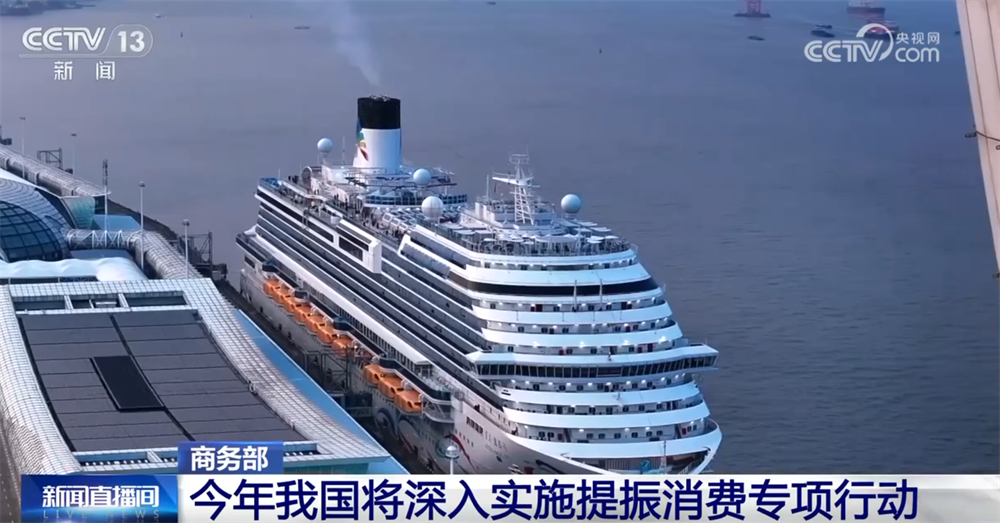
Group 1: Consumption and Trade Development - In 2026, China will implement special actions to boost consumption, promote trade innovation, and gradually expand the autonomous opening of the service sector [1][5] - The focus will be on cultivating new growth points in service consumption, optimizing the old-for-new consumption policy, and enhancing the international consumption environment [1] - The development of digital, green, and health consumption will be prioritized to stimulate consumption in lower-tier markets [1] Group 2: Foreign Investment and Trade Integration - China aims to create new advantages in attracting foreign investment and will expand the autonomous opening of the service sector [8] - The country will optimize and upgrade goods trade, significantly develop service trade, and encourage service exports [5] - Innovations in digital and green trade will be promoted to facilitate the integration of trade and investment [5] Group 3: Agricultural Development and Rural Revitalization - The Ministry of Agriculture and Rural Affairs will prioritize grain production to ensure stable supply of grain and important agricultural products [10][13] - A new round of actions to enhance grain production capacity will be implemented, aiming for a target of 1 trillion jin of grain [13] - Efforts will be made to consolidate and expand poverty alleviation achievements, transitioning to a normalized and precise assistance phase [15] Group 4: Energy Sector Outlook - The 2026 energy economic forecast indicates that high-innovation fields such as hydrogen energy, new energy vehicle batteries, and photovoltaic components will maintain high levels of interest [19] - There is potential for collaborative development in nuclear power and biomass energy [19] Group 5: Corporate Financing - In 2025, over 2,300 enterprises financed more than 10.1 trillion yuan in the interbank market, effectively reducing financing costs and supporting the transformation of private enterprises [21]
当绿色产能已经就绪,如何让消费者为“未来”买单?
Sou Hu Cai Jing· 2026-01-12 04:33
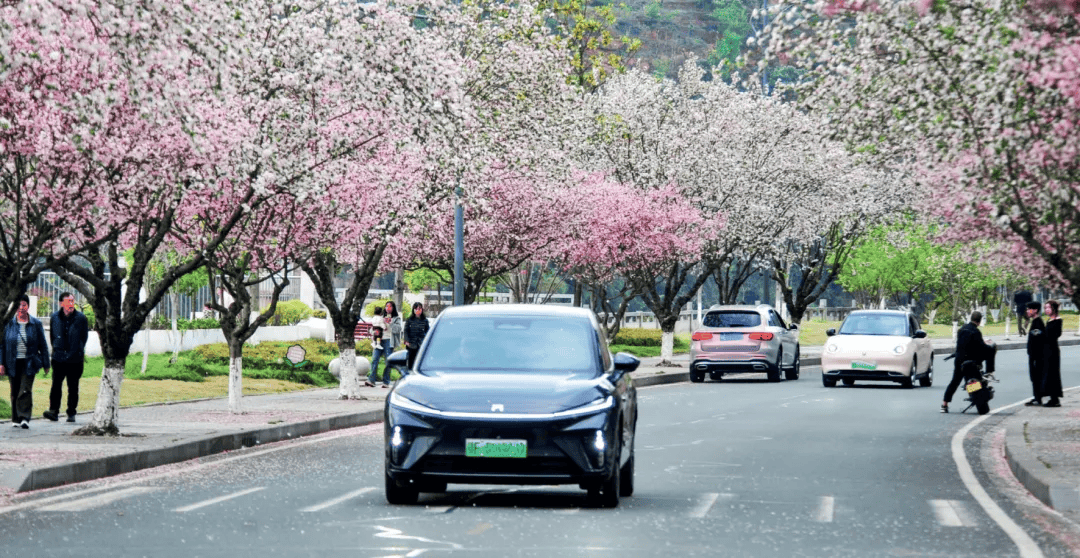
Group 1 - The core viewpoint emphasizes the need for a coordinated approach between production reforms and consumer cultivation in China's green transition, encouraging consumers to pay for green products [2][8] - The Chinese government has issued a notification outlining 20 specific measures to promote green consumption across various sectors, indicating a shift towards a balanced development of production and consumption [2][8] - China, as a major industrial and renewable energy player, must leverage its dual identity as a supplier and consumer to transform its green industry advantages into systemic competitive advantages [2][8] Group 2 - The global path to green transition involves a comprehensive systemic change that includes economic structure, industrial systems, market mechanisms, and social values, rather than relying solely on technological innovation [3][4] - Developed countries are generally in a dual-track phase of "policy support + market promotion," while some developing countries are still in the early stages of "policy establishment + market cultivation" [4][5] - Initial investments in renewable energy and industrial manufacturing are crucial for building green production capacity, which is necessary for subsequent consumer-side initiatives [4][5] Group 3 - As green production capacity expands, challenges arise if policies continue to focus primarily on the production side without addressing consumer-side policies, leading to diminishing marginal returns on policy support [6][12] - The lack of consumer demand activation can hinder the realization of environmental value from green products, affecting companies' motivation for continuous innovation [7][12] - The transition from a production-dominated approach to a collaborative model involving both production and consumption is essential for achieving high-quality development in green transition [7][12] Group 4 - China's green transition has primarily focused on production breakthroughs, achieving significant advancements in renewable energy capacity and green technology, with key indicators showing substantial growth [8][9] - The successful development of the electric vehicle industry in China illustrates the effective interaction between production and consumption, driven by supportive policies and market mechanisms [9][10] - The next critical step for China is to enhance consumer willingness to choose green products, thereby creating a market system that supports both supply and demand [8][10] Group 5 - The establishment of a green electricity consumption mechanism and the promotion of green power consumption are part of China's strategy to drive demand for renewable energy [10][11] - The integration of renewable energy with various industries and the development of zero-carbon parks are initiatives aimed at fostering a collaborative environment for green transition [11][12] - The structural disconnect in the green production-consumption value chain is a common challenge globally, necessitating a focus on cultivating sustainable consumer demand to create a closed-loop value system [12][13] Group 6 - The transition to a consumer-driven market for green products requires initial policy interventions to lower consumer barriers and build awareness [14][15] - As consumer experiences with green products improve, the focus should shift from direct subsidies to value communication and awareness cultivation [15][16] - Ultimately, achieving a stable market cycle where green production and consumption reinforce each other depends on fostering long-term recognition of green value among consumers [15][16]
全国商务工作会议:优化消费品以旧换新政策实施
Cai Jing Wang· 2026-01-12 02:41
Core Insights - The national business work conference held from January 10 to 11 emphasizes eight key areas for the national business system to focus on by 2026 [1] Group 1: Consumer Spending - The first priority is to implement special actions to boost consumption, creating the "Buy in China" brand. This includes accelerating the cultivation of new growth points in service consumption and releasing the potential of service consumption [1] - The policy for replacing old consumer goods with new ones will be optimized to promote the expansion and upgrading of product consumption [1] - The development of an international consumption environment is highlighted, along with the promotion of digital, green, and health consumption to stimulate the vitality of the lower-tier market [1] Group 2: Market and Distribution System - The second focus is on improving the modern market and distribution system, advancing the construction of a unified national market [1] - Strengthening institutional guarantees and optimizing facility carriers are essential for promoting innovation in the retail industry [1] - The modern commercial circulation system will be enhanced, and pilot city construction will be further advanced, along with the integration of domestic and foreign trade [1] Group 3: Trade Innovation - The third area is to promote trade innovation and establish the "Export China" brand [1] - There will be an emphasis on optimizing and upgrading goods trade while significantly developing service trade and encouraging service exports [1] - Innovations in digital and green trade will be pursued to promote the integration of trade and investment [1]
利好!上市公司,密集公告!
Zheng Quan Shi Bao· 2026-01-12 00:33
(原标题:利好!上市公司,密集公告!) 今日关注 近90家A股上市公司发布2025年年度业绩预告 17家净利同比预增上限超100% 两部门:4月1日起 取消光伏等产品增值税出口退税 证监会较大幅度提高证券期货违法行为"吹哨人"奖励 最高奖励100万元 重要的消息有哪些 1.全国商务工作会议:加快培育服务消费新增长点 优化消费品以旧换新政策实施 全国商务工作会议1月10日至11日在京召开。会议指出,2026年全国商务系统要重点做好八个方面工作:一是深入实施提振消费专项行动,打 造"购在中国"品牌。加快培育服务消费新增长点,释放服务消费潜力。优化消费品以旧换新政策实施,推动商品消费扩容升级。打造国际化消费 环境。发展数字消费、绿色消费、健康消费,激发下沉市场消费活力。二是健全现代市场和流通体系,推进全国统一大市场建设。加强制度保 障,优化设施载体,推动零售业创新发展,完善现代商贸流通体系,深入推进试点城市建设。推进内外贸一体化。三是推动贸易创新发展,打 响"出口中国"品牌。优化升级货物贸易,大力发展服务贸易,鼓励服务出口,创新发展数字贸易、绿色贸易,促进贸易投资一体化。四是塑造吸 引外资新优势,擦亮"投资中国"品 ...





利好!上市公司,密集公告!
证券时报· 2026-01-12 00:13
Group 1 - Nearly 90 A-share listed companies have released their 2025 annual performance forecasts, with 17 companies expecting a year-on-year net profit increase of over 100% [12] - The Ministry of Finance and the State Administration of Taxation announced the cancellation of VAT export tax rebates for photovoltaic products starting April 1, 2026, and a reduction in the VAT export tax rebate rate for battery products from 9% to 6% until the end of 2026 [4][5] - The China Securities Regulatory Commission has significantly increased the rewards for whistleblowers reporting securities and futures violations, with the maximum reward raised to 1 million yuan [6] Group 2 - The national business work conference emphasized the need to accelerate the cultivation of new growth points in service consumption and optimize the implementation of the old-for-new consumption policy [3] - The Guangzhou real estate market has shown signs of stabilization, with both transaction volume and prices increasing for eight consecutive weeks [10] - The "Tianma-1000" unmanned transport aircraft successfully completed its first flight, showcasing its capabilities for logistics, emergency rescue, and material delivery [7] Group 3 - Tongfu Microelectronics plans to raise no more than 4.4 billion yuan through a private placement to enhance packaging capacity for storage chips and other emerging applications [19] - Aerospace Chuangxin expects a net loss of approximately 220 million yuan for 2025, primarily due to insufficient revenue to cover costs and restructuring expenses [17] - Visual China reported a fair value change of 67.35 million yuan from its holdings in MiniMax, which represents about 56.53% of its 2024 net profit [16]
商务部:今年将加快培育服务消费新增长点
Xin Lang Cai Jing· 2026-01-11 20:19
Group 1 - The national business work conference emphasized the importance of boosting consumption and building a strong domestic market as part of the "14th Five-Year Plan" starting in 2026 [1][2] - Key focus areas for 2026 include consumption, circulation, trade, foreign investment, alignment with international rules, foreign investment, multilateral economic cooperation, and risk prevention [1] - The conference highlighted the need to create the "Buy in China" brand and to accelerate the cultivation of new growth points in service consumption, optimizing policies for upgrading consumer goods [1][2] Group 2 - In terms of foreign trade and investment, the conference called for promoting innovative trade development and enhancing the "Export China" brand, with a focus on optimizing goods trade and developing service trade [2] - The meeting stressed the importance of creating new advantages to attract foreign investment and enhancing the "Invest in China" brand, while also expanding the opening up of the service sector [2] - The conference noted that 2025 would be a significant year, with stable business development and positive contributions to economic recovery, highlighting the enhanced role of consumption and the optimization of foreign investment structure during the "14th Five-Year Plan" period [2]
【光明论坛】绿色消费绘就美好生活鲜明底色
Xin Lang Cai Jing· 2026-01-11 20:19
Group 1: Policy and Market Dynamics - The Ministry of Commerce and nine other departments have issued a notification to implement green consumption initiatives, providing a clear roadmap for the green transformation of China's consumer market [1] - The policy aims to leverage market mechanisms to transmit pressures and incentives for green development to the consumer end, encouraging consumers to choose environmentally friendly products [1][2] - The emergence of digital empowerment and innovative models is transforming green consumption from a mere concept into a fashionable trend, with e-commerce platforms launching "green bills" and "carbon accounts" to quantify low-carbon behaviors [2] Group 2: Economic and Social Impact - Green consumption is associated with healthier and higher-quality living standards, promoting a shift from excessive consumption to better experiences, reflecting a new value system of harmonious coexistence with nature [3] - The establishment of a "green consumption points system" aims to assetize and contextualize green behaviors, creating a long-term positive incentive mechanism for consumers [2] - The promotion of green consumption is seen as a way to meet public demand for a better ecological environment and high-quality ecological products, aligning with the goals of high-quality development [3] Group 3: Collaborative Efforts - Green consumption is a complex system involving production, circulation, consumption, and recycling, requiring collaboration among government, market, and society [3] - The government is expected to play a guiding role by improving green standards and ensuring market fairness, while the market should focus on technological innovation to reduce green costs [3] - Individual social actions, such as rejecting single-use items and prioritizing energy-efficient products, are essential for contributing to a sustainable future [3]
全国商务工作会议部署今年八项重点任务 深入实施提振消费行动 推动零售业创新发展
Zheng Quan Shi Bao· 2026-01-11 16:55
Group 1 - The national business conference held on January 10-11 outlined eight key tasks for the national business system by 2026, focusing on consumption, trade innovation, foreign investment, and international economic cooperation [1] - The conference emphasized the implementation of a special action to boost consumption, aiming to create the "Buy in China" brand and enhance service consumption potential [1] - It was highlighted that there will be efforts to optimize the implementation of the old-for-new consumption policy and to develop an international consumption environment [1] Group 2 - The conference called for the promotion of trade innovation, including the launch of the "Export China" brand and the development of service trade and digital trade [2] - There is a focus on enhancing foreign investment attractiveness by expanding service sector openness and improving investment promotion levels [2] - The need for effective management of foreign investments was stressed, including the establishment of a comprehensive overseas service system and deepening cooperation under the Belt and Road Initiative [2]