自有品牌

Search documents
县城零食大王联姻,一年卖出500多亿
FBIF食品饮料创新· 2025-05-10 15:07
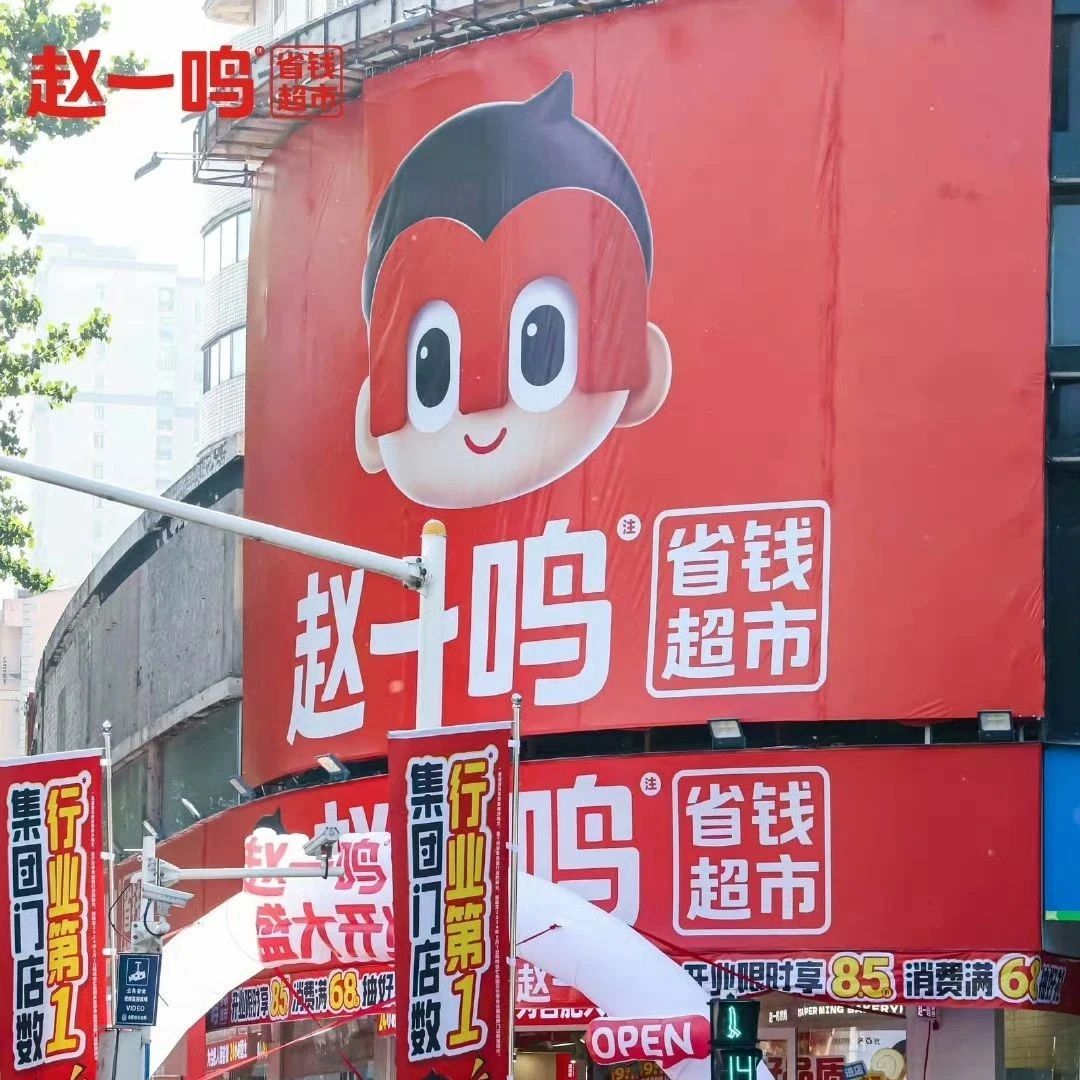
Core Viewpoint - The article discusses the emergence and growth potential of "poor people's supermarkets" in China, exemplified by the listing application of Hunan Mingming Henbang Commercial Chain Co., Ltd. on the Hong Kong Stock Exchange, highlighting its rapid expansion in lower-tier markets and significant revenue growth projections [1][4]. Group 1: Company Overview - Hunan Mingming Henbang has approximately 58% of its stores located in county towns and rural areas, indicating a deep penetration into the lower-tier market [1]. - The company reported revenue figures of RMB 4.285 billion, RMB 10.295 billion, and RMB 39.343 billion for the years 2022, 2023, and 2024 respectively, with a compound annual growth rate (CAGR) of 203.0% [2]. - The total Gross Merchandise Value (GMV) for 2024 is projected to reach RMB 55.5 billion [1]. Group 2: Industry Trends - The retail sector in China is experiencing a transformation, with a notable shift towards discount retailing and the emergence of hard discount models, as seen with companies like Aldi and the rise of discount supermarkets [4][19]. - The discount retail market is expected to grow to RMB 2.28 trillion by 2025, with a CAGR of 11.0% from 2022 to 2025 [19]. - The trend of "quality-price ratio" is becoming prominent, where consumers seek high-quality products at lower prices, reflecting a shift in consumer behavior towards value [8][12]. Group 3: Competitive Landscape - The competitive landscape is intensifying, with major players like Three Squirrels and Yonghui Supermarket facing challenges, including significant shareholder losses and strategic shifts [14][16]. - The concept of private labels is gaining traction, with companies like Aldi achieving over 90% of their product offerings as private labels, which allows for lower prices and higher quality control [27]. - The article highlights the importance of supply chain optimization and operational efficiency as key competitive advantages in the discount retail space [20][22].

罗兰贝格合伙人蒋云莺:建议法规加入“货架公平比例”指标
Jing Ji Guan Cha Bao· 2025-05-10 09:02
Core Viewpoint - The discussion highlights the need for regulatory changes in China's retail sector to ensure fair competition between private labels and third-party brands, particularly through the introduction of a "shelf fairness ratio" indicator [1][2]. Group 1: Market Dynamics - Supermarkets prioritize their private labels on shelves due to higher profit margins, which limits the survival space for third-party brands [1][7]. - When the revenue share of private labels in fresh categories reaches 35%, supermarkets enforce differentiation requirements on third-party brands, further squeezing their market presence [1][7]. - The physical space dominance of private labels in retail environments creates a more insidious form of market unfairness compared to online platforms [1][2]. Group 2: Regulatory Environment - Current regulations, such as the Anti-Unfair Competition Law, do not specifically address shelf space allocation, leading to a lack of enforcement against unfair practices [2]. - Recommendations include setting a cap on the shelf space allocated to private labels and establishing a rapid arbitration mechanism for supplier complaints [2][7]. Group 3: Development of Private Labels - Domestic private labels are growing, driven by consumer demand for quality and health, as well as digital technology [3][4]. - The market share of private labels in China is currently between 10% and 20%, significantly lower than the over 30% share in developed markets [4][5]. - Factors contributing to the lower share include an underdeveloped supply chain and consumer skepticism regarding the quality of private labels [5][6]. Group 4: Consumer Trust and Marketing Strategies - Enhancing consumer trust in private labels can be achieved through transparent marketing, authoritative certifications, and risk-reducing return policies [6]. - Successful international strategies, such as Costco's unconditional return policy and ALDI's streamlined product offerings, can serve as models for Chinese retailers [6][8]. Group 5: Competitive Landscape - The promotion of private labels can lead to a disadvantage for third-party brands, as evidenced by sales declines for smaller brands when private label shelf space increases [7][9]. - Retailers often impose longer payment terms on third-party suppliers compared to their private labels, creating cash flow pressures for smaller brands [9]. Group 6: Future Outlook - The development of private labels in China may evolve into a dual-track system, with higher shares in first-tier cities and traditional brands dominating in lower-tier cities [10]. - If supply chain maturity improves, leading retailers could see private label revenue share exceed 40% in the long term [10].
永辉这样做自有品牌
Jing Ji Guan Cha Wang· 2025-05-10 03:52
Core Insights - The chairman of Miniso, Ye Guofu, has taken on a leadership role in Yonghui Supermarket's reform, announcing a supply chain transformation plan aimed at eliminating intermediaries and establishing direct procurement relationships with suppliers to ensure product quality [1] - Yonghui aims to incubate 100 products with sales exceeding 100 million yuan within three years and plans to launch 60 new private label products by 2025, targeting a 40% contribution from private labels to overall sales [1][5] - Currently, the contribution of Yonghui's private label sales ranges from 5% to 15% depending on the region and store, with a long-term goal to match the private label revenue contributions of international retail giants like Walmart and Costco [1][5] Supply Chain Strategy - Yonghui's private label development began in 2002, with a focus on understanding consumer demand and adapting to market changes [2] - The company has previously set ambitious targets for private label sales, including a goal of 15% to 20% by 2020, but faced challenges in execution [2][3] - Yonghui's acquisition of Dameng, a major retail service provider, was seen as a strategic move to enhance its private label offerings and strengthen its supply chain [2] Operational Changes - In 2023, Yonghui's private label sales reached 3.54 billion yuan, accounting for 5% of total revenue, with an 8.26% year-on-year growth [5] - The company is undergoing a transformation by reducing the number of private label SKUs and restructuring its team to improve efficiency and focus on core products [6][13] - Yonghui is learning from competitors like Pang Donglai, which has successfully developed a high percentage of private label products, and aims to adopt a more customer-centric approach [6][12] Future Directions - Yonghui's supply chain upgrade is intended to enhance bargaining power and cost efficiency while paving the way for private label development [8] - The company emphasizes a shift from being a mere distributor of brands to focusing on product quality and customer needs [8][10] - Yonghui plans to establish deeper collaborations with core suppliers to create differentiated private label products that add value for consumers [12][14]

渠道品牌的边界
Jing Ji Guan Cha Bao· 2025-05-09 14:00
Core Insights - The rise of private label brands, referred to as "channel brands," is reshaping the retail landscape in China, with retailers increasingly developing their own products to compete with traditional brands [2][4][9] - The average number of new private label products developed by retailers is projected to increase significantly from 83 in 2022 to 142 by 2024, indicating a strong trend towards self-branding in retail [2] - The emergence of channel brands is expected to lead to a transformation in retail operations and ecosystems, as retailers seek to differentiate themselves and improve profit margins [4][6] Retail Dynamics - Retail giants like Costco and Walmart have successfully leveraged their private label brands, with Costco's Kirkland accounting for one-third of its sales and Walmart deriving over 30% of its sales and more than 50% of its profits from private labels [4] - The competitive pressure from channel brands is forcing traditional brand manufacturers to lower their prices, creating a challenging environment for them [5] - The relationship between channel brands and traditional brands is complex, as retailers must balance their own products with third-party brands to maintain market viability [6][8] Market Trends - The trend of channel brands is not just a local phenomenon but reflects a broader shift in retail strategies globally, with significant implications for brand positioning and consumer perception [9][10] - The need for regulatory measures, such as a "shelf space fairness ratio," is being discussed to ensure a balanced representation of private labels and third-party brands on retail shelves [6][7] - Ultimately, the ability to capture consumer attention and loyalty will remain a critical challenge for both channel brands and traditional brands in the evolving retail landscape [8]


鸣鸣很忙IPO三问:谁挣钱?谁在卷?谁受益?
Sou Hu Cai Jing· 2025-05-08 09:53
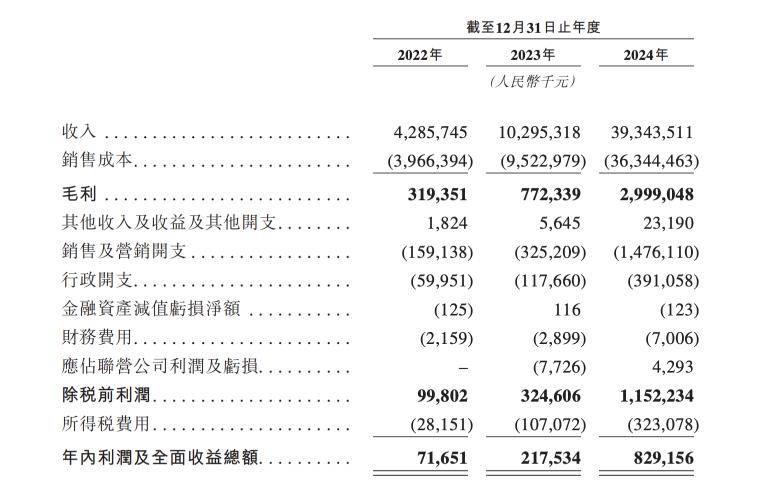
Core Viewpoint - The company Mingming Henmang Group, a leading player in the snack retail sector, has submitted its IPO application to the Hong Kong Stock Exchange, marking its entry into the public market [1][2]. Financial Performance - The company has experienced significant revenue growth, achieving revenues of 4.29 billion RMB in 2022, 10.30 billion RMB in 2023, and projected 39.34 billion RMB in 2024, representing an over eightfold increase in three years [6][7]. - Despite the impressive revenue figures, the company has maintained low profit margins, with gross profit margins of 7.5% in 2022, 7.5% in 2023, and 7.6% in 2024, which are lower than its competitor Wancheng Group's 10.76% during the same period [10][11]. Business Model - The company's business model is characterized by a low-cost, high-volume strategy, focusing on a wide range of products and a significant presence in lower-tier cities, with approximately 58% of its stores located in county towns and rural areas [4][8]. - The franchise model has become a mainstream choice in the snack retail industry, with 99.5% of the company's revenue coming from supplying products to its franchise stores [11][13]. Market Competition - The competitive landscape is intensifying, with both Mingming Henmang and its rival Wancheng Group aggressively expanding their store networks, leading to market saturation in certain areas [14][15]. - Both companies have implemented substantial franchise support policies to attract and retain franchisees, resulting in a significant increase in the number of franchise stores for Mingming Henmang from 994 in 2022 to 7,241 in 2024 [17]. Strategic Shifts - The company is shifting its strategy to focus on higher quality and differentiated products, moving away from solely competing on price [22][25]. - Mingming Henmang has initiated a self-branding strategy, launching its own product lines to improve profit margins and enhance its market image [24][26][28]. Future Outlook - The company plans to allocate 70% of the funds raised from its IPO for store expansion, indicating a continued focus on growth [18]. - Additionally, Mingming Henmang is exploring new retail formats, such as community discount supermarkets, to diversify its offerings and meet broader consumer needs [29][30].
县城零食大王联姻,一年卖出500多亿
盐财经· 2025-05-04 09:44
Core Viewpoint - The article discusses the emergence and growth of discount supermarkets in China, particularly focusing on the listing of Hunan Mingming Hen Mang Commercial Chain Co., Ltd. and its rapid expansion in lower-tier cities [2][4]. Group 1: Company Overview - Hunan Mingming Hen Mang has submitted its listing application to the Hong Kong Stock Exchange, with approximately 58% of its stores located in county towns and rural areas, indicating a deep penetration into the lower-tier market [2]. - The company has shown significant revenue growth, with projected revenues of RMB 42.8 billion, RMB 102.9 billion, and RMB 393.4 billion from 2022 to 2024, reflecting a compound annual growth rate (CAGR) of 203.0% [3]. - The merger of two leading snack chains, "Zero Snacks" and "Zhao Yiming Snacks," has positioned Mingming Hen Mang as a major player in the snack retail sector [3]. Group 2: Industry Trends - The discount retail sector in China is experiencing a transformation, with a notable increase in the number of stores, as evidenced by Mingming Hen Mang and other brands like "Hao Xiang Lai" both surpassing 15,000 stores [4]. - The retail industry is witnessing a shift towards lower prices and higher value, with consumers increasingly seeking products that offer better quality at lower costs, a trend referred to as "quality-price ratio" [9][11]. - The overall discount retail market is projected to reach RMB 2.28 trillion by 2025, with a CAGR of 11.0% from 2022 to 2025, indicating robust growth in this segment [24]. Group 3: Competitive Landscape - Major players in the discount retail space, such as Aldi and Sam's Club, are adopting hard discount models, which focus on reducing costs through supply chain optimization and operational efficiency [21][24]. - The rise of private label products is becoming a significant trend, with companies like Aldi achieving over 90% of their product offerings as private labels, which allows for lower prices and higher quality control [33]. - The competition in the discount retail sector is intensifying, with brands needing to innovate and differentiate themselves to maintain market share and consumer trust [36][37].

全国门店超1.4万家,年轻人即将再“吃”出一家IPO?
Sou Hu Cai Jing· 2025-05-02 15:00
Core Viewpoint - The company, Hunan Mingming Hen Mang Commercial Chain Co., Ltd., has officially submitted its application for an IPO on the Hong Kong Stock Exchange, marking its entry into the capital market and highlighting its rapid growth in the snack retail sector [1]. Group 1: Company Growth - Established in 2017 in Changsha, the company has focused on lower-tier cities, avoiding fierce competition in first and second-tier cities, and has rapidly expanded its store count to over 14,180 by the end of 2024, with annual revenue nearing 5 billion yuan [2][6]. - The company employs a franchise model, with 97.4% of its stores being franchises, allowing for low investment thresholds and quick returns, appealing to many small-town entrepreneurs [6]. - Targeting the 18-35 age demographic, the company has successfully attracted price-sensitive consumers who seek value for money, contributing to its rise as a significant player in the new consumption landscape [6]. Group 2: Industry Challenges - The snack retail industry has shifted from a blue ocean to a red ocean, with increased competition from brands like Laiyoupin and Haoxianglai, leading to challenges such as high growth versus low barriers to entry, management difficulties, and price sensitivity versus margin compression [7][9][10][12]. - The industry faces issues of product homogeneity and lack of brand loyalty, making it difficult for companies to maintain customer retention once price advantages diminish [9]. Group 3: Future Growth Strategies - The IPO is seen as a pivotal moment for the company, transitioning from rapid expansion to a focus on sustainable growth and profitability, emphasizing the need for a robust operational framework [13]. - Developing proprietary brands is crucial for enhancing profit margins and brand recognition, although it requires significant investment in research, marketing, and quality control [15]. - The company plans to expand its logistics network to improve supply chain efficiency and ensure stable product availability across its extensive store network [16]. - Optimizing store performance by enhancing operational efficiency and customer experience is essential for future growth, shifting focus from quantity to quality [17]. Group 4: Long-term Perspective - The snack business is fundamentally a long-term endeavor that tests product quality, supply chain management, and organizational capabilities [18]. - The company's journey from rapid franchise expansion to building a strong brand and operational capabilities is critical for its success in the capital market and beyond [18].
博士眼镜(300622) - 2025年4月30日投资者关系活动记录表
2025-04-30 09:06
Group 1: Future Growth Drivers - The main drivers for future profit growth are the increasing vision problems among the elderly and children, with a focus on the aging population and the rising myopia rates among youth [2][3] - As of 2023, the overall myopia rate among children and adolescents in China is 52.7%, with rates of 35.6% for elementary school students, 71.1% for middle school students, and 80.5% for high school students [2][3] Group 2: Financial Performance - For the fiscal year 2024, the company achieved a revenue of 1,202.82 million yuan, representing a year-on-year growth of 2.29% [5] - The net profit attributable to shareholders was 103.63 million yuan, reflecting a decrease of 19.08% compared to the previous year [5] Group 3: Market Outlook - The global eyewear market is projected to grow from 104.08 billion USD in 2024 to 131.34 billion USD by 2029, with a compound annual growth rate (CAGR) of 4.8% [6] - The Chinese eyewear retail market is expected to expand from approximately 97.86 billion yuan in 2024 to 116.29 billion yuan by 2029, with an estimated CAGR of 3.5% [6] Group 4: Store Expansion and Brand Development - As of December 31, 2024, the company operates 557 stores, including 510 direct-operated and 47 traditional franchise stores [7] - In 2024, the company opened 78 new stores and closed 36, resulting in a net increase of 42 stores [7] - The company has developed 13 proprietary eyewear brands and 4 lens brands, with proprietary lens sales accounting for 58.65% of total lens sales and proprietary frame sales accounting for 65.40% of total frame sales in 2024 [7] Group 5: Smart Glasses Initiative - The company is actively integrating smart technology into its offerings, establishing partnerships with leading smart eyewear brands and enhancing in-store experiences with dedicated smart eyewear sections [4] - A joint venture with Thunder Innovation was established to co-develop smart eyewear products, with the first product launched on January 7, 2025 [4]

美国零售和中国线下零售区别在哪里?
2025-04-30 02:08
Summary of Conference Call Records Industry Overview - The records discuss the retail industry in the United States and China, highlighting differences in operational strategies and market dynamics [1][2][4][36]. Key Points and Arguments U.S. Retail Market - U.S. retail giants like Walmart and Amazon excel in supply chain management and innovation, particularly through strategies like Everyday Low Pricing (EDLP) and the application of AI [1][2][3]. - The U.S. retail market is characterized by its stability and maturity, with a historical evolution from small family-owned stores to large chains [2]. - Walmart's focus on digitalization and automation has enhanced operational efficiency and innovation capabilities [3]. Chinese Retail Market - China leads in instant delivery services, achieving delivery within 30 minutes, while still needing to improve in large retail management and product design [1][4]. - The development of private labels in China requires strong brand influence and product development capabilities, alongside a focus on omnichannel consumer experience [1][6][12]. - Professional talent is crucial for optimizing large retail management, product design, and targeting consumer pain points [5]. Private Label Development - The evolution of private labels in the U.S. has shifted from reliance on suppliers to in-house development, with Costco's Kirkland brand demonstrating significant growth [7][8]. - Successful private label strategies require strong market influence, a dedicated talent team, optimized supply chains, and effective marketing strategies [9][12]. - Demand forecasting is critical in fresh retail for inventory management and profitability, with Walmart successfully implementing precise forecasting methods [21]. Challenges and Opportunities - The management of fresh products poses challenges for private labels, particularly in maintaining quality and safety standards [19][20]. - The retail industry must adapt to consumer demands and preferences, emphasizing the importance of emotional value and unique shopping experiences in physical stores [24][39]. - Discount stores are expanding rapidly in both the U.S. and China, with a focus on supply chain management and data-driven decision-making to ensure sustainable growth [25][43]. Future Trends - The future of retail may see the emergence of new business models and opportunities, with a focus on meeting consumer needs and maintaining profitability [37][38]. - The integration of online and offline resources is expected to enhance the competitiveness of private labels, particularly through the use of AI in supply chain management [16][32]. - The retail landscape will continue to evolve, with the potential for large retail formats to expand into lower-tier markets [41]. Additional Important Content - The records highlight the importance of experiential marketing, such as sampling events, to enhance consumer engagement and drive sales [28][29]. - The impact of tariffs on U.S. retailers has been significant, affecting supply chains and product availability [34]. - The records also discuss the challenges faced by traditional department stores like Macy's, which must adapt to the changing retail environment to survive [49][50]. This comprehensive overview captures the essential insights from the conference call records, focusing on the dynamics of the retail industry in both the U.S. and China, the evolution of private labels, and the challenges and opportunities that lie ahead.

民爆光电(301362) - 投资者关系活动记录表(2025年4月28日)
2025-04-28 10:44
Group 1: Revenue and Market Distribution - In 2024, export revenue accounted for over 95% of total revenue, with Europe at approximately 46%, Oceania at 15%, Asia at 18%, and the Americas at 16% [2] - As of the end of March 2025, the company had orders on hand of approximately 330 million, compared to 340 million in the same period last year [5] Group 2: Impact of Tariffs and Supply Chain Management - Direct and indirect exports to the U.S. accounted for about 7.3% of total revenue in 2024, indicating minimal impact from U.S. tariffs [2] - The company plans to enhance internal supply chain management to control costs and extend supply chains in tariff exemption zones [10][11] Group 3: Production Capacity and Future Plans - The new factory in Vietnam is expected to generate a production value of 500-600 million, sufficient to meet demand for the next three years [3] - There are currently no plans for additional overseas production capacity beyond the second phase in Vietnam, but the company will monitor overseas policy changes [4] Group 4: Profitability and Cost Control - The company anticipates that the special lighting segment will see higher growth, contributing to improved profitability despite a decrease in gross margin compared to the previous year [7] - Cost control measures and a focus on research and development are key strategies for maintaining high growth rates and performance [11][12]