
长期投资

Search documents
震荡市投资指南,A500或是优选?
Xin Lang Cai Jing· 2025-12-09 09:54
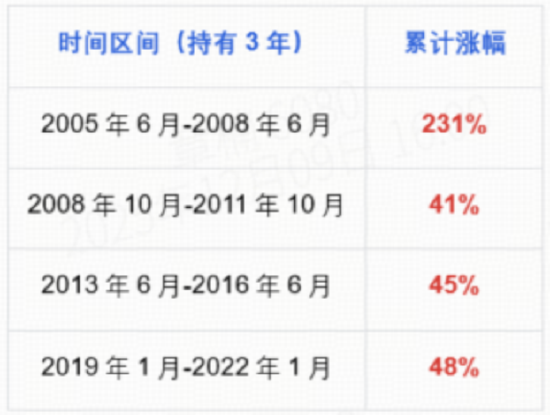
Group 1 - The market has experienced a period of volatility since the index successfully surpassed 4000 points in November, leading to a rapid rotation of hot sectors and increased difficulty for investors [1][12] - Historical experience suggests that weak and volatile market conditions are often the best times for long-term investment positioning, as evidenced by past market bottoms [1][12] - From 2000 onwards, A-shares have seen four historical market bottoms, with significant returns when investments were made at these lows and held for three years, averaging over 16% annualized returns [1][15] Group 2 - Long-term investment in broad-based indices is favored, as exemplified by Warren Buffett's endorsement of the S&P 500 as an excellent long-term investment vehicle [2][16] - Broad-based indices address common long-term investment challenges such as stock selection difficulty, risk concentration, cost erosion, and emotional interference [2][16] Group 3 - The CSI A500 index, launched in late 2024, is designed as an "upgraded version" of broad-based indices, optimizing industry structure and increasing weight in new economy sectors like technology and pharmaceuticals [4][18] - The CSI A500 index employs an "industry balance" methodology to ensure representation across all sectors, reducing over-concentration in traditional industries [4][18] Group 4 - Since its inception, the CSI A500 index has outperformed the CSI 300 index, with a cumulative return of 444.09% compared to 352.67% for the latter, indicating a significant excess return [6][20] - As of December 5, 2025, the total scale of ETFs tracking the CSI A500 index has exceeded 200 billion yuan, ranking second among all broad-based ETFs, with a high institutional investor participation rate of 90% [10][22]

博时市场点评12月9日:两市涨跌不一,创业板继续上涨
Xin Lang Cai Jing· 2025-12-09 08:19
Market Overview - The three major indices in the A-share market showed mixed results, with the ChiNext Index rising by 0.61% and total market turnover decreasing to 1.91 trillion yuan compared to the previous day [1][6] - As of December 9, the Shanghai Composite Index closed at 3909.52 points, down 0.37%, while the Shenzhen Component Index closed at 13277.36 points, down 0.39% [9] Regulatory Developments - On December 6, the China Securities Regulatory Commission (CSRC) announced plans to "loosen" regulations for high-quality institutions, optimizing risk control indicators and increasing capital space and leverage limits to enhance capital efficiency [2][7] - The National Financial Regulatory Administration issued a notice on December 5, reducing the solvency risk factor for insurance companies holding long-term positions in the CSI 300 Index and other indices by 10% [2][8] Investment Sentiment - The regulatory guidance aims to enhance the return on equity (ROE) for brokerages and promote differentiated development for small and foreign brokerages, which may catalyze short-term sentiment in the brokerage sector [2][7] - The recent adjustments reflect a supportive attitude from regulators towards long-term investments and capital, particularly targeting blue-chip and quality growth stocks [3][8] Market Performance - In the industry performance, sectors such as comprehensive services, communication, and electronics saw significant gains, with increases of 3.45%, 2.23%, and 0.78% respectively, while sectors like non-ferrous metals, steel, and real estate experienced declines of 3.03%, 2.47%, and 2.10% [9] - A total of 1290 stocks rose, while 3855 stocks fell in the market [9] Capital Tracking - The market turnover was reported at 19,178.70 billion yuan, showing a decrease from the previous trading day, while the margin financing balance increased to 25,005.15 billion yuan [10]

投资笔记:短线获利和长期投资怎么选?
Sou Hu Cai Jing· 2025-12-09 06:47
【聊聊带人炒股】 近期爱人给笔者抛出一个问题:你一年赚那么点分红,不觉得很慢吗? 事情的起因是,她有位闺蜜和老公在做短线,据说是有一个类似投资群的小圈子,里面有人每天带着他 们买,获利以后抽分成。除此之外,这位闺蜜的老公自己也在研究看线,每次聊天都说自己一天赚几 千,虽然也有亏的时候,但大多数时间都在赚。 于是乎,爱人跟我闲聊的时候就问:你的资金比他们多,为什么不这么做?只要保证每个月都赚,一年 比工作强多了。 相信各位读者朋友看到后能一眼分辨出真伪,首先就是带人炒股这件事,在投资圈、金融界早就不是什 么秘密,到了最后大多是骗局、割韭菜。因为有一个很浅显的原因:如果一个人能精准预测股票走势为 什么还要分享给其他人,带别人赚钱?他要做的应该是第一时间聚集更多的钱买入,或借钱、或贷款, 自己独享这样的机会。 况且股市出现这么多年,还从来没有人能够精准预测市场走势、个股走势,不管是传奇投机者利弗莫 尔、还是股神巴菲特、亦或者是一众华尔街大佬都做不到。要说真有人能够预测一只股票的走势,那么 多半是他在操盘,就类似90年代末的庄股,凭借资金量硬控股价走势。 那么问题就来了:一个操盘手凭什么带那么多人炒股? 司的前十大流 ...


上市公司监督管理条例公开征求意见,资金面略有收敛,债市震荡回暖
Dong Fang Jin Cheng· 2025-12-08 09:44
Report Summary 1. Report Industry Investment Rating No relevant information provided. 2. Core Viewpoints On December 5, the liquidity slightly tightened; the bond market fluctuated and recovered; the main indices of the convertible bond market collectively rose, and most convertible bond issues increased in price; yields on U.S. Treasuries across all maturities generally increased, and yields on 10-year government bonds of major European economies generally rose [1]. 3. Summary by Directory 3.1 Bond Market News - **Domestic News**: On the evening of December 5, Chinese and U.S. economic and trade leaders held a video call, discussing the implementation of previous consensuses and promoting stable and positive development of Sino-U.S. economic and trade relations [3]; on December 6, China Securities Regulatory Commission Chairman Wu Qing emphasized accelerating the creation of first-class investment banks and institutions to boost high-quality development of the capital market [4]; on December 5, the CSRC solicited public opinions on the "Regulations on the Supervision and Administration of Listed Companies"; the "Administrative Measures for Financial Leasing Business of Financial Leasing Companies" will be implemented from January 1, 2026; the central bank renewed a bilateral currency swap agreement with the Macao Monetary Authority, expanding the scale to 50 billion yuan/57 billion Macao patacas [5][6]. - **International News**: U.S. economic data for September showed inflation and personal income increases, but actual personal consumption expenditures remained stagnant; the preliminary December consumer confidence index rose, and short-term inflation expectations dropped to the lowest level since January; key European economies' 10-year government bond yields generally increased [7][8][30]. - **Commodities**: On December 5, international crude oil futures prices continued to rise, with WTI January crude futures up 0.69% to $60.08 per barrel and Brent February crude futures up 0.77% to $63.75 per barrel; COMEX February gold futures closed flat at $4,243 per ounce; NYMEX natural gas prices rose 5.25% to $5.337 per ounce [9][10]. 3.2 Liquidity - **Open Market Operations**: On December 5, the central bank conducted 139.8 billion yuan of 7-day reverse repurchase operations at an interest rate of 1.40%, with 303.1 billion yuan of reverse repurchases maturing, resulting in a net withdrawal of 161.5 billion yuan [12]. - **Funding Rates**: On December 5, the liquidity slightly tightened but remained generally loose. DR001 rose 0.06bp to 1.300%, and DR007 rose 0.04bp to 1.438% [13]. 3.3 Bond Market Dynamics - **Interest Rate Bonds**: On December 5, affected by rumors of the Politburo's mention of "dual cuts," the bond market fluctuated and recovered. Yields on 10-year government bonds and 10-year China Development Bank bonds decreased [16]. - **Credit Bonds**: On December 5, the trading prices of two industrial bonds deviated by over 10%; several companies, including Zhengyuan Real Estate and Fosun Group, faced regulatory actions due to information disclosure violations; many companies, such as Vanke and Longfor Group, announced bond-related events [18][19][22]. - **Convertible Bonds**: On December 5, the A-share market rose, and the convertible bond market followed suit. The main convertible bond indices increased, and most individual convertible bonds rose. Several companies, including Aowei Electronics, announced convertible bond-related events [21][23][27]. - **Overseas Bond Markets**: On December 5, yields on U.S. Treasuries across all maturities generally increased, and yields on 10-year government bonds of major European economies generally rose; the daily price changes of Chinese dollar bonds are provided [26][30][32].




2025年12月08日申万期货品种策略日报-国债-20251208
Shen Yin Wan Guo Qi Huo· 2025-12-08 02:20
Report Overview - The report is a daily strategy report on Treasury bond futures from Shenwan Futures on December 8, 2025, providing data on Treasury bond futures, short - term market rates, and macro - news [1][2][3] 1. Treasury Bond Futures Market 1.1 Futures Market Data - Yesterday, Treasury bond futures prices generally rose, with the T2603 contract rising 0.19%. The trading volume and price changes varied among different contracts, and most contracts saw a decrease in open interest [2] - The active CTD bond IRR% of each Treasury bond futures main contract was at a low level, with no arbitrage opportunities [2] 1.2 Market Indicators - Short - term market interest rates showed mixed trends. SHIBOR 7 - day rate decreased by 0.8bp, DR007 rate increased by 1.11bp, and GC007 rate increased by 1.2bp [2] - Key - term Chinese Treasury bond yields generally declined. The 10Y Treasury bond yield dropped 2.34bp to 1.85%, and the long - short (10 - 2) Treasury bond yield spread was 34.93bp [2] - Overseas key - term Treasury bond yields mostly increased. The US 10Y Treasury bond yield rose 3bp, the German 10Y Treasury bond yield rose 2bp, and the Japanese 10Y Treasury bond yield rose 1.2bp [2] 2. Macro News 2.1 Central Bank Operations - On December 5, the central bank conducted 139.8 billion yuan of 7 - day reverse repurchase operations at a fixed rate, with a net withdrawal of 161.5 billion yuan. This week, 663.8 billion yuan of reverse repurchases will mature [3] 2.2 Regulatory Policies - The draft of the "Guidelines for Performance Evaluation and Management of Fund Management Companies" requires higher follow - up investment ratios for executives and fund managers. For example, at least 30% of the annual total performance compensation of the chairman and executives of a fund company should be used to purchase the company's funds [3] 2.3 Industry Events - At the Eighth Member Congress of the China Securities Association, the CSRC Chairman Wu Qing pointed out that A - shares have achieved reasonable growth in quantity and effective improvement in quality. He also put forward requirements for the securities industry, such as playing the role of analysis and research, expanding the capital space and leverage limit of securities firms, and so on [3] 2.4 National Policies - The CSRC Chairman Wu Qing published a signed article clarifying the key tasks and measures for improving the institutional inclusiveness and adaptability of the capital market during the 15th Five - Year Plan period [3] 2.5 International Economic Data - The US September core PCE price index rose 2.8% year - on - year and 0.2% month - on - month, basically in line with market expectations. The one - year inflation expectation of the University of Michigan in December dropped to 4.1%, and the five - year inflation expectation dropped to 3.2% [3] 3. Industry Information and Comments 3.1 Interest Rate Movements - Money market interest rates showed mixed trends. Some inter - bank lending rates decreased, while some repurchase rates increased. US Treasury bond yields rose across the board [3] 3.2 Market Analysis - The market funds were stable, but concerns about global liquidity tightening and some domestic factors such as the decline in demand for long - term Treasury bonds and the implementation of new fund sales regulations affected the bond market. The long - term Treasury bond futures prices weakened [3]
践行长期投资 市场呼吁优化发起式基金生存门槛
Zhong Guo Jing Ji Wang· 2025-12-08 00:47
Core Viewpoint - The article discusses the evolution and challenges of the initiator-style fund in China, emphasizing the need for optimizing the three-year, 200 million yuan threshold for fund survival to better support small and medium-sized fund companies and new fund managers [1][2][4]. Group 1: Development and Current Status - The initiator-style fund was established in August 2012, becoming a significant part of the public fund industry, with a total scale approaching 3.4 trillion yuan [1]. - There is a notable disparity among initiator-style funds, with some achieving over 20 billion yuan in scale while others face automatic termination due to not meeting the 200 million yuan threshold after three years [1][2]. Group 2: Industry Perspectives on Threshold Optimization - Industry insiders argue that the current three-year, 200 million yuan requirement may lead to the "mis-killing" of potentially successful funds due to market fluctuations affecting their scale [2][3]. - A call for a multi-dimensional assessment system is made, suggesting that factors like average scale, performance stability, and holder structure should be considered to avoid the premature closure of quality funds [2][3]. Group 3: Impact on Small and Medium-sized Fund Companies - Lowering the threshold could alleviate operational pressures on small and medium-sized fund companies, allowing them to focus more on research and investment rather than on maintaining minimum scale [4][5]. - The potential for increased innovation in niche markets is highlighted, with examples of new funds targeting cutting-edge sectors like innovative drugs and green energy [4][5]. Group 4: Long-term Strategy and Performance - The original intent of initiator-style funds is to align the interests of fund managers and investors, promoting long-term investment strategies [6][7]. - Future strategies for initiator-style funds are expected to focus on proactive product layouts in specific industry sectors and enhancing the performance of index-enhanced funds [7][8].
盘前必读丨A股迎来多重利好;国家医保商保“双目录”公布
Di Yi Cai Jing· 2025-12-07 23:14
Group 1 - The year-end market is expected to experience rapid rotation, primarily maintaining a volatile structure [1][15][16] - The A-share market has achieved reasonable growth in volume and effective improvement in quality [6] - The Nasdaq China Golden Dragon Index increased by 1.29%, with notable gains from companies like Dingdong Maicai and Baidu [4] Group 2 - The U.S. stock market saw moderate gains, with the Dow Jones up 0.22% and the S&P 500 up 0.19% [4] - Major tech companies showed mixed performance, with Microsoft and Google gaining while Apple declined [4] - The WTI crude oil futures rose by 0.69% to $60.08, marking a weekly increase of 2.61% [4] Group 3 - The State Council is focusing on energy conservation and carbon reduction, along with regulatory measures for administrative law enforcement [6] - The China Securities Regulatory Commission (CSRC) emphasizes the importance of long-term and value investment products [6][8] - The National Financial Supervision Administration has adjusted risk factors for insurance companies, lowering certain risk factors for long-term holdings [7] Group 4 - The Ministry of Commerce is promoting consumer spending and expanding the market for durable goods [10] - The new drug directory for national medical insurance will be implemented starting January 1, 2026, with 114 new drugs added [12] - The online liquor market is projected to grow significantly, with a GMV of approximately 150 billion yuan in 2024 [13]

践行长期投资,市场呼吁优化发起式基金生存门槛
Sou Hu Cai Jing· 2025-12-07 14:31
Core Viewpoint - The article discusses the need to optimize the survival threshold for initiated funds in China, which currently requires a minimum scale of 200 million yuan after three years, to better support potential funds and long-term investment strategies [1][3]. Group 1: Current State of Initiated Funds - Initiated funds have grown significantly over the past decade, with a total scale approaching 3.4 trillion yuan, becoming an important part of public funds [3]. - There is a notable disparity among initiated funds, with some achieving over 20 billion yuan while others, like Guotai Hai Tong and Shenwan Hongyuan, face automatic termination due to not meeting the 200 million yuan threshold after three years [3]. Group 2: Industry Perspectives on Threshold Optimization - Industry insiders believe that the current three-year, 200 million yuan requirement may lead to the "mis-killing" of potentially successful funds due to market volatility affecting their scale [4]. - There is a call for a more comprehensive assessment system that considers average scale, performance stability, and holder structure to avoid the premature termination of quality funds [4]. Group 3: Impact on Small and Medium Fund Companies - Lowering the threshold for initiated funds could alleviate operational pressures on small and medium-sized fund companies, allowing them to focus more on research and investment rather than on maintaining minimum scale [7]. - The potential for increased innovation in niche markets, such as innovative drugs and green energy, may arise if the threshold is relaxed, encouraging more institutions to explore new strategies [7][8]. Group 4: Long-term Investment and Strategy - The original design of initiated funds aims to align the interests of fund companies and investors, allowing for flexible, counter-cyclical investments [10]. - Balancing short-term performance pressures with long-term development strategies remains a core challenge for the public fund industry, and optimizing the survival conditions for initiated funds could provide management and fund managers with more room to develop quality strategies [11].
践行长期投资,市场呼吁优化发起式基金生存门槛
中国基金报· 2025-12-07 14:22
Core Viewpoint - The article discusses the need to optimize the survival threshold for initiated funds in China, emphasizing the importance of long-term investment and the potential benefits of lowering the current requirement of 200 million yuan within three years for fund survival [2][4][10]. Group 1: Development and Challenges of Initiated Funds - Initiated funds have grown significantly over the past decade, with a total scale approaching 3.4 trillion yuan, becoming an important part of public funds [4]. - There is a notable disparity among initiated funds, with some achieving over 20 billion yuan while others face automatic termination due to not meeting the 200 million yuan threshold after three years [4][5]. - The current requirement of 200 million yuan within three years is seen as potentially harmful, as it may lead to the premature termination of promising funds due to market fluctuations [4][5]. Group 2: Suggestions for Optimization - Industry experts suggest establishing a more comprehensive assessment system that considers average scale, performance stability, and holder structure to avoid "mis-killing" quality products [5]. - There is a call for a balance between optimizing thresholds and managing the potential rise of "mini funds," which could strain company resources due to high operational costs [5][9]. - The need for accompanying measures to prevent fund companies from blindly launching products without focusing on long-term performance is highlighted [6]. Group 3: Impact on Small and Medium-sized Fund Companies - Lowering the threshold for initiated funds could alleviate operational pressures on small and medium-sized fund companies, allowing them to focus more on research and investment rather than on maintaining minimum scales [8][9]. - The potential for increased innovation in niche markets, such as innovative drugs and green energy, is anticipated if the threshold is relaxed, encouraging more institutions to explore new strategies [8][9]. - The current high threshold may hinder new fund managers from developing their investment strategies effectively, and a lower threshold could provide a more conducive environment for growth [9]. Group 4: Long-term Investment Philosophy - The original design of initiated funds aims to align the interests of fund companies and investors, promoting risk-sharing and flexible investment strategies [10]. - Successful initiated funds have emerged by focusing on national strategies and sectors like technology innovation and high-end manufacturing, demonstrating the potential for significant returns even in challenging market conditions [10][12]. - The balance between short-term performance pressure and long-term development strategies remains a core issue in the public fund industry, with suggestions for future strategies focusing on proactive product layouts and niche market exploration [12].

保险行业研究:风险因子下调引导长钱长投,险资权益配置限制再放开
SINOLINK SECURITIES· 2025-12-07 13:37
Investment Rating - The industry is rated as "Buy" with an expectation of an increase exceeding 15% in the next 3-6 months [8]. Core Insights - The adjustment of risk factors for long-term stock investments is expected to ease the constraints on insurance capital allocation to equities. Specifically, the risk factor for stocks held over three years in the CSI 300 and the CSI Low Volatility 100 Index has been reduced from 0.3 to 0.27, and for stocks held over two years on the STAR Market, it has been lowered from 0.4 to 0.36 [2][3]. - The policy aims to guide long-term investments and stabilize the capital market, although the immediate impact on insurance capital's willingness and scale to increase equity assets is expected to be limited [4]. - It is estimated that there will be an influx of 550-600 billion yuan in new capital into the market next year, with varying levels of stock accumulation among companies [5]. Summary by Sections Risk Factor Adjustment - The adjustment of risk factors is a direct implementation of measures announced earlier to support the capital market, which includes a 10% reduction in stock investment risk factors [2][3]. - The overall impact on the solvency ratio of insurance companies is expected to be minimal, with a projected increase in solvency ratios for major life insurance companies being less than 3% [3]. Market Outlook - The insurance sector is anticipated to see double-digit growth in new premium sales, driven by the maturity of fixed deposits and the appeal of insurance products for long-term wealth preservation [6]. - The valuation of insurance companies remains low, presenting a favorable cost-performance ratio for investment [6]. Capital Influx - Major state-owned enterprises are expected to allocate 30% of new premiums to A-shares, translating to approximately 250 billion yuan entering the market [5]. - Some companies may exceed this allocation, with estimates suggesting that companies like China Life and Taiping may invest up to 40% of new premiums into the stock market [5].