云计算

Search documents
百度(BIDU):上调估值,因“冷门”资产有价值释放机会
Haitong Securities International· 2025-09-19 12:41
Investment Rating - The report maintains an "OUTPERFORM" rating for Baidu (BIDU US) with a target price of US$188.00, reflecting a significant upside from the current price of US$135.25 [1][3]. Core Insights - The report highlights the potential value release from "hidden" assets due to the new CFO's strategy, shifting the valuation method from P/E to Sum-of-the-Parts (SoTP) [1][2]. - Baidu is undergoing a transformation in its traditional business model, focusing on enhancing its AI SaaS products, cost-effective cloud infrastructure, and building an open foundational model ecosystem [1][2]. - The demand for large language models (LLMs) is expected to further unlock the value of Baidu's Kunlun chip, with significant orders already secured [1][2]. - The report outlines three scenarios for valuation: pessimistic, baseline, and optimistic, reflecting varying degrees of success in AI commercialization and market share growth [3]. Financial Summary - Revenue projections show a slight decline from RMB 134,598 million in Dec-23A to RMB 131,136 million in Dec-25E, with a net profit decrease from RMB 28,746 million to RMB 21,030 million in the same period [1]. - The gross profit margin (GPM) is expected to decrease from 51.7% in Dec-23A to 42.6% in Dec-25E, while the return on equity (ROE) is projected to decline from 11.5% to 7.3% [1]. - The report provides a detailed breakdown of the valuation for different segments, estimating the total market value at US$64 billion, leading to the target price of US$188 per ADR [2]. Business Segments Analysis - Traditional search advertising is valued at US$10.2 billion, while AI cloud services are estimated at US$5.4 billion, and AI SaaS at US$2 billion [2]. - The "Luo Bo Kua" autonomous taxi service is projected to achieve a 60% market share by 2030, with a normalized operating profit margin of 15% [2]. - The Kunlun chip is expected to capture a 5.4% market share in the AI computing GPU data center market by 2029, with a normalized operating profit margin of 15% [2]. AI and Cloud Services - Baidu's AI cloud services are experiencing significant growth, with a 34% year-on-year increase in revenue, reaching RMB 131 billion in the first half of 2025 [32]. - The report emphasizes the importance of AI SaaS in driving revenue and profit, with Baidu's document and cloud services expected to contribute significantly to overall income [19][20]. - The AI cloud infrastructure is positioned to capitalize on the growing demand for AI solutions across various industries, including gaming, e-commerce, and finance [28][32].

利好催化,国防军工、地产脉冲!AI双子星背离,159363成功收涨!新高后现分歧,港股互联网ETF收出十字星
Xin Lang Ji Jin· 2025-09-19 12:23
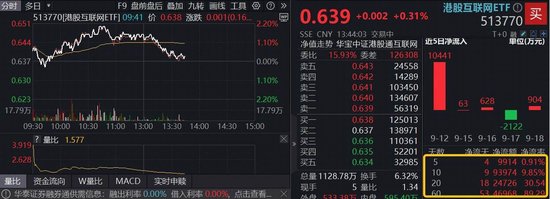
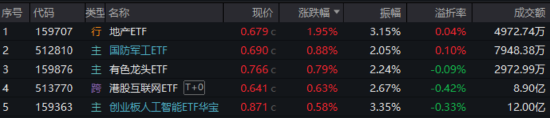
Market Overview - The market experienced a day of low trading volume with major indices closing down, as total trading volume reached 2.35 trillion yuan, significantly lower than the previous day's 3.17 trillion yuan [1] - The Shanghai Composite Index fell by 1.3% for the week, while the Shenzhen Component Index rose by 1.14%, and the ChiNext Index increased by 2.34%, marking a seven-week consecutive rise [1] Sector Performance - The defense and military sector saw a notable rise, with Guorui Technology hitting the daily limit, and the Defense and Military ETF (512810) reaching a peak of 2% [1] - Real estate stocks showed volatility in the afternoon, with the real estate ETF (159707) rising by 2%, potentially driven by policy adjustments regarding property tax trials in Shanghai [1] - The non-ferrous metals sector rebounded significantly, with Ganfeng Lithium hitting the daily limit and the Non-ferrous Metals Leader ETF (159876) peaking at 1.7% [1] - Technology stocks displayed increased divergence, with the AI-focused ETFs showing mixed results; the Huabao ChiNext AI ETF (159363) rose by 0.58%, while the Huabao Sci-Tech AI ETF (589520) fell by 1.76% [1] Fund Flows - The top-tier brokerage ETF (512000) and the fintech ETF (159851) continued to decline, with respective decreases of 0.68% and 1.81%, despite strong fund inflows in previous days [2] - The top-tier brokerage ETF attracted 12.62 billion yuan in net inflows over the last 16 days, totaling 64.5 billion yuan [2] Hong Kong Market Dynamics - The Hong Kong market showed mixed performance, with the Hang Seng Index closing flat and the Hang Seng Tech Index slightly up by 0.37% [3] - The Hong Kong Internet ETF (513770) experienced volatility, initially rising by over 2% before closing up by 0.63% with a trading volume of 8.9 billion yuan [5] AI and Technology Sector Insights - The AI-driven technology sector remains a focal point, with significant growth potential as companies like Alibaba and Tencent continue to advance their AI capabilities [9] - The Hong Kong Internet ETF (513770) has outperformed the Hang Seng Tech Index, with a cumulative increase of over 15 percentage points [11] - The demand for AI computing power is expected to grow exponentially, with the global AI server market projected to reach 125.1 billion USD by 2024 [16] Innovation and Drug Development - The Hong Kong Innovation Drug ETF (520880) faced a decline, with a drop of 1.58% amid a broader market adjustment, but it has seen consistent inflows, totaling over 6.7 billion yuan in the past 13 days [22][23] - The ETF has been restructured to focus solely on innovative drug development, excluding CXO companies, which is expected to enhance its performance in the long run [23][24]

甲骨文复兴启示:老巨头如何穿越新周期
经济观察报· 2025-09-19 12:08
Core Insights - Oracle's recent success is attributed to its accurate insight into technological evolution and strategic decision-making by its leadership [1][5] - The company has positioned itself effectively in the AI wave, securing significant contracts with major players like OpenAI and Nvidia, and potentially taking on a key role with TikTok [2][4] Technology Strategy - Oracle chose to focus on "second-generation cloud infrastructure" (OCI) rather than competing directly in the crowded public cloud market, which aligns well with the computational needs of AI model training and inference [2][3] - OCI's inherent architectural advantages provide Oracle with a competitive edge in cost-effectiveness and energy efficiency, especially as demand for computational power surges [3] Client Base and Trust - Oracle's long-standing relationships with large, complex organizations such as banks and governments create a strong trust factor, making it a reliable choice for AI giants seeking robust computational support [4] - This trust, built over decades, serves as an intangible asset that competitors find difficult to replicate quickly [4] Market Positioning - Oracle has strategically positioned itself as a "water and electricity" supplier in the AI era, avoiding direct competition with application-layer companies and instead focusing on providing essential computational resources [4][5] - The partnership with Nvidia enhances Oracle's infrastructure capabilities, allowing it to serve a wide range of clients without seeking to control them [4] Financial Considerations - Despite Oracle's promising trajectory, it faces challenges such as a $35 billion annual capital expenditure plan, which has impacted its free cash flow [5] - The company must efficiently convert its substantial contract backlog into actual revenue and establish large-scale data centers globally [5] Lessons Learned - Oracle's experience illustrates that established companies can thrive in new cycles by focusing on their strengths rather than diversifying blindly [5] - The case of Oracle demonstrates that while technological waves can disrupt some companies, those that can adapt and find their rhythm can continue to lead in the evolving market landscape [5]


OpenAI、Anthropic台前斗法,微软、亚马逊幕后对垒
3 6 Ke· 2025-09-19 12:00
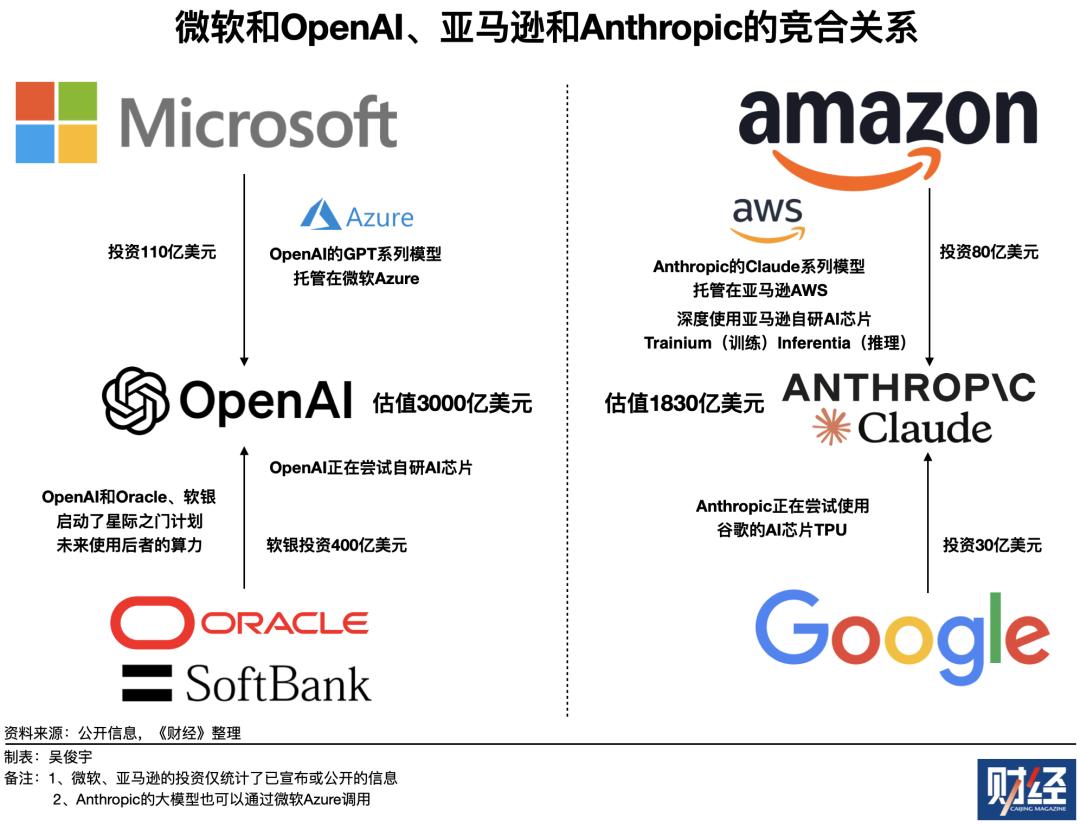
Group 1 - The AI competition has evolved into a power struggle over technological supremacy for the next decade, with no permanent alliances, only capital and interests [1][10][48] - The current landscape features two main camps: OpenAI and Anthropic as the leading AI startups, supported by tech giants Microsoft and Amazon, which dominate over 60% of the cloud market [1][2][10] - OpenAI and Anthropic have recently completed significant funding rounds, becoming the third and fourth largest unicorns globally, with valuations of $300 billion and $183 billion respectively [1][2] Group 2 - Microsoft has invested over $13 billion in OpenAI, which has led to a strategic partnership where Microsoft provides the necessary computing power and integrates OpenAI's models into its products [2][14][43] - Amazon has invested $8 billion in Anthropic, establishing a strategic alliance that promotes Anthropic's models to its customers and utilizes Amazon's AWS for model training [2][14][26] - The collaboration between OpenAI and Microsoft has significantly boosted Azure's revenue, with predictions that Azure's revenue will exceed $100 billion by 2025, driven by OpenAI's cloud spending [14][15][22] Group 3 - Anthropic has rapidly grown to become a strong competitor to OpenAI, focusing on enterprise-level solutions and achieving a 400% revenue growth in a short period [26][27][31] - Anthropic's strategy includes a "multi-cloud" approach, allowing clients to deploy its models across various cloud platforms, which enhances its appeal to enterprise customers [34][35] - The competition between Microsoft and Amazon is intensifying, with both companies seeking to solidify their positions in the cloud computing and AI markets [26][39][47] Group 4 - The partnerships between these companies are not without challenges, as both OpenAI and Anthropic have governance structures that limit the influence of their larger partners [43][44] - There are indications that Microsoft and OpenAI's relationship may be weakening, as Microsoft seeks to develop its own models and reduce reliance on OpenAI [45][46] - Amazon's future competitiveness may hinge on the success of its self-developed AI chips, which are crucial for supporting Anthropic's growth and maintaining AWS's market position [42][47]


马云被曝全面回归阿里,公司市值再突破3万亿
Sou Hu Cai Jing· 2025-09-19 11:58
Core Viewpoint - Alibaba's founder Jack Ma is making a strong return, significantly increasing his involvement in the company's strategic decisions, particularly in artificial intelligence and competition against rivals like JD.com and Meituan [2][5]. Group 1: Strategic Focus - Jack Ma's participation in Alibaba's decision-making has reached its highest level in five years, focusing on AI and direct competition with key e-commerce and local service competitors [2]. - The company is investing 500 billion yuan to subsidize instant retail and local services, aiming to capture market share from JD.com and Meituan [2][8]. - Alibaba is undergoing a strategic refocus, divesting non-core assets to concentrate resources on key business areas, including the sale of its stakes in Intime Retail and Yonghui Superstores [5][6]. Group 2: Leadership Changes - The leadership structure has been adjusted, with a reduction in the partner team from 26 to 17 members, indicating a shift in management dynamics [6]. - Jiang Fan has joined the partner committee, becoming a key figure next to CEO Wu Yongming, reflecting a significant change in the company's core management [6]. Group 3: AI and Technology Investments - Alibaba plans to invest 3.8 trillion yuan over the next three years to build cloud computing and AI hardware infrastructure [6]. - The company has signed a contract to provide 1,024 devices and 16,384 computing cards for the China Unicom Sanjiangyuan Green Power Intelligent Computing Center project, becoming the largest computing power supplier for this initiative [7]. Group 4: Market Performance - Alibaba's stock price surged over 3% on September 17, reaching a nearly four-year high, with a total market value exceeding 3 trillion HKD and a year-to-date increase of over 96% [9][10].

美股科技股猛跌!中概股集体飘红,全球市场差距咋这么大
Sou Hu Cai Jing· 2025-09-19 11:53
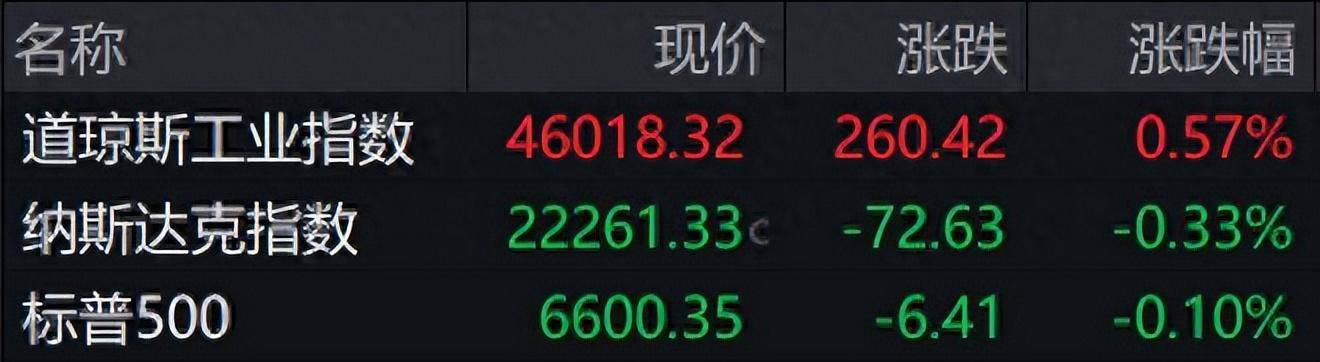
Market Overview - The global financial market exhibited a "divided" trend, with the Dow Jones Industrial Average slightly up by 0.57%, while the Nasdaq and S&P 500 fell by 0.33% and 0.10% respectively, highlighting a significant disparity in performance among major tech stocks [1][3] - Chinese assets, in contrast, saw a strong performance, with the Nasdaq Golden Dragon China Index surging by 2.8%, and Baidu experiencing a gain of over 11% [1][3] Federal Reserve Actions - The Federal Reserve's recent decision to lower the benchmark interest rate by 25 basis points to a range of 4.00%-4.25% has had a profound impact on global markets [3] - The Fed's acknowledgment of rising risks in the employment sector marks a shift from its previous stance on a strong job market, indicating a cautious outlook on the economic future [3] Economic Data - Recent U.S. economic data revealed a decline in new housing starts to an annualized rate of 1.3 million units, a 3.7% drop from July, and building permits fell from 1.362 million to 1.312 million, the lowest since May 2020 [4][3] - The weak housing data has raised concerns among investors about a potential economic slowdown, overshadowing the positive effects of the Fed's rate cut [4][3] Policy Developments - The Chinese government is set to introduce a series of policy measures aimed at boosting the service sector, including high-quality development in the accommodation industry and integration of rail and tourism [5] - The Ministry of Industry and Information Technology is seeking public input on mandatory national standards for intelligent connected vehicles, which could enhance safety in the automotive sector [6] Industry News - CATL announced that it will begin mass supply of sodium-ion batteries for passenger vehicles next year, which offer a range of over 500 kilometers and are expected to meet over 40% of domestic passenger vehicle market demand [6][14] - Major tech events, such as Huawei's Connect 2025 and Meta Connect 2025, are anticipated to unveil significant advancements in AI, cloud computing, and smart vehicles, potentially influencing the tech industry [9][11] Investment Insights - Analysts suggest that the current economic stability and the Fed's rate cut cycle could provide a favorable environment for market sentiment and capital inflow, with expectations of a potential upward trend in A-shares and economic performance [11] - There are indications of a shift in market focus, with low-positioned sectors like semiconductor manufacturing and smart driving showing signs of recovery, while high-positioned sectors may face profit-taking pressures [11]


市北高新:全力打造市北高新园区“产业集聚、企业集群、功能集成”新型楼宇经济格局
Quan Jing Wang· 2025-09-19 10:12
Group 1 - The core viewpoint of the article emphasizes the company's commitment to enhancing investor communication and its strategic focus on industrial investment in key technology sectors such as cloud computing, big data, artificial intelligence, and blockchain [1][2] - The company aims to create a comprehensive industrial investment service system that integrates policy, space, investment, and ecology, supporting the entire lifecycle of industrial investment [1] - The company operates the Shibei High-tech Park as a core area for Shanghai's global innovation center and international digital city, with local government policies aimed at attracting data intelligence enterprises [2] Group 2 - The company is focused on industrial recruitment strategies that leverage the advantages of the "Central Ring Digital Industry Innovation Belt," aiming to create a new economic pattern characterized by industrial aggregation, enterprise clusters, and functional integration [2] - The company has established seven service platforms and fifteen one-stop service windows within the Shibei High-tech Park to provide comprehensive support for entrepreneurial guidance, project validation, policy connection, financing, and capital market services [1]

新媒股份:公司聚焦打造“互联网新视听头部平台”的战略目标
Zheng Quan Ri Bao Zhi Sheng· 2025-09-19 10:09
Core Viewpoint - The company aims to establish itself as a leading platform in the "Internet New Audio-Visual" sector through technological innovation and market-driven strategies [1] Group 1: Strategic Focus - The company is focused on developing a "head platform" in the Internet New Audio-Visual space [1] - The strategic goal includes leveraging technological advancements such as ultra-high definition, artificial intelligence, cloud computing, and big data [1] Group 2: Talent Acquisition and Team Stability - The company is actively promoting market-oriented mechanisms to attract professional talent [1] - Competitive compensation and incentive mechanisms are being implemented to ensure team stability and high morale [1] Group 3: Sustainable Development - The company is committed to achieving sustainable and healthy development through its strategic initiatives and talent management [1]

数读“十四五”期间生态环境成绩单“含绿量” 高质量发展有“智”更有“质”
Yang Shi Wang· 2025-09-19 07:49
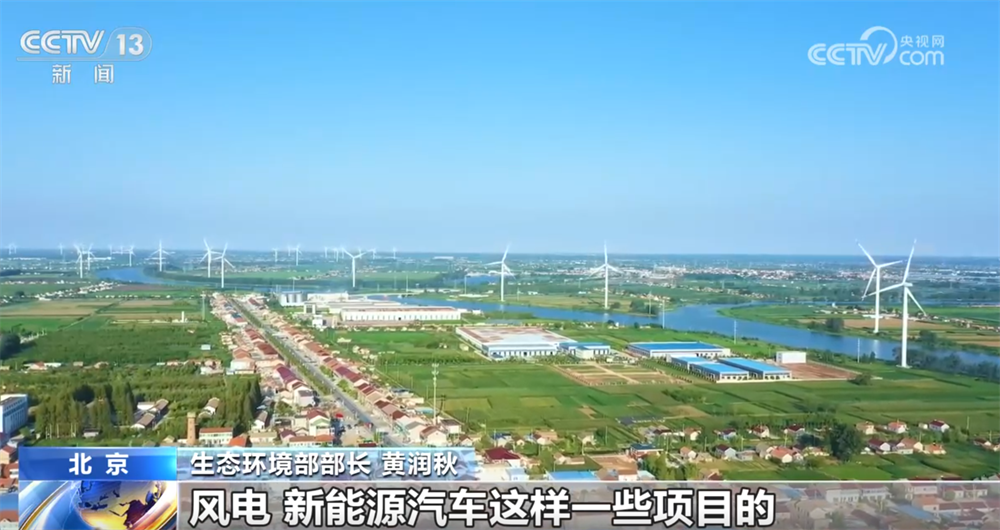
Core Viewpoint - The Chinese government is actively promoting high-quality development through environmental protection policies, focusing on reducing high-emission and high-pollution projects while increasing investments in clean energy and high-tech industries [1][3]. Group 1: Environmental Policy and Development - The number of environmental impact assessments (EIAs) for high-emission and high-pollution projects has been decreasing, while those for wind power and electric vehicles have increased by 44.4% and 31.3% respectively in the first half of 2025 compared to the previous year [1]. - Since the beginning of the 14th Five-Year Plan, 14,600 EIA documents for high-tech electronic information manufacturing projects have been approved, involving a total investment of 6.28 trillion yuan [1]. Group 2: Emission Standards and Green Transformation - A total of 32 emission standards have been revised to promote green transformation in key industries, resulting in 198 million tons of coking capacity and 110 million tons of cement clinker capacity achieving ultra-low emissions [3]. Group 3: Technological Innovation and Green Development - Over 5,000 outstanding technological achievements have been gathered to assist enterprises in achieving green and low-carbon development, contributing to the establishment of the world's largest clean steel production system [5]. Group 4: Environmental Monitoring and Automation - China has built the world's largest ecological environment monitoring network, with 33,000 monitoring stations covering all cities at the prefecture level and above, as well as key watersheds and marine areas [7]. - The monitoring process has been automated, enhancing the precision, comprehensiveness, and timeliness of data collection [8]. Group 5: Smart Law Enforcement and Problem Rectification - A smart law enforcement system has been established, leading to the rectification of over 260,000 environmental issues during the 14th Five-Year Plan [14]. - The use of advanced technologies such as satellite remote sensing and drones has enabled a non-intrusive, integrated problem discovery mechanism across various environments [15]. Group 6: Improvement in Detection and Compliance - The accuracy of identifying pollution sources has improved from 40% to 85%, and the problem detection rate for vehicle inspection institutions has decreased from 53% to 6.9% [17]. - Despite a 30% reduction in on-site inspections from January to August this year, the problem discovery rate has increased by 10-25 percentage points [19].
降息落地后,港股AI牛还有多少空间?
Xin Lang Ji Jin· 2025-09-19 05:56
Core Viewpoint - The Hong Kong stock market, particularly the technology sector, is experiencing volatility with mixed performances among major tech companies, while the Hong Kong Internet ETF (513770) shows significant trading activity and potential for growth in the AI sector [1][3][6]. Group 1: Market Performance - The Hong Kong Internet ETF (513770) saw a price increase of over 2% before retreating, indicating market divergence, with a trading volume exceeding 700 million yuan [1]. - The Hang Seng Index and Hang Seng Tech Index have reached four-year highs, with historical analysis suggesting that the current market cycle has room for further growth [2][3]. - The Hong Kong Internet ETF has outperformed the Hang Seng Tech Index by over 15 percentage points in terms of cumulative gains this year [7]. Group 2: AI and Technology Sector - The AI narrative in the Hong Kong market is gaining traction, with major players like Alibaba and Tencent making significant advancements in AI capabilities [3][6]. - The Chinese cloud computing market is projected to exceed 400 billion yuan by 2025, benefiting cloud service providers like Tencent Cloud and Alibaba Cloud [3]. - The valuation of the Hong Kong technology sector is notably lower compared to its US and A-share counterparts, presenting a potential investment opportunity [4]. Group 3: ETF Composition and Performance - The Hong Kong Internet ETF is heavily weighted towards major tech companies, with Tencent and Alibaba accounting for 15.61% and 13.37% of the ETF, respectively [6][7]. - The ETF's underlying index, the CSI Hong Kong Internet Index, has a PE ratio of 25.55, which is at a historical low compared to the past decade [4]. - The ETF has reached a record size of over 11 billion yuan, with an average daily trading volume of nearly 600 million yuan this year [8].