具身智能体

Search documents
多空双方围绕60日均线争夺
Chang Sha Wan Bao· 2025-12-02 05:31
Market Overview - The three major indices opened lower, with the Shanghai Composite Index down 0.14%, the Shenzhen Component down 0.13%, and the ChiNext down 0.04% [1] - Trading volume in the Shanghai and Shenzhen markets exceeded 560 billion, a decrease of over 60 billion compared to the previous day, with an expected total trading amount of over 1.7 trillion for the day [1] Industry Insights - The AI mobile phone concept is actively fluctuating, while the commercial aerospace concept is recovering, and the real estate sector is strengthening [1] - According to a report by CRIC Real Estate Research, the supply of new properties in 30 key cities in November is expected to reach 6.69 million square meters, a month-on-month increase of 16% [1] - In the first batch of sci-tech innovation and entrepreneurship robot ETFs, more funds are expected to flow into the robotics sector, boosting market performance [2] - The CEO of Google DeepMind expressed intentions to make Gemini the software foundation for the robotics world, indicating further investment in embodied robotics [2] Product Development - ZTE announced the limited release of the Nubia M153, which features the Doubao mobile assistant technology, aimed at developers and interested users [3] - The Doubao mobile assistant, led by ByteDance, enhances user interaction and experience through AI capabilities integrated into mobile devices [3] - The development of AI on mobile devices is expected to drive hardware upgrades, potentially leading to a new wave of device replacements [3] Technical Analysis - The market experienced a rebound, with the Shanghai Composite Index returning above 3900 points and trading volume reaching nearly 1.87 trillion [4] - The current rebound is approaching a previous gap and a key resistance level, suggesting a likely consolidation phase [4] - The AI sector is experiencing significant growth, indicating a potential recovery in technology stocks, while sectors like innovative pharmaceuticals and non-ferrous metals remain worth monitoring [4]

A股12月开门红!2000亿龙头今年第二次收盘涨停
Sou Hu Cai Jing· 2025-12-02 01:45
Market Overview - The market experienced a significant rebound on December 1, with the Shanghai Composite Index surpassing 3900 points, closing up 0.65%, while the Shenzhen Component and ChiNext Index rose by 1.25% and 1.31% respectively [1][3] - Nearly 3400 stocks in the market saw gains, with total trading volume reaching 1.87 trillion yuan, an increase of 288.1 billion yuan compared to the previous trading day [1][2] Sector Performance - The consumer electronics and non-ferrous metals sectors led the gains, while internet e-commerce, insurance, and battery sectors faced declines [1] - The electronic sector saw a net inflow of over 70 billion yuan in the past five trading days, significantly outperforming the second-ranked communication sector, which had a net inflow of nearly 40 billion yuan [5][6] Key Stocks and Trends - ZTE Corporation's stock hit the daily limit, indicating strong market interest, with trading volume exceeding 10 billion yuan [4][8] - The AI smartphone concept stocks surged, contributing to the overall activity in the consumer electronics sector, which includes smart speakers, wireless earphones, and AI glasses [5][6] Investment Opportunities - The recent announcement from six departments regarding the promotion of consumption in key industries, including smart connected vehicles and consumer electronics, is expected to drive further investment in these sectors [6] - The introduction of the "Doubao Phone Assistant" by ByteDance, which integrates AI capabilities into smartphones, is anticipated to enhance user experience and drive hardware upgrades, potentially leading to a new wave of device replacements [7] Box Office and Film Industry - The film "Zootopia 2," released by China Film, achieved a total box office of 1.913 billion yuan within five days, breaking multiple records and indicating a recovery in the film industry [14] - Analysts suggest that the combination of box office recovery and AI technology will create structural upgrade opportunities in the film sector, with a focus on technology-driven content companies and those involved in IP derivatives and short drama businesses [14]

字节跳动否认自研手机,中兴通讯A股H股大涨
2 1 Shi Ji Jing Ji Bao Dao· 2025-12-01 13:24
Core Insights - ByteDance is redefining the concept of mobile phones by introducing the Doubao mobile assistant, which integrates AI capabilities at the operating system level rather than as a standalone application [2][4] - The Doubao mobile assistant is designed to be a system-level intelligent agent that can understand screen content and perform complex tasks autonomously, marking a significant shift in user interaction with mobile devices [4][9] Product Development - The Doubao mobile assistant is currently in a technical preview phase and is being integrated into various smartphone brands through partnerships, with ZTE's nubia M153 being the first model to feature it [2][4] - The assistant allows users to interact seamlessly through voice commands and dedicated AI keys, enhancing the user experience by embedding common functionalities like voice and video calls [4][5] Market Impact - Following the announcement of the Doubao mobile assistant, ZTE's stock price surged, indicating strong market confidence in the collaboration between AI models and hardware manufacturing [5][8] - The global smartphone market is experiencing a slowdown, with growth projected to drop to 1.5% by 2025, making AI functionality a critical differentiator for smartphone manufacturers [8][9] Strategic Direction - ByteDance aims to avoid the competitive landscape of hardware manufacturing by focusing on deep integration with operating systems, thereby defining the next generation of human-computer interaction [8][9] - The company's strategy is to leverage its existing AI capabilities and user understanding to transform mobile operating systems into proactive intelligent agents, rather than passive resource managers [9]

字节跳动否认自研手机,中兴通讯A股H股大涨
21世纪经济报道· 2025-12-01 13:18
Core Viewpoint - ByteDance is redefining the concept of mobile phones by introducing the Doubao mobile assistant, which integrates AI capabilities deeply into the operating system, moving beyond traditional standalone AI applications [2][4]. Group 1: Doubao Mobile Assistant Launch - The Doubao mobile assistant was released on December 1, 2023, as a technical preview, built on the Doubao app and developed in collaboration with mobile manufacturers [2]. - ByteDance has no plans to develop its own mobile phones but is negotiating with multiple manufacturers to integrate the Doubao assistant into various brand models [2][4]. - The first engineering sample, nubia M153, developed in partnership with ZTE, features the Doubao assistant and is priced at 3499 yuan [2]. Group 2: AI Integration and Capabilities - The Doubao assistant represents a significant shift from being a limited voice tool to a "system-level intelligent agent" that can understand screen content and perform complex tasks autonomously [4]. - Users can activate the assistant through voice commands or a dedicated AI key, allowing seamless interaction across different applications [4]. - The assistant's capabilities include multi-modal functions and integration with the system's native photo gallery, enabling users to issue voice commands for photo editing [4]. Group 3: Market Impact and Strategic Positioning - Following the announcement, ZTE's stock price surged, reflecting market optimism about the collaboration between AI models and hardware manufacturing [6]. - The introduction of AI capabilities is seen as a key differentiator for mobile manufacturers, with major players like Apple and Samsung developing their own AI strategies [9]. - ByteDance's approach contrasts with traditional manufacturers by focusing on embedding AI capabilities at the operating system level, aiming to redefine user interaction and ecosystem standards [9][10]. Group 4: Future Outlook and Industry Trends - The global smartphone market is expected to slow down, with growth projected at only 1.5% by 2025, increasing the importance of differentiated AI functionalities for manufacturers [8]. - Analysts suggest that ByteDance's strategy leverages its existing strengths in user engagement and data understanding to transition into the next generation of computing platforms [9]. - The ultimate goal is for AI to become the "soul" of the smartphone, transforming the operating system into an intelligent agent that actively manages hardware and services [10].

字节跳动否认自研手机,合作方中兴通讯强势涨停
2 1 Shi Ji Jing Ji Bao Dao· 2025-12-01 10:41
Core Insights - ByteDance is redefining the concept of mobile phones by introducing the Doubao mobile assistant, which integrates AI capabilities at the operating system level rather than as a standalone application [1][2] - The Doubao mobile assistant represents a significant breakthrough in ByteDance's hardware ecosystem strategy, allowing for seamless interaction and deep integration with mobile devices [2][3] Group 1: Product Development - The Doubao mobile assistant is being developed in collaboration with multiple smartphone manufacturers, with no plans for ByteDance to produce its own hardware [1][3] - The first engineering sample, the nubia M153, has been released in partnership with ZTE, featuring the Doubao mobile assistant at a price of 3499 yuan [1][2] Group 2: Market Impact - Following the announcement of the Doubao mobile assistant, ZTE's stock price surged, hitting the upper limit in A-shares and increasing over 13% in H-shares, indicating strong market confidence in the collaboration [2][3] - The introduction of AI capabilities is seen as a key differentiator for smartphone manufacturers in a slowing global market, with predictions of a growth slowdown to 1.5% by 2025 [6][7] Group 3: Strategic Vision - ByteDance aims to penetrate the operating system layer to redefine human-computer interaction and establish a strategic advantage in the future AI ecosystem [6][7] - The company's strategy focuses on leveraging its existing AI capabilities and understanding of user intent to create a more integrated and intelligent mobile experience [7]
港股速报|港股12月开门红 利好刺激 中兴通讯H股大涨13%
Mei Ri Jing Ji Xin Wen· 2025-12-01 10:11
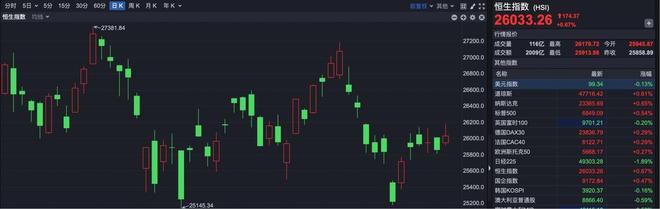
Market Performance - The Hong Kong stock market opened positively in December, with the Hang Seng Index recovering above the 26,000-point mark, closing at 26,033.26 points, up 174.37 points, a gain of 0.67% [1] - The Hang Seng Tech Index closed at 5,644.76 points, increasing by 45.65 points, a rise of 0.82% [3] Focus Companies - ZTE Corporation's H-shares rose over 13%, while its A-shares hit a 10% limit up. This surge is attributed to positive news regarding the launch of the Nubia M153, which features the Doubao mobile assistant technology [5] - The development of AI on mobile devices is expected to drive hardware upgrades, potentially leading to a new wave of smartphone replacements [6] Sector Performance - The consumer electronics sector showed strong performance, with Sunny Optical Technology rising over 6%, and Lens Technology and Q Technology both increasing by over 4% [6] - Technology stocks performed well overall, with Alibaba up over 2%, NetEase nearly 4%, and Baidu up over 1%. However, Xiaomi and Meituan saw declines of over 1% and 2%, respectively [6] - Gold and non-ferrous metal stocks experienced broad gains, with Jiangxi Copper rising over 10% and China Gold International up over 11% [6] - Cryptocurrency-related stocks faced significant declines, with Sparkle Tech Holdings down over 9% and OK Blockchain Chain down over 8% [6] Capital Flow - Southbound funds recorded a small net purchase of Hong Kong stocks, with a cumulative net buy exceeding 2.1 billion HKD by the end of the trading day [7] Market Outlook - According to a report from CMB International, the market is shifting focus from external factors to internal policies, with expectations for a year-end rally in December. Attention is on the upcoming Central Economic Work Conference [9] - Some institutions remain optimistic about dividend assets in the Hong Kong market, viewing them as a "safe haven" amid market fluctuations [9] - Short-term recommendations suggest focusing on dividend/defensive sectors while also considering consumer sectors benefiting from policies and technology sectors with valuation corrections [9]
A股收评:12月开门红!沪指收复3900点,消费电子、有色金属股爆发
Ge Long Hui· 2025-12-01 07:51
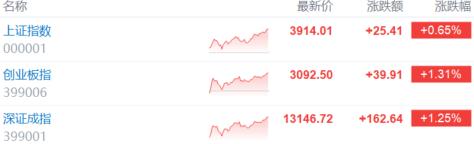
Market Overview - On the first trading day of December, A-shares opened higher, with the Shanghai Composite Index returning above 3900 points [1] - By the close, the Shanghai Composite Index rose by 0.65% to 3914 points, the Shenzhen Component Index increased by 1.25%, and the ChiNext Index gained 1.31% [2] Trading Volume and Market Performance - The total market turnover reached 1.89 trillion yuan, an increase of 291.7 billion yuan compared to the previous trading day, with nearly 3400 stocks rising [3] Sector Performance - AI mobile phones, Honor concepts, and consumer electronics sectors saw collective gains, while satellite internet stocks strengthened [4] - Notable sectors with significant gains included smart wearables, electronic chemicals, blind box economy, precious metals, and star flash concepts [4] - Conversely, the power equipment sector declined, and the titanium dioxide sector opened high but closed low, with AI corpus, tax refund stores, and state-owned cloud concepts experiencing notable declines [4] Key Stocks - Consumer electronics stocks surged, with AI mobile phones and AI glasses leading the charge. Companies like Furong Technology, ZTE, and Daoming Optics saw significant increases [6][7] - Precious metals and non-ferrous metals stocks also performed well, with Jiangxi Copper rising over 9% amid expectations of interest rate cuts by the Federal Reserve [8] - Airline and shipping stocks showed strong performance, with China National Aviation and China Merchants Industry experiencing notable gains [9] Industry Insights - The livestock sector faced declines, with companies like Wens Foodstuffs and Muyuan Foods dropping over 2%. Analysts suggest that the industry is entering a loss phase, which may lead to a long-term increase in pork prices due to capacity adjustments [10] - E-commerce stocks faced downward pressure, with Xinghui Co. and Xinxinda experiencing significant declines following the announcement of new regulations on live e-commerce [11] Future Outlook - Analysts from CITIC Securities believe that the slow bull market remains unchanged, with potential for early spring rallies in 2024. Key sectors to focus on include technology growth and resource products [12]
端侧AI再迎催化!豆包发布手机助手预览版,消费电子50ETF(159779)冲击两连涨
2 1 Shi Ji Jing Ji Bao Dao· 2025-12-01 05:57
Group 1 - The consumer electronics sector is experiencing a resurgence, with the Consumer Electronics 50 ETF (159779) rising by 1.46%, marking two consecutive days of gains [1] - Notable stocks within the sector include Beijing Junzheng and Transsion Holdings, both rising over 10%, while companies like Lingyi iTech, Lens Technology, and Zhaoyi Innovation saw increases of nearly 5% [1] - The launch of the Doubao APP mobile assistant, an AI tool that integrates with smartphone operating systems, is expected to enhance user interaction through voice commands and is being developed in collaboration with multiple smartphone manufacturers [1] Group 2 - Dongwu Securities highlights that the development of AI on mobile devices is driving hardware upgrades, potentially leading to a new wave of smartphone replacements [2] - The evolution of on-device large models is shifting AI from a mere interactive tool to an "embodied intelligent agent," expanding its application from voice assistance to multimodal understanding and personalized productivity tasks [2] - The Consumer Electronics 50 ETF (159779) tracks the CSI Consumer Electronics Theme Index, which includes leading companies in AI smartphones and AIPC, with top holdings such as Luxshare Precision, SMIC, and Cambrian [2]
新统计口径下的广东汽车:产业竞争力升维大势不改
2 1 Shi Ji Jing Ji Bao Dao· 2025-10-30 15:15
Core Insights - The automotive industry in China has become a key economic pillar, contributing approximately 10% to the national GDP, with production exceeding 20 million vehicles in the first eight months of the year, reflecting double-digit growth year-on-year [2] - Guangdong province, while ranking second in vehicle production with 1.7769 million units, is transitioning from being the largest production province to becoming a major player in the automotive industry through innovation and technology [2][5] Statistical Adjustments - The National Bureau of Statistics has changed the method of calculating local automotive production from "enterprise legal person location" to "production location," impacting the reported production figures for provinces [3][4] - This adjustment has led to fluctuations in production data, particularly affecting Guangdong, which has seen its ranking drop despite ongoing growth in its automotive sector [4] Industry Competitiveness - The shift in statistical methodology aims to better align with the construction of a unified national market and provides a more comprehensive view of regional automotive competitiveness [5] - Guangdong's automotive industry is evolving from a production-focused model to one that emphasizes industry output, similar to trends observed in the automotive sectors of the US, Japan, Germany, and South Korea [5] Technological Advancements - Guangdong has established a complete industrial chain in the smart connected vehicle sector, including manufacturers, autonomous driving tech companies, and key suppliers, positioning itself as a leader in this field [6] - The province is focusing on five key areas: computing chips, AI models, AI vehicles, AI robots, and flying cars, leading to significant advancements in technology and commercial applications [8] Global Expansion - Leveraging its geographical advantages, Guangdong is increasingly exporting its automotive industry competitiveness globally, with companies like Xpeng and BYD initiating localized production in Europe and Japan [10] - This trend indicates a significant shift in Guangdong's automotive industry as it enters a new competitive phase, enhancing its influence and presence in international markets [10]



全球首个具身智能开放平台来了!让大模型长出“身体”,像人一样自然表达交互
量子位· 2025-10-29 09:30
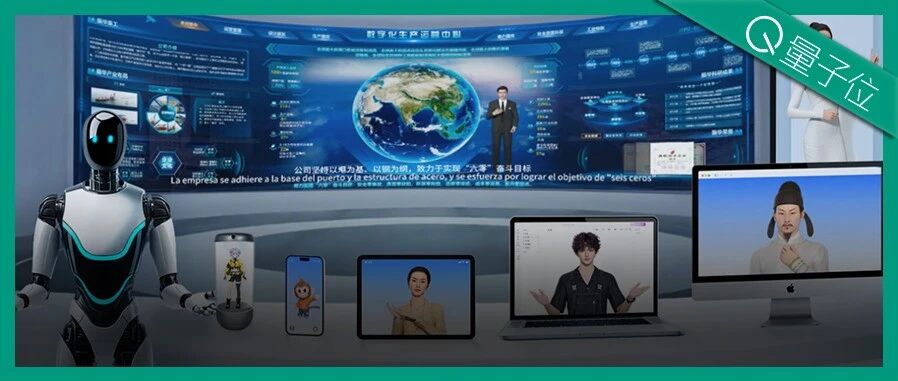
Core Viewpoint - The article emphasizes the expansive potential of embodied intelligence beyond current robotic applications, highlighting the launch of the "Mofa Cloud" platform by Mofa Technology, which enables 3D digital humans to interact naturally with users [1][3][5]. Summary by Sections Introduction to Embodied Intelligence - The concept of embodied intelligence is linked to the development of digital humans, which can enhance interaction capabilities in various applications [2][4]. Mofa Cloud Platform - Mofa Technology has introduced the "Mofa Cloud" platform, the world's first infrastructure for embodied intelligence, aimed at developers [3][4]. - This platform allows large language models to gain physical presence, enabling robots to express emotions and actions naturally [5][6]. Key Features of Mofa Cloud - The platform boasts an end-to-end latency of less than 1.5 seconds, supports millions of concurrent users, and can operate on low-cost computing architectures [6][28]. - It generates real-time 3D digital human expressions, voice, and gestures based on text input, facilitating seamless multimodal interactions across various devices [8][12]. Applications of Mofa Cloud - Mofa Cloud serves three main application directions: enhancing AI models with physical expression, upgrading screens to embodied intelligent interfaces, and enabling humanoid robots to communicate naturally [11][12][15]. - It can be deployed in settings like hotels and government offices for roles such as reception and guidance, providing 24/7 service [17][18]. Developer Accessibility - The platform supports SDK and API integration, allowing developers to embed its capabilities into any terminal or application, creating interactive AI companions [20][34]. Overcoming Challenges - Mofa Cloud addresses the challenges of creating high-quality, low-latency, and cost-effective digital humans, breaking the "impossible triangle" of quality, cost, and scalability [23][27]. - The platform utilizes a cloud-edge architecture that minimizes bandwidth and computational requirements, making it adaptable to various systems and devices [28][30]. Unique Positioning - Unlike traditional digital human platforms, Mofa Cloud focuses on driving interaction rather than merely generating content, allowing for real-time responses and emotional engagement [36][40]. - It integrates the capabilities of digital humans with large models, creating a new category of embodied intelligent agents that enhance human-computer interaction [43][55]. Future Implications - The launch of Mofa Cloud signifies a shift in how embodied intelligence is perceived, emphasizing the importance of physical presence in AI interactions [56][58].