
半导体制造

Search documents
行业聚焦:全球硅-28行业头部生产商市场份额及排名调查
QYResearch· 2026-01-19 04:50
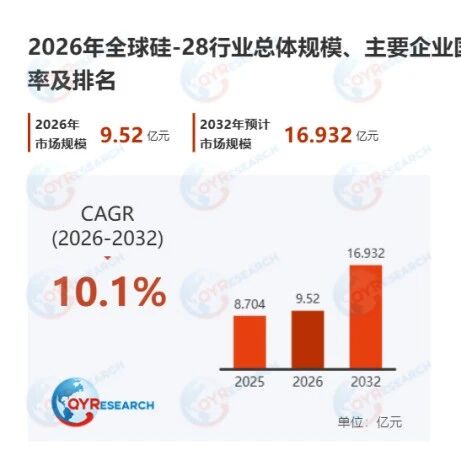
Core Viewpoint - The article discusses the significance of Silicon-28 as a stable isotope with high purity, its production processes, and its applications in advanced technologies, particularly in quantum computing and semiconductor manufacturing [2][3][4][5]. Group 1: Production and Purification - Silicon-28 is produced through complex and energy-intensive isotope separation techniques, primarily from natural silica, with only a few global institutions capable of large-scale purification [3]. - The production process involves converting silica into silane gas and then using high-speed centrifuges to separate isotopes based on their slight mass differences [3]. - The high purity Silicon-28 is essential for creating functional materials, particularly single crystals, which require stringent control over crystal defects and purity [3]. Group 2: Applications - The primary application of Silicon-28 is in quantum computing, specifically for constructing spin qubits, leveraging its unique nuclear spin properties for precise control of electron states [4]. - Silicon-28's stable lattice structure also shows potential in high-precision sensors and next-generation low-power semiconductor devices [4]. - The demand for Silicon-28 has shifted from niche research to a stable and scalable market driven by the needs of advanced semiconductor manufacturing [5]. Group 3: Market Dynamics - The global Silicon-28 market is projected to reach $230 million by 2031, with a compound annual growth rate (CAGR) of 10.7% in the coming years [7]. - Currently, the semiconductor industry accounts for approximately 84.4% of the demand for Silicon-28, indicating its critical role in this sector [12]. - The market is characterized by a shift from a few dominant players to a more competitive landscape, enhancing supply chain resilience and promoting technological advancements [5][9]. Group 4: Challenges and Opportunities - The high production costs and energy requirements for Silicon-28 isotope separation pose significant barriers to entry for potential users [16]. - Geopolitical factors and the strategic importance of Silicon-28 have led to a focus on supply chain security, prompting countries to support domestic production capabilities [17]. - The evolving landscape presents opportunities for new entrants and related industries, as demand for high-purity Silicon-28 substrates is expected to grow significantly [17].

IPO上会在即!中科仪累计分红2.4亿!
Guo Ji Jin Rong Bao· 2026-01-14 06:35
Core Viewpoint - China Academy of Sciences Shenyang Instrument Co., Ltd. (referred to as "Company") is preparing for its IPO on the Beijing Stock Exchange, with a review by the listing committee scheduled soon, and has shown growth in revenue despite a slight decline in gross margin [1][5]. Company Overview - The Company was established in 2001 and is a provider of core components for semiconductor manufacturing equipment and vacuum scientific instruments, controlled by China Academy of Sciences Holdings Co., Ltd. [2] - The Company specializes in dry vacuum pumps and vacuum scientific instruments, primarily serving the integrated circuit wafer manufacturing and photovoltaic battery sectors [2]. - The Company has three national-level R&D platforms and has received multiple national science and technology awards, establishing itself as a leader in vacuum technology and scientific instruments in China [2]. Market Position - The Company is the largest domestic manufacturer of dry vacuum pumps in the integrated circuit sector and the only one achieving mass application in advanced processes [3]. - Its products meet the production needs of advanced logic chips and 3D NAND storage, with successful applications in leading domestic wafer manufacturing companies [3]. IPO Details - The Company aims to raise 825 million yuan through the IPO, with funds allocated for industrialization of dry vacuum pumps, expansion of high-end semiconductor equipment, and R&D projects [4]. Financial Performance - Revenue for the Company during the reporting period (2022-2025) was 698 million yuan, 852 million yuan, 1.082 billion yuan, and 574 million yuan, indicating a growth trend [5]. - Net profit figures were 498 million yuan, 600 million yuan, 193 million yuan, and 138 million yuan, with significant fluctuations in net profit due to holdings in listed companies [5]. - The Company distributed a total of 240.5 million yuan in cash dividends over the reporting period, with specific distributions noted in 2023 and 2024 [6]. Gross Margin Analysis - The Company's gross margin showed a slight decline over the reporting period, with figures of 28.66%, 33.02%, 29.44%, and 28.15%, attributed to market competition and price reductions [5][6].
博道基金张建胜: 追求成长但不为高溢价“买单”
Zhong Guo Zheng Quan Bao· 2026-01-13 22:29
Core Viewpoint - The current market equates "investing in technology" with "buying AI," with many investors viewing optical modules as a ticket to the AI market. However, some fund managers, like Zhang Jiansheng from Baodao Fund, adopt a different approach by focusing on growth without chasing extreme hot stocks, achieving significant returns through early-stage investments in various sectors [1][2]. Investment Strategy - Zhang Jiansheng's investment framework emphasizes a "bottom-up, moderately diversified, and balanced growth" approach, with a strong focus on valuation and drawdown control. His cautious risk preference stems from early career experiences during market volatility [2]. - His investment style features distinct left-side trading characteristics, where he sets target market values for companies and gradually sells once stock prices reach predetermined levels, avoiding high premium purchases [2][3]. Market Insights - Zhang believes that leading companies with high market attention and expectations require deep industry knowledge to generate excess returns. He prefers to identify "left-side" targets with lower market attention and reasonable valuations, which helps manage downside risks [3][4]. - His portfolio construction strategy involves limiting single industry holdings to no more than 25%, maintaining a balanced allocation across high-end manufacturing, TMT, and consumer sectors, which aids in drawdown control [3][4]. Valuation Focus - Zhang's emphasis on valuation allows him to uncover opportunities in less popular market segments, such as his early 2024 positioning in the Hong Kong stock market and the 2025 focus on the innovative drug sector, where he aims to profit from valuation recovery [4][5]. - He recognizes that low valuations do not guarantee stock price increases; thus, identifying marginal changes in industry dynamics is crucial. His investment in semiconductor storage reflects a dual assessment of valuation and industry trends [5][6]. 2026 Market Outlook - Zhang maintains an optimistic view of the A-share market, supported by three key factors: a significant decrease in risk premiums, ongoing regulatory support for capital markets, and signs of corporate earnings recovery [6][7]. - In terms of investment focus for 2026, he highlights three areas: AI, particularly in storage and connectivity, resources and high-end manufacturing benefiting from "re-industrialization" and "re-globalization," and valuation recovery opportunities in traditional industries like chemicals and consumer sectors [6][7].
万润股份(002643) - 投资者关系活动记录表20260113
2026-01-13 11:37
Group 1: Financial Performance - The company's revenue for the first three quarters of 2025 increased by approximately 2.31% year-on-year [2] - The net profit attributable to shareholders grew by about 3.27% compared to the same period last year [2] Group 2: Semiconductor Manufacturing Materials - The company has developed over 300 compounds in the semiconductor manufacturing materials sector, achieving a leading position domestically [3] - The new production capacity project at Wanrun Industrial Park (Phase II C05) includes approximately 751 tons of semiconductor photoresist-related materials, with construction expected to be completed by the end of this year [3] Group 3: Solid-State Battery Materials - The laboratory development of lithium sulfide, a key upstream material for solid-state battery electrolytes, has been completed [4] - The pilot production line construction is underway, aiming for completion by the end of June [4] Group 4: Perovskite Products - The company has developed over 100 compounds in perovskite photovoltaic materials, including hole transport layer materials and electron transport layer materials [5] - Although the industry has not yet reached large-scale commercialization, the technology level of downstream perovskite photovoltaic components is continuously improving [5] Group 5: High-Performance Polymers - The company has five main categories of high-performance polymer products, including PEI, TPI, and PEEK, with annual production capacities of 1,500 tons for PEI and over 100 tons for TPI and PI-5218 [5] - The PEEK product is currently in the downstream application verification stage, with an existing annual production capacity of approximately 100 tons [5]

光刻核心材料突围!抗反射涂层(ARC)打破欧美日韩垄断,国产龙头已实现规模化量产
Sou Hu Cai Jing· 2026-01-12 13:45
Core Viewpoint - The demand for anti-reflective coatings (ARC) is expected to grow significantly in China, driven by the rapid development of the semiconductor manufacturing industry and advancements in technology [2][3]. Group 1: Industry Overview - Anti-reflective coatings are functional thin film materials that suppress interface light reflection and enhance light transmittance, primarily used in photolithography processes within the semiconductor manufacturing sector [1]. - The types of anti-reflective coatings include organic and inorganic coatings, top anti-reflective coatings (TARC), bottom anti-reflective coatings (BARC), multi-layer, and single-layer coatings [1]. - BARC is noted for its ability to control reflection at interfaces and effectively reduce standing wave effects, making it widely applicable [1]. Group 2: Market Trends and Projections - According to a report by the New Thinking Industry Research Center, the Chinese chip production is projected to reach 451.4 billion units in 2024, representing a year-on-year growth of 22.2% [2]. - The application of anti-reflective coatings in the chip manufacturing process is crucial for absorbing reflective light generated during photolithography [2]. - The market for anti-reflective coatings in China is expected to expand further as downstream industry conditions improve [2][3]. Group 3: Key Players - Major global producers of anti-reflective coatings include DuPont, Shin-Etsu, JSR, DONGJIN SEMICHEM, and Merck [2]. - In China, leading manufacturers include Hengkun New Materials and Mega Chip Color, with Hengkun New Materials already capable of large-scale production of BARC, leading in sales within the domestic industry [2].
苹果拟2028年首发2亿像素iPhone;马斯克计划建2纳米晶圆厂丨Going Global
创业邦· 2026-01-11 10:56
Key Points - The article discusses significant events in the overseas expansion of companies, including TikTok Shop's new support policies in Southeast Asia and Xiaomi's strategic partnership with AliExpress [3][5] - DeepSeek is set to release its V4 AI model, which is expected to outperform existing models in code generation [10][11] - Alibaba's Qianwen model has seen a surge in downloads, reaching 700 million, making it the most adopted open-source model globally [13][14] - Shenzhen Yunbao Intelligent has submitted an IPO application, aiming to become the first DPU stock in the market [20][21] - Xiaopeng Motors plans to accelerate its global manufacturing layout by 2026, with operations already established in 60 countries [23] - Michael Burry has disclosed his short position on Oracle, citing concerns over the company's business strategy [25] - Elon Musk proposes a revolutionary 2nm chip manufacturing plant, challenging traditional cleanroom designs [26][27] - Apple is planning to introduce a 200-megapixel iPhone by 2028, marking a significant upgrade from its current 48-megapixel camera [28] - Japan is working on a domestic version of the Starlink system to enhance its communication capabilities [30]

台积电的真正瓶颈
3 6 Ke· 2026-01-06 05:13
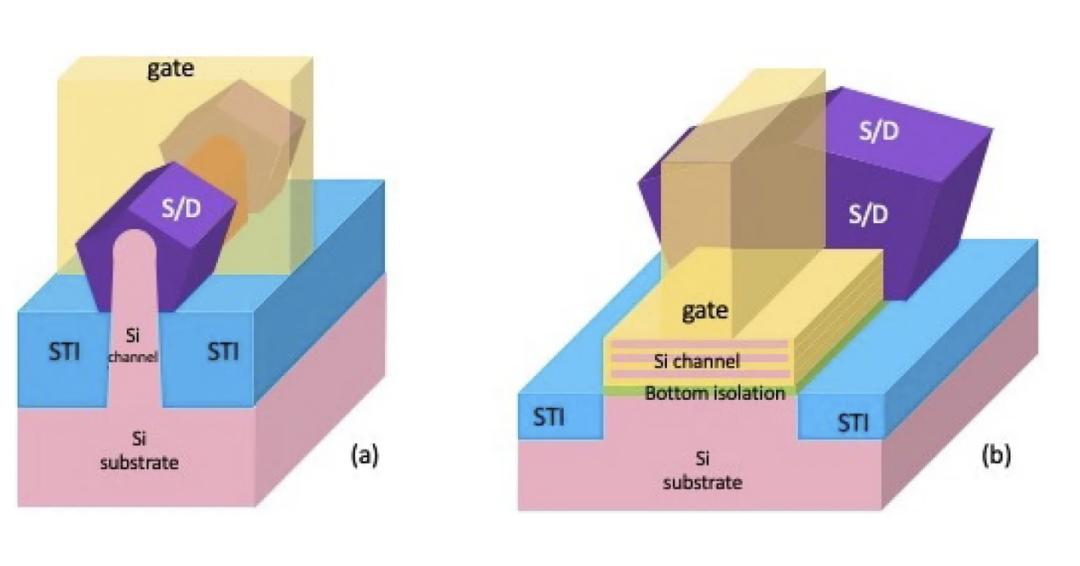
Group 1: TSMC's 2nm Technology - TSMC is set to begin mass production of its 2nm technology in Q4 2025, marking a significant advancement in transistor architecture with the introduction of GAA (Gate-All-Around) transistors, which is the most substantial change since the FinFET technology was introduced in 2011 [1][2] - The 2nm process will enhance wafer production density by 30% to 50%, leading to a prolonged capital expenditure cycle, with SEMI predicting it will reach $156 billion by 2027 [1] - TSMC's N2 technology will provide performance and power efficiency improvements across all process nodes, addressing the growing demand for energy-efficient computing [1][2] Group 2: Performance Metrics - Compared to the 3nm N3E process, TSMC's 2nm technology will increase speed by 10% to 15% at the same power level, while reducing power consumption by 25% to 30% and increasing chip density by over 15% [2] - TSMC plans to launch the N2P process as an extension of the 2nm family, targeting mass production in H2 2026 for applications in smartphones and high-performance computing [2] Group 3: Advanced Packaging Challenges - The real bottleneck in the semiconductor industry is shifting from transistor density to advanced packaging technologies, particularly CoWoS (Chip-on-Wafer-on-Substrate) [3][17] - TSMC's CEO confirmed that supply remains tight and is expected to continue until 2025, with advanced packaging prices increasing by 10-20% annually, while logic wafer prices only rise by 5% [23] Group 4: CoWoS Capacity and Market Dynamics - TSMC is accelerating the expansion of its CoWoS capacity to meet the surging demand for AI chips, with projections for capacity to reach 125K wafers per month by the end of 2026 and further increase to 170K wafers per month by the end of 2027 [24] - NVIDIA is expected to secure over 70% of the CoWoS-L allocation, creating a structural advantage, while other major players like Broadcom and AMD are also vying for the remaining capacity [23][36] Group 5: Future Roadmap and Innovations - TSMC's roadmap includes the introduction of new technologies such as CoPoS (Chip-on-Package-on-Substrate) expected to be implemented post-2027, aimed at improving packaging area utilization and production efficiency [24] - The transition from FinFET to GAA technology signifies a generational shift in semiconductor manufacturing complexity, with a structural demand increase of 30-50% per wafer startup [36]

台积电南京厂,获批!
半导体行业观察· 2026-01-01 01:26
Core Viewpoint - TSMC has received an annual license from the U.S. government to import American chip manufacturing equipment to its factory in Nanjing, China, ensuring uninterrupted operations and product delivery [1] Group 1: TSMC's U.S. Operations - TSMC's new factory in Silicon Valley is projected to incur a loss of nearly 14.3 billion New Taiwan Dollars (NTD) in 2024, making it the most costly overseas facility [2] - The cumulative losses for TSMC's U.S. factory from 2021 to 2023 reached approximately 4 billion NTD, with losses of 4.81 billion NTD in 2021, 9.43 billion NTD in 2022, and 10.924 billion NTD in 2023 [2] - TSMC's chairman stated that the construction of the U.S. factory is entirely based on customer demand, and once completed, it will contribute about 30% of TSMC's 2nm and more advanced production capacity [2] Group 2: TSMC's Nanjing Operations - TSMC's subsidiary in Nanjing reported a profit of 25.954 billion NTD last year, showing a consistent increase from 12.283 billion NTD in 2021, 20.486 billion NTD in 2022, and 21.755 billion NTD in 2023 [2] - Over four years, the total profit from the Nanjing factory exceeded 80 billion NTD, indicating strong performance compared to its U.S. counterparts [2]
中巨芯:与巨化股份及巨化集团续签日常生产经营合同书
Ju Chao Zi Xun· 2025-12-11 11:47
Core Viewpoint - Zhongjuxin (688549.SH) announced the renewal of daily operational contracts with its major shareholder, Zhejiang Juhua Co., Ltd., aiming to standardize related transactions and ensure stable operations [1][3]. Group 1: Contract Details - The renewed daily operational contract will be effective for three years, from January 1, 2026, to December 31, 2028 [3]. - The contract encompasses arrangements for raw material and energy supply, public engineering maintenance services, transportation services, and environmental testing [3]. - The renewal is expected to reduce redundant investments and resource waste while safeguarding the legal rights of all parties involved [3]. Group 2: Company Background - Zhongjuxin was established in 2017 and focuses on electronic chemical materials, including electronic wet chemicals, specialty gases, and precursor materials [3]. - The company's products are widely used in manufacturing sectors such as integrated circuits, display panels, and photovoltaics [3]. - Since its listing on the Shanghai Stock Exchange's Sci-Tech Innovation Board in 2023, Zhongjuxin has been expanding its semiconductor manufacturing support business [3]. Group 3: Strategic Implications - The renewal of the contract is expected to enhance collaboration in raw material and energy assurance, as well as environmental and safety management [3]. - By leveraging Juhua's capacity and advantages in fluorochemical and gas sectors, Zhongjuxin aims to optimize its cost structure and supply chain flexibility [3]. - This strategic move is anticipated to support the expansion and technological upgrades of its electronic wet chemicals and specialty gases businesses [3]. Group 4: Financial Performance - In the first three quarters of 2025, Zhongjuxin achieved a revenue of 881 million yuan, representing a year-on-year growth of 17.56% [4]. - In the third quarter alone, the company reported a revenue of 314 million yuan and a net profit attributable to shareholders of 17.07 million yuan, reflecting year-on-year increases of 12.76% and 152.24%, respectively [4]. - The company plans to continue optimizing its production lines and product structure based on its existing business [4].


趋势研判!2025年中国激光热处理设备行业政策、产业链、市场规模、竞争格局及发展趋势分析:成为先进半导体制造的必要设备,市场规模将保持持续增长[图]
Chan Ye Xin Xi Wang· 2025-12-10 01:36
Core Insights - Laser heat treatment equipment is becoming a necessary investment in advanced semiconductor manufacturing as semiconductor processes continue to evolve [1][5] - The penetration rate of laser technology in China's heat treatment equipment market is 16.01%, significantly lower than the global average of 25.89%, indicating substantial growth potential for the market [4][5] - The market size for China's laser heat treatment equipment is projected to reach approximately $1.519 billion in 2024, with a growth rate of 26.14% compared to 2023, and is expected to reach $1.728 billion in 2025 and $3.296 billion by 2030 [1][5] Industry Overview - Heat treatment is a critical process in semiconductor manufacturing, used for repairing lattice damage, activating impurities, and modifying material crystallization [2][4] - Laser heat treatment is characterized by its strong spatial selectivity, short processing cycles, and high flexibility, making it suitable for the trends of miniaturization and complexity in semiconductor manufacturing [3][4] Market Dynamics - The laser heat treatment equipment market is classified into laser annealing and laser material modification, with high technical barriers and significant R&D investment [4] - The value of heat treatment equipment in the semiconductor market has reached 3%, comparable to other essential processes like ion implantation and cleaning [4] Competitive Landscape - The global and Chinese laser heat treatment equipment market is dominated by foreign companies such as Veeco, Sumitomo Heavy Industries, and Dean Technology, which collectively hold over 80% of the market share [5][8] - Domestic companies like Shanghai Micro Electronics, Huazhuo Precision, and Lepu Technology are gaining market share in China due to their cost advantages and increasing technological capabilities [5][8] Industry Trends - The advantages of laser heat treatment technology become evident as logic chip processes enter below 40nm, making it an essential process below 28nm [15] - The introduction of new materials and structures, such as SiC/GaN and trench-type IGBTs, will provide additional growth opportunities for the laser heat treatment equipment market [15] - The shift towards three-dimensional integration in integrated circuits aligns well with the capabilities of laser heat treatment technology, which offers efficient and precise energy delivery [15]

