双碳引领

Search documents
政策东风催化,化工板块猛攻!化工ETF(516020)上探1.8%,机构:龙头企业有望实现盈利估值双提升
Xin Lang Cai Jing· 2025-12-17 02:07
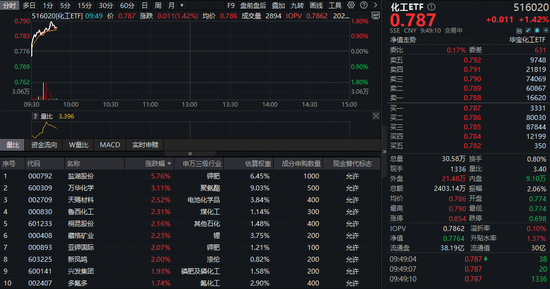
Group 1 - The chemical sector experienced a significant rally on December 17, with the chemical ETF (516020) opening strong and reaching a maximum intraday increase of 1.8%, closing with a gain of 1.42% [1][8] - Key stocks in the sector included Salt Lake Co., which surged over 5%, and Wanhu Chemical, which rose over 3%, along with several others like Tianqi Materials and Luxi Chemical, which increased by more than 2% [1][8] Group 2 - An important meeting held last week outlined major development tasks for the upcoming year, emphasizing "comprehensive governance of 'involutionary' competition," "promoting high-quality development," and "leading green transformation," which may provide ongoing momentum for optimizing the chemical industry landscape [9][10] - According to Dongfang Securities, the focus on "anti-involution" and "high-quality development" will enhance industry competition order, accelerate the exit of outdated capacity, and shift the industry from "quantity-based pricing" to "quality-based competition" [9][10] - The current valuation of the chemical sector is attractive, with the chemical ETF's underlying index price-to-book ratio at 2.33, positioned at the 39.92 percentile relative to the past decade, indicating a favorable long-term investment opportunity [10] Group 3 - Looking ahead, Zhongyin Securities noted that the chemical products' downstream applications span various industries, including real estate, automotive, home appliances, textiles, and agriculture, with expectations for good growth in chemical product demand driven by policies aimed at expanding domestic demand and the rapid development of downstream industries like new energy and AI [11] - The chemical industry is currently at the bottom of the cycle, and the "anti-involution" trend is expected to accelerate the optimization of the competitive landscape, potentially improving profitability and valuations for leading companies [11] - The chemical ETF (516020) tracks the CSI segmented chemical industry theme index, covering various sub-sectors, with nearly 50% of its holdings in large-cap leading stocks, such as Wanhu Chemical and Salt Lake Co., providing an efficient way to capitalize on the rebound in the chemical sector [11][12]

聚焦中央经济工作会议丨中央财办有关负责同志详解2025年中央经济工作会议精神
Xin Hua Wang· 2025-12-16 12:52
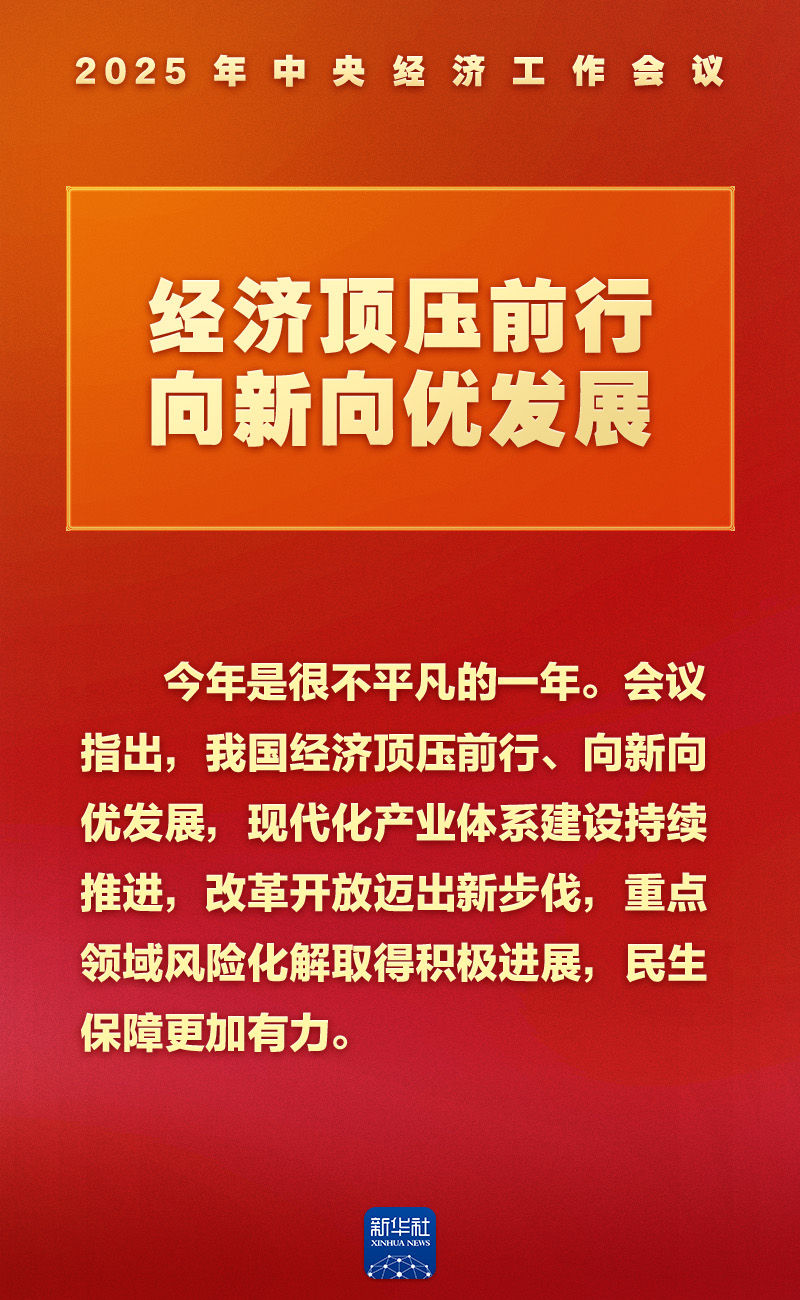
Core Viewpoint - The 2025 Central Economic Work Conference outlines China's economic performance and strategic priorities, emphasizing resilience and innovation in the face of challenges, while setting a roadmap for future growth and stability. Economic Performance and Outlook - The overall economic operation is stable with expected growth around 5% for the year, positioning China among the leading global economies, with a projected GDP of approximately 140 trillion yuan [2] - Employment remains stable, with significant growth in foreign trade and diversified exports [2] - The construction of a modern industrial system is progressing, with advancements in technology and innovation in sectors like AI and biomedicine [2] - Reforms and opening-up measures are advancing, with a focus on creating a unified national market and addressing competitive issues [2] - Risk mitigation in key areas has shown positive results, including the orderly replacement of local government hidden debts and the completion of housing delivery tasks [2] - Social welfare policies, such as childcare subsidies and free education for preschoolers, are being implemented to enhance public welfare [2] Challenges and Strategic Responses - The conference acknowledges ongoing economic challenges, including external environmental changes and domestic supply-demand imbalances [3] - Despite these challenges, China's long-term economic fundamentals remain strong, supported by a large market, complete industrial system, and abundant talent resources [3] - The government plans to continue implementing proactive macroeconomic policies, focusing on quality and efficiency [4][5] Fiscal and Monetary Policy - The fiscal policy will maintain necessary deficits and debt levels while addressing local fiscal difficulties and ensuring sustainable finances [5][6] - Monetary policy will remain moderately accommodative, with a focus on stabilizing economic growth and ensuring liquidity [8][9] Domestic Demand and Investment - Expanding domestic demand is a top priority, with a contribution rate of 71% to economic growth in the first three quarters [9] - The government aims to stimulate consumption by addressing structural changes and enhancing residents' income [9][10] - Investment strategies will focus on infrastructure and social welfare, with an emphasis on high-quality projects and private sector engagement [10] Regional Development and Innovation Centers - The construction of international technology innovation centers in Beijing, Shanghai, and the Guangdong-Hong Kong-Macau Greater Bay Area is a key strategic initiative to enhance global competitiveness [11][12] - The expansion of these centers aims to integrate innovation resources and promote high-quality development [12] Market Regulation and Competition - The government is addressing market distortions and enhancing fair competition through regulatory reforms and the establishment of a unified national market [13][14] - Measures will be taken to regulate local government behaviors and ensure compliance with fair competition standards [14] Trade and Foreign Investment - The government plans to enhance foreign trade and investment through a series of measures, including expanding service sector openness and optimizing the business environment for foreign investors [15][17] - Efforts will be made to sign more trade agreements and promote high-quality imports [16][17] Employment and Real Estate Market - Employment policies will focus on stabilizing job growth, particularly for key demographics such as graduates and migrant workers [22][23] - The real estate market will be stabilized through measures that address both supply and demand, encouraging the transformation of real estate companies and promoting high-quality housing development [25][27]
抓住关键 完成明年经济工作的重点任务——论学习贯彻中央经济工作会议精神
Ren Min Ri Bao· 2025-12-15 22:49
Group 1: Economic Strategy and Focus Areas - The central economic work conference emphasizes eight key tasks for economic work in the coming year, focusing on internal demand, innovation, reform, openness, coordinated development, dual carbon goals, prioritizing people's livelihoods, and maintaining bottom lines [1] - The conference identifies the need to fully tap economic potential, addressing the prominent contradiction of strong supply and weak demand domestically, positioning "internal demand as the main driver" as the top priority [1][2] - The conference highlights the importance of expanding domestic demand as a critical point for strengthening the domestic cycle, aiming to stimulate consumption and investment through targeted actions [2] Group 2: Green Development and Carbon Goals - The conference underscores the commitment to "dual carbon" goals, promoting comprehensive green transformation as a key task, reflecting the determination to advance ecological civilization and green development [3] - Under the influence of the "dual carbon" targets, China's green transformation has accelerated, achieving significant milestones in renewable energy and establishing the world's largest carbon market [3] - The focus for the coming year includes transitioning from energy consumption control to carbon emission control, requiring coordinated efforts in industrial restructuring, pollution management, and climate change response [3] Group 3: New Development Paradigm - The concept of new productive forces is linked to green productivity, aiming to activate new momentum for green development and expand new spaces for economic and social development [4] - The current development landscape presents both strategic opportunities and challenges, necessitating a thorough understanding and implementation of the central economic work conference's spirit to effectively respond to challenges and promote development [4][5]
抓住关键,完成明年经济工作的重点任务
Ren Min Ri Bao· 2025-12-15 22:20
Group 1: Economic Strategy and Focus Areas - The central economic work conference emphasizes the importance of "eight persistences" to guide economic work for the upcoming year, focusing on key tasks to ensure a strong start for the 14th Five-Year Plan [1] - The eight key tasks include prioritizing domestic demand, driving innovation, pushing for reforms, maintaining openness, promoting coordinated development, leading with "dual carbon" goals, prioritizing people's livelihoods, and ensuring bottom-line stability [1] - The conference highlights the need to address both old problems and new challenges, reflecting a clear problem-oriented and goal-oriented approach [1] Group 2: Domestic Demand and Consumption - Domestic demand is identified as a strategic focus, with the aim of building a strong domestic market, which is crucial for China's modernization [2] - From January to November, China's retail sales of consumer goods exceeded 45.6 trillion yuan, showing a year-on-year growth of 4.0%, with service retail growth outpacing goods retail [2] - The potential for consumption is significant, with over 3.6 billion people benefiting from consumption upgrade programs, indicating the vast market potential of over 1.4 billion people [2] Group 3: Green Development and Carbon Goals - The conference outlines the commitment to "dual carbon" goals, emphasizing the need for a comprehensive green transition in economic and social development [3] - China has made significant progress in green development, achieving early completion of its 2030 renewable energy targets and establishing the world's largest carbon market [3] - The focus for the coming year includes transitioning from energy consumption control to carbon emission control, requiring coordinated efforts in industrial restructuring, pollution management, and climate change response [3] Group 4: New Productive Forces and Green Economy - The concept of new productive forces is linked to green productivity, aiming to activate new growth drivers and expand development space while enhancing ecological well-being [4] - The current development landscape presents both strategic opportunities and challenges, necessitating a proactive approach to implement the central economic work conference's directives [4]
中国续当全球经济“稳定器”
Guo Ji Jin Rong Bao· 2025-12-15 10:51
Group 1 - China's strong export performance provides greater space for policy operations, with fiscal efforts expected to play a key role in addressing global economic uncertainties [1][6] - The Central Economic Work Conference outlined key tasks for 2026, emphasizing the need for a strong domestic market, innovation-driven growth, and coordinated development [3][4] - The focus on domestic demand indicates a potential reduction in external contributions to economic growth, necessitating macro policies aimed at boosting consumption and investment [4] Group 2 - The monetary policy will continue to be moderately accommodative, with the central bank likely to implement gradual interest rate cuts and reserve requirement ratio reductions [5] - Structural monetary policies will be optimized to support key sectors such as technology innovation, manufacturing upgrades, and green development [5] - The fiscal policy will remain proactive, with an emphasis on maintaining necessary fiscal deficits and optimizing expenditure structures to address local fiscal challenges [5] Group 3 - Global monetary policy paths are diverging, with the U.S. Federal Reserve recently lowering interest rates while other major economies like the Eurozone and the UK are expected to maintain or even increase rates [7][11][12] - Emerging markets may benefit from a weaker dollar and potential further rate cuts by the Federal Reserve, creating more room for local central banks to implement supportive monetary policies [14] - The economic outlook for emerging markets varies, with some countries like Brazil and India expected to maintain robust growth due to strong domestic demand [14]
多方为“十五五”环境企业发展支招,聚焦三大方向
Di Yi Cai Jing· 2025-12-15 09:17
Core Insights - The environmental industry in China is experiencing a significant transformation, with 24 out of the top 50 environmental companies reporting year-on-year revenue growth [1][4]. Group 1: Industry Growth and Trends - The "14th Five-Year Plan" period is crucial for achieving carbon peak goals and advancing high-quality development in China [2]. - Experts indicate that the ecological environment industry has a promising future, supported by the central government's focus on "dual carbon" initiatives and green transformation [3]. - The average revenue of the top 50 environmental companies in 2025 is projected to be 7.536 billion yuan, reflecting a year-on-year decrease of 3.91% [4]. Group 2: Company Performance - Among the top 50 companies, three have revenues exceeding 20 billion yuan: China Everbright Environment (28.02 billion yuan), Beijing Enterprises Water Group (24.27 billion yuan), and Beijing Capital Eco-Environment Protection (20.05 billion yuan) [4]. - Of the top 50 companies, 43 are publicly listed, with 36 on A-shares, 6 on Hong Kong stocks, and 1 in Singapore [5]. Group 3: Strategic Directions - Environmental companies are encouraged to focus on three main areas: embracing development trends, deepening green transformation, and adhering to high-quality development standards [3]. - There is a need for systematic restructuring around policies, technology, market, and finance to improve profitability and cash flow in the environmental sector [4].
“八个坚持”拓开2026年中国经济大视野
Guo Ji Jin Rong Bao· 2025-12-15 03:12
Group 1: Macroeconomic Policy and Domestic Market - The core macroeconomic policy emphasizes a more proactive approach, focusing on quality and efficiency as key development themes, with the "Eight Persistences" as critical directives for economic work in the first year of the 14th Five-Year Plan [1] - Domestic demand has become the main driver of economic growth, contributing an average of 93.1% to economic growth from 2013 to 2024, highlighting the importance of a strong domestic market as a long-term strategy [2][3] Group 2: Innovation and New Growth Drivers - The necessity of innovation-driven growth is underscored, as new momentum is essential for future development and competitive positioning, requiring a systemic reshaping of production factors and business models [4][5] - The development of new momentum must support both high-end industries and traditional industry upgrades, creating high-quality employment and meeting the needs of the populace [5] Group 3: Reform and High-Quality Development - Continuous reform is essential to inject vitality into high-quality development, addressing deep-seated issues that have emerged due to changing development stages [6][7] - Emphasis on technological innovation as a key driver for high-quality development, necessitating a deep integration of innovation systems and breaking down institutional barriers [7] Group 4: Open Economy and International Cooperation - China aims for a higher level of openness, promoting multi-faceted cooperation to adapt to global economic changes and challenges, emphasizing the importance of collaborative networks in various fields [8][9] - The need for innovative cooperation mechanisms to address challenges posed by protectionism and geopolitical tensions is highlighted, focusing on quality and resilience in partnerships [9] Group 5: Coordinated Development and Urban-Rural Integration - The strategy of promoting coordinated development aims to address the growing disparities between urban and rural areas, emphasizing the need for a balanced and inclusive development approach [10][11] - Regional integration strategies like the Beijing-Tianjin-Hebei collaboration and the Yangtze River Economic Belt are examples of efforts to optimize resource allocation and promote high-quality regional economic layouts [11] Group 6: Green Transformation and Carbon Neutrality - The commitment to achieving carbon peak by 2030 and carbon neutrality by 2060 reflects China's responsibility in global climate governance and the need for a comprehensive green transformation [12][13] - Innovation is identified as the core engine for achieving carbon goals, requiring advancements in renewable energy, energy efficiency, and the establishment of supportive institutional frameworks [14] Group 7: Focus on People's Livelihood - The emphasis on prioritizing people's livelihoods reflects the increasing complexity of public demands, necessitating a responsive governance approach that addresses specific community needs [15][16] - Establishing long-term mechanisms to ensure sustainable improvements in public welfare is crucial, with a focus on resource allocation and social governance [16] Group 8: Risk Management - The need to manage risks in key areas such as real estate and local debt is highlighted, with a focus on maintaining stability while actively addressing potential threats [17][18] - A balanced approach to risk management is essential, combining immediate responses with long-term structural improvements to foster sustainable development [18]
投资于人民生为大!解读2025中央经济工作会议
Xin Lang Cai Jing· 2025-12-15 00:00
Core Viewpoint - The central economic work meeting emphasizes the integration of investment in both material and human resources, indicating a focus on improving people's livelihoods in 2026 [1][1]. Group 1: Investment in Human Resources - The meeting highlights the importance of investing in people and prioritizing livelihoods, suggesting that future economic efforts will concentrate on the welfare of the population [1][1]. - Key initiatives include stabilizing employment for critical groups such as college graduates and migrant workers, as well as enhancing the quality and capacity of job opportunities [1][1]. Group 2: Education and Structural Adjustments - There is a focus on restructuring the allocation of educational resources, which is seen as a significant step towards improving human capital [1][1]. - Experts are optimistic about the implementation of detailed measures related to educational reforms and resource distribution [1][1]. Group 3: Broader Economic Goals - The meeting also addresses broader tasks such as reform challenges and the "dual carbon" initiative, indicating a commitment to sustainable development [1][1]. - The anticipation of more specific measures being rolled out in the coming year reflects a proactive approach to economic management [1][1].
基础化工行业:中央经济工作会议部署26年工作,MDI价格持续强势
Orient Securities· 2025-12-14 12:47
Investment Rating - The industry investment rating is maintained as "Positive" [5] Core Insights - The central economic work conference has outlined key tasks for 2026, emphasizing high-quality development and green transformation, which will drive optimization in the chemical industry [8] - MDI prices have shown strong resilience, influenced by unexpected production halts in major facilities, leading to a favorable supply-demand situation [8] Summary by Sections Industry Overview - The chemical industry is expected to recover, with specific focus on MDI, PVC, and phosphate chemicals due to strong demand from energy storage growth [3][8] Investment Recommendations - Companies with potential for recovery in the PVC sector include: Zhongtai Chemical, Xinjiang Tianye, Chlor-alkali Chemical, and Tianyuan Co., all currently unrated [3] - MDI leader: Wanhua Chemical is rated as "Buy" [3] - In the phosphate chemical sector, companies to watch include: Chuanheng Co. and Yuntianhua, both currently unrated [3] - In the oxalic acid industry, recommended stocks include: Hualu Hengsheng, Huayi Group, and Wankai New Materials, all rated as "Buy" [3]




中央经济工作会议,这些提法意涵深刻!
Xin Hua She· 2025-12-13 05:32
Core Insights - The Central Economic Work Conference held on December 10-11, 2025, summarized economic work for 2025, analyzed the current economic situation, and outlined tasks for 2026 [1] Group 1: Key Principles - The conference emphasized "Five Musts" for economic work: fully tapping economic potential, combining policy support with reform and innovation, ensuring both flexibility and effective management, investing in both physical and human capital, and honing internal capabilities to face external challenges [3][4] Group 2: Policy Directions - The conference highlighted the need for a policy orientation focused on stability and progress, quality improvement, and efficiency enhancement, while leveraging both existing and new policies to enhance macroeconomic governance [9] Group 3: Eight Key Tasks - The conference outlined "Eight Persistences" as key tasks for the upcoming year, including prioritizing domestic demand, driving innovation, tackling reforms, maintaining openness, promoting coordinated development, leading with "dual carbon" goals, prioritizing people's livelihoods, and ensuring bottom-line security [12] Group 4: Domestic Market Focus - The conference prioritized building a strong domestic market, with tasks such as formulating a plan for increasing urban and rural residents' income, optimizing the implementation of new policies, and increasing central budget investments [15] Group 5: Innovation and Reform - The conference called for a focus on innovation, with tasks including developing a comprehensive plan for education, technology, and talent development, and establishing international technology innovation centers in key regions [17] Group 6: Market Regulation - The conference stressed the importance of reform to enhance high-quality development, including establishing a national unified market construction regulation and addressing issues like overdue payments to businesses [19] Group 7: External Cooperation - The conference emphasized the need for external openness and cooperation, with plans to gradually expand service sector openness and promote digital and green trade [22] Group 8: Coordinated Development - The conference highlighted the importance of coordinated development, focusing on rural-urban integration and regional collaboration, with specific tasks aimed at promoting high-quality county economic development [25] Group 9: Green Transition - The conference underscored the commitment to a green transition, with plans to develop a national energy strategy and enhance carbon trading market construction [27] Group 10: Livelihood Improvements - The conference aimed to prioritize people's livelihoods, with initiatives to support flexible employment, increase educational opportunities, and reform healthcare payment methods [31] Group 11: Real Estate Stability - The conference addressed the need to stabilize the real estate market through targeted measures, inventory reduction, and promoting the construction of quality housing [34]