可复用火箭

Search documents
国内首个,海上可复用火箭基地开工
财联社· 2026-01-08 01:54
Core Viewpoint - The article highlights the launch of the first domestic large-scale liquid rocket assembly and recovery reuse base project by Arrow Yuan Technology, marking a significant step in China's commercial space industry with a total investment of 5.2 billion yuan [1]. Group 1: Project Overview - The project includes a recovery reuse center, a testing and inspection center, and a manufacturing center, aiming for an annual production capacity of 25 rockets [1]. - The first rocket manufactured at this base is named "Qiantang," which is based on the core product "Yuanxingzhe No. 1," featuring a height of 66 meters, a diameter of 4.2 meters, and a launch mass of 575 tons [1]. - The rocket has a low-cost launch capability, with a per-kilogram launch cost expected to drop below 20,000 yuan, significantly reducing the cost of access to space [1][4]. Group 2: Company Background - Arrow Yuan Technology, founded in 2019 and headquartered in Beijing, specializes in reusable liquid rockets using a "stainless steel + liquid oxygen methane" approach [2]. - The founder, Wei Yi, has extensive experience in rocket propulsion technology and has previously held significant roles in China's new generation rocket development [4]. Group 3: Financial Aspects - The company has completed four rounds of financing, with the latest round ending in January 2025, attracting investments from notable venture capital firms and state-owned enterprises [5][6]. - The market price for a single rocket launch in China's commercial space sector is approximately 220 million yuan, with payload prices ranging from 80,000 to 100,000 yuan per kilogram [4].


三年半烧光近35亿!蓝箭航天冲击IPO,开年遇现场抽检
Nan Fang Du Shi Bao· 2026-01-06 12:36
Core Viewpoint - Blue Arrow Aerospace, often referred to as the "Chinese version of SpaceX," has officially submitted its IPO application to the Shanghai Stock Exchange, aiming to raise 7.5 billion yuan, marking a significant milestone in its ten-year journey since its establishment in 2015 [2] Company Overview - Founded in 2015, Blue Arrow Aerospace has transitioned from being perceived as a "scam" to a pioneer in China's commercial aerospace sector [2] - The company is led by Zhang Changwu, who has a financial background and previously worked at HSBC and Santander Bank, which is unique in the technology-driven aerospace startup landscape [3][4] Financial Performance - Blue Arrow Aerospace reported a revenue of 782,900 yuan in 2022, which increased to 36.43 million yuan in the first half of 2025 due to the commercial launch of its Zhuque-2 rocket [7] - The company has accumulated a net loss of approximately 3.46 billion yuan from 2022 to mid-2025, with a significant loss of 1.187 billion yuan in 2023 alone [7][8] Funding and Investment - The company plans to issue up to 500 million shares to raise a total of 7.5 billion yuan, with 4.73 billion yuan allocated for reusable rocket technology enhancement and 2.77 billion yuan for increasing production capacity [5][6] - Blue Arrow has attracted significant investment from both venture capital and state-owned funds, with a total of 1.35 billion yuan injected by national industrial investment funds in 2024 [4][5] Market Position and Strategy - Blue Arrow Aerospace aims to address capacity bottlenecks in the aerospace industry by establishing intelligent manufacturing bases and transitioning to industrial-scale production [6] - The company has been included in the core supplier list for the "China Star Network" and has secured a contract for launching 18 satellites in a single mission, positioning itself favorably in the growing satellite internet infrastructure market [8] Industry Outlook - The commercial aerospace sector is expected to see a wave of IPOs, with Blue Arrow's listing potentially igniting interest in the industry, especially given the high valuation of SpaceX [9] - Analysts predict that the industry may experience a merger and acquisition wave as companies strive to establish themselves in the competitive landscape [9]
火箭坠落,股价飞天
虎嗅APP· 2026-01-01 13:19
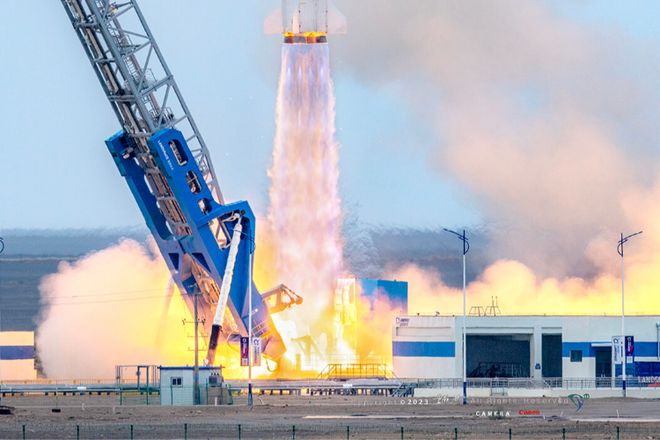
Core Viewpoint - The article discusses the recent failures of China's new rockets, Zhuque-3 and Chang Zheng-12A, in achieving successful recovery, yet highlights a paradoxical surge in the aerospace sector, particularly in commercial space stocks, indicating a rational revaluation of value under new rules and clear expectations [5][6][7]. Group 1: Market Dynamics - Despite the failures of rocket recovery, the aerospace sector, especially commercial space stocks, experienced significant price increases, with some stocks doubling in a matter of days [6]. - The market is not irrationally reacting; rather, it is undergoing a rational revaluation based on a new understanding of "engineering iteration certainty" [7][10]. - The introduction of commercial space and private capital has shifted the traditional failure-averse culture to a "rapid trial and error" approach, allowing for faster technological iterations [12]. Group 2: Supply Chain Implications - The focus should shift from the success or failure of rocket recovery to the thousands of components that make up a rocket, revealing a broader picture of the industry's supply chain [17]. - The reusable rocket technology leads to increased demand for high-end manufacturing components, creating a "continuous consumption demand" for the aerospace supply chain [20]. - The dual validation from both state-owned and private companies pursuing similar technological goals provides a "technical path insurance" for supply chain enterprises [21]. Group 3: IPO and Market Opportunities - The release of guidelines by the Shanghai Stock Exchange for commercial rocket companies to list on the Sci-Tech Innovation Board has created a clear path for capital market participation [24][25]. - The new listing criteria focus on successful payload delivery to orbit rather than recovery, encouraging investment in companies that demonstrate strong launch capabilities [26]. - The market is actively seeking and trading stocks related to leading commercial space companies, indicating a preemptive investment strategy in the emerging aerospace ecosystem [28]. Group 4: Data Utilization and Industry Growth - The commercial space sector has made failure data transparent and marketable, turning each failed attempt into a valuable resource for industry learning and advancement [30]. - The accumulation of failure data is seen as a unique advantage for China's commercial space industry, allowing for rapid engineering experience accumulation [31]. - The current enthusiasm in the market reflects a collective bet on the potential for significant cost reductions in space access, driven by China's robust industrial capabilities [36].
【2025年终回顾】进击的卫星产业,战略、产业、资本三级火箭助推
Jin Rong Jie· 2025-12-29 07:11
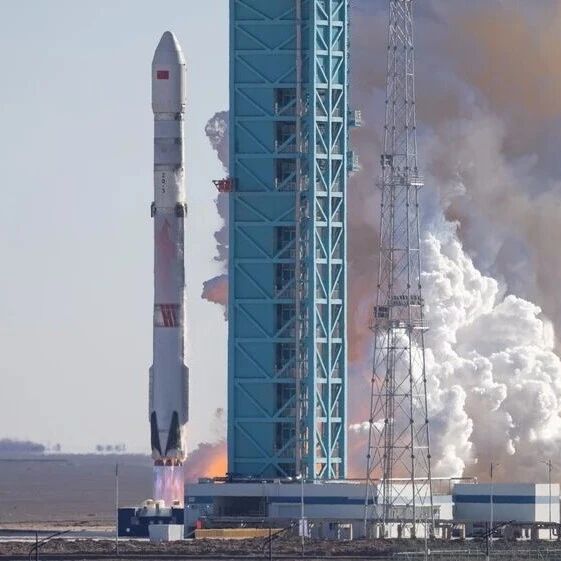
Core Insights - The satellite industry is expected to experience explosive growth in 2025, driven by strategic planning, technological advancements, and significant capital market activity [1][2][3] - The satellite industry ETF (159218) has seen a year-to-date increase of over 62.34%, with a current scale of 1.366 billion yuan and net inflows exceeding 900 million yuan [1] - The competitive landscape is intensifying, with major countries like China and the U.S. leading in satellite launches, accounting for 90.7% of the total operational satellites globally [1][2] Market Dynamics - As of November, there have been 325 space launches globally, with China conducting 87 launches (84 successful) and the U.S. 205 launches (202 successful), resulting in a total of 4,026 operational satellites [1][2] - The Chinese government has established a dedicated agency for commercial space, aiming to support the development of satellite communication services with a target of over 10 million users by 2030 [2] Technological and Capital Developments - The launch frequency of China's national satellite constellation is expected to increase significantly in the fourth quarter of 2025, with a year-on-year growth of 41% in commercial launch orders and a success rate of 98.5% [2] - The capital market is responding positively, with significant investment activity in the commercial space sector, including over 60 financing events totaling more than 9 billion yuan [2][3] Investment Opportunities - The Shanghai Stock Exchange has released guidelines for the listing of commercial rockets, emphasizing the importance of reusable technology in successful launches [3] - The commercial space sector is anticipated to see a "test flight competition" for reusable rockets, which could accelerate technological advancements and attract further investment [3] Industry Structure - The satellite industry ETF tracks the China Satellite Industry Index, covering various segments including satellite manufacturing, launch services, and ground equipment, with a focus on satellite manufacturing as a core area of development [3]
卫星通信专场
2025-12-25 02:43
Summary of Satellite Communication Industry Conference Call Industry Overview - The satellite communication sector has experienced an excess market performance since November 21, 2025, likely driven by optimistic market sentiment due to the progress of the reusable Zhuque 3 rocket [2][3] - Key upcoming events such as the Long March 10 reusable test and Tianbing Tianlong 3 launch tests are expected to further enhance market attention and sustain the sector's momentum [2][3] - The National Grid's second-generation satellite launches are projected to double the previous total launch volume in 2025, indicating a potential turning point for the industry if this trend continues into 2026 [2][7] Core Insights and Arguments - The satellite communication sector is currently viewed as a thematic investment opportunity, with its performance closely mirroring the Guozheng 2000 index from early 2022 to November 2025 [3] - The industry is characterized by three main categories of catalytic factors: launches, policies, and applications [4][5] - Specific launches, such as the National Grid's second-generation satellites, are expected to have a significant catalytic effect despite an overall increase in launch frequency reducing market sensitivity [5][6] Key Catalysts for Future Development 1. **Launch Acceleration**: The ability to provide low-cost, stable launch capacity through reusable rockets is crucial for reducing costs and enhancing network deployment [8] 2. **Policy Support**: National policies are vital for maintaining competitive advantage in the context of limited low-orbit resources and intense Sino-US competition [6][9] 3. **New Applications**: The introduction of new technologies and applications, such as mobile direct satellite internet access, could significantly boost market enthusiasm [8][9] Market Projections - By 2026, the satellite communication industry is expected to reach a critical inflection point, with approximately 1,200 satellites needed to effectively support satellite internet deployment [11] - The market potential is substantial, with projections indicating annual revenues of around 124 billion RMB at peak, translating to a profit increment of 25 billion RMB if a 20% net profit margin is achieved [12] Recommended Companies - **Xinke Mobile**: Involved in joint R&D with the National Grid, holding significant shares in the second-generation satellite project [13] - **Fenghuo Communication**: Known for its 100G inter-satellite laser communication terminals, expected to generate notable profit increases [13] - **Chengchang Technology**: Engaged in TR chip business, likely to benefit from the doubling of communication satellite channels [13] - **Zhenlei Electronics**: High market share in power chip products, with potential positive impacts on overall performance [13] - **Guobo Electronics**: Leading position in TR components, poised for new opportunities if third-party participants are introduced [14] Conclusion - The satellite communication industry is on the brink of significant growth, driven by technological advancements, supportive policies, and increasing market demand. Investors are encouraged to focus on companies with strong performance certainty and relevant business connections within the industry.
开源证券:太空算力有望推动商业航天产业变革 可复用火箭是规模化应用关键
智通财经网· 2025-12-23 03:04
Group 1 - The core viewpoint is that policy and industry collaboration is driving a new turning point for China's commercial aerospace sector [1] - The expected operational cost of China's ultimate space computing power is projected to be only 1/12 of that on the ground, indicating significant economic value [2] - The successful vertical recovery test of the Zhuque-3 rocket and the imminent maiden flight of the Long March 12A rocket highlight advancements in reusable rocket technology [1][3] Group 2 - The commercial aerospace sector's large-scale application heavily relies on low-cost and high-frequency launch capabilities, with reusable rockets being crucial [3] - By 2030, China is expected to achieve 100 launches per year at a cost of approximately 10 million yuan per launch, with the annual output value of rocket launches and satellite manufacturing reaching 85 billion yuan [3] - The development of space computing power is anticipated to provide a new path for forming an economic closed loop in China's commercial aerospace sector [2] Group 3 - Beneficiary companies in the commercial rocket sector include Superjet, Srey New Materials, Aerospace Power, and others [4] - Satellite payload companies include China Satellite, Guobo Electronics, and others [4] - Downstream application companies include Haige Communication, Zhongke Xingtou, and others [4]
中小盘周报:商业航天催化不断,可复用火箭迎来大发展-20251207
KAIYUAN SECURITIES· 2025-12-07 14:43
Group 1: Commercial Space Development - China's commercial space development is accelerating, with the National Space Administration recently releasing a plan emphasizing "reusable rockets" as a key focus area[4] - The Zhuque-3 rocket, equipped with nine Tianque-12A engines, has a total thrust of 7542 kN and aims to reduce the cost of space access[4] - The launch service price for the Long March 3B rocket for high-orbit missions is approximately CNY 70,900/kg, while the Long March 2 for low-orbit missions is about CNY 28,200/kg[4][22] Group 2: Market Trends and Projections - The 14th Five-Year Plan positions commercial space as a "new pillar industry," targeting a GDP contribution of 2% and a value exceeding CNY 7 trillion by 2030[5] - The plan aims for reusable rockets to achieve over 10 reuse cycles and a 50% reduction in satellite manufacturing costs[5] - The commercial space market is projected to exceed CNY 2.5 trillion by 2025, growing at a compound annual growth rate of 35%[28] Group 3: Competitive Landscape - The Falcon 9 rocket's reusability allows for significantly lower launch costs, with high-orbit service prices at CNY 27,500/kg and low-orbit at CNY 8,700/kg, highlighting a competitive gap with China's pricing[22][25] - The Zhuque-3 rocket's specifications, including a diameter of 4.5 meters and a payload capacity of at least 18 tons to low Earth orbit, position it competitively against international counterparts[19][18] Group 4: Investment Opportunities - Beneficial sectors include components for rockets, solid and liquid engines, and satellite manufacturing, with companies like Aerospace Development and China Satellite among the key players[5] - The report highlights investment opportunities in the commercial launch service sector, driven by the increasing demand for satellite launches, particularly for small satellite constellations[29]
中金:国内复用火箭有望逐步成熟 可复用开启低成本航天时代
Zhi Tong Cai Jing· 2025-12-05 01:49
Group 1 - The global commercial space industry is experiencing significant growth, driving demand for rocket launches, with domestic reusable rockets expected to mature gradually [1][2] - The number of global space launches is projected to increase from 112 in 2020 to 263 in 2024, with commercial rockets becoming the main force in global launches [2] - Domestic commercial rocket companies have rapidly developed since 2014, with multiple rocket types achieving consecutive successful launches, and reusable models like Zhuque-3 and Tianlong-3 expected to have intensive maiden flights in 2025-2026 [2] Group 2 - The cost of launching is estimated to account for 30%-40% of the total cost of satellite constellation construction, with the commercial model Falcon 9's unit launch cost at only $3,000 per kilogram, significantly lower than traditional launch vehicles [2] - The turnaround time for commercial rockets like Falcon 9 can be reduced to under 100 days, compared to the 20-month cycle of traditional rockets, making them more suitable for dense launch schedules [2] - Scalable and reusable commercial rockets are anticipated to provide ample low-cost capacity support for space infrastructure development, further solidifying the foundation of the commercial space industry [2][3] Group 3 - Reusability is a key factor in reducing costs for commercial rockets, with the airframe and propulsion system accounting for 60%-80% of rocket costs; under ten reuse scenarios, Falcon 9's launch cost could drop to $1,270 per kilogram [3] - New technologies are further driving down manufacturing costs, with many large-thrust commercial rockets adopting variable thrust liquid engines, and liquid oxygen-methane expected to become a mainstream fuel due to its low cost and reduced carbon buildup [3] - The airframe structure is shifting from aluminum alloy to stainless steel, and complex structures are being produced using 3D printing techniques to achieve weight reduction and cost savings [3]
中金 | 卫星互联网#05:商业火箭——航天发射新力量,可复用开启低成本航天时代
中金点睛· 2025-12-04 23:38
Core Viewpoint - The report emphasizes the critical role of commercial rockets in achieving low-cost and large-scale access to space, highlighting the development status, technological pathways, and cost-reduction strategies in the commercial rocket sector [5][10]. Group 1: Global and Domestic Development of Commercial Rockets - The global demand for rocket launches is driven by the booming commercial space industry, with the number of launches expected to grow from 112 in 2020 to 263 in 2024, making commercial rockets the primary launch vehicles [5][7]. - Since 2014, domestic commercial rocket companies have rapidly developed, with several models achieving consecutive successful launches. Reusable rockets like Zhuque-3 and Tianlong-3 are expected to have their maiden flights in 2025-2026, significantly enhancing domestic launch capacity [5][16]. Group 2: Cost Reduction and Efficiency - Launch costs account for approximately 30%-40% of the total cost of satellite constellation construction. The commercial model has significantly reduced costs, with SpaceX's Falcon 9 achieving a unit launch cost of $3,000 per kilogram [5][20]. - The turnaround time for commercial rockets has been reduced to under 100 days, compared to the traditional 20-month cycle, making them more suitable for rapid and frequent launches [5][20]. Group 3: Reusability and Technological Advancements - Reusability is key to reducing costs, with the structure and propulsion system accounting for 60%-80% of rocket costs. Falcon 9's launch cost could drop to $1,270 per kilogram with ten reuses [6][27]. - New technologies, such as variable thrust liquid engines and the use of stainless steel instead of aluminum alloys, are being adopted to further lower manufacturing costs [6][35]. Group 4: Policy Support and Market Growth - The U.S. has established a robust legal framework for commercial space, fostering the growth of commercial rockets since 1984. Similarly, China's policies since 2014 have encouraged private investment in commercial space ventures [10][15]. - The commercial launch service market is projected to reach $9.3 billion in 2024, with the U.S. market alone expected to grow to $6.1 billion, more than doubling since 2021 [15][20]. Group 5: Future Prospects and Industry Dynamics - The domestic commercial rocket sector is expected to accelerate growth, with major models entering regular launch phases and reusable rockets set for intensive launches in 2025-2026 [16][20]. - The increasing number of satellite launches, driven by large-scale constellation projects, positions commercial rockets as the mainstay for low Earth orbit (LEO) launches, with Falcon 9 capable of providing over 2,000 tons of LEO capacity in 2024 [25][26].

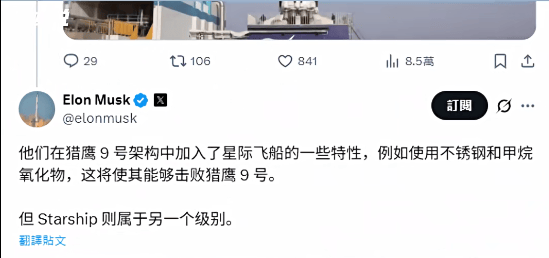
马斯克认可的朱雀三号将于11月29日首飞
Sou Hu Cai Jing· 2025-11-25 09:40
Core Viewpoint - Beijing Blue Arrow Aerospace's Zhuque-3 rocket is set for its maiden flight on November 29, marking a significant milestone in China's space capabilities, particularly in reusable rocket technology [1] Group 1: Rocket Development - Zhuque-3 is China's first large liquid oxygen-methane rocket featuring a stainless steel body structure and the ability to be reused over 20 times, aimed at supporting diverse commercial scenarios such as large satellite constellations and high-frequency low-cost launches [1] - The development of Zhuque-3 has progressed rapidly, with key experiments completed within just over two years since its project initiation in August 2023, significantly faster than the five years taken for SpaceX's Falcon 9 [1] Group 2: Industry Comparison - Elon Musk has publicly compared Zhuque-3 to SpaceX's Falcon 9, noting that the Chinese rocket incorporates features from the Starship, which could give it a competitive edge [1] - This acknowledgment from Musk represents a rare recognition of the performance advantages of Chinese rockets in the global aerospace industry [1]