
城市NOA

Search documents
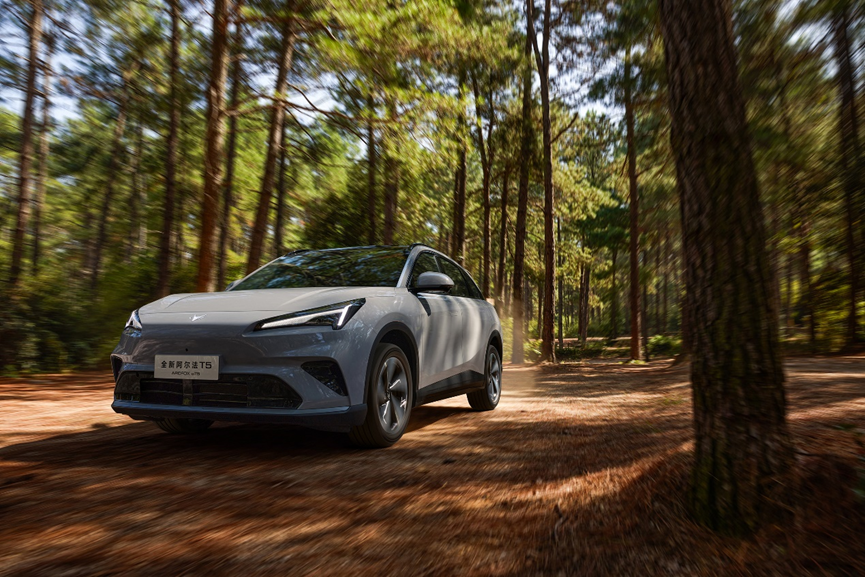
北汽极狐全新阿尔法T5携双动力登场,进一步降低城市NOA的“门槛”
Xin Lang Cai Jing· 2025-10-30 01:21
Core Insights - The new BAIC Arcfox Alpha T5 aims to redefine the value benchmark for mid-size SUVs priced around 150,000 RMB, leveraging advanced driving assistance and range-extending technologies [1][3] Pricing and Market Position - The Alpha T5 is launched at a promotional price range of 109,800 to 154,800 RMB, offering both pure electric and range-extended versions across seven configurations [1] - The vehicle has already received over 10,000 pre-sale orders, indicating strong market interest [1] Technological Features - The Alpha T5 is the first SUV to offer city NOA (Navigation on Autopilot) at a price point below 150,000 RMB, featuring the Snapdragon 8775 integrated chip and BAIC's Yuanjing intelligent driving assistance system [3] - It incorporates a unique "inertial dual-eye stereo vision system" that mimics human vision, allowing for precise obstacle detection without relying on pre-existing databases [3] - The vehicle's high computing power of 144 Tops enables complex driving scenarios such as traffic jam assist and autonomous highway entry and exit [3] Performance and Efficiency - The range-extended version features a high-efficiency Atkinson cycle engine with a thermal efficiency of 43%, achieving 0-100 km/h acceleration in 6.5 seconds when fully charged and 6.8 seconds in a depleted state [3] - The WLTC fuel consumption in a depleted state is 5.18 L, with a comprehensive range of up to 1,215 km under CLTC conditions [3] - The pure electric version boasts a maximum range of 705 km and supports 800V high-voltage fast charging, allowing for a 30%-80% charge in just 8.9 minutes [3] Space and Comfort - The Alpha T5 features an extended length of 4,760 mm and a wheelbase of 2,845 mm, with a maximum trunk capacity of 1,546 L when the second-row seats are folded down, catering to family travel needs [5] - The vehicle is built with high manufacturing standards and a robust body structure, ensuring safety and quality while providing a cost-effective smart mobility option [5]


【重磅深度】2025年主流车企城市NOA试驾报告—10月北京篇
东吴汽车黄细里团队· 2025-10-29 14:25
Core Insights - 2025 is identified as a pivotal year for automotive intelligence, initiating a three-year cycle that will elevate domestic electrification penetration rates to 50%-80%+, leading to a restructuring of the automotive landscape [4][10] - Leading intelligent driving manufacturers have successfully implemented complex urban scenarios such as roundabouts and U-turns, enhancing high-level functionalities like parking and scene understanding, thereby improving the driving experience for passengers and safety personnel [4][10] Investment Highlights - A comprehensive evaluation of six intelligent driving manufacturers, including ZunJie, Xiaopeng, Zhiji, Ideal, Xiaomi, and NIO, was conducted through large sample concentrated road tests and small sample in-depth road tests, focusing on scene implementation, takeover frequency, and comfort [5][10] - The keyword for the Beijing intelligent driving assessment is "stronger gets stronger," with Huawei and Xiaopeng leading in overall takeover counts and performance across various scenarios, particularly excelling in challenging situations [5][10] - Compared to Q1, the gap in intelligent driving capabilities among manufacturers has been narrowing by Q3, with second-tier manufacturers improving their performance in complex urban scenarios and reducing takeover frequencies [6][10] Road Test Overview - The large sample concentrated road test involved a standardized route in Beijing, assessing various performance metrics such as overall evaluation, takeover counts, stability, and efficiency [41][40] - The small sample in-depth road tests were conducted under varying traffic conditions, focusing on specific scenarios like roundabouts and complex intersections to evaluate the vehicles' decision-making and interaction capabilities [61][72] Manufacturer Performance - ZunJie achieved the highest overall evaluation score with an average takeover count of 1.16, demonstrating strong performance in challenging scenarios [44] - Xiaopeng's XOS model exhibited the lowest average takeover count at 0.94, showcasing balanced performance across various scenarios [48] - Zhiji's IM AD 3.0 received a score of 3.55 with an average takeover count of 1.44, indicating good handling of complex situations [49] - Ideal's OTA 8.0 scored 3.20 with a lower average takeover count of 1.06, reflecting a conservative driving style [52] - Xiaomi's V1.9.7 had an average takeover count of 3.86, indicating variability in performance across different scenarios [55] - NIO's cedar model recorded an average takeover count of 4.14, effectively covering most urban intelligent driving scenarios [58]



提前完成产业规划目标,中国新能源车市场格局逐步清晰
Di Yi Cai Jing· 2025-09-25 14:56
Group 1: Industry Overview - During the 14th Five-Year Plan period, China's new energy vehicle (NEV) industry has rapidly developed, becoming a core driving force in the global NEV market [1][2] - According to the Ministry of Industry and Information Technology, NEV penetration is expected to exceed 20% by 2025 and 50% by 2035, with 2022 data showing a penetration rate of over 20%, achieving the 2025 target three years early [1][2] - The Chinese market has been the largest NEV market globally for several consecutive years, with a competitive advantage in the NEV supply chain [1][4] Group 2: Market Growth and Sales Data - In 2018, the wholesale volume of new energy passenger vehicles in China surpassed 1 million for the first time, with a year-on-year growth rate of 84% [2] - In 2021, NEV sales reached 3.31 million units, a year-on-year increase of 183% [2] - By 2024, NEV production and sales are projected to exceed 10 million units, with sales reaching 12.87 million units, a year-on-year growth of 35.5%, accounting for 70.5% of global NEV sales [2][4] Group 3: Competitive Landscape - The dominance of joint venture brands in the Chinese automotive market has been disrupted, with domestic brands like BYD capturing nearly 70% market share [2][3] - The competition in the NEV market has intensified, with a shift towards intelligent driving features becoming a major selling point for many manufacturers [6][7] - The market is undergoing a structural adjustment, with economic NEVs becoming mainstream and plug-in hybrid vehicles (PHEVs) experiencing rapid growth [6][7] Group 4: International Expansion and Future Projections - China has become the world's largest automobile exporter, with NEV exports reaching 1.06 million units in the first half of the year, a year-on-year increase of 75.2% [4] - It is projected that NEV sales will exceed 15 million units this year, with a shift in market share towards PHEVs and a gradual recovery of battery electric vehicles (BEVs) post-2030 [4][5] - The 14th Five-Year Plan period is expected to be a critical phase for reshaping the market structure, with industry concentration increasing and key technological breakthroughs anticipated [8]



【汽车智能化9月投资策略】新一代智驾架构集中落地,继续看好智能化主线!
东吴汽车黄细里团队· 2025-08-30 15:23
Core Viewpoint - The article emphasizes the importance of automotive intelligence as a revolutionary shift in transportation, highlighting the transition to L3 automation and the emergence of Robotaxi services as key drivers for automakers to enhance sales and revenue through software monetization [3][9]. Group 1: Automotive Intelligence Overview - Automotive intelligence represents a significant transformation in the industry, characterized by three main phases: L3 automation aiding vehicle sales, L4 Robotaxi services enabling software revenue, and the global rise of domestic brands [3][9]. - The year 2025 is projected to be a pivotal point for automotive intelligence, with urban NOA (L3 automation) becoming a top consideration for consumers when purchasing vehicles. The penetration rate of L3 automation is expected to rise from 10% in 2025 to over 80% by 2027 [3][9]. - The automotive intelligence landscape is described as a competitive elimination process, categorizing companies into three types: B-end Robotaxi operators, C-end personalized brands, and high-end vehicle manufacturers. Component suppliers are divided into modular and single-category suppliers [3][9]. Group 2: August Intelligence Summary - The focus in August was on the iteration of next-generation driving architectures, with notable advancements such as the launch of the Li Auto VLA architecture and the introduction of the new XPeng P7 featuring advanced self-driving capabilities [4][10]. - The penetration rate of urban NOA reached 23.2% in July, reflecting a month-on-month increase of 0.9 percentage points. XPeng's smart driving penetration exceeded 70%, while Li Auto's overall urban NOA penetration was 59.4%, showing a slight decline of 2.2 percentage points [4][10]. Group 3: Investment Recommendations for 2025 - The article maintains a positive outlook on smart vehicles, emphasizing that intelligence is the core, with new vehicle cycles and monthly sales being critical metrics. The focus is on Hong Kong-listed companies such as XPeng Motors, Li Auto, and Xiaomi, as well as A-share companies like BYD and SAIC [5][9]. - There is a strong interest in incremental components related to automotive intelligence, including AI chips, domain controllers, steer-by-wire systems, and automotive electronics, with specific companies highlighted for investment potential [5][9]. Group 4: Market Trends and Projections - The article outlines a forecast for the automotive intelligence market, indicating that by 2025-2027, the goal is to achieve a 50%-80% penetration rate for new energy vehicles, with a focus on hardware business models. The software monetization model is expected to face challenges in achieving substantial breakthroughs [19][20]. - The anticipated growth in Robotaxi services is expected to lead to significant commercialization and a qualitative leap in the automotive industry, marking the beginning of a new industrial trend [19][20].

零跑汽车(09863):半年报符合预期,新车推动下增长空间广阔
Shenwan Hongyuan Securities· 2025-08-29 07:07
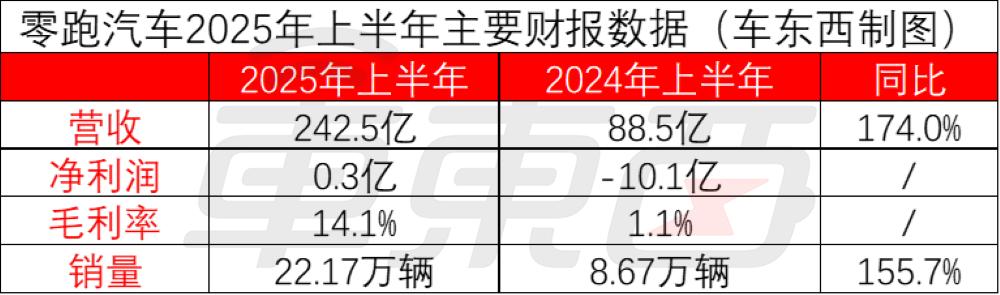
Investment Rating - The report maintains a "Buy" rating for the company, indicating a positive outlook for its stock performance in the near term [7]. Core Insights - The company reported a significant increase in revenue and sales volume in its 2025 half-year report, with revenue reaching 24.25 billion RMB, a year-on-year increase of 174%, and sales volume of 222,000 vehicles, up 156% year-on-year [4][5]. - The introduction of the B series models is expected to drive further sales growth, with the B10 model contributing significantly to sales since its launch [7]. - The company is projected to achieve substantial revenue and profit growth in the coming years, with revenue estimates for 2025, 2026, and 2027 revised upwards to 65.32 billion RMB, 133.26 billion RMB, and 178.08 billion RMB, respectively [5][7]. Financial Data and Profit Forecast - The company’s financial projections show a recovery in net profit, with estimates of 691 million RMB for 2025, 5.47 billion RMB for 2026, and 8.3 billion RMB for 2027, reflecting a strong growth trajectory [5][8]. - The earnings per share (EPS) is expected to turn positive in 2025, with an estimate of 0.52 RMB per share, increasing to 6.21 RMB per share by 2027 [5][8]. - The company’s gross margin is projected to improve, with a gross margin of 14.1% reported for the first half of 2025, up 13 percentage points year-on-year [4]. Sales and Market Expansion - The company plans to expand both domestically and internationally, with new models and strategic partnerships expected to enhance sales and profitability [7]. - The B series models are anticipated to match the sales performance of the C series, contributing to the overall sales target of over one million vehicles in the next year [7]. - The company is also focusing on enhancing its overseas market presence, with local production in Europe expected to begin next year, which will help mitigate tariffs and improve margins [7].

零跑首次实现半年度净利润转正,官宣有两款旗舰新车,喊出明年百万目标
3 6 Ke· 2025-08-18 23:19
Core Viewpoint - Leapmotor achieved its first half-year net profit in 2025, raising its sales guidance for 2025 to 580,000-650,000 units, with a target of challenging 1 million units in 2026 [1][6][7]. Financial Performance - Leapmotor's revenue for the first half of 2025 was RMB 24.25 billion, a 174% increase from RMB 8.85 billion in the same period of 2024 [2][20]. - The company reported a net profit of RMB 30 million for the first half of 2025, marking its first positive half-year net profit [3][24]. - The gross margin reached a record high of 14.1%, up from 1.1% in the first half of 2024, reflecting a 13 percentage point increase [3][22]. - Total vehicle deliveries in the first half of 2025 were 221,700 units, a 155.7% increase compared to 86,700 units in the same period of 2024 [3][24]. Sales and Production Guidance - The sales guidance for 2025 has been adjusted to 580,000-650,000 units, with expectations for significant growth in August and September [6][8]. - Leapmotor aims to challenge the target of 1 million units in annual sales by 2026 [7]. - The D-series models are set to debut in October 2025, with a launch planned for the first quarter of 2026 [10][11]. Research and Development - Leapmotor plans to achieve urban NOA (Navigation on Autopilot) by the end of 2025, aiming to be among the top tier in assisted driving technology [13]. - The company is expected to localize production in Europe, with the B-series models being the first to be produced there [15][18]. Market Expansion - Leapmotor has established over 600 sales and service points in approximately 30 international markets, with more than 550 in Europe [29]. - The company plans to establish a localized production base in Europe by the end of 2026 to enhance its global market presence [29]. Cash Flow and Financial Health - As of June 30, 2025, Leapmotor's cash reserves totaled RMB 29.58 billion, indicating strong financial health [26]. - The free cash flow for the first half of 2025 was RMB 860 million, a significant improvement from a negative RMB 480 million in the same period of 2024 [26].
德赛西威(002920):2024年报业绩增长亮眼,智能驾驶业务景气度持续高企
GOLDEN SUN SECURITIES· 2025-03-15 13:22
Investment Rating - The report maintains a "Buy" rating for the company [2][5] Core Insights - The company reported a robust performance in 2024, with operating revenue increasing by 26.06% year-on-year, and net profit attributable to shareholders rising by 29.62% year-on-year, indicating strong growth momentum [1] - The smart cockpit business demonstrated steady growth, achieving operating revenue of 18.23 billion yuan, driven by diversified product offerings and strong new customer orders [1] - The smart driving business experienced significant growth, with operating revenue reaching 7.31 billion yuan, a year-on-year increase of 63.06%, supported by the rapid commercialization of advanced smart driving features [2] - The company effectively managed costs, resulting in a marginal decrease in sales, management, and R&D expense ratios compared to the same period in 2023, enhancing profit margins [2] Financial Performance Summary - In 2024, the company achieved operating revenue of 27.62 billion yuan and net profit of 2.01 billion yuan, with projected net profits for 2025, 2026, and 2027 expected to be 2.80 billion yuan, 3.60 billion yuan, and 4.62 billion yuan respectively [4] - The company's earnings per share (EPS) for 2024 was 3.61 yuan, with projections of 5.04 yuan, 6.48 yuan, and 8.32 yuan for the following years [4] - The price-to-earnings (P/E) ratio is projected to decrease from 34.3x in 2024 to 14.9x in 2027, indicating potential for valuation improvement [4]
从自信之巅到反思低谷,理想走过一个周期
晚点LatePost· 2024-07-29 10:55
以下文章来源于晚点Auto ,作者晚点团队 晚点Auto . 从制造到创造,从不可能到可能。《晚点LatePost》旗下汽车品牌。 L9 两年 20 万台,一款成功产品的艰难历程。 文丨窦亚娟 编辑丨 宋玮 外界评价起理想产品的失败与成功,往往会想到两款极致的产品——一款是理想 ONE,另一款则是 MEGA。 两款车量产时间相差不到 4 年,理想的公司状态天差地别,从默默无闻到登顶新势力,两款车得到的市场 结果和评价也大相径庭。 在这两款产品之间,有一款产品并不常被提起,虽然它是对理想影响最大的一款车之一,也是理想诞生至 今最成功的产品。 它就是 L9--比第一代产品 ONE 贵 13 万、理想第一款真正意义上的豪华车、二代平台的第一款车。凭借它 和它背后经验的复制,理想甩开了曾经的同级对手蔚来和小鹏,月销量从 1 万台爬到了 5 万台,市值飙升 至全国第二,一度仅次于比亚迪。 直到今年 3 月,第一款纯电产品 MEGA 发布,这一上升螺旋停滞。MEGA 上市三个月销量加起来不到 6000 台,L 系列的改款也受到影响,月销量下滑至 3 万台。一款产品的失利,导致理想市值从 461 亿美元 跌至 215 亿美 ...