实用的货币主义

Search documents
国泰海通|“联储换帅”总量联合解读
国泰海通证券研究· 2026-02-01 14:04
Group 1 - The core viewpoint of the article is that Kevin Warsh advocates for a policy of "rate cuts + balance sheet reduction" to control inflation and restore the Federal Reserve's independence while addressing President Trump's demands for lower interest rates [8][14]. - Warsh's approach is termed "pragmatic monetarism," emphasizing the need for the Federal Reserve to take responsibility for inflation, which he attributes to the prolonged quantitative easing (QE) following the financial crisis [8][6]. - The article discusses the historical context of Federal Reserve chair transitions, noting that such changes typically lead to increased volatility in bond markets, structural adjustments in yield curves, and a re-evaluation of risk premiums [12][14]. Group 2 - Warsh criticizes the Federal Reserve's large balance sheet, arguing that QE has distorted market incentives and reduced banks' willingness to lend to the real economy [8][13]. - The article highlights that Warsh's policy proposals aim to transition from a "sufficient reserves" framework to a "scarce reserves" framework, which would encourage banks to increase lending [8][14]. - The potential implications of Warsh's nomination include a heightened sensitivity in the bond market to the new chair's policy stance, particularly given the complex economic environment characterized by persistent inflation and geopolitical risks [14][12]. Group 3 - The article suggests that under Warsh's leadership, the Federal Reserve may exhibit three key characteristics: increased policy uncertainty due to independence paradoxes, a gradual convergence of rate cut paths, and a reduction in bond market support due to aggressive balance sheet reduction [14][15]. - It is noted that the current economic landscape requires a balance between managing inflation and supporting credit expansion, particularly in light of the Trump administration's policies aimed at revitalizing manufacturing and real estate sectors [17][14]. - The article concludes that regardless of who becomes the new chair, the short-term outlook for the Federal Reserve's monetary policy is likely to remain accommodative, with a focus on maintaining liquidity in the markets [21][14].


财信证券宏观策略周报(2.2-2.6):市场仍有韧性,适当博弈消费及地产-20260201
Caixin Securities· 2026-02-01 13:06
Group 1 - The report suggests that the market remains resilient, with opportunities in consumer and real estate sectors, particularly during the pre-Spring Festival consumption peak, recommending investments in sectors like liquor, film, and tourism [4][18] - The bond market is expected to see the 10-year government bond yield fluctuate between 1.80% and 1.85% around the Spring Festival, with a need for new triggers to break below 1.80% [4][8] - The manufacturing PMI for January fell to 49.3%, indicating a return to contraction territory, primarily due to weak demand [8][9] Group 2 - Industrial profits for large-scale enterprises showed a marginal improvement, with December profits turning from a decline of 13.1% in November to a growth of 5.3%, indicating a recovery trend [10] - The real estate sector is transitioning to a high-quality development phase, with regulatory measures in place to control debt levels among real estate companies, suggesting a shift from scale expansion to quality growth [11] - The report highlights the potential for structural opportunities in high-dividend assets such as banks, coal, oil, public utilities, and transportation [22] Group 3 - The report emphasizes the importance of monitoring the manufacturing PMI and its correlation with domestic economic policies and export market performance for future trends [9] - The commodity market is experiencing significant short-term shocks, with gold expected to maintain value for low-cost purchases amid macroeconomic fluctuations [17][18] - The report notes that the demand for copper is likely to increase as manufacturing resumes post-Spring Festival, with low inventory levels at the Shanghai Futures Exchange [8][17]
美联储新主席提名沃什:主张、影响与展望
Xin Lang Cai Jing· 2026-01-31 04:09
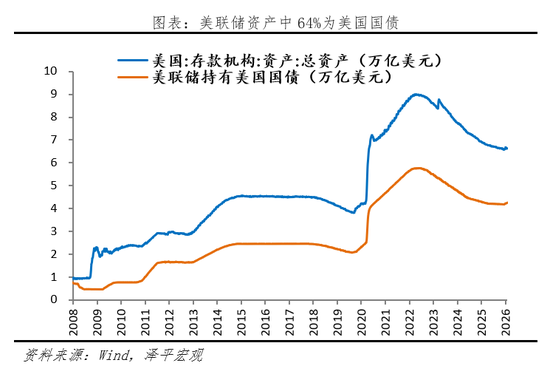
Group 1 - The core viewpoint is that Kevin Warsh, nominated by President Trump for the next Federal Reserve Chair, has a significant background in both the Federal Reserve and the financial sector, making him a candidate who balances market acceptance with Trump's demand for interest rate cuts [3][25] - Warsh identifies himself as a moderate reformer with a hawkish background, previously criticizing long-term quantitative easing policies. He advocates for "pragmatic monetarism," which involves balance sheet reduction to suppress inflation expectations and create room for interest rate cuts [3][25] - The market reacted sharply to the announcement, with U.S. Treasury yields rising, the dollar strengthening, and both U.S. stocks and gold prices falling, indicating a typical hawkish expectation [10][12][35] Group 2 - In the short term, Warsh is likely to support 1-3 interest rate cuts in the coming year to address Trump's urgent demand for lower rates. The long-term impact will depend on the interplay between balance sheet reduction and interest rate cuts [16][38] - The "balance sheet reduction + interest rate cut" policy combination faces four major challenges: potential offsetting effects between the two policies, limited direct impact of balance sheet reduction on the economy and inflation, the need for new buyers for U.S. debt amid ongoing reductions, and the risk of a liquidity crisis if not managed properly [5][39][40] Group 3 - Warsh's background includes significant experience in both the financial and political arenas, having worked at Morgan Stanley and served as a special assistant to President George W. Bush. He became the youngest Federal Reserve Governor at age 35 [29][30] - His advocacy for substantial interest rate cuts since 2025 has raised questions about whether this is a genuine policy approach or merely a political gesture to align with Trump [31][32]
美联储新主席提名沃什:主张、影响与展望
泽平宏观· 2026-01-31 03:38
Core Viewpoint - Kevin Walsh, nominated by President Trump for the next Federal Reserve Chair, has a significant background in both the Federal Reserve and the financial sector, balancing market acceptance with Trump's demand for interest rate cuts [3][4]. Group 1: Background and Profile of Walsh - Walsh has a notable career, having worked at Morgan Stanley and served as a special assistant to President George W. Bush, becoming the youngest Federal Reserve Governor at age 35 [6][8]. - His connections in both Wall Street and politics, along with his marriage to a member of the Estee Lauder family, position him as a candidate who can meet Trump's aggressive interest rate cut demands [8]. Group 2: Walsh's Monetary Policy Views - Walsh is known for his hawkish stance but has recently shifted towards a more dovish approach, advocating for a combination of "quantitative tightening" (QT) and interest rate cuts [9][10]. - He believes that the Federal Reserve's long-term quantitative easing has led to current inflation issues and argues for a return to traditional monetary boundaries [9][10]. Group 3: Short-term Market Impact - Following Walsh's nomination, the market reacted with a typical hawkish expectation, leading to a rise in U.S. Treasury yields, a stronger dollar, and declines in both U.S. stocks and gold prices [11]. - The 10-year U.S. Treasury yield increased by approximately 4 basis points, reflecting concerns over tightening liquidity due to Walsh's proposed policies [11]. Group 4: Future Federal Reserve Policy Outlook - In the short term, Walsh is likely to support 1-3 interest rate cuts in response to Trump's urgent demand for lower rates [12]. - The effectiveness of Walsh's proposed "QT + interest rate cuts" policy will depend on the balance between tightening and easing effects, which remains uncertain [12][13]. Group 5: Challenges Ahead - There are four main challenges to implementing Walsh's policy combination: the potential for QT and interest rate cuts to offset each other, limited direct impact of QT on inflation, the need for new buyers for U.S. debt, and the risk of a liquidity crisis if not managed properly [4][13][14].
谁是沃什?美联储最年轻理事,雅诗兰黛家族女婿,其岳父第一个建议特朗普买下格陵兰岛
Sou Hu Cai Jing· 2026-01-30 13:03
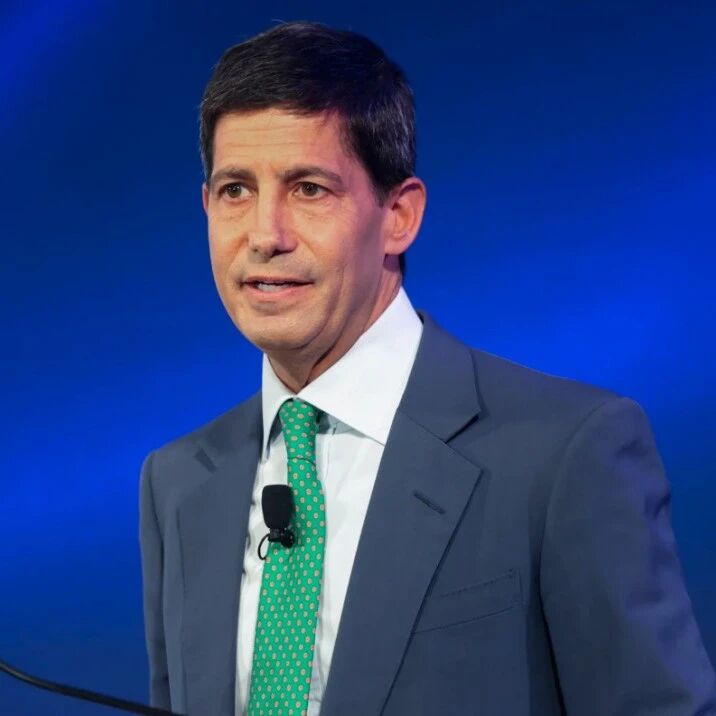
Core Viewpoint - Kevin Warsh has been nominated by President Trump to be the next Chairman of the Federal Reserve, bringing a unique blend of political connections and financial expertise to the role [1][11]. Background and Experience - Warsh was born in Albany, New York, in 1970 and graduated from Stanford University with a degree in Public Policy, majoring in Economics and Political Science. He later earned a JD from Harvard Law School [3]. - He worked at Morgan Stanley from 1995 to 2002, eventually becoming an Executive Director in the M&A department. Following this, he served as a Special Assistant to the President and Executive Secretary of the National Economic Council from 2002 to 2006 [4]. - In 2006, Warsh was appointed to the Federal Reserve Board, becoming the youngest member in its history at age 35, despite facing criticism for his age and perceived lack of experience [4]. Role During the Financial Crisis - During the 2008 financial crisis, Warsh acted as a bridge between Wall Street and then-Fed Chairman Ben Bernanke, participating in numerous discussions on crisis response strategies [5]. - He was a vocal critic of the Fed's aggressive quantitative easing (QE) policies, opposing the second round of QE in 2011 and leaving the Fed, which was seen as a weakening of the hawkish faction within the Fed [5]. Shift in Monetary Policy Perspective - After leaving the Fed, Warsh criticized its expansive role and the prolonged ultra-loose monetary policies, arguing they could distort markets and create asset bubbles [6]. - Recently, he has expressed support for interest rate cuts, which some critics view as political opportunism, while others see it as a reflection of his "pragmatic monetarism" approach [6][7]. Pragmatic Monetarism Theory - Warsh's "pragmatic monetarism" aims to address both the government's desire for rate cuts and market concerns about inflation. The theory advocates for aggressive quantitative tightening (QT) to reduce the Fed's balance sheet and curb inflation expectations [8]. - This approach seeks to create a safe space for lowering nominal interest rates without triggering inflation, although it has faced criticism for being impractical in the current banking system [9].

美联储主席概率最大人选——沃什政策主张的一场对话:通胀是美联储的一种选择
美股IPO· 2026-01-30 02:19
Core Viewpoint - Kevin Warsh argues that inflation is a choice made by the Federal Reserve, not a result of external factors, and emphasizes the need for reform rather than a complete overhaul of the Fed's structure [3][7][8]. Group 1: Inflation and Monetary Policy - Warsh criticizes the Fed for its complacency during the "Great Moderation" period, believing it led to an overextended balance sheet and the current inflation crisis [3][8]. - He asserts that the Fed has the power to control price levels and should not blame external factors like supply chain issues or geopolitical events for inflation [3][7]. - Warsh proposes that reducing the Fed's $7 trillion balance sheet could create room for lower interest rates, which he views as essential for the economy [4][10]. Group 2: Reform Proposals - Warsh advocates for a "restoration" of the Fed's core mission to maintain price stability, rather than a revolutionary change [8][12]. - He emphasizes the need for a clear division of responsibilities between the Fed and the Treasury, suggesting a new agreement to delineate their roles [12][13]. - He describes his approach as "pragmatic monetarism," focusing on controlling inflation through balance sheet reduction [4][10]. Group 3: Critique of Quantitative Easing - Warsh supports the initial quantitative easing (QE1) during the 2008 crisis but strongly opposes the continuation of QE during stable economic periods, arguing it fosters asset bubbles [9][62]. - He believes that the Fed's actions have blurred the lines between fiscal and monetary policy, leading to excessive government spending [13][70]. - Warsh warns that treating every period as a crisis has led to a more interventionist Fed, which he views as dangerous [70][71]. Group 4: Economic Outlook - Despite his criticisms, Warsh is optimistic about the U.S. economy, citing potential productivity growth driven by AI and deregulation [4][14]. - He envisions a resilient economy if policies return to rationality, reminiscent of the productivity boom in the 1980s [4][14].
最能体现沃什政策主张的一场采访:通胀是美联储的一种选择
美股IPO· 2025-12-16 03:52
Group 1 - The core argument presented by Warsh is that inflation is a choice made by the Federal Reserve, not a result of external factors like supply chains or geopolitical issues. He emphasizes that the central bank has the power to control price levels [1][6][30] - Warsh criticizes the complacency of the Federal Reserve during the "Great Moderation" period, arguing that the belief that inflation was dead led to an excessively large balance sheet that contributed to current inflation issues [1][7][32] - He advocates for a "restoration" of the Federal Reserve rather than a complete overhaul, suggesting that reforms should focus on reducing the balance sheet to create space for lower interest rates [2][7][10] Group 2 - Warsh proposes a practical monetary policy approach, emphasizing the need for the Federal Reserve and the Treasury to clearly define their roles, with the Fed managing interest rates and the Treasury handling fiscal accounts [2][10] - He expresses strong opposition to the continuation of quantitative easing (QE) during stable economic periods, arguing that it fosters asset bubbles and undermines the original agreement to exit from crisis measures [8][11][60] - Warsh believes that the Federal Reserve has overstepped its boundaries, transitioning from a "lender of last resort" to an omnipresent "first intervener," which he argues must be curtailed [9][64] Group 3 - He highlights the dangers of the Federal Reserve's actions encouraging excessive fiscal spending by the government, leading to a significant increase in national debt [11][63] - Despite his criticisms, Warsh remains optimistic about the U.S. economy, predicting a productivity boom driven by AI and deregulation, similar to the economic growth seen in the 1980s [12][64] - Warsh asserts that the Federal Reserve has deviated from its core mission of maintaining price stability, which he describes as an "institutional drift" that necessitates reform to regain credibility [13][66]

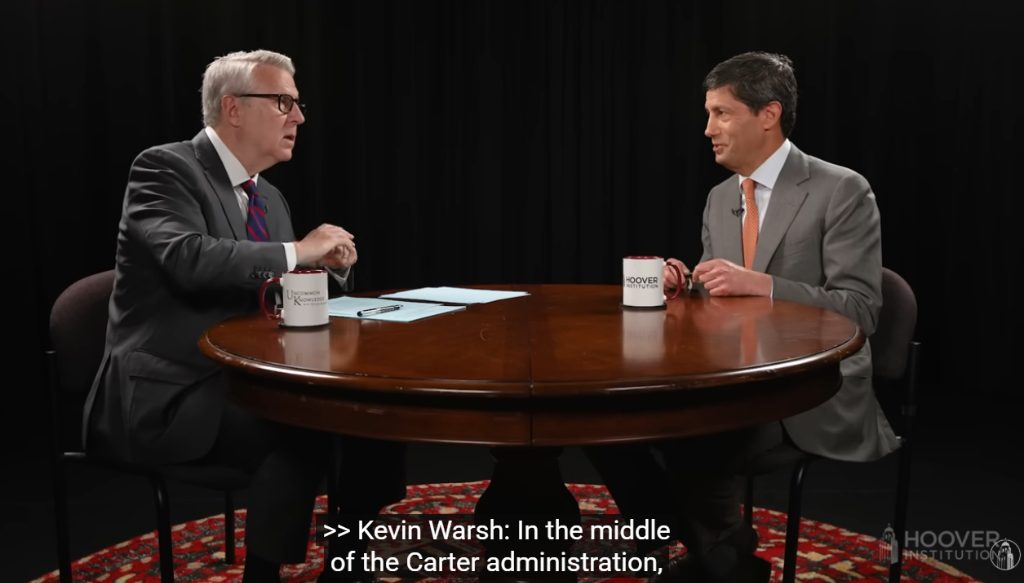
最能体现沃什政策主张的一场采访:通胀是美联储的一种选择
Hua Er Jie Jian Wen· 2025-12-16 03:29
Core Viewpoint - Kevin Warsh, a potential successor to the Federal Reserve Chair, criticizes the current Fed's policies and suggests significant reforms to address inflation, which he claims is a result of poor policy choices rather than external factors [1][5][20]. Group 1: Warsh's Critique of the Federal Reserve - Warsh argues that inflation is a choice made by the Federal Reserve, emphasizing that the central bank has the power to control price levels [5][20]. - He criticizes the Fed's complacency during the "Great Moderation" period, suggesting that the failure to reduce the balance sheet led to the current inflation crisis [1][5]. - Warsh believes that the Fed has deviated from its core mission of maintaining price stability and has engaged in excessive monetary interventions [5][20]. Group 2: Proposed Reforms - Warsh advocates for a "restoration" of the Federal Reserve rather than a complete overhaul, suggesting that the existing framework should be preserved while correcting past mistakes [2][5]. - He proposes reducing the Fed's balance sheet, which currently stands at $7 trillion, to create room for lower nominal interest rates [2][5]. - Warsh emphasizes the need for a clear division of responsibilities between the Federal Reserve and the Treasury, arguing that both should focus on their respective roles without overstepping boundaries [2][5]. Group 3: Economic Outlook - Despite his criticisms, Warsh expresses optimism about the U.S. economy, predicting a productivity boom driven by AI, similar to the economic growth seen during the Reagan era [2][5]. - He believes that rational policy adjustments can lead to significant resilience in the U.S. economy [2][5].