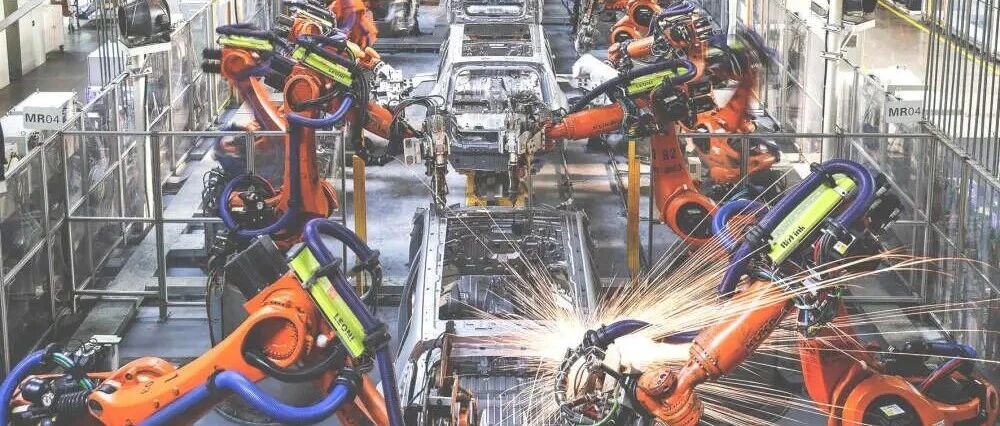
扩大国内需求

Search documents
格林期货早盘提示-20251117
Ge Lin Qi Huo· 2025-11-17 08:29
Report Summary 1. Report Industry Investment Rating No relevant content provided. 2. Core View The iron ore market showed a rising trend on Friday and in the night session. However, the overall market is affected by multiple factors. On the demand side, the real - estate investment and related steel - using indicators in the black building materials industry are deteriorating, and the domestic demand for steel is weak. The decline in crude steel and pig iron production also has a negative impact on iron ore demand. On the supply side, the production of five major steel products and inventory have decreased, and the inventory of imported iron ore in ports and steel mills has increased. Considering these factors, the iron ore market is expected to fluctuate, and short - term band operations within a certain range are recommended [1]. 3. Summary by Relevant Catalogs Market Review - Iron ore prices rose on Friday and continued to rise in the night session [1]. Important Information - Central Bank's Tao Ling proposed to restrict the "involution - type competition" in the financial industry and maintain a reasonable profit margin [1]. - The National Bureau of Statistics stated that it is necessary to continue to expand domestic demand and optimize the market competition environment to promote a reasonable recovery of prices [1]. - In October, China's automobile production was 3.279 million vehicles, a year - on - year increase of 11.2%. From January to October, the national real - estate development investment was 7.3563 trillion yuan, a year - on - year decrease of 14.7% [1]. Market Logic - Demand side: In the first 10 months, the real - estate investment growth rate continued to decline, and the growth rates of new construction, construction, and completion of houses continued to drop. The steel - using indicators of the black building materials industry deteriorated. The narrow - sense infrastructure investment growth rate was - 0.1%, the first negative value since 2021. The manufacturing investment growth rate dropped to 2.7%, the lowest level since 2021. The domestic demand for steel was weak. The year - on - year growth rate of crude steel production continued to decline, and pig iron production decreased by 1.8% year - on - year, which was negative for iron ore demand [1]. - Supply side: The production of five major steel products and inventory decreased. The inventory of imported iron ore in ports and steel mills increased. Affected by the lifting of production restrictions in some areas of Hebei, the daily output of molten iron increased by 2.66 million tons week - on - week. Recently, more building material steel mills resumed production, which was positive for iron ore demand [1]. Trading Strategy - Short - term band operations within a range are recommended. For the main 2601 contract, the pressure level is 833, and the support level is 750 [1].
国常会部署“促消费稳投资”,新一轮降准降息有望实施
第一财经· 2025-11-16 15:48
Core Viewpoint - The article discusses the fluctuations in major economic indicators in China due to external demand slowdown, weakened domestic demand, and high base effects from the previous year, emphasizing the need for stronger macroeconomic policies to stabilize growth [3][4]. Economic Indicators - In October, the industrial added value for large-scale enterprises grew by 4.9% year-on-year, slowing down by 1.6 percentage points from September [3]. - The total retail sales of consumer goods increased by 2.9% year-on-year, a slight decline of 0.1 percentage points from September [3]. - From January to October, fixed asset investment (excluding rural households) reached 408,914 billion yuan, a year-on-year decrease of 1.7% [3]. Government Response - The State Council, led by Premier Li Qiang, held a meeting to discuss the implementation of "two major" constructions aimed at enhancing consumption and investment [3][4]. - The government plans to enhance the adaptability of supply and demand in consumer goods to stimulate consumption and achieve a dynamic balance [3][4]. Investment Trends - Despite a decline in overall investment, emerging industries such as digital manufacturing and smart equipment are showing significant growth, with the digital industry manufacturing value-added increasing by 9.5% year-on-year [7][8]. - The investment in fixed assets has seen a historical decline, particularly in infrastructure, manufacturing, and real estate sectors [9]. "Two Major" Construction - The "two major" construction initiative is set to allocate 800 billion yuan to support 1,459 projects, focusing on strategic areas such as ecological restoration and major infrastructure [11][12]. - This initiative aims to optimize project reviews and enhance the quality of investments, promoting new productive forces [11][12]. Consumer Trends - Service consumption is becoming a significant growth point, with retail sales in services growing by 5.3% year-on-year [7]. - Digital and green consumption are expanding, with online retail sales increasing by 9.6% year-on-year, indicating a shift towards a more diversified consumption structure [8][14]. Supply and Demand Adaptability - Enhancing supply and demand adaptability is crucial for releasing consumption potential and ensuring economic circulation [13][15]. - The article highlights the need for a balance between supply and demand, with a focus on quality and personalized consumption [14][15].


国家统计局:继续扩大国内需求、优化市场竞争环境等,促进物价合理回升
Sou Hu Cai Jing· 2025-11-14 12:30
11月14日,国家统计局公布2025年10月份国民经济运行情况。数据显示,10月份,全国居民消费价格 (CPI)同比上涨0.2%,上月为下降0.3%;环比上涨0.2%。 同日,国家统计局新闻发言人、总经济师、国民经济综合统计司司长付凌晖在国务院新闻办举行的新闻发 布会上表示,总的来看,在促进价格合理回升的各项措施作用下,10月份居民消费价格出现积极变化,但 市场需求拉动仍显不足,价格总体低位运行。下阶段,要继续扩大国内需求,纵深推进全国统一大市场建 设,优化市场竞争环境,推进重点行业产能治理,改善供求关系,促进价格合理回升。 ...
国家统计局:要释放消费潜力 规范市场竞争
Feng Huang Wang· 2025-11-14 03:23
Core Viewpoint - The National Bureau of Statistics emphasizes the need to expand domestic demand, unleash consumption potential, increase effective investment, strengthen innovation-driven growth, regulate market competition, promote capacity governance in key industries, and facilitate a reasonable rebound in industrial producer prices [1] Group 1 - The focus on expanding domestic demand is crucial for economic growth [1] - There is an emphasis on unleashing consumption potential to drive economic activity [1] - Increasing effective investment is highlighted as a key strategy for economic development [1] Group 2 - Strengthening innovation-driven growth is essential for enhancing competitiveness [1] - Regulating market competition is necessary to ensure a fair business environment [1] - Promoting capacity governance in key industries is aimed at optimizing production efficiency [1] Group 3 - Facilitating a reasonable rebound in industrial producer prices is important for stabilizing the economy [1]
国家统计局:下阶段要继续扩大国内需求,推进重点行业产能治理,促进物价合理回升
Di Yi Cai Jing· 2025-11-14 03:10
Group 1 - The core viewpoint emphasizes the need to deepen the construction of a unified national market and optimize the market competition environment [1] - The next phase will focus on expanding domestic demand and advancing the governance of production capacity in key industries [1] - The goal is to improve supply-demand relationships and promote a reasonable recovery in prices [1]
国家统计局:下阶段要全方位扩大国内需求,着力稳就业、稳企业、稳市场、稳预期
Zheng Quan Shi Bao Wang· 2025-11-14 02:12
Core Viewpoint - The overall operation of the national economy in October is stable, with solid progress in transformation and upgrading, and the new development momentum continues to grow [1] Economic Performance - The external environment remains unstable and uncertain, and there are significant pressures from domestic structural adjustments, posing challenges to the stable operation of the economy [1] Policy Recommendations - The next steps should focus on maintaining a stable yet progressive work guideline, expanding domestic demand comprehensively, and ensuring stability in employment, enterprises, markets, and expectations [1] - There is an emphasis on actively promoting the effective implementation of macro policies, deepening reforms and opening up, and further strengthening innovation-driven initiatives [1] Economic Goals - The aim is to promote a qualitative effective improvement and a reasonable quantitative growth of the economy [1]
财政部长蓝佛安:将不新增隐性债务作为“铁的纪律”
Xin Lang Cai Jing· 2025-11-03 11:38
Core Viewpoint - The article emphasizes the importance of proactive fiscal policy in driving economic growth and structural optimization during the 14th Five-Year Plan period, highlighting the need for effective responses to complex changes in the development environment [2]. Group 1: Domestic Demand Expansion - The government aims to fully expand domestic demand and support the construction of a strong domestic market by increasing tax, social security, and transfer payments to boost residents' income and optimize income distribution [3]. - Policies such as fiscal subsidies and loan interest discounts will be utilized to cultivate new consumption growth points and create new consumption scenarios [3]. - The use of special bonds and ultra-long-term special government bonds will be optimized to encourage private capital participation in major project construction, thereby expanding effective investment [3]. Group 2: Technological Independence - The focus will be on supporting high-level technological self-reliance and accelerating the development of new productive forces by increasing investment in technology, particularly in basic and applied research [4]. - The government will enhance the efficiency of technology innovation investments and promote the deep integration of technological and industrial innovation [4]. Group 3: Improving Livelihoods - The government will prioritize employment, support enterprises in maintaining and expanding jobs, and address employment issues for key groups [4]. - There will be efforts to improve education quality, strengthen social security networks, and enhance public health services [4]. Group 4: Urban-Rural Integration - The strategy includes promoting urban-rural integration and expanding modernization development space through diverse investment mechanisms and comprehensive rural revitalization [5]. - Support will be provided for high-standard farmland construction and the implementation of compensation mechanisms for grain production and sales [5]. Group 5: Fiscal Management and Reform - The government will deepen reforms and strengthen supervision to enhance fiscal governance effectiveness, including optimizing tax structures and improving the fiscal relationship between central and local governments [5]. - A focus will be placed on preventing and resolving local government debt risks, with strict measures against the creation of new hidden debts [5].
蓝佛安:将不新增隐性债务作为“铁的纪律”
Jin Rong Shi Bao· 2025-11-03 11:17
Core Viewpoint - The article emphasizes the importance of proactive fiscal policy in driving economic growth and structural optimization during the 14th Five-Year Plan period, highlighting the need for effective responses to complex changes in the development environment [1] Group 1: Expansion of Domestic Demand - The government aims to fully expand domestic demand and support the construction of a strong domestic market by increasing residents' income and optimizing income distribution [2] - Policies such as fiscal subsidies and loan interest discounts will be utilized to cultivate new consumption growth points and create new consumption scenarios [2] - The use of special bonds and long-term special government bonds will be optimized to encourage private capital participation in major project construction [2] Group 2: Technological Independence and Innovation - The focus is on supporting high-level technological self-reliance and accelerating the development of new productive forces by increasing investment in technology [3] - The government will enhance the allocation and management of central fiscal science and technology funds to improve the effectiveness of innovation investments [3] - Traditional industries will be optimized while new and future industries are cultivated to promote deep integration of technological and industrial innovation [3] Group 3: Improvement of People's Livelihood - The government prioritizes employment and supports enterprises in stabilizing and expanding jobs, addressing employment issues for key groups [4] - There will be an emphasis on enhancing social security networks and improving public health service systems [4] - Policies will be implemented to optimize the supply of elderly care and childcare services, contributing to overall social welfare [4] Group 4: Urban-Rural Integration and Regional Development - The government will promote urban-rural integration and expand modernization development space by supporting rural revitalization and enhancing agricultural productivity [5] - Investment in rural infrastructure and public services will be prioritized to create livable and workable rural areas [5] - The strategy includes implementing regional coordinated development to optimize economic development space [5] Group 5: Fiscal Management and Debt Risk Prevention - The government aims to enhance fiscal governance effectiveness through reforms and strengthened supervision [6] - A focus on optimizing the tax structure and improving the fiscal relationship between central and local governments will be pursued [6] - Measures will be taken to prevent and resolve local government debt risks, including strict regulations against the creation of new hidden debts [6]
财长详解“十五五”财政重点,较“十四五”有重大变化
Di Yi Cai Jing Zi Xun· 2025-11-02 04:09
Core Insights - The focus of fiscal policy in the next five years will shift towards effectively leveraging proactive fiscal policies to support China's modernization and national rejuvenation efforts [1][2] - The "15th Five-Year Plan" emphasizes the importance of proactive fiscal policies in response to complex domestic and international challenges, highlighting the need to mitigate risks and ensure stable economic performance [2] Fiscal Policy Focus - The "15th Five-Year Plan" outlines a shift from establishing a modern fiscal and tax system to enhancing the role of proactive fiscal policies and ensuring fiscal sustainability [1][3] - The fiscal work will prioritize six key areas: expanding domestic demand, supporting technological self-reliance, improving livelihoods, promoting urban-rural integration, deepening fiscal and tax reforms, and addressing local debt risks [3] Economic Environment - The changing focus of fiscal policy is directly related to evolving domestic and international conditions, with increased emphasis on risk and uncertainty compared to the "14th Five-Year Plan" [2] - The external environment is characterized by instability, intensified great power competition, and rising protectionism, while the domestic economy remains resilient with significant potential for growth [2] Implementation Strategies - The Ministry of Finance plans to enhance fiscal policy effectiveness by increasing tax, social security, and transfer payments to boost household income and consumption [3] - There will be a focus on scientific management of fiscal policies, balancing market efficiency with government intervention, and ensuring that fiscal resources are allocated to areas with high social benefits [3][4] Debt Management - The fiscal strategy will include careful management of deficits, debts, and expenditures to ensure fiscal sustainability and address local debt risks effectively [5]
8月重磅经济数据出炉
21世纪经济报道· 2025-09-15 12:06
Economic Overview - In August, the industrial added value of large-scale enterprises increased by 5.2% year-on-year and 0.37% month-on-month [1] - The service production index rose by 5.6% year-on-year in August [1] - The total retail sales of consumer goods grew by 3.4% year-on-year and 0.17% month-on-month in August [1] - From January to August, fixed asset investment (excluding rural households) increased by 0.5% year-on-year, while excluding real estate development investment, it grew by 4.2% [1][5] Investment Trends - Manufacturing investment increased by 5.1% year-on-year from January to August, although the growth rate is declining [5] - Infrastructure investment (excluding power, heat, gas, and water production and supply) grew by 2.0%, down 1.2 percentage points from January to July [5] - Real estate development investment decreased by 12.9% year-on-year, with the decline rate widening by 0.9 percentage points compared to the previous period [5][7] Real Estate Market - The real estate market is experiencing fluctuations, but the decline in sales and housing prices is narrowing, indicating progress towards stabilization [7] - Recent adjustments in housing policies in some cities have shown positive effects, leading to improved market transactions [7] - Continued efforts are needed to promote the stabilization of the real estate market, including enhancing the supply of high-quality housing [7] Consumer Market - The retail sales of consumer goods showed resilience, with significant growth in key categories such as furniture and home appliances [10] - The film industry also saw a substantial increase, with box office revenue and audience numbers rising by 48.6% and 66.9% year-on-year, respectively [10] - Despite some downward pressure, the overall consumer market remains stable, supported by various consumption promotion policies [10][11] Export and Import Dynamics - In August, the total goods import and export volume increased by 3.5% year-on-year, with exports growing by 4.8% and imports by 1.7% [11] - Exports to the U.S. saw a significant decline of 32.9%, which was a major drag on overall export performance [11] - However, exports to non-U.S. and non-ASEAN regions increased by 6.4%, indicating efforts to explore new markets amid tariff pressures [11] Price Trends - The Producer Price Index (PPI) decreased by 2.9% year-on-year in August, but the decline rate narrowed compared to the previous month [12] - Factors contributing to the PPI changes include improved market competition, increased demand in emerging industries, and the effects of consumption-boosting policies [12] - The current PPI remains in a declining range, which poses challenges for industrial enterprises [12]