
技术平权

Search documents
公关这个事,还是得学学人家刘强东
Xin Lang Cai Jing· 2026-02-02 09:36
炒股就看金麒麟分析师研报,权威,专业,及时,全面,助您挖掘潜力主题机会! 来源:深正观察 最近这几天,京东老板刘强东又给宿迁市光明村的老家乡亲送年货。几乎每一个网帖下面,都是好评如 潮。 t ! " ! PS' BE P #刘强东连续多年给老家送年货# 刷到刘强东给老乡 送年货的新闻,简直超级羡慕呀!谁懂啊家人们, "大强子"也太好了!!! 每年都雷打不动给老家乡亲 们备年货,吃的、用的啥都有,并且还会给村里年 纪大的老人发万元红包!全是实用的东西,这格局 直接拉满! ... 全文 28日预30日 给父 从2015年起,东哥每逢春节前,都给老家乡亲献爱心,实打实的十几年如一日。除了致富不忘乡亲,东 哥在各个场合都挺质朴、真诚。比如他在街边请快递员吃饭,比如他在品酒会上给15桌来宾挨个敬上真 的白酒。 这么大的一个富豪,跟隔壁老哥一样实诚。渐渐的,大伙都忘记了现在的东哥,居然是2018年9月2日在 美国灰头土脸的那位东哥。 西贝老板贾国龙现在的心情,跟东哥2018年在明尼苏达的时候一样糟糕。老贾像祥林嫂一样怨恨,"我 不懂公关,而是一个踏踏实实做实业、做服务的人,是不是这个世界上不会诡辩的普通人就该被欺 辱?" ...


月之暗面创始人杨植麟为Kimi锁定系统智能主赛道
Mei Ri Jing Ji Xin Wen· 2026-01-29 13:03
1月27日,月之暗面旗下Kimi正式发布并开源全新多模态模型——Kimi K2.5。"它是我们目前最强大的 模型。"月之暗面创始人杨植麟在介绍新模型的视频中这样定义了Kimi K2.5。 而在此前的1月26日,阿里发布千问旗舰推理模型Qwen3Max-Thinking。该模型总参数量超万亿 (1T),也被阿里冠上千问推理模型中"最强"的称号。 对此,业内有观点指出,中国AI企业正试图跳出单纯的算力比拼,走向更差异化的深度思考发展路 径,但不难发现,Agent和视觉理解能力是其迭代中共同出现的高频词,也正成为本轮技术迭代中无可 争议的竞赛焦点。 展示"技术平权"理念 "AI让专业技能平权化,释放了每个人的个体创造力。"1月21日,在瑞士达沃斯举行的世界经济论坛 2026年年会上,Kimi总裁张予彤曾如是说道。 在此次Kimi K2.5发布后,"技术平权"这一关键词,再次出现在Kimi相关介绍中。那么,具体来看, Kimi在本次作出了哪些更新? 《每日经济新闻》记者了解到,首先,Kimi K2.5提升了模型的视觉理解能力,并将其与推理、代码、 Agent等能力结合,降低了用户与AI的交互门槛。 据月之暗面方面介绍 ...
技术平权瓦解外贸壁垒 “三无老板”也能出海了
2 1 Shi Ji Jing Ji Bao Dao· 2026-01-21 12:22
Core Insights - AI has become a significant driving force for Chinese companies going global, addressing challenges such as time zone differences and communication barriers [1][6] - The application of AI tools is particularly beneficial for small and medium-sized enterprises (SMEs), lowering entry barriers and enhancing operational efficiency [1][6][7] Group 1: AI Applications in Business - AI tools are being widely adopted in content creation and operational optimization, with SMEs benefiting the most from these applications [1][6] - Companies like Suzhou Xilang Door Industry have integrated AI customer service systems, which can handle 90% of initial inquiries, significantly improving efficiency [3][5] - AI has enabled companies to overcome language barriers, allowing for more effective communication and understanding of customer needs [4][5] Group 2: Growth and Market Impact - The integration of AI has led to exponential growth for companies, with Xilang reporting a reduction in the sales cycle for new employees from 3-4 months to 1 month [5] - The global trade growth is projected to increase by nearly 40% by 2040 due to AI advancements, indicating a transformative impact on international trade [6][7] - Major e-commerce platforms are driving this AI revolution, providing comprehensive AI tools that enhance operational efficiency for sellers [7][8] Group 3: Organizational Changes - AI is reshaping the organizational structure of cross-border e-commerce, allowing for streamlined operations that can reduce team sizes significantly [8] - The reliance on AI tools is expected to mitigate challenges related to talent shortages, particularly for SMEs, by enhancing operational capabilities at lower costs [7][8] - As AI becomes more prevalent, companies must consider how to maintain competitive advantages and adapt to evolving market conditions [8]
资本和AI必有一战
3 6 Ke· 2026-01-21 02:52
Core Insights - The discussion revolves around the relationship between AI development and capital investment, questioning whether AI production requires capital as a prerequisite [1][2] - The article critiques the notion that capitalism is solely driven by profit maximization, suggesting that modern society has developed a belief in the importance of making money without a clear purpose for its use [2][3] - Elon Musk's provocative statement about the potential disappearance of currency implies that wealth accumulation is a social construct rather than an objective reality, hinting at the possibility of AI replacing capitalism [3][4] Group 1: AI and Capitalism - The article raises the question of whether AI production is dependent on capital investment, contrasting it with traditional industries where capital is essential for production [1] - Musk's assertion that "wealth accumulation is meaningless without humans" suggests a shift in perspective on the role of capital in society, indicating that AI could redefine production dynamics [3] - The potential for AI to enhance productivity is acknowledged, but the article questions the implications for ownership of production resources and the distribution of wealth [3][4] Group 2: Political and Social Implications - The text discusses the historical context of capitalism and its relationship with political structures, emphasizing the need for a reevaluation of economic systems in light of technological advancements [2][4] - The concept of technological equality is introduced, questioning whether AI can genuinely distribute power and resources fairly among the population, given past experiences with technology centralization [3][4] - The article highlights concerns about the future of employment and taxation in a society increasingly reliant on AI, raising questions about the sustainability of government and social structures [4]
资本和AI必有一战|Findme
投中网· 2026-01-20 11:20
Core Viewpoint - The article discusses the implications of AI on capitalism and the potential for AI to replace traditional economic structures, questioning the necessity of capital investment for production in the future [3][5][7]. Group 1: Capital and AI - The development of AI raises questions about the role of capital in production, suggesting that AI may not require capital investment as a prerequisite for production [3]. - The author references Marx Weber's idea that capitalism emerged from a new ethical framework, but argues that this perspective is outdated as modern economies recognize the need for consumption to drive production [4]. - The article highlights a statement by Elon Musk regarding the potential disappearance of currency, emphasizing that wealth accumulation is a social construct rather than an objective reality [5]. Group 2: Technology and Power Distribution - The article suggests that Musk's comments imply a belief in technological equality, where AI could distribute power and resources more equitably among individuals [6]. - It questions the historical trend of technological advancements leading to centralization of power, contrasting it with the promise of decentralization that new technologies like AI claim to offer [6]. - The author references Peter Thiel's argument that modern economics cannot effectively address political issues, suggesting that technological advancements may be the key to resolving these challenges [7]. Group 3: Societal Implications of AI - The article raises concerns about the societal impact of AI, particularly regarding job displacement and the implications for taxation and government structure [7]. - It questions the feasibility of AI replacing human roles and the potential consequences for social rights and responsibilities [7]. - The author expresses skepticism about the notion that AI can fully replicate human intelligence, emphasizing the limitations of AI in understanding human experience [7].

L3落地+L4出海!北汽新能源以技术创新破局,2025年量利双升
Xin Hua Cai Jing· 2026-01-20 07:29
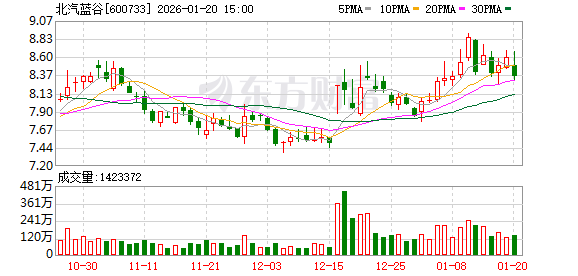
Core Insights - The article highlights that BAIC New Energy has successfully transitioned from the "technology investment phase" to the "performance realization phase" in the competitive autonomous driving sector, establishing a significant leading advantage [2][3] - The company is set to achieve a complete value loop of "technology-sales-benefits" by 2025, breaking the stereotype of state-owned enterprises in the automotive industry and redefining the value model of "new state-owned enterprise vehicle manufacturing" [3] Technological Advancements - BAIC New Energy's L3 autonomous driving model, the Arcfox Alpha S, received the first batch of L3 autonomous driving licenses in December 2025, marking a shift from "technical verification" to "commercial realization" [5] - The Alpha S (L3 version) is equipped with 34 high-precision sensors, including three LiDARs, ensuring a comprehensive 360-degree perception matrix and a leading speed limit of 80 km/h among approved L3 models in China [9] Strategic Collaborations - The company announced an upgrade of its collaboration with Pony.ai to the 2.0 era, aiming to deploy 3,000 units of the Arcfox Alpha T5 Robotaxi within the year, targeting both the domestic and global Robotaxi markets [9] Market Positioning - BAIC New Energy has established a dual-brand strategy, with the Arcfox brand achieving over 160,000 units sold and the premium Enjoy brand breaking 10,000 units in December, solidifying its position in the luxury electric vehicle market [12] - The company has successfully crossed the scale threshold in the mainstream market, with a total sales volume of 209,000 units in 2025, reflecting an 84% year-on-year increase [12] Financial Performance - The gross margin for BAIC Blue Valley turned positive at 1.8% in Q3 2025, with revenue showing positive growth for three consecutive quarters, indicating a shift towards a profitable business model [14] - The company is entering a virtuous cycle of "scale driving profitability, profitability feeding innovation," supported by the introduction of new products and technologies [14]

技术破局、爆款出圈,MG的2025“好起来了”
Bei Ke Cai Jing· 2026-01-13 08:21
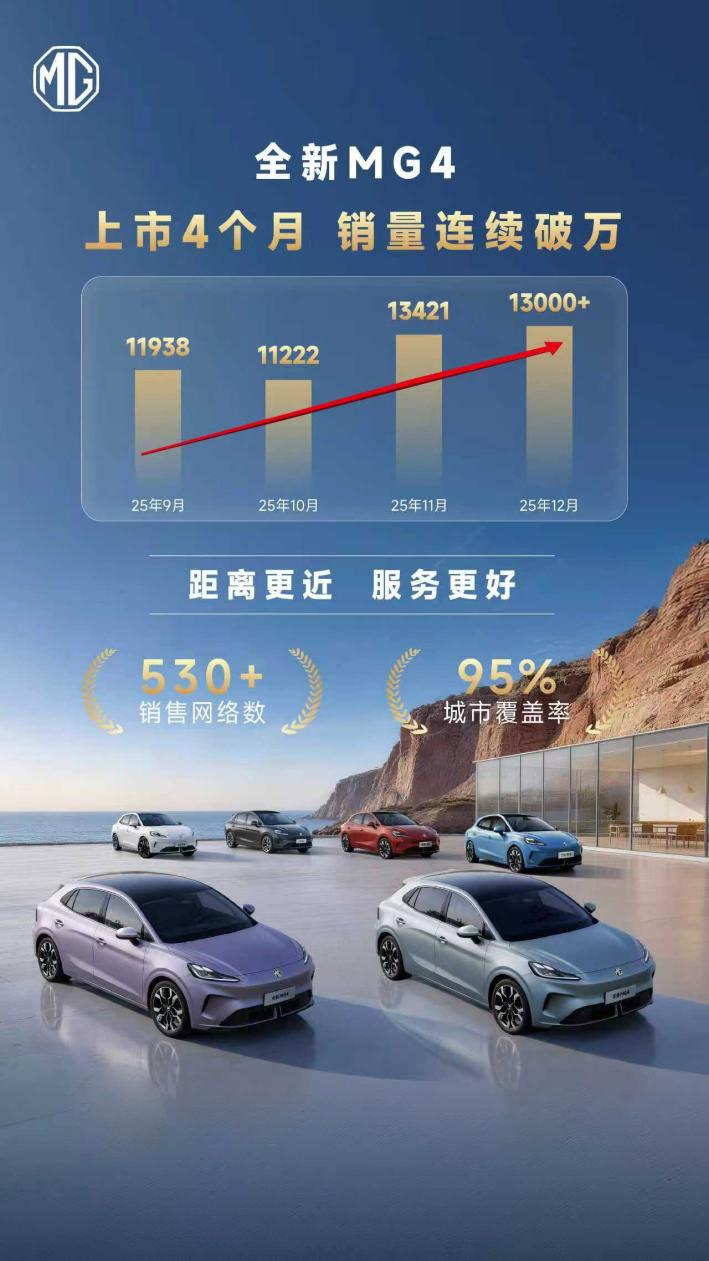
Core Insights - MG has experienced a significant transformation in 2025, achieving a year-on-year sales growth of over 59%, with its new energy vehicles (NEVs) surging by 476%, becoming the main driver of this growth [1][14] - The launch of the new MG4 has been pivotal, with monthly sales exceeding 10,000 units for four consecutive months and total orders surpassing 80,000, establishing MG as a leader in the 100,000-level pure electric vehicle segment [1][12] Sales Performance - MG's domestic sales reached 116,000 units by November 2025, surpassing the total sales for the entire year of 2024 [10] - In the European market, MG's sales exceeded Tesla for the first time, achieving 153,000 units in the first half of 2025, and total sales in Europe and the UK surpassed 300,000 units for the year [10] Product Innovation - The new MG4 features advanced technologies such as mass production of semi-solid batteries and an integrated battery and vehicle body design, addressing key consumer pain points with a range of over 400 kilometers at a price point of 70,000 [7][5] - The vehicle is equipped with high-end features typically found in more expensive models, including Qualcomm 8155 chips and advanced driving assistance systems, redefining standards in the pure electric hatchback market [7][9] Brand Positioning - MG has shifted from a reliance on traditional fuel vehicles to a focus on new energy vehicles, with NEV sales increasing significantly [14] - The brand has received multiple awards, including "China's Annual Top Ten Cars" and "Best-Selling New Energy Vehicle," reflecting high market recognition of its product value and reliability [14] Market Strategy - MG's approach to market competition has not relied on price wars but rather on meeting core consumer demands through a "technology equality" strategy, offering high-quality products at accessible prices [5] - The company has expanded its sales network to over 530 stores, covering 95% of cities, and has seen other brand dealers switch to MG, indicating strong market confidence [12] Future Outlook - As MG prepares for the new year, it has launched a 1 billion yuan promotional campaign to stimulate consumer demand, aiming to maintain its growth momentum [15] - The company faces the challenge of converting its current upward trajectory into sustained growth, which will be crucial for its future success [15]
全球开发者狂喜,Claude Code史上最大更新,一次性1096次提交
3 6 Ke· 2026-01-12 02:23
Core Insights - Boris Cherny, the creator of Claude Code, no longer writes code himself but utilizes his AI tool, which generated over $1 billion in revenue last year [1][3][20] - The recent update, Claude Code 2.1, marks a significant enhancement with 1,096 submissions, showcasing a self-improving AI system [7][39] Update Features - **Shift+Enter Functionality**: The long-awaited multi-line input feature is now operational across various terminals without additional configuration [8] - **Skills System Upgrade**: Skills are now first-class citizens, allowing for hot reloading and context forking, enhancing developer efficiency [9][11] - **Session Teleportation**: Users can seamlessly transfer conversations between the web and terminal environments, enabling continuity in work [14] - **Intelligent Permission Management**: The system can now attempt alternative methods when tool calls are denied, improving workflow [15] - **Multi-language Responses**: Claude Code can now respond in multiple languages, catering to non-English speaking developers [17][18] Market Position and Philosophy - Claude Code is recognized as a true general-purpose agent, capable of various tasks beyond coding, such as data analysis and content creation [20][21] - The design philosophy of "folder thinking" allows users to organize tasks effectively, enhancing productivity [24] - The "danger mode" feature enables full automation of computer operations, significantly increasing efficiency [25] - The Skills ecosystem allows users to leverage pre-validated workflows, streamlining the development process [26][27] Background on Boris Cherny - Boris Cherny, a former Meta engineer, now leads Claude Code development at Anthropic, relying entirely on Claude Code for his coding tasks [30][33] - His approach emphasizes quality over speed, believing that high-quality outputs reduce overall development time [33] Future Implications - The evolution of Claude Code suggests a shift in the role of programmers, focusing more on defining problems rather than writing code [41] - The self-referential nature of AI, as demonstrated by Claude Code's ability to improve itself, marks a significant milestone in AI development [42] - The rise of open-source models is democratizing access to AI capabilities, shifting power dynamics in the industry [42]

高德扫街榜百日之变 AI世界模型能否撑起下一个超级入口?
Zhong Guo Jing Ying Bao· 2026-01-09 00:33
Core Insights - The article discusses the launch and impact of Gaode's "Flying Street View" feature, which allows users to virtually explore restaurants and attractions, enhancing the local service experience [1][6] - Gaode's "Street View Ranking" has surpassed 660 million users and achieved a 330% increase in merchant orders within 100 days of its launch, indicating strong market traction [1][6] - The integration of AI-driven world models into the local service sector represents a significant technological advancement, aiming to bridge the gap between real experiences and digital representations [2][4] Group 1: Product Features and Innovations - The "Flying Street View" feature utilizes Gaode's self-developed world model technology, which scored the highest in international benchmarks, showcasing its capability to transform local service experiences [2][3] - This technology allows merchants to create realistic digital storefronts with minimal effort, using just a smartphone to capture video, which AI then processes into immersive experiences [1][4] - The transition from traditional 3D modeling to AI-driven industrial production marks a significant shift in how local businesses can present themselves online [2][3] Group 2: Market Position and Strategy - Gaode aims to evolve from a navigation tool to a critical decision-making platform for users in unfamiliar environments, enhancing its role in the local service ecosystem [6][7] - The company is focused on building a trust system through the integration of behavior and credit data, which is essential for creating a reliable local service network [6][7] - Gaode's strategy includes providing free access to the "Flying Street View" feature for 1 million small businesses, promoting inclusivity and reducing barriers to digital representation [2][5] Group 3: Challenges and Future Outlook - Gaode faces challenges in maintaining real-time updates of digital representations to match the dynamic nature of physical storefronts and customer interactions [7] - The company is currently adopting a non-commercial approach to the "Street View Ranking," prioritizing trust over immediate monetization, which may require balancing with other revenue-generating business segments [7] - The success of Gaode's transition to a "super entrance" for local services will depend on its ability to sustain the authenticity of its rankings and navigate the complexities of commercialization [7]
零跑十年:从边缘玩家到价值重构者的蜕变
Zhi Tong Cai Jing· 2026-01-08 12:21
Core Insights - Leap Motor has achieved significant growth, delivering 597,000 vehicles in 2025, a 103% year-on-year increase, securing its position as the top seller among new energy vehicle manufacturers [1] - The launch of the D series, including the D19 SUV and D99 MPV, marks Leap Motor's entry into the high-end market while maintaining its cost-effective strategy [2] - Leap Motor's strategy emphasizes "technological equality," aiming to provide high-end features at competitive prices, thereby reshaping consumer perceptions of "technological luxury" [2] Product Development - The D19 is priced between 250,000 and 300,000 yuan, offering both range-extended and pure electric options, while the D99 targets the 300,000 yuan MPV market with a large battery and flexible seating [1] - Both models are built on a new D platform that integrates range-extended and pure electric architectures, featuring a compact and efficient integrated electric drive system developed in collaboration with NIO [1][2] Strategic Partnerships - Leap Motor has formed a strategic partnership with China FAW, securing a 3.744 billion yuan investment to enhance its resource base and development capabilities [2] - The company has established a dual-driven strategy with domestic and international partnerships, including collaboration with Stellantis, to support its growth and expansion goals [2] Market Positioning - Leap Motor's stock has seen a 50% increase since the beginning of 2025, reflecting positive market sentiment regarding its business fundamentals [3] - Analysts note that Leap Motor has transitioned from a "cost-effective player" to a "technology integrator," leveraging vertical integration to enhance product quality while maintaining margins [3] Competitive Landscape - The upcoming launch of the D19 and D99 in April 2026 will place Leap Motor in direct competition with established players like BYD and Xiaomi, highlighting the need for strong brand positioning [4] - Leap Motor aims to achieve a sales target of 1 million vehicles by 2026, which will require robust production, distribution, and service capabilities [4] Industry Impact - Leap Motor represents a shift in the automotive industry, moving from a follower to a rule-maker, emphasizing the importance of equitable access to advanced technology [5] - The company's focus on electric, intelligent, and localized manufacturing reflects the resilience and innovative spirit of Chinese manufacturing in the face of global challenges [5]
