换电网络

Search documents
巨头,入局!
中国基金报· 2025-08-04 07:23
Core Viewpoint - The car rental industry is set to embrace a large-scale battery swapping model, with CATL partnering with multiple companies to introduce over 100,000 battery-swappable vehicles by 2025, catering to diverse rental needs [2][5]. Group 1: Strategic Partnerships - CATL has signed a strategic cooperation agreement with Times Electric, Shenzhou Car Rental, and CMB Financial Leasing to implement the battery swapping model in the car rental sector [2][5]. - The collaboration aims to provide sustainable energy solutions through deep synergy in energy supply, asset operation, financial support, and vehicle services [5][7]. Group 2: Vehicle and Technology Implementation - Shenzhou Car Rental will introduce CATL's chocolate battery-swappable models across various vehicle categories, targeting the A0 to B-class mainstream market, with a pilot program starting in 2025 [5][11]. - The vehicles will be equipped with standardized battery swapping blocks, offering a range of 400 to 600 kilometers, thus supporting flexible energy replenishment for various rental scenarios [5][11]. Group 3: Infrastructure Development - CATL plans to leverage Shenzhou Car Rental's extensive network of over 2,000 offline outlets and parking lots to build a battery swapping network covering key transportation hubs, enabling efficient "return and swap" services for rental customers [11][14]. - The integration of battery swapping station navigation and settlement functions into the Shenzhou Car Rental app will create a seamless "rent - swap - return" service experience [13]. Group 4: Future Goals and Expansion - CATL aims to establish 1,000 battery swapping stations by 2025, with a mid-term goal of 10,000 stations and a long-term target of 30,000 stations nationwide, involving collaboration with various partners [14]. - Recent partnerships with NIO and Sinopec highlight CATL's commitment to building the largest battery swapping network globally and standardizing industry technologies [14].

宁德时代(300750):2Q25业绩稳健 盈利能力不断改善
Xin Lang Cai Jing· 2025-08-03 10:40
Core Viewpoint - The company has shown strong performance in the first half of 2025, with significant growth in battery shipments and revenue, while maintaining high capacity utilization and planning for future expansion in battery swapping networks [2][3][4]. Group 1: Financial Performance - In 2Q25, the company's battery shipments were approximately 150 GWh, generating revenue of 941.8 billion yuan, representing year-on-year and quarter-on-quarter growth of 8.3% and 11.2% respectively [1]. - For 1H25, the company reported total revenue of 1,788.9 billion yuan, a year-on-year increase of 7.3%, with revenue from power and energy storage batteries at 1,315.7 billion yuan (up 16.8%) and 284.0 billion yuan (down 1.5%) respectively [2]. - The net profit margin improved to 17.5% in 2Q25, with net profits for 1H25 and 2Q25 reaching 304.9 billion yuan and 165.2 billion yuan, reflecting year-on-year growth of 33.3% and 33.7% respectively [2]. Group 2: Production Capacity and Utilization - The company maintained a high capacity utilization rate of 90% in 1H25, with effective capacity at 345 GWh and production at 310 GWh [3]. - The company has 235 GWh of capacity under construction, projecting total annual capacity to approach 900 GWh by the end of 2025 [3]. Group 3: Market Strategy and Future Outlook - The company plans to establish 1,000 passenger car battery swapping stations and 300 heavy truck swapping stations by 2025, having already built 400 and 100 stations respectively by the end of July [3]. - The company expects total lithium battery shipments for 2025 to reach 632 GWh, with power and energy storage batteries projected at 506 GWh and 126 GWh, indicating year-on-year growth of 32.8% and 36.0% [4]. - Despite a decrease in battery prices due to metal price fluctuations, the company has adjusted its profit forecasts upward, reflecting a robust operational efficiency and structural revenue changes [4].

H1电动重卡电池装机同比增长230%,瑞浦兰钧装机排名升至第二
高工锂电· 2025-07-25 10:22
Core Viewpoint - The domestic sales of new energy heavy trucks reached approximately 79,000 units in the first half of 2025, marking a year-on-year increase of 185%, nearing the total sales of the previous year [1][3]. Group 1: Market Trends - The electrification of heavy trucks is accelerating, with new energy heavy truck sales hitting a new high and penetration exceeding 20% [2]. - The rapid growth of new energy heavy trucks has driven the corresponding installation of power batteries to approximately 31.7 GWh, a year-on-year increase of 230% [4]. - The sales of battery-swapping heavy trucks reached 25,000 units in the first half of the year, reflecting a year-on-year growth of 141% [14]. Group 2: Technological Innovations - Ultra-fast charging technology is becoming a core focus in the competition for heavy truck electrification, significantly enhancing the sales of charging heavy trucks [5][12]. - The new energy heavy truck battery from Ruipu Lanjun, the 324Ah Pro, has an energy density of 198 Wh/kg and a lifecycle of over 10,000 cycles, making it suitable for demanding operational conditions [10]. - The design of the rear stacking battery pack by Ruipu Lanjun has improved energy capacity to 680 kWh while reducing the height by 16%, enhancing vehicle stability and driver visibility [15][16]. Group 3: Competitive Landscape - Ruipu Lanjun holds a 7.5% market share in battery installations with a total installation volume of 2.38 GWh, showing steady growth compared to the first half of 2024 [5][7]. - The company has secured orders from major clients including SANY, Dongfeng, and Heavy Truck, expanding its customer base to include various manufacturers [8]. - The innovation in battery swapping and the establishment of a robust battery-swapping network are expected to continue driving the growth of new energy heavy truck sales [8].

重整旗鼓的乐道,能帮蔚来在四季度盈利吗?
电动车公社· 2025-07-19 15:59
Core Viewpoint - NIO has begun to adopt cost-saving measures, indicating a shift towards financial prudence after years of significant losses, with a goal to achieve profitability by Q4 2025 [7][11][40]. Group 1: Financial Performance and Cost Management - NIO has accumulated losses exceeding 127 billion RMB since its inception, highlighting the urgency for profitability [10]. - The company has set a target to turn profitable by Q4 2025, as stated by CEO Li Bin [11][12]. - NIO's recent activities, such as consolidating multiple events into one, reflect a strategic move to reduce costs significantly [5][6][40]. Group 2: Investment and R&D - NIO has invested over 60 billion RMB in research and development, which has led to significant technological advancements in the industry [14][15]. - The company has established a robust charging and battery swapping network, with 3,405 battery swap stations and over 80 million swaps completed [20][22]. - NIO's strategy includes extensive infrastructure investments, such as 13,375 supercharging piles, which also serve other brands, indicating a commitment to user experience [23][24][29]. Group 3: Brand Strategy and Market Positioning - NIO is restructuring its brand strategy by integrating its sub-brands to optimize resource utilization and enhance profitability [41][55]. - The launch of the new brand, Ladao, is positioned to leverage NIO's existing resources and customer base, aiming for higher sales volumes [56][66]. - The company is focusing on creating a closed-loop system among its brands to increase sales and reduce costs, thereby improving overall profitability [73][75]. Group 4: Future Outlook - NIO's ability to achieve profitability in Q4 2023 will heavily depend on the delivery performance of its Ladao brand [49][75]. - The company is adapting to a rapidly changing market environment, emphasizing the need for financial discipline and strategic resource allocation [39][40][80]. - NIO aims to establish itself as a leading high-end brand in the Chinese automotive market, competing with established global players [81][84].


蔚来汽车
数说新能源· 2025-06-04 03:27
Core Viewpoint - The company has shown a steady increase in electric vehicle deliveries and is focused on cost reduction and product innovation to improve financial performance and market competitiveness [1][2][3][8]. Group 1: Delivery and Sales Performance - In the first quarter, the company delivered 42,094 smart electric vehicles, a year-on-year increase of 4.1%, with expectations for the second quarter to reach between 72,000 and 75,000 vehicles, representing a year-on-year growth of 25.5% to 30.7% [1]. - The company successfully launched new models including ES6, EC6, ET5, and ET5T, which are expected to enhance sales performance [2][12]. - ONVO brand has seen a steady increase in orders since April, with the L60 model ranking among the top three in its segment [18][20]. Group 2: Financial Performance - Total revenue reached RMB 12 billion, a year-on-year increase of 21.5% [8]. - The automotive gross margin improved to 10.2%, up from 9.2% in the previous year, driven by lower material costs [9]. - Operating loss was RMB 6.4 billion, a year-on-year increase of 19%, while net loss was RMB 6.8 billion, a year-on-year increase of 30.2% [10]. Group 3: Cost Management and Efficiency - The company has implemented cost control measures, aiming for a 15% reduction in R&D expenses in the second quarter [14]. - Sales and management expenses increased by 46.8% year-on-year, but the company plans to manage these costs carefully to achieve a target of keeping non-GAAP sales and management expenses below 10% of sales revenue by the fourth quarter [10][14]. - The company is focusing on improving operational efficiency through restructuring and resource allocation [13][14]. Group 4: Product and Technology Innovation - The NX9031 smart driving chip has been deployed in flagship models, enhancing product competitiveness and cost structure [3]. - The NWM model has been launched, providing significant upgrades in active safety and driving experience [16][17]. - The company plans to introduce the L90 model in the third quarter, which is expected to attract strong interest due to its innovative features [20]. Group 5: Charging and Battery Swap Network - The company operates 3,408 battery swap stations globally, providing over 75 million battery swap services [5]. - The charging network has expanded significantly, with over 26,000 charging piles installed across major cities [5]. - The company is working on increasing the coverage of its battery swap network, particularly in lower-tier cities [19]. Group 6: International Expansion - The company has established partnerships in over 15 core markets and plans to expand its global presence with the launch of the Firefly brand in several European countries [7][28]. - The focus remains on long-term growth rather than aggressive short-term sales targets in international markets [28]. Group 7: Production Capacity and Supply Chain Management - The current production capacity is sufficient to meet the expected delivery targets for the fourth quarter, with plans to open a third factory in September [29]. - The company is transitioning to a more inventory-based sales model to better meet consumer demand [30].

宁德时代董事长曾毓群表示:未来三年重卡新能源渗透率将突破50%;电动重卡全生命周期成本优势突显
鑫椤锂电· 2025-05-21 00:54
Core Viewpoint - The article emphasizes the economic advantages of electric heavy-duty trucks over traditional fuel vehicles, highlighting the importance of battery technology and infrastructure in driving the transition to electric commercial vehicles [1][2][4]. Group 1: Economic Benefits of Electric Heavy-Duty Trucks - The economic viability of electric heavy-duty trucks is demonstrated by the cost savings per kilometer compared to fuel vehicles, with savings of 0.62 CNY per kilometer, leading to an annual profit increase of 60,000 CNY for trucks running 100,000 kilometers [1]. - The transition to electric heavy-duty trucks is expected to significantly reduce costs and carbon emissions, with a projected penetration rate of over 50% in the next three years [2]. Group 2: Battery Technology and Infrastructure - CATL has introduced a standard battery pack (75 battery) for heavy-duty trucks, with a current capacity of approximately 171 kWh, expected to increase to 200 kWh, and a lifespan of over 12 years and 6,000 cycles [5][7]. - The development of a nationwide battery swap network covering 15,000 kilometers is planned, which will enhance the operational efficiency of electric heavy-duty trucks [4]. Group 3: Industry Trends and Innovations - Various companies are launching new battery products tailored for commercial vehicles, with features such as rapid charging capabilities and improved energy density, which are crucial for the adoption of electric heavy-duty trucks [9][11]. - The introduction of innovative battery technologies, such as the CTB (Cell to Body) architecture, aims to optimize energy density and enhance the economic performance of electric heavy-duty trucks [11][12]. Group 4: Challenges and Future Outlook - The current lack of dense charging infrastructure poses challenges for the widespread adoption of electric heavy-duty trucks, but ongoing developments in battery technology and business models are expected to accelerate the transition [15][16]. - The industry consensus is shifting towards electric heavy-duty trucks, driven by the economic advantages and advancements in battery technology [16].

宁德时代一季报营收利润双增,持续加大换电网络市场布局
Jing Ji Guan Cha Wang· 2025-04-15 10:08
Core Insights - Ningde Times reported a revenue of 84.705 billion yuan for Q1 2025, a year-on-year increase of 6.18%, and a net profit of 13.96 billion yuan, up 32.85% [1] - The company has a small proportion of its business in the U.S., which has been minimally affected by recent tariff policies [1] - The emerging markets in the Middle East and Australia are experiencing rapid growth in energy storage demand, driven by renewable energy and AI data centers [1][2] Financial Performance - R&D investment reached 4.814 billion yuan in Q1 2025, a year-on-year increase of 10.92% [2] - The net cash flow from operating activities was 32.868 billion yuan, up 15.91% year-on-year [2] - As of the end of Q1, the company had a cash and cash equivalents balance of 286.3 billion yuan [2] Market Position and Strategy - Ningde Times has maintained its position as the global leader in power battery usage for eight consecutive years, with a market share of 38% in January and February 2025, and 43% in the European market, an increase of 8% year-on-year [1] - The company plans to establish 1,000 battery swap stations in 2025 and has signed a cooperation framework agreement with Sinopec to build a nationwide battery swap ecosystem [3] - Strategic partnerships have been formed with NIO to create the largest and most advanced passenger vehicle battery swap service network globally, and a joint venture with Didi to expand the battery swap market [3]
蔚来4月以来销量跳涨 在沪总交付突破10万辆
Xin Hua Cai Jing· 2025-04-14 08:25
Core Viewpoint - NIO has recently achieved significant sales growth, attributed to new financial incentives, local subsidies, and internal organizational changes, marking a phase of organic growth for the company [2] Group 1: Sales Performance - NIO's sales reached a new high in the past two weeks, with over 3,500 new orders during the Qingming Festival and 1,400 orders on the first working day after the holiday [2] - The introduction of a "5-year interest-free" financial policy and a "5-year free battery swap" benefit has positively impacted customer interest, leading to a 15% increase in foot traffic at some stores [2] Group 2: Product Launches - 2025 is projected to be a significant year for NIO, with multiple new product launches, including the ET9 and models based on a new generation platform [3] - The NIO Firefly brand will also see the launch of its namesake model in April, alongside the second model from the Lido brand, the L90 [3] Group 3: Technology and Infrastructure - NIO is focusing on end-to-end intelligent safety and active safety in response to the current trend in smart driving [3] - The company has established a robust battery swap network, with 187 swap stations in Shanghai and over 1,044 stations in the Yangtze River Delta region, accounting for 32% of the national total [4] - NIO plans to achieve "battery swap coverage in every county" in Anhui by mid-2023, following similar success in Jiangsu, Zhejiang, and Shanghai [4]
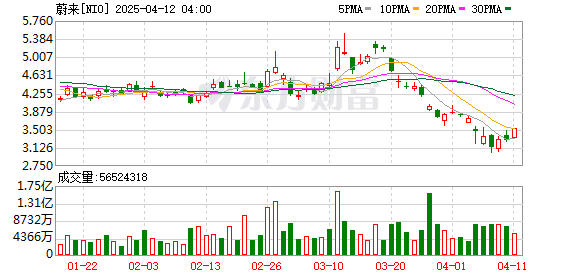
乐道总裁艾铁成宣布离职!昨天还在发文宣传换电,曾承诺3月冲击2万辆交付量,回应“订单爆了”:准备做成梗图发放
Mei Ri Jing Ji Xin Wen· 2025-04-02 04:56
Core Viewpoint - The resignation of Ai Tiecheng as president of Lidao Automotive and the appointment of Shen Fei as the new president are part of a strategic organizational adjustment by NIO to enhance Lidao's sales performance and operational efficiency [1][4]. Group 1: Leadership Changes - Ai Tiecheng announced his resignation from Lidao Automotive and NIO, citing unsatisfactory sales performance of the Lidao L60 despite its strong product capabilities [1]. - Shen Fei, previously in charge of NIO's energy business, has been appointed as the new president of Lidao Automotive, responsible for sales and regional management [4]. - The restructuring aims to allocate more management resources to Lidao, enhancing team collaboration and resource sharing across business units [4]. Group 2: Sales Performance - The Lidao L60 was launched in September 2022, with ambitious delivery targets set by Ai Tiecheng for 2024 and 2025 [4]. - In the first two months of 2023, Lidao's delivery numbers were 5,912 and 4,049 vehicles, respectively, indicating a need for improved sales strategies [4]. - As of March 31, 2025, Lidao has delivered a total of 35,542 vehicles, with 14,781 vehicles delivered in the first quarter of 2025 alone [6].
比亚迪发布10C快充电池,“油电同速”竞赛开启
高工锂电· 2025-03-18 10:43
Core Viewpoint - BYD's new 10C fast charging technology sets a new benchmark for electric vehicle charging speed, significantly narrowing the gap between electric and fuel vehicles in terms of refueling experience [5][9] Group 1: Battery Technology - The second-generation blade battery features a shift from long blade design to short blade design, effectively reducing internal resistance [2] - Key innovations include optimization of electrode materials, with a focus on enhancing conductivity and performance under high temperatures [2][3] - The introduction of a composite temperature control system improves heat dissipation by up to 90%, addressing the thermal challenges of high-speed charging [3][4] Group 2: Charging Infrastructure - BYD plans to build over 4,000 "Megawatt Flash Charging Stations" with a maximum charging power of 1,360 kW, enhancing the overall charging ecosystem [4][5] - The company is developing supporting energy storage systems to ensure stable operation of the fast charging network [4] Group 3: Market Positioning and Strategy - The cost of the second-generation blade battery is expected to increase by approximately 8%, with overall vehicle costs rising by 6%-7% due to the high-voltage battery system [5][6] - Initial deployment of the 10C technology will focus on high-end models, with plans to extend to models priced below 200,000 yuan by 2026 [5][6] - The industry anticipates that mainstream upgrades in fast charging technology will primarily focus on 5C and 6C levels this year, while BYD's 10C technology accelerates competition in the high-end market [6][8] Group 4: Competitive Landscape - The introduction of the 10C technology increases competitive pressure on battery manufacturers, requiring them to develop comprehensive system solutions rather than just high C-rate batteries [8] - The collaboration between CATL and NIO highlights the competitive dynamics in the refueling sector, emphasizing two core development paths: ultra-fast charging and standardized battery swapping networks [9]