智能网联新能源汽车

Search documents
乌鲁木齐特斯拉中心维修技师宋师傅:科技让产业更智能高效,让车主更省钱省心 | 一线员工的小目标和大梦想
Zhong Guo Qi Che Bao Wang· 2026-02-25 06:54
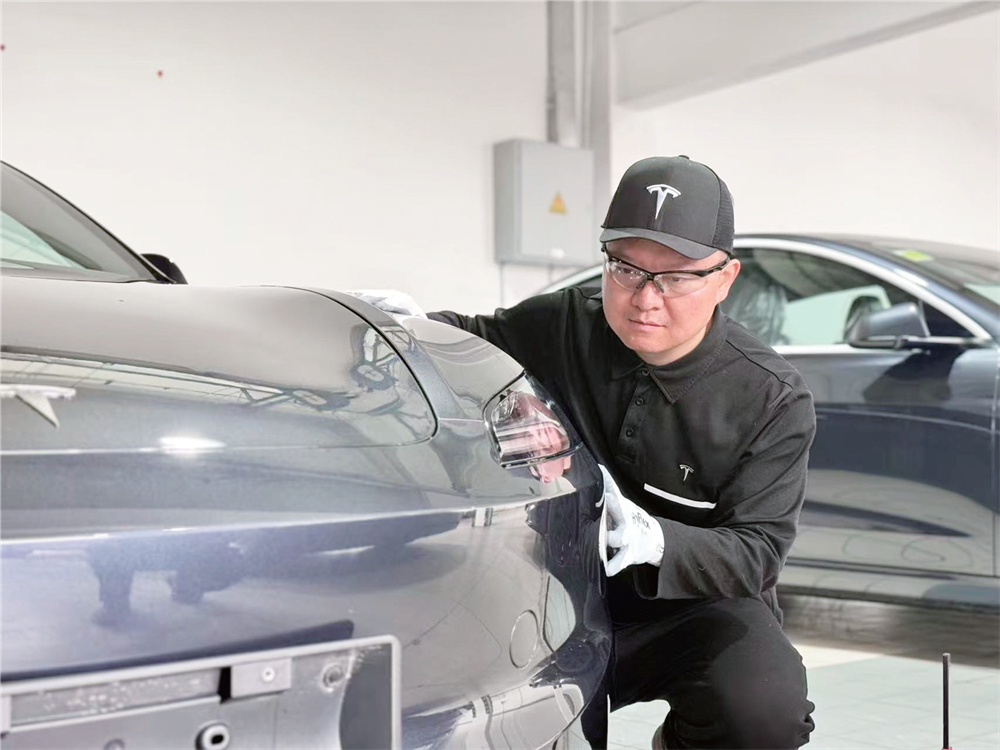
Core Insights - Tesla is expanding its mobile service capabilities in Xinjiang, with technicians like Song providing on-site assistance to customers across the region, demonstrating a shift from traditional service models to more efficient, technology-driven solutions [2][3] - The integration of remote diagnostic technology allows Tesla to resolve issues without requiring customers to visit service centers, significantly improving service efficiency and customer satisfaction [2][3] - The development of charging infrastructure in Xinjiang has progressed, facilitating the use of electric vehicles and contributing to local economic growth [4] Company Operations - Tesla's mobile service technicians are equipped with advanced diagnostic tools, transforming vehicle repair from physical labor to a more intellectual process, which enhances service delivery [2][3] - In 2022, Tesla's mobile service in Xinjiang covered over 20,000 kilometers, showcasing the efficiency and effectiveness of their service model compared to traditional repair stations [3] Industry Trends - The automotive industry is witnessing a significant transformation with the rise of smart and connected electric vehicles, which is expected to lead to substantial changes in the aftermarket services [5] - The upcoming years, particularly 2026, are seen as a pivotal period for the development of intelligent connected new energy vehicles in China, indicating a trend towards greater integration of AI in the automotive sector [5]


瞭望 | 重庆:“汽车产量第一城”的新跨越
Xin Hua She· 2026-02-24 09:14
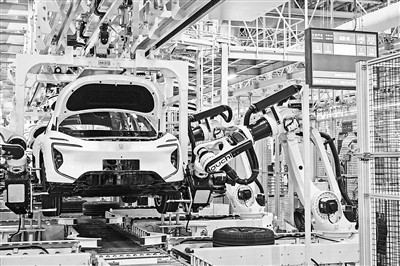
Core Insights - Chongqing aims to become a "smart connected new energy vehicle capital," focusing on both vehicle production and building a resilient full industry chain [1][4] - In 2025, Chongqing's automobile production reached 2.788 million units, a year-on-year increase of 9.7%, with new energy vehicles (NEVs) growing at a rate of 36% to 1.296 million units [1][4] - The automotive industry cluster in Chongqing has surpassed 800 billion yuan, driven by innovation and efficiency improvements [1][4] Industry Development - Chongqing's automotive industry faced challenges in the past due to a decline in production, but has now pivoted towards the "smart connected new energy vehicle" sector, leveraging advancements in technology [2][4] - Leading companies like Changan Automobile are implementing comprehensive reforms, achieving over 400 core technology breakthroughs in the NEV sector [2][4] - The production efficiency in Changan's smart factory has improved by over 50% compared to traditional factories [2] Technological Advancements - Changan Automobile's L3-level autonomous driving vehicle received the first official license in China, marking a significant milestone in the country's autonomous vehicle development [6] - The L3 system allows for driver disengagement under specific conditions, enhancing safety and operational efficiency [6][7] - Chongqing is integrating smart manufacturing across the entire production process, transitioning from traditional manufacturing to intelligent manufacturing [6][7] Supply Chain Resilience - The local supply chain for automotive components in Chongqing has stabilized at over 45%, with significant improvements in local sourcing capabilities [9][10] - The city is focusing on strengthening, supplementing, and extending its automotive supply chain, ensuring a self-sufficient and efficient ecosystem [9][10] - Collaborative platforms are being established to enhance communication between large and small enterprises, fostering innovation and resilience within the supply chain [10][11] Collaborative Ecosystem - Chongqing has formed an automotive product innovation alliance with the Chengdu region, promoting shared research and development efforts [11] - The city has attracted over 600 smart connected NEV component enterprises, creating a robust industrial ecosystem [11][12] - The government and industry stakeholders are working together to support various technological routes in the NEV sector, aiming for a comprehensive upgrade of the automotive ecosystem [12]
今年春晚第5个分会场,藏在苏州
21世纪经济报道· 2026-02-14 01:17
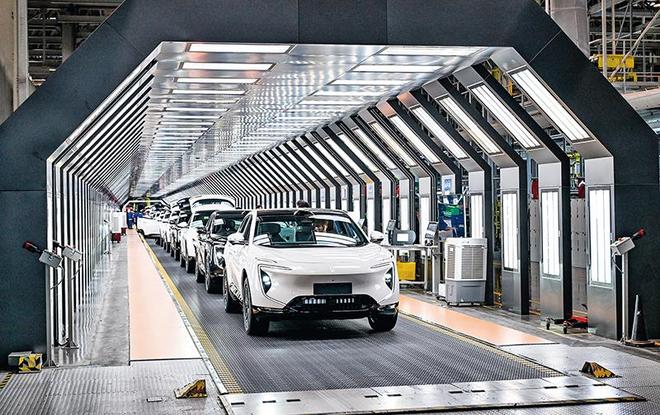
Core Viewpoint - The Spring Festival Gala has evolved into a significant platform for cities to showcase their economic and industrial strengths, with the 2024 gala restoring the "1+N" model of multiple sub-venues, highlighting the transformation and achievements of various cities in China [1][3][4]. Group 1: Economic Transformation and Industrial Development - The 2025 Spring Festival Gala in Chongqing will feature a light show with 780 electric vehicles, symbolizing the city's shift from traditional fuel vehicles to new energy and smart connected cars, following a major industrial transformation initiated in 2018 [3][4]. - Chongqing's new energy vehicle production has increased 29 times over the past five years, positioning it as the leading city in automotive production in China by 2025 [4]. - Wuhan will showcase advancements in six key areas including optoelectronic information and AI during the 2025 gala, reflecting its strategic industrial layout [8]. Group 2: Regional Highlights and Innovations - The 2024 gala in Changsha will prominently feature engineering machinery, with local companies like Zoomlion and SANY representing the city's core industrial strength, as Changsha's engineering machinery sector has led the nation in asset value and revenue for 13 consecutive years [8]. - The 2024 gala in Shenyang will mark the debut of heavy-duty industrial robots on the national stage, showcasing the city's evolution from an old industrial base to a hub of innovation [8]. - The 2026 gala will include new participants like Suzhou's Wuzhong District, which is home to four robot companies, emphasizing its ambition to become a leading robotics industrial cluster in China [16]. Group 3: Investment and Economic Strategy - Hefei has successfully attracted major investments in sectors like display technology and electric vehicles, earning the title of "the most powerful venture capital city" and becoming a hub for unicorn companies [13]. - Yibin, transitioning from a traditional resource-based economy to a new energy and materials hub, has rapidly developed a complete industrial chain in the battery sector, showcasing the potential for resource-rich cities to embrace new economic opportunities [13][14].

小米汽车公布:超60万台!事关第一代SU7、新一代SU7 最新问答来了
Mei Ri Jing Ji Xin Wen· 2026-02-13 00:50
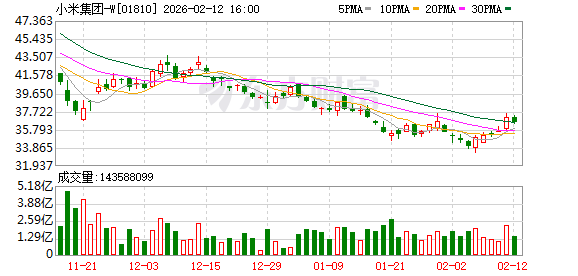
Group 1 - Xiaomi Auto announced that it has delivered over 600,000 vehicles since April 3, 2024 [2] - In January 2024, Xiaomi's YU7 model sold 37,869 units, as reported by the company's founder and CEO Lei Jun [3] - Xiaomi Auto confirmed that it will continue to provide maintenance and service for the first-generation SU7, which has been discontinued, ensuring parts availability for at least 10 years [7] Group 2 - Xiaomi Auto expressed strong support for the "Guidelines for Compliance with Pricing Behavior in the Automotive Industry" issued by the National Market Supervision Administration, emphasizing its commitment to fair competition and consumer rights [9] - The company plans to optimize its pricing management and compliance system in accordance with the guidelines, aiming to eliminate price fraud and unfair competition [9] - Xiaomi Auto intends to collaborate with industry partners to uphold the guidelines and contribute to the high-quality development of the Chinese automotive industry [9]

2.12犀牛财经早报:“春节档”银行花式“抢客”理财
Xi Niu Cai Jing· 2026-02-12 01:39
Group 1 - The inquiry transfer market is experiencing rapid growth, with 12 A-share listed companies implementing share transfers since 2026, and many institutions reporting floating profits exceeding 30% [1] - Public and private funds are actively participating in the inquiry transfer market, indicating a shift towards a more stable and regular share transfer mechanism in China's capital market [1] - The banking sector is engaged in a competitive marketing push for wealth management products ahead of the Chinese New Year, reflecting operational pressures due to declining interest rates and a scarcity of quality assets [1] Group 2 - Regulatory scrutiny in the capital market has intensified, with a focus on misleading statements and financial fraud, resulting in a significant increase in penalties and investigations [2] - As of February 11, 2026, 13 listed companies and their actual controllers have been investigated, with an average of one company being penalized every three days [2] - The total dividend amount distributed by listed companies before the Spring Festival has reached a record high of 348.8 billion yuan, surpassing the previous year's total [2] Group 3 - Several retail companies have announced adjustments to service arrangements and delivery fees during the Spring Festival, indicating a trend of increased costs for consumers [3] - The automotive industry is shifting from a "policy-driven" approach to a "product-driven" strategy, focusing on consumer demand and innovation for high-quality development [4] - Some companies in the photovoltaic industry are halting or delaying investment projects due to changing market conditions, indicating a transition towards market consolidation [4] Group 4 - xAI has seen significant talent turnover, with two co-founders leaving the company, raising concerns about the stability of its core team [5] - Tesla is also experiencing a wave of executive departures, with a recent announcement from a vice president marking the latest in a series of high-profile exits [5] - Apple is facing challenges in upgrading its Siri virtual assistant, with delays in the release of anticipated features due to software issues [5] Group 5 - Over ten real estate companies have undergone executive changes since the beginning of 2026, reflecting strategic adjustments in response to business needs [5] - Estée Lauder has filed a lawsuit against Walmart for selling counterfeit products, highlighting ongoing issues with brand protection in the retail sector [6][7] - 聚能磁体 has initiated the IPO process, indicating a move towards public listing and capital raising [7]
新晋“汽车第一省” 又出手了
Mei Ri Jing Ji Xin Wen· 2026-02-10 15:13
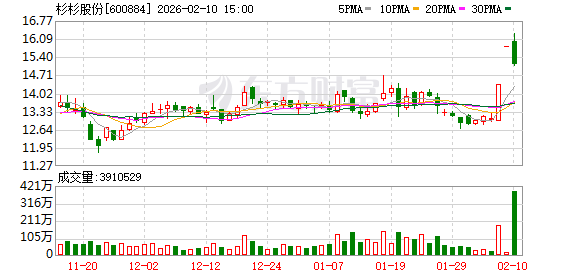
Core Viewpoint - The acquisition of Shanshan Co., Ltd. by Anhui state-owned assets through Wanhui Group marks a significant move in the strategic integration of the new materials industry chain, aiming to enhance the automotive sector in Anhui province [2][3]. Group 1: Acquisition Details - On February 8, Shanshan Co., Ltd. announced that its controlling shareholder, Shanshan Group, signed a restructuring investment agreement with Wanhui Group, allowing Wanhui to control 21.88% of Shanshan's voting rights for a total consideration of up to 7.156 billion yuan [2]. - If the restructuring process is successful, Wanhui Group will become the controlling shareholder of Shanshan Co., Ltd., with the actual controller changing to the Anhui Provincial State-owned Assets Supervision and Administration Commission [2]. Group 2: Strategic Implications - The acquisition is seen as a part of Anhui's strategy to promote production through investment, particularly in the context of the automotive industry, which has recently surpassed Guangdong in production volume [3]. - The collaboration between Wanhui Group, which specializes in polyvinyl alcohol (PVA) and its derivatives, and Shanshan, which focuses on lithium battery anode materials and polarizers, is expected to create synergies that will support the automotive industry's growth in Anhui [3]. Group 3: Broader Context of Mergers and Acquisitions - In 2023, Anhui's state-owned assets have been active in mergers and acquisitions, with eight instances of local state-owned enterprises acquiring listed companies, leading the nation [5]. - The backdrop for this activity includes national policies encouraging mergers and acquisitions, such as the "National Nine Articles" and "Science and Technology Innovation Board Eight Articles," which are expected to initiate a new wave of restructuring [5]. Group 4: Industry Development Focus - The automotive industry is identified as a key area for growth, with local governments in Anhui focusing on enhancing the quality and competitiveness of the automotive supply chain [9][10]. - The province aims to build a competitive automotive innovation ecosystem, emphasizing the importance of quality, branding, and capability in addition to scale [10]. Group 5: Regional Collaboration and Ecosystem Building - Various cities in Anhui are actively engaging in the automotive sector, with specific focuses on different components, such as battery materials and electronic parts, to create a well-rounded automotive ecosystem [11]. - The provincial government is facilitating mergers to introduce quality assets and enhance local industrial development through targeted strategies [12].
竞逐“中国汽车第一城” 谁更具含金量?
Zhong Guo Qi Che Bao Wang· 2026-02-10 09:09
Core Viewpoint - Chongqing has regained its title as "China's Automobile Capital" with a projected automobile production of 2.7877 million units in 2025, marking a 9.7% year-on-year increase, surpassing Guangzhou and positioning itself as a leader in the automotive industry [1] Group 1: Chongqing's Automotive Industry Development - The local government has shifted its automotive industry development goal from becoming "China's Detroit" to establishing a globally influential "Smart Connected New Energy Vehicle Capital" [1] - Chongqing's new energy vehicle production is expected to reach 1.2961 million units in 2025, reflecting a 36% year-on-year growth and a 29-fold increase over five years [2] - The establishment of the Jialing River Laboratory aims to tackle the underlying logic of automotive robotics, enhancing Chongqing's position in the smart driving sector [2] Group 2: Competitive Landscape Among Cities - Hefei is projected to produce approximately 2.5 million vehicles in 2025, with new energy vehicles accounting for 55.2% of that total, indicating a strong presence in the market [3] - Guangzhou's automotive production is estimated at 2.41 million units in 2025, with new energy vehicles making up 27.5% of total production, showcasing its ongoing competitiveness [4] - Shanghai is expected to produce around 1.772 million vehicles in 2025, with new energy vehicles constituting about 66% of that figure, highlighting its significant role in the industry [4] Group 3: Industry Trends and Future Outlook - The competition among cities is evolving from a focus on quantity to a comprehensive ecosystem approach, emphasizing technology, quality, and value [5][6] - Cities are increasingly leveraging their unique advantages and resources to enhance their automotive industries, with Chongqing focusing on exporting its vehicles through new transportation routes [7] - The future of automotive industry competition will involve collaborative development and complementary advantages among regions, aiming for a high-end position in the global value chain [7]
智能网联新能源汽车领域场景对接会举办
Xin Lang Cai Jing· 2026-02-05 17:12
Group 1 - The event "Empowering New Quality Productivity in Intelligent Connected New Energy Vehicles" was held in Shunyi District, marking a new stage in the deep integration of the industrial chain and innovation chain [1] - Two cooperation projects, "Key Technology Innovation Project for Automotive Cabin Materials" and "Digital Twin and Intelligent Simulation Technology Platform Project," were signed, indicating a focus on core technology support and application verification [1] - The event was co-hosted by the Beijing Municipal Science and Technology Commission, Zhongguancun Science Park Management Committee, and Shunyi District People's Government, aiming to promote the integration of intelligent connected new energy vehicle technology with diverse application scenarios [1] Group 2 - Beijing Automotive Research Institute and Chongqing Changan Automobile Co., Ltd. presented four scene demand projects, including "Multi-domain Integrated Intelligent Chassis Control Technology" and "Next-Generation High-Integration High-Performance Vehicle Range Extender System" [2] - Several companies, including Beijing Qingling Electric Co., Ltd. and Aido AI Technology (Beijing) Co., Ltd., showcased five technology new scene capability projects during the event [2]

跌出“百万辆赛道”三年,这个北方大市“杀”回来了
Mei Ri Jing Ji Xin Wen· 2026-02-05 12:10
Core Insights - The automotive production landscape in China is undergoing significant changes, with Anhui surpassing Guangdong to become the top province in vehicle production by 2025, while traditional automotive stronghold Jilin exits the top ten [1] - Qingdao has re-entered the "million vehicle" production club, achieving an annual output of 2.6122 million vehicles, marking a 44.1% year-on-year increase [1][3] - The rise of new energy vehicles (NEVs) has been a key driver for Qingdao's automotive industry, with NEV production accounting for 40% of the total output last year, up from less than 10% five years ago [3][4] Automotive Production Rankings - In 2025, the top ten provinces for automotive production will include Anhui, Guangdong, Shandong, Jiangsu, Zhejiang, and Hunan, with Shandong achieving a record output of over 2 million vehicles for the first time [1] - Qingdao's automotive manufacturing sector contributed approximately 25.9% growth in industrial added value, with a total vehicle output of 1.022 million units [1] Qingdao's Automotive Industry Development - Qingdao's automotive industry has a historical context, with significant contributions from companies like SAIC-GM-Wuling, which produced 499,000 vehicles last year, including 302,000 NEVs [4][5] - The city has historically relied on attracting major automotive projects rather than developing local brands, which has implications for its long-term industry identity [5][6] Future Opportunities in Autonomous Vehicles - Qingdao is positioning itself as a leader in autonomous vehicle deployment, with over 1,200 autonomous delivery vehicles in operation, surpassing the deployment of Waymo in San Francisco [2][9] - The city has implemented policies to support the development of smart and connected vehicles, indicating a strategic shift towards integrating automotive manufacturing with data and AI technologies [7][8] Challenges and Considerations - Despite recent successes, Qingdao's automotive industry faces challenges due to a lack of strong local brands and reliance on external manufacturers, which may hinder its ability to establish a unique automotive identity [6][10] - The city's approach to automotive development, characterized by a focus on attracting projects rather than nurturing local brands, raises questions about its sustainability in the competitive automotive landscape [5][6]
重庆:领跑智能网联新能源汽车赛道
Ke Ji Ri Bao· 2026-02-05 06:37
Core Insights - Chongqing is leading the smart connected electric vehicle sector, with a projected annual automobile production of 2.7877 million units by 2025, including 1.2961 million electric vehicles, which is 30 times the production in 2020 [2] - The city is undergoing a significant industrial transformation, shifting from traditional manufacturing to a smart connected ecosystem, thereby accelerating the creation of new high-quality development momentum [2] Innovation Ecosystem - The Chongqing Liangjiang Collaborative Innovation Zone has nurtured nearly 1,000 hard-tech companies and facilitated around 1,500 technology transfer achievements [3] - Companies like Chongqing Zhongke Yaolu Information Technology have developed domestic firsts in 3D glue quality online detection systems, achieving over 20 times growth in five years [3] - Long-term R&D investments by companies such as Changan Automobile exceed 5%, with significant advancements in software and hardware integration [3] Industry Development - Chongqing has established seven national-level enterprise technology centers and three industrial innovation complexes, forming an integrated development pattern of "software + intelligence + hardware" [4] - The region's innovation ecosystem has attracted companies like Beidou Zhili Technology, which has achieved over 3 billion yuan in annual sales and over 12% in R&D investment [4] Industrial Cluster - Chongqing is implementing a world-class smart connected electric vehicle industrial cluster development plan, transitioning from individual efforts to collective action [6] - Changan Automobile reached a milestone of producing its 30 millionth vehicle in just over four years, showcasing the rapid growth of the brand [6] - The city has gathered over 1,200 large-scale component manufacturers, achieving comprehensive coverage of electric vehicle components [6] Supply Chain Optimization - The establishment of a "factory within a factory" model has enhanced supply chain efficiency, with local production and supply capabilities significantly improving response times [8] - Companies like CATL have set up local production facilities within the Seres Super Factory, achieving production adjustments in just 20 minutes [8] - This model has led to a 50% improvement in supply chain collaborative innovation capabilities, streamlining the number of primary suppliers [8] Strategic Vision - Chongqing aims to achieve a local supply rate of 70% for smart connected electric vehicle components by 2027, fostering a deeply integrated industrial ecosystem [7] - The city is leveraging technological innovation and comprehensive chain layout to drive exponential growth in the smart connected electric vehicle industry, aspiring to become a globally influential hub [9]