
科技转型

Search documents
中国商人抢滩中亚新蓝海,“俄版谷歌”搭桥
Di Yi Cai Jing· 2025-12-15 10:53
Core Insights - The rise of trade between China and Central Asian countries has created opportunities for Russian companies, particularly Yandex, to assist Chinese firms in penetrating these markets [1][9] - Central Asia, especially Kazakhstan, is becoming a strategic hub for Chinese companies under the Belt and Road Initiative, with increasing visibility of Chinese brands in cities like Almaty [3][12] Group 1: Market Opportunities - Yandex, known as the "Russian Google," is leveraging its dominant position in the Central Asian market to attract Chinese clients seeking to enter these previously overlooked regions [1][8] - The demand for financial services from Chinese enterprises in Central Asia is growing, indicating a significant market opportunity for companies in this sector [5][6] - The retail e-commerce market in Kazakhstan is projected to reach 1.45 trillion tenge in the first half of 2024, reflecting a 61% year-on-year growth, with e-commerce accounting for 16.6% of retail trade [10] Group 2: Advertising and Digital Services - Yandex Ads is actively expanding its services to Chinese advertisers, with a reported 76% increase in the number of ads placed by Chinese advertisers in Kazakhstan in 2025 [10][11] - The advertising expenditure by Chinese companies in Kazakhstan is expected to grow by 192% in 2025, compared to a 45% increase in Russia [10] Group 3: Automotive Sector - Chinese automotive brands are increasingly visible in Russia and Central Asia, with a notable rise in interest from local consumers, as 47% of Russian car buyers are considering Chinese vehicles for their next purchase [12][14] - The sales of Chinese passenger cars in Russia are projected to grow by 48% in 2024, reaching 1.57 million units, driven by the popularity of plug-in hybrid vehicles [14][15] - Yandex is collaborating with Chinese automotive manufacturers to integrate its software into vehicles, enhancing their appeal in the Russian and Central Asian markets [15]


中国长安第3000万辆汽车下线背后的科技路径
Zhong Guo Jing Ying Bao· 2025-12-12 06:38
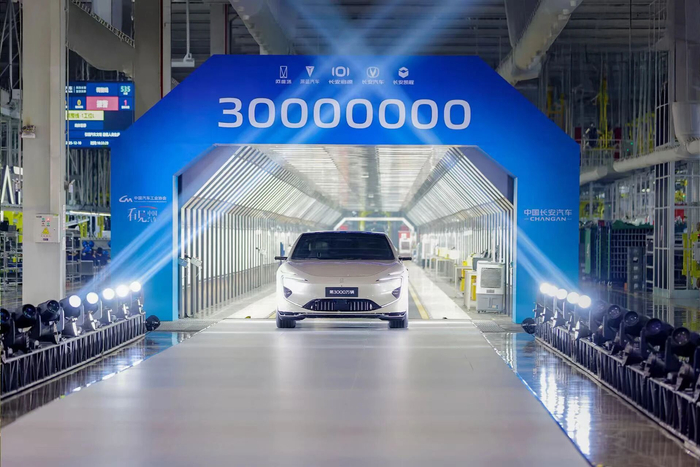
Core Insights - The production of the 30 millionth vehicle by Changan Automobile marks a significant milestone in the company's transformation towards technology and innovation [3][6] - Changan aims to produce and sell 5 million vehicles by 2030, with over 60% being new energy vehicles and over 30% sold overseas [3][4] Group 1: Production Milestones - Changan's first 10 million vehicles took 30 years, the second 10 million took 7 years, and the third 10 million took just 4.5 years [1] - The 30 millionth vehicle is a symbol of Changan's commitment to innovation and technology [3] Group 2: Research and Development - Changan has established a global R&D network with 44 technology research and product development centers and over 200 laboratories [3][5] - The company has applied for over 14,000 patents in the last three years, averaging 19 patents per day [5] - Changan invests 5% of its annual revenue into R&D, focusing on advanced technology and safety systems [5][8] Group 3: Sales Performance - In the first ten months of the year, Changan sold 2.374 million vehicles, with 869,000 being new energy vehicles, a 60.6% increase year-on-year [4] - In October, Changan's total sales reached 278,000 vehicles, with new energy vehicle sales of 119,000, up 36% year-on-year [4][5] Group 4: Strategic Plans - Changan's strategic plans include the "Shangri-La" for new energy, "Beidou Tianshu" for intelligence, and "Haina Baichuan" for globalization [3][8] - The company is focused on building a self-controlled supply chain and expanding its global market presence [8]

2026年宏观经济和市场展望:新一轮再定价周期
Haitong Securities International· 2025-12-07 12:06
Global Economic Outlook - The global economic growth rate is projected to slow to 3.1% in 2026, down from 3.2% in 2025, primarily due to rising protectionism and uncertainty[2][16]. - Global inflation is expected to decrease to 4.2% in 2025 and further to 3.7% in 2026, with significant disparities among different economies[2][17]. China Economic Forecast - China's GDP growth for the first three quarters of 2025 was 5.2%, slightly above the annual target of 5%, with a forecasted growth of approximately 4.8% in 2026[3][32]. - Structural challenges persist in the Chinese economy, including an aging population and weakened consumer spending, which may hinder long-term growth[3][32]. US Economic Outlook - The US economy has maintained a strong growth rate of 2.8% over the past two years, with a projected GDP growth of 2.3% in 2026, supported by fiscal policies and AI investments[4][34]. - Inflation in the US is expected to remain above target levels, impacting monetary policy decisions[4][34]. Asset Class Performance - Emerging market investments are anticipated to improve significantly starting in 2025, while developed markets have shown steady performance due to high profitability and AI themes[5][39]. - Gold has outperformed other assets as a hedge against inflation and currency risks, while global bond returns remain under pressure due to high interest rates[5][40]. Market Predictions - The Shanghai Composite Index is expected to rise to 5600 points in 2026, driven by improvements in economic fundamentals and corporate earnings[6][54]. - The Hang Seng Index is projected to reach 34,000 points, reflecting a broader market recovery and increased capital inflows[6][54].
潮品、文创、黑科技一站式打卡!河南品牌“秀”出多元消费新体验
Sou Hu Cai Jing· 2025-12-05 12:16
Core Insights - The event "Supply Renewal Journey, Service Leap New Stage - 2025 Henan Province New Service and Supply Brand Construction Exchange Activity" showcased a variety of innovative and diverse brands from Henan, highlighting the province's vibrant economic landscape [1][30] - The exhibition featured prominent brands such as Mixue Ice City and Henan Museum's cultural products, demonstrating the integration of modern consumer needs with traditional heritage [5][8] Group 1: Brand Highlights - Mixue Ice City, a globally recognized tea beverage chain, has established a comprehensive control over its entire supply chain, creating an efficient and replicable business model for fresh tea drinks [5] - Henan Museum's cultural innovation showcased sub-brands like "Yulai Yuchao" and "Bohua Yatang," transforming six thousand years of history into accessible and consumable products, emphasizing their role as pioneers in cultural product development and intellectual property protection [8] - The exhibition also featured innovative technologies such as "naked-eye 3D + XR" to bring ancient oracle bone inscriptions to life, enhancing the cultural tourism experience [12] Group 2: Product Innovations - Various food products were highlighted, including Shan Yao powder and Huai Ju tea from Sanhua Tang, which integrate traditional Chinese medicine into modern lifestyles [16] - The "Little Pear Sister" series from Ningling Guoyuan Gong and traditional sour and spicy noodles from Shedian Ancient Town reflect the blend of traditional flavors with contemporary fast-food settings [16] Group 3: Technological Advancements - Power Diamond, a leader in the cultivated diamond industry, is building a new development ecosystem that integrates smart manufacturing, creative design, and brand sales [19][22] - Henan Guangyuan New Materials Co., Ltd. showcased electronic-grade glass fiber, essential for advanced electronic devices, indicating the company's focus on high-tech materials [26] - Henan Xuanshi Tool Co., Ltd. is transitioning from traditional manufacturing to an integrated model of R&D, production, and sales, aiming for global expansion [26] Group 4: Overall Impact - The exhibition served as a significant platform for brand exchange and industrial collaboration, showcasing Henan enterprises' achievements in industrial upgrading, cultural transformation, and technological innovation [30]

并购发力研发加码 推动美的集团转型科技巨擘
Zheng Quan Shi Bao· 2025-12-03 22:04
Core Viewpoint - Midea Group has successfully transformed from a home appliance company to a diversified technology giant covering various sectors including smart home, renewable energy, industrial technology, building technology, robotics and automation, healthcare, and smart logistics during the "14th Five-Year Plan" period [1][2] Group 1: Business Transformation - Midea Group has made significant capital moves, acquiring controlling stakes in listed companies such as Hekang New Energy, Wandong Medical, and Kelon Electronics, thereby entering new fields like renewable energy, medical imaging, and energy management [1] - The company aims to extend the lifecycle of its home appliance business while simultaneously promoting its B2B business, creating a "growth relay" effect [1] Group 2: R&D Investment - Over the past five years, Midea Group has invested more than 60 billion yuan in research and development [2] - The company ranks eighth globally and first among Chinese private enterprises in terms of patent families according to the 2023 global patent leaders list [2] - Midea has established 38 R&D centers in 12 countries, forming a global R&D network structured as "2+4+N" [2] - The company emphasizes a technology leadership strategy as its core strategy and plans to increase R&D investment further, focusing on fundamental research and disruptive technology breakthroughs [2]

宁波银行(002142) - 2025年11月25日投资者关系活动记录表
2025-11-25 07:14
Group 1: Competitive Advantages - The company adopts a differentiated business strategy to adapt to changes in the operating environment and accumulate unique advantages [2] - Key strategies include deepening operational focus, enhancing professional management, accelerating technological transformation, and maintaining risk management to ensure stable operations [2] Group 2: Capital Growth and Financing - The company emphasizes the long-term relationship between dividends and internal capital growth, ensuring a solid capital foundation for sustainable business development [2] - Internal capital is expected to create greater value for the company's development, with a commitment to improving performance and maintaining steady internal capital growth for shareholder returns [2] Group 3: Loan Growth and Economic Support - The company has focused on supporting key sectors such as small and micro enterprises, manufacturing, import-export businesses, and consumer services, leading to steady loan growth [2] - Future loan growth is anticipated to be supported by ongoing policy benefits aimed at expanding domestic demand and promoting consumption, effectively meeting the financing needs of the real economy [2] Group 4: Compliance and Communication - During the investor relations activity, the company ensured thorough communication with investors while adhering to disclosure regulations, with no significant undisclosed information leaks reported [2]

月内多家支付机构重大事项变更许可信息公示
Zheng Quan Ri Bao· 2025-11-24 16:42
Core Viewpoint - The recent changes in non-bank payment institutions reflect a trend towards compliance and consolidation within the industry, as evidenced by name changes, capital increases, and frequent changes in senior management [1][3]. Group 1: Company Name Changes - Several non-bank payment institutions have changed their names to include "payment" in compliance with regulatory requirements, enhancing user recognition of their payment functions [3]. - The name changes also indicate a shift towards technology-driven service platforms, highlighting the industry's technological transformation [3]. Group 2: Changes in Senior Management - Significant changes in senior management have been reported across various non-bank payment institutions, indicating a dynamic leadership landscape [1][2]. - Specific changes include the appointment of new directors and managers in companies such as Beijing Zhongtou Kexin and Shanghai Huifu Payment [1][2]. Group 3: Capital Increases - Institutions like Zhenlian Payment have increased their registered capital from 100 million to 200 million, reflecting a trend of capital enhancement across the sector [3]. - The increase in capital is driven by the need to meet regulatory capital thresholds and to support new business ventures such as cross-border payments and supply chain finance [3]. Group 4: Industry Trends - The non-bank payment industry is expected to evolve in three main directions: deepening compliance, leveraging technology, and integrating ecosystems [3]. - Regulatory pressures will push institutions to focus on quality over quantity, while advancements in AI and blockchain will reshape payment experiences [3].
家电周报:海尔机器人与INDEMIND达成战略合作,比依股份定增获批-20251122
Shenwan Hongyuan Securities· 2025-11-22 07:49
Investment Rating - The report maintains a positive outlook on the home appliance sector, highlighting that the sector outperformed the CSI 300 index during the week [2][3]. Core Insights - The home appliance sector index fell by 2.3%, while the CSI 300 index dropped by 3.8%, indicating a relative strength in the sector [2][3]. - Key companies such as Aopu Technology, Zhejiang Meida, and Supor showed gains, while companies like Joyoung, Beiqi, and Biyi experienced significant declines [4]. - Haier Robotics and INDEMIND signed a strategic cooperation agreement to advance the application of embodied robots in home settings [8]. - Biyi Electric received approval from the China Securities Regulatory Commission for a specific stock issuance [9]. Sales Data - In October, sales of cleaning appliances increased year-on-year, with robotic vacuum sales rising by 36.01% to 500,900 units and sales revenue increasing by 35.34% to 1.025 billion yuan [29]. - Sales of washing machines also saw a significant increase, with units sold rising by 60.11% to 429,300 and revenue increasing by 60.34% to 756 million yuan [29]. - Personal care products showed mixed results, with hairdryer sales slightly up by 0.31% but revenue down by 18.17%, while electric shaver sales rose by 29.12% with revenue up by 38.05% [34]. Industry Dynamics - The report identifies three main investment themes: 1. The potential of leading white and black appliance companies characterized by low valuations, high dividends, and stable growth [2]. 2. Upstream core component manufacturers are diversifying into emerging tech fields such as robotics and data center cooling [2]. 3. The increasing penetration of new consumer categories like cleaning appliances presents significant growth opportunities [2]. Macro Economic Environment - As of November 21, 2025, the USD to CNY exchange rate was reported at 7.0875, reflecting a year-to-date decrease of 1.40% [40]. - In October 2025, the total retail sales of consumer goods reached 46,291 billion yuan, showing a year-on-year increase of 2.90% [42].



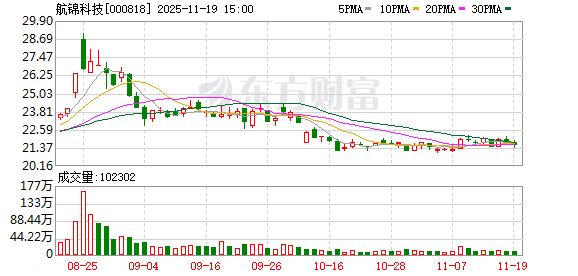
航锦科技:公司将持续优化资源配置 促进各业务板块高质量发展
Zheng Quan Ri Bao· 2025-11-19 14:13
Group 1 - The company has been promoting a technology transformation strategy since the change of its actual controller to the Wuhan State-owned Assets Supervision and Administration Commission [2] - The focus is on laying out new types of information infrastructure, enhancing industrial layout through multiple measures [2] - The company will continue to optimize resource allocation to promote high-quality development across various business segments [2]

20cm速递|科创板100ETF(588120)飘红,科技或支撑指数韧性
Mei Ri Jing Ji Xin Wen· 2025-11-17 05:39
科创板100ETF(588120)跟踪的是科创100指数(000698),单日涨跌幅达20%,该指数从科创板市场 中选取市值较大、流动性较好的100只证券作为指数样本,以反映科创板代表性上市公司证券的整体表 现。成分股覆盖了信息技术、生物医药、新材料等多个高科技领域,具有较强的创新性和成长潜力。 (文章来源:每日经济新闻) 野村东方国际证券指出,在科技转型过程中,由于指数行业权重的持续转变,历史相对估值的参考意义 下降,电子等行业在内的盈利增长持续带动科技领域的估值上修。估值分化加剧的现象将在A股市场持 续,指数的下行空间有限。中美贸易摩擦出现缓和,但双方都已展开中长期自主可控的产业链安全建 设,自主可控等题材将长期受益。科技题材中的医药等先于市场调整,可能成为科技内部轮动的首选。 此外,在"十五五"规划中,对安全韧性的描述(自主可控的投资加码)和新兴产业的商业化(商业航 天、卫星、6G、低空机器人)有望对A股形成积极影响。建议投资者同步增加对中美两国自主可控题材 的关注度,在中国资产中加大对军贸、AI基建、商业航天与6G基建、工控/办公/AI软件等题材的关注。 ...