跨界发展

Search documents
“火腿第一股”女总裁闪辞,90后“太子”接任
3 6 Ke· 2025-12-16 11:35
Core Viewpoint - The recent leadership change at Jinzi Ham is significant, with the appointment of Zheng Hu as the new president following the resignation of Guo Bo, indicating a strategic shift within the company as it navigates challenges in its core business and explores new ventures in the semiconductor industry [1][4]. Company Leadership Changes - Guo Bo resigned as president of Jinzi Ham after only five months in the role, while still retaining her position as vice chairman and on the board's strategic committee [1]. - Zheng Hu, born in 1991 and previously serving as vice president, has been appointed as the new president, with a term lasting until the end of the current board's tenure [1][3]. Family Background and Influence - Zheng Hu is the son of Zheng Qing Sheng, the company's controlling shareholder, which raises questions about nepotism and the potential for familial influence in corporate governance [3][4]. - Zheng Qing Sheng, a notable entrepreneur with a diverse business background, has been pivotal in Jinzi Ham's recent strategic direction, including the establishment of semiconductor companies [4][6]. Financial Performance - Jinzi Ham reported a revenue of 170 million yuan for the first half of 2025, a decline of 14.73% year-on-year, with a net profit of 22.92 million yuan, down 25.11% [4][6]. - The company's ham business saw a revenue drop of 1.47 billion yuan compared to its peak in 2021, indicating ongoing struggles in its core operations [4][6]. Product Performance Metrics - Sales volume for ham decreased by 14% to 1,004,568 kg in the first half of 2025 compared to the same period in 2024 [5]. - The production volume of ham also fell by 17.55%, while the inventory increased by 10.81%, suggesting potential overproduction issues [5]. Strategic Ventures - Jinzi Ham is venturing into the semiconductor industry, with plans to invest up to 300 million yuan in acquiring a stake in Zhongsheng Microelectronics, which is currently operating at a loss [6][9]. - The company aims to leverage its semiconductor investments to diversify its revenue streams, although the long-term viability of this strategy remains uncertain [9][10]. Market Trends and Opportunities - The high-end market for ham products is growing, with premium offerings like gift boxes and aged hams becoming increasingly popular, presenting a potential growth opportunity for Jinzi Ham [11]. - The company is also focusing on enhancing its online sales channels and direct marketing efforts to capture a larger market share [10][11].


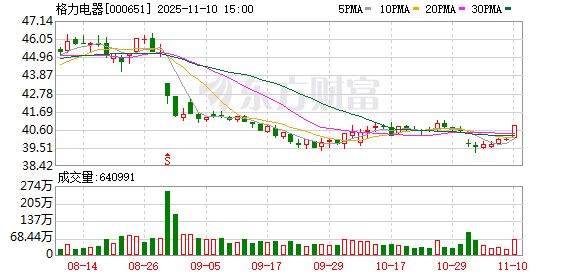
董明珠回应格力跨界做冰箱遭质疑
Zheng Quan Shi Bao· 2025-11-10 09:48
Core Viewpoint - Gree's decision to enter the refrigerator market is driven by a commitment to quality and innovation, as emphasized by its CEO Dong Mingzhu, who highlights the company's investment in fully automated manufacturing processes [2] Group 1: Company Strategy - Gree aims to differentiate its refrigerator products by developing a fully automated factory, which is designed entirely in-house to ensure advanced quality control [2] - The company is willing to invest more in production costs to guarantee the quality of its products across various categories, including air conditioners, refrigerators, and washing machines [2] Group 2: Market Response - There is skepticism among consumers regarding Gree's move into the refrigerator market, which Dong Mingzhu addresses by stating that simply following market trends would not lead to the creation of high-quality products [2]

董明珠回应格力跨界做冰箱遭质疑
证券时报· 2025-11-10 09:31
Core Viewpoint - Gree's decision to enter the refrigerator market is driven by a commitment to quality and innovation, rather than merely following market trends [1]. Group 1 - Gree's entry into the refrigerator market has faced skepticism from the public, which was addressed by Dong Mingzhu, emphasizing the importance of quality over mere market presence [1]. - The company is establishing a fully automated refrigerator factory, designed entirely in-house, which allows for advanced quality control throughout the production process [1]. - Gree is willing to invest more in production costs to ensure the quality of its products, whether they are air conditioners, refrigerators, or washing machines [1].

汇绿生态控股公司在马来西亚买地 拟用于光模块项目建设基地
Jing Ji Guan Cha Bao· 2025-11-07 01:51
Core Viewpoint - Huilv Ecology (001267) is making significant strides in its overseas optical module project, with recent developments including a land purchase in Malaysia for project construction [1][2]. Group 1: Project Developments - Huilv Ecology's subsidiary, Junheng Technology (Malaysia) Co., Ltd., signed a purchase agreement to acquire industrial land in Penang, Malaysia, for 24 million MYR (approximately 40.99 million RMB) [1]. - The acquired land spans a total area of 7,844.3 square meters, designated for the optical module project [1]. Group 2: Investment and Strategic Expansion - The company plans to establish a subsidiary in Singapore with Wuhan Junheng Technology Co., Ltd., with a total investment of 200 million RMB, where Huilv Ecology will hold a 70% stake [2]. - The Singapore subsidiary aims to fully fund a Malaysian subsidiary, which will serve as an overseas production base for optical communication products, including research, development, and sales [2]. - Huilv Ecology is diversifying into the optical module sector to create a "second growth curve" for its business, marking a strategic shift from its traditional focus on ecological environment construction [2]. Group 3: Market Response - On November 6, Huilv Ecology's stock closed at a limit-up price of 18.93 RMB per share, indicating positive market sentiment regarding the company's recent developments [3].
3个涨停!亏损上市房企,拟收购半导体公司
Shen Zhen Shang Bao· 2025-10-22 07:15
Core Viewpoint - Yingxin Development's stock has been on a continuous rise due to its plan to acquire 81.8091% of Guangdong Changxing Semiconductor Technology Co., aiming to create a dual-driven model of "cultural tourism + technology" [1][2] Group 1: Acquisition Details - The company signed a share acquisition intention agreement with Guangdong Changxing Information Management Consulting Co. and Zhang Zhiqiang to purchase the majority stake in Changxing Semiconductor [1] - If the acquisition is successful, Yingxin Development will gain control of a national-level "little giant" enterprise, entering the memory chip packaging and testing sector [1][2] - Changxing Semiconductor, established in 2012, specializes in memory chip packaging and testing, holding 76 valid patents, including 22 invention patents [1][2] Group 2: Strategic Implications - The acquisition aligns with the company's strategic layout of "cultural tourism + technology," enhancing its overall competitiveness and laying a solid foundation for future expansion in high-tech fields [2] - This move represents a combination of upgrading traditional business and entering emerging industries, which is expected to improve the company's core competitiveness and support sustainable development [2] Group 3: Financial Performance - Yingxin Development reported a significant decline in its financial performance, with a 50.97% year-on-year drop in revenue to 772 million yuan and a net loss of 161 million yuan in the first half of 2025 [2][3] - The company has recorded negative net profits for five consecutive years, accumulating losses of 11.493 billion yuan from 2020 to 2024 [3] - The lack of R&D investment, with zero R&D expenses reported in the first half of the year, raises concerns about the company's future innovation capabilities and competitiveness [3]

搞扫地机器人的追觅宣布造车和手机后被曝强制员工投资,公司回应
第一财经· 2025-09-24 09:52
Core Viewpoint - The article discusses the recent controversy surrounding a private equity fund associated with Chasing Technology, which allegedly requires employees to co-invest with a mechanism linked to employee retention and performance [3][4]. Group 1: Company Developments - Chasing Technology has gained attention for its expansion into the automotive industry, aiming to create a high-performance luxury car, with plans for a factory near Tesla's German facility, which will be 1.2 times larger than Tesla's Berlin factory [7]. - The company also announced the launch of its high-end flagship smartphone, Dreame Space, which reportedly secured over 100 million yuan in overseas orders before its release [7]. - The founder, Yu Hao, has stated that the company is financially stable, with sufficient cash flow and plans for multiple IPOs globally by the end of next year [7]. Group 2: Private Equity Fund Structure - Chasing Technology established the Chasing Robot Industry Venture Capital Fund, which includes a growth-stage strategic fund with a scale of 10 billion yuan, most of which has been raised, and an early-stage incubation fund that recently completed its first round of fundraising [8]. - The growth-stage fund focuses on mature commercial applications in areas such as smart cleaning robots and smart vehicles, while the early-stage fund aims to support startups in strategic planning and management [8]. - The fund's co-investment structure allows employees to invest starting from 10,000 yuan, with no upper limit, and includes provisions for tax responsibilities and handling of employee rights upon departure [4][9].

“工程机械+农场”长出新生意
Zheng Quan Ri Bao· 2025-09-04 16:11
Core Viewpoint - The article highlights the increasing involvement of engineering machinery companies in the agricultural machinery sector, emphasizing their role in enhancing agricultural productivity and modernizing farming practices through technological innovation and cross-industry collaboration [1][2]. Group 1: Engineering Machinery Companies' Involvement - Several engineering machinery companies, such as SANY Heavy Industry and XCMG, are expanding into agricultural machinery production, leveraging their technological expertise to address common challenges in the agricultural sector [2][3]. - SANY Heavy Industry's electric micro-excavator, originally designed for narrow engineering scenarios, is now being utilized in agricultural settings like vineyards and orchards, showcasing the versatility of engineering machinery [2]. - XCMG has focused on practical applications, producing a wide range of agricultural machinery, including tractors and harvesters, to meet market demands [3]. Group 2: Technological Innovations - Engineering machinery companies are applying advanced technologies, such as hydraulic control and precision positioning, to enhance agricultural machinery's efficiency and effectiveness [3][5]. - The introduction of smart technologies, including IoT, big data, and AI, is driving the intelligent upgrade of agricultural machinery, significantly improving operational efficiency [6][7]. - SANY Heavy Industry has developed a fully automated rice planting machine that reduces labor requirements and increases planting efficiency through advanced navigation systems [7][8]. Group 3: Market Expansion and Export Growth - China's agricultural machinery exports have seen significant growth, with a 37.1% increase year-on-year in the first half of 2025, indicating a positive trend in international demand [8][10]. - Hunan Province has reported a remarkable 109.5% increase in agricultural machinery exports, with notable growth in exports to Germany and Indonesia [8]. - Companies like SANY Heavy Industry and LiuGong are successfully penetrating international markets, with SANY's micro-excavators meeting stringent European environmental standards and LiuGong delivering specialized machinery to Thailand [9][10].



科技新贵都在跨界,为何这家公司玩得最大?
Sou Hu Cai Jing· 2025-08-30 04:59
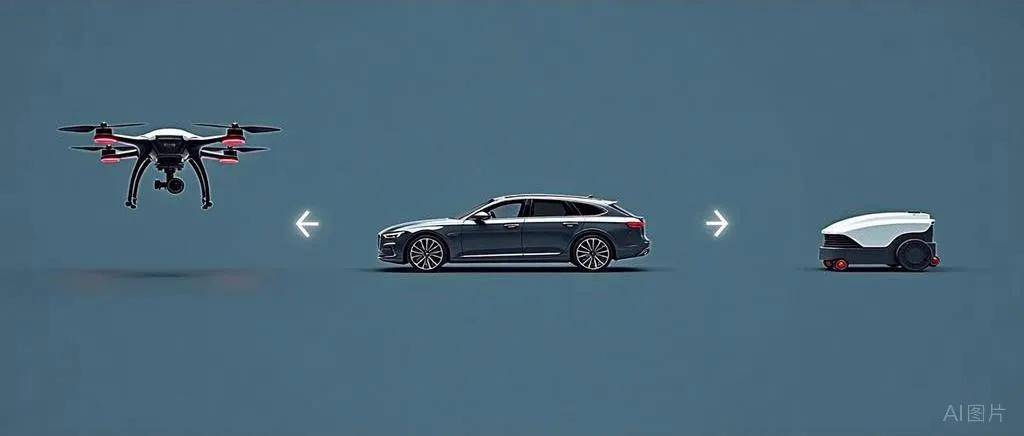
Core Viewpoint - The trend of cross-industry expansion among technology companies is gaining momentum, with firms seeking new growth avenues in response to complex industry and economic environments [1][3]. Group 1: Cross-Industry Expansion - DJI has ventured into the sweeping robot and panoramic camera markets, while other companies like Roborock and Ecovacs are exploring new domains such as laundry appliances and smart kitchens [2]. - Xiaomi's foray into the automotive sector has significantly boosted its stock price, which has increased over 200% in the past year [3]. - The company Chase has announced its ambition to become a "boundary-less ecological enterprise," entering multiple sectors including drones, automobiles, kitchen appliances, and more [3][4]. Group 2: Chase's Ambitions - Chase's CEO, Yu Hao, has expressed intentions to create a high-end airline service, aiming to dominate the air travel market [4][6]. - The company is actively forming a professional drone development team and has invested 4 billion in establishing a smart home appliance headquarters in Nanjing [6][7]. - Chase plans to produce 4.5 million units annually for its ice-washing appliances, with rapid progress from signing to construction [7]. Group 3: Product Positioning and Market Strategy - Chase's television products are positioned in the ultra-high-end market, priced between $1,500 and $2,500, emphasizing a "flagship" and "top-tier" branding [8]. - The automotive division of Chase is also aggressive, with multiple business units focusing on different vehicle types, including SUVs and luxury cars [10][11]. - The first batch of prototype vehicles includes modified versions of popular models, showcasing Chase's innovative approach [12]. Group 4: Technological Foundation - Chase's product lines share commonalities, leveraging mature core technologies such as high-speed motors and autonomous driving capabilities [14]. - The company has a strong emphasis on self-developed technology, which serves as its primary competitive advantage and growth engine [14]. - Chase's rapid market penetration is supported by its history of innovation, having previously developed high-speed motors that outperformed industry standards [14]. Group 5: Market Competition and Challenges - The global smart vacuum cleaner market is competitive, with leading companies holding significant market shares, and Chase currently at 8% [15]. - Despite the technological advantages of established players like DJI, entering new markets remains challenging, as evidenced by mixed reviews of their new products [21][24]. - The pursuit of new growth avenues is fraught with difficulties, as many companies face the reality of saturated markets requiring disruptive innovation [29][30].

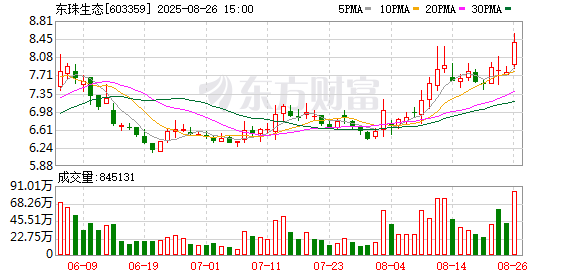
停牌前突然大涨!603359 重大资产重组
Zhong Guo Ji Jin Bao· 2025-08-26 14:18
Core Viewpoint - Dongzhu Ecological is planning to acquire a controlling stake in Kairuixingtong Information Technology (Nanjing) Co., Ltd., marking a significant asset restructuring and a move into the satellite communication sector [1][2][4]. Group 1: Company Overview - Dongzhu Ecological is an ecological restoration and governance service provider, but its performance has been declining in recent years [1][13]. - Kairuixingtong specializes in satellite communication technology and has established a strong product and technology advantage in various applications, including military and emergency services [13][14]. Group 2: Financial Performance - Dongzhu Ecological's net profit attributable to shareholders has significantly decreased from 34.72 million yuan in 2022 to -630.12 million yuan in 2024 [14][16]. - The company's revenue for 2024 was reported at approximately 375.93 million yuan, a decline of 54.64% compared to the previous year [14][15]. - In the first quarter of 2025, Dongzhu Ecological reported a net profit of -39.49 million yuan, a year-on-year decrease of 112.69% [16][17]. Group 3: Market Activity - On August 26, 2023, Dongzhu Ecological's stock price surged by 7.85%, reaching a market capitalization of 3.738 billion yuan, prior to the announcement of the acquisition [1][2]. - The company plans to suspend trading starting August 27, 2023, for a period not exceeding 10 trading days [1][2].

追觅要“上天”
Hua Er Jie Jian Wen· 2025-08-21 11:53
Core Viewpoint - The article discusses the strategic expansion of the company ChaseMe into the drone market, highlighting its ambition to tap into the trillion-dollar low-altitude economy and its competitive positioning against established players like DJI [2][3][12]. Group 1: Company Expansion - ChaseMe has confirmed its entry into the drone business, marking a significant strategic move into a new market [3]. - The company is actively assembling a professional drone R&D team, indicating that its cross-industry development has reached a substantial stage [4]. - ChaseMe's founder, Yu Hao, has a strong aerospace background, which provides the company with inherent advantages in entering the drone market [5]. Group 2: Technological Advantages - The technical expertise accumulated in ChaseMe's core business of robotic vacuum cleaners, such as 3D spatial perception and dynamic obstacle avoidance, can be directly applied to drone flight control and navigation systems [5][7]. - The company's existing technology for generating centimeter-level dynamic maps can significantly enhance drone recognition accuracy and obstacle avoidance success rates [6][8]. Group 3: Market Context - The domestic robotic vacuum cleaner market is becoming increasingly competitive, with a low market penetration rate, prompting players to explore new growth opportunities [9]. - According to IDC data, the Chinese robotic vacuum cleaner market is expected to ship 5.389 million units in 2024, reflecting a year-on-year growth of 6.7% [9]. - ChaseMe aims to diversify its product offerings and expand into broader markets to unlock additional growth potential [9]. Group 4: Competitive Landscape - The drone market is currently dominated by DJI, which holds over 70% of the global consumer drone market share [12]. - Despite the competitive challenges, the growth prospects of the drone industry continue to attract new entrants like ChaseMe and other players [13]. - Industry experts believe that there are still unresolved user pain points in the drone sector, such as flight experience and intelligent interaction, presenting opportunities for new players [13].