
降杠杆

Search documents
券商两融额度告急?中小券商利率优惠不再,有大券商已低于4%
第一财经· 2026-01-15 10:12
Core Viewpoint - The A-share market is strengthening with increased enthusiasm from margin traders, but this time, brokerages are not engaging in a "price war," leading to a tightening of margin trading quotas [3][4]. Summary by Sections Margin Trading Quotas - Some brokerages are experiencing tight margin trading quotas, although many large brokerages report that margin funds remain sufficient [3][4]. - A small brokerage manager indicated that while there are no current impacts on individual investors' trading, restrictions on specific stocks could arise if margin quotas are insufficient [3][8]. Commission Rates and Margin Rates - Personal investors can currently open accounts with commission rates as low as "万1" (0.01%) if their account balance is 500,000 or more [3][6]. - There is significant variation in margin rates among brokerages, with some large brokerages offering rates between 4% and 5%, while smaller brokerages may exceed 5% and reach up to 8% [3][7]. Recent Market Activity - The margin trading balance has seen a notable increase, reaching a historical high of 2.6982 trillion yuan as of January 14, 2026, following a trend of rising activity throughout the previous year [11]. - The number of new margin trading accounts opened in 2025 reached 1.5421 million, a year-on-year increase of 52.91% [11]. Regulatory Changes - On January 14, major exchanges raised the minimum margin requirement for new margin contracts from 80% to 100%, a move aimed at cooling the current market and promoting healthy investment practices [9][10]. - Analysts believe this adjustment will have a controlled impact on the overall margin trading market size, as seen in past regulatory changes [10][12]. Future Implications - The increase in margin requirements is expected to lead to a slower growth rate in margin trading balances compared to previous periods [11]. - The intention behind the regulatory changes is to manage leverage effectively and mitigate potential credit risks associated with concentrated margin trading [12].


券商两融额度告急?中小券商利率优惠不再,有大券商已低于4%
Di Yi Cai Jing Zi Xun· 2026-01-15 09:52
Core Viewpoint - The A-share market is strengthening with increased enthusiasm from margin traders, but brokerage firms are not engaging in a "price war" this time, leading to a tightening of margin financing quotas [1]. Group 1: Margin Financing Quotas - Some brokerage firms are experiencing tight margin financing quotas, although many large firms report that margin funds remain sufficient [1]. - If brokerage firms face insufficient margin quotas, it may impact individual investors' trading, particularly if specific stocks are restricted by exchanges [1][4]. - The tightening of margin quotas is not currently affecting investor operations, but it could lead to limitations in borrowing funds for certain stocks [4]. Group 2: Margin Financing Rates - There is a significant disparity in margin financing rates among brokerages, with some large firms offering rates as low as 4% to 5%, while smaller firms may exceed 5% and reach up to 8% [1][3]. - New accounts for margin financing are being offered rates around 5% by some smaller brokerages, while larger firms can provide rates below 5% depending on the account size [2][3]. - The financing rates are influenced by the liquidity and operational costs of smaller brokerages, which tend to have higher rates due to limited funding [5]. Group 3: Regulatory Changes and Market Impact - On January 14, major exchanges raised the minimum margin requirement for financing purchases from 80% to 100%, which is expected to cool down the margin financing market [5][6]. - This adjustment is only applicable to new financing contracts, allowing existing contracts to continue under previous terms, thereby minimizing immediate market disruption [5][6]. - Historical data indicates that similar regulatory changes have previously led to a decrease in margin financing balances, suggesting a controlled impact on market activity [6][7]. Group 4: Market Activity and Future Outlook - The margin financing market has seen increased activity, with balances rising from approximately 1.7 trillion to 2.6982 trillion yuan as of January 14, 2026, marking a new historical high [7]. - The number of new margin financing accounts opened in 2025 reached 1.5421 million, a 52.91% increase from the previous year, indicating strong market engagement [7]. - Despite the tightening measures, large brokerages report that their margin financing operations remain stable and unaffected, focusing on risk management and investor qualification [7].
两大主线集体退潮!盘后传来利好 A股调整到位了吗?
Mei Ri Jing Ji Xin Wen· 2026-01-15 08:09
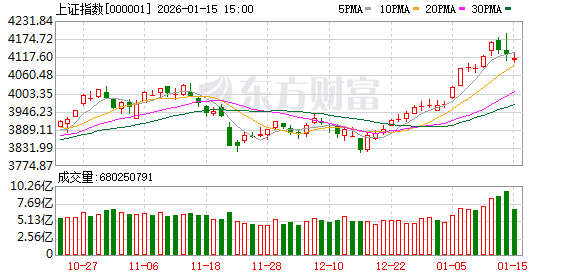
Market Overview - The three major indices showed mixed performance, with the Shanghai Composite Index dipping below 4100 points during the day, closing down 0.33%, while the Shenzhen Component Index and the ChiNext Index rose by 0.41% and 0.56% respectively [2] - The overall market saw over 3100 stocks decline, with a total trading volume of 2.91 trillion yuan, a decrease of 1.04 trillion yuan from the previous trading day [2] Sector Performance - The semiconductor sector strengthened in the afternoon, while the CPO concept fluctuated upward. The tourism and hotel sector was active, and the non-ferrous metals sector rose [2] - Conversely, sectors such as AI applications and commercial aerospace experienced significant declines, with high-profile stocks collectively retreating [2][3] Market Sentiment and Adjustments - The overarching theme in the A-share market is "cooling down," particularly affecting overheated sectors like commercial aerospace and AI applications, which are experiencing increased probabilities and magnitudes of correction [3] - There is a divergence in opinions regarding the extent and direction of market adjustments, with the Shanghai Composite Index maintaining the 4100-point level but nearing the 10-day moving average [4][6] ETF and Trading Activity - At the market close, the number of stocks hitting the daily limit down reached 71, a recent high, indicating increased selling pressure [8] - Notably, several broad-based ETFs saw significant trading volumes, with the CSI 500 ETF trading over 26.3 billion yuan, setting a historical high [7] Future Outlook - Analysts suggest that the recent "cooling" signals primarily target short-term overperformers rather than negating the overall "slow bull" trend. The market may experience a period of consolidation, with structural opportunities likely to continue [7] - The recent adjustments in monetary policy, including a 0.25 percentage point reduction in various structural monetary policy tool rates, are expected to support economic transformation and optimization [7] - The performance of precious metals, semiconductor chains, and tourism sectors is anticipated to align with the upward trends in policy and industry, suggesting potential for continued profitability [13]
官宣“降杠杆”,拐点来了?
Hu Xiu· 2026-01-14 14:54
Group 1 - The adjustment of the financing leverage ratio from 80% to 100% indicates a tightening of financing conditions, reducing the leverage multiple from 1.25 times to 1 time, which may impact market dynamics [3] - This regulatory move is interpreted as a signal to control market risks and aims to promote a "slow bull" market rather than a "crazy bull" market, which could lead to systemic risks [3] Group 2 - The announcement from major exchanges reflects a proactive approach to manage market leverage under regulatory guidance, suggesting a focus on sustainable growth in emerging industries and high-quality domestic industry upgrades [3]
一图看懂 | 历次融资保证金调整后A股怎么走
市值风云· 2026-01-14 10:08
Core Viewpoint - The recent adjustment of the financing margin ratio from 80% to 100% is seen as a "regulator" rather than a "steering wheel" for the market, indicating that it primarily serves as a counter-cyclical adjustment without altering the long-term market trend [3]. Group 1: Market Impact - Historical data shows that previous adjustments to the financing margin have had limited short-term impact on the market. For instance, in November 2015, when the ratio was raised from 50% to 100%, the Shanghai and Shenzhen 300 Index experienced fluctuations of 0.48%, -0.82%, and 0.75% over the following 1, 3, and 5 days respectively [4]. - In September 2023, when the margin was lowered from 100% to 80%, the index saw changes of 0.74%, -0.09%, and 0.83% during the same time frame [5]. Group 2: Policy Objectives - The adjustment adheres to the "new and old separation" principle, ensuring that existing and extended contracts remain unaffected, which aims to smooth market volatility [5]. - The core objective of the policy is to moderately reduce leverage and prevent excessive speculation, thereby fostering a rational investment atmosphere. In the long run, this is beneficial for the stable development of the capital market [5].

广期所再出手,修改钯铂金保证金和涨跌板,有何影响?
Sou Hu Cai Jing· 2026-01-11 02:13
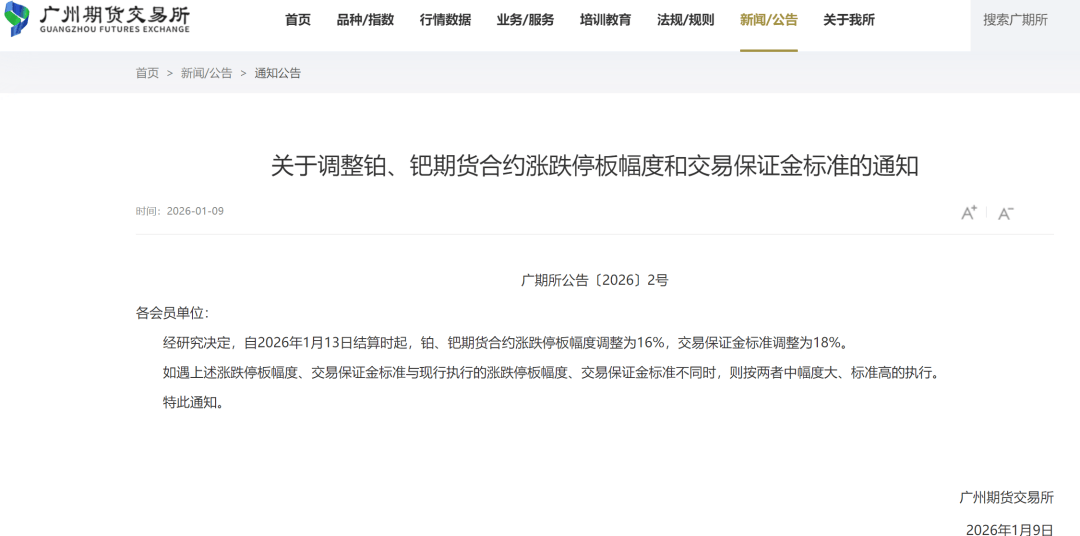
Core Viewpoint - The recent adjustments in the futures contracts for platinum and palladium by the Guangzhou Futures Exchange aim to control risks and stabilize the market, reflecting a strategic move to balance speculation and fundamental market conditions [1][3]. Group 1: Market Performance - The first trading week of the year saw a positive start for the Chinese stock market and commodities, particularly for precious metals, which rebounded significantly after a period of decline [1]. - Palladium and platinum, which have experienced significant volatility over the past month, are highlighted as new entrants in the precious metals market [1]. Group 2: Regulatory Changes - The Guangzhou Futures Exchange announced an increase in the price fluctuation limits for platinum and palladium futures contracts to 16% and raised the trading margin requirement to 18%, effective January 13, 2026 [2]. - The previous fluctuation limit was 13%, and the margin requirement was 15%, indicating a 3 percentage point increase in both cases [2]. Group 3: Impact of Adjustments - The combination of increased margin requirements and fluctuation limits is intended to reduce leverage and curb speculation, while potentially increasing short-term volatility but guiding the market back to fundamental values in the long term [3]. - The core objectives of these adjustments are to lower leverage, mitigate risks, and maintain liquidity in the market [3]. Group 4: Market Guidance - The differentiated adjustments, such as lower margins for hedging compared to speculation, reflect a policy direction that encourages hedging while suppressing speculative activities, aiming to align the market with the needs of the real economy [4]. - The future performance of platinum and palladium will be significantly influenced by international price movements, indicating a strong correlation with global market trends [5].
CMC(CMC) - 2026 Q1 - Earnings Call Transcript
2026-01-08 17:00
Financial Data and Key Metrics Changes - CMC reported net earnings of $177.3 million, or $1.58 per diluted share, compared to a net loss of $175.7 million in the prior year period [21] - Adjusted earnings were $206.2 million, or $1.84 per diluted share, compared to $86.9 million and $0.76 per diluted share in the prior year [22] - Consolidated core EBITDA reached $316.9 million, a 52% increase from $208.7 million in the prior year [22] - Core EBITDA margin expanded to 14.9%, reflecting growth both year-over-year and sequentially [5] Business Line Data and Key Metrics Changes - North American Steel Group generated adjusted EBITDA of $293.9 million, with an EBITDA margin of 17.7%, up from 12.3% in the prior year [22] - Construction Solutions Group net sales grew by 17% year-over-year to $198.3 million, with adjusted EBITDA increasing by 75% to $39.6 million [23] - Europe Steel Group reported adjusted EBITDA of $10.9 million, down from $25.8 million in the prior year, primarily due to a lower CO2 credit [24] Market Data and Key Metrics Changes - Shipments of finished steel were virtually unchanged year-over-year, with a less than 1% decline from the previous quarter [10] - The Dodge Momentum Index increased by approximately 50% year-over-year, indicating substantial pent-up demand in non-residential markets [11] - The commercial segment of the DMI grew by 57%, while institutional projects increased by 37% [11] Company Strategy and Development Direction - CMC's strategic focus is on transforming into a stronger organization with higher, more stable margins and returns on capital [5] - The TAG initiative aims to drive operational and commercial excellence, targeting a permanent improvement in margins and cash flows [16] - Recent acquisitions of CPMP and Foley Products are expected to enhance CMC's commercial portfolio and financial profile [18] Management's Comments on Operating Environment and Future Outlook - Management expressed confidence in the supportive market conditions, with stable demand and limited imports contributing to strong performance [5] - The company anticipates modest declines in consolidated core EBITDA for the second quarter due to seasonal trends, but expects contributions from the precast businesses to offset this [31] - Management remains optimistic about long-term demand drivers, including infrastructure investment and energy generation [12] Other Important Information - CMC's effective tax rate was 3.1% in the first quarter, with expectations of a full-year rate between 5% and 10% for fiscal 2026 [29] - The company plans to spend approximately $625 million in capital expenditures for fiscal 2026, focusing on growth investments and completing the Steel West Virginia micromill [30] Q&A Session Summary Question: Insights on CPMP and Foley acquisitions - Management noted positive cultural fit and integration potential, with confidence in achieving synergies [36] Question: North American metal margins outlook - Management expects margins to remain stable, with demand absorbing new supply entering the market [38] Question: Seasonal impacts on volumes - Typical seasonal decline of 5%-10% is expected in the second quarter, despite stronger than anticipated first-quarter volumes [42] Question: Precast business seasonality - The precast business is expected to follow overall seasonal trends, contributing about $30 million of EBITDA in the second quarter [46] Question: Scrap optimization benefits - Scrap optimization initiatives have significantly improved margins, with ongoing efforts to enhance quality and reduce costs [50]

保利置业20251229
2025-12-29 15:51
Summary of Poly Real Estate Conference Call Company Overview - **Company**: Poly Real Estate - **Industry**: Real Estate Development Key Points Land Acquisition and Sales Strategy - In the first 11 months of 2025, Poly Real Estate's total land acquisition reached **15 billion RMB**. The land acquisition strategy is adjusted based on market conditions, sales, and cash flow dynamics. Historically, the ratio of equity land acquisition to equity sales was set at **0.4**, but this will be adjusted according to market conditions [2][6] - The company has approximately **40 billion RMB** of remaining inventory from projects between 2019 and 2021, with significant pressure from industry adjustments. Projects from 2022 to 2024 are expected to generate profits and help digest earlier inventory, with a total saleable value of over **40 billion RMB** [2][7] - For 2025, the expected land acquisition value is around **50 billion RMB**, with a total saleable volume of approximately **180 billion RMB**, and over half of the assets are considered good quality [2][7] Financial Performance and Debt Management - As of June 2025, the average funding cost is **2.9%**, with stable cash flow resulting in positive net cash inflow. The company has a debt structure where **60%** is bank loans, **35%** is public bonds, and the remaining is other forms like CMBS [3][9][14] - The total debt is **68.2 billion RMB**, with **38%** secured and **62%** unsecured. The company has a refinancing plan that, if completed before the earnings release, will enhance market confidence [10][11][14] - The debt maturing in 2026 is approximately **5 billion RMB**, and the company has a solid annual funding plan, indicating low repayment risk [11][12] Market Conditions and Future Outlook - The company has maintained a stable performance in the fixed income sector, with a focus on market sentiment and potential impacts from events like Vanke's situation. Since 2021, the company has seen stable cash inflows and decreasing leverage [9][10] - The company aims for a pre-tax profit margin and IRR of over **10%**, but may lower static return rate requirements if projects can quickly sell and recover funds [5][17] - The sales target for 2025 is **50 billion RMB**, with **47.7 billion RMB** already achieved by November. The target for 2026 may be slightly conservative, with expectations of a minor decline [25][26] Land Acquisition and Project Management - The company has a dynamic land acquisition strategy based on market conditions, with a focus on maintaining a **10+10** standard for land acquisition requirements [27] - The company is exploring alternative land acquisition methods, including partnerships and government negotiations, to secure quality land even in challenging market conditions [19][24] - Current inventory includes projects with a total value of **49.5 billion RMB**, with an overall gross margin of **14%**. The company anticipates this margin to be near the bottom, with future trends dependent on annual turnover and leadership decisions [28] Risk Management and Strategic Adjustments - The company maintains a cash reserve of around **30 billion RMB** to mitigate risks from potential market downturns. It has implemented stress testing measures to prepare for adverse market conditions [13] - The company is cautious about entering lower-tier markets, focusing primarily on core cities and quick-turnaround residential projects [24] Future Financing and Debt Structure Optimization - The company plans to prioritize repaying high-interest loans while managing its debt structure effectively. The average financing cost has decreased to **2.9%**, with ongoing efforts to optimize capital structure [35][36][37] - Future financing strategies include pursuing long-term, low-cost financing options, such as issuing bonds with maturities of over five years [38] Conclusion - Poly Real Estate is strategically positioned to navigate the current market challenges with a focus on maintaining financial stability, optimizing land acquisition strategies, and managing debt effectively. The company aims to achieve its sales targets while adapting to market conditions and exploring new opportunities for growth.
浙江建投回复深交所问询函 明确收购子公司少数股权不构成明股实债
Xin Lang Cai Jing· 2025-11-18 15:37
Core Viewpoint - Zhejiang Construction Investment Group Co., Ltd. (referred to as "Zhejiang Jian Tou") has provided a detailed response regarding the acquisition of minority stakes in its subsidiaries, emphasizing compliance and operational status of the target assets [1][2]. Group 1: Compliance and Financial Structure - The investment from Guoxin Jian Yuan Fund does not constitute "equity disguised as debt," and the accounting treatment aligns with enterprise accounting standards [2][3]. - The fund's investment was made through a public listing process, with share prices based on assessed values, and the fund has significant influence over the subsidiaries' management [2][3]. - The accounting treatment includes recognizing the investment as equity and potential buyback obligations as financial liabilities, which is compliant with regulatory standards [2][3]. Group 2: Acquisition Necessity - The acquisition involves purchasing 13.05%, 24.73%, and 24.78% stakes in Zhejiang Yi Jian, Zhejiang Er Jian, and Zhejiang San Jian, respectively, converting them into wholly-owned subsidiaries [3]. - Post-acquisition, the net profit attributable to the parent company is projected to increase by 19.13% to 995 million yuan, with a reduction in the debt-to-asset ratio from 92.13% to 90.84% [3]. - The acquisition aligns with national policies aimed at reducing leverage, with the subsidiaries' average debt-to-asset ratio decreasing by approximately 5 percentage points since 2020 [3]. Group 3: Operational Challenges and Resilience - The subsidiaries are experiencing revenue and profit declines due to market adjustments and increased competition, with projected revenue drops of 10.51% and 15.06% for Zhejiang Er Jian and Zhejiang San Jian, respectively [4]. - Despite challenges, there are positive indicators with new contract signings showing significant growth, particularly in public construction and smart building sectors [4]. - The subsidiaries' order backlog and new contracts suggest a potential recovery as urban renewal policies and large-scale projects are implemented [4]. Group 4: Customer and Supplier Risk Management - The major clients of the subsidiaries are primarily state-owned enterprises, with accounts receivable provisions in line with industry standards [5][6]. - Supplier relationships are stable, with procurement processes conducted through public bidding, ensuring competitive pricing [5][6]. - The independent financial advisor and accountants have confirmed that the transaction meets regulatory requirements and that there are no significant liquidity risks associated with the target assets [6].

货币基金跟踪:25Q3,货基扩规模、拉久期
Tianfeng Securities· 2025-11-11 10:45
Report Industry Investment Rating No relevant content provided. Core Viewpoints of the Report - In Q3 2025, the bond market fluctuated repeatedly. Against this backdrop, the money market fund (MMF) market had two notable features: continued expansion on the liability side, which may continue into Q4, and an increase in duration along with a reduction in certificate of deposit (CD) holdings [1][2][3]. Summary by Related Catalogs 2025Q3 MMF Quarterly Report: Two Key Concerns - **Liability - side Expansion**: In Q3, the MMF's stock size grew beyond the seasonal level, mainly due to the expansion of the liability side of existing products, primarily from the retail end. Reasons include the deposit rate cut in late May, the need for low - risk funds to transition from bond funds as the bond market was suppressed by the stock market since July, and the potential early "movement" of funds from high - interest fixed deposits. This expansion trend may continue in Q4 as high - interest fixed deposits mature and the MMF's liquidity advantage is strengthened by the fund sales fee regulation [2][9]. - **Increasing Duration and Reducing CD Holdings**: In Q3, the MMF's duration lengthened, with a reduction in CD holdings and an increase in financial bond holdings. The proportion of assets with a 30 - 120 - day term increased, while that of assets within 30 days decreased. This was because the CD's allocation cost - effectiveness decreased, and increasing the duration of the portfolio through the purchase of policy - financial bonds could enhance returns. Additionally, allocating to deposits and repurchase agreements helped reduce negative deviation pressure and meet potential redemption needs [3][10]. 2025Q3 MMF Performance Overview - **Size**: The net asset value was approximately 14.63 trillion yuan, a quarter - on - quarter increase of nearly 50 billion yuan, continuing to exceed the seasonal level. The scale of newly - issued funds dropped significantly, with 3 new MMFs issued, totaling about 9.2 billion yuan [4][11]. - **Subscription and Redemption**: The proportion of net - subscribed MMFs was about 51.9%, a 6.9 - percentage - point decline from the previous quarter. The retail - end net subscription - redemption rate slightly increased, while the institutional - end rate significantly decreased [18]. - **Leverage Reduction and Duration Increase**: The average leverage ratio was 105%, a 0.6 - percentage - point decline from the previous quarter. The average remaining maturity of the portfolio was about 85 days, a slight increase of about 1 day from the previous quarter [4][26]. - **Deviation**: The number of funds with the lowest negative deviation remained at a low level, with 150 funds, a slight increase of 33 from the previous quarter. The negative deviation pressure was generally limited [4][28]. - **Performance**: The MMF's yield continued to decline slightly. In terms of the monthly average yield, the average and median at the end of September were 1.12% and 1.12% respectively, a decrease of 0.13 and 0.16 percentage points from the end of June [4][33]. - **Asset Allocation**: MMFs reduced bond holdings and increased bank deposits and repurchase agreements. Among bonds, they reduced CD holdings and increased policy - financial bond holdings, while also lengthening the asset allocation term [3][40].