
AI应用落地

Search documents
华为轮值董事长孟晚舟发表2026年新年致辞
Sou Hu Cai Jing· 2025-12-30 03:38
Core Insights - The company views the wave of intelligent transformation as a long-term strategic opportunity, focusing on deepening industry applications of AI in various sectors such as healthcare, steel production, and oil and gas exploration [2][5] Group 1: Achievements in 2025 - The company assisted operators in building 5G-A networks, providing high-speed connectivity to 60 million users [4] - The HarmonyOS ecosystem has accelerated from "usable" to "user-friendly," with over 36 million devices running HarmonyOS 5.0 and above [4] - Collaborated with automotive partners to equip over 1.4 million vehicles with smart driving capabilities, covering nearly 7 billion kilometers of assisted driving [4] - The Kunpeng ecosystem has developed over 6,800 partners and 3.8 million developers, while the openEuler operating system has been installed on over 16 million units [4] - The company produced over 20 trillion kilowatt-hours of green electricity, saving 150 billion kilowatt-hours and reducing emissions by 1.06 billion tons, equivalent to planting 1.45 billion trees [4] Group 2: Future Strategic Focus for 2026 - The company aims to strengthen vertical industry operations and leverage its "mixed" advantages to enable intelligent transformation across various sectors [7] - Plans to build an open-source Kunpeng and Ascend ecosystem to empower partners in developing products that meet diverse industry needs [7] - The "water strategy" will enhance pipeline flow, integrating AI into communication networks to transition from connectivity to "intelligent connectivity" [7] - The company will prioritize consumer experience to enrich the HarmonyOS ecosystem and enhance AI experiences for end-users [7] - The focus will also include enhancing AI data centers for greater efficiency and implementing liquid cooling for fast charging solutions [7]


华为新年致辞出炉!孟晚舟:战略聚焦,以质取胜!
Zheng Quan Shi Bao Wang· 2025-12-30 03:07
Core Viewpoint - Huawei emphasizes strategic focus and organizational strength to navigate challenges and seize long-term opportunities in the wave of intelligent transformation [1][9]. Group 1: Achievements in 2025 - Huawei assisted operators in building 5G-A networks, providing high-speed connectivity to 60 million users [4]. - The HarmonyOS ecosystem has accelerated, with over 36 million devices running HarmonyOS 5.0 and above [4]. - Collaborated with automotive partners to equip over 1.4 million vehicles with smart driving capabilities, covering nearly 7 billion kilometers of assisted driving [4]. - The Kunpeng ecosystem has grown to over 6,800 partners and 3.8 million developers, with the openEuler operating system installed on over 16 million units [4]. - The Ascend ecosystem has developed over 3,000 partners and 4 million developers, with the Atlas 900 super node serving various industries [4]. - In green energy, Huawei produced over 20 trillion kilowatt-hours of green electricity, saving 150 billion kilowatt-hours and reducing emissions by 1.06 billion tons, equivalent to planting 1.45 billion trees [4]. Group 2: Future Strategic Directions - The company aims to strengthen vertical industry operations and leverage its diverse advantages to facilitate intelligent transformation across various sectors [8]. - Huawei plans to build an open-source ecosystem for Kunpeng and Ascend, enabling partners to develop products that meet diverse industry needs [8]. - The "water strategy" will enhance pipeline flow, integrating AI into communication networks to transition from connectivity to "intelligent connectivity" [8]. - The focus will remain on consumer experience to enrich the HarmonyOS ecosystem and enhance AI experiences for end-users [8]. - The company will work on reconstructing AI data centers to maximize output efficiency and improve charging experiences with liquid-cooled fast charging technology [8].

AI沦为暗线?从商业航天入手“十五五”投资机会!
格隆汇APP· 2025-12-16 09:44
Core Viewpoint - The article discusses the ongoing trends in various technology sectors, particularly focusing on the AI industry, commercial aerospace, autonomous driving, nuclear fusion, and quantum technology, emphasizing the long-term potential despite short-term market fluctuations [5][6][10][13][16]. Group 1: Commercial Aerospace - The Chinese government has prioritized commercial aerospace in its strategic goals, establishing a dedicated department and action plans, indicating strong policy support [8]. - The demand for low-orbit satellite resources is urgent, with plans for thousands of satellites, and recent technological advancements in reusable rockets are expected to significantly reduce launch costs [8][20]. - Key players in the commercial aerospace sector include China Satellite, which leads in satellite manufacturing, and various companies involved in rocket manufacturing and satellite components [20][22]. Group 2: Autonomous Driving - The autonomous driving sector is entering a critical commercialization phase, supported by government policies and technological advancements, with a projected market size of 2.7 trillion by 2030 for Robotaxi services [10]. - The recent approval of L3 autonomous vehicle models marks a significant step towards commercial deployment [10]. Group 3: Nuclear Fusion - Nuclear fusion is recognized as a future clean energy source, but it remains in the experimental stage, with significant breakthroughs needed before commercialization [11][12]. - Current investments are focused on technological milestones, making it a long-term investment opportunity [12]. Group 4: Artificial Intelligence - The AI sector is transitioning from speculative investments to practical applications, with a focus on real-world implementations that enhance efficiency and reduce costs [13]. - The emphasis is on AI applications across various industries, including manufacturing and healthcare, rather than on speculative infrastructure investments [13]. Group 5: Robotics - The development of embodied intelligence and humanoid robots is a key focus area, with increasing demand in manufacturing due to labor shortages and rising costs [14]. - Companies like Tesla are advancing humanoid robot production, while domestic firms are achieving significant progress in core components [14]. Group 6: Semiconductor Industry - The semiconductor sector is a priority for domestic self-sufficiency, with a focus on overcoming key technological challenges [15]. - Domestic wafer manufacturers are expanding production, and there is a growing demand for domestic semiconductor components [15]. Group 7: Quantum Technology - Quantum communication is positioned as a strategic priority for national security, with ongoing efforts in standardization and pilot projects in financial and governmental applications [16]. - Companies in the quantum sector are beginning to secure significant contracts, indicating a move towards commercialization [16][24]. Group 8: Market Trends and Investment Strategy - The article suggests that commercial aerospace is currently the most promising sector for investment, driven by policy, demand, and technological advancements [26]. - It also highlights the importance of focusing on sectors with clear policy support and performance validation, such as AI applications and robotics, while recognizing the long-term potential of quantum technology and semiconductor advancements [26].

医渡科技连续5日回购 累计斥资超730万港元
Zhi Tong Cai Jing· 2025-12-09 12:56
Core Viewpoint - In the context of ongoing adjustments in the Hong Kong stock market, Yidu Tech (02158) has demonstrated its intrinsic value and management confidence through a series of solid buyback operations and significantly improved interim performance [1] Buyback Operations - On December 9, Yidu Tech announced a buyback of 345,000 shares at a price of HKD 5.15 per share, amounting to approximately HKD 1.78 million [1] - The company has implemented buybacks for five consecutive trading days, totaling around 1.42 million shares and exceeding HKD 7.3 million in total buyback amount [1] Financial Performance - For the interim results of the fiscal year 2026, Yidu Tech reported total revenue of RMB 358 million, representing a year-on-year growth of 8.7% [1] - The adjusted EBITDA for existing business reached approximately RMB 54 million, doubling compared to the same period last year, with the company nearing breakeven on the accounting level, achieving this milestone about a year ahead of management's original expectations [1] Market and Industry Trends - According to Guosen Securities, the short-term adjustment in the Hong Kong stock market provides space for recovery in 2026 [1] - The US dollar index is expected to weaken in early 2026, benefiting the valuation recovery of emerging markets [1] - The AI sector remains a key focus for 2026, driven by the need for accelerated domestic hardware production and the anticipation of more AI applications [1] AI Medical Sector - Yidu Tech operates in the AI medical sector, which is one of the most barrier-protected and demand-driven core scenarios in the "AI empowering various industries" trend [1] - The company's medical large model technology has entered a new phase of "multiple blooming and large-scale landing," evidenced by three dimensions: 1. Deep application in well-known hospitals, with the AI middle platform implemented in over 30 top-tier hospitals, achieving nearly 1,000 high-frequency calls per day in a single hospital [1] 2. Significant improvement in the accuracy of the TNM staging assessment intelligent agent for key specialties [1] 3. Integration of expert wisdom through the digital twin of doctors, allowing broader service of clinical experience to patients [1]
长城基金杨建华:A股存在反弹动力,密切关注重要会议的政策定调
Xin Lang Cai Jing· 2025-12-09 03:02
Core Viewpoint - The market is entering a window period of upward resonance in policy, liquidity, and fundamentals as December approaches, with previous adjustments effectively releasing some valuation and sentiment risks [1][3]. Group 1: Market Outlook - The upcoming Political Bureau meeting and Central Economic Work Conference will be crucial in setting the macroeconomic tone for the next year [1][3]. - The external environment is expected to remain relatively stable, and the A-share market has seen risk release after adjustments, indicating a potential for stabilization and rebound [1][3]. Group 2: Investment Focus for 2026 - Key investment directions include new narratives in AI, particularly the practical application of AI, sectors benefiting from the U.S. entering a rate-cutting cycle, resource stocks amid a new round of U.S. dollar easing, and dividend stocks favored by domestic incremental capital [1][3]. - There is also a focus on cyclical sectors that may bottom out due to sustained domestic demand [1][3].
领先市场太多 也很苦恼
小熊跑的快· 2025-11-26 03:45
Group 1 - The article highlights the performance of Tengjing Technology (688195.SH), which has shown negative contributions in recent evaluations, with a significant drop of -19.59% over a holding period of 6 days and -12.36% over 4 days [1][2]. - There is a sentiment that the market has already priced in the gains for Google and its related chains, indicating that the stock may have reached a saturation point [2]. - The author expresses frustration about being ahead of the market, suggesting that being too early can lead to missed opportunities, as others may not respond to insights until much later [4]. Group 2 - There is optimism regarding a new AI application that is expected to gain traction, although it is anticipated that the market may take time to react to this development [5].

国办点名AI场景应用,产业落地进入大规模加速期
Cai Fu Zai Xian· 2025-11-12 07:39
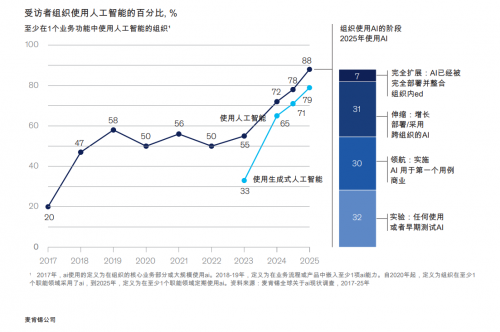
Core Insights - The focus of the AI industry is shifting from technological breakthroughs to practical applications, driven by increasing policy support and market demand [1][5][6] - The release of the recent government policy is expected to accelerate the commercialization of AI technologies and products, marking a transition in capital markets from speculative investments to tangible applications [1][6][9] Industry Development - 2023 is seen as a pivotal year for AI application deployment, with McKinsey predicting that by 2025, inference will account for over 80% of AI computing power consumption, while training will drop below 20% [2] - The AI industry is transitioning from general application layouts to deep exploration of specific scenarios, with leading companies like Lenovo making significant advancements in various sectors such as healthcare [10][16] Market Trends - The demand for AI applications is evolving, with a shift from cloud and platform investments to AI-native solutions that deliver measurable business outcomes [12] - The market for AI technology applications in China is projected to reach approximately 580 billion yuan by 2025, with a compound annual growth rate of over 25% [5] Company Innovations - Lenovo has upgraded its AI capabilities significantly, launching the Tianxi personal super intelligent agent and enhancing its functionalities to better meet user needs [3][13] - The company is adopting a "service-first" model for GPU services, which is expected to reduce deployment costs by 20-30% over three years while improving AI workload performance by up to 30% [15] Investment Opportunities - The recent policy changes are expected to create a favorable environment for companies focusing on AI application scenarios, potentially leading to improved profitability and increased capital interest [6][9] - Companies that align their strategies with the newly defined application scenarios in the policy are likely to attract more investment and achieve higher valuations [9][16]

国泰海通|计算机:“十五五”前瞻部署未来产业,美国政府或入股量子科技
国泰海通证券研究· 2025-10-26 15:15
Group 1 - OpenAI launched the AI browser ChatGPT Atlas, marking a significant shift in how AI can reshape internet access, currently available for macOS users [1] - ChatGPT Atlas integrates a "tool + AI" paradigm, enhancing the browser's functionality to serve as an intelligent task terminal, capable of complex operations like booking flights and purchasing groceries [1] - The Chinese government emphasizes the importance of technology in the "14th Five-Year Plan," focusing on key areas such as integrated circuits, quantum technology, and other future industries to drive economic growth [2] Group 2 - Several U.S. quantum computing companies are negotiating with the U.S. Department of Commerce to secure federal funding in exchange for equity, indicating increased government intervention in key economic sectors [3] - Companies like IonQ, Rigetti Computing, and D-Wave Quantum are among those discussing potential government investment, with each company expected to receive at least $10 million [3] - The U.S. Department of Commerce's funding application process may include various terms beyond equity, such as warrants, intellectual property licenses, and revenue-sharing agreements [3]

走进上市公司——科大讯飞:探秘AI国家队,共话产业新未来
Quan Jing Wang· 2025-10-20 09:22
Core Insights - The event organized by China Merchants Securities showcased iFlytek's strategic innovations in general large model technology, industry applications, and global expansion, emphasizing its status as a leading AI enterprise in China [1][2][7] - iFlytek's market capitalization has recently surpassed 100 billion, highlighting the commercial value of technological innovation [1] Group 1: Company Overview - iFlytek has achieved significant milestones in core technologies such as speech synthesis, speech recognition, machine translation, and natural language understanding since its establishment in 1999 [2] - The company has developed various applications across industries, including an acoustic imaging device for precise anomaly detection in industrial settings and AI-powered educational tools that have maintained the top sales position in the high-end category for four consecutive years [2][3] Group 2: Leadership Insights - iFlytek's co-founder and senior vice president, Jiang Tao, emphasized the importance of robust data engineering, model engineering, and intelligent agent engineering in AI industry applications, asserting that simply applying open-source models is insufficient [5][6] - The recently released Spark X1 version demonstrates significant advantages in "hallucination governance," which is crucial for large-scale applications in education, healthcare, and other serious sectors [5][6] Group 3: Market Trends and Analysis - The AI industry is segmented into upstream computing infrastructure, midstream large model vendors, and downstream application scenarios, with the computing segment entering a phase of performance validation driven by increased capital expenditure [7][8] - iFlytek's competitive edge lies in its self-controlled technology, leading market share in state-owned enterprises, and a comprehensive AI industry chain layout [7][8] - Successful B-end applications in sectors like healthcare and education are essential for transforming AI expenditures from cost items to investment items, thereby overcoming traditional IT budget constraints [8]


1009港股日评:三大指数走势分化,资源股逆势走强-20251010
Changjiang Securities· 2025-10-10 03:22
Core Insights - The Hong Kong stock market experienced a mixed performance on October 9, 2025, with the Hang Seng Index declining by 0.29% to 26,752.59, while the Hang Seng China Enterprises Index rose by 0.07% to 9,530.13, indicating a divergence in index movements [2][7][11] - The overall market turnover reached HKD 386.82 billion, with net inflows from southbound funds amounting to HKD 3.043 billion, reflecting continued interest from mainland investors [2][11] - Sector performance showed a rotation, with the Wind Hong Kong non-ferrous metals sector gaining strength due to rising overseas risk aversion and domestic policy support, while previously high-performing sectors like pharmaceuticals and semiconductors faced profit-taking and declined [2][11] Market Performance - The Hang Seng Technology Index fell by 0.66% to 6,471.34, contributing to the overall market's downward pressure [7][11] - In the A-share market, the Shanghai Composite Index increased by 1.32%, and the CSI 300 rose by 1.48%, indicating a stronger performance compared to the Hong Kong market [7][11] - Among the major sectors, the composite sector (+4.01%), non-ferrous metals (+3.77%), and coal (+2.81%) led the gains, while pharmaceuticals (-5.23%), light industry manufacturing (-5.00%), and electronics (-2.30%) lagged [7][11] Sector Analysis - The non-ferrous metals sector's rise was attributed to increased gold reserves in China and export controls on rare earth technologies, which positively influenced market expectations for supply and demand dynamics [11] - The construction sector saw increased interest due to expectations of accelerated infrastructure investment, leading to a shift in capital from previously high-flying sectors like semiconductors [11] - The report highlights three potential directions for future growth in the Hong Kong market: AI technology and new consumption, sustained inflows from southbound funds, and the impact of monetary policy changes in the U.S. and China [11]