
AI Infra

Search documents
AI infra:算力系统化升级DB for AI进程加速:计算机行业重大事项点评
Huachuang Securities· 2026-01-27 10:13
❑ 2026 年 1 月 5 日,NVIDIA 宣布,NVIDIA BlueField-4 数据处理器(NVIDIA BlueField 全栈平台的一部分)为 NVIDIA 推理上下文内存存储平台提供支持, 该平台是面向下一代 AI 前沿的新一代 AI 原生存储基础设施。1 月 20 日,在 2026 阿里云 PolarDB 开发者大会上,阿里云旗下云原生数据库 PolarDB 正式 发布 AI 数据湖库(Lakebase)等系列全新产品能力。 评论: ❑ 我们认为:大模型记忆和硬件,将成为模型发展核心叙事,助力 AIDB 与向量 数据库规模化进程: 证 券 研 究 报 告 计算机行业重大事项点评 AI infra:算力系统化升级 DB for AI 进程加速 事项: 行业研究 计算机 2026 年 01 月 27 日 推荐(维持) 华创证券研究所 证券分析师:吴鸣远 邮箱:wumingyuan@hcyjs.com 执业编号:S0360523040001 联系人:周楚薇 邮箱:zhouchuwei@hcyjs.com 行业基本数据 | | | 占比% | | --- | --- | --- | | 股票家数( ...

清华教授翟季冬:Benchmark正在「失效」,智能路由终结大模型选型乱象
雷峰网· 2026-01-23 07:47
Core Insights - The article discusses the "choice paradox" in the AI model and computing power industry, highlighting the challenges users face in selecting appropriate models amidst a plethora of options and varying performance metrics [2][7][10] - It emphasizes that high benchmark scores do not necessarily align with user needs, as different service providers may offer significantly different performance for the same model due to factors like aggressive quantization [8][10][11] - The article introduces AI Ping, a product developed by Qingcheng Jizhi, aimed at providing a systematic evaluation of different models and service providers, thereby helping users make informed decisions [3][12][17] Group 1: Industry Challenges - Users often struggle with the overwhelming number of options and the complexity of selecting the right model, which can lead to inefficiencies and increased costs for enterprises [2][10] - The performance of models can vary widely based on the service provider, with discrepancies in API service throughput and response times affecting user experience [8][9] - The article notes that the choice of model should be tailored to specific tasks, as different models excel in different areas, which complicates the selection process for users [10][11] Group 2: AI Ping and Its Functionality - AI Ping aims to act as a "Yelp for computing power," aggregating performance data and user habits to recommend cost-effective solutions [3][17] - The product's functionality includes both service provider routing and model routing, allowing users to select the best service and model based on their specific needs [13][17] - The development of AI Ping has involved extensive testing of various models and service providers to ensure accurate performance metrics and user satisfaction [14][19] Group 3: Market Dynamics and Future Directions - The article highlights the importance of data aggregation in improving model selection accuracy, which can lead to reduced costs for users and better resource utilization for service providers [3][17] - It discusses the evolving landscape of the AI Infra industry, emphasizing the need for continuous software and hardware integration to meet the growing demands of users [22][30] - The article concludes with a reflection on the future of AI Infra, suggesting that as long as model evolution and computing architecture continue to advance, the demand for AI Infra solutions will persist [26][30]


PPIO创始人姚欣:闲置率高达八成的国产GPU,如何盘活成「真算力」?丨智算想象力十人谈
雷峰网· 2026-01-20 10:50
Core Viewpoint - PPIO is strategically betting on underappreciated directions in the tech landscape, transitioning from edge cloud services to GPU inference platforms and now to Agent sandboxes, showcasing its adaptability and foresight in a rapidly evolving market [2][6]. Group 1: Company Background and Growth - PPIO was founded in 2018 amidst fierce competition in the edge computing and CDN market, with a vision to integrate idle computing resources into a distributed platform [3]. - The company initially struggled to find a balance between supply and demand until the pandemic-induced surge in online traffic helped it establish a growth trajectory [4]. - By 2024, PPIO's revenue is projected to reach 558 million, reflecting exponential growth in a short period [4]. Group 2: Technological Development and Market Position - PPIO has developed a unique Agent sandbox, which provides a secure environment for AI agents to operate, preventing unauthorized access to external resources [4][19]. - The company has focused on building a comprehensive AI cloud service capability, moving from edge cloud to GPU inference and now to PaaS solutions [6][11]. - PPIO's strategy emphasizes creating technology for unseen demands, positioning itself ahead of industry trends [12][14]. Group 3: Market Strategy and Differentiation - PPIO aims to avoid competing in the saturated GPU trading market, instead opting for a model that integrates idle distributed computing resources into cloud services [15][17]. - The company has identified a significant opportunity in the AI developer market, which is expected to grow rapidly, with new applications consuming resources at a much higher rate than traditional internet giants [25]. - PPIO's approach to open-source and non-binding API capabilities caters to the evolving needs of AI developers, contrasting with traditional cloud service models that often lock users into proprietary systems [22][24]. Group 4: Future Outlook and Challenges - PPIO is currently preparing for an IPO in Hong Kong, indicating confidence in its growth trajectory and market position [6]. - The company recognizes that the primary challenge lies in demand-side growth, particularly in latency-sensitive applications [32]. - PPIO's unique distributed cloud model, built on fragmented and heterogeneous infrastructure, sets it apart from traditional cloud providers that rely on centralized data centers [27].

计算机周观察20260118:继续看好AI应用行情
CMS· 2026-01-18 07:33
Investment Rating - The report maintains a "Recommended" rating for the industry, indicating a positive outlook for the sector's fundamentals and expected performance relative to the benchmark index [2][23]. Core Insights - The report emphasizes that 2026 is the inaugural year for AI applications, suggesting that the market is just beginning to experience significant growth in this area [1]. - The computer sector has shown strong performance, with a notable increase in stock prices, indicating robust investor interest and market activity [4][17]. - Key developments in AI technology are highlighted, including Alibaba's significant upgrade to its Qianwen App, which integrates various services and enhances its AI capabilities [9][11]. Industry Overview - The industry comprises 286 stocks, with a total market capitalization of approximately 4,800.7 billion and a circulating market value of about 4,256.1 billion [2]. - The computer sector's absolute performance over the past 1 month, 6 months, and 12 months has been 20.2%, 24.2%, and 53.2%, respectively, showcasing strong growth [4]. - The report notes that the competition for AI application and infrastructure is intensifying, with a focus on major players like Alibaba and various vertical AI application companies [16]. Market Performance Review - In the second week of 2026, the computer sector rose by 3.82%, with notable stock performances from companies such as Jiechuang Intelligent and Shiji Information, which saw increases of 28.95% and 28.69%, respectively [17][18]. - The report provides a detailed ranking of stocks based on their weekly performance, highlighting both the top gainers and losers in the sector [17].


大模型最难的AI Infra,用Vibe Coding搞定
机器之心· 2026-01-07 05:16
Core Insights - The article discusses the challenges and potential of Vibe Coding in AI infrastructure development, highlighting its limitations in complex systems and proposing a document-driven approach to enhance its effectiveness [3][5][20]. Group 1: Challenges of Vibe Coding - Vibe Coding faces three main issues: context loss, decision deviation, and quality instability, primarily due to the lack of a structured decision management mechanism [4][5]. - The complexity of AI infrastructure, characterized by thousands of lines of code and numerous interrelated decision points, exacerbates these challenges [4][5]. Group 2: Document-Driven Vibe Coding Methodology - The document-driven approach aims to systematize key decisions during the design phase, significantly reducing complexity and improving code quality [6][20]. - By focusing on high-level design decisions, developers can leverage AI for detailed code implementation, achieving complex functionalities with minimal coding [7][20]. Group 3: Implementation in Agentic RL - The article presents a case study on optimizing GPU utilization in Agentic Reinforcement Learning (RL) systems, which face significant resource scheduling challenges [11][12]. - A proposed time-sharing reuse scheme dynamically allocates GPU resources, addressing the inefficiencies of existing solutions and improving overall system performance [14][15]. Group 4: Performance Validation - Experiments on a large-scale GPU cluster demonstrated that the time-sharing reuse scheme increased rollout throughput by 3.5 times compared to traditional methods, significantly enhancing task completion rates and reducing timeout occurrences [46][50]. - The analysis indicates that the additional system overhead introduced by the new scheme is minimal, validating its practical value in large-scale Agentic RL training [53][55]. Group 5: Team and Future Directions - The article concludes with an introduction to the ROCK & ROLL team, which focuses on advancing RL technologies and enhancing the practical application of large language models [57]. - The team emphasizes collaboration and open-source contributions to foster innovation in the RL community [58].

当AI已成为共识,企业究竟该如何真正“用起来”?
吴晓波频道· 2026-01-07 00:30
Core Insights - The main challenge for companies in adopting AI is not the technology itself but the speed of decision-making by leaders, with only 1% of companies achieving "mature deployment" of AI despite 92% planning to invest more in it [2][3][32] - AI's integration into businesses requires a transformation in internal capabilities, including strategic choices, organizational collaboration, data and processes, governance, and risk control [4][32] Group 1: AI Infrastructure and Deployment - The future of AI opportunities lies in two layers of infrastructure: AI Infra (computational power) and Agent Infra (intelligent agent infrastructure), which are essential for scaling AI applications [8][9] - Companies need to connect models, computational power, data, tools, and processes to succeed in the AI landscape [9] - AI deployment in enterprises requires building a knowledge base, creating digital employees, and optimizing workflows to fundamentally reshape work processes [13][28] Group 2: AI as a Collaborator - The perception of AI as a collaborator rather than just a tool is crucial for its effective use, as it combines the advantages of both human and programmatic capabilities [14] - Understanding AI's role and capabilities can help organizations leverage its strengths while managing its limitations [14] Group 3: Real-World Applications and Case Studies - Companies like Meitu and DJI exemplify a growth strategy focused on leveraging core technological capabilities rather than merely expanding product lines [15][16] - AI's true value in industries lies in its ability to eliminate uncertainties in production and R&D processes, enhancing efficiency and quality [28] - The shift from general models to specific intelligent agents tailored to business needs is essential for practical AI applications in enterprises [22][24] Group 4: Organizational Capability and Transformation - Successful AI integration requires organizations to develop the ability to manage data and operate intelligent agents, rather than relying solely on AI experts [24][25] - The focus should be on embedding AI into the organizational framework to ensure it becomes a part of the operational capabilities [32][34] - The current period presents an optimal opportunity for companies to transform AI into a growth logic and organizational productivity [35]

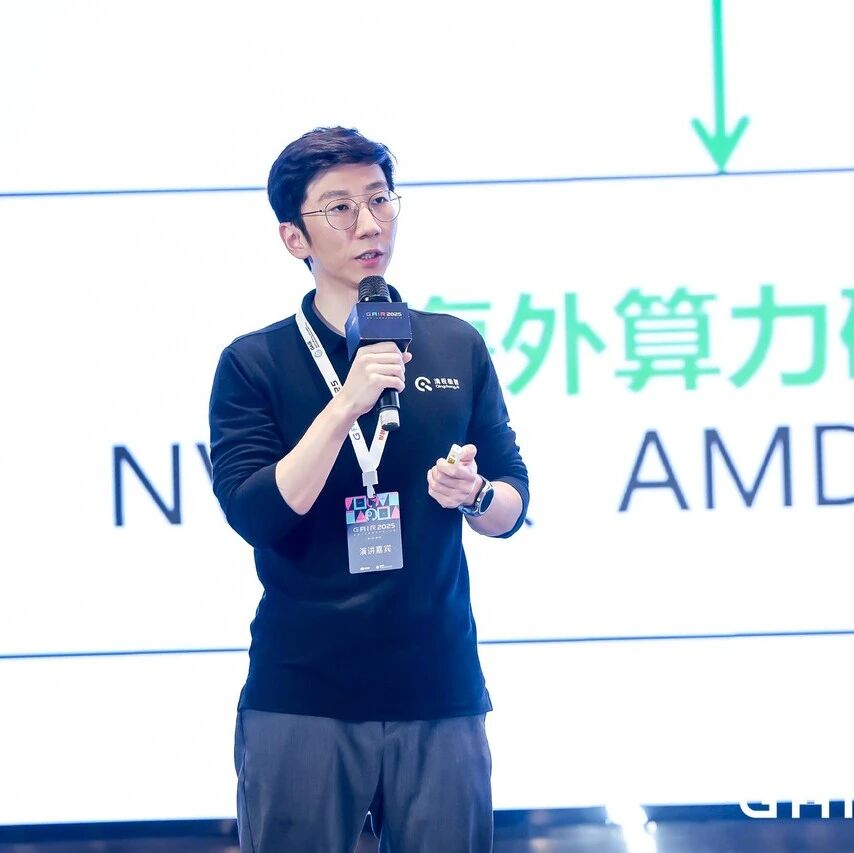
清程极智师天麾:MaaS盈利战打响,Infra技术已成利润关键丨GAIR 2025
雷峰网· 2025-12-26 09:57
Core Viewpoint - The article discusses the current state of domestic computing power in China, emphasizing the need for improved software ecosystems and system-level optimization to enhance the utilization of domestic chips in AI applications [5][21]. Group 1: AI Infrastructure and Market Trends - The GAIR conference highlighted the rapid evolution of computing power and its impact on AI technology and industry structure, focusing on the next decade of China's AI industry [2]. - The speaker, Shi Tianhui, pointed out that the bottleneck in the utilization of domestic computing power lies in the software ecosystem and system-level optimization capabilities [5][21]. - The MaaS (Model as a Service) market is experiencing significant growth, with a reported increase of over 400% in the first half of the year, indicating a strong demand for AI services [33]. Group 2: Challenges and Solutions in AI Infrastructure - The current challenge is that many domestic enterprises purchase chips from multiple vendors, leading to difficulties in software compatibility and maintenance [22][13]. - The company has developed a proprietary inference engine, "Chitu," which aims to simplify the use of domestic chips and improve their performance [21][22]. - The article emphasizes the importance of a unified software solution to address the "M×N" problem of optimizing multiple models across various chips, which requires significant resources and expertise [25][29]. Group 3: Innovations and Product Offerings - The "Chitu" inference engine has been designed to support both domestic and foreign chips, significantly lowering the barriers for customers to utilize AI applications effectively [22][27]. - The company has introduced "AI Ping," a one-stop platform for evaluating and accessing various MaaS offerings, which aims to reduce information asymmetry in the market [30][36]. - The platform provides comprehensive performance evaluations and a routing function that allows users to access multiple suppliers through a single interface, enhancing cost efficiency and service reliability [39][41].
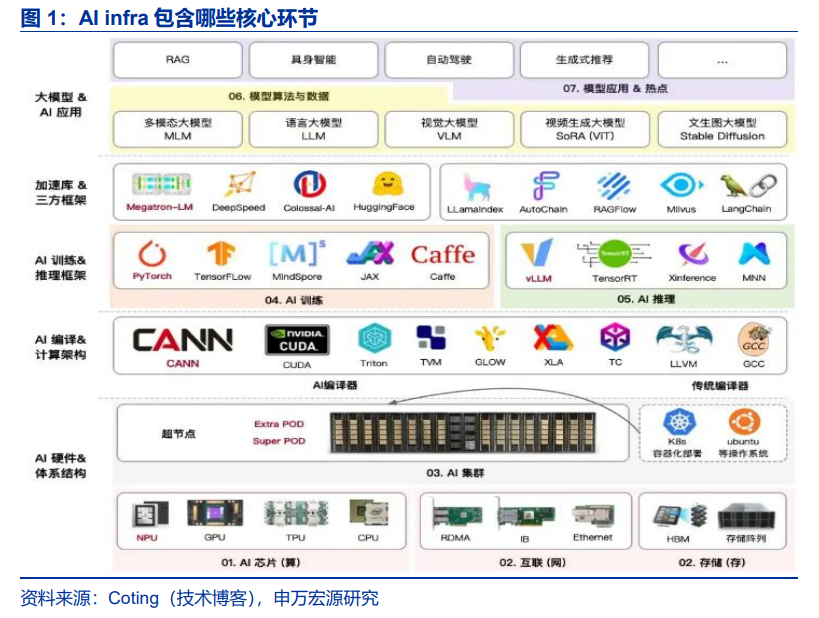
申万宏源:AI Infra已成为AI应用落地关键 “卖铲人” 看好OLTP与向量数据库方向
智通财经网· 2025-12-24 06:49
Group 1 - AI Infra has become a key "seller" for application deployment, with computing scheduling being the core variable determining the profitability of model inference [1] - Domestic model token fees are significantly lower than overseas, leading to higher cost sensitivity; for instance, Alibaba's Aegaeon can reduce GPU usage by 82% through token-level scheduling [1] - The combination of generative AI and agents is accelerating penetration, with AI infra software expected to enter a high growth phase [1] Group 2 - The demand for data infrastructure is surging ahead of application explosion, with vector databases becoming a necessity; Gartner predicts that by 2025, enterprise adoption of RAG technology will reach 68% [2] - The data architecture in the AI era is shifting from "analysis-first" to "real-time operations + analysis collaboration," leading to significant changes in the industry [3] - MongoDB is well-positioned to meet the low-cost AI deployment needs of small and medium-sized clients, achieving a 30% growth rate in its core products for FY26Q3 [3] Group 3 - NVIDIA has introduced a SCADA solution that connects GPUs directly to SSDs, reducing IO latency to microsecond levels, which is crucial for vector databases to adapt to AI real-time inference needs [4] - Relevant companies in this space include MongoDB, Dameng Data, Yingfang Software, Snowflake, and Deepin Technology [5]
下一个“AI卖铲人”:算力调度是推理盈利关键,向量数据库成刚需
Hua Er Jie Jian Wen· 2025-12-24 04:17
Core Insights - The report highlights the emergence of AI infrastructure software (AI Infra) as a critical enabler for the deployment of generative AI applications, marking a golden development period for infrastructure software [1] - Unlike the model training phase dominated by tech giants, the inference and application deployment stages present new commercial opportunities for independent software vendors [1] - Key products in this space include computing scheduling software and data-related software, with computing scheduling capabilities directly impacting the profitability of model inference services [1][2] Computing Scheduling - AI Infra is designed to efficiently manage and optimize AI workloads, focusing on large-scale training and inference tasks [2] - Cost control is crucial in the context of a price war among domestic models, with Deepseek V3 pricing significantly lower than overseas counterparts [5] - Major companies like Huawei and Alibaba have developed advanced computing scheduling platforms that enhance resource utilization and reduce GPU requirements significantly [5][6] - For instance, Huawei's Flex:ai improves utilization by 30%, while Alibaba's Aegaeon reduces GPU usage by 82% through token-level dynamic scheduling [5][6] Profitability Analysis - The report indicates that optimizing computing scheduling can serve as a hidden lever for improving gross margins, with a potential increase from 52% to 80% in gross margin by enhancing single-card throughput [6] - The sensitivity analysis shows that a 10% improvement in throughput can lead to a gross margin increase of 2-7 percentage points [6] Vector Databases - The rise of RAG (Retrieval-Augmented Generation) technology has made vector databases a necessity for enterprises, with Gartner predicting a 68% adoption rate by 2025 [10] - Vector databases are essential for supporting high-speed retrieval of massive datasets, which is critical for RAG applications [10] - The demand for vector databases is expected to surge, driven by a tenfold increase in token consumption from API integrations with large models [11] Database Landscape - The data architecture is shifting from "analysis-first" to "real-time operations + analysis collaboration," emphasizing the need for low-latency processing [12][15] - MongoDB is positioned well in the market due to its low entry barriers and adaptability to unstructured data, with significant revenue growth projected [16] - Snowflake and Databricks are expanding their offerings to include full-stack tools, with both companies reporting substantial revenue growth and customer retention rates [17] Storage Architecture - The transition to real-time AI inference is reshaping storage architecture, with a focus on reducing IO latency [18] - NVIDIA's SCADA solution demonstrates significant improvements in IO scheduling efficiency, highlighting the importance of storage performance in AI applications [18][19]


中银晨会聚焦-20251224
Bank of China Securities· 2025-12-24 01:19
证券研究报告——晨会聚焦 2025 年 12 月 24 日 资料来源:万得,中银证券 中银国际证券股份有限公司 具备证券投资咨询业务资格 产品组 证券分析师:王军 中银晨会聚焦-20251224 ■重点关注 【电子】AI Infra 升级浪潮中的材料革命*苏凌瑶 茅珈恺。AI 推理需求催化 云厂商资本开支,计算效率和互联带宽协同升级。AI PCB 是 AI Infra 升级浪 潮中的核心增量环节。AI PCB 三大原材料电子布、铜箔、树脂则是构筑 PCB 介电性能的核心壁垒。 市场指数 | 指数名称 | 收盘价 | 涨跌% | | --- | --- | --- | | 上证综指 | 3919.98 | 0.07 | | 深证成指 | 13368.99 | 0.27 | | 沪深 300 | 4620.73 | 0.20 | | 中小 100 | 8111.91 | 0.35 | | 创业板指 | 3205.01 | 0.41 | 行业表现(申万一级) | 指数名称 | 涨跌% | 指数名称 | 涨跌% | | --- | --- | --- | --- | | 电力设备 | 1.12 | 社会服务 | (2 ...