IP联名

Search documents
当IP成为消费驱动力,如何“装配”它?
Zhong Guo Jing Ji Wang· 2026-01-12 23:58
Core Insights - The article discusses the rapid growth of the IP (Intellectual Property) and consumer market in China, particularly in the digital entertainment sector, with projections indicating a market size of 753 billion yuan by 2025, reflecting a year-on-year growth of 62.8% [1] - The "IP + food" market is expected to reach 414.8 billion yuan by 2025, with a compound annual growth rate of 10.6% from 2025 to 2029, and an even higher growth rate of 18.5% in the Chinese market during the same period [2] - The integration of IP into consumer products is evolving from mere promotional tools to strategic brand assets that enhance emotional connections with consumers [3][8] Group 1: Market Trends - The IP-related consumer products have seen significant sales, with the "Nezha 2" movie generating hundreds of billions in sales from its merchandise [1] - A survey indicates that 49% of users consider IP to be a "plus" in their purchasing decisions, with 50.3% of respondents planning to increase their IP-related spending in 2025 [1] - The IP + food market is becoming a key driver for brands to innovate and differentiate in a highly competitive landscape [2][7] Group 2: Brand Strategies - Brands like Yili and Mengniu are leveraging popular IPs to create products that resonate emotionally with consumers, moving beyond simple collaborations to deeper brand narratives [3][5] - Yili's collaboration with "Zootopia 2" resulted in a unique jasmine tea milk tea product that aligns with family consumption scenarios, enhancing brand image and consumer engagement [4] - Mengniu's partnership with "Nezha 2" not only produced co-branded products but also integrated the film's themes into product design, significantly boosting social media engagement [6] Group 3: Consumer Engagement - The concept of "social currency" is emerging, where products are designed to be shareable and collectible, enhancing user interaction and brand loyalty [4][8] - The collaboration between brands and IPs is increasingly focused on creating emotional connections, with products designed to evoke feelings and social sharing among consumers [10][11] - The "health food play" category is gaining traction, with products designed for children that combine safety, nutrition, and emotional engagement, reflecting a shift in consumer expectations [12][14]


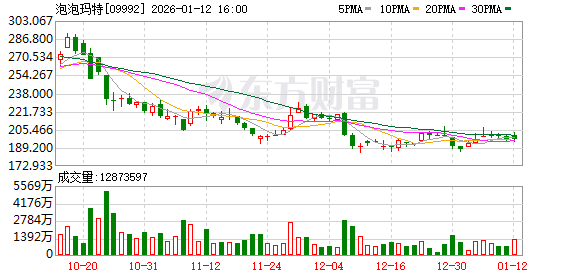
泡泡玛特联手荣耀,潮玩手机要来了?
Guo Ji Jin Rong Bao· 2026-01-12 14:49
Core Viewpoint - Pop Mart is launching a collaboration with Honor, a leading smartphone brand, to create a trendy toy-themed smartphone, which has generated significant interest in both the toy and tech communities [2][4]. Group 1: Collaboration Details - The collaboration is not a self-developed phone by Pop Mart but an IP co-branding partnership with Honor [2]. - The specific collaboration model between Honor and Pop Mart has not been disclosed yet, but it could range from lightweight branding to deep customization across the product lifecycle [4]. - Pop Mart is known for its "IP + blind box" model, successfully creating and operating several popular IPs, including MOLLY and SKULLPANDA, and has established three core business segments: consumer products, service experiences, and entertainment [4]. Group 2: Financial Performance - In the first half of 2025, Pop Mart reported revenue of 13.88 billion yuan, a year-on-year increase of 204.4%, and an adjusted net profit of 4.71 billion yuan, up 362.8% [5]. - The THE MONSTERS series, which includes the LABUBU IP, generated revenue of 4.81 billion yuan, marking a 668% increase and accounting for 34.7% of total revenue [5]. - Other IPs like MOLLY, SKULLPANDA, CRYBABY, and DIMOO also surpassed 1 billion yuan in revenue [5][6]. Group 3: Market Context - Honor, originally a sub-brand of Huawei, has become a leading smartphone brand in China, holding a market share of 19.5% in Q2 2022, 19.4% in Q3 2023, and 17.1% in Q1 2024 [6]. - The Chinese smartphone market is experiencing intense competition, with Honor facing challenges from brands like vivo, Apple, and Huawei, which have recently outperformed it in terms of shipment volumes [7][8]. - The overall smartphone market in China saw a slight decline in shipments, with a total of approximately 68.5 million units shipped in Q3 2025, down 0.5% year-on-year [8][9].


荣耀将与泡泡玛特推出联名手机
Guan Cha Zhe Wang· 2026-01-12 11:31
Group 1 - The core point of the article is that Honor is collaborating with Pop Mart to launch the Honor 500 series as the first trendy toy phone, set to be unveiled on January 19 [1] - The collaboration involves comprehensive co-creation, including ID design, packaging, system themes, and exclusive accessories, rather than just simple graphics [1] - The special edition phone will feature a Molly theme, including dedicated icons, boot animations, and ringtones, along with a gift box containing the phone, a limited Molly figurine, a custom phone case, and stickers [1] Group 2 - In a highly competitive mid-range market, simply focusing on hardware specifications is no longer sufficient to attract consumers, making this collaboration a strategy to emphasize "emotional value" [2] - Previous successful collaborations in the industry, such as OnePlus's partnership with the game "Genshin Impact," have shown that limited edition phones can command high prices in the second-hand market, sometimes being referred to as "investment products" [2] - Other brands like Redmi and Realme have also engaged in successful IP collaborations, indicating a trend where such partnerships can lead to significant consumer demand and sales [2][3] Group 3 - Analysts note that IP collaborations have become a key strategy for mobile manufacturers seeking differentiation in the market [3] - However, there is a risk that if the collaboration lacks depth, such as simple logo overlays or color changes without meaningful customization, it may face criticism and potentially impact sales negatively [3]
茶饮行业:喜茶品牌社媒表现深度解析报告
数说故事· 2026-01-07 01:46
Investment Rating - The report does not explicitly provide an investment rating for the industry or company Core Insights - Heytea is a representative brand of new-style tea drinks, known for its "inspired tea" positioning and diverse product line, including cheese tea and fruit tea, which are popular among young consumers [3][5] - The brand has shown significant social media engagement, particularly on platforms like Douyin and Xiaohongshu, with notable peaks in interaction during promotional events [3][4] - Consumer sentiment towards Heytea is generally positive, although there are some negative feedbacks regarding long waiting times and product pricing [3][4] Summary by Sections 1. Brand Overview - Heytea was founded in 2012 in Jiangmen, Guangdong, initially named "Huangcha" before rebranding due to trademark issues [5][7] - The brand targets young professionals and students, emphasizing a high-end tea experience that combines traditional tea culture with modern consumer needs [5][6] - Heytea's product line includes innovative offerings like the cheese tea series, fruit tea family, and seasonal limited editions, with a commitment to using high-quality ingredients [6][9] 2. Social Media Performance Analysis - Heytea's social media performance is characterized by seasonal and event-driven spikes in engagement, particularly during promotional campaigns [16][20] - The brand's social media strategy varies by platform, with Weibo focusing on brand updates, Douyin emphasizing user-generated content (UGC), and Xiaohongshu concentrating on product recommendations [15][46] - In the competitive landscape, Heytea maintains a strong presence, leveraging IP collaborations and promotional activities to enhance brand visibility [14][15] 3. Consumer Sentiment Analysis - The sentiment analysis indicates a generally positive perception of Heytea, with a net sentiment ratio (NSR) of 72.71% on Douyin and 74.23% on Xiaohongshu during peak promotional periods [34][35] - However, sentiment on Weibo and WeChat is more mixed, reflecting concerns over product availability and service experiences [36][37] - Key themes in consumer feedback include appreciation for IP collaborations, product taste, and complaints about service efficiency and product pricing [41][42][45] 4. Marketing Campaign Breakdown: Heytea × CHIIKAWA Collaboration - The collaboration with CHIIKAWA in August 2025 aimed to enhance brand visibility and attract younger consumers through limited edition products [60][61] - The campaign utilized a multi-platform approach, generating significant engagement spikes across social media channels, particularly during the launch [63][66] - Consumer feedback highlighted both excitement for the collaboration and frustration over product scarcity and service issues, indicating areas for improvement in operational efficiency [70][72][77]
IP联名如何摆脱“预制味”?
3 6 Ke· 2026-01-06 03:27
Core Insights - The collaboration between Starbucks and Harry Potter represents a shift from traditional IP partnerships to immersive experiences that evoke emotional connections with consumers [2][3][5] - The initiative successfully engages a wide demographic, appealing to both younger and older generations, thus enhancing brand familiarity and reducing the cost of trying new products [5][6] Group 1: Emotional Consumption Era - The traditional approach to IP collaborations has become less effective due to oversaturation and lack of narrative depth, leading to consumer fatigue [2] - Consumers are increasingly seeking emotional value, aesthetic recognition, and cultural belonging, moving beyond mere purchasing behavior [2] Group 2: Starbucks and Harry Potter Collaboration - Starbucks launched three limited-edition drinks and various themed merchandise, effectively tapping into nostalgic sentiments during the winter season [3][4] - The collaboration generated significant social media engagement, with customers sharing their experiences and emotional reactions [4] Group 3: Store as an Immersive Experience - Starbucks stores are designed as "third spaces" that encourage interaction and prolonged engagement, making them ideal for themed transformations [7][8] - The Guangzhou and Tianjin stores were specifically chosen for their architectural compatibility with the Harry Potter theme, enhancing the immersive experience [8][9] Group 4: Human Element in Experience - The involvement of Starbucks employees, referred to as "partners," in creating a memorable experience is crucial, as they actively engage with customers and enhance the emotional connection [11][12] - Unique activities and spontaneous interactions by employees contribute to the warmth and authenticity of the collaboration [13][14] Group 5: Sustainable Immersive IP Collaborations - Successful collaborations share common elements: high-quality products, well-designed stores, and engaged employees that facilitate emotional connections [15][16] - The challenge remains in managing rising costs and consumer sensitivity to IP collaborations, necessitating a long-term strategy rather than short-term marketing tactics [17]

功能还是情绪?IP消费的价值抉择与增长路径
Zhong Guo Jing Ying Bao· 2025-12-23 14:31
Core Insights - The holiday season, particularly Christmas, is a significant time for emotional consumption, with brands leveraging various IPs to boost sales and profits [1] - The collaboration between popular IPs and consumer products is gaining traction, with companies like Bubble Mart and Miniso actively engaging in cross-industry partnerships [2][4] - The IP retail market in China is experiencing substantial growth, with a reported retail value of $13.77 billion in 2023, reflecting a year-on-year increase of 9.6% [6] Group 1: IP Collaborations and Market Trends - Popular IP collaborations, such as the partnership between Heytea and Bubble Mart's "Star People," have generated significant buzz on social media, with sales exceeding 100 million yuan in the first year of collaboration [2] - The interest consumption market is projected to surpass 380 billion yuan by the third quarter of 2025, indicating a growth rate of over 10% compared to the previous year [2] - The collaboration between Disney's "Zootopia 2" and over 60 brands showcases the potential for large-scale IP commercialization, with companies like Bubble Mart and Miniso leading the charge [3][5] Group 2: Strategies for IP Utilization - Companies are advised to segment their audience effectively, creating limited edition products for core fans while offering practical items for broader consumer groups [1] - The success of IPs relies on their ability to connect with consumers through quality content and innovative product offerings, as seen in the strategies of Disney and Bubble Mart [7][8] - Miniso's dual strategy of leveraging both international licensed IPs and signing exclusive agreements with original artists aims to build a robust IP ecosystem [8][9] Group 3: Challenges and Considerations - The risk of consumer fatigue due to oversaturation of IP collaborations is a concern, necessitating a focus on meaningful engagement rather than superficial partnerships [5][9] - The need for brands to align character emotions with consumer needs is crucial for successful IP integration, moving beyond mere branding to create relatable experiences [9] - The competitive landscape for IPs is intensifying, with companies exploring new methods to differentiate themselves and avoid homogenization in the market [7][9]
年均涨约1元,但年轻人为何难对“麦门”说再见?
Zhong Guo Jing Ying Bao· 2025-12-20 03:02
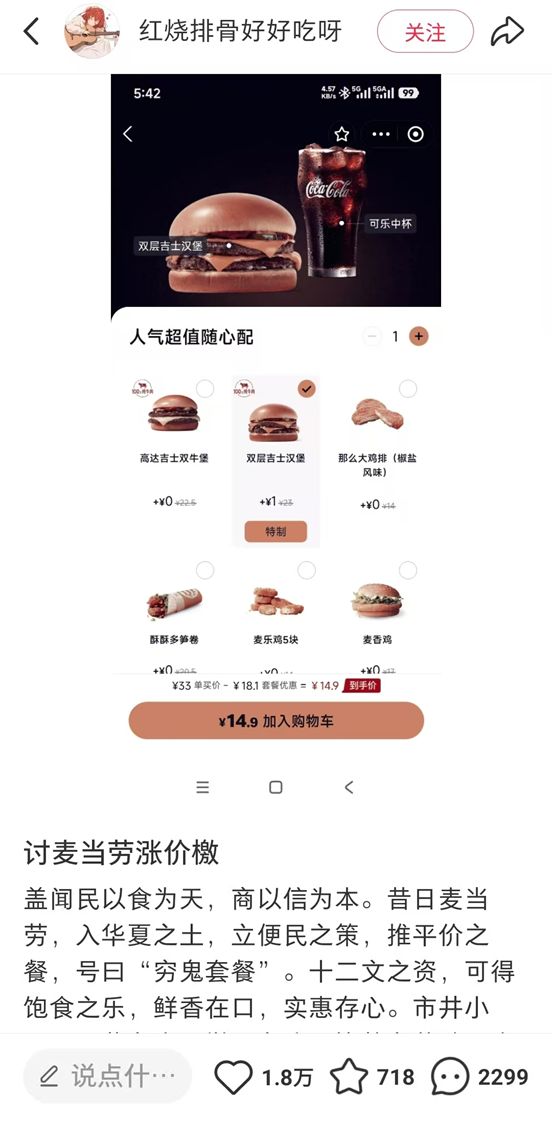
Core Viewpoint - McDonald's has announced a price increase for certain menu items starting December 15, 2025, with prices rising by 0.5 to 1 yuan, affecting the "1+1 Flexible Combo" which will see some combinations priced at 14.9 yuan, disappointing many consumers [1][3]. Price Increase History - Over the past five years, McDonald's has reportedly raised prices five times, with an average annual increase of approximately 0.5 to 1 yuan per item [4][8]. - The "1+1 Flexible Combo" was first introduced in March 2019 at a price of 12 yuan, which has since increased to 14.9 yuan, representing a total increase of 2.9 yuan or over 24% [8]. - Specific examples include the "McFish Combo," which has risen from 21 yuan in 2019 to 34 yuan currently, an increase of 13 yuan [8]. Consumer Sentiment - Following the announcement of the price increase, many loyal customers expressed disappointment and frustration, with some considering switching to competitors or making their own burgers [9][11]. - Despite complaints about perceived reductions in portion sizes, McDonald's maintains that their product standards have not changed [11]. Market Expansion - China has become McDonald's second-largest and fastest-growing market globally, with plans to open 1,000 new stores in China by 2025, contributing to a total of over 10,000 stores by 2028 [11][12]. - In the third quarter of 2025, McDonald's reported total revenue of $7.078 billion, a 3% year-over-year increase, with comparable sales in the international development licensed market, including China, growing by 4.7% [11]. Brand Positioning - McDonald's has successfully built trust among Chinese consumers regarding food safety and quality, making it difficult for price increases to significantly alter consumer habits [12]. - The brand has also become popular among younger consumers, leveraging collaborations with various IPs to attract this demographic, including partnerships with popular franchises [16].

哈尔斯:海外产能卡位全球格局,自主品牌开辟价值新篇章
Xin Lang Cai Jing· 2025-12-15 13:35
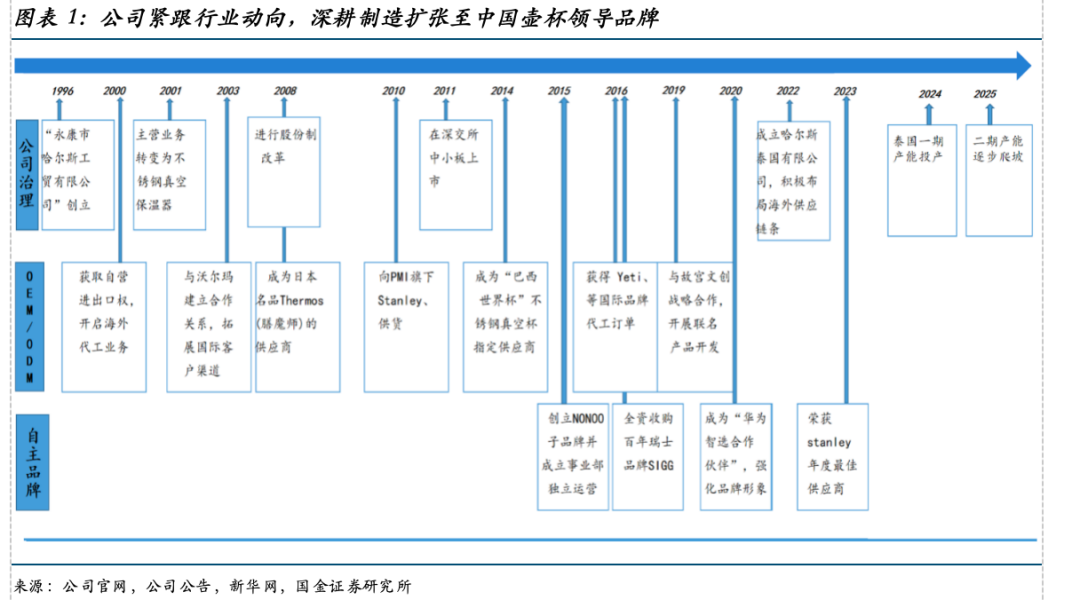
Investment View - The company is a leading manufacturer and brand operator of thermal cups in China, driving industry innovation and high-quality development through strong partnerships with key clients like Yeti, Stanley, and Owala, supported by continuous R&D investment and overseas production capacity [1][4] - The first phase of the Thailand production base was fully operational in 2023, with the second phase expected to reach production capacity by the first half of 2025, rapidly increasing output [1][42] - The company is actively investing in channel development, product innovation, and IP collaborations to enhance its own brand, Hars, and strengthen governance through employee stock ownership and share buybacks [1][12] Investment Logic - The company is solidifying overseas customer loyalty through efficient R&D and overseas production, with Yeti's stable growth and focus on high-margin new products, Stanley's transition to steady growth, and Owala's innovative designs driving high growth [2][9] - The company is expanding its customer matrix by actively seeking high-potential emerging brands like Brumate and Takeya, smoothing out fluctuations caused by brand rotation [2][41] - The company is entering a harvest period for its self-owned brand investments, focusing on channel expansion and product innovation to enhance brand recognition [2][10] Financial Performance - For the first three quarters of 2025, the company reported revenue of 2.437 billion yuan, a year-on-year increase of 2.94%, while net profit attributable to shareholders was 100 million yuan, down 55.49% due to short-term impacts from overseas capacity ramp-up and domestic brand investments [7] - Revenue from vacuum vessels, aluminum bottles, and other businesses in the first half of 2025 was 1.376 billion yuan, 165 million yuan, and 30 million yuan respectively, with year-on-year growth rates of 13.00%, 11.31%, and 13.54% [7] - The company's overseas revenue accounted for 86.91% of total revenue in the first half of 2025, with a year-on-year increase of 14.14% [7] Supply Chain and Production Capacity - The company is enhancing its supply chain advantages and production capacity, with the Thailand base's first phase producing approximately 5.5 million units annually and the second phase expected to reach 24.5 million units [42][43] - The company is implementing localized operations and optimizing logistics and procurement costs through a rapidly forming local supply chain in Thailand [42][43] - The company is advancing its smart manufacturing initiatives, aiming to replicate the lighthouse factory model to improve efficiency and reduce costs [46] Brand Development - The company is focusing on expanding its self-owned brand, Hars, and leveraging the Swiss brand SIGG to penetrate the European market [52][53] - The company is enhancing brand recognition through a multi-channel strategy, including online and offline retail, and has seen significant sales growth in platforms like Tmall and Douyin [55][57] - The company is integrating emotional value and product functionality into its branding strategy, collaborating with various IPs to attract younger consumers and enhance market penetration [59][63]

美邦服饰(002269.SZ):公司服饰未与《疯狂动物城》IP联名
Ge Long Hui· 2025-12-15 07:17
Group 1 - The company Meibang Apparel (002269.SZ) clarified on its interactive platform that it has not collaborated with the IP of "Zootopia" for any apparel line [1]

潮汕老板卖0.1克黄金,今年已进账62亿
华尔街见闻· 2025-12-14 10:31
Core Viewpoint - The article discusses how the jewelry brand潮宏基 is successfully appealing to the Z generation by offering lightweight gold products combined with popular IP collaborations, thus transforming the perception of gold from a mere investment to an emotional and wearable value [3][12][52]. Group 1: Market Trends and Consumer Behavior - The trend of "lightweight gold" is gaining traction among the Z generation, who prefer affordable and shareable gold items over traditional heavy gold jewelry [4][15]. -潮宏基's strategy of selling gold in small weights (0.1 grams to 0.96 grams) at prices ranging from 200 to 1000 yuan has sparked enthusiasm among young consumers for "low-cost gold" [12][14]. - The emotional value associated with these products, rather than just their investment potential, is a key driver of consumer interest [15][18]. Group 2:潮宏基's Business Model and Financial Performance -潮宏基's revenue surged nearly 30% in the first three quarters of 2025, exceeding 6.2 billion yuan, but the company faces a profit dilemma with "increasing revenue but not increasing profit" [8][38]. - The company's gross margin has declined from nearly 36% in 2020 to about 24% in 2024, marking a ten-year low, primarily due to the lower margins from franchise operations [39][42]. -潮宏基's aggressive expansion strategy, including a franchise model, has led to a significant drop in overall profit levels, raising concerns about sustainability [41][43]. Group 3: Product Innovation and IP Collaborations -潮宏基 has positioned itself as the "Bubble Mart of the jewelry industry" by leveraging IP collaborations with popular characters, enhancing its appeal to younger consumers [5][22]. - The brand's innovative approach includes using hollow and hollowed-out designs, along with fashionable elements, to create visually appealing lightweight gold products [19][21]. -潮宏基's marketing strategies, such as limited edition blind boxes and exclusive gift sets, have effectively engaged the young consumer base [24][25]. Group 4: Challenges and Future Outlook - Despite its growth,潮宏基 faces challenges such as declining product quality and increasing consumer complaints, which could undermine brand trust [47][50]. - The company is also dealing with intellectual property disputes, which may affect its expansion into overseas markets [50][52]. - As潮宏基 prepares for its IPO on the Hong Kong Stock Exchange, concerns about its profit quality and sustainability of its growth strategy are paramount [52][56].