
人与自然和谐共生

Search documents
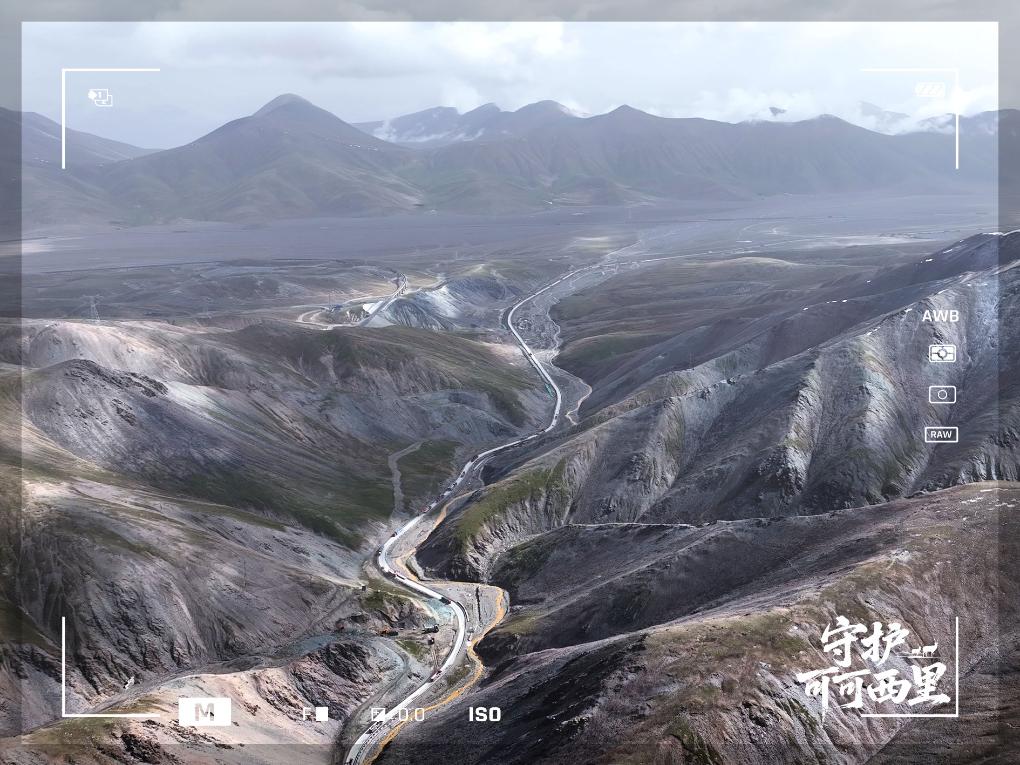
守护可可西里|10米的宽度,意味着什么?
Xin Hua Wang· 2025-08-08 08:17
Core Viewpoint - The article highlights the significance of the Qinghai-Tibet Highway in connecting the Tibetan Plateau with the mainland, emphasizing its role in wildlife protection, particularly for the endangered Tibetan antelope in the Hoh Xil region [2][5][10]. Group 1: Infrastructure and Wildlife Protection - The Qinghai-Tibet Highway, opened in 1954, is one of the highest highways in the world, facilitating access to the Hoh Xil region [2]. - The highway's construction has posed challenges for wildlife, particularly the Tibetan antelope, which migrates annually to give birth in Hoh Xil [7][8]. - Experts have implemented measures such as reducing road gradient and creating wildlife passages to help Tibetan antelopes navigate the highway more easily, significantly reducing their crossing time from 2-3 hours to much less [8]. Group 2: Environmental Significance - The Hoh Xil region is recognized as a UNESCO World Heritage site, underscoring its ecological importance [10]. - The article describes the breathtaking landscapes and the unique wildlife, including the Tibetan antelope, which is part of one of the world's largest migrations of hoofed animals [7][10]. - The efforts to protect the Tibetan antelope and their habitat serve as a model for harmonious coexistence between human infrastructure and wildlife conservation [8].

生态产品价值实现的理论贡献与实践路径
Ren Min Ri Bao· 2025-08-08 01:07
Core Viewpoint - The realization of ecological product value is a significant theoretical innovation in Xi Jinping's ecological civilization thought, emphasizing the transformation of natural wealth into economic value while protecting the environment [2][7]. Group 1: Theoretical Contributions - The concept of ecological product value realization innovatively constructs a pathway for transforming natural capital into economic productivity, integrating ecological protection as an intrinsic driver of economic growth [2][3]. - It marks a cognitive leap from "resource management" to "value management," addressing the externalities of ecological systems through market mechanisms [3][4]. Group 2: Practical Pathways - The establishment of a market-based pricing mechanism for ecological products is essential, requiring a classification of products and tailored strategies for public and commercial ecological goods [16][17]. - The implementation of a multi-faceted ecological compensation mechanism is crucial for incentivizing participation in ecological protection, including both vertical and horizontal compensation agreements [16][17]. Group 3: Economic and Social Integration - Ecological product value realization supports the integration of economic benefits with social equity, ensuring that ecological services are recognized as tradable economic assets [13][14]. - It promotes a new paradigm for regional coordinated development, allowing for innovative compensation mechanisms that align ecological protection with economic incentives [9][14]. Group 4: Technological and Institutional Framework - The integration of advanced technologies, such as blockchain and AI, is transforming the valuation and trading of ecological products, enhancing efficiency and transparency in ecological markets [10][11]. - A robust institutional framework is necessary to support the realization of ecological product value, including clear property rights, standardized valuation systems, and effective governance structures [15][18].

守护大美湿地
Ren Min Wang· 2025-08-07 00:58
Group 1: International Wetland Cities - Nine cities in China, including Shanghai Chongming and Zhejiang Wenzhou, have been certified as "International Wetland Cities," bringing the total to 22, the highest in the world [1] - Wetlands are recognized as crucial for ecological safety and sustainable development, with significant emphasis placed on their protection by the Chinese government [1] Group 2: Ecological Protection and Supervision - The Chongming District's wetland area is nearly 70%, and the local supervisory bodies are actively involved in ensuring ecological protection through rigorous oversight [2] - The "Dongting Clear Wave" initiative focuses on the ecological protection of the Dongting Lake wetlands, with local authorities conducting regular supervision and accountability measures [3][4] Group 3: Challenges in Wetland Protection - Despite significant achievements in wetland protection, challenges such as inadequate awareness of wetland importance and insufficient regulatory enforcement persist [5][6] - Issues of negligence and abuse of power among some officials have been identified, leading to illegal developments and resource exploitation [6] Group 4: Local Initiatives and Collaborations - Various local governments, such as in Jiangsu and Hunan, are implementing collaborative mechanisms to enhance wetland protection and management [10][11] - The establishment of volunteer teams and community engagement initiatives aims to foster a culture of wetland conservation among the public [10] Group 5: Economic and Ecological Synergy - The development of "beautiful economy" initiatives emphasizes the sustainable use of wetland resources while preserving ecological integrity [9] - The integration of ecological, social, and cultural benefits in wetland management is highlighted as a key objective for future projects [11]
守护可可西里|原来,你是这样的可可西里!
Xin Hua She· 2025-08-05 08:41
Core Viewpoint - The article highlights the ecological significance and conservation efforts in the Koko Nor region, emphasizing its unique environment and the successful recovery of endangered species like the Tibetan antelope. Group 1: Geographic and Ecological Overview - Koko Nor, located in the southwestern part of Qinghai Province, spans approximately 45,000 square kilometers and is characterized by a harsh high-altitude desert landscape formed by mountains, basins, glaciers, and rivers [3][5] - The region, with an average elevation exceeding 4,600 meters and annual average temperatures below -4 degrees Celsius, is described as a "life forbidden zone" yet is home to diverse wildlife, including Tibetan antelopes and wild yaks [6][9] Group 2: Conservation History and Efforts - In the late 20th century, Koko Nor faced severe poaching, leading to a drastic decline in Tibetan antelope populations from over 1 million to less than 20,000 [6][9] - Local communities, led by figures like Jiesang Suonandajie, formed anti-poaching patrols, which evolved into a structured conservation effort recognized at national and global levels [9][11] - Since 2009, Koko Nor has seen 16 consecutive years without poaching incidents, and the Tibetan antelope population has rebounded to over 70,000, transitioning from "endangered" to "near threatened" status [11][13]

内蒙古阿拉善:沙海中的绿色家园
Ren Min Wang· 2025-08-01 01:52
Core Viewpoint - The article highlights the unique geographical and ecological features of Alxa League in Inner Mongolia, emphasizing its transformation from a harsh desert environment to a region with sustainable living conditions and rich biodiversity [1][5][9]. Geographical Features - Alxa League covers an area of 270,000 square kilometers, characterized by deserts and oases that support human habitation [1]. - The region is home to three major deserts: Badain Jaran, Tengger, and Ulan Buh, which are interconnected by roads and railways, facilitating transportation [3]. Environmental Conditions - Wind and sand are constant challenges for residents, particularly during winter and spring when strong winds carry sand [5]. - The architecture in Alxa is adapted to these conditions, featuring low buildings with thick walls and small, sealed windows to enhance insulation and protect against sand [5]. Biodiversity and Natural Resources - Alxa League contains 602 lake basins and 75 large lakes, with each lake covering over 1 square kilometer, particularly abundant in the Badain Jaran Desert [7]. - The region also boasts 450,000 acres of natural poplar forests, one of the last three remaining in the world, which turn golden in autumn, attracting tourists [8]. Conservation Efforts - A significant achievement in environmental management is the completion of a 1,856-kilometer sand control belt, marking a historic shift towards sustainable land use after 40 years of efforts [9]. - The area has seen nearly 10 million acres of desertification control, leading to a successful "people retreating from sand" initiative [9].

千年江水新契机!能源跨区配置,雅江开发怎样实现和谐共生?
Sou Hu Cai Jing· 2025-07-24 05:36
Core Insights - The Yarlung Tsangpo River is transforming into a significant development driver for Tibet, with hydropower projects enhancing its value beyond just water resource utilization [1] - The construction of cascade power stations will generate 60 million kilowatts of installed capacity, equivalent to three Three Gorges dams, providing hundreds of billions of kilowatt-hours of electricity annually [1] - This clean energy supply will not only meet local demand but also support industrial upgrades in eastern and central China, contributing to the country's carbon reduction goals [1] Strategic Implications - The potential for cross-regional electricity resource allocation is significant, as neighboring countries like India, Iran, and Pakistan face power shortages [3] - Exporting surplus electricity could alleviate energy crises in these regions while generating substantial foreign exchange revenue for China, creating a sustainable "energy output-capital return" cycle [3] - The development of tourism along the Yarlung Tsangpo River, supported by ecological protection and landscape restoration, could create a world-class tourist destination, boosting local industries [3] Agricultural Development - The concept of diverting river water to arid regions like Xinjiang could enhance agricultural productivity, transforming barren land into arable fields [5] - This model of resource allocation has successful precedents, such as Israel's drip irrigation and China's South-to-North Water Diversion Project [5] - The coordinated development of hydropower, tourism, and ecological agriculture aims to reshape Tibet's economic geography, creating a diversified industrial system [5] Environmental Sustainability - The development of the Yarlung Tsangpo River exemplifies a harmonious coexistence of human activity and nature, challenging the notion that development equates to destruction [7] - Techniques like low dam development and ecological flow guarantees aim to maximize resource benefits while preserving ecological integrity [7] - The river's development signifies a broader narrative of sustainable utilization, benefiting both current and future generations [7]
循宋韵雅趣 赴一场生态文化盛宴
Hang Zhou Ri Bao· 2025-07-23 02:29
Core Viewpoint - The event "Song Rhythm and the Twelve Months of Fragrance: The Leap of Fish during the Major Heat" aims to promote biodiversity awareness through immersive experiences related to ancient water management wisdom and traditional cultural practices [1][2] Group 1: Event Overview - The event was held on July 22, coinciding with the solar term of Major Heat, at the Hangzhou Hai Tang Ruins Museum, organized by the Hangzhou Ecological Environment Bureau and other local entities [1] - Activities included educational lectures, hands-on experiences in traditional crafts, and interactive sessions focused on biodiversity protection [1][2] Group 2: Educational Aspects - Children learned about ancient water management techniques and the ecological significance of the Qiantang River through guided tours and exhibits [1] - An ecological expert delivered a lecture on fish diversity in the Qiantang River, emphasizing the importance of protecting wild fish species and the dangers of random releases [1] Group 3: Community Engagement - The event featured interactive activities such as making scented sachets and assembling wooden boat models, allowing families to engage in traditional summer customs [1] - The initiative has been recognized as a leading case in biodiversity protection and sustainable practices, with plans for further community-oriented activities [2]
着力建设绿色低碳的美丽城市——深入贯彻落实中央城市工作会议精神述评之六
Xin Hua She· 2025-07-22 12:11
Core Viewpoint - The recent Central Urban Work Conference has outlined key tasks for urban development, emphasizing the construction of green and low-carbon beautiful cities as a priority for high-quality urban growth [1] Group 1: Urban Ecological Environment Governance - Continuous efforts are being made to consolidate the achievements in urban ecological environment governance, with specific examples such as the transformation of chemical enterprises in Yueyang, Hunan, leading to a 100% excellent water quality rate for seven consecutive years in the Yangtze River section [2] - The Ministry of Ecology and Environment highlights that cities are densely populated and economically active areas, facing significant ecological challenges, necessitating effective measures to address air quality, drinking water source protection, and new pollutant management [2][3] Group 2: Green and Low-Carbon Transformation - Various cities are implementing actions to enhance pollution control, such as promoting electric vehicles in Jinan and utilizing advanced dust control technologies in Beijing, contributing to improved urban ecological quality [3][4] - The Central Urban Work Conference calls for collaborative efforts to achieve pollution reduction, carbon reduction, and green expansion, with a focus on developing green industries and services, and improving transportation and energy systems [4] Group 3: Harmonious Coexistence with Nature - Urban areas are not only human habitats but also rich biodiversity zones, with Beijing creating natural belts to support wildlife, enhancing urban ecological safety and quality of life [6] - Experts emphasize the importance of maintaining urban biodiversity and ecological integrity, advocating for nature-based solutions and the use of native species in urban planning [6][7]
“敲”出来的自豪感与幸福感(中国道路中国梦)
Ren Min Ri Bao· 2025-07-21 22:10
Core Viewpoint - The development of mineral resources should not be a one-sided extraction from nature, but rather a respectful utilization that ensures harmonious coexistence between humans and nature [3]. Group 1: Mining Challenges and Experiences - The process of finding mineral resources is challenging, requiring endurance against harsh weather conditions, including significant temperature fluctuations and strong winds [1]. - Innovative methods have been developed to cope with adverse weather, such as using backpacks as counterweights and forming human chains to navigate through strong winds [1]. Group 2: Importance of Mineral Resources - Mineral resources are crucial for the development of strategic emerging industries, serving as essential raw materials for new material research [2]. - The successful discovery of significant mineral deposits, such as the largest single salt mine in China, contributes to local economic development and provides financial benefits to communities [3]. Group 3: Environmental Considerations - The mining industry must integrate environmental considerations into its operations, ensuring that mining activities do not harm the landscape [3]. - Measures such as leak prevention during construction and post-extraction land restoration are implemented to minimize environmental impact [3]. Group 4: Commitment to Sustainable Development - The industry emphasizes the importance of balancing economic growth with environmental sustainability, advocating for a model where both natural resources and ecological health are preserved [3]. - Continuous efforts are made to enhance geological exploration and contribute positively to the environment and local communities [4].
从“修复工程”到“生态画卷”,艺术设计如何让生态修复华丽变身?
Zhong Guo Huan Jing Bao· 2025-07-21 01:48
Core Viewpoint - The ecological restoration of plains is essential for improving local environmental quality and fulfilling people's aspirations for a better life, with aesthetic value playing a crucial role in this process [1] Group 1: Ecological and Aesthetic Integration - The integration of art and design in ecological restoration can enhance both ecological vitality and human warmth, achieving a harmonious coexistence between humans and nature [1] - The restoration of water systems in plains should address connectivity and water quality while also reconstructing spatial relationships through artistic design, transforming water systems into linear landscapes that carry ecological functions and cultural memories [2] Group 2: Water System Design - Emphasis on ecological aesthetics in waterfront spaces can be achieved through tiered and gentle sloping ecological banks, incorporating native aquatic plants to create rich and layered waterfront landscapes [2] - Seasonal water level fluctuations in plain water systems can be transformed into unique landscape experiences through flexible space design, such as creating variable water level areas in wetland restoration [3] Group 3: Agricultural Ecological Restoration - The ecological restoration of farmland should balance production functionality, ecological benefits, and aesthetic value, creating a sustainable agricultural system that integrates production, ecology, and landscape [4] - Aesthetic reconstruction of farmland patterns can be achieved by planting crops with varying colors and heights, creating visually appealing "landscape patterns" [4] Group 4: Artistic Transformation of Agricultural Facilities - Agricultural facilities such as irrigation systems can be transformed into landscape elements through artistic design, enhancing both efficiency and aesthetic appeal [5] Group 5: Lake and Village Integration - The ecological restoration of lakes should break administrative boundaries and achieve systematic integration of ecological elements through artistic design, creating harmonious overall landscapes [6] - The design of lakefront buffer zones should unify functionality and aesthetics, employing multi-layered vegetation to create a natural transition from land to water [6] Group 6: Pollution Control and Community Aesthetics - The design of river mouths entering lakes is critical for controlling pollution, utilizing tiered artificial wetlands for multi-level water purification while creating visually appealing landscapes [7] - The preservation of local village characteristics around lakes is essential, avoiding excessive commercialization and ensuring ecological functionality through careful restoration of local waterways [7]