创新驱动

Search documents
决胜“十四五” 擘画“十五五”·地方资本市场高质量发展之西藏篇: 雪域高原资本川流 特色产业“格桑花”竞相怒放
Zheng Quan Shi Bao· 2026-01-06 18:38
Core Viewpoint - The capital market in Tibet has shown remarkable progress during the "14th Five-Year Plan" period, contributing significantly to the high-quality development of the local economy and laying a solid foundation for continued growth in the "15th Five-Year Plan" period [1] Group 1: Company Performance - The number of listed companies in Tibet has steadily increased to 22 by the end of Q3 2025, with total market capitalization rising from over 200 billion to 320 billion yuan, and 14 companies entering the "100 billion club," accounting for nearly 60% [2] - In the first three quarters of 2025, the total operating revenue of these companies reached 40.98 billion yuan, a year-on-year increase of 4.96%, while net profit attributable to shareholders was 6.63 billion yuan, up 37.2%, significantly outpacing national averages [2] - The pharmaceutical and non-ferrous metal industries have emerged as key drivers of regional economic growth, with 8 pharmaceutical companies and 3 non-ferrous metal companies leading the market [2] Group 2: Industry Innovation - Companies in Tibet have prioritized innovation as a core development strategy, with R&D expenditures increasing from 1.441 billion yuan in 2020 to 2.206 billion yuan in 2024, a growth of 53.09% [4] - The R&D intensity of listed companies in Tibet has consistently exceeded the national average, reaching 4.24% in the first three quarters of 2025, nearly double the national average [4] - Hai Sikang, the company with the highest R&D investment, raised 800 million yuan through a private placement in February 2023, with R&D expenses reaching 624 million yuan in 2024 [4] Group 3: Investor Returns - Listed companies in Tibet have focused on enhancing investor returns, with cumulative cash dividends reaching 17.012 billion yuan during the "14th Five-Year Plan," a 28.79% increase from the previous period [6] - Meihua Biological, the company with the highest dividend payout, distributed 6.218 billion yuan in dividends during this period, reflecting a strong operational capacity [6] - Stock buybacks have also been utilized to boost market confidence, with a total of 3.424 billion yuan spent on buybacks during the "14th Five-Year Plan," a 391.24% increase from the previous period [6] Group 4: Financing Channels - The capital market in Tibet has diversified financing tools, with direct financing amounts growing from 13.92 billion yuan in 2021 to 25.528 billion yuan in 2024, achieving a compound annual growth rate of 22.40% [7] - The issuance of asset-backed securities (ABS) marked a significant milestone, with a local state-owned enterprise issuing 7 ABS products in 2024, achieving a "zero breakthrough" in ABS issuance in Tibet [7] - By Q3 2025, there were 120 private fund management institutions in Tibet, ranking 22nd in the country, with a total fund size of 260.971 billion yuan [7] Group 5: Risk Management - Regulatory authorities in Tibet have adopted a "zero tolerance" approach to illegal activities, handling 13 cases of market violations during the "14th Five-Year Plan," with penalties exceeding 30 million yuan [8] - The region has maintained a "zero default" status for corporate bonds, with no companies facing major delisting risks during this period [9] - Investor education initiatives have been implemented, including the creation of bilingual resources and partnerships with local universities to enhance investor literacy [9] Group 6: Future Outlook - The capital market in Tibet aims to focus on "innovation-driven, industrial upgrading, and risk prevention" as core strategies for the "15th Five-Year Plan," with efforts to cultivate quality enterprises in key sectors [10] - Regulatory bodies are committed to enhancing corporate governance and internal control systems while encouraging companies to return value to investors through dividends and buybacks [10] - The emphasis will be on fostering a healthy market ecosystem by addressing financial misconduct and supporting the development of high-quality enterprises [10]
多地耗材降价落地,最高降幅超97%
21世纪经济报道· 2026-01-06 10:47
Core Viewpoint - The article discusses the significant price reduction in medical consumables across China, driven by new policies aimed at addressing the issue of inflated prices, which is reshaping the competitive landscape of the pharmaceutical industry [4][6][10]. Policy Implementation - The current price governance features "full coverage and dynamic adjustment," with various regions implementing complementary policies to manage prices effectively [6][10]. - Ningxia's recent notification requires companies to confirm the national minimum effective price by January 28, 2026, targeting high-risk consumables [6]. - Jiangxi initiated a normalization of price linkage in November 2025, expanding management to all listed consumables, while Heilongjiang's policy covers all listed products [6][7]. Price Reduction Impact - Medical consumables are experiencing drastic price drops, with some products seeing reductions of over 97%, such as ultrasound endoscope water bags dropping from 4,400 yuan to 127.15 yuan [7]. - High-value consumables like coronary stents have decreased from an average of 13,000 yuan to around 700 yuan, a reduction exceeding 93% [7]. - The cumulative savings from the centralized procurement of coronary stents and artificial joints from 2020 to 2025 exceed 200 billion yuan and 150 billion yuan, respectively [8]. Industry Restructuring - The introduction of a "floor price" is accelerating the reshaping and transformation of the medical consumables industry, ending the previous model reliant on regional price differences [10]. - Companies that fail to adjust prices in a timely manner face suspension from listing, particularly affecting small and medium-sized manufacturers [10]. - The competitive landscape is shifting, with domestic brands outperforming foreign companies in procurement bids due to significantly lower pricing [10]. Market Regulation Mechanism - The new market regulation mechanism is characterized by "normalization and intelligence," allowing for real-time monitoring and automatic price comparisons across the country [11]. - The goal is to establish a unified national pricing system, enhancing transparency and efficiency in the industry [12]. - Companies are encouraged to adapt to a compliant and transparent market environment, focusing on cost control and increased R&D investment in high-value products [12]. Future Outlook - The ongoing price governance is seen as a necessary step towards high-quality development in the medical industry, balancing price control with innovation incentives [12]. - The industry is expected to transition towards a model that prioritizes innovation, quality, and patient value, moving away from rapid, unregulated growth [12].


领克2025年销量的背后,藏着汽车市场的一大趋势
创业邦· 2026-01-06 10:05
Core Insights - The automotive market in 2026 is predicted to return to fundamentals, moving away from low-level competition based on price to innovation-driven growth [2] - In 2025, the domestic automotive market saw a significant shift, with R&D investment from car manufacturers increasing by 32.94% year-on-year, indicating a focus on innovation [2] - Key changes in the automotive industry include rational public attitudes towards intelligent driving, a return to safety, quality, and reliability as core attributes, and a focus on companies that invest in R&D and innovation [2] Group 1: Lynk & Co Performance - In 2025, Lynk & Co achieved impressive sales, with annual sales surpassing 350,000 units, a year-on-year increase of 22.8% [4] - The Lynk 900 model performed exceptionally well, selling over 50,000 units within six months of its launch, ranking among the top three in the full-size hybrid SUV segment [7] - The brand's three-year depreciation rate stands at 54.58%, with several models topping their respective segments, indicating strong market recognition and user satisfaction [8] Group 2: Brand Positioning and Strategy - Lynk & Co's average selling price exceeded 200,000 yuan, surpassing traditional joint venture brands like Toyota and Honda, reflecting its successful high-end positioning [9] - The brand emphasizes long-termism and high-value products, avoiding low-quality price wars, and focusing on safety and technological innovation [15] - The shift from price competition to value competition is evident, with consumers increasingly prioritizing safety, quality, and reliability over price [16][17] Group 3: Technological Advancements - In 2025, Lynk & Co entered the Intelligent 2.0 era, offering advanced driving assistance and smart cockpit features across multiple models, catering to mid-to-high-end users [17][18] - The brand's commitment to safety and quality is demonstrated through rigorous testing and high safety ratings, enhancing its market visibility [13][14] - The integration of user data from over 7.2 million app users helps optimize product definitions and supports the iterative development of technology [22] Group 4: Market Dynamics and Future Outlook - The competitive landscape in the automotive market is intensifying, with the top 10 manufacturers capturing 61.9% of the market share in 2025 [20] - Lynk & Co's overseas sales exceeded 30,000 units, focusing on high-end hybrid models, and expanding into 31 international markets [23] - The company is building a self-reinforcing business loop where technological investments translate into product strength, which in turn attracts high-quality users and drives further technological advancements [23]

【人民日报】坚持创新驱动,加紧培育壮大新动能
Ren Min Ri Bao· 2026-01-06 01:58
Core Viewpoint - The article emphasizes the importance of technological innovation and the development of new driving forces for high-quality economic growth in China, highlighting the establishment of international technology innovation centers and the integration of modern industrial systems to enhance competitiveness and productivity [5][9]. Group 1: Technological Innovation and Economic Growth - The first physical results from a neutrino experiment led by China were announced, indicating a commitment to long-term scientific achievements [5]. - The world's first commercial supercritical carbon dioxide power generation unit has successfully commenced operations, showcasing breakthroughs in technology [5]. - The central economic work conference emphasizes the need for innovation-driven development and the cultivation of new economic drivers [5][9]. Group 2: Development of International Technology Innovation Centers - The Beijing-Tianjin-Hebei, Yangtze River Delta, and Guangdong-Hong Kong-Macau Greater Bay Area are identified as key regions for high-quality development and international technology innovation centers [5][8]. - The integration of innovation resources in these regions is expected to enhance competitiveness and foster a world-class innovation hub [8][9]. Group 3: Modern Industrial System and Upgrading - The construction of a modern industrial system is highlighted as essential for China's modernization, with a focus on enhancing service industries and key industrial chains [9][10]. - The collaboration between manufacturing and information technology is driving the transformation and upgrading of industries, with significant improvements in production efficiency and cost reduction [9][10]. Group 4: New Quality Productivity - The development of new quality productivity is emphasized as a critical requirement for high-quality development, with regions encouraged to leverage their unique advantages [11]. - The "East Data West Calculation" project in Gansu is cited as an example of utilizing local resources to establish a significant data center cluster, promoting new business models [11].

打破“罗默悖论” 加快创新驱动
Sou Hu Cai Jing· 2026-01-05 23:15
Group 1 - The core viewpoint emphasizes that innovation-driven development and nurturing new growth drivers are essential for achieving high-quality economic development in China [1] - The article discusses two dimensions of innovation: knowledge production and application in economic activities, highlighting the importance of integrating technological and industrial innovation [1] - The investment in key technological fields and talent cultivation is crucial for overcoming technological bottlenecks, with discussions around the implications of doubling R&D personnel and funding on economic growth [1][2] Group 2 - The "new production function" model positions data as a vital production factor in the new economy, emphasizing the transformation from data to information and then to knowledge [2] - The article identifies a need for policy design that fosters an environment conducive to innovation and incentivizes both production and application of innovations [2] - The "data assetization function" is defined, highlighting the importance of cultivating high-quality talent aligned with strategic innovation needs rather than merely focusing on academic qualifications [2] Group 3 - The article stresses the necessity of applying new skills in practice to convert technological innovations into industrial innovations, with entrepreneurial spirit being a key driver [3] - Innovation policies should not only remove barriers to technological and engineering innovations but also improve the business environment to unleash entrepreneurial potential [3] - The new production function introduces a framework for "intangible asset investment," which includes digital financial capital and data capital [3] Group 4 - Data assets are increasingly recognized for their investment role in business operations, with only capitalized expenditures qualifying as R&D investments [4] - The growing investment in data assets indicates a higher degree of digitalization in industries, marking a significant characteristic of the digital economy [4] - The article discusses the evolution of financial investments towards digital financial assets, with a focus on adapting to the data attributes of underlying assets [4] Group 5 - The new production function explores the impact of institutional frameworks on the integration of industrial innovation, emphasizing the need for policy flexibility to encourage knowledge creation [5] - Short-term policy adjustments can facilitate knowledge production while ensuring ethical oversight in technology applications [5] - Institutional innovations are necessary to amplify the incentives for innovation-driven growth, aligning with the objectives of systemic reform [5]
【发展之道】打破“罗默悖论” 加快创新驱动
Zheng Quan Shi Bao· 2026-01-05 18:49
Group 1 - The core viewpoint emphasizes that innovation-driven development is essential for achieving high-quality economic growth in China, focusing on both knowledge production and its application in economic activities [1] - The state is investing heavily in key technology areas to enhance the quality and efficiency of innovation, including increasing the number of trained personnel at various educational levels [1][2] - The "scale effect paradox" is highlighted, where despite a significant increase in R&D personnel in the U.S., GDP growth rates remained stable, indicating a need for more effective policy design to maximize research resource allocation [1][2] Group 2 - The "new production function" model positions data as a crucial production factor in the new economy, emphasizing the transformation of data into information and knowledge, and the application of skills in industries [2] - The model suggests that human capital development is critical, focusing on cultivating high-quality talent aligned with strategic innovation needs rather than merely relying on academic qualifications [2] - The importance of improving the business environment to unleash entrepreneurial potential is stressed, alongside the need for policies that facilitate innovation and remove barriers in technology and processes [3] Group 3 - The role of data assets in corporate operations is underscored, with the necessity for expenditures to meet capitalization conditions to be recognized as R&D investments, reflecting the increasing digitalization of industries [4] - The emergence of digital financial assets as a new form of investment is discussed, with traditional financial investments evolving to accommodate the data attributes of underlying assets [4] - The expectation of a global investment landscape dominated by digital financial assets is noted, urging financial regulatory policies in China to adapt to support digital economic growth [4] Group 4 - The influence of institutional frameworks on industry innovation is examined, highlighting the need for policy adjustments to encourage knowledge creation while ensuring ethical oversight in technology applications [5] - The potential for institutional innovations to amplify the effects of the new production function is emphasized, aiming to provide stronger incentives for innovation-driven growth [5]
700亿,东莞出了个新首富
创业家· 2026-01-05 10:16
Core Viewpoint - The article discusses the generational transition of control within Dongyangguang, highlighting the transfer of ownership from founder Guo Meilan to her son Zhang Yushuang, marking a significant moment in the evolution of private enterprises in China [5][9][10]. Group 1: Succession of Control - Guo Meilan transferred her entire stake in two key companies to her son Zhang Yushuang, making him the sole actual controller of Dongyangguang, which has a market value of nearly 70 billion yuan [5][9]. - The transfer was a no-cost internal family gift, avoiding complex tax structures and clarifying Zhang's authority as the sole controller [11]. - This transition reflects a modern governance structure, prioritizing corporate strategy over family sentiment, and signifies a shift in leadership to a younger generation [11][12]. Group 2: Company Growth and Strategy - Dongyangguang began as a small aluminum foil processing factory in the 1990s and has evolved into a comprehensive industrial group spanning electronic materials, new energy batteries, and biomedicine [14][15]. - The company has shown remarkable strategic determination and cross-industry integration, entering the pharmaceutical sector in 2007 and the new energy sector in 2015, with significant investments in high-value materials [15][16]. - Dongyangguang's unique "technology + capital" dual-drive model has enabled it to maintain over 5% of annual revenue for R&D, resulting in over 2,000 patents and substantial capital raising exceeding 20 billion yuan [15][16]. Group 3: Future Vision under New Leadership - Zhang Yushuang aims to establish Dongyangguang as a leader in the new energy materials sector, with plans for a zero-carbon factory and significant R&D investments [19][20]. - The company is shifting focus from generic drug production to innovative drug development, with a commitment of at least 5 billion yuan for clinical research in the next five years [20]. - Zhang's strategy includes global expansion, establishing overseas production bases, and collaborating with international biotech firms to enhance the company's global footprint [20][21].


荒滩起新城 红土绽芳华 福建长汀全链条服务护航医疗器械产业闯出革命老区振兴之路
Zhong Guo Zhi Liang Xin Wen Wang· 2026-01-05 07:02
Core Viewpoint - The medical device industry in Changting County, Fujian Province, is experiencing significant growth and development, driven by strategic planning, party-building initiatives, and comprehensive service support from local government and regulatory bodies [1][2][3] Group 1: Industry Development - Changting County has established a medical device industry park that has seen the production of various medical products, including留置针 and medical consumables, indicating a shift towards industrial clustering and high-end development [1] - The county has identified the medical device industry as a strategic breakthrough direction, leveraging national industrial policies to foster growth [1] - As of 2024, Changting County has signed 9 projects, with an additional 6 projects expected by the third quarter of 2025, showcasing a proactive approach to attracting investment [2] Group 2: Innovation and Market Expansion - Companies within the Changting medical device industry park have collectively obtained over 220 patents, highlighting their innovation capabilities [3] - The local market regulatory authority has created a platform for production and sales matching, facilitating dynamic supply-demand interactions between enterprises and hospitals [3] - The industry park has been integrated into Fujian Province's biopharmaceutical industry layout, serving as a model for rural revitalization in revolutionary old areas [3]
五大关键词看好中国经济新一年
Jin Rong Shi Bao· 2026-01-05 02:33
Core Viewpoint - In 2025, China's economy demonstrated remarkable resilience and vitality, achieving a GDP growth of 5.2% year-on-year in the first three quarters, surpassing initial forecasts by institutions like the IMF and ranking among the top global economies. The year marked a significant "system upgrade" in growth momentum, characterized by accelerated development of new productive forces and a series of targeted macro policies aimed at enhancing future competitiveness and laying the groundwork for the 15th Five-Year Plan [2][4]. Group 1: Economic Growth and Structure - China's GDP growth of 5.2% in 2025's first three quarters reflects strong economic performance, driven by industrial upgrades and the expansion of emerging industries [2]. - The government implemented targeted macro policies focusing on digital economy and AI, supporting urban renewal and enhancing consumption through equipment upgrades and trade-in programs [2]. - The 15th Five-Year Plan emphasizes high-quality development with quantifiable goals such as maintaining economic growth within a reasonable range and improving residents' consumption rates [2]. Group 2: Domestic Demand and Investment - The 2025 Central Economic Work Conference prioritized "domestic demand as the main driver" for economic work in 2026, aiming for qualitative improvements and reasonable growth through multi-dimensional efforts in consumption, investment, and industry [3]. - Investment structure is set to optimize, focusing on new infrastructure, public services, and industrial upgrades, with significant government support in education, healthcare, and technology sectors [5]. Group 3: Innovation and Technology - The emphasis on "innovation-driven" development is crucial for addressing global economic uncertainties, with a systematic enhancement of China's innovation capabilities expected by 2026 [6][7]. - In 2024, R&D expenditure reached 36,326.8 billion yuan, an increase of 8.9% from the previous year, indicating a shift from following to leading in technological innovation [6]. Group 4: Reform and Market Integration - The construction of a unified national market is a key reform focus for 2026, aiming to eliminate market barriers and ensure fair competition through standardized regulations [8][9]. - Data shows that inter-provincial trade sales accounted for 41.1% of national sales revenue from January to November 2025, reflecting deepening trade connections and progress in market integration [8]. Group 5: Institutional Opening and Foreign Investment - The 2025 Central Economic Work Conference called for steady progress in institutional opening, with a focus on expanding service sector access and optimizing free trade zone layouts [11][12]. - From January to October 2025, 53,782 new foreign-invested enterprises were established, a 14.7% increase year-on-year, supported by various measures to attract foreign investment [11]. Group 6: Green Transformation - The commitment to a "dual carbon" strategy aims to drive comprehensive green transformation, with significant investments projected in climate adaptation and zero-carbon industries over the next decade [13][15]. - By August 2025, China's installed capacity for wind and solar power exceeded 1.69 billion kilowatts, tripling since 2020, highlighting the shift towards renewable energy [15][16]. - The establishment of a green financial support system aims to unify standards and enhance funding for green projects, with a notable increase in market confidence reflected in the green industry prosperity index [17].
信心·底气·勇气:开年看吉林高质量发展
Xin Hua Wang· 2026-01-05 02:28
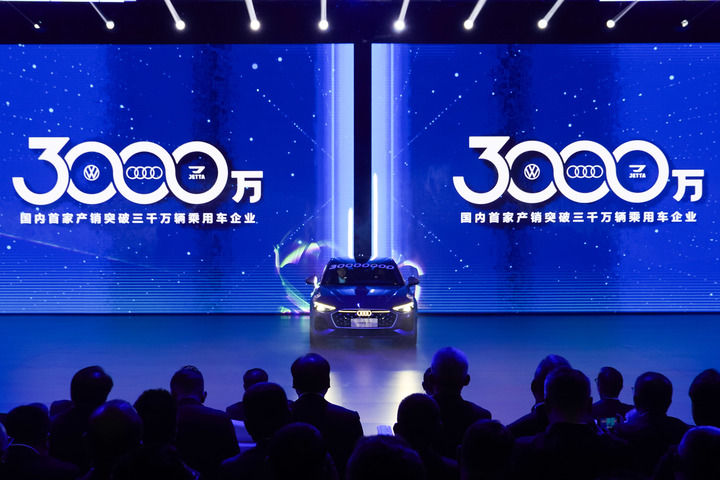
Group 1 - FAW-Volkswagen has produced its 30 millionth vehicle, showcasing its growth from a single brand and model to over 30 fuel and new energy vehicles [2] - Jilin's industrial manufacturing has shown resilience, with a reported 8.4% year-on-year increase in industrial added value for the first three quarters of 2025, ranking sixth nationwide [5] - The province's strategic emerging industries and high-tech manufacturing have outpaced traditional industrial growth, with electronic manufacturing value increasing by 15% year-on-year [5] Group 2 - Jilin's agricultural output remains stable, with a total grain production of 871.6 billion jin in 2025, continuing to rise [5] - The province has seen significant growth in foreign trade, with over 40% increases in export freight volume and cross-border e-commerce management platform import-export totals in the first half of the previous year [5] - Jilin has prioritized social welfare, implementing 20 key livelihood projects to enhance the quality of life for its residents [5] Group 3 - Jilin's ecological environment supports high-quality development, maintaining air quality in the top tier nationally since the 14th Five-Year Plan [6] - The province is focusing on new energy and high-end manufacturing, transitioning from traditional industries to more advanced sectors [10] - Jilin has over 4,100 high-tech enterprises, reflecting its commitment to innovation and technological advancement [10] Group 4 - The province is addressing development challenges through targeted policies, including the establishment of an industrial transformation upgrade fund and incentives for talent retention [10][11] - Jilin is implementing a comprehensive development plan for the Changchun metropolitan area, aiming for an economic total of approximately 1.35 trillion yuan by 2030 [13] - The province is enhancing the integration of education, technology, talent, and industry to accelerate the commercialization of research outcomes [14]