国内大循环

Search documents
商务部:全链条扩大汽车消费
Mei Ri Jing Ji Xin Wen· 2025-11-27 02:51
当前政策注重"外需缓和期"与"内需培育期"的衔接,这种"短期纾困+中期转型"的政策组合,标志着我 国正加速构建更具韧性的经济发展体系。 可选消费ETF(562580)紧密跟踪中证全指可选消费指数,汽车和家电占比合计超78%。随着国民经济 持续向好发展,我国消费者人均可支配收入不断上升,消费支出从食品、服装等向交通、医疗、消费电 子等方向转变,可选消费板块投资价值凸显。 商务部表示,商品消费是促消费惠民生的重要领域,下一步商务部将推进汽车流通消费改革试点,扩大 二手车流通,拓展汽车改装、租赁、赛事、房车露营等汽车后市场,全链条扩大汽车消费。 中长期内,政策层面持续强化"国内大循环"战略支点,通过消费补贴、税收优惠等精准施策,推动内需 结构升级。 ...
金灿荣:从“美攻我守”到“互有攻守”,统一的可能性在增大
Guan Cha Zhe Wang· 2025-11-24 05:47
Group 1 - The core viewpoint of the article is that the relationship between China and the United States has entered a phase of structural tension, with both parties viewing each other as the "only" competitor, leading to a comprehensive competitive relationship [1][2][5] - The historical context of China-U.S. relations is divided into several stages, with the first stage being absolute hostility from 1949 to 1972, followed by a period of strategic cooperation against the Soviet Union after the Shanghai Communiqué [2][4] - The Trump administration marked a turning point in U.S.-China relations, officially designating China as the "only strategic competitor" in its national security strategy, leading to a phase of comprehensive strategic competition [5][6] Group 2 - The article discusses the mixed warfare strategy employed by the U.S. against China, which includes trade wars, technology restrictions, and financial pressures, indicating a shift from a defensive to a more aggressive stance by China [6][10] - The recent trade war has seen China adopting a more assertive response, with significant retaliatory tariffs that demonstrate a shift in strategy from previous years [8][10] - The U.S. has faced supply shortages as a result of the trade conflict, leading to a reconsideration of its approach, which highlights the interdependence of the two economies [10][11] Group 3 - The article emphasizes the importance of domestic stability for both China and the U.S., noting that internal challenges such as economic downturns and social issues could impact their international standing [15][16] - China's foreign policy is evolving, moving away from "keeping a low profile" to a more assertive stance, particularly in military capabilities and regional influence [19][20] - The article outlines China's strategic focus on building a unified domestic market and enhancing its international relationships, particularly through initiatives like the Belt and Road [32][34]

10月新能源汽车表现亮眼 | 投研报告
Zhong Guo Neng Yuan Wang· 2025-11-21 07:04
Core Insights - The automotive market in China continues to show positive trends with October 2023 sales reaching 3.322 million units, a year-on-year increase of 8.8% [2] - Cumulative sales from January to October 2023 stand at 27.687 million units, reflecting a year-on-year growth of 12.4% [2] - The inventory situation indicates a comprehensive inventory coefficient of 1.2 for October, which is a 6.4% increase year-on-year but a 13.3% decrease month-on-month [2] - The new energy vehicle (NEV) segment is performing particularly well, with October sales of 1.715 million units, a year-on-year growth of 19.9% and a penetration rate of 51.6% [2] Sales and Inventory - October 2023 automotive sales were 3.322 million units, up 8.8% year-on-year [2] - Total automotive sales for the first ten months of 2023 reached 27.687 million units, marking a 12.4% increase compared to the same period last year [2] - The comprehensive inventory coefficient for October was 1.2, which is a 6.4% increase year-on-year and a 13.3% decrease from the previous month [2] - The dealer inventory warning index stood at 52.6%, up 2.1 percentage points year-on-year but down 1.9 percentage points month-on-month [2] New Energy Vehicles - NEV sales in October 2023 were 1.715 million units, representing a year-on-year increase of 19.9% and achieving a penetration rate of 51.6% [2] - From January to October 2023, NEV sales totaled 12.943 million units, with a year-on-year growth of 32.7% and a penetration rate of 46.7% [2] Investment Strategy - The automotive sector is advised to focus on undervalued leading companies in both vehicle manufacturing and parts due to improving performance [3] - Key companies to watch include established domestic brands in the NEV sector such as BYD, Changan Automobile, Geely, and Li Auto [3] - Stable, undervalued parts manufacturers like Huayu Automotive and Fuyao Glass are also recommended [3] - The report highlights opportunities in the domestic replacement market driven by the "domestic circulation" strategy [3] Market Performance - The automotive sector experienced a weekly decline of 2.11%, ranking 26th among 31 sectors tracked by Shenwan [5] - The automotive industry underperformed compared to the CSI 300 index, which saw declines of -0.18% [5] - In the sub-sectors, automotive services increased by 0.51%, while automotive parts and other categories saw declines [5] Notable Stocks - The top five gaining stocks in the automotive sector this week were Langbo Technology, Yingli Automotive, Xinpeng Co., Huafeng Co., and Qin'an Co. [6] - The top five losing stocks included Biaobang Co., Xinquan Co., Haoen Automotive, Sanlian Forging, and Beite Technology [7]




提升资本市场功能 更好服务做强国内大循环
Shang Hai Zheng Quan Bao· 2025-11-18 18:42
Core Viewpoint - The article emphasizes the importance of strengthening the domestic circulation as a strategic move for sustainable economic development, particularly in the context of increasing external uncertainties and the need for a robust domestic market [2][3][4]. Group 1: Strengthening Domestic Circulation - Strengthening domestic circulation is essential for addressing external shocks, enhancing internal stability, and ensuring long-term growth amidst global uncertainties [4][5]. - The domestic market's role is highlighted as a key driver for high-quality development, with a focus on expanding domestic demand and optimizing supply structures [5][6]. - The integration of domestic and international circulations is necessary to leverage global resources while enhancing domestic market efficiency [6]. Group 2: Capital Market's Role - The capital market is positioned as a crucial hub for facilitating the efficient operation and quality enhancement of the domestic circulation [9]. - Capital markets can support the integration of technology and industry by providing comprehensive pricing mechanisms that reflect various business factors [10]. - The capital market's resource allocation capabilities can enhance the vitality of domestic circulation by directing resources to high-quality enterprises [11][12]. Group 3: Policy Recommendations - The article suggests that capital market reforms should align with the broader goal of strengthening domestic circulation, emphasizing cross-departmental collaboration [16][17]. - It advocates for the development of diverse financing channels, particularly for technology innovation enterprises, to improve service capabilities across the entire lifecycle [17]. - The establishment of specialized funds by local governments is recommended to enhance long-term capital allocation to quality enterprises [17].
吴政隆:坚持有效市场和有为政府相结合|宏观经济
清华金融评论· 2025-11-18 09:07
Core Viewpoint - The article emphasizes the importance of effectively combining a market-driven economy with proactive government intervention to enhance the socialist market economy in China, as outlined in the 15th Five-Year Plan [2][4]. Group 1: Economic System Reform - The reform of the economic system is a key focus, aiming to enhance the advantages of the socialist market economy. The 20th Central Committee has prioritized the construction of a high-level socialist market economy system, addressing issues that hinder market competition and government function [5]. - There is a need to clarify the boundaries between government and market roles to maximize the advantages of the socialist market economy, thereby liberating and developing productive forces [5]. Group 2: High-Quality Development - High-quality development is identified as the primary task for building a modern socialist country. The 15th Five-Year Plan aims for qualitative improvements and reasonable quantitative growth, emphasizing the need for both market and government collaboration [6]. - The article outlines that innovation, coordination, green development, openness, and sharing are essential components of the new development philosophy that must be fully integrated into economic and social development [6]. Group 3: Domestic Circulation and External Challenges - Strengthening domestic circulation is crucial to counteract external uncertainties and shocks. The article highlights the importance of leveraging both government and market forces to facilitate resource flow and efficient allocation within the domestic market [7]. - With a population of over 1.4 billion and a growing middle-income group, breaking down barriers to resource allocation can unleash significant development potential and enhance domestic economic stability [7]. Group 4: Market System Construction - The article stresses the need to build a unified, open, competitive, and orderly market system, which is essential for optimizing resource allocation and enhancing market vitality [9][10]. - It calls for the establishment of a nationwide unified market that promotes fair competition and reduces transaction costs, thereby fostering a conducive environment for technological innovation and enterprise development [10]. Group 5: Fair Competition and Legal Framework - Fair competition is highlighted as a fundamental principle of the market economy, with ongoing efforts to strengthen competition policies and eliminate barriers to market entry [11]. - The establishment of a legal economy and credit economy is essential, with a focus on creating a unified social credit system that enhances trust and accountability among market participants [12]. Group 6: Business Environment Optimization - The article advocates for the continuous improvement of the business environment to stimulate market vitality and internal development momentum, aligning with international standards [13]. - It emphasizes the need for a transparent and efficient market access system, as well as the protection of foreign investment rights to encourage more foreign enterprises to invest in China [13]. Group 7: Government Role and Efficiency - The government is tasked with balancing market vitality and order, ensuring effective macroeconomic governance and regulatory oversight [15][16]. - Enhancing government service levels is crucial for creating a service-oriented government that meets the needs of citizens and businesses, thereby improving overall satisfaction and efficiency [18].
把握“投资于人”的丰富意蕴(连线评论员)
Ren Min Ri Bao· 2025-11-17 22:01
Core Viewpoint - The integration of "investment in material" and "investment in people" is essential for promoting high-quality development and improving the quality of life for the population [1][4]. Investment in People vs. Investment in Material - Investment in people focuses on human capital development, including education, health, social security, and employment support, while investment in material emphasizes physical assets [1][2]. - The shift from material to human investment reflects a change in growth drivers from factor-driven to innovation-driven, enhancing the quality of human resources and innovation capabilities [1][2]. - Investment in people has a longer return cycle but offers stable and lasting benefits, contributing to social effects and economic quality [1][2]. Deep Adjustments in Economic Governance - The adjustment in economic governance is evident in three areas: shifting growth drivers, optimizing economic structure, and focusing on sustainable long-term development [1][2]. - The emphasis on balancing short-term growth with long-term development indicates a refined approach to macroeconomic management [1][2]. Synergy Between Investments - The relationship between investment in material and investment in people is reciprocal; material investment can enhance human development, while human investment can stimulate material investment [2][3]. - A systematic approach is needed to align investments in technology infrastructure and talent development, ensuring a cohesive strategy that connects education, talent, and industry [2][3]. Supply and Demand Dynamics - On the supply side, the combination of investments can significantly enhance labor quality and innovation capacity, leading to a new level of productivity [3]. - On the demand side, investing in people improves social security and overall welfare, which can elevate demand levels and create a dynamic balance between supply and demand [3]. Broader Economic Implications - The focus on human development is crucial for transitioning from middle-income to high-income status, emphasizing the importance of talent cultivation and human-centered economic strategies [4]. - The approach aims to maximize human creativity and drive economic growth through the comprehensive development of the population [4].
管涛:中国出口韧性从何而来
Di Yi Cai Jing· 2025-11-16 13:21
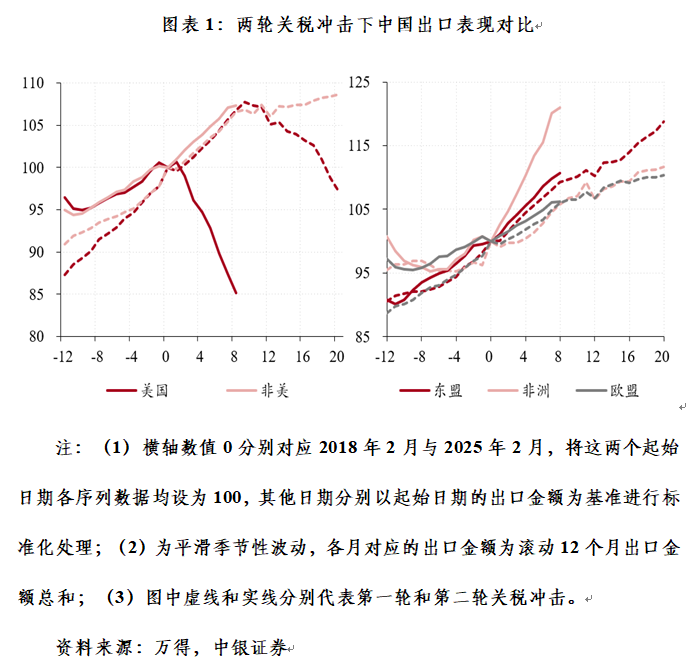
Core Viewpoint - China needs to be vigilant about the weakening momentum of global economic growth and the recurring external trade conflicts that may disrupt external demand in the coming year [1] Group 1: Export Market Diversification - The trade conflict initiated by Trump has led to a significant increase in tariffs on Chinese exports, with rates rising from 34% to as high as 125% [2][3] - Despite the intensified trade conflict, China's reliance on the U.S. for exports has decreased, with the share of exports to the U.S. dropping from around 20% at the end of 2018 to about 10% [3][4] - China's exports to ASEAN and Africa have seen significant growth, with year-on-year increases of 14.3% and 26.1% respectively, contributing positively to overall export growth [4] Group 2: Export Product Structure Optimization - The structure of China's export products has improved, with the share of high-tech industrial products rising to 53.3% in September 2023, marking a historical high [5][7] - The growth in high-tech industrial exports has been driven by machinery and audio-visual equipment, which saw their export shares increase to 42.6% and 8.5% respectively [5][7] - The RCA index for various industrial products indicates that while labor and resource-intensive products have seen a decline in comparative advantage, other categories have shown significant improvement [9][12] Group 3: Concerns Behind Export Resilience - A significant portion of China's exports consists of intermediate goods, with 51.1% of total exports being intermediate products, indicating a reliance on further processing in other countries like Vietnam [13][15] - The IMF report highlights that while China's intermediate goods trade has increased, the export of final goods remains primarily directed towards Europe and North America, raising concerns about the sustainability of this trade structure [15] - The continuous decline in export prices since 2023 has led to a trend of "trading price for volume," which may provoke increased trade protectionism against China [15][17]
10月份主要指标出炉 如何看待当前经济运行态势?
Xin Hua She· 2025-11-14 12:00
Economic Overview - The national industrial added value for October increased by 4.9% year-on-year, while the service production index rose by 4.6% year-on-year [1][2] - The overall economic operation is stable, with steady progress observed in various sectors [2][3] Production and Supply - Agricultural production is stable, with an increase in autumn grain area and continuous improvement in yield, indicating a promising harvest for the year [2] - The industrial added value for large-scale enterprises grew by 4.9% year-on-year, maintaining overall stability [2] - The service industry showed steady growth, with accommodation and catering production index increasing by 3.9% year-on-year, accelerating by 2.6 percentage points compared to the previous month [2] Market Sales - In October, the total retail sales of consumer goods increased by 2.9% year-on-year, with significant growth in sales related to the replacement of old consumer goods [2] - From January to October, the retail sales in the service sector grew by 5.3% year-on-year [2] Investment Trends - Fixed asset investment decreased by 1.7% year-on-year from January to October, but when excluding price factors, there was a slight increase in the physical workload of investments [2] - Manufacturing investment grew by 2.7% year-on-year, accounting for 25.6% of total investment [2] Trade Performance - The total import and export value in October increased by 0.1% year-on-year, with a slowdown in growth due to a high base from the previous year [2] Employment and Prices - The urban surveyed unemployment rate in October was 5.1%, a decrease of 0.1 percentage points from the previous month [3] - The Consumer Price Index (CPI) rose by 0.2% year-on-year in October [3] Structural Adjustments and New Momentum - The economy is undergoing structural adjustments, with new consumption patterns and digital, green, and intelligent products gaining traction [4] - From January to October, online retail sales of physical goods accounted for 25.2% of total retail sales, an increase of 0.2 percentage points from the previous period [4] - Investment in high-tech sectors showed rapid growth, with aerospace and information services investments increasing by 19.7% and 32.7% year-on-year, respectively [4] Future Outlook - The economic structure adjustment is progressing steadily, with new momentum continuing to grow, indicating a positive trend for high-quality economic development [5] - Despite facing risks and challenges, favorable conditions for achieving annual economic targets remain intact [6] - Recent policies, including a new 500 billion yuan financial tool, aim to enhance local government financial capacity and stimulate effective investment [7]
10月份主要指标出炉,如何看待当前经济运行态势?
Xin Hua Wang· 2025-11-14 10:39
Economic Overview - In October, the industrial added value of large-scale enterprises increased by 4.9% year-on-year, while the service production index rose by 4.6% year-on-year, indicating stable economic performance [1][2]. Production and Supply - Agricultural production remains stable with an increase in autumn grain area and yield, suggesting a promising harvest for the year [2]. - The accommodation and catering industry saw a production index growth of 3.9% year-on-year, accelerated by the overlap of the National Day and Mid-Autumn Festival holidays [2]. Market Sales - The total retail sales of consumer goods in October grew by 2.9% year-on-year, with a notable increase in sales related to the replacement of old consumer goods [2]. - From January to October, the retail sales of services increased by 5.3% year-on-year [2]. Investment Trends - Fixed asset investment decreased by 1.7% year-on-year from January to October, but the actual workload of investment showed slight growth when excluding price factors [3]. - Manufacturing investment grew by 2.7% year-on-year, accounting for 25.6% of total investment [3]. Employment and Prices - The urban surveyed unemployment rate in October was 5.1%, a decrease of 0.1 percentage points from the previous month [3]. - The Consumer Price Index (CPI) rose by 0.2% year-on-year in October [3]. Structural Adjustments and New Growth Drivers - The economy is undergoing structural adjustments with significant growth in new driving forces, including a 19.7% year-on-year increase in investment in the aerospace and aviation equipment manufacturing sector [4]. - The online retail sales of physical goods accounted for 25.2% of total retail sales, reflecting the expansion of new consumption formats [4]. Emerging Industries - The added value of the digital industry manufacturing sector increased by 9.5% year-on-year, with smart device manufacturing and electronic components growing by 11.1% and 12.3%, respectively [5]. Economic Outlook - Despite facing risks and challenges, the long-term supportive conditions for economic growth remain unchanged, with a solid foundation for achieving annual targets [6]. - The GDP growth rate for the first three quarters was 5.2%, placing it among the top global economies [6]. Policy Measures - The implementation of proactive macroeconomic policies, including the introduction of 500 billion yuan in new policy financial tools, is expected to enhance economic momentum [7].
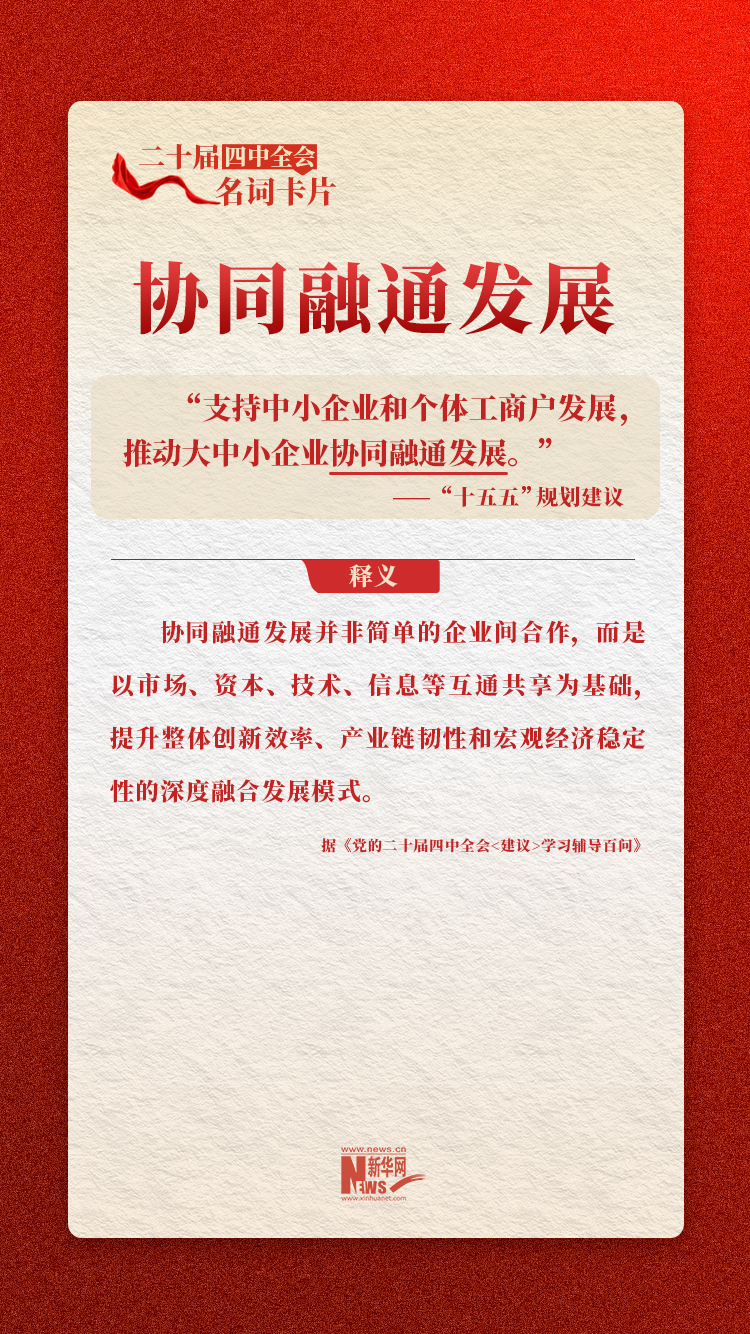
二十届四中全会名词卡片:协同融通发展
Xin Hua Wang· 2025-11-14 10:06
Core Viewpoint - The article emphasizes the importance of promoting the collaborative development of large, medium, and small enterprises to enhance innovation efficiency, industrial chain resilience, and macroeconomic stability [3][7][9]. Group 1: Importance of Collaborative Development - Collaborative development among enterprises helps build an industrial innovation ecosystem by pooling various innovation resources and stimulating societal innovation vitality [7]. - Large enterprises possess abundant R&D resources and advanced technologies but may lack innovation agility due to their size, while small and medium enterprises (SMEs) are agile but often face funding and technical challenges [7]. - An open innovation platform allows large enterprises to communicate their technology needs, providing SMEs with clear market guidance, while SMEs can contribute their innovations to large enterprises, enhancing overall innovation efficiency [7]. Group 2: Enhancing Industrial Chain Resilience - In the context of global economic restructuring, the resilience and collaboration of industrial chains are becoming core competitive factors [8]. - Large enterprises can guide SMEs in improving capabilities and ensuring supply chain stability through standardized practices, while SMEs can focus on niche markets and specialized support [8]. - Collaborative development enables efficient utilization of production, technology, and human resources, deepening the synergy between industrial and innovation chains [8]. Group 3: Strengthening Domestic Circulation - The collaborative development of enterprises is crucial for establishing a domestic circulation-based economic framework, which requires a robust internal cycle [9]. - SMEs play an irreplaceable role in job creation and innovation, while large enterprises stabilize demand and support economic stability [9]. - This collaboration fosters efficient industrial clusters, enhancing regional competitiveness in R&D, manufacturing, and services [9]. Group 4: Strategies for Promoting Collaboration - Promoting collaborative development is a systematic project requiring joint efforts from both government and market [11]. - The government should create public service platforms and encourage joint projects between large and small enterprises to facilitate resource sharing [11]. - Large enterprises, especially state-owned ones, should be guided to take on leadership roles in collaboration, while professional service institutions should enhance their capabilities to support these partnerships [11]. - A supportive ecosystem should be established to protect intellectual property and foster fair cooperation among enterprises [11].