消费提振

Search documents
10月24日投资早报|友发集团第三季度净利润同比增长2320.53%,华工科技筹划在香港联交所上市,今日一只新股上市
Xin Lang Cai Jing· 2025-10-24 00:40
Market Performance - On October 23, 2025, the A-share market saw all three major indices close higher, with the Shanghai Composite Index at 3922.41 points, up 0.22%, and the Shenzhen Component Index at 13025.45 points, also up 0.22%. The ChiNext Index rose 0.09% to 3062.16 points. Over 2900 stocks increased in value, with a total trading volume of 1.64 trillion yuan, down 239 billion yuan from the previous trading day [1] - The Hong Kong stock market rebounded, with the Hang Seng Index rising 0.72% to 25967.98 points, and a total trading volume of 245.256 billion HKD. The Hang Seng China Enterprises Index increased by 0.83% to 9300.74 points, while the Hang Seng Tech Index rose 0.48% to 5951.45 points [1] - In the U.S. stock market, driven by strong technology stocks, all three major indices closed higher. The Dow Jones Industrial Average rose 0.31% to 46,734.61 points, the S&P 500 increased by 0.58% to 6,738.44 points, and the Nasdaq Composite gained 0.89% to 22,941.80 points. The S&P 500 fully recovered the previous day's decline of approximately 0.5% [1] New Stock Listings - A new stock, Chao Ying Electronics (stock code 603175), was listed with an issuance price of 17.08 yuan per share and a price-to-earnings ratio of 28.64. The company specializes in automotive electronic PCBs and is one of the few in China capable of mass production of multi-layer HDI and arbitrary layer interconnected HDI automotive electronic boards. Its products are widely used in automotive electronics, displays, storage, consumer electronics, and communications [3] - Another new stock, Da Ming Electronics (stock code 603376), is set for subscription with an issuance price of 12.55 yuan per share and a price-to-earnings ratio of 17.97. The company focuses on automotive electronic components and provides comprehensive solutions for the design, development, production, and sales of automotive body electronic control systems. Its main products include driver assistance systems, cockpit central control systems, smart optoelectronic systems, window control systems, and seat adjustment systems [4] Policy and Economic Goals - The Fourth Plenary Session of the 20th Central Committee of the Communist Party of China emphasized the need to boost consumption and expand effective investment, aiming to eliminate obstacles to the construction of a unified national market. The focus is on enhancing domestic circulation and promoting a positive interaction between supply and demand [5] - The session also outlined the main goals for the 14th Five-Year Plan period, including significant achievements in high-quality development, substantial improvements in self-reliance in technology, breakthroughs in deepening reforms, and enhanced social civilization. By 2035, the aim is to significantly elevate China's economic, technological, defense, and comprehensive national strength, with a target for per capita GDP to reach the level of moderately developed countries [5]


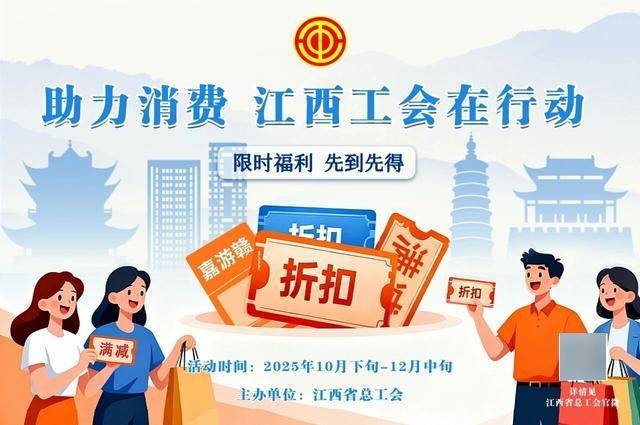
江西省总工会派发5000万元“消费红包”!惠及全省职工!
Sou Hu Cai Jing· 2025-10-22 05:09
Core Points - The Jiangxi Provincial Federation of Trade Unions has allocated 50 million yuan to stimulate consumer spending among workers from late October to mid-December 2025 [2][4] - The initiative focuses on two main areas: daily consumer goods and cultural tourism, aiming to benefit workers and share development outcomes [2] Group 1: Funding Allocation - 30 million yuan is designated for promoting general consumer spending among workers, while 20 million yuan is specifically for cultural tourism consumption [2] - Of the 30 million yuan for general consumption, 29 million yuan will be distributed to various municipal trade unions to cover a wider range of consumption scenarios [2] - The remaining 1 million yuan will be used for issuing consumption vouchers through the "Jiangxi Workers' Benefits" platform [2] Group 2: Cultural Tourism Support - The program will subsidize 50,000 enterprise workers to participate in the "Jia You Gan" cultural tourism activities, with at least 80% of participants being frontline workers from non-public enterprises and new employment forms [2]

广东出台AI赋能制造业行动方案;宇树科技IPO,新进展……盘前重要消息一览
证券时报· 2025-10-22 00:09
New Stock Offerings - Dana Biological's subscription code is 920009, with an issue price of 17.10 yuan per share and a subscription limit of 360,000 shares [1] Economic and Trade Relations - China's stance on Sino-U.S. economic and trade issues is consistent and clear, emphasizing that trade wars do not benefit either side and should be resolved through equal and respectful negotiations [3] - A video conference was held between China's Minister of Commerce and the EU's Trade Commissioner to discuss key economic and trade issues, including export controls and the EU's anti-subsidy case against Chinese electric vehicles [3] Artificial Intelligence Development - Guangdong Province's action plan aims to enhance high-quality development in manufacturing through artificial intelligence, focusing on various sectors such as consumer electronics and biomedicine, and providing funding support for benchmark projects [4] - Zhejiang Province's draft action plan aims to cultivate leading intelligent development platforms and achieve over 70% application penetration of intelligent systems by 2027, with a goal of over 90% by 2030 [5] Tourism and Consumption - Guizhou Province's implementation plan aims to enhance tourism consumption by creating world-class destinations and promoting deep experience tourism products, alongside policies to optimize travel services [6] - Guangzhou's action plan focuses on boosting consumption by enhancing the management of state-owned listed companies and promoting income growth through various measures [7] Company Performance Highlights - Pop Mart reported a year-on-year revenue increase of 245%-250% in Q3 [11] - Jin Gu shares received a project designation from a global leading automotive company for low-carbon wheels [12] - China Telecom's net profit for the first three quarters increased by 5.03% year-on-year [13] - Shiyida's net profit for Q3 surged by 471.34% year-on-year [14] - Wancheng Group's net profit for the first three quarters increased by 917.04%, with a proposed dividend of 1.5 yuan per share [15] - Shengnong Development's net profit for the first three quarters rose by 202.82%, proposing a dividend of 3 yuan per share [16] - China National Materials' net profit for Q3 increased by 234.84% year-on-year [17] - Grebo received significant orders from a leading U.S. home improvement retailer for lithium battery outdoor power equipment [18]




金融优化服务促消费提振
Jing Ji Ri Bao· 2025-10-21 22:01
Group 1: Economic Growth and Consumer Spending - Consumption is identified as the main engine driving economic growth, with a focus on enhancing consumer spending through various initiatives [1] - Jiangsu Province achieved a total retail sales of consumer goods amounting to 30,984.7 billion yuan from January to August this year, ranking first nationwide and supporting high-quality national consumption development [1] Group 2: Financial Institutions and Consumer Policies - Financial institutions are actively implementing policies to boost consumption, with China Construction Bank (CCB) leading the way by launching a consumption finance initiative that integrates credit, scenarios, payments, and derivative services [2] - As of October, CCB's personal consumer loan balance reached 629.5 billion yuan, with over 100 billion yuan added this year [2] - CCB has distributed nearly 6.9 billion yuan in government consumption subsidies across 185 cities, stimulating over 56.4 billion yuan in payment transactions [2] Group 3: Aging Population and New Consumer Products - The aging population is expected to create significant market opportunities for elderly care products and services, as highlighted by the founder of a health industry company that has completed over 300,000 home modifications for elderly individuals [3] - Intelligent robotic dogs are emerging as a new consumer favorite, with one company reporting over 20,000 units sold in just over a year [4] - Financial support from CCB has been crucial for companies developing innovative products, enabling them to transition from research to market [4]
老百姓不消费,经济难回暖,政府反内卷难见效,稳物价还缺这招!
Sou Hu Cai Jing· 2025-10-14 01:57
Group 1 - The photovoltaic industry is facing significant challenges, with 31 major companies in the A-share market reporting revenues of 117.8 billion yuan in Q1 2025, a year-on-year decline of 24.5%, and a net loss of 12.58 billion yuan [1] - The steel industry is experiencing some relief as local authorities reduce excess capacity, leading to a halt in price declines in July, but skepticism remains among workers and small business owners [1] - The automotive industry continues to struggle with a price war that has persisted into May 2023, resulting in a profit margin of only 3.9% in Q1 and negative cash flow [3] Group 2 - Consumer spending is not keeping pace with income growth, with nominal disposable income rising by 5.3% in the first half of 2025, but consumption growth only at 5.1%, indicating a lack of vitality in the market [3] - The CPI turned negative in March, primarily due to food prices, with a year-on-year decline of 0.4% in August, while core CPI shows a mild recovery but remains below the 2% target [5] - The real estate market has not fully stabilized, with slow wealth effect release and unclear expectations leading to a slowdown in private investment [5] Group 3 - The government aims to stabilize the real estate and stock markets to boost consumer confidence, but the actual willingness to spend may not align with wealth recovery [7] - Employment targets have been specified, with an urban unemployment rate of around 5.5% and over 12 million new jobs expected, indicating a focus on government procurement and community positions to support graduates [7] - The supply-side adjustments may temporarily alleviate the price war's impact, but long-term demand instability could hinder companies' willingness to invest [9] Group 4 - To stabilize prices, it is essential not only to address industry chaos but also to increase consumer confidence and spending, requiring a dual approach of supply and demand [11] - The current economic adjustments resemble a surgical procedure, where stabilizing bleeding is crucial, but patient cooperation in recovery is key to success [11] - If policies can effectively connect subsidies, employment, and consumer confidence in Q4, the price target may approach 2%, but missing any link could cool market activity [11]


中国建设银行宿迁分行:数字金融全面赋能 促进释放消费潜力
Jiang Nan Shi Bao· 2025-10-08 07:23
Core Viewpoint - The article highlights the effective implementation of consumption-boosting policies in China, particularly through the initiatives of China Construction Bank's Suqian branch, which aims to enhance consumer spending and stimulate economic growth by leveraging digital platforms and government subsidies [1][2]. Group 1: Policy Implementation and Financial Services - China Construction Bank's Suqian branch actively supports national policies to boost consumption by creating a four-party ecosystem involving government, banks, merchants, and consumers [1][2]. - The bank has established a "green channel" for new business processing to streamline services for merchants, reducing inefficiencies in communication and organization [2][4]. - The bank's initiatives include providing payment settlement and credit loan services to support local merchants and consumers, ensuring that financial benefits reach the end-users effectively [2][3]. Group 2: Consumer Engagement and Market Impact - The bank's participation in the "Su New Consumption" campaign has led to significant consumer engagement, with over 150,000 customers participating and subsidies amounting to 1.079 billion yuan, directly driving consumption by 3.345 billion yuan [5]. - The focus on upgrading consumer products through initiatives like "old-for-new" exchanges in appliances and home decor is aimed at enhancing product quality and promoting sustainable consumption [3][4]. - The bank emphasizes the importance of integrating financial products into consumer scenarios to better meet the financial needs of the market [4][5]. Group 3: Digital Financial Services - The bank leverages its "CCB Life" platform to facilitate the distribution and usage of government consumption vouchers, enhancing the overall consumer experience [4][5]. - A one-on-one service model is implemented during promotional activities, ensuring that merchants receive direct support and guidance on policy implementation [5]. - The bank aims to continuously adapt its services to align with local economic development, focusing on consumer satisfaction and quality of life improvements [5].

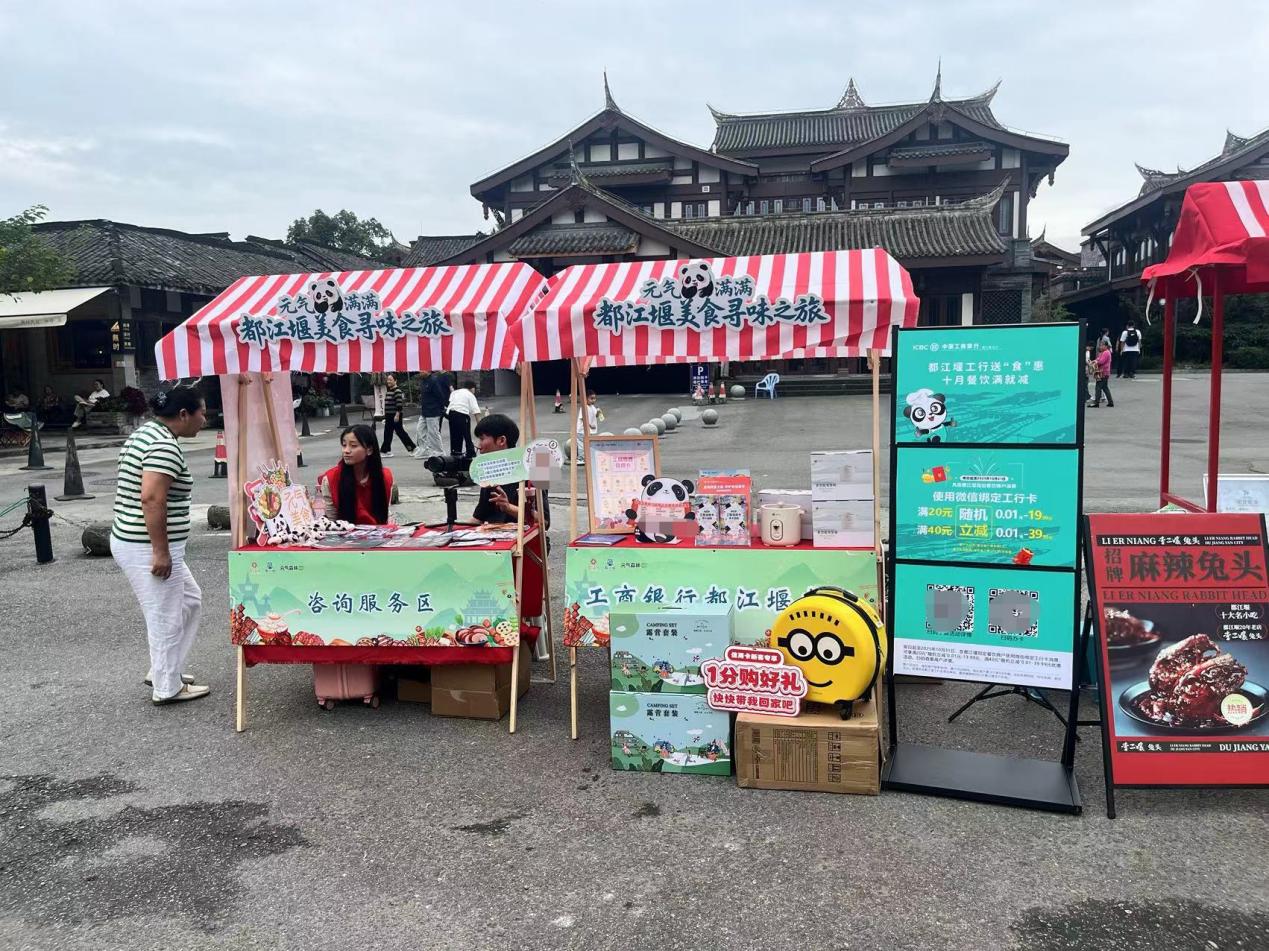
锦绣天府 工银相伴(六)|金融礼遇惠蓉城,乐享金秋郊野游
Zhong Guo Jin Rong Xin Xi Wang· 2025-10-06 01:53
Core Viewpoint - The article highlights the innovative financial activities launched by the Industrial and Commercial Bank of China (ICBC) Chengdu Branch during the double festival period, aimed at enhancing consumer experience and boosting local tourism and consumption in Chengdu's suburban areas [1][3]. Group 1: Financial Activities and Consumer Engagement - ICBC Chengdu Branch has introduced various consumer-friendly financial activities, including "Listening to the Thousand-Year History of Dujiangyan" and "Random Discounts in South Bridge Business Circle," to enhance the payment experience and stimulate regional consumption [1][3]. - The bank's initiatives have received recognition from local government and regulatory bodies, with praise for its role in promoting convenient payment services and supporting local tourism and cultural consumption [3]. Group 2: Regional Highlights and Collaborations - In Xinjin, ICBC Chengdu Branch has partnered with local businesses to launch the "Enjoy National Day and Mid-Autumn Festival" random discount campaign, involving over 40 local restaurants to enhance the culinary experience for visitors [6][8]. - In Qionglai, the bank collaborated with the local business bureau to offer random discounts across 81 merchants, enhancing the consumer experience during the double festival period [9]. - In Chongzhou, ICBC Chengdu Branch supported the "Moonlight Market" event, providing random discount activities for 30 participating merchants, catering to diverse consumer needs [11]. Group 3: Broader Impact on Local Economy - The bank's initiatives have collectively engaged over 6,000 merchants across various sectors, including dining, entertainment, and retail, contributing to a significant boost in local consumption [16]. - The "Happy Season" campaign in Jintang, covering over 50 quality merchants, aims to enhance consumer satisfaction and stimulate spending during the festival [14].

财政政策全方位激发消费活力
Jing Ji Ri Bao· 2025-10-05 21:58
Core Viewpoint - The Chinese government is intensifying its fiscal policies to boost consumer spending, particularly through the "old-for-new" subsidy program, which has allocated a total of 690 billion yuan in special bonds to support this initiative, contributing to a total of 300 billion yuan for the year [1][2] Group 1: Fiscal Policy and Consumer Spending - The implementation of various fiscal policies, including personal consumption loan subsidies and new consumption scenarios, has significantly contributed to stabilizing and promoting economic growth [1][2] - The government has released approximately 4.2 trillion yuan in fiscal support for the "old-for-new" program, resulting in over 2.9 trillion yuan in sales across various goods [2][3] Group 2: Employment and Income Growth - The central government has prioritized employment, allocating 318.6 billion yuan in employment subsidies during the 14th Five-Year Plan, a 29% increase from the previous plan, leading to over 50 million new urban jobs [2] - Enhanced social security measures, including childcare and elderly care subsidies, have reduced living costs, thereby increasing consumer confidence and spending capacity [2] Group 3: Quality of Supply and Consumer Environment - Recent initiatives by the Ministry of Finance and the Ministry of Commerce aim to improve the quality of supply and optimize the consumer environment through pilot programs in various cities, with funding ranging from 200 million to 400 million yuan [3] - The focus on creating innovative consumption scenarios and enhancing international service levels is expected to boost consumer confidence and market activity [3] Group 4: Overall Economic Impact - The combination of proactive fiscal policies is designed to address economic shortfalls, improve livelihoods, and expand domestic demand, thereby playing a crucial role in driving economic growth [4]
沈建光:需充分重视中国消费出现的七大结构性分化|国庆大咖谈
Di Yi Cai Jing· 2025-10-05 02:38
Core Viewpoint - The article emphasizes the importance of not only the changes in total consumption metrics but also the structural differentiation within the Chinese consumption market, highlighting both challenges and future potential for consumption growth [1] Group 1: Structural Differentiation in Consumption - Differentiation One: Improvement in goods consumption contrasted with a slowdown in service consumption, with goods retail sales growing by 4.8% year-on-year from January to August, significantly higher than the previous year's 3.2% [2] - Differentiation Two: High-end consumption is cooling while affordable consumption is gaining popularity, as evidenced by a nearly 20% decline in luxury car sales and a 5.4% revenue growth for Shanxi Fenjiu, a mid-range liquor brand [3] - Differentiation Three: The rise of domestic brands at the expense of imported goods, with local brands increasing their market share from 39% in 2012 to 76% by 2024 across various categories [4][5] Group 2: Regional and Group Consumption Trends - Differentiation Four: Consumption growth in first-tier cities is lagging behind that of lower-tier cities, with various factors contributing to this trend, including economic pressures and population changes [6] - Differentiation Five: Social group consumption is underperforming compared to individual consumer spending, with social group consumption growth lagging behind individual consumption since Q2 2023 [7] - Differentiation Six: Low-income groups are experiencing slower consumption growth compared to high-income groups, with the lowest income quintile showing only a 3.5% increase in disposable income [8] Group 3: Consumption Confidence and Policy Response - Differentiation Seven: While hard data on consumption shows recovery, consumer confidence remains low, with the consumer confidence index at 89.0, below the critical threshold of 90 for 28 consecutive months [9][10] - The policy response includes measures to stimulate consumption, such as expanding the scope of trade-in programs and increasing subsidies for service consumption, alongside long-term structural reforms aimed at enhancing consumer spending [11]
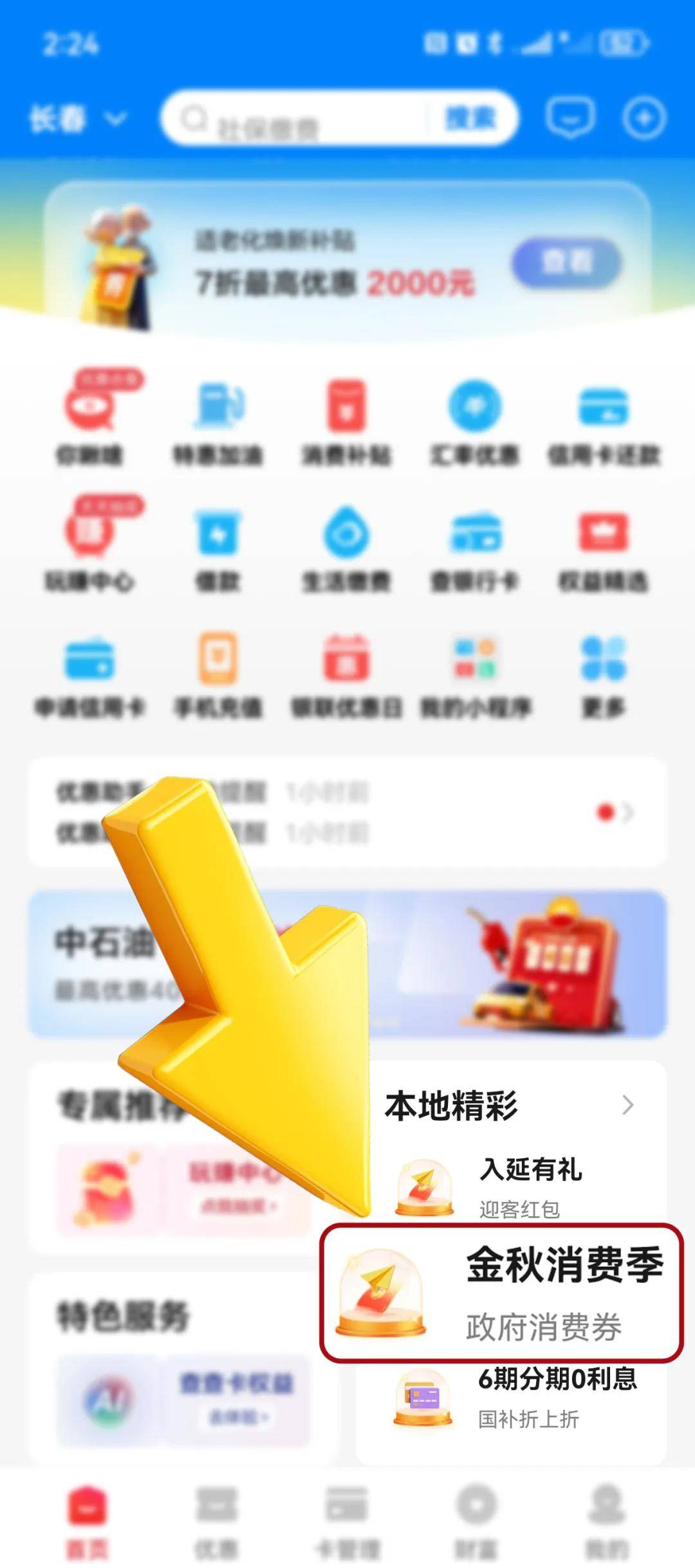
长春将发放超市消费券
Sou Hu Cai Jing· 2025-09-30 08:59
Group 1 - The core initiative is the "Maple and Birch Celebration Double Festival Carnival" promotional activities in Changchun, aimed at boosting consumer spending and stimulating domestic demand as per central and provincial directives [1] - The promotional activities will include the distribution of supermarket consumption vouchers during the National Day holiday, utilizing a "government subsidy + enterprise funding" collaborative model [1] Group 2 - The promotional platform for the activities is the UnionPay Cloud Flash Payment APP, targeting users located in Changchun [2] - Vouchers will be issued starting from October 1, 2025, at 10:00 AM on a first-come, first-served basis, and will be valid until October 31, 2025 [3] Group 3 - The vouchers will have a face value of 40 yuan, with 30 yuan subsidized by the government and 10 yuan funded by enterprises, limited to one voucher per user during the promotional period [4] Group 4 - Users can claim the vouchers by accessing the "Local Excitement" section in the Cloud Flash APP, with successful claims resulting in immediate deposit into their personal accounts [5] Group 5 - Vouchers must be used at designated merchants, cannot be transferred, exchanged for cash, or reused after a full refund, with partial refunds affecting the discount proportionally [9] - Users must bind their phone numbers and bank cards in the APP and complete real-name verification to participate [10] Group 6 - Users are required to enable GPS location services in the APP, and any fraudulent activities will result in disqualification from the promotion [11] - The list of participating merchants includes various supermarkets and convenience stores in Changchun, with specific stores designated for voucher redemption [12][13]