人工智能(AI)

Search documents
活动邀请 | 2025年彭博私募投资策略闭门交流会 (杭州场)
彭博Bloomberg· 2025-09-02 06:34
Group 1 - The article highlights the impact of U.S. tariff policies and geopolitical tensions on the global macroeconomic landscape, leading to increased market risk aversion [2] - China's economic recovery and high financing demand are attracting international hedge funds, creating opportunities for diversified asset allocation [2] - The rapid development of artificial intelligence (AI) is enhancing the performance of tech stocks and driving index growth, positioning AI as a key tool for private equity firms to navigate uncertainty [2] Group 2 - The upcoming Bloomberg Private Equity Investment Strategy Closed-Door Exchange Meeting in Hangzhou will feature industry leaders discussing market trends and challenges [2] - The theme of the Hangzhou event is "AI as a Lever to Unlock Opportunities in the International Derivatives Market," focusing on the dual drivers of quantitative analysis and AI in global derivatives services and research [2] - The event agenda includes discussions on new trends in the overseas equity derivatives market and a fireside chat on global market investments amid volatility [4]


马斯克最新指示:机器人接管一切,你在家里躺着数钱
Hu Xiu· 2025-09-02 05:34
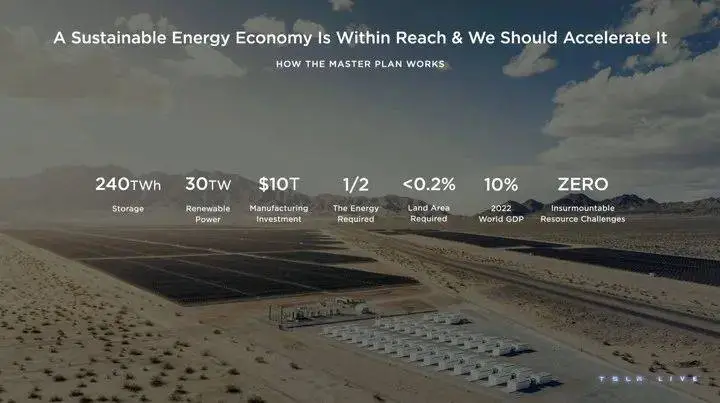
Core Insights - Tesla's latest "Master Plan Part 4" shifts focus from sustainable development to a vision of a future society dominated by AI and robotics, termed "sustainable abundance" [2][20] - The plan emphasizes that 80% of Tesla's value will come from its humanoid robot, Optimus, indicating a strategic pivot towards productivity rather than just automotive or energy products [3][10] - The report presents a grand vision for a new economic structure driven by machines, raising questions about the societal implications of widespread automation and job displacement [14][15][18] Summary by Sections Historical Context - Previous plans (Parts 1 and 2) were pragmatic, focusing on product and business strategies, addressing how Tesla would penetrate the market and establish a comprehensive ecosystem around electric vehicles and energy solutions [4][5] - The first plan outlined a roadmap from niche to mass-market electric vehicles, while the second plan expanded into solar energy, storage, and autonomous driving [4] New Vision - The fourth part of the plan is less about specific business strategies and more about a global economic analysis, arguing for the feasibility of a complete transition to sustainable energy [6][8] - It positions AI as the foundational technology driving this new system, with Optimus executing production tasks, while existing hardware becomes applications of AI capabilities [10][11] Economic Implications - The plan proposes a new economic model where the value created by robots is taxed and redistributed to ensure universal high income (UHI), aiming for a society where everyone has access to essential needs [15][16] - The implementation of this model faces significant challenges, including political resistance and societal impacts, which are not addressed in the plan [18] Current Challenges - Tesla's stock price fell following the announcement, highlighting the gap between the ambitious goals and the current production capabilities [7][19] - Internal challenges, such as the dissolution of the Dojo supercomputer team and declining sales in key markets like China, contrast sharply with the optimistic vision of exponential growth and prosperity [18][19] Conclusion - The "Master Plan Part 4" signifies a major strategic shift for Tesla, moving beyond traditional business objectives to a broader societal vision, but achieving this vision will require more than just technological advancements [20][21]


铜:金融和商品属性共振,沪铜价格中枢有望上移
Fang Zheng Zhong Qi Qi Huo· 2025-09-02 05:23
Report Industry Investment Rating - Not provided in the document Core Viewpoints of the Report - In August, the global copper market's volatility decreased, and copper prices showed a narrow - range oscillation with a slow upward trend. The main driver of copper prices in August was its financial attribute, and the fundamentals at home and abroad were differentiated. In September, the financial and commodity attributes of copper are expected to drive prices upwards jointly, and copper prices are expected to reach a second high in the fourth quarter [5][6][105] - The global copper supply and demand pattern in 2025 is tight, with a significant supply gap in copper concentrates. The refined copper surplus scale is expected to narrow, and the domestic copper market will be in a tight - balance pattern [88] Summary by Directory 1. Global Macro and Copper Market - In the third quarter in China, there is a policy window period, but market risk appetite has rebounded. The probability of the Fed cutting interest rates in September is high, which is favorable for copper prices in September. The US manufacturing industry is expanding, the employment market is loose, and the market's expectation of the Fed's interest - rate cut has increased, and the US dollar index has weakened [10][12][16] 2. Copper Supply Situation Analysis - **Mine End**: Globally, the supply of copper concentrates in the second quarter was relatively loose, but the annual output increase was limited. The supply shortage situation is difficult to ease in the short term, and the supply gap in 2025 is expected to exceed 1.1 million metal tons. In the future, the increment will mainly come from existing expansion projects [21][25] - **Smelting End**: Although the supply of domestic copper concentrates is tight, the production of refined copper has reached new highs. However, the constraint of mine - end supply on electrolytic copper production will become more obvious in the future. The processing fees of domestic copper concentrates are expected to continue to decline, and the production in the second half of the year is likely to be lower than that in the first half [32][35] - **Recycled Copper**: The spread between refined and scrap copper has widened, and the production of recycled copper has decreased. In the next stage, the substitution effect on copper concentrates is expected to increase [38] - **Electrolytic Copper Trade**: In the first half of 2025, China's electrolytic copper exports increased and imports decreased, achieving a tight - balance in supply and demand. After the US imposed a 50% tariff on semi - finished copper products in August, the import window is expected to open in September, and the import volume will gradually recover [41] 3. Copper Demand Situation Analysis - **Copper Products**: The output of domestic copper products is gradually emerging from the off - season. In September, the output is likely to increase month - on - month, and the annual output is expected to increase by more than 4% year - on - year [46] - **Copper Rod**: The output of refined copper rods is expected to recover. In September, the downstream demand is expected to pick up, and the operating rate of enterprises is expected to rise [49] - **Copper Tube**: The output of copper tubes has decreased month by month, and the copper demand in the third quarter has dropped to the lowest point of the year. In September, the internal and external sales of air - conditioners are expected to decline significantly, and the copper demand will further decrease [52] - **Copper Bar**: The demand for copper bars is expected to decline year - on - year, and the output will show negative growth, becoming the main drag on copper consumption [55] - **Copper Plate and Strip**: The output of copper plate and strip is lower than the average level in recent years. In September, the output is expected to increase month - on - month [58] - **Copper Foil**: The output of copper foil has increased against the trend and is about to enter the peak season. In September, the output is expected to continue to increase and reach a new high for the year [65] - **Power Grid and Power Source Investment**: In 2025, the power grid investment is expected to increase, while the power source investment growth has slowed down. The copper demand on the power source side is expected to decline in the second half of the year compared with the first half [68] - **Real Estate**: The real estate investment improvement is not obvious, and it will still be the main drag on copper consumption this year [71] - **Household Appliances**: The household appliance consumption in the first half of the year has overdrawn the demand in the third quarter, and the copper demand on the household appliance side has gradually declined to the lowest point of the year [74] - **New Energy Vehicles and AI**: The output of new energy vehicles maintains high - speed growth, and the AI copper demand will contribute incremental demand in the future [78] 4. Copper Inventory Change Analysis - In August, the copper inventory trends at home and abroad were significantly differentiated. COMEX and LME copper inventories continued to accumulate, while domestic inventories decreased. In September, the domestic copper fundamentals are expected to strengthen further, and the inventories are expected to decline further [84] 5. Global Copper Supply - Demand Balance - In 2025, the global copper concentrate supply gap is expected to exceed 1.1 million metal tons. The refined copper surplus scale is expected to narrow to about 194,000 tons, and the domestic copper market will be in a tight - balance pattern [88] 6. Copper Position Analysis - In August, the total position of COMEX copper futures and options continued to decline, and the net long position decreased, which had a negative impact on copper prices. The long - position of LME copper investment funds remained basically stable [96] 7. Arbitrage Analysis - The copper Shanghai - London ratio has continued to decline since the beginning of the year. The copper - zinc ratio has continued to rise and reached the highest level in the past 10 years, and it is expected to continue to rise in the remaining time of this year [101] 8. Copper Market Outlook and Operation Suggestions - In September, the financial and commodity attributes of copper are expected to drive prices upwards jointly. The copper price is expected to reach a second high in the fourth quarter, and the high point will be higher than that in the first half of the year. Downstream demanders are recommended to actively set prices and conduct buying hedging operations on the futures market. The support range for the main contract price of Shanghai copper is expected to be 78,000 - 79,000 yuan/ton, and the pressure range is expected to be 80,000 - 82,000 yuan/ton [105]
外资大举涌入港股 科技与消费成核心配置赛道
Huan Qiu Wang· 2025-09-02 05:05
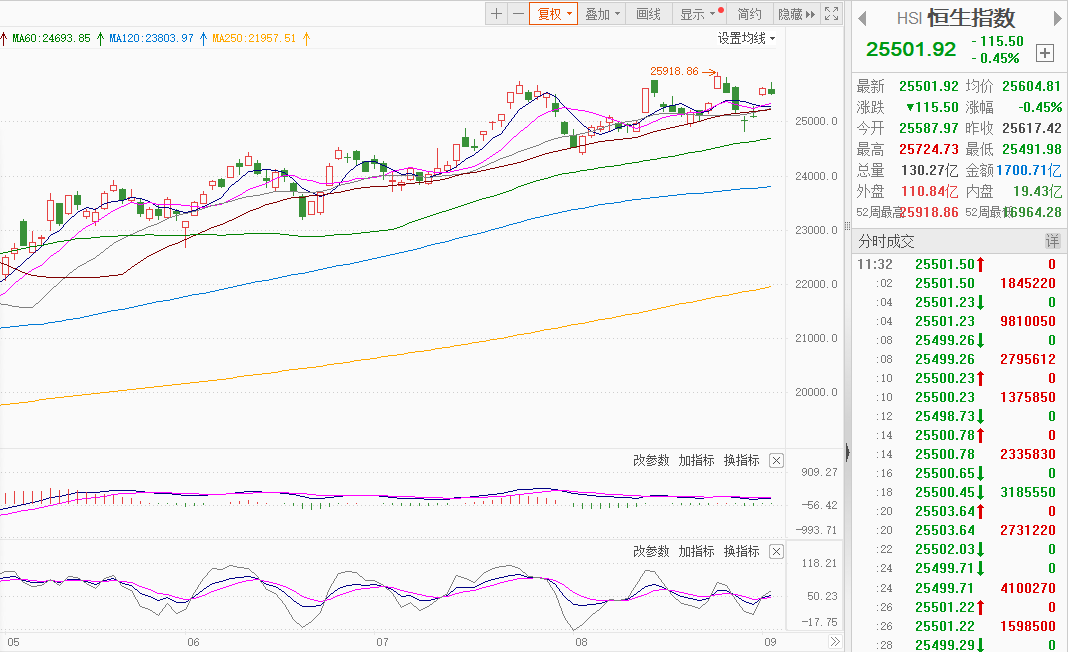
Group 1 - The Hong Kong stock market has attracted global capital due to its valuation advantages and quality Chinese assets, with the Hang Seng Index and Hang Seng Tech Index rising 27.70% and 29.79% respectively year-to-date as of September 1 [1] - Foreign capital inflow into the Hong Kong market has been significant, with long-term stable foreign institutional funds totaling approximately 67.7 billion HKD and short-term flexible funds around 16.2 billion HKD from May to July, exceeding 80 billion HKD in total [2] - Major international investment banks have increased their holdings in leading Hong Kong stocks, with Goldman Sachs raising its stake in BYD H-shares from 2.3% to 3.51% and Citibank increasing its holdings in CATL H-shares from 7.01% to 7.97% [2] Group 2 - Foreign investment is primarily focused on technology and consumer sectors, with foreign capital holding a dominant position in most sub-sectors, particularly in technology, retail, and insurance, where foreign institutions hold 77% of retail sector funds [3] - The improvement in the fundamentals of Chinese assets has attracted foreign investors, who are increasing their exposure through passive funds and "low allocation replenishment" in active funds [3] Group 3 - The technology and consumer sectors are expected to remain attractive to foreign investors, with Hong Kong's tech leaders benefiting from the AI industry trend, leading to greater upward potential [4] - Despite significant gains in the Hong Kong market, many foreign institutions believe there is still ample room for growth, with Goldman Sachs projecting an 8% to 9% earnings growth for H-shares by 2025, above the market average [4] - Experts from Morgan Asset Management and UBS Investment Bank also see structural investment opportunities in the technology, internet, consumer, and pharmaceutical sectors in Hong Kong [4]
英伟达“金主”豪盛,“榜一”“榜二”狂刷182亿美元
阿尔法工场研究院· 2025-09-02 00:03
导语:"大型云服务提供商"占据了英伟达数据中心营收的50%,而数据中心业务又贡献了公司总营收的88%。 根据提交给美国证券交易委员会的文件,英伟达(Nvidia)在第二财季中近40%的营收来自仅两家客户。 上周三,这家芯片制造商公布,截至7月27日的季度营收创下467亿美元的新高,同比增长56%,主要得益于人工智能(AI)数据中心的爆发式增长。然 而,随后的披露显示,这一增长很大程度上依赖于少数几家客户。 具体来看,英伟达(Nvidia)表示,一家客户占据第二财季总营收的23%,另一家客户贡献了16%。但文件并未披露客户身份,仅以"客户A"和"客户 B"代称。 在上半财年中,"客户A"和"客户B"分别贡献了20%和15%的总营收。此外,该公司表示,还有四家客户分别贡献了14%、11%、11%和10%的二季度营 收。 英伟达在文件中强调,这些客户均为"直接"客户,例如原始设备制造商(OEMs)、系统集成商或分销商,他们直接从英伟达采购芯片。而"间接客户", 如云服务提供商(cloud service providers)和互联网消费公司,则通过这些直接客户购买英伟达芯片。 也就是说,像微软、甲骨文、亚马逊或谷歌 ...


车险“反内卷”初见成效 非车险或于明年改善
Zheng Quan Shi Bao Wang· 2025-09-01 23:17
Core Viewpoint - The property insurance industry has made initial progress in "anti-involution," leading to improved underwriting profitability and business quality among major insurers [1][2]. Group 1: Financial Performance - Major property insurance companies, including PICC, Ping An, and Taikang, have reported significant growth in underwriting profitability, with comprehensive cost ratios showing notable declines [3]. - PICC achieved an underwriting profit of 11.699 billion yuan, a year-on-year increase of 53.5%, with a comprehensive cost ratio of 95.3%, the best level in nearly a decade, down 1.5 percentage points year-on-year [3]. - Ping An's underwriting profit surged by 125.9% to 7.978 billion yuan, with a comprehensive cost ratio of 95.2%, improving by 2.6 percentage points year-on-year [3]. - Taikang reported an underwriting profit of 3.55 billion yuan, a year-on-year increase of 30.9%, with a comprehensive cost ratio of 96.3%, down 0.8 percentage points year-on-year [3]. Group 2: Cost Ratio Optimization - The optimization of comprehensive cost ratios is attributed to a decrease in expense ratios, with PICC's cost ratio primarily benefiting from reduced expenses, while Ping An and Taikang experienced declines in both claims and expense ratios [3]. - Ping An's Vice President noted that the effective control of expenses and claims, along with the application of technology and AI in underwriting and claims processing, has laid a solid foundation for cost ratio optimization [3]. Group 3: Regulatory Changes and Future Outlook - The implementation of "reporting and operation unity" in auto insurance has helped standardize market order, with PICC's auto insurance comprehensive cost ratio at 94.2%, down 2.2 percentage points year-on-year [4]. - The non-auto insurance sector is expected to see the rollout of "reporting and operation unity" policies, which could positively impact financial performance in 2025 and significantly improve results in 2026 [5]. - If effectively implemented, the non-auto insurance "reporting and operation unity" policy will guide the industry back to its core insurance functions, promoting rational competition and enhancing underwriting capabilities [6]. Group 4: Industry Transformation - The "anti-involution" trend across various sectors is expected to create a more stable pricing basis for property insurance and foster a rational market environment [7]. - This shift will encourage insurance companies to focus resources on product, service, and technological innovation rather than price competition, leading to high-quality development [7]. - Long-term, the effective execution of regulatory policies will help the industry return to its core functions, enabling better risk assessment and management, thus supporting economic stability and growth [7].


车险“反内卷”初见成效非车险或于明年改善
Zheng Quan Shi Bao· 2025-09-01 18:45
Core Viewpoint - The property insurance industry has made initial progress in "anti-involution," leading to a significant decrease in comprehensive cost ratios among major listed insurance companies, particularly in auto insurance [1][3]. Group 1: Industry Performance - The comprehensive cost ratios of the three major property insurance companies have significantly decreased, with auto insurance expense ratios showing notable declines [1][3]. - China Pacific Insurance, Ping An Property & Casualty, and People’s Insurance Company of China all reported substantial growth in underwriting profits, with comprehensive cost ratios below 100%, indicating profitability [3]. - Specifically, People’s Insurance Company achieved an underwriting profit of 11.699 billion yuan, a year-on-year increase of 53.5%, with a comprehensive cost ratio of 95.3%, the best level in nearly a decade [3]. - Ping An Property & Casualty's underwriting profit surged by 125.9% to 7.978 billion yuan, with a comprehensive cost ratio of 95.2%, improving by 2.6 percentage points year-on-year [3]. - China Pacific Insurance reported an underwriting profit of 3.550 billion yuan, a year-on-year increase of 30.9%, with a comprehensive cost ratio of 96.3%, down 0.8 percentage points [3]. Group 2: Cost Ratio Optimization - The optimization of comprehensive cost ratios is attributed to a decrease in expense ratios, with People’s Insurance Company benefiting from expense reductions, while Ping An and China Pacific achieved improvements through both claims and expense ratio reductions [3][4]. - Ping An's report highlighted that the decline in cost ratios was primarily due to optimized auto insurance expenses and the turnaround of guarantee insurance [4]. - The implementation of the "reporting and execution consistency" reform in auto insurance has effectively regulated market order, contributing to the reduction in comprehensive cost ratios [4]. Group 3: Future Outlook - The non-auto insurance sector is expected to implement the "reporting and execution consistency" policy, which is anticipated to positively impact financial performance in 2025 and significantly improve results in 2026 [5]. - The industry is expected to shift focus from price competition to product, service, and technological innovation, promoting high-quality development [6]. - The long-term execution of the "reporting and execution consistency" policy is projected to help the industry return to its core insurance functions, enhancing risk assessment and management services [6].
AI算力需求持续增长 硬蛋创新上半年收入同比增长54.5%至66.77亿元
Zheng Quan Ri Bao· 2025-09-01 10:38
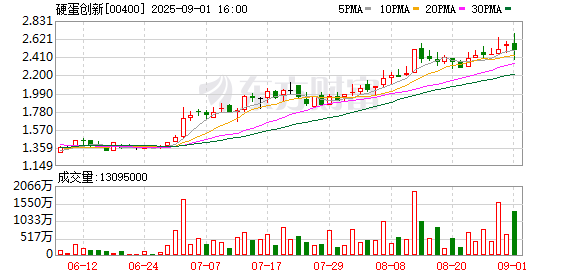
Core Insights - The company, HardEgg Innovation, reported a 54.5% year-on-year revenue growth to 6.677 billion yuan for the first half of 2025, with a net profit of 190 million yuan, driven by the booming demand for AI computing power [2] - The significant performance boost is attributed to its subsidiary, Shenzhen Keton Technology Co., Ltd., which serves as a core supplier in the AI computing supply chain, benefiting from partnerships with over 80 leading chip manufacturers including Nvidia, Xilinx, Intel, and AMD [2] - HardEgg Technology (Shenzhen) Co., Ltd., another key segment of the company, is leveraging a "dual-engine" strategy to capitalize on domestic AI computing opportunities and strengthen its position in the new energy sector [3] Business Strategy - The company is transitioning from a chip trading platform to a technology integration platform, which has shown significant results in its core business growth [2] - The dual-engine strategy involves collaboration with domestic leaders like Huawei to provide computing solutions and a focus on battery swapping and recycling in the new energy sector [3] - The CEO, Kang Jingwei, emphasized the goal of transforming data resources into strategic assets and building a solid competitive moat to create long-term sustainable value for shareholders [3]
长城基金刘疆:看好算力、人形机器人、低空经济等细分领域
Xin Lang Ji Jin· 2025-09-01 10:07
Group 1 - The core viewpoint is that AI's impact is expanding beyond technology companies, reshaping the economy similarly to the mobile internet, with significant opportunities for "AI+" sectors [1] - AI is expected to greatly enhance the operational efficiency of traditional industries and fundamentally alter productivity and production relationships in the economy and society [1] - Investors are actively seeking companies that can effectively leverage AI for intelligent upgrades to enhance their core competitiveness, regardless of whether they are in the tech sector or traditional industries [1] Group 2 - Domestic tech giants are maintaining a proactive yet steady pace in AI investment compared to overseas counterparts, focusing on rapid technology adoption while having advantages in commercialization and monetization efficiency [2] - Some AI products from domestic companies are already generating substantial revenue, with AI tools for short video platforms and AI-driven precision marketing contributing to incremental income [2] - The computing power sector is experiencing a boom, with opportunities emerging in sub-sectors like optical communication, PCB, and liquid cooling, while humanoid robots and low-altitude economy fields like autonomous taxis and eVTOLs are expected to see significant growth [2]
开学了:入门AI,可以从这第一课开始
机器之心· 2025-09-01 08:46
Core Viewpoint - The article emphasizes the importance of understanding AI and its underlying principles, suggesting that individuals should start their journey into AI by grasping fundamental concepts and practical skills. Group 1: Understanding AI - AI is defined through various learning methods, including supervised learning, unsupervised learning, and reinforcement learning, which allow machines to learn from data without rigid programming rules [9][11][12]. - The core idea of modern AI revolves around machine learning, particularly deep learning, which enables machines to learn from vast amounts of data and make predictions [12]. Group 2: Essential Skills for AI - Three essential skills for entering the AI field are mathematics, programming, and practical experience. Mathematics provides the foundational understanding, while programming, particularly in Python, is crucial for implementing AI concepts [13][19]. - Key mathematical areas include linear algebra, probability and statistics, and calculus, which are vital for understanding AI algorithms and models [13]. Group 3: Practical Application and Tools - Python is highlighted as the primary programming language for AI due to its simplicity and extensive ecosystem, including libraries like NumPy, Pandas, Scikit-learn, TensorFlow, and PyTorch [20][21]. - Engaging in hands-on projects, such as data analysis or machine learning tasks, is encouraged to solidify understanding and build a portfolio [27][46]. Group 4: Career Opportunities in AI - Various career paths in AI include machine learning engineers, data scientists, and algorithm researchers, each focusing on different aspects of AI development and application [38][40]. - The article suggests that AI skills can enhance various fields, creating opportunities for interdisciplinary applications, such as in finance, healthcare, and the arts [41][43]. Group 5: Challenges and Future Directions - The rapid evolution of AI technology presents challenges, including the need for continuous learning and adaptation to new developments [34][37]. - The article concludes by encouraging individuals to embrace uncertainty and find their passion within the AI landscape, highlighting the importance of human creativity and empathy in the technological realm [71][73].