全球化

Search documents
发赢喜、合资索尼——TCL站上舞台中央?
BambooWorks· 2026-01-27 10:29
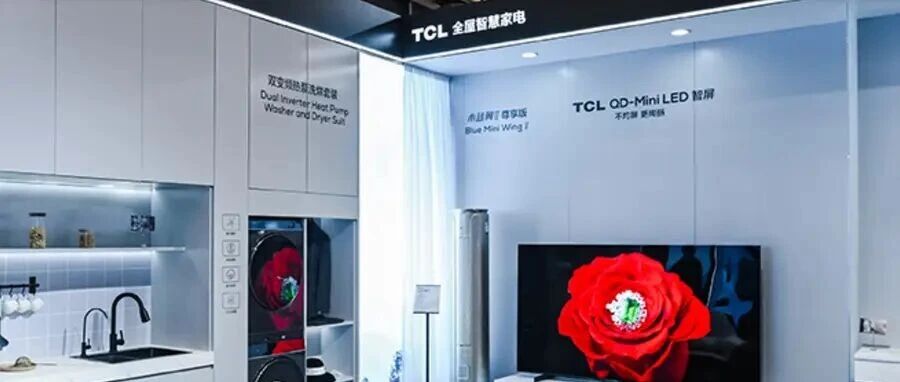
Core Viewpoint - TCL Electronics is experiencing significant growth driven by its large-screen display business, leading to a positive profit forecast and a strategic partnership with Sony to enhance its home entertainment offerings [1][2][3]. Group 1: Financial Performance - The company expects its adjusted net profit for the previous year to increase by 45% to 60%, amounting to approximately HKD 23.3 billion to HKD 25.7 billion [2][3]. - Following the profit announcement, TCL's stock price surged nearly 14% on January 19 [3]. Group 2: Strategic Partnerships - TCL has announced a joint venture with Sony, where TCL will hold a 51% stake and Sony will hold 49%, aimed at integrating resources and enhancing competitive strength in the global market for televisions and home audio products [3]. Group 3: Market Position and Product Performance - TCL is the second-largest television manufacturer globally, with a shipment of 13.46 million units in the first half of 2025, reflecting a year-on-year increase of 7.6% [6]. - The company has seen significant growth in Mini LED television shipments, with a 153% increase year-on-year, reaching 2.24 million units in the first three quarters of 2025 [6]. Group 4: Future Growth Potential - The AR glasses segment, particularly through its subsidiary Thunderbird Innovation, is gaining traction, holding nearly 40% of the consumer AR glasses market share in China [8]. - The AR glasses market is projected to grow significantly, with an estimated market size of RMB 231 billion in 2023, representing a 95% year-on-year increase, and expected to exceed RMB 1.187 trillion by 2030 [8]. Group 5: Industry Outlook - Despite potential challenges from reduced government subsidies in the home appliance sector, the market is expected to grow by 15% in 2026, reaching a sales figure of RMB 1.353 trillion [9]. - TCL's valuation is projected at a price-to-earnings ratio of 11 times for 2026, which is considered reasonable compared to peers in the home appliance sector [9].

追觅是下一个乐视?CEO回应:三大不同,追觅全球罕见
Sou Hu Cai Jing· 2026-01-27 10:05
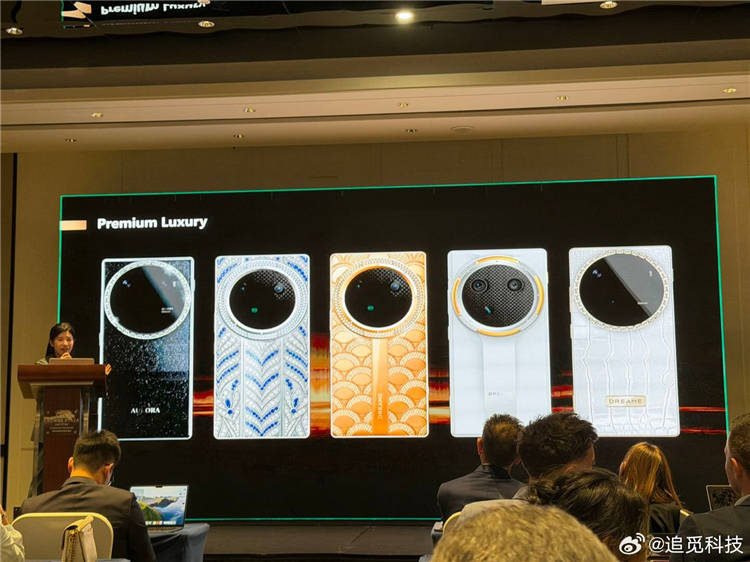
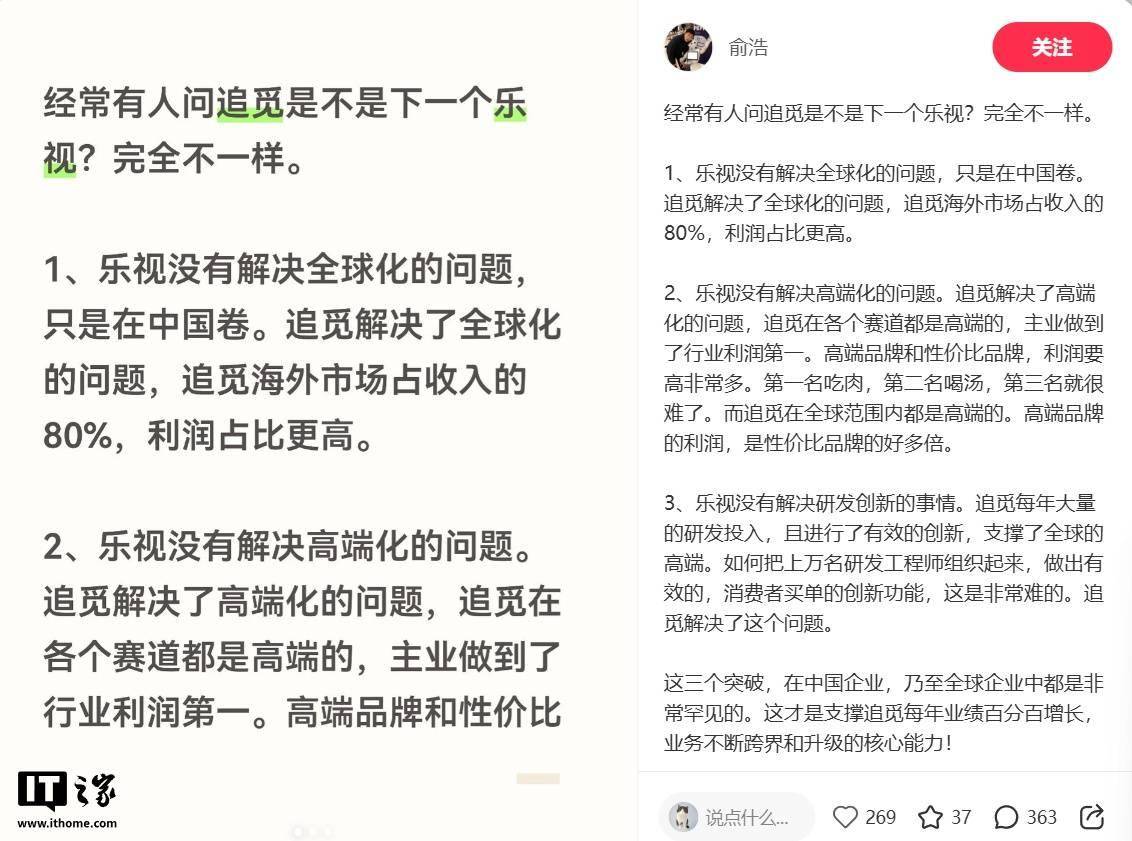
做新能源汽车、做高端智能手机、做酒旅品牌、做航空服务…… 追觅近期不断曝出跨界开拓新业务,甚至其CEO俞浩还曾表示要打造人类历史上第一个百万亿美金公司。 看到如此疯狂的追觅,许多人都想起了曾经生态化反模式的乐视,以及为梦想窒息但至今在美国没有回国 的贾跃亭。 有意思的是,追觅CEO俞浩今日发文,回应了追觅是不是下一个乐视的问题。他认为追觅和乐视完全不一 样,而这个不一样主要有3点体现。 首先是乐视没有解决全球化问题,而追觅解决了全球化问题。他透露追觅海外市场营收占比高达80%,利 润占比还更高。 其次乐视没有解决高端化问题,而追觅解决了高端化问题,并且在各个赛道都是高端的,主业还做到了行 业利润第一。 最后就是乐视没有解决研发创新的问题,而追觅每年大量研发投入且有效创新,做出了消费者买单的创新 功能。 简单来说,俞浩认为追觅解决了市场、品牌以及技术创新的问题,而这在全球企业中都罕见,支撑着追觅 每年业绩百分百增长,业务不断跨界和升级。 虽然俞浩这样回答,但许多细节都经不起推敲。比如他说追觅解决了高端化问题,追觅主业利润行业第一 高,但很明显这两者之间没有必然的联系。而且就算追觅品牌足够高端,但跨界到其他行业, ...
柳工(000528.SZ):预计2025年归母净利润15.26亿元-16.59亿元,同比增长15%-25%
Ge Long Hui A P P· 2026-01-27 09:38
Core Viewpoint - LiuGong (000528.SZ) expects a net profit attributable to shareholders of 1.526 billion to 1.659 billion yuan for the year 2025, representing a growth of 15% to 25% compared to the previous year [1] Financial Performance - The net profit excluding non-recurring gains and losses is projected to be between 1.323 billion and 1.455 billion yuan, indicating a growth of 16% to 28% year-on-year [1] Industry Trends - The demand for domestic construction machinery, particularly earth-moving machinery, is influenced by industry cyclicality and macroeconomic policies, showing stable growth after a rebound from the previous year's low [1] - The international construction machinery market is also showing signs of stabilization and recovery [1] Strategic Initiatives - The company adheres to a new "three-full" strategy focusing on "comprehensive solutions, comprehensive digitalization, and globalization" [1] - LiuGong is implementing an innovative dual-circulation development model, optimizing business combinations, and enhancing cost efficiency across the entire value chain to achieve revenue and profit growth [1] Financial Management - The company maintains strict adherence to accounting policies and has increased scrutiny on problem and risk assets during the reporting period, leading to the provision for impairment losses to ensure the robustness of financial statements [1]

武汉病毒所发现尼帕有效药物!生物疫苗回调,沃森生物、智飞生物跌超6%!生物医药ETF汇添富(159839)收跌超2%,再获超5400万份净申购!
Sou Hu Cai Jing· 2026-01-27 09:32
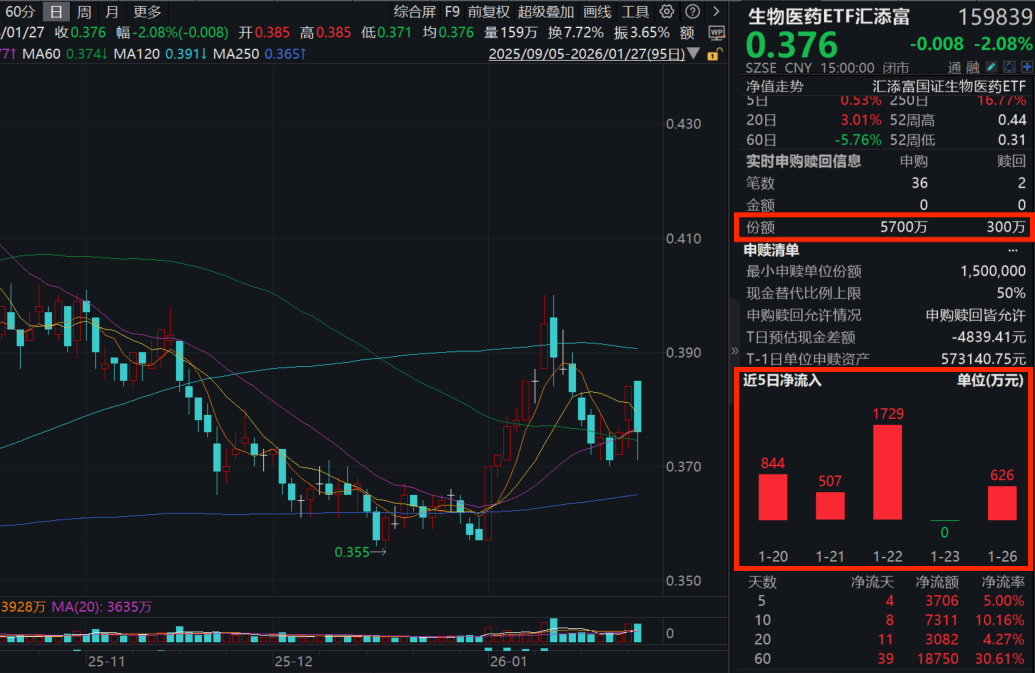
Group 1 - The core viewpoint of the news highlights a recent pullback in the biopharmaceutical sector, with the Huatai-PineBridge Biopharmaceutical ETF (159839) declining by 2.08% while maintaining high trading volume, with nearly 600 million yuan in transactions for the day [1][4] - The ETF has seen continuous inflows, with a net subscription of over 54 million shares today and a total of over 73 million yuan in the last 10 days [1] - The ETF tracks the Guozheng Biopharmaceutical Index, which includes sectors such as CXO, vaccines, chemical drugs, blood products, and medical aesthetics, with the vaccine sector currently accounting for 15.1% of the index [6] Group 2 - A significant research breakthrough was reported by the Wuhan Institute of Virology, confirming that the oral nucleoside drug VV116 shows significant antiviral activity against the Nipah virus, providing new hope for the prevention and treatment of this high-mortality emerging infectious disease [3] - The biopharmaceutical ETF's major component stocks mostly experienced declines, with Watson Bio and Zhi Fei Bio dropping over 6%, while Sanofi Biopharma saw an increase of over 10% [4][5] - The latest performance forecast from Sanofi Biopharma indicates an expected net profit of approximately 2.9 billion yuan for 2025, representing a year-on-year growth of 311.35% [4] Group 3 - Data from Guoxin Securities indicates a decrease in pharmaceutical holdings among funds, with the overall pharmaceutical holding ratio at 7.97%, down by 1.71 percentage points from the previous quarter [7] - The largest sub-sector in pharmaceutical holdings is chemical preparations and other biological products, while the internet pharmacy and other biological products saw the most significant decline in holdings [9] - The JPM 2026 conference highlighted the acceleration of internationalization among Chinese pharmaceutical companies, with significant technological breakthroughs in areas such as ADC and GLP-1, leading to increased global competitiveness [10][11]





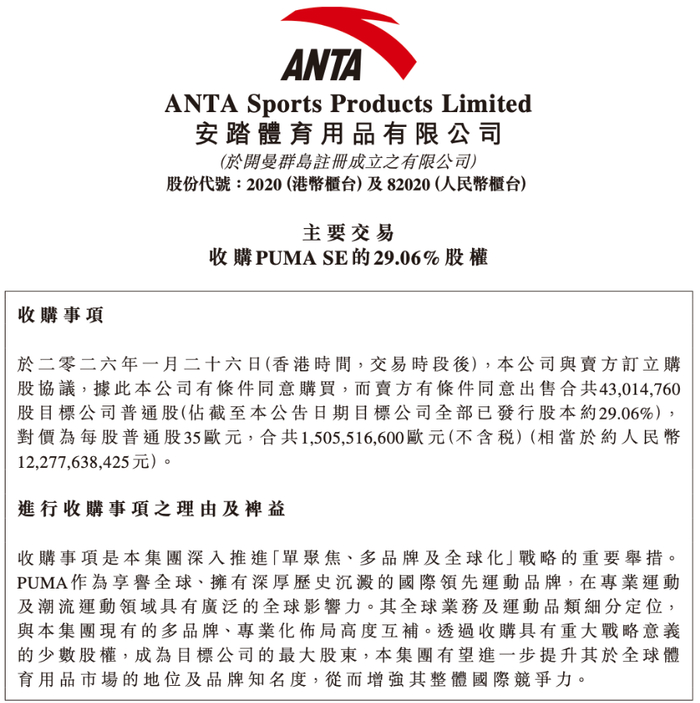
124亿现金收购29%股权,安踏将成彪马最大股东,公司股价一度涨超3%
Mei Ri Jing Ji Xin Wen· 2026-01-27 06:03
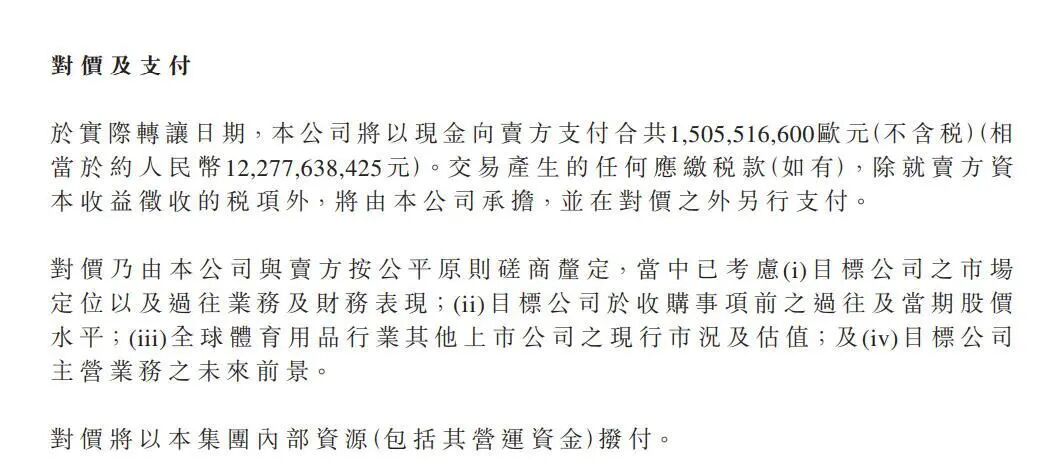
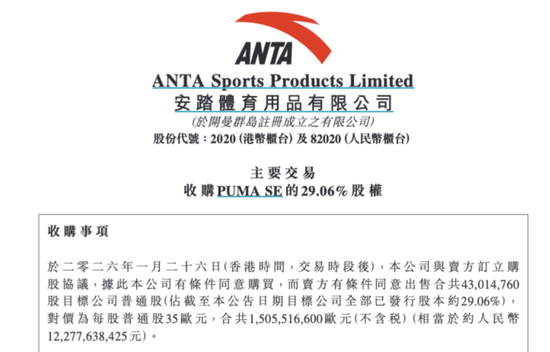
Core Viewpoint - Anta Group has reached an agreement to acquire a 29.06% stake in Puma SE from the Pinault family's investment company Groupe Artémis for €1.5 billion, funded entirely by Anta's internal cash reserves. The transaction is expected to be completed by the end of 2026, pending regulatory approvals and customary closing conditions [1][2]. Group 1: Acquisition Details - The acquisition involves the purchase of 43,014,760 ordinary shares of Puma, representing approximately 29.06% of the total issued share capital, at a price of €35 per share, totaling €1,505,516,600 (approximately ¥12.4 billion) [2]. - Anta Group's Chairman, Ding Shizhong, stated that becoming the largest shareholder of Puma is a significant milestone in advancing the company's "single focus, multi-brand, globalization" strategy [2]. Group 2: Strategic Importance - The acquisition is seen as a strategic move to enhance Anta's position in the global sports goods market and increase brand recognition, as Puma is a globally recognized brand with a strong historical presence in professional and lifestyle sports [2]. - Anta aims to leverage Puma's global business and product segmentation to complement its existing multi-brand and specialized layout [2]. Group 3: Financial Performance of Puma - Puma has experienced a decline in performance, with a net profit of €360 million in 2023, dropping to €342 million in 2024, and reporting a net loss of €247 million in the first half of 2025, along with a net loss of €62.3 million in Q3 2025 [8]. - In response to high operational costs, Puma plans to streamline approximately 900 white-collar jobs globally by the end of 2026, following a previous layoff of 500 employees as part of a cost-cutting initiative announced in March 2025 [8]. Group 4: Anta's Recent Activities - Anta has been active in acquiring foreign brands, including the full acquisition of the German outdoor brand Jack Wolfskin for a base price of $290 million (approximately ¥2.1 billion) in April 2025 [10]. - Anta Sports, a subsidiary of Anta Group, was listed on the Hong Kong Stock Exchange in 2007 and focuses on the research, design, manufacturing, marketing, and sales of professional sports goods, including various brands such as Anta, FILA, DESCENTE, and others [10][11]. Group 5: Anta's Financial Performance - Anta Sports reported a revenue increase of 14.3% to ¥38.54 billion in the first half of 2025, achieving a historical high, with adjusted net profit rising by 7.1% to ¥6.597 billion [12].
斥资123亿,安踏入股体育巨头
Xin Lang Cai Jing· 2026-01-27 03:53
炒股就看金麒麟分析师研报,权威,专业,及时,全面,助您挖掘潜力主题机会! 来源:中国基金报 记者 赵心怡 【导读】安踏集团斥资15亿欧元(约合123亿元人民币)收购彪马29.06%股权 市场传言终于"靴子落地",安踏集团宣布将收购彪马29.06%股权。 1月27日,中国体育用品巨头安踏集团宣布,以15亿欧元现金收购德国运动品牌彪马(PUMA)29.06% 的股权,交易对手为法国皮诺家族(Pinault)旗下投资公司Groupe Artémis。 若交易于2026年底前完成,安踏将成为彪马最大股东。但安踏明确表示,暂不发起全面要约收购。 对于此次收购,安踏集团董事局主席丁世忠表示:"收购彪马的股权成为其最大股东,是安踏集团深入 推进'单聚焦、多品牌、全球化'发展战略的重要里程碑。彪马是具有标志性意义的全球知名品牌,有着 深厚的品牌资产。我们期待与彪马公司相互学习并分享经验,携手合作充分释放其品牌势能。" 丁世忠还提到:"这将有助于进一步推动安踏集团的全球化进程,促进包括中国在内的全球体育产业繁 荣,同时为全球消费者和利益相关者创造长期价值。" 资料显示,彪马成立于1948年,是德国运动品牌的标志性代表,以深厚的 ...
追觅是不是下一个乐视?CEO俞浩回应称“完全不一样”
Sou Hu Cai Jing· 2026-01-27 03:43
IT之家 1 月 27 日消息,追觅科技创始人兼 CEO 俞浩昨晚在社交媒体发布长文,表示经常有人问追觅是不是下一个乐视?俞浩称"完全不一样"。 1、乐视没有解决全球化的问题,只是在中国卷。追觅解决了全球化的问题,追觅海外市场占收入的 80%,利润占比更高。 3、乐视没有解决研发创新的事情。追觅每年大量的研发投入,且进行了有效的创新,支撑了全球的高端。如何把上万名研发工程师组织起来, 做出有效的,消费者买单的创新功能,这是非常难的。追觅解决了这个问题。 这三个突破,在中国企业,乃至全球企业中都是非常罕见的。这才是支撑追觅每年业绩百分百增长,业务不断跨界和升级的核心能力! 2、乐视没有解决高端化的问题。追觅解决了高端化的问题,追觅在各个赛道都是高端的,主业做到了行业利润第一。高端品牌和性价比品牌, 利润要高非常多。第一名吃肉,第二名喝汤,第三名就很难了。而追觅在全球范围内都是高端的。高端品牌的利润,是性价比品牌的好多倍。 IT之家注意到,俞浩在评论区中回应了裁员传闻,表示历史上整体裁员非常少,只有过一次,去年六七月,中国区人效太低,要提高人效。俞浩还称"核心 人员很稳定"。 那你们电商板块为啥裁员啊 昨天 19 ...
安踏15亿欧元收购彪马29%股权,成最大股东
Xin Jing Bao· 2026-01-27 02:43
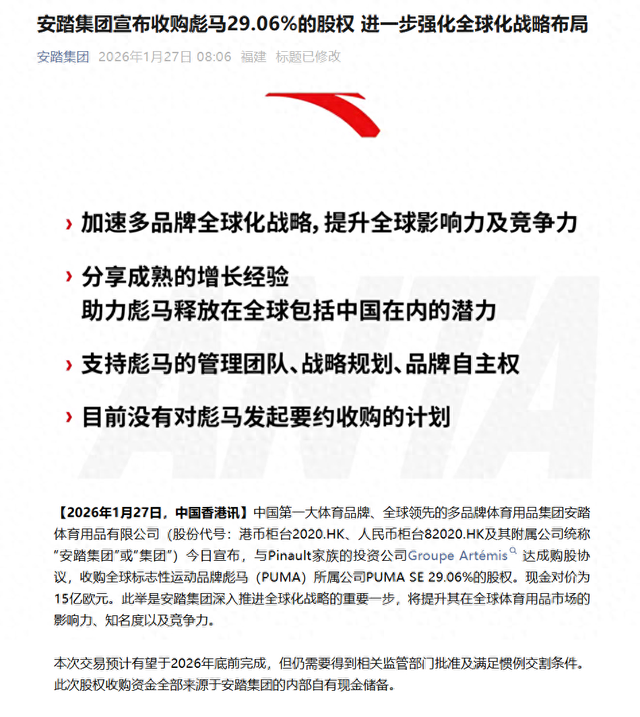
新京报记者 王真真 编辑 陈莉 校对 刘军 1月27日,安踏集团与Pinault家族的投资公司Groupe Artémis 达成购股协议,收购全运动品牌彪马 (PUMA)所属公司PUMA SE 29.06%的股权。现金对价为15亿欧元,此次股权收购资金全部来源于安 踏集团的内部自有现金储备。 安踏集团透露,本次交易预计有望于2026年底前完成,但仍需要得到相关监管部门批准及满足惯例交割 条件。 安踏集团董事局主席丁世忠表示:收购彪马的股权成为最大股东,是安踏集团深入推进"单聚焦、多品 牌、全球化"发展战略的重要里程碑。 ...

124亿现金!安踏成彪马最大股东
Bei Jing Ri Bao Ke Hu Duan· 2026-01-27 02:34
安踏集团公众号27日早间发文称,安踏体育用品有限公司今日宣布,与Pinault家族的投资公司Groupe Artémis达成购股协议,收购运动品牌彪马(PUMA)所属公司PUMA SE29.06%的股权。现金对价为15 亿欧元(按当前汇率,约合人民币123.885亿元)。 安踏方面表示,本次交易预计有望于2026年底前完成,但仍需要得到相关监管部门批准及满足惯例交割 条件。此次股权收购资金全部来源于安踏集团的内部自有现金储备。 安踏集团董事局主席丁世忠表示,"收购彪马的股权成为最大股东,是安踏集团深入推进'单聚焦、多品 牌、全球化'发展战略的重要里程碑。" 来源:中 新经纬 ...
安踏成彪马最大股东,股价拉升超3%
2 1 Shi Ji Jing Ji Bao Dao· 2026-01-27 02:12
Core Viewpoint - Anta Group has reached an agreement to acquire a 29.06% stake in Puma SE from Groupe Artémis for €1.5 billion, marking a significant step in its strategy to enhance its global presence and brand portfolio [1][5]. Group 1: Acquisition Details - The acquisition is expected to be completed by the end of 2026, pending regulatory approvals and customary closing conditions [5]. - The funding for the acquisition will come entirely from Anta Group's internal cash reserves [5]. - Following the announcement, Anta's stock price rose over 3% in Hong Kong [5]. Group 2: Strategic Importance - Anta's Chairman, Ding Shizhong, emphasized that becoming the largest shareholder of Puma is a milestone in the company's strategy of "single focus, multi-brand, globalization" [5]. - Anta aims to leverage Puma's brand strength and assets to enhance its global strategy and create long-term value for stakeholders [5][12]. Group 3: Puma's Current Performance - Puma's sales decreased by 10.4% to €1.9557 billion in Q3 2025, with wholesale business down 15.4% to €1.3857 billion, while direct-to-consumer (DTC) sales grew by 4.5% to €570 million [10]. - The DTC share increased from 25.1% in Q3 2024 to 29.1% in Q3 2025, driven by e-commerce growth [10]. - The Americas region saw a 15.2% decline in sales to €678.1 million, primarily due to North America [11]. Group 4: Future Outlook and Integration - Anta expressed confidence in Puma's long-term value and potential, highlighting the complementary nature of their product offerings and market presence [12]. - Anta plans to respect Puma's management culture and governance structure while seeking to appoint suitable representatives to the supervisory board post-acquisition [5][12]. - The company has no immediate plans for a full takeover of Puma but is open to exploring deeper collaboration in the future [5][12]. Group 5: Global Strategy - Anta's acquisition aligns with its "three-step" strategy for globalization, which includes establishing international brands in China, managing global brands, and expanding the Anta brand internationally [15]. - The successful integration of FILA and Amer Sports demonstrates Anta's capability to manage global brands effectively [16]. - Anta's governance model emphasizes decentralized responsibility, allowing brand CEOs to manage their operations while aligning with the overall group strategy [17].