白酒行业调整

Search documents
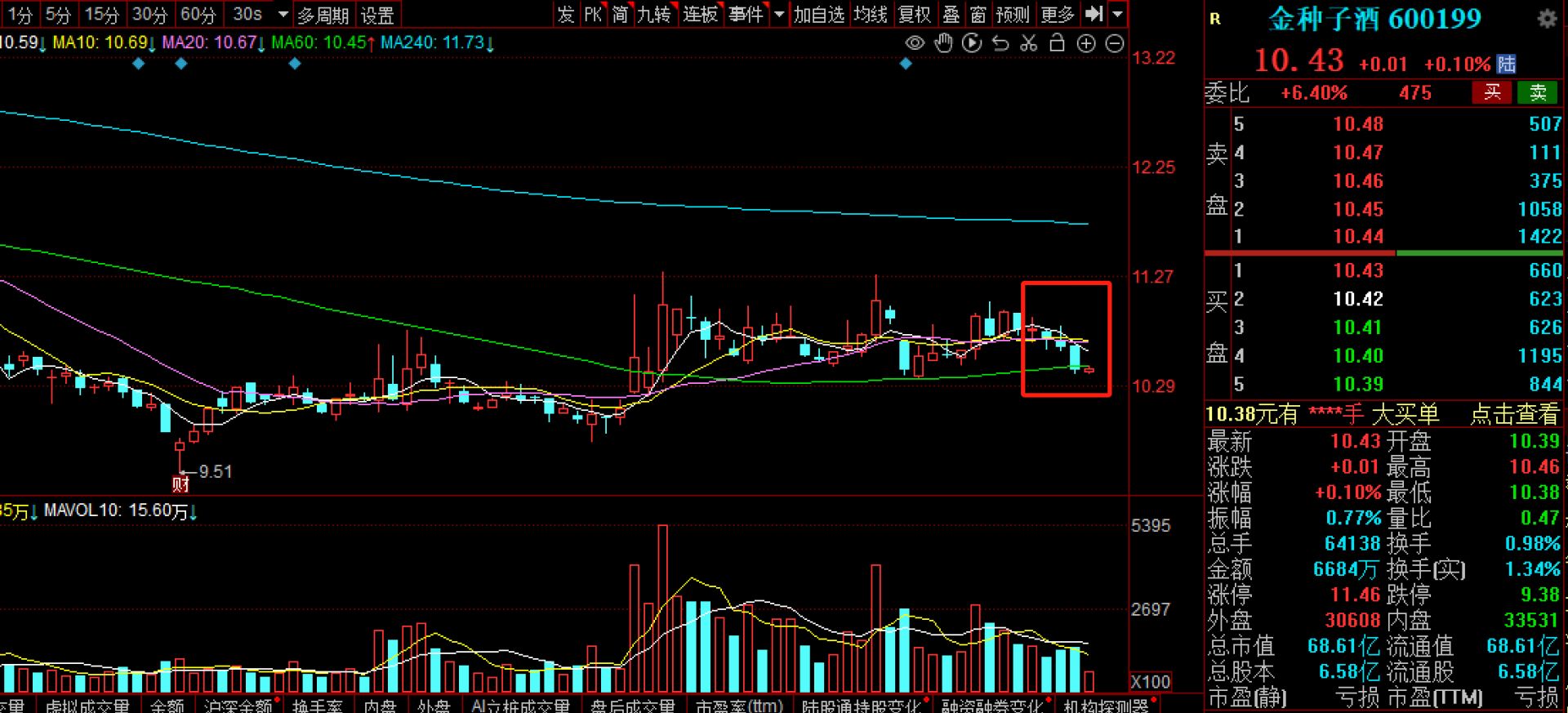
金种子酒等白酒股周跌超3%,白酒指数未能实现周线7连阳
Xin Lang Cai Jing· 2025-08-03 10:33
Group 1 - The white liquor index experienced a weekly decline of 2.15%, failing to achieve a seven-week upward trend [1] - The white liquor sector is characterized by low valuation, low expectations, low holdings, and high dividend returns, indicating a potential investment opportunity as consumer demand gradually recovers [1][5] - Major liquor companies are showing strong competitive advantages due to their robust market positions and brand strength [1] Group 2 - Hong Kong's San Miguel Brewery reported a 26% weekly increase in stock price, driven by a mid-term performance that exceeded expectations, with a revenue of approximately HKD 390 million, up 3.22% year-on-year [3] - In contrast, Budweiser APAC faced a 7.75% weekly decline due to poor performance, with a reported 8.2% decrease in sales and a 9.5% drop in revenue in the Chinese market for the first half of 2025 [3] - The white liquor industry is undergoing significant changes, including a shift towards lower alcohol content, younger demographics, and higher cost-performance ratios [3][5] Group 3 - The white liquor industry is currently marked by low valuation metrics, with the white liquor index's price-to-earnings ratios at historical lows, indicating potential undervaluation [5] - The proportion of fund holdings in the white liquor sector has significantly decreased, reaching a new low compared to previous years, reflecting reduced investor confidence [5] - Despite the challenges, the dividend yield for leading liquor brands has become relatively attractive, with several companies showing an increase in dividend rates [5]


外资股东不懂中国白酒?水井坊预计2025年上半年营收净利双双下滑
Sou Hu Cai Jing· 2025-07-31 11:52
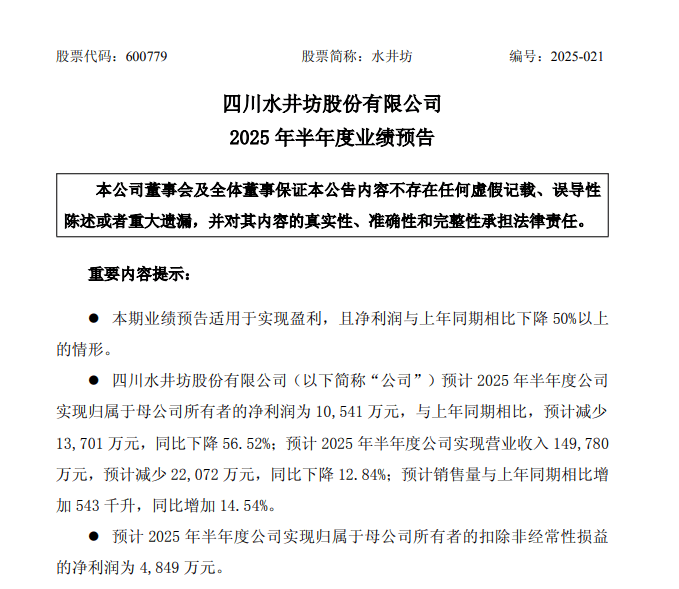
Core Viewpoint - The company, Shui Jing Fang, is experiencing a decline in revenue and net profit despite an increase in sales volume, attributed to ongoing adjustments in the liquor industry and weak consumer demand in traditional consumption scenarios [2][5][6]. Group 1: Financial Performance - For the first half of 2025, the company expects a revenue of 1.498 billion yuan, a year-on-year decrease of 12.84%, and a net profit of 105 million yuan, down 56.52% year-on-year [3]. - The sales volume of finished liquor is projected to increase by 543 thousand liters, a 14.54% year-on-year rise, all from mid-to-high-end products [5]. - From 2021 to 2024, the company's revenue showed a fluctuating growth pattern: 4.632 billion yuan (54.10%), 4.673 billion yuan (0.88%), 4.953 billion yuan (6%), and 5.217 billion yuan (5.32%) [5]. Group 2: Management Changes - The company has undergone significant management changes, with the chairman and general manager positions changing hands in July 2025, marking the second leadership transition in less than two years [1][11]. - Cristina Samin Suner, who took over as chairman in June 2024, has already been replaced by Sudhindra Shivnegere Rajarao [11][12]. - Frequent changes in the executive team may impact the company's strategic execution and market confidence [11][13]. Group 3: Market Dynamics - The liquor industry is currently in a deep adjustment phase, with traditional consumption scenarios like business banquets under pressure, leading to a slowdown in market recovery [5][6]. - The company has reported higher-than-expected channel inventory levels post-Spring Festival, affecting subsequent shipment volumes [5]. - In response to market disruptions, the company has implemented strict measures against violations of its pricing policies during promotional events [16][18].

口子窖再遭联合创始人减持
YOUNG财经 漾财经· 2025-07-31 10:59
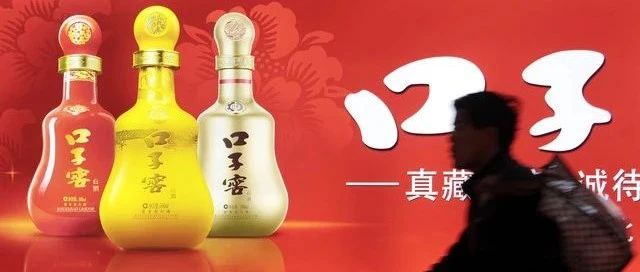
Core Viewpoint - The recent announcement of a share reduction by Liu Ansheng, a co-founder of Kuozi Jiao, has raised concerns about the company's stability and future prospects, especially after losing its position as the "second in Huijiu" to Yingjia Gongjiu in 2022 [1][5][12] Summary by Sections Share Reduction Announcement - Liu Ansheng plans to reduce his holdings by up to 10 million shares, representing 1.67% of the total share capital, between August 12 and November 11, 2025 [1] - This reduction comes at a time when Kuozi Jiao is facing operational challenges, including slowing growth and difficulties in product restructuring [1][5] Historical Context of Share Reductions - Liu Ansheng has a history of share reductions, having previously cashed out over 7 billion yuan through multiple reductions since the company's listing [3][4] - If the current reduction plan is fully executed, it could bring his total cash-out to over 10 billion yuan, leaving him with less than 9% of the company's shares [3][4] Financial Performance - Kuozi Jiao's revenue in 2022 was 5.135 billion yuan, a 2.12% increase, while net profit fell by 10.24% to 1.55 billion yuan [6] - In contrast, Yingjia Gongjiu reported a revenue of 5.505 billion yuan, a 19.59% increase, and a net profit of 1.705 billion yuan, a 22.97% increase [6] - The gap in revenue and net profit between Kuozi Jiao and Yingjia Gongjiu has widened in 2023 and 2024, indicating a concerning trend for Kuozi Jiao [7][8] Challenges in Product Structure - Kuozi Jiao has struggled with product structure adjustments, primarily focusing on mid-to-low-end products, while high-end offerings have not gained significant market traction [9][10] - The company faces intense competition from both local and external brands, which has hindered its ability to adapt to market demands [11] Future Outlook - The combination of share reductions, slowing growth, and challenges in product restructuring presents significant hurdles for Kuozi Jiao's future [12] - Analysts suggest that shareholder actions may reflect a lack of confidence in the company's short-term prospects, emphasizing the need for breakthroughs in the mid-to-high-end market and expansion beyond provincial boundaries [12]

白酒不行了?不,是市场太急了
Sou Hu Cai Jing· 2025-07-29 12:15
Core Viewpoint - The Chinese liquor industry is currently undergoing a deep adjustment period, with overall market performance being sluggish and many companies reporting significant declines in revenue and profit [1][3][4]. Industry Overview - The liquor industry is experiencing a noticeable slowdown in growth, with many companies reporting declines in both revenue and net profit, and some even turning from profit to loss [1][3]. - The adjustment in the industry is characterized by a systemic pressure affecting all companies, rather than isolated operational issues [3][4]. Company Performance - Jiu Gui Jiu's net profit for the first half of the year is expected to be between 8 million and 12 million yuan, a decline of 90.08% to 93.39% compared to 121 million yuan in the same period last year, with revenue expected to drop by approximately 43% to around 560 million yuan [1]. - Shui Jing Fang anticipates a net profit of 105 million yuan for the first half of the year, down 56.52% year-on-year, with revenue expected to decrease by 12.84% to 1.498 billion yuan, despite a 14.54% increase in sales volume [1]. - Shunxin Agriculture expects a net profit of 155 million to 195 million yuan, a decline of 53.85% to 63.32% year-on-year, due to decreased sales volume impacting overall revenue and profit levels [3]. - Jinzhongzi forecasts a net loss of 60 million to 90 million yuan for the first half of the year, attributing this to the industry's deep adjustment and ongoing decline in production [3]. Market Dynamics - The industry faces multiple challenges, including shrinking consumption scenarios, soft market demand, and a shift in consumer preferences towards fruit wines and low-alcohol beverages [4]. - High inventory levels and serious price inversion issues are exacerbating industry pressures, with over 58% of distributors reporting increased inventory and more than half facing price inversion problems [4]. - The average inventory turnover days have reached 900 days, an increase of 10% year-on-year, indicating significant supply chain inefficiencies [4]. Future Outlook - Despite the current challenges, leading companies like Kweichow Moutai and Wuliangye are still achieving relatively stable growth, with Moutai reporting a 9% year-on-year revenue increase [7]. - The low-alcohol beverage market is emerging as a new growth point, with companies exploring new product lines and sales channels [7]. - Industry experts predict a full recovery by 2027, with new development opportunities arising in 2028, suggesting that patience and understanding are needed for the industry's transformation [8][9].





珍酒李渡董事长吴向东:从白酒教父到新晋网红,公司去年营收 71 亿元,大珍能否扛起突围大旗?
Sou Hu Cai Jing· 2025-07-29 12:12
Core Viewpoint - The Chinese liquor industry is entering a deep adjustment period in 2024, with intensified market competition and frequent personnel changes, prompting companies to view "reform" as a key driver for exploring new growth points to meet challenges and embrace opportunities [2] Company Overview - Wu Xiangdong, chairman of Zhenjiu Lidu Group, has gained significant attention in the liquor industry through his outspoken views on social media, becoming a new "internet celebrity" in the sector [5] - Zhenjiu Lidu has experienced fluctuations in performance amid the industry's adjustment cycle, with 2024 revenue reaching 70.67 billion yuan, a slight increase of 0.52% year-on-year, while net profit attributable to shareholders fell by 43.12% to 13.24 billion yuan [6][19] Strategic Initiatives - To adapt to current consumer trends, Zhenjiu Lidu has reintroduced the strategic new product "Da Zhen·Zhenjiu" and signed Yao Anna as the "Cultural Heritage Ambassador," with Wu Xiangdong personally promoting the product [8][22] - The company aims to enhance its market position by focusing on the next high-end product segment, with "Da Zhen" priced at 888 yuan, and has allocated a significant portion of its budget towards this initiative [22][24] Market Position and Competition - Zhenjiu Lidu has maintained its position as the third-largest sauce-flavored liquor brand in Guizhou for two consecutive years, with revenue from the Zhenjiu brand at 44.80 billion yuan in 2024 [18][20] - The company faces competition from other brands like Guotai, which has set a sales target of 60 billion yuan for 2025, intensifying the competitive landscape [18] Financial Performance - The company's financial performance shows a decline in net profit primarily due to non-operating financial instrument valuation changes, stock incentive costs, and listing expenses [20] - Revenue breakdown indicates that only the Lidu brand saw growth, with an 18.3% increase to 13.13 billion yuan, while the core brand Zhenjiu experienced a revenue decline [20][21] Future Outlook - 2025 marks the 50th anniversary of Zhenjiu, and the company aims to transition towards becoming a world-class brewing enterprise, indicating a need for transformation and enhanced industry adaptability [25]

左手一碗面,右手茅五剑
Sou Hu Cai Jing· 2025-07-28 20:28
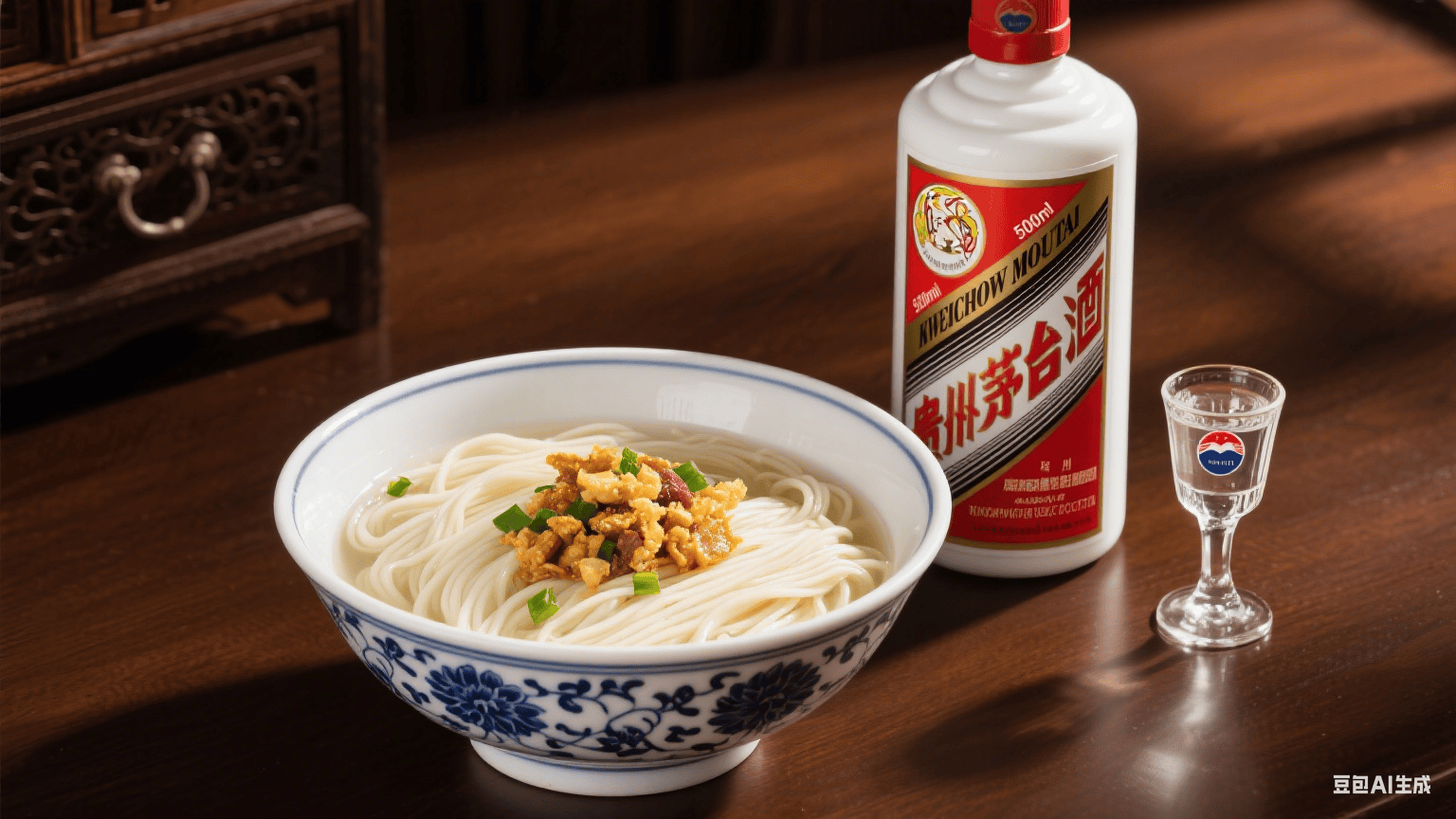
Core Viewpoint - The innovative sales model of a small noodle shop in Shanghai, which combines low-cost noodles with high-end liquor sold by the cup, highlights a potential growth opportunity in the struggling liquor market, particularly for premium brands like Moutai [2][10]. Group 1: Innovative Consumption Model - The noodle shop sells a bowl of noodles for 3 yuan and offers premium liquors like Moutai, Wuliangye, and Jian Nan Chun by the cup, creating a unique consumption experience [3][5]. - The pricing for the liquors is set at 48 yuan for Moutai, 24 yuan for Wuliangye, and 12 yuan for Jian Nan Chun, with each cup containing 10 milliliters [7]. - This model allows consumers who cannot afford a full bottle to experience high-end liquor, thus breaking the traditional consumption barriers associated with premium brands [5][9]. Group 2: Market Context and Challenges - The liquor industry is currently facing significant challenges, including a downturn in consumption and strict regulations, which have led to a decline in sales [10][12]. - The implementation of stringent alcohol bans since May has severely impacted traditional consumption venues, leading to a drop in market activity [10][12]. - Despite the current difficulties, there are signs of potential recovery, with large-scale investment projects and urban renewal initiatives expected to stimulate demand in the liquor market [12].

量价齐跌、利润腰斩,白酒如何走出阵痛期?| 白酒半年特辑②
Sou Hu Cai Jing· 2025-07-28 00:44
Core Viewpoint - The Chinese liquor industry is facing severe challenges in 2025 due to a combination of policy adjustments, consumption structure transformation, and deep competition, leading to declining production, prices, and profits [2][6]. Group 1: Industry Performance - Major liquor companies such as Shunxin Agriculture, Shui Jing Fang, and Jiu Gui Jiu have reported significant declines in net profits, with some experiencing drops of over 90% [2][3]. - The overall industry is experiencing a "volume and price decline," with production volume down 7.6% year-on-year in the first five months of 2025, and a cumulative decline of 69.5% from 2016 to 2024 [5][6]. - The first quarter of 2025 saw a slight increase in revenue of 0.38% for large-scale liquor enterprises, but total profits decreased by 0.73%, indicating a clear downward trend [5][6]. Group 2: Market Dynamics - The industry is facing "three heavy cold currents": persistent price fluctuations, high inventory levels, and a collapse in consumption scenarios [8][10][11]. - Price declines are evident, with liquor prices dropping by 2.0% year-on-year in the first half of 2025, and over 60% of companies experiencing price inversions [8][9]. - Inventory pressure is significant, with an average inventory turnover period of 900 days, and over 58% of distributors reporting increased stock levels [10][11]. Group 3: Consumer Behavior and Trends - Consumer demand is shifting towards more rational spending, with a notable decrease in high-end liquor purchases and a preference for lower-priced products [12][13]. - The traditional consumption scenarios, such as business banquets and gift-giving, are shrinking, leading to a decline in sales during peak seasons [11][12]. - The rise of low-alcohol and foreign liquor preferences among younger consumers is further diluting the market for traditional liquor [11][12]. Group 4: Strategic Responses - Liquor companies are urged to adapt by targeting the mass market with affordable and quality products, as the market for low-cost liquor is expected to grow significantly [14]. - Product innovation is essential, with a focus on lower alcohol content to meet the health-conscious preferences of younger consumers [14]. - Companies are exploring new sales channels, including online platforms and instant retail, to enhance market reach and efficiency [14][15].


食品饮料行业报告(2025.07.14-2025.07.18):白酒迎来情绪修复,大众品关注个股机会
China Post Securities· 2025-07-24 03:22
Industry Investment Rating - The investment rating for the food and beverage industry is "Outperform the Market" and is maintained [1] Core Insights - The report highlights that the liquor sector has faced challenges due to the implementation of the "Regulations on Strict Economy and Opposition to Waste" by the central government, leading to a decline in revenue and profits for most liquor companies in Q2 2025. However, recent media corrections have stabilized the sector, and a gradual recovery is expected [3][20] - The report emphasizes the importance of individual stock opportunities within the consumer goods sector, particularly in the context of the liquor market's recovery and the introduction of innovative products [4][21] Summary by Sections Industry Overview - The closing index for the food and beverage sector is 17226.07, with a 52-week high of 19809.29 [1] - The sector has shown a relative performance decline compared to the CSI 300 index, with a year-on-year retail sales growth of 4.8% in June 2025 [14] Liquor Sector Analysis - The report notes that major liquor companies like Moutai, Wuliangye, and Luzhou Laojiao have varying price-to-earnings ratios, indicating a mixed valuation landscape [20] - The introduction of new products, such as the "Jiu Gui Free Love" by Jiu Gui Jiu and its collaboration with the retail channel "Pang Dong Lai," is expected to drive sales and innovate marketing strategies [5][18] Fund Holdings and Market Sentiment - As of Q2 2025, the food and beverage sector's fund holding ratio is 6.75%, reflecting a decrease of 2.12 percentage points, indicating cautious sentiment among investors [4][20] - The liquor segment's fund holding ratio is 4.98%, also down by 2.42 percentage points, suggesting a trend of risk aversion in the market [20] Company Performance Highlights - Dongpeng Beverage reported stable revenue growth, with significant increases in electrolyte water and fruit tea segments [22] - The report mentions that companies like Youfei Foods and Guoquan are focusing on channel optimization and product innovation to drive growth [23] - The performance of companies such as Zhou Hei Ya and Jiahe Foods is noted, with both showing signs of recovery despite facing challenges [23] Market Trends and Price Movements - The food and beverage sector index increased by 0.68% in the latest week, ranking 13th among 30 sectors, while the dynamic PE ratio stands at 21.26 [24] - The report highlights that soft drinks and dairy products have shown the highest growth rates among sub-sectors [24]


水井坊(600779):2025年半年度业绩预告点评:Q2释放压力,良性开启新财年
Huachuang Securities· 2025-07-15 07:32
Investment Rating - The report maintains a "Strong Buy" rating for the company with a target price of 64 yuan [2][8]. Core Views - The company is expected to face challenges in the first half of 2025, with projected revenue of 1.498 billion yuan, a decrease of 12.84% year-on-year, and a net profit of 105 million yuan, down 56.52% year-on-year. However, sales volume increased by 14.54% year-on-year, indicating potential recovery [2][8]. - The second quarter of 2025 is anticipated to show a revenue of 539 million yuan, a decline of 31.37% year-on-year, with a net profit turning negative at -85 million yuan compared to a profit of 56 million yuan in the same period last year [2][8]. - The report highlights that the company is adjusting its operational strategies in response to market pressures, including slowing down shipment rates and enhancing channel management to stabilize pricing [8][9]. Financial Summary - For 2024A, total revenue is projected at 5.217 billion yuan, with a year-on-year growth rate of 5.3%. However, for 2025E, revenue is expected to decline by 10.1% to 4.687 billion yuan [4][8]. - The net profit for 2024A is estimated at 1.341 billion yuan, with a growth rate of 5.7%, while for 2025E, it is projected to drop to 1.004 billion yuan, reflecting a decrease of 25.1% [4][8]. - The earnings per share (EPS) for 2025E is adjusted to 2.06 yuan, down from previous estimates, with a projected increase to 2.21 yuan in 2026E and 2.54 yuan in 2027E [4][8]. Market Performance - The company has been actively managing its market presence, with recent reports indicating a reduction in inventory levels from nearly three months to around two months, which is expected to stabilize pricing in the near future [8][9]. - The report notes that the company is taking measures to control market order and pricing, which may lead to a healthier operational environment as it enters the new fiscal year [8][9].
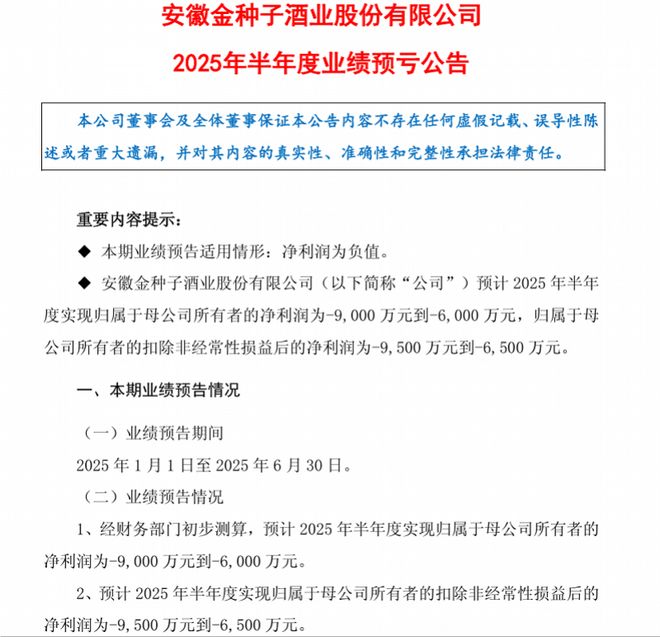
金种子酒半年最高预亏9000万,华润系总经理已辞职
Nan Fang Du Shi Bao· 2025-07-15 03:33
Core Viewpoint - Jinzhongzi Liquor is expected to report a significant net loss for the first half of 2025, continuing a trend of financial struggles over the past four years [1][5]. Financial Performance - The company anticipates a net profit attributable to shareholders of between -90 million to -60 million yuan for the first half of 2025, with a net profit excluding non-recurring items expected to be between -95 million to -65 million yuan [1]. - In Q1 2025, Jinzhongzi Liquor reported an operating income of 296 million yuan, a year-on-year decrease of 29.41%, and a net profit attributable to shareholders of -38.93 million yuan, a decline of 320.62% [5]. - Cumulatively, from 2021 to 2024, the company has recorded net losses of -166 million, -187 million, -22 million, and -258 million yuan, totaling over 600 million yuan in losses [5]. Industry Context - The liquor industry is experiencing a deep adjustment in 2025, with a continued decline in production and significant changes in consumer behavior and preferences [5]. - Jinzhongzi Liquor faces intense competition from regional brands like Guqingong Liquor and Kouzi Jiao, making it difficult to increase market share [6]. - The company has struggled to find a suitable transformation strategy despite multiple internal adjustments and the involvement of China Resources Group as a major shareholder [6]. Management Changes - Following the acquisition of a 49% stake by China Resources Group, there have been significant management changes, including the resignation of General Manager He Xiuxia [6]. - Analysts suggest that the operational strategies employed by China Resources, such as channel flattening and data control, have not been effective in the liquor market [6].