产业升级

Search documents
2025年中国贸易顺差1.189万亿美元 多元化布局新兴市场成外贸新增长点
Chang Jiang Shang Bao· 2026-02-09 01:58
Core Insights - In 2025, China achieved a trade surplus of $1.189 trillion, marking the first time any country has surpassed a $1 trillion trade surplus [1] - China's total foreign trade value reached $635.477 billion, with a year-on-year growth of 3.2%, continuing a nine-year growth streak since joining the WTO [1] - The growth in exports was 5.5%, while imports remained relatively stable, contributing to a 19.79% increase in trade surplus compared to the previous year [1] Group 1: Trade Performance - In 2025, China's exports showed resilience, supported by market diversification and structural upgrades, while import growth slowed due to various factors [1] - Trade with 249 countries and regions occurred, with surpluses formed with over 190 countries and deficits with more than 50 [2] - Trade surpluses with the EU and ASEAN reached $291.8 billion and $275.8 billion respectively, with surpluses of approximately $100 billion each with India and Africa [2] Group 2: Export Structure and Policy Support - The structure of exports is continuously optimizing, with a long-term pattern of primary product deficits and industrial product surpluses [3] - In 2025, primary product deficits reached $859.3 billion, while industrial product surpluses amounted to $2.0483 trillion [4] - The export of high-tech products grew by 13.2%, contributing 2.4 percentage points to overall export growth, with significant increases in green energy exports [4] - Supportive policies, including optimizing export tax refund processes and expanding export credit insurance, have been crucial for maintaining strong trade performance, especially for small and medium-sized enterprises [4]
湖北发布2026年汽车以旧换新细则 最高补贴2万旧车认定范围扩大
Chang Jiang Shang Bao· 2026-02-09 01:55
Core Viewpoint - Hubei Province has officially launched a new round of vehicle trade-in subsidy policy, effective from January 1, 2026, aimed at promoting green consumption and optimizing the automotive market [1][4]. Group 1: Policy Implementation - The new subsidy policy includes adjustments to the vehicle scrapping and trade-in standards, extending the registration time for scrapped vehicles, and ensuring that more essential consumer groups benefit from the subsidies [1][4]. - The subsidy standard will now be calculated as a percentage of the new car sales price, with a maximum subsidy of 20,000 yuan for purchasing new energy vehicles and 15,000 yuan for fuel vehicles with an engine size of 2.0 liters or less [4][5]. Group 2: Consumer Impact - As of December 21, 2025, nearly 420,000 applications for the trade-in subsidy have been submitted, generating over 60 billion yuan in automotive consumption, with nearly 50% of consumers benefiting from the policy [2]. - The proportion of new energy vehicles purchased through the trade-in program exceeds 60%, indicating a rapid shift towards greener and smarter automotive solutions [2]. Group 3: Application Process - The application process for subsidies will continue to be fully online, allowing consumers to apply through designated platforms with necessary documentation [2][3]. - Each consumer can only choose one option between scrapping and trade-in for subsidies within a year, and the same vehicle cannot receive multiple subsidies [3]. Group 4: Regulatory Framework - The policy emphasizes a unified standard for trade-in subsidies and prohibits the designation of specific vehicle recycling companies, ensuring fair participation from various business entities [3][4]. - A joint regulatory mechanism will be established among relevant departments to prevent fraudulent claims and ensure compliance with the subsidy guidelines [3].
【早盘三分钟】2月9日ETF早知道
Xin Lang Cai Jing· 2026-02-09 01:37
Core Insights - The article discusses the performance of various ETFs, highlighting the resilience of the chemical and non-ferrous metal sectors amidst market fluctuations [5][19]. Market Overview - As of February 6, 2026, the Shanghai Composite Index, Shenzhen Component Index, and ChiNext Index have percentile PE ratios of 98.89%, 91.35%, and 46.11% respectively, indicating a high valuation environment [1]. - The chemical ETF (516020) increased by 2.37%, while the non-ferrous metal ETF (159876) rose by 0.18%, showcasing sector resilience [17][19]. Sector Performance - The top three sectors with net inflows include: - Electric Power Equipment: 2.522 billion - Basic Chemicals: 2.065 billion - Machinery: 0.805 billion [2][11] - The sectors with the highest net outflows are: - Communication: -4.440 billion - Media: -4.133 billion - Computers: -3.133 billion [2][11]. ETF Performance - The following ETFs showed notable performance: - Chemical ETF: 2.37% increase, with a 6-month performance of 44.66% [14]. - Green Energy ETF: 1.51% increase, with a 6-month performance of 35.35% [14]. - New Materials ETF: 1.32% increase, with a 6-month performance of 38.61% [14]. - The non-ferrous metal ETF has been identified as part of a long-term investment strategy, with expectations of high profitability lasting 3-5 years due to supply-demand mismatches and macroeconomic support [19]. Institutional Insights - Guotai Junan Securities continues to favor investment opportunities in the chemical sector, recommending focus on leading companies and price recovery products [19]. - The non-ferrous metal sector is expected to maintain high profitability driven by macroeconomic factors and industry upgrades [19].


沪深300股指期权 买入跨式策略正当时
Qi Huo Ri Bao Wang· 2026-02-09 01:20
Core Viewpoint - The expectation for consumer recovery is rising as the Chinese New Year approaches, suggesting potential upward momentum for the CSI 300 index, which may benefit from a "catch-up" rally [1][12]. Group 1: Market Indicators - The PCR (Put-Call Ratio) for CSI 300 options has decreased to 63.47%, indicating a weakening risk appetite among investors, with the current level at the 43.8th percentile for 2023 [2]. - The implied volatility for at-the-money options has dropped to 14.79%, positioned at the 39.9th percentile for 2023, reflecting a decline in the premium investors are willing to pay for volatility [3]. Group 2: Economic and Policy Context - The manufacturing PMI for January was reported at 49.3, down 0.8 percentage points from the previous month, indicating a contraction in market demand compared to production [5]. - The government is focusing on expanding domestic demand and supporting technology and consumption sectors to stabilize economic growth and improve market confidence [7][8]. Group 3: Investment Strategy - A straddle strategy, involving buying equal amounts of call and put options at the same strike price, is recommended to capitalize on potential market movements as consumer recovery expectations rise [12].
上行周期下的企业痛点与期权运用
Qi Huo Ri Bao Wang· 2026-02-09 01:10
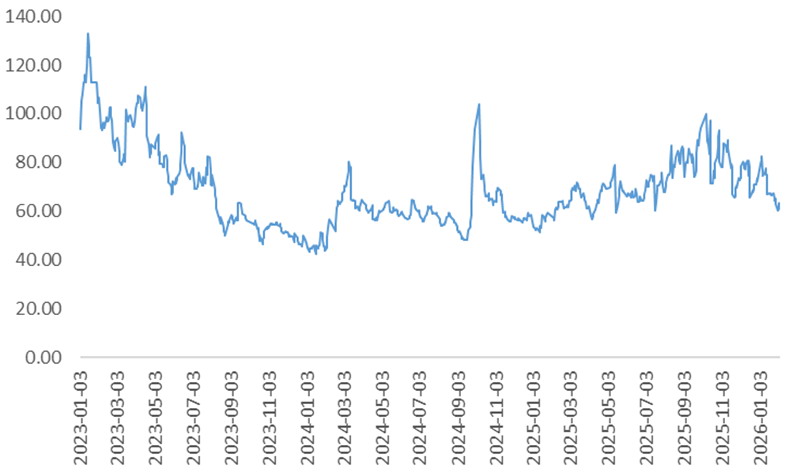
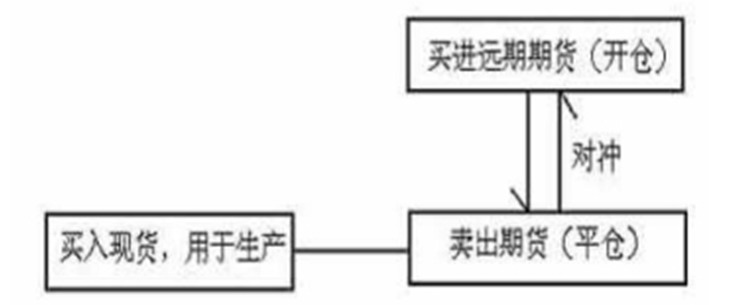
Core Insights - The article discusses the challenges and opportunities faced by companies during an economic upturn, emphasizing the need for innovative risk management strategies, particularly through the use of options [1][12]. Group 1: Challenges in the Upturn Cycle - Rapid cost adjustments are the primary challenge for companies, as raw material prices rise quickly while downstream demand lags, leading to a situation where companies face "incremental but no profit" [2]. - Market competition evolves during an upturn, with new entrants increasing competition from a simple cost-based approach to a more complex one involving "financing capability + market share" [2]. - Traditional risk management tools, such as futures hedging and long-term agreements, have limitations in addressing the complexities of the upturn cycle [4]. Group 2: Limitations of Traditional Tools - Futures hedging can lock in costs but also prevent companies from benefiting from falling raw material prices, leading to high opportunity costs when procurement needs are uncertain [2][4]. - Long-term agreements provide supply stability but lack flexibility, becoming burdensome when market demand changes suddenly [4]. - Financial hedging tools can only manage single risk factors, failing to address the multi-faceted risks present in an upturn cycle [4]. Group 3: Options as a Solution - Options provide a non-linear risk management approach, allowing companies to navigate traditional limitations effectively [5]. - A combination of spot purchasing and buying call options enables companies to manage procurement costs efficiently, benefiting from price drops while capping costs during price increases [5][6]. - Companies can also use put options to hedge against price declines, employing strategies like spreads or ratio strategies to minimize costs [8]. Group 4: Competitive Advantage through Volatility Management - Managing volatility becomes a new competitive advantage, with companies able to generate additional income by selling volatility strategies while maintaining stable cash flows [10]. - The use of options reflects a shift towards a cyclical thinking approach in risk management, requiring a deeper understanding of various risk factors beyond simple bullish or bearish views [11]. Group 5: Strategic Integration of Risk Management - Companies that can integrate risk management into strategic decision-making will stand out in the new cycle, transforming risks into strategic advantages [12]. - The cultivation of a risk management culture involves establishing clear risk preferences at the board level, flexible option strategies at the management level, and professional execution capabilities at the operational level [11].
经济日报:做强中国制造硬实力
Jing Ji Ri Bao· 2026-02-09 00:59
Core Viewpoint - China's manufacturing sector is set to maintain its position as the world's largest for 16 consecutive years, entering the "14th Five-Year Plan" with resilience and potential for transformation [1] Group 1: Stability - The reasonable growth of China's manufacturing volume will solidify the economic foundation and support the quality improvement of the industry [2] - Key industrial provinces play a crucial role in stabilizing industrial growth, contributing 80% of the industrial added value [2] - The Ministry of Industry and Information Technology (MIIT) will implement a new round of growth stabilization plans for ten key industries to ensure the stability of the industrial economy [3] Group 2: Progress - The effective enhancement of quality in China's manufacturing will strengthen core competitiveness and promote high-quality development [5] - The added value of large-scale equipment manufacturing and high-tech manufacturing is expected to grow by 9.2% and 9.4% respectively in 2025, indicating significant progress in high-end transformation [5] - The "14th Five-Year Plan" emphasizes the promotion of digital transformation in manufacturing, with a focus on building a robust digital infrastructure [6][7] Group 3: Innovation - New quality productivity is essential for restructuring and injecting strong momentum into China's manufacturing [9] - The cultivation of emerging industries and forward-looking industries is crucial for future growth, with a focus on high-tech sectors like quantum information and brain-computer interfaces [11] - The integration of technology and industry innovation is vital for enhancing production efficiency and driving industrial transformation [12][13] Group 4: Activation - Increasing high-quality technological supply is necessary to stimulate innovation vitality, with a focus on major national projects and industry-specific actions [13] - Enterprises are becoming the main force in R&D investment, accounting for over 70% of total funding, highlighting the need for government support [13] - Building a national service network for manufacturing mid-test services will facilitate the transformation of technological achievements into marketable products [14]
【宝鸡】“宝鸡制造”家具获出口资质
Shan Xi Ri Bao· 2026-02-08 23:48
Core Insights - Shaanxi Xinyu Furniture Co., Ltd. has become the first company in Baoji to obtain registration for exporting bamboo and wood products, marking a significant step for "Baoji manufacturing" in entering international markets [1] - Baoji Customs has provided tailored support through a "one enterprise, one policy" approach and a dual-track service model, focusing on the export needs of enterprises [1] Group 1 - Baoji Customs actively engaged with Shaanxi Xinyu Furniture to address their unfamiliarity with international standards and quarantine requirements, offering both online and offline support [1] - Offline support included on-site policy delivery, interpretation of quality safety regulations, and guidance on establishing a comprehensive quality management system [1] - Online support utilized the "Internet + Customs" platform for streamlined administrative processes, significantly reducing time and labor costs for the company [1] Group 2 - The successful registration opens international market opportunities for the company and fills a gap in export qualifications for furniture products in Baoji [1] - The company has already established cooperation intentions with enterprises in Kazakhstan and Kyrgyzstan [1] - Baoji Customs plans to continue optimizing regulatory services and provide policy promotion and technical guidance to more export-potential enterprises in the region [1]
中国散裂中子源:既是科技创新“摇篮”,也是产业升级“催化剂”
Xin Lang Cai Jing· 2026-02-08 23:41
Core Insights - The second phase of the China Spallation Neutron Source (CSNS) is accelerating, with key facilities completed, positioning it as a core driver for technological innovation and industrial integration in the Guangdong-Hong Kong-Macao Greater Bay Area [1][2] Group 1: Technological Advancements - The CSNS has achieved a milestone with 100% self-controlled core equipment and the successful acceptance of the world's first high-power P-band fast-tuning tube, marking a leading position in key technical indicators [2] - Over 90% of the equipment for the CSNS is domestically produced, showcasing China's global competitiveness in high-end manufacturing [2] Group 2: Industrial Empowerment - The CSNS has completed over 2,500 projects during the 14th Five-Year Plan, addressing cutting-edge fields such as new energy batteries and high-temperature superconductors [3] - The neutron scattering technology allows companies to optimize battery processes by "visualizing" microscopic changes in electrode materials, significantly shortening R&D cycles [3] - A boron neutron capture therapy (BNCT) device developed by the CSNS has entered clinical trials, breaking foreign monopolies and enhancing the entire industry chain from equipment manufacturing to drug development [3] Group 3: Collaborative Development - There is a need for improved communication and collaboration among industries to facilitate the sharing of technological achievements from the CSNS [4] - The CSNS aims to actively engage with enterprises to promote the use of its advanced research platform, enhancing regional industrial development [4] - The collaboration between government, industry associations, and research platforms is expected to position the CSNS as a key support for the Greater Bay Area's global innovation landscape [4]
从外贸万亿大省看韧性与活力(财经深一度)
Ren Min Ri Bao· 2026-02-08 22:07
Core Insights - In 2025, China's total import and export value of goods reached 45.47 trillion yuan, a year-on-year increase of 3.8%, maintaining its position as the world's largest trading nation [1] - The growth in foreign trade reflects the resilience and vitality of the Chinese economy, with provinces leveraging their geographical advantages and resource endowments to contribute to steady development [1] Group 1: Trade Performance and Contributions - Guangdong province led the nation in foreign trade for 40 consecutive years, with an import and export scale of 9.49 trillion yuan in 2025, showcasing a shift from traditional light industrial products to high-tech and high-end equipment [1] - Jiangsu province's export of electromechanical products exceeded 70% of its total exports in 2025, indicating a trend towards cluster-based upgrades in foreign trade [1] - Zhejiang's foreign trade reached 5.55 trillion yuan in 2025, with a strong emphasis on digital transformation, as evidenced by the Yiwu Global Digital Trade Center [2] Group 2: Market Diversification and New Opportunities - Chinese foreign trade enterprises are diversifying their international market layouts to mitigate risks associated with single markets, with Guangdong's trade with ASEAN, EU, and Hong Kong each surpassing 1 trillion yuan [3][4] - The first China-Europe freight train from the Guangdong-Hong Kong-Macao Greater Bay Area successfully reached Poland, carrying key electronic products, highlighting the shift from product output to industrial capability output [3] - Zhejiang's trade with ASEAN surpassed that with the EU for the first time, reflecting strong adaptability in emerging markets [4] Group 3: New Business Models and Innovations - The rise of new business models such as cross-border e-commerce and market procurement is providing new pathways for small and medium-sized enterprises to engage in global trade [6][7] - Shanghai's service trade reached over 250 billion USD in 2025, with a focus on high-end services and digital technology, maintaining its position as a national leader [6] - Jiangsu's cross-border e-commerce platform is driving a 35% increase in exports for small and medium-sized enterprises, showcasing the synergy between e-commerce and supply chain finance [6] Group 4: Systemic Changes and Future Outlook - China's foreign trade development is characterized by systematic changes, including industrial upgrades, market diversification, and innovative business models, despite complex external environments [7] - The "Guangdong Goods Go Global" initiative aims to support foreign trade enterprises in expanding markets and strengthening industries [7] - Experts suggest that China's trade innovation will inject more certainty into global economic development, with a focus on expanding partnerships and enhancing trade resilience [7]
锚定“硬科技”赛道 公募踊跃参与上市公司定增项目
Shang Hai Zheng Quan Bao· 2026-02-08 17:33
Core Viewpoint - The number of listed companies conducting private placements has significantly increased in 2023, with a total financing scale reaching 84.939 billion yuan, a 359% increase compared to the same period last year, indicating a robust recovery in the A-share market and a growing interest from public funds in high-quality projects [1][3]. Group 1: Market Activity - As of February 5, 2023, 12 listed companies have completed private placements, doubling the number from the same period last year [1]. - The total amount raised through these placements has reached 84.939 billion yuan, reflecting a substantial increase in market activity [1]. - Public funds such as E Fund, Caitong Fund, and Nord Fund have actively participated in these private placements, indicating a competitive environment for high-quality projects [1][2]. Group 2: Fund Participation - E Fund has emerged as a major player in the private placement of companies like Beiqi Blue Valley and Megmeet, with significant allocations across multiple funds [2]. - Other public fund companies, including Guotou Ruijin Fund and Huatai Asset Management, have also participated in various private placements, showcasing a broad interest in the market [2]. - The participation of multiple funds in projects like Megmeet and Beiqi Blue Valley highlights the trend of increasing collaboration among public funds in private placements [2]. Group 3: Industry Focus - The companies involved in these private placements predominantly exhibit "hard technology" characteristics, focusing on sectors such as electric vehicles, smart appliances, and electronic information technology [3]. - Approximately 70% of the financing from private placements is directed towards new productive forces, aligning with national strategic directions for industrial upgrades [3]. - The current trend indicates a healthy market environment characterized by stable volume and improved quality of projects, with a focus on high-quality companies leveraging capital markets to strengthen their core businesses [3][4]. Group 4: Investment Challenges - The increasing competition for high-quality private placement projects has raised the bar for fund managers' research and pricing capabilities [4]. - The disparity between a restrained supply of projects and a surging demand from various capital sources, including banks and insurance funds, has intensified the competition [4]. - The average issuance discount for private placements has risen, necessitating a greater emphasis on pricing strategies and research capabilities for successful investment [4].