
绿色消费

Search documents
“两新”激发中国制造新动能
Jing Ji Ri Bao· 2026-01-08 21:43
Core Viewpoint - The "Two New" policy aims to inject new momentum into Chinese manufacturing by driving investment and consumption, facilitating a transition from a manufacturing power to a manufacturing stronghold [1][4]. Investment and Consumption - The National Development and Reform Commission and the Ministry of Finance have optimized the support scope, subsidy standards, and implementation mechanisms of the "Two New" policy [1]. - A total of 625 billion yuan in special long-term bonds for the first batch of the consumption upgrade plan has been allocated ahead of schedule for 2026 [1]. - From January to November 2025, investment in equipment and tools increased by 12.2% year-on-year, contributing 1.8 percentage points to overall investment growth [1]. Market Opportunities - The "old-for-new" consumption policy has opened new market spaces for durable consumer goods, with sales expected to exceed 2.6 trillion yuan in 2025 [2]. - Specific figures include over 11.5 million vehicles, 129 million home appliances, 9.1 million digital products, and 12 million home renovation items being replaced [2]. Upgrading Manufacturing - The "Two New" policy not only stimulates investment and consumption but also drives quality upgrades in Chinese manufacturing [2]. - Companies are replacing outdated equipment with new technology, improving production efficiency and product competitiveness, which encourages further R&D investment [2]. Transition to High-End Manufacturing - There is a growing preference for smart and green products, with nearly 60% of replaced vehicles being new energy vehicles and over 90% of replaced home appliances being energy-efficient [3]. - The policy optimization is expected to invigorate more small and medium-sized enterprises (SMEs) by lowering investment thresholds and streamlining application processes [3].
两节期间消费提示:守护节日消费,共筑安心环境
Zhong Guo Shi Pin Wang· 2026-01-08 10:06
Group 1 - Sufficient supply of essential goods such as rice, flour, oil, meat, eggs, and dairy products during the holiday season, with a simultaneous increase in consumer demand for dining and purchasing New Year goods [1] - Consumers are advised to be cautious of price traps and to verify the authenticity of promotional offers, avoiding misleading practices such as "price inflation before discounts" [1][2] - It is recommended to prioritize purchasing from reputable supermarkets and e-commerce platforms, ensuring products have proper certifications and quality guarantees [2] Group 2 - Consumers should confirm the details of dining services, including menu items, prices, and refund policies, to prevent disputes [3] - Restaurants are required to clearly display prices for all menu items, including any additional fees for takeout or service [3] - Consumers are encouraged to keep all purchase receipts and records to facilitate potential claims, and to report any violations to market supervision authorities [3]
2026年开年 这些小变化传递积极信号
Ren Min Wang· 2026-01-08 08:39
Group 1 - The core viewpoint of the news highlights the implementation of various policies aimed at enhancing high-quality development and addressing public concerns as 2026 marks the beginning of the "14th Five-Year Plan" [1] Group 2 - Starting from January 1, 2026, the value-added tax rate for individuals selling residential properties purchased for less than two years has been reduced from 5% to 3% [5] - The new parenting subsidy for 2026 can be applied for online or offline, with a new feature for those who have previously applied in 2025 to continue receiving benefits [4] - The introduction of a new version of the railway tourism ticket product across 212 stations, with 25 different options available starting November 27, 2025 [3] - The implementation of the "Green Product Certification and Labeling Management Measures" on January 4, 2026, aims to standardize green product certification activities [3] - The People's Bank of China will not display overdue information for individuals who repay overdue debts by March 31, 2026, under the new credit repair policy [9]

推行绿色消费正当其时
Di Yi Cai Jing· 2026-01-08 08:26
Core Viewpoint - The article discusses the implementation of green consumption in China as a crucial strategy for achieving high-quality economic development and addressing environmental challenges, as outlined in the recent notification by the Ministry of Commerce and nine other departments [3][21]. Group 1: Definition and Importance of Green Consumption - Green consumption is defined as a sustainable consumption system that encompasses the entire production, circulation, consumption, and recycling chain, rather than merely focusing on environmentally friendly products [4]. - The concept of green consumption emphasizes intergenerational equity and resource constraints, aiming to meet basic human needs while minimizing waste and pollution [4]. - The promotion of green consumption is essential for addressing tightening resource and environmental constraints, upgrading consumption structures, and competing in the global green transition [5][6][8]. Group 2: Challenges and Trends - China faces multiple challenges, including resource constraints, rapid consumption structure upgrades, and intensified global competition in green transformation [5]. - The shift in consumer preferences towards green, healthy, and low-carbon products is evident, with 73.8% of consumers prioritizing green products in their daily lives [7]. - The market for green consumption is projected to reach 5 trillion yuan in 2024, reflecting a 10% increase from the previous year, with significant growth in sectors like new energy vehicles and green appliances [11]. Group 3: Economic and Environmental Benefits - Green consumption can drive industrial upgrades and enhance economic quality by guiding enterprises towards low-carbon and high-end transformations [10]. - It can expand high-quality domestic demand, injecting lasting momentum into economic growth by creating new consumption patterns and opportunities [11]. - The ecological and economic benefits of green consumption include improved resource efficiency and reduced pollution, contributing to sustainable development [12]. Group 4: Policy Recommendations and Implementation Strategies - Strengthening the supply of green products and services is crucial to address mismatches in supply and demand, focusing on areas like green agriculture, appliances, and automotive sectors [14][15]. - Innovative consumption models, such as green supply chains and green consumption points systems, are necessary to enhance consumer engagement and convenience [16][17]. - A robust policy framework that combines incentives and regulatory measures is essential for fostering a conducive environment for green consumption [18][19]. Group 5: Public Awareness and Participation - Raising public awareness and promoting green consumption behaviors are fundamental to driving widespread participation in green initiatives [20]. - Initiatives should include educational campaigns, community activities, and the promotion of sustainable lifestyles to embed green consumption into societal norms [20]. - The establishment of exemplary green enterprises and communities can serve as models to inspire broader adoption of green consumption practices [20].
人民财评:让人民群众在绿色发展中享有高品质生活
Sou Hu Cai Jing· 2026-01-08 04:38
Group 1 - The core idea emphasizes the need for multi-faceted collaboration among government, market, and consumers to promote green consumption, integrating it into every aspect of daily life [1] - The Ministry of Commerce and nine other departments have jointly issued a notice with 20 specific measures across seven areas to encourage green consumption, aiming to foster a green and low-carbon lifestyle [1] - The initiative seeks to enhance policy guidance, market mechanisms, and public participation to drive high-quality development and accelerate the transition to green consumption models [1] Group 2 - Policy incentives are crucial for cultivating green consumption, with measures such as subsidies for replacing old products and pilot programs for green consumption scenarios translating into tangible benefits for the public [2] - The government aims to replace 18.3 million vehicles through trade-in programs from 2024 to 2025, with nearly 60% being new energy vehicles, and 192 million home appliances, with over 90% being of the highest energy efficiency [2] - Local initiatives, such as green consumption subsidies and food banks, are effectively meeting consumer demand for high-quality products while promoting green consumption [2] Group 3 - Enterprises play a vital role in driving green consumption by integrating green principles throughout their operations, with e-commerce platforms forming green cooperation alliances and retailers establishing dedicated green product sections [3] - The introduction of a quantifiable green consumption points system encourages consumer participation and aligns commercial and social values, with a reported 26.31% increase in the use of environmentally friendly alternatives in the business sector by mid-2025 [3] - The development of "zero-carbon factories" and products made from recyclable materials reflects the growing commitment of businesses to sustainability [3] Group 4 - Green consumption is becoming a societal trend, with individual actions like using reusable bags and choosing energy-efficient products contributing to a collective movement towards sustainability [4] - The Wuhan carbon benefit platform exemplifies innovative approaches to engage consumers, allowing them to track their low-carbon behaviors and earn rewards, with over 200 million users and 24 million recorded reduction actions [4] - The widespread promotion of green consumption concepts through various campaigns is fostering a deeper societal commitment to sustainable practices, driving the growth of the green consumption market [4]
培育绿色消费新增长点 九部门明确七方面20项举措
Jing Ji Ri Bao· 2026-01-08 02:48
Group 1 - The core viewpoint of the article emphasizes the importance of promoting green consumption as a key strategy for achieving green low-carbon development and enhancing economic transformation in China [1] - The Ministry of Commerce announced that from 2024 to 2025, China aims to implement a vehicle trade-in program for 18.3 million cars, with nearly 60% being new energy vehicles [1] - The old-for-new appliance program is expected to replace 192 million units, with over 90% being of first-level energy efficiency, leading to a total sales increase of 3.92 trillion yuan and benefiting 494 million consumers [1] Group 2 - The Ministry of Agriculture and Rural Affairs highlighted the rapid growth in demand for high-quality green agricultural products, which is driving the upgrade of the agricultural supply system [2] - Initiatives include establishing a platform for green agricultural product sales and organizing events to promote local specialties in major consumption areas [2] - The Ministry of Commerce is focusing on green supply chain development and promoting high-quality logistics, including the use of recyclable packaging materials [2] Group 3 - The Ministry of Ecology and Environment is working on turning waste materials into valuable resources through the "waste-free city" initiative, enhancing the recycling system for discarded consumer goods [3] - By 2024, over 11,000 smart community recycling facilities are expected to be added nationwide, supporting the recycling of approximately 100 million old appliances with a financial investment of 5 billion yuan [3] - The State Administration for Market Regulation plans to strengthen the regulatory framework for green consumption, including updating national standards and enhancing enforcement against violations in green product labeling and food waste [3] Group 4 - The Ministry of Commerce will coordinate with relevant departments to refine and implement measures that promote the greening of production and consumption, aiming to inject green momentum into high-quality economic development [4]
商务部:将多措并举推进塑料污染治理
Yang Shi Xin Wen Ke Hu Duan· 2026-01-08 01:45
Core Viewpoint - The Chinese government is taking multiple measures to promote plastic pollution control and encourage green consumption, with a focus on reducing single-use plastic products and promoting eco-friendly alternatives [1] Group 1: Plastic Pollution Control Measures - The Ministry of Commerce has established a reporting system for single-use plastic products, requiring local authorities to regularly report on the usage and recycling status of these products [1] - Data from the Ministry indicates that the usage of environmentally friendly alternatives is expected to increase by 26.31% in the first half of 2025 compared to previous periods [1] Group 2: Promotion of Eco-Friendly Alternatives - The government is promoting the use of bamboo as a substitute for plastic and is actively cultivating a market for bamboo-based green consumer products [1] - Efforts are being made to reduce the use of single-use plastic products and packaging in the catering industry, with clear regulations on plastic restrictions in this sector [1] Group 3: Future Initiatives - The Ministry of Commerce plans to strengthen the management of reporting on single-use plastic products and increase the promotion of biodegradable and bamboo-based alternatives [1] - There is a commitment to deepen plastic reduction efforts in key areas such as the catering industry to contribute to green consumption and the construction of a beautiful China [1]
新年伊始 这些小变化传递积极信号
Ren Min Ri Bao· 2026-01-08 01:34
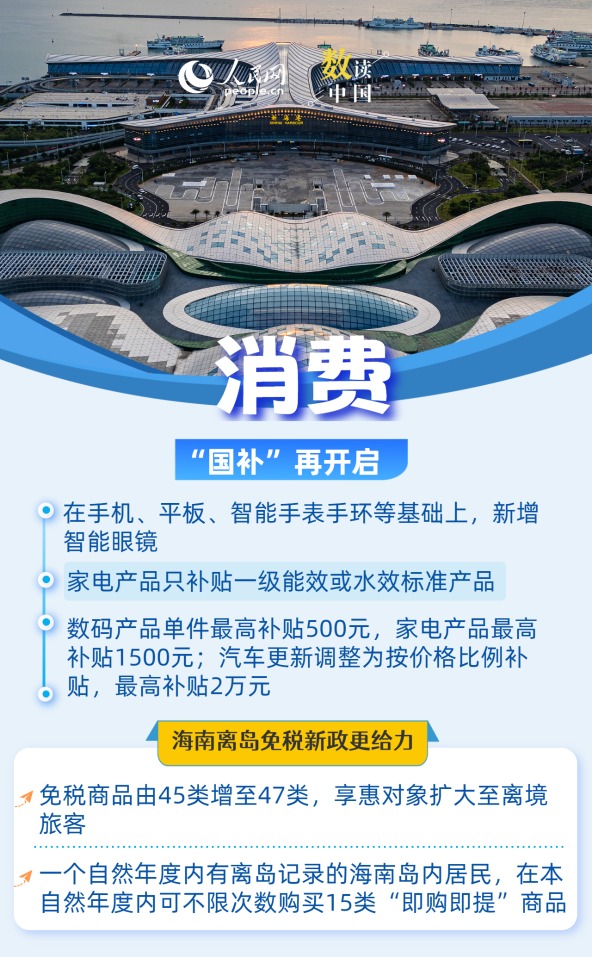
Group 1: Consumer Policies - A new round of "national subsidies" has been launched, covering a range of products including smart glasses, home appliances, and vehicle updates, with subsidies up to 15% for digital and home appliances [2] - The Hainan duty-free policy has been adjusted, expanding the number of duty-free items from 45 to 47 and allowing residents with departure records to purchase certain items multiple times within a year, leading to a significant increase in shopping activity [2] Group 2: Transportation and Services - The introduction of a new railway tourism ticket in Northeast China allows travelers to visit multiple destinations with a single ticket, enhancing convenience for tourists [3] - New regulations promoting green consumption have been implemented, aiming to facilitate the transition to a low-carbon economy across various sectors [3] Group 3: Housing Market - The VAT rate for individuals selling homes purchased for less than two years has been reduced from 5% to 3%, significantly lowering transaction costs and stimulating the real estate market [7] Group 4: Credit Repair - A one-time credit repair policy has been implemented, allowing individuals to remove certain overdue records from their credit reports if debts are repaid by March 31, 2026, reflecting a shift towards a more supportive credit management approach [8] Group 5: Taxation and Business Environment - The new VAT law has come into effect, providing clearer legal guidelines for businesses and enhancing the certainty of tax policies, which is expected to invigorate business operations [10]
过去两年实现汽车以旧换新1830万辆
Bei Jing Qing Nian Bao· 2026-01-07 23:52
Core Viewpoint - The Ministry of Commerce and nine other departments have issued a notice to promote green consumption, outlining 20 measures across seven areas to enhance green consumption during the 14th Five-Year Plan period [1] Group 1: Green Consumption Initiatives - The notice aims to enrich the supply of quality goods in the livelihood sector and cultivate new growth points for green consumption, focusing on building a green supply chain [1] - The Ministry of Commerce plans to achieve the replacement of 18.3 million old cars by 2025, with nearly 60% being new energy vehicles, and 192 million old home appliances, with 90% being of first-level energy efficiency [2] - The old-for-new policy is expected to drive sales of consumer goods amounting to 3.92 trillion yuan, benefiting approximately 494 million consumers [2] Group 2: Green Supply Chain Development - Efforts are being made to promote high-quality development in commercial logistics and to encourage the use of recyclable packaging materials, with the standardization rate of pallets reaching 37.8% [2] - Approximately 50 million reusable pallets are in circulation, which could save 250 million single-use pallets, equivalent to protecting 50 million trees and reducing carbon emissions by over 2 million tons [2] - The number of green warehouses has reached 1,092, covering an area of about 65 million square meters [2] Group 3: Recycling and Resource Recovery - The Ministry of Commerce, along with nine other departments, has issued a notice to improve the recycling system for waste electrical appliances and furniture, establishing 32 pilot cities and 78 enterprises [3] - The total amount of recycled resources in the country is projected to reach approximately 380 million tons by 2025 [3] - The Ministry of Ecology and Environment is promoting the transformation of waste materials into resources, with 113 cities participating in the "waste-free city" initiative since 2018 [4] Group 4: Financial Support and Technological Innovation - The Ministry of Ecology and Environment has announced a financial commitment of 5 billion yuan by 2025 to support the recycling of about 100 million old appliances, resulting in over 3 million tons of recycled resources [4] - Technological innovations, such as the use of microorganisms to convert battery waste into environmentally friendly materials, are being promoted to enhance resource recovery [4] Group 5: Agricultural Green Consumption - The Ministry of Agriculture and Rural Affairs has launched initiatives to promote green and high-quality agricultural products, with a focus on organic and specialty products [5] - By the end of 2025, the total number of certifications for organic products is expected to exceed 88,000, with standardized production areas for green food reaching 20.5 million acres [6] - China has become the third-largest organic consumer market globally, with over 32,000 valid certification certificates issued for various organic products [6]
新年伊始,这些小变化传递积极信号
Xin Hua Wang· 2026-01-07 23:39
Group 1: Consumer Policies - A new round of "national subsidies" has been launched, covering a range of products including smartphones, tablets, smart glasses, and major home appliances, with subsidies of 15% for digital and home appliance products [3] - The subsidy for digital products is capped at 500 yuan per item, while home appliances can receive up to 1500 yuan; for car replacements, the maximum subsidy is 20,000 yuan [3] - The Hainan duty-free policy has been adjusted, expanding the number of duty-free items from 45 to 47 and allowing residents with departure records to purchase certain items without limit within a year [3] Group 2: Transportation Services - The Northeast region has introduced a new railway tourism ticket that allows travelers to visit multiple destinations with a single ticket, valid for 15 days [4] - The new ticketing system supports flexible travel across 14 stations and includes options for advance seat reservations [4] - New regulations have been implemented to promote green consumption across various sectors, including food, clothing, and transportation [4] Group 3: Housing Market - The value-added tax rate for individuals selling homes purchased for less than two years has been reduced from 5% to 3%, significantly lowering transaction costs [9] - This policy change is expected to stimulate the real estate market by enhancing liquidity and encouraging "sell old, buy new" transactions [9] - The number of transactions for homes under two years old has seen a noticeable increase following the tax adjustment [9] Group 4: Credit Repair Policies - A one-time credit repair policy has been implemented, allowing individuals to remove overdue records from their credit reports if they repay debts by March 31, 2026 [10] - The policy aims to provide a fair and accessible way for individuals to restore their credit status, reflecting a shift towards a more balanced approach in credit management [10] Group 5: Taxation and Business Environment - The new Value-Added Tax Law has come into effect, providing clearer legal guidelines for businesses and enhancing compliance management [11] - The law aims to stimulate business activity by ensuring tax policy certainty and protecting taxpayer rights [12] - Various measures are being introduced to support entrepreneurial activities, including reducing financing costs and streamlining land approval processes [12]