
以旧换新政策

Search documents
11月重卡销量大涨近5成!全年110万、出口32万辆已近在眼前
智通财经网· 2025-12-01 22:34
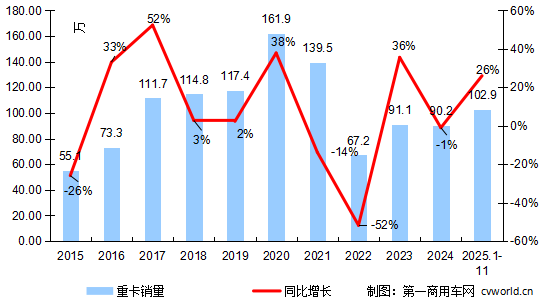
Core Insights - The heavy truck market in China is experiencing significant growth, with sales reaching approximately 100,000 units in November 2025, marking a 46% increase year-on-year and a 6% decrease month-on-month [1] - Cumulatively, the heavy truck market has sold over 1 million units from January to November 2025, achieving a year-on-year growth of about 26% [1] - Exports of heavy trucks are also on the rise, with an expected year-on-year increase of nearly 20% in November, leading to a projected total export of over 320,000 units for the year [1] Group 1: Heavy Truck Sales Performance - In November, the terminal sales of heavy trucks are expected to show a year-on-year growth of around 44%, with a month-on-month increase of approximately 17% [2] - The terminal sales of natural gas heavy trucks have shown a consistent upward trend, with sales expected to exceed 20,000 units for four consecutive months [3] - The sales of electric heavy trucks are anticipated to reach a new high in November, with a significant year-on-year increase of nearly 160% [3] Group 2: Market Drivers and Policies - The strong performance in terminal sales is supported by the policy promoting the scrapping and replacement of old operating trucks, which has driven demand since April [2] - The retail price of LNG has remained stable, contributing to the recovery in demand for natural gas heavy trucks [3] - The upcoming reduction in the purchase tax for new energy vehicles starting January 1 is expected to create a pre-purchase effect, further boosting sales in November [3]

11月重卡销量大涨近5成!全年110万、出口32万辆已近在眼前 | 光耀评车
第一商用车网· 2025-12-01 16:04
Core Viewpoint - The heavy truck market in China is experiencing significant growth, driven by policies such as the old-for-new program, with expectations for continued strong performance as the year ends [2][8]. Group 1: Sales Performance - In November, heavy truck sales reached approximately 100,000 units, marking a 46% year-on-year increase despite a 6% month-on-month decline [2][5]. - Cumulatively, from January to November, heavy truck sales exceeded 1 million units, achieving a 26% year-on-year growth [5]. - The average growth rate from April to November has been around 42%, indicating a robust market performance [2]. Group 2: Policy Impact - The heavy truck market's growth is significantly influenced by the old-for-new policy, which has been a key driver since April [8]. - Some local governments have paused or modified their subsidy programs due to fiscal constraints, but the release of final subsidy funds has reignited some support for purchases [8] [10]. Group 3: Export Trends - Heavy truck exports are also on the rise, with November exports expected to increase by nearly 20%, contributing to an anticipated total of over 320,000 units for the year [10]. Group 4: Segment Performance - In November, natural gas heavy trucks surpassed 20,000 units in sales, while electric heavy trucks reached record highs, driven by strong terminal demand [11][16]. - The terminal sales of new energy heavy trucks are projected to reach 26,000 units in November, reflecting a year-on-year growth of nearly 160% and a market penetration rate exceeding 30% [16].

乘用车终端需求跟踪及展望
2025-12-01 16:03
Summary of Conference Call Records Industry Overview: Automotive Market Key Insights and Arguments - The automotive market in 2025 is significantly influenced by policy changes, with subsidy reductions and stricter measures expected to suppress consumption, particularly affecting the economy car segment [1][4] - In October, discounts on vehicles increased but did not lead to a price war; brands like BYD and Geely launched new models while older models saw moderate price reductions [1][6] - The penetration rate of new energy vehicles (NEVs) in 2026 will depend on the continuation of policies and technological upgrades, with trends towards larger batteries, longer ranges, and fast-charging technologies [1][8] - High-end joint venture brands are expected to continue losing market share, especially in the price range above 250,000 yuan, due to competition from domestic NEVs [1][9] Market Demand and Trends - Overall demand and foot traffic in November decreased compared to October, primarily due to a pause in subsidy policies leading to consumer hesitation [2] - December is expected to see a rebound in demand, but year-on-year comparisons will still show a decline due to inventory clearance needs and potential tax increases from new technology [2][5] - The first quarter of 2026 is anticipated to be optimistic due to seasonal sales and government subsidies, although challenges are expected in March and April, particularly for economy cars [5][16] Discount and Pricing Strategies - Discounts in October and November were deeper than in September, particularly during the National Day holiday, but did not violate regulatory policies [6] - Discounts for brands like BYD and Xpeng decreased by approximately 10% in November compared to October, indicating a shift in pricing strategies [6] Company-Specific Insights BYD - BYD plans to launch the M6 and a new generation of plug-in hybrid technology in 2026, aiming to enhance electric range and low-temperature fast-charging capabilities [3][12] - Domestic retail sales for BYD in 2025 are projected to be between 3.2 to 3.3 million units, a decline from 3.5 million units in 2024, but a recovery is expected in 2026 with about 10% growth [13] Tesla - Tesla's market outlook for the next two years is cautious, with expectations of stagnation or potential decline unless improvements in their Full Self-Driving (FSD) technology are made [11] - The introduction of lower-priced Model 3 and Model Y variants is anticipated to expand market share in the first quarter of 2026 [11] Xiaomi - Xiaomi's current monthly delivery volume is around 50,000 units, with a significant portion of orders being speculative due to the second-hand market collapse [17] - The delivery cycle is currently projected at 20 to 25 weeks, but actual delivery may take longer, leading to an order backlog [17] Joint Venture Brands - High-end joint venture brands like BMW and Mercedes are expected to face significant pressure, particularly in the mid-range segment, while lower-priced joint venture brands remain competitive due to a lack of strong rivals [10] Future Challenges - The implementation of the trade-in policy has been smooth initially, but challenges are expected in March and April 2026 due to diminishing subsidy levels and potential inventory issues [16] Additional Important Insights - The competition between BYD and Geely in technology upgrades is likely to intensify, with both companies aiming to push the NEV penetration rate above 60% by March 2026 [1][8] - The market for traditional fuel vehicles is expected to face challenges from the increasing presence of electric models, particularly in the under 100,000 yuan segment [10]

宏观点评:PMI连续8月处于线下的背后-20251130
GOLDEN SUN SECURITIES· 2025-11-30 13:26
Macro Overview - The manufacturing PMI for November 2025 is at 49.2%, a slight increase of 0.2 percentage points from the previous month, but still below the expansion threshold for the eighth consecutive month[1] - The non-manufacturing PMI decreased to 49.5%, down 0.6 percentage points, indicating a contraction in the service sector[2] Economic Signals - Supply and demand indicators show a rebound, with the production index at 50.0%, indicating a return to the expansion threshold[3] - New export orders index increased by 1.7 percentage points to 47.6%, reflecting a temporary easing in the US-China trade situation, although it remains in contraction territory[4] Price and Inventory Trends - The price indices for raw materials and factory output rose by 1.1 and 0.7 percentage points respectively, suggesting an improvement in overall market prices[5] - Finished goods inventory decreased by 0.8 percentage points, while raw material inventory remained stable, likely due to slight production recovery[5] Employment and Sector Performance - Large enterprises saw a PMI decline of 0.6 percentage points, while small and medium enterprises experienced a rise of 2.0 percentage points, indicating varying levels of economic pressure across company sizes[5] - The service sector PMI fell to 49.5%, influenced by the end of holiday effects, while the construction sector PMI increased to 49.6%[5] Future Outlook - Economic pressures are expected to persist into the fourth quarter, with a focus on upcoming policy meetings in December that will shape 2026 strategies[6] - Short-term policies are anticipated to provide support but may not significantly boost growth, as maintaining a GDP growth rate of 4.4% in Q4 is crucial for achieving the annual target of "keeping growth above 5%"[7]
数读中国 多组数据见证我国消费结构持续优化
Ren Min Wang· 2025-11-22 01:02
Core Insights - China's consumption structure continues to optimize, with a retail sales growth of 4.3% year-on-year from January to October, and service retail sales increasing by 5.3% [1][5]. Group 1: Service Retail Growth - Service retail sales have accelerated, with a year-on-year growth of 5.3% from January to October, which is 0.1 percentage points faster than the previous period and 0.9 percentage points higher than goods retail sales growth [2]. - Travel-related consumption showed positive momentum, with restaurant income growing by 3.8% in October, an increase of 2.9 percentage points compared to September [3]. Group 2: Consumption Trends - Various service categories, including cultural, recreational, transportation, and tourism consulting, maintained a growth rate of over 10% [4]. - The consumption upgrade policy has positively impacted sales, with communication equipment retail sales increasing by 23.2% and cultural office supplies by 13.5% in October [5]. Group 3: Regional Sales Performance - County and rural markets outperformed urban areas, with rural retail sales growing by 4.1% in October, reflecting the popularity of rural tourism [6]. - From January to October, retail sales in counties and rural areas grew by 4.6%, surpassing urban growth rates [6]. Group 4: Basic Goods Sales - Basic living goods showed strong sales, with over 70% of categories in large retail units experiencing growth. Food retail sales increased by 8.0%, clothing by 6.3%, and daily necessities by 7.4% in October [7]. Group 5: Upgraded Consumption Demand - There is an increasing demand for upgraded products, with sports and entertainment goods retail sales growing by 10.1% and cosmetics by 9.6% in October [8]. Group 6: E-commerce Growth - Online retail sales grew by 9.6% from January to October, with physical goods online retail sales increasing by 6.3%, outpacing overall retail sales growth by 2.0 percentage points [9].
2026 年家电行业投资策略:红利、科技与出海:2026 家电投资三主线
Shenwan Hongyuan Securities· 2025-11-21 11:01
Group 1 - The demand for home appliances has significantly improved, with the white goods sector showing a rebound in valuation. In the first nine months of 2025, air conditioning sales reached 90.81 million units, a year-on-year increase of 8.4% [2][3] - The "old-for-new" policy implemented in July 2024 has positively impacted sales, particularly in the kitchen appliance sector, where retail sales of range hoods and gas stoves saw year-on-year increases of 14.9% and 15.7%, respectively [2][3][24] - The overall valuation of the home appliance sector has declined, but it is currently at a near-bottom level, indicating high cost-effectiveness for investment [2][3][29] Group 2 - Three main investment themes are identified: 1. **Dividend**: Leading white and black goods companies exhibit low valuation, high dividends, and stable growth, making them attractive for investment [4] 2. **Technology**: Core component manufacturers are diversifying into emerging tech fields such as robotics and data center cooling, seeking cross-industry transformation [4] 3. **Overseas Expansion**: The penetration rate of new consumer categories, such as clean appliances, is increasing, indicating substantial growth potential [4][5] Group 3 - The white goods sector is expected to maintain stable growth due to the ongoing effects of the "old-for-new" policy, with head companies like Haier, Midea, and Gree being recommended for investment [4][5] - The kitchen appliance sector shows a clear division in performance, with traditional categories benefiting from government subsidies while new categories like integrated stoves face challenges [24][25] - The export market is experiencing a gradual decline in demand, with air conditioning exports dropping by 12.9% year-on-year in Q3 2025, influenced by previous tariff policies and high base effects [3][9][18]
行业ETF风向标丨科技、芯片ETF放量下跌,龙头家电ETF微涨0.09%
Mei Ri Jing Ji Xin Wen· 2025-11-21 05:50
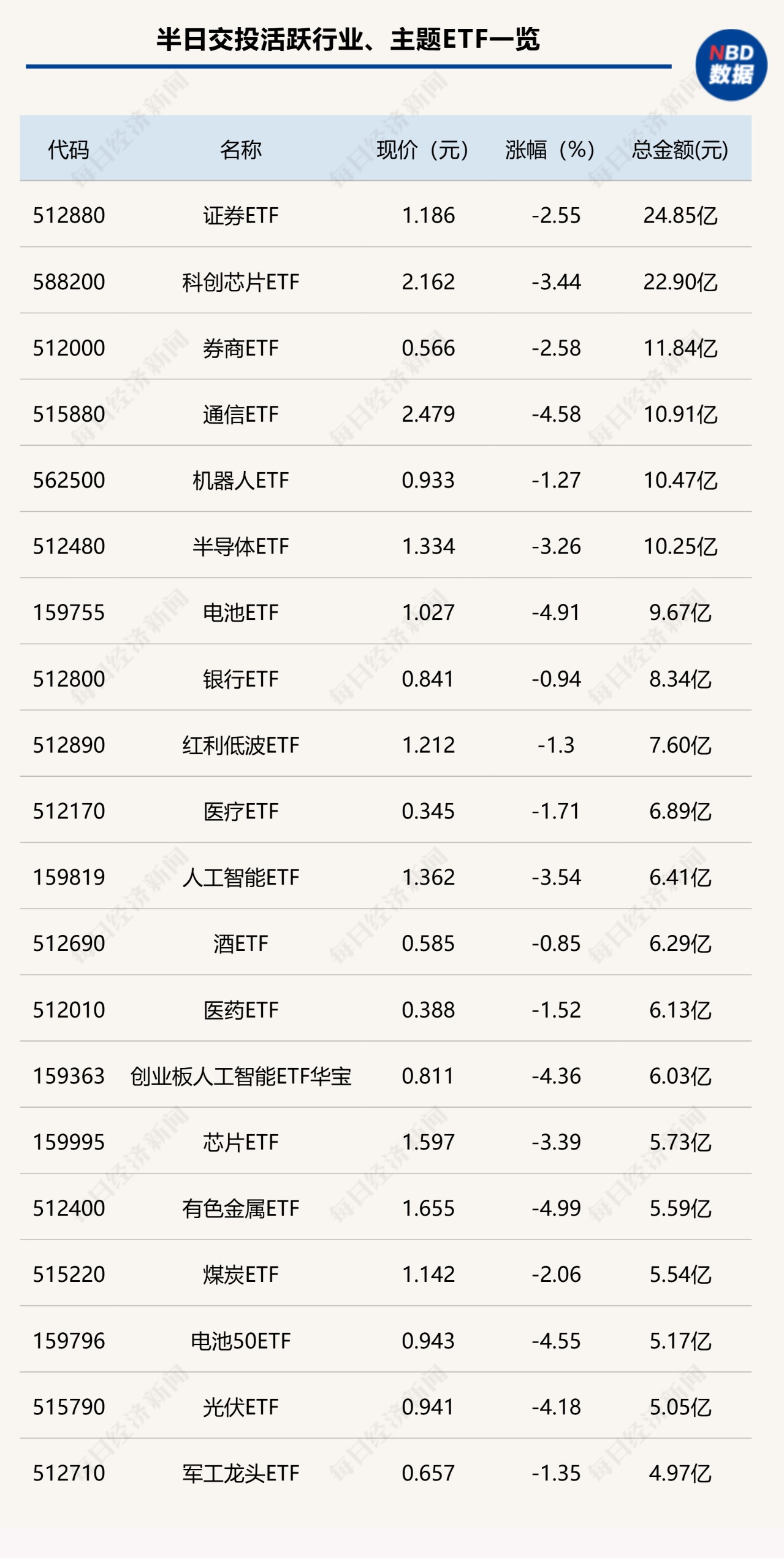
点评:龙头家电ETF(159730)今日上午涨幅达到0.09%,该ETF规模为0.33亿份,半日成交金额为560.69万元,其追踪的是国证龙头家电指数。 国证龙头家电指数反映沪深北交易所中家电行业优质上市公司的市场表现。该指数将权重更多地配置在细分领域的龙头企业中,如清洁电器、厨房电器以及 家电零部件逆变器等细分领域。 | 代码 | 名称 | 现价(元) | 涨幅 (%) | 总金 | | --- | --- | --- | --- | --- | | 512880 | 证券ETF | 1.186 | -2.55 | 24. | | 588200 | 科创芯片ETF | 2.162 | -3.44 | 22. | | 512000 | 券商ETF | 0.566 | -2.58 | 11. | | 515880 | 通信ETF | 2.479 | -4.58 | 10. | | 562500 | 机器人ETF | 0.933 | -1.27 | 10. | | 512480 | 半导体ETF | 1.334 | -3.26 | 10. | | 159755 | 电池ETF | 1.027 | -4.91 | ...
乘联分会:11月1-16日全国乘用车市场零售88.6万辆 同比下降14%
智通财经网· 2025-11-19 08:57
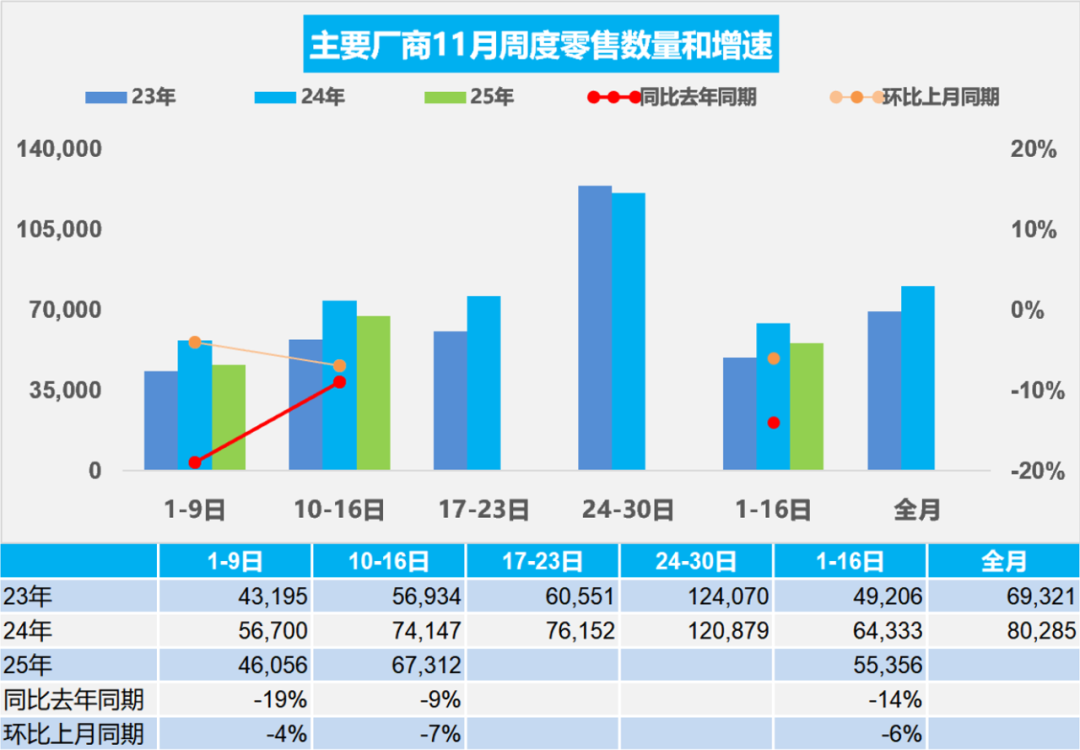
乘用车:11月1-16日,全国乘用车市场零售88.6万辆,同比去年11月同期下降14%,较上月同期下降6%,今年以来累计零售2,014.2万辆,同比增长7%;11 月1-16日,全国乘用车厂商批发102.1万辆,同比去年11月同期下降14%,较上月同期增长14%,今年以来累计批发2,479.5万辆,同比增长11%。 新能源:11月1-16日,全国乘用车新能源市场零售55.4万辆,同比去年11月同期增长2%,较上月同期增长7%,今年以来累计零售1,070.3万辆,同比增长 21%;11月1-16日,全国乘用车厂商新能源批发61.8万辆,同比去年11月同期增长1%,较上月同期增长17%,今年以来累计批发1,267.5万辆,同比增长 28%。 渗透率:11月1-16日,全国乘用车市场新能源零售渗透率62.5%;全国乘用车厂商新能源批发渗透率60.6%。11月第一周全国纯燃料轻型车生产33.1万辆, 同比去年11月同期下降3%,较上月同期增长59%;11月第一周混合动力与插混总体生产18.5万辆,同比去年11月同期下降8%,较上月同期增长27%。 智通财经APP获悉,11月19日,乘联分会发布周度分析指出,11月1- ...
开源证券:社零数据增速环比继续回落 但部分消费环比改善较好
Zhi Tong Cai Jing· 2025-11-17 06:21
Core Viewpoint - The report from Kaiyuan Securities indicates a continued decline in the growth rate of social retail sales in October 2025, with expectations for more fiscal policies to support domestic demand and a recovery in consumer spending [1] Monthly Observation - In October 2025, the total retail sales of consumer goods increased by 2.9% year-on-year, with a month-on-month decline of 0.1 percentage points from September [1] - The consumption structure showed marginal recovery in food, beverages, tobacco, and catering due to holiday spending, while the "trade-in" policy's diminishing effect and a high base from the previous year led to negative growth in appliances and automotive categories [1] - Catering and above-limit catering revenue increased by 3.8% and 3.7% year-on-year, respectively, with month-on-month growth of 2.9 percentage points and 5.3 percentage points from September, supported by holiday travel [1] - Sub-sectors such as grain and oil food, beverages, and tobacco saw year-on-year increases of 9.1%, 7.1%, and 4.1%, respectively, with significant month-on-month improvements [1] Quarterly Observation - The growth rate of social retail sales is expected to continue declining in Q4 2025, although there may be marginal improvements in the growth rates of catering and food and beverage sectors [2] - In October 2025, the retail sales growth rate decreased by 0.6 percentage points compared to Q3 2025, primarily due to the weakening effect of subsidy policies and a high base from the previous year [2] - The growth rates for grain and oil food, beverages, and tobacco in October 2025 improved compared to Q3 2025, indicating a positive trend in food and beverage consumption [2] Industry Observation - The liquor industry is still in a bottoming phase, with structural differentiation in consumption during the October holiday, showing recovery in mass banquets and family gatherings, while business consumption remains weak [3] - The snack industry demonstrates resilience due to its high-frequency demand, supported by holiday consumption, with leading companies enhancing competitiveness through product innovation and channel expansion [3]
家电周报:各品牌陆续发布双十一战报,九阳豆业“哈基米豆浆”引领热潮-20251116
Shenwan Hongyuan Securities· 2025-11-16 13:14
Investment Rating - The report maintains a positive outlook on the home appliance sector, highlighting a "Buy" recommendation for key players in the white goods segment due to their low valuation, high dividends, and stable growth potential [4]. Core Insights - The home appliance sector outperformed the Shanghai and Shenzhen 300 Index, with the sector index rising by 1.1% while the broader index fell by 1.1%. Key companies like Joyoung (26.6%), Lek Electric (12.2%), and Hisense (7.1%) led the gains, while companies like Sanhua Intelligent Control (-12.3%) and Roborock (-1.5%) faced declines [5][7]. - Stone Technology achieved significant sales growth during the Double Eleven shopping festival, becoming the top brand in the cleaning appliance category with a market share of 34.75% in the sweeping robot segment and a 25.02% share in the washing machine segment, with net sales increasing by 408.52% year-on-year [11]. - Joyoung's new plant-based beverage, "Haqimi Green Bean Soy Milk," has gained popularity in the market, indicating strong consumer interest and potential for growth [12]. Sales Data Summary - **Air Conditioners**: In October 2025, online retail sales volume was 1.99 million units, a year-on-year decrease of 22.2%, while offline sales were 378,000 units, down 42.3%. The average online retail price decreased by 1.9% to 3,073 yuan per unit, and the offline average price fell by 12.2% to 4,330 yuan per unit [30]. - **Kitchen Appliances**: - **Range Hoods**: Online sales volume was 1.166 million units, down 8.6% year-on-year, while offline sales were 128,000 units, down 34.3%. The online average price increased by 8.5% to 2,005 yuan per unit, while the offline average price decreased by 5.5% to 4,422 yuan per unit [35]. - **Dishwashers**: Online sales volume was 187,000 units, down 29.1%, and offline sales were 34,000 units, down 26%. The online average price rose by 3.6% to 4,790 yuan per unit, while the offline average price fell by 1.6% to 8,195 yuan per unit [39]. Industry Dynamics - The report identifies three main investment themes: 1. **White Goods**: The reversal of real estate policies is expected to boost the white goods sector, which is characterized by low valuations and high dividends. The "trade-in" policy may catalyze growth, and rising copper prices are generating positive sentiment in the channel [4]. 2. **Exports**: Companies like Ousheng Electric and Dechang Co. are recommended due to their stable income growth driven by large customer orders and recovery in overseas demand [4]. 3. **Core Components**: The report highlights the increased demand for core components driven by the white goods sector's unexpected growth, recommending companies like Huaxiang Co. and Shun'an Environment for their competitive advantages and growth potential [4].