
物理AI

Search documents
中国版“CES展”背后的惊喜
Xin Lang Cai Jing· 2026-01-13 11:32
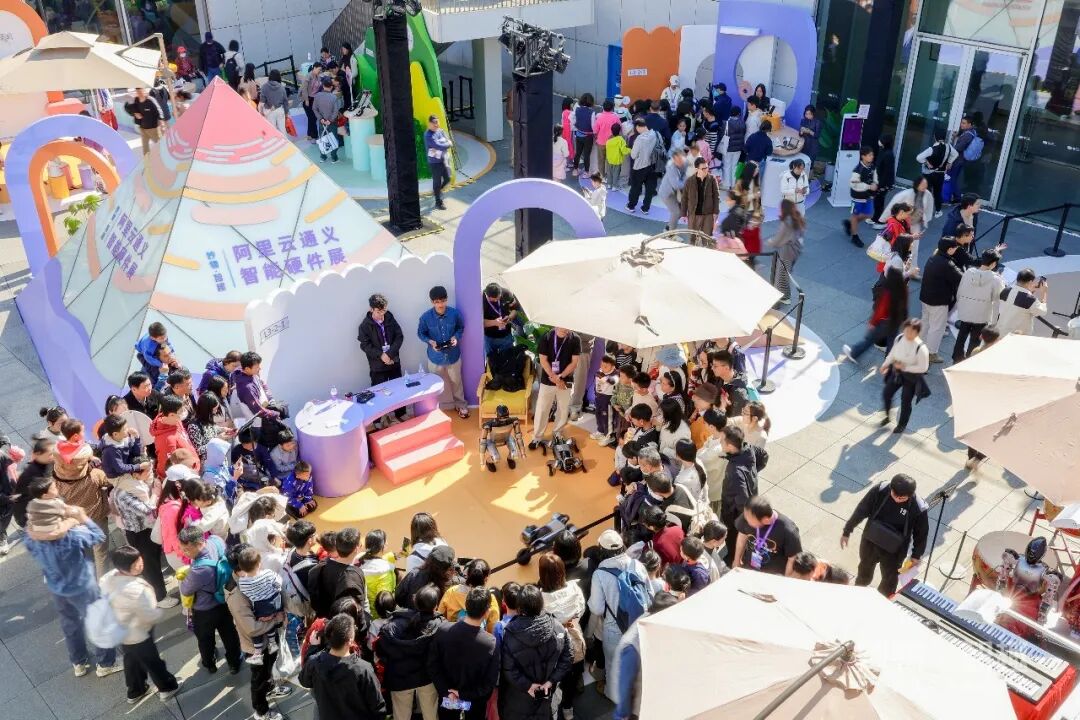
Core Viewpoint - The future of AI hardware is firmly rooted in China, as evidenced by the recent intelligent hardware exhibition hosted by Alibaba Cloud, which is being compared to CES in the U.S. [1][10] Group 1: Exhibition Overview - The exhibition covered over 5,000 square meters and showcased more than 1,500 new AI hardware products, with 180 items debuting simultaneously at CES in the U.S. [2] - The exhibition featured a diverse range of products across various consumer sectors, including 3C digital products, home appliances, toys, fitness equipment, and more [2][4]. Group 2: AI Hardware Trends - The terms "emergence" and "generalization" were used to describe the rapid proliferation of AI products across industries, indicating a significant transformation in the application of AI technology [7]. - The exhibition highlighted the integration of AI into traditional industries, suggesting a profound industrial restructuring that surpasses the previous mobile app revolution [10]. Group 3: Future AI Development - A second wave of AI development is anticipated by 2026, characterized by accelerated technological iterations and a shift in application timelines from 5-10 years to 2-3 years [11]. - The concept of "physical AI" is emerging, with applications expected to extend beyond consumer devices to include automobiles, robotics, and various industrial terminals [13][14]. Group 4: Economic Impact - The potential economic impact of AI on global GDP could be a growth of 10%, representing a value reconstruction space of up to $11 trillion [14]. - By 2026, it is projected that 80% of the AI market will be driven by new incremental markets, emphasizing the importance of future market capture over current market share [14]. Group 5: Competitive Landscape - The competition in China is dual-tracked, with traditional industries leveraging AI for transformation while "AI-native companies" explore new business models [15][16]. - AI applications in China are focusing on traditional manufacturing, new energy vehicles, and agriculture, utilizing cloud services to enhance efficiency [16][18]. Group 6: Infrastructure and Global Expansion - The foundational infrastructure for AI is evolving from a "Token factory" to an "AI super factory," indicating a shift towards comprehensive AI cloud services [25][27]. - Alibaba Cloud is expanding its global infrastructure to support Chinese enterprises' internationalization, with plans to establish facilities in 29 regions and 92 availability zones by 2025 [29]. Group 7: Conclusion - The intelligent hardware exhibition signifies a pivotal moment for China's AI industry, with the potential to lead in global AI advancements and redefine the landscape of consumer electronics [30][32].

?集AI、自动驾驶与机器人三大投资主题于一身的现代汽车股价狂飙 市值猛增240亿美元
Zhi Tong Cai Jing· 2026-01-13 08:34
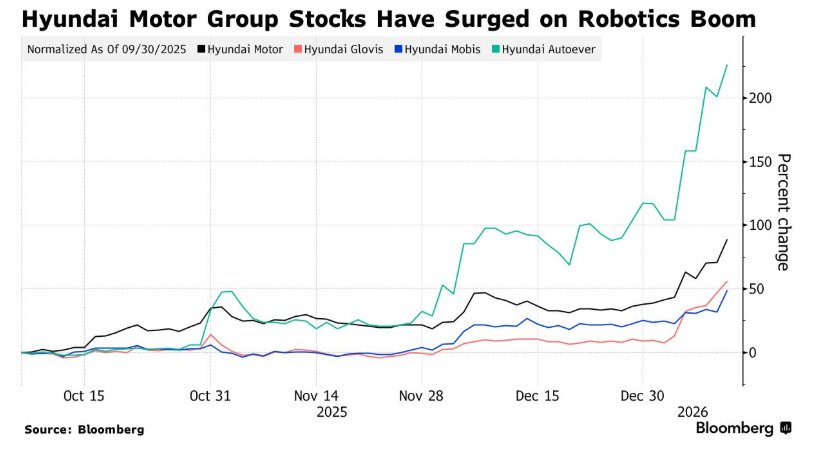
Group 1: Hyundai Motor Company Overview - Hyundai Motor Co. has increased its market value by approximately $24 billion since the beginning of 2026, equivalent to the current total market value of Rivian [1] - The company's stock price has surged by 30% this year, contributing significantly to the strong performance of the Korean Kospi index, which rose by 76% in 2025 [1] - Hyundai is no longer viewed merely as an automobile manufacturer but as a leader in AI, autonomous driving technology, and humanoid robotics, attracting positive investor sentiment [1] Group 2: Stock Market Performance - The Kospi index has reached historical highs, surpassing key levels of 4300, 4500, and 4600 points, with a record closing of approximately 4693 points on January 13 [3] - Since the start of 2026, the Kospi index has seen a cumulative increase of 8%, continuing the momentum from 2025's remarkable growth [3] - Analysts from major financial institutions predict that the Kospi index could rise by at least 20% in the coming year, supported by government stimulus measures and a strong growth trend in the semiconductor sector [3] Group 3: AI and Robotics Developments - Hyundai's deepening collaboration with Nvidia, particularly on the Atlas robot project, has sparked significant investor interest in the company's leadership in physical AI [5] - The introduction of the Alpamayo model, described as a "ChatGPT moment for physical AI," emphasizes the ability of autonomous systems to perceive, reason, and act in the real world [6] - Nvidia's recent announcements regarding partnerships with major Korean conglomerates aim to establish AI factories to support extensive AI training and inference workloads [7][8] Group 4: Investment Appeal - Despite the substantial increase in market value, Hyundai's stock remains attractive with a projected price-to-earnings ratio of only 8.3x, lower than the KOSPI's 10x [9] - The company's valuation is bolstered by its subsidiary Boston Dynamics, which is estimated to be worth approximately 68 billion USD, although there are currently no IPO plans for it [9]

黄仁勋的Agentic AI,闯入全球市值最高药厂
Sou Hu Cai Jing· 2026-01-13 08:03
Core Insights - Nvidia plans to collaborate with Eli Lilly to invest $1 billion in a joint AI lab aimed at transforming the healthcare sector through advanced AI technologies [3][25] - The focus of the collaboration is to address the global shortage of healthcare professionals by deploying AI agents in the medical field, with a significant emphasis on the rapid adoption of AI in healthcare compared to other industries [5][12] - Nvidia's CEO highlighted the importance of physical AI and its impact on the pharmaceutical industry, with advancements in AI models and robotics enhancing laboratory automation and drug development processes [6][10] Group 1: Collaboration and Investment - Nvidia and Eli Lilly will establish a joint AI lab with a $1 billion investment to integrate top scientists and AI researchers [3][25] - The partnership aims to accelerate drug discovery and laboratory automation, shifting the current model from 90% wet lab work to a more balanced approach with increased computational methods [25][29] Group 2: AI in Healthcare - The healthcare sector is experiencing unprecedented speed in the deployment of technology, with AI expected to play a crucial role in addressing the projected shortage of millions of healthcare workers by 2030 [12][11] - Nvidia's AI models and tools are being utilized to enhance clinical workflows, allowing healthcare professionals to save significant time and improve patient care [13][31] Group 3: Technological Advancements - Nvidia's advancements in AI, such as the Cosmos model and Isaac robotics platform, are designed to improve laboratory efficiency and quality control in drug manufacturing [6][19] - The company is also focusing on open-source models and tools to democratize access to AI technologies, enabling a wider range of companies to innovate in the healthcare space [9][22] Group 4: Future Outlook - The emergence of AI scientists and agents is expected to revolutionize the pharmaceutical industry, with a projected $300 billion market for drug development being reshaped by these technologies [18][25] - Nvidia's collaboration with Eli Lilly is seen as a pivotal moment in the integration of AI into scientific research, potentially leading to breakthroughs in drug discovery and development [25][28]


集AI、自动驾驶与机器人三大投资主题于一身的现代汽车股价狂飙 市值猛增240亿美元
智通财经网· 2026-01-13 07:20
Core Viewpoint - Hyundai Motor Co. has increased its market value by approximately $24 billion since the beginning of 2026, equivalent to the current total market value of Rivian, driven by a 30% rise in its stock price this year, contributing significantly to the strong performance of the Korean Kospi index [1] Group 1: Hyundai's Market Performance - Hyundai's market value has surged, reflecting its transformation from a traditional automaker to a leader in AI, autonomous driving, and humanoid robotics, attracting positive investor sentiment [1] - The stock price of Hyundai reached a new historical high, rising over 10% during trading, as analysts raised price targets due to the company's deepening collaboration with Nvidia and its ambitions in autonomous driving showcased at CES [1][7] Group 2: Related Companies and Market Trends - Hyundai's subsidiaries, including Hyundai Glovis, Hyundai Mobis, and Hyundai Autoever, have also reached historical highs, indicating a broader positive trend in the automotive supply chain related to the Atlas humanoid robot [4] - The Korean stock market has shown remarkable growth, with the Kospi index rising 8% since the start of 2026, following a 76% increase in 2025, driven by major players like Samsung Electronics and SK Hynix [5] Group 3: AI and Autonomous Driving Developments - Hyundai's collaboration with Nvidia on the Atlas robot project has sparked significant investor interest, positioning the company as a leader in physical AI, which emphasizes real-world perception and action by robots [7] - The introduction of Nvidia's Alpamayo, a visual-language-action model, represents a significant advancement in autonomous driving technology, focusing on decision-making logic and safety [8][9] Group 4: Future Prospects and Valuation - Despite the substantial increase in market value, Hyundai's stock remains attractive with a projected price-to-earnings ratio of 8.3x, lower than the Korean benchmark index's 10x [10] - The valuation of Boston Dynamics, a subsidiary of Hyundai, is estimated at approximately 68 billion USD, although there are currently no specific IPO plans for the company [11]
国泰海通:多家中国智能眼镜企业参展CES 全球智能眼镜出货量维持高速增长
Zhi Tong Cai Jing· 2026-01-13 06:25
Group 1 - The core viewpoint of the report highlights the significant presence of Chinese companies at CES 2026, with 16 out of 23 exhibitors in the AI glasses category being from China, indicating a strong market focus and innovation in this sector [1][3] - The CES 2026 event showcased approximately 4,300 companies from over 160 countries, with Chinese exhibitors accounting for about 22% of the total, second only to the United States [2] - The report emphasizes the shift in AI development from "digital intelligence" to "physical AI," marking a trend towards deeper integration of AI with hardware [2] Group 2 - Several Chinese smart glasses companies made notable announcements at CES, including Thunderbird's launch of the X3Pro Project eSIM glasses, which support independent functions like calls and real-time AI translation [3] - ByteDance's "Doubao" AI glasses are set to enter the shipping phase, with plans for multiple configurations, including a no-screen version expected to launch in Q1 2026 [3] - Alibaba's Quark glasses sold out of new inventory by December 23, and an OTA upgrade was implemented on December 31, enhancing features like payment and translation [3] Group 3 - The industry trend indicates a focus on lightweight designs, with mainstream products now weighing between 30-50 grams, aiming to return to everyday accessory status [4] - The integration of multimodal technologies is driving AI from passive responses to proactive services, encompassing audio, visual, and tactile experiences [4] - AI glasses are evolving into independent smart terminals capable of functions like calls, internet connectivity, and complex AI computations [4] Group 4 - Global smart glasses shipments are projected to grow by 110% year-on-year in the first half of 2025, maintaining a high growth trajectory [5] - The inclusion of smart glasses in national subsidy programs is expected to provide additional market growth opportunities [5] - A recent policy announcement by the National Development and Reform Commission and the Ministry of Finance includes smart glasses in a new consumer subsidy initiative, which is anticipated to drive further demand [5] Group 5 - Recommended stocks in the sector include Kangnait Optical (02276), Doctor Glasses (300622), and Aishide (002416), with Tianyin Holdings (000829) also mentioned as a relevant stock [6]




首只规模超过500亿元的A500ETF诞生!
Xin Lang Cai Jing· 2026-01-13 05:18
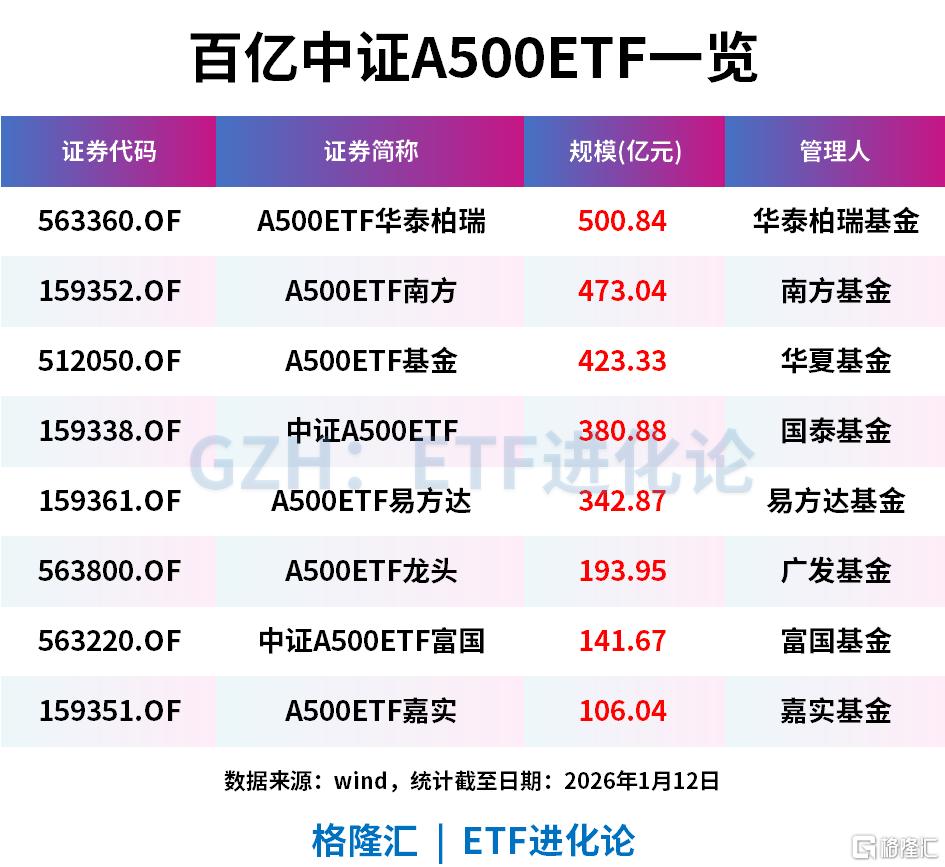
Group 1: A500 ETF Market Overview - As of January 12, the total scale of 40 A500-related ETFs reached 300.89 billion yuan, with 8 ETFs exceeding 10 billion yuan, accounting for 85.16% of the total scale [1] - The A500 ETF managed by Huatai-PB became the first A500 index ETF to exceed 50 billion yuan, with a scale of 50.84 billion yuan [1] - The second and third largest A500 ETFs are managed by Southern Fund and Huaxia Fund, with scales of 47.22 billion yuan and 42.33 billion yuan, respectively [1][3] Group 2: A500 ETF Scale Details - The top A500 ETFs by scale include: - A500 ETF Huatai-PB: 50.84 billion yuan [3] - A500 ETF Southern: 47.22 billion yuan [3] - A500 ETF Huaxia: 42.33 billion yuan [3] - A500 ETF Guotai: 38.09 billion yuan [3] - A500 ETF E Fund: 34.29 billion yuan [3] - A500 ETF GF: 19.40 billion yuan [3] - A500 ETF Fortune: 14.17 billion yuan [3] - A500 ETF Harvest: 10.60 billion yuan [3] Group 3: Market Sentiment and Trends - The current macro environment is favorable, with ample liquidity supporting market risk appetite, contributing to a positive response in global stock markets [5][7] - There is a strong inclination for new capital inflow as institutions prepare for the upcoming Spring Festival and Two Sessions, indicating a robust demand for A-shares [5] - The market is expected to continue its upward trend, with a focus on structural opportunities and sector rotation, particularly in commercial aerospace and technology sectors [7][8]



速递 | 中国公司干翻硅谷!全球具身智能第一,完全开源
未可知人工智能研究院· 2026-01-13 03:02
Core Viewpoint - A Chinese company, Qianxun Intelligent, has achieved a significant milestone by surpassing the Silicon Valley company Physical Intelligence in the global embodied intelligence model rankings, securing the top position with its open-source model, Spirit 1.5 [1][2]. Group 1: Global Ranking and Performance - The RoboChallenge Table30 is the first large-scale real-robot evaluation ranking, assessing robots on 30 practical tasks, which provides a more accurate measure of performance compared to previous self-reported rankings [2]. - Qianxun's Spirit 1.5 scored 66.09, achieving a success rate of over 50%, surpassing the previous leader, Pi0.5, which had a score of 61.84 and a success rate of 42.67% [3]. Group 2: Technological Innovation - Qianxun's success is attributed to its unique approach called "Diverse Collection," which allows robots to learn from real-world scenarios without predefined scripts, leading to a 40% increase in transfer learning efficiency compared to traditional methods [4][5]. - The company emphasizes the importance of training models with diverse, real-world data to enhance their adaptability and performance in complex tasks [5]. Group 3: Team and Funding - Qianxun's founding team includes Han Fengtang, a former CTO of Lush Robotics, and Gao Yang, a Tsinghua University graduate and Berkeley PhD, both of whom bring extensive industry experience and expertise [6][8]. - The company has rapidly secured funding, completing multiple financing rounds since its establishment in February 2024, with the latest round raising nearly 600 million, led by JD.com [8][9]. Group 4: Market Position and Strategy - Qianxun is categorized as a "soft-hard integrated" player in the embodied intelligence sector, possessing both proprietary software and hardware, which allows for a data feedback loop that enhances model training and hardware performance [12][13]. - The company is positioned to capitalize on the growing demand for robots in logistics and retail, as evidenced by JD.com's investment, which reflects the need for functional robots in real-world applications [9][11]. Group 5: Future Opportunities - The emergence of embodied intelligence is expected to create significant employment opportunities, particularly in roles such as robot algorithm engineers, scene solution experts, and data collection engineers [17][19]. - The industry is anticipated to see a clear differentiation in the next 1-2 years, with companies that cannot access sufficient real-world data likely to fall behind, while those like Qianxun that integrate hardware and software effectively will thrive [21][22].

中国版“CES展”背后的惊喜
吴晓波频道· 2026-01-13 00:30
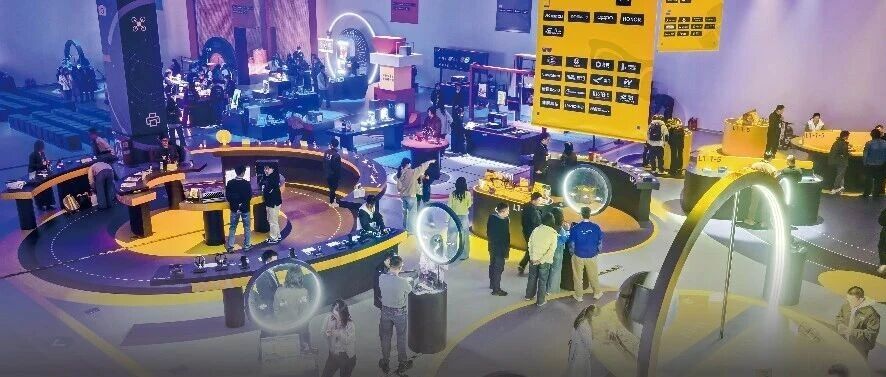
Core Viewpoint - The future of AI hardware is firmly rooted in China, as evidenced by the recent intelligent hardware exhibition held by Alibaba Cloud, which showcased over 1,500 AI hardware products, indicating a significant leap in the industry [2][5][12]. Group 1: AI Hardware Exhibition Insights - The Alibaba Cloud exhibition featured more than 1,500 AI hardware products, with 180 items debuting simultaneously at the CES in the U.S., covering a wide range of consumer sectors from digital devices to home entertainment [5][12]. - The exhibition presented a strong "booth feel," with various AI products displayed in a way that encouraged hands-on interaction, highlighting the diversity and accessibility of AI technology [6][8]. - The event underscored the concepts of "emergence" and "generalization," indicating that AI capabilities are rapidly expanding across various industries, leading to unprecedented product proliferation [8][12]. Group 2: Future Trends in AI - By 2026, a second wave of AI development is anticipated, characterized by rapid technological iterations and a significant reduction in the time required for technology deployment, from 5-10 years to 2-3 years [14][17]. - The shift towards "physical AI" is expected to redefine industries, particularly in automotive and heavy machinery, as AI becomes integrated into traditional sectors [14][16]. - The distinction between consumer and enterprise applications of AI is becoming clearer, with enterprise applications poised to drive deeper value and productivity enhancements, potentially increasing global GDP by 10% [17][18]. Group 3: Competitive Landscape - The competition in AI is evolving into a dual-track approach, where traditional industries leverage AI for transformation while "AI-native companies" explore new business models [19][20]. - Chinese industries are focusing on traditional manufacturing, new energy vehicles, and agriculture, utilizing cloud services to enhance efficiency and reduce costs [20][22]. - The emergence of "AI-native companies" is fostering innovation across various sectors, with a notable rise in startups that utilize generative AI for content creation and other applications [24][26]. Group 4: Infrastructure and Cloud Computing - The foundational infrastructure for AI is transitioning from a "Token factory" to an "AI super factory," emphasizing the need for comprehensive cloud services that support both immediate and advanced AI applications [30][32]. - Companies like Alibaba Cloud are expanding their global infrastructure to meet the increasing demand for AI capabilities, supporting Chinese enterprises in their international ventures [37][38]. - The integration of AI into cloud computing is essential for realizing the full potential of AI technologies, as it enables efficient data processing and model deployment [36][38].

AI眼镜迈入独立智能终端时代,开始接管手机核心功能
硬AI· 2026-01-12 15:40
Core Viewpoint - AI glasses are transitioning from smartphone accessories to independent smart terminals, driven by the integration of eSIM technology and multimodal AI capabilities, marking a significant shift in the industry towards standalone functionality [3][4]. Group 1: Industry Trends - The introduction of eSIM technology allows AI glasses to operate independently from smartphones, enabling functionalities such as calls, real-time AI conversations, and online streaming without needing a mobile connection [6]. - The global shipment of smart glasses is projected to see a 110% year-on-year increase in the first half of 2025, with AI glasses accounting for 78% of this growth [4][16]. - Major tech companies, including ByteDance and Alibaba, are accelerating their entry into the AI glasses market, with new products expected to launch soon [8][10]. Group 2: Product Innovations - Rayneo's X3 Pro Project eSIM, the first AI glasses with eSIM support, showcases the ability to function independently, enhancing user experience [6]. - Rokid's new AI smart glasses, Rokid Style, emphasize an open ecosystem, supporting various AI models and maintaining a lightweight design [6]. - ByteDance's "Doubao" AI glasses are set to enter the market with a focus on user-friendly features and competitive pricing [8]. Group 3: Market Dynamics - The market for AI glasses is expected to benefit from government policies, including subsidies for consumers purchasing smart glasses, which will stimulate demand [18]. - The report indicates that Meta holds a leading market share of 73% in the smart glasses sector, with a significant increase in the proportion of AI-enabled glasses [16].

智能眼镜行业跟踪报告:智能眼镜:多厂商发力,走向规模化应用
GUOTAI HAITONG SECURITIES· 2026-01-12 15:23
Investment Rating - The report assigns an "Overweight" rating for the smart glasses industry [4]. Core Insights - The CES 2026 event highlighted the integration of AI with hardware, indicating a shift towards "Physical AI" [2][5]. - The smart glasses sector is experiencing rapid growth, with global shipments increasing by 110% year-on-year in the first half of 2025 [17]. - The inclusion of smart glasses in national subsidy policies is expected to drive further growth [21]. Summary by Sections Industry Overview - The CES 2026 showcased approximately 4,300 exhibitors from over 160 countries, with 942 Chinese exhibitors, representing 22% of total participants [5]. - Major Chinese brands like Thunderbird Innovation and Rokid are making significant advancements in smart glasses technology [5][6]. Product Developments - Thunderbird Innovation launched the X3 Pro Project eSIM, enabling independent communication capabilities [5]. - Rokid introduced the Rokid Style, weighing only 38.5g, featuring an open AI ecosystem [6]. - ByteDance's "Doubao" AI glasses are set to enter the market, with various configurations planned for release [9]. Market Trends - The trend towards lightweight designs is evident, with many products now weighing between 30-50g [15]. - AI glasses are evolving into independent smart devices capable of complex functions like communication and AI processing [15]. - The market is seeing a shift from basic audio glasses to more advanced AI-integrated models, with AI glasses' shipment share rising from 46% to 78% [17]. Investment Recommendations - The report recommends investing in companies such as Kangnait Optical, Doctor Glasses, and Aishide, with Tianyin Holdings also mentioned as a relevant target [21][24].