积极财政政策

Search documents
投资前瞻:多项财经大事集中来袭
Wind万得· 2025-12-28 22:31
Market News - The Ministry of Finance announced that a more proactive fiscal policy will continue in 2026, focusing on expanding fiscal expenditure, optimizing government bond tools, enhancing transfer payment efficiency, and improving expenditure structure [3] - The National Bureau of Statistics will release the December PMI data on December 31, with November's manufacturing PMI at 49.2%, a slight increase of 0.2 percentage points from October [4] - The People's Bank of China aims to significantly increase the scale and proportion of various long-term funds invested in A-shares, promoting a virtuous cycle between capital market stability and high-quality economic development [6] - The Shanghai and Shenzhen Stock Exchanges announced a series of fee reduction measures for 2026, expected to save over 1.9 billion yuan in total [7] Sector Developments - The Ministry of Industry and Information Technology established a standardization committee for humanoid robots and embodied intelligence, focusing on key technologies and industry standards [11] - The 2025 Shenzhen Brain Conference aims to create a platform for industry integration and innovation [13] - The 2025 China Green Hydrogen Industry Conference will discuss policies and technological breakthroughs that will impact the green hydrogen industry chain [14] Individual Stock Events - CATL plans to apply sodium batteries on a large scale in various sectors including battery swapping and energy storage in 2026 [17] - Xiaomi's co-founder plans to reduce holdings of up to $2 billion in B-class common stock [17] - ST Huluwawa and its chairman are under investigation for information disclosure violations [17] Lock-up Expiration - A total of 34 companies will have lock-up shares released this week, amounting to 3.697 billion shares with a total market value of approximately 58.895 billion yuan [18] - The peak lock-up expiration date is December 30, with 13 companies releasing shares worth a total of 27.645 billion yuan [18] Institutional Outlook - CITIC Securities highlights that 39 out of 360 industry/theme ETFs reached new highs in December, with a focus on communication and resource-related ETFs [25] - Guojin Securities identifies new investment themes emerging in 2026, emphasizing the importance of AI investments and the recovery of global manufacturing [26] - Zhongtai Securities believes there is still upward potential in the market before the Spring Festival, with opportunities for low-cost positioning [27]







影响市场重大事件:财政部2026年继续实施更加积极的财政政策,扩大财政支出盘子,进一步增加财政科技投入,实施制造业重点产业链高质量发展行动
Mei Ri Jing Ji Xin Wen· 2025-12-28 22:29
Group 1: Fiscal Policy and Economic Support - The Ministry of Finance will continue to implement a more proactive fiscal policy in 2026, expanding the fiscal expenditure framework to ensure necessary spending levels [1] - There will be an increase in fiscal technology investment and a focus on high-quality development actions for key manufacturing industry chains [2] - The government will support consumption by continuing to allocate funds for the replacement of old consumer goods [7] Group 2: Market Trends and Investment Opportunities - The silver economy market in China is expected to exceed 20 trillion yuan by 2030, driven by the aging population and increasing consumption among the elderly [3] - In 2025, the A-share market saw 528 stocks doubling in value, with a significant number being AI and merger-related stocks [5] - Over 12,000 private equity securities investment funds have been registered this year, marking a nearly 100% increase compared to the previous year, with stock strategies dominating the market [6] Group 3: Technological Advancements - The International Thermonuclear Experimental Reactor (ITER) correction field coil procurement package has been completed and delivered, marking a significant milestone in fusion energy research [4] - The People's Bank of China emphasizes the importance of artificial intelligence in driving high-quality development across various sectors, particularly in financial technology [10] Group 4: Corporate Developments - Kweichow Moutai plans to reduce the supply of high-value products in 2026 and will no longer use a distribution model, aiming to stabilize product prices [11] - Shengyuan Environmental Protection's controlling shareholders have committed to compensating for investment losses in a private fund, indicating a proactive approach to investor relations [9]
全国财政工作会议提出 扩大财政支出盘子 优化政府债券工具组合
Zhong Guo Zheng Quan Bao· 2025-12-28 22:15
Core Viewpoint - The National Finance Work Conference emphasizes the continuation of a more proactive fiscal policy in 2026, focusing on expanding fiscal expenditure, optimizing government bond tools, and enhancing the effectiveness of transfer payments to support local financial autonomy [1][2]. Group 1: Fiscal Policy and Economic Development - The conference outlines key tasks for 2026, including promoting domestic demand, supporting the construction of a strong domestic market, and implementing actions to boost consumption and effective investment in key areas [1][2]. - There is a strong emphasis on integrating technological and industrial innovation, increasing fiscal investment in technology, and supporting high-quality development in key manufacturing industries [1][2]. Group 2: Social Welfare and Environmental Sustainability - The meeting highlights the importance of strengthening basic social safety nets, promoting employment, improving education and healthcare services, and enhancing the social security system to meet public needs [2]. - It also calls for a comprehensive green transformation of economic and social development, focusing on pollution prevention, ecosystem protection, and the establishment of supportive policies for low-carbon development [2]. Group 3: International Cooperation and Fiscal Management - The conference stresses the need for enhanced international financial cooperation, promoting high-level openness, and reforming global economic governance [2]. - It emphasizes the importance of scientific fiscal management, maintaining a balance between responsibility and mechanism improvement, and managing government debt effectively [2][3].
财政政策如何继续“更加积极” 扩大财政支出盘子,强化重点领域保障
Ren Min Ri Bao· 2025-12-28 22:03
Core Viewpoint - The Chinese government plans to implement a more proactive fiscal policy in 2026, focusing on expanding fiscal expenditure and optimizing spending structures to support economic growth and ensure a strong start to the "14th Five-Year Plan" [1] Group 1: Fiscal Policy and Economic Growth - The government aims to enhance domestic demand and support the construction of a robust domestic market, with a strong emphasis on boosting consumption through various initiatives [1] - Plans include funding for consumer incentives, optimizing personal consumption loan interest subsidies, and promoting new consumption models [1] - There will be increased investment in key areas such as new productivity and comprehensive human development, alongside efforts to establish a unified national market [1] Group 2: Infrastructure and Social Welfare - Continued issuance of long-term special government bonds is expected to support major national projects, ensuring sustained investment demand and improving living standards [2] - Fiscal spending will be directed towards social welfare, with a focus on enhancing residents' income and improving consumption willingness [2] - The government will implement policies to lower financing costs for innovation and service sectors, thereby encouraging technological innovation and consumption [2] Group 3: Technological and Industrial Development - The government plans to increase fiscal investment in technology and strengthen the role of enterprises in innovation [2] - There will be a focus on fostering new productive forces through enhanced fiscal and tax policies, promoting the integration of technological and industrial innovation [2] - Initiatives will include insurance compensation policies for first-time applications and support for high-quality development in key manufacturing sectors [2] Group 4: Social Security and Regional Development - Strengthening basic social security and enhancing urban-rural integration will be priorities, with measures to increase residents' income through various channels [3] - The government will support rural revitalization and improve agricultural productivity, while also promoting new urbanization and regional coordinated development [3] - Fiscal policies will be adjusted to ensure public services are accessible and portable, facilitating urban renewal and regional strategies [3]
莫斯科遭袭!特朗普称美乌将达成安全协议;江西省博物馆声明:是原件;小米集团林斌拟减持不超20亿美元;爱奇艺:安排退费丨每经早参
Mei Ri Jing Ji Xin Wen· 2025-12-28 21:48
↓中国贸促会召开12月例行新闻发布会 2 美国11月成屋签约指数、新屋开工数 3 美国12月19日当周EIA汽油、EIA原油 数据将公布" 1 王毅会见柬埔寨副首相兼外交大臣布拉索昆 每经编辑|张喜威 王瀚黎 12月28日,中共中央政治局委员、外交部长王毅在云南玉溪会见柬埔寨副首相兼外交大臣布拉索昆。王毅表示,中柬铁杆友谊经受国际风云变幻考验,坚如 磐石、历久弥坚。中方高度关注柬泰边境紧张局势,一直致力于劝和促谈。在各方共同努力下,柬泰两国军方达成停火协议,朝着恢复和平迈出重要一步, 中方对此表示祝贺。停火完全符合柬泰人民共同愿望,符合地区各国普遍期待,相信会得到各方欢迎支持。(央视新闻) 王毅会见泰国外长西哈萨 2025年12月28日,中共中央政治局委员、外交部长王毅在云南玉溪会见泰国外长西哈萨。王毅表示,中方高度关注泰柬边境紧张局势,对冲突造成平民伤 亡、民众流离失所深感痛心。外长先生曾表示,泰国是爱好和平的国家,不愿与邻国为敌,中方对此重视和赞赏。作为友好近邻,中方最不希望看到泰柬兵 戎相见,最希望看到两国重归于好。在各方努力下,泰柬军方达成停火协议,迈出通往和平的第一步,中方对此感到欣慰。(央视新闻) ...




财政部详解财政政策如何“更加积极”
Bei Jing Shang Bao· 2025-12-28 16:11
Core Insights - The National Financial Work Conference emphasized the continuation of a more proactive fiscal policy in 2026, focusing on expanding fiscal expenditure and ensuring necessary spending levels [1][3] Group 1: Fiscal Policy and Expenditure - The conference highlighted the need to expand the fiscal expenditure envelope to ensure necessary spending levels [3] - A proactive fiscal policy will be implemented, characterized by increased spending, expanded deficits, and enhanced transfer payments to stimulate overall demand and promote economic recovery [3] - In the first 11 months of 2025, the total fiscal expenditure reached 3.40662 trillion yuan, reflecting a year-on-year growth of approximately 4.5% [3] Group 2: Key Tasks for 2026 - The conference outlined six key tasks for 2026, with a primary focus on supporting domestic demand and enhancing consumer spending through targeted actions [4] - There will be an emphasis on increasing effective investment, particularly in new productive forces and comprehensive human development [4] - The second key task involves supporting the deep integration of technological and industrial innovation, with increased fiscal investment in technology and improved management of technology funding [5] Group 3: Social and Regional Development - The conference stressed the importance of promoting urban-rural integration and regional coordination to expand development space [5] - In the realm of social welfare, there will be a focus on strengthening basic social security and improving employment, education, and healthcare services [6] - The conference also highlighted the need for increased investment in human capital, including the establishment of childcare subsidies and the gradual promotion of free preschool education [6] Group 4: Green Development and International Cooperation - A significant focus will be placed on promoting comprehensive green transformation in economic and social development, including pollution prevention and ecosystem protection [7] - The conference called for strengthening international financial cooperation and expanding high-level openness, particularly through initiatives like the Hainan Free Trade Port [6][7]

周末 全是利好!史诗级行情 这只基金宣布 暂停申购!
Zhong Guo Ji Jin Bao· 2025-12-28 15:11
Group 1: Fiscal Policy and Economic Support - The Ministry of Finance will continue to implement a more proactive fiscal policy in 2026, expanding fiscal expenditure and optimizing government bond tools to enhance their effectiveness [2] - The Ministry of Finance plans to support consumer goods replacement programs in the coming year, adjusting and optimizing subsidy ranges and standards to boost consumption [3] Group 2: Financial Market Developments - The People's Bank of China aims to improve the institutional policy environment conducive to long-term investments, significantly increasing the scale and proportion of various long-term funds invested in A-shares [4] - The Shanghai Stock Exchange has introduced a series of fee reduction measures for 2026, expecting a total reduction of approximately 1.113 billion yuan [9] Group 3: Investment Strategies and Market Trends - CITIC Securities highlights that 39 out of 360 industry/theme ETFs reached new highs in December, with a focus on communication, non-ferrous metals, and commercial aerospace ETFs as key investment themes [10] - Shenwan Hongyuan emphasizes that the favorable conditions for the spring market remain unchanged, driven by liquidity and upcoming events such as the Spring Festival and the Two Sessions [12] - Guotai Junan identifies new investment themes emerging in the commodity market and real industry chains, reflecting a shift towards investment over consumption [13] - The market is seeing increased inflows into broad-based ETFs, with significant net inflows into the CSI A500 ETF, indicating a stable increase in institutional investment [14][19] - The market is expected to experience a "cross-year + spring" rally, with a focus on cyclical price increases in sectors such as non-ferrous metals, oil, chemicals, and renewable energy [15] Group 4: Currency and Capital Flow - The appreciation of the RMB is expected to attract overseas capital back to China, with a favorable external environment for the RMB's appreciation [18][23] - The current macroeconomic environment is characterized by domestic fundamentals improving alongside overseas liquidity, which may lead to significant capital inflows and asset revaluation in China [23]

聚焦全国财政工作会议丨今年更加积极的财政政策打出“组合拳”
Sou Hu Cai Jing· 2025-12-28 14:44
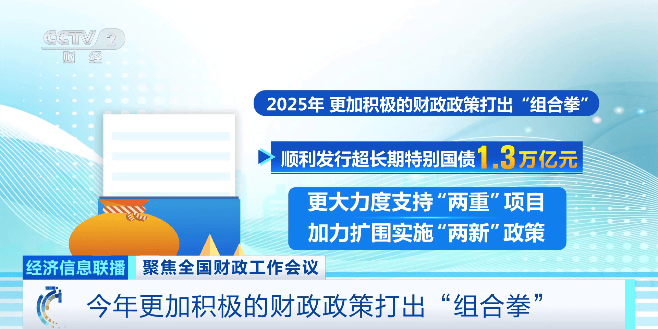
此外,2025年,更加积极的财政政策精准发力支持高质量发展,大幅增加基础研究投入;同时,持续加 强民生保障,充实稳就业政策工具,逐步推进免费学前教育,提高国家奖学金、助学金标准,建立育儿 补贴制度。 中央财经大学财税学院教授 白彦锋:"十四五"时期相比上一个五年,我们国家财政实力进一步增强, 财政收入106万亿元,增幅达19%。"十四五"期间财政支出合计136万亿元,增幅24%。 转载请注明央视财经 (央视财经《经济信息联播》)12月27日至28日,全国财政工作会议在北京召开。记者从会议上了解 到,2025年,我国积极财政政策打出一系列"组合拳",有力有效支持经济向新向优发展。 2025年,我国保持支出强度,全年一般公共预算支出超过29万亿元。同时,顺利发行超长期特别国债 1.3万亿元,更大力度支持"两重"项目,加力扩围实施"两新"政策。新增地方政府专项债券4.4万亿元。 盘活5000亿元债务结存限额,补充地方综合财力。发行5000亿元特别国债补充国有大型商业银行资本, 有力增强信贷投放能力。 2025年,更加积极的财政政策在供需两端激发消费潜力,出台实施个人消费贷款和服务业经营主体贷款 贴息政策。 编辑:令 ...
周末,全是利好!史诗级行情,刚刚宣布,暂停申购!
中国基金报· 2025-12-28 14:43
Key Points - The article discusses recent positive developments in the Chinese financial market, including government policies aimed at boosting fiscal spending and consumer support [3][4]. - The People's Bank of China emphasizes the need for a favorable policy environment to enhance long-term investments in the A-share market [5]. - The Shanghai Stock Exchange has introduced guidelines to support commercial rocket enterprises, indicating a focus on innovation in the aerospace sector [8][10]. - The market is experiencing a "small rally" with significant trading volume, particularly in sectors like metals and commercial aerospace [27]. Group 1: Government Policies - The Ministry of Finance plans to continue implementing a proactive fiscal policy in 2026, focusing on expanding fiscal spending and optimizing government bond tools [3]. - The government will support consumer goods through a subsidy program for replacing old products, aiming to stimulate consumption [4]. Group 2: Market Developments - The People's Bank of China reports on improving the investment environment for long-term funds in the A-share market, aiming for a healthy cycle between capital markets and the real economy [5]. - The Shanghai Stock Exchange has released guidelines for commercial rocket companies to facilitate their listing on the Sci-Tech Innovation Board, supporting the growth of the aerospace industry [8][10]. Group 3: Market Analysis by Securities Firms - CITIC Securities highlights the performance of ETFs, noting that sectors like telecommunications and aerospace are gaining traction due to their alignment with international infrastructure competition [15]. - Shenwan Hongyuan emphasizes the liquidity-driven nature of the current market rally, suggesting that the spring market conditions remain favorable [17]. - Guotai Junan identifies new investment themes emerging in commodity markets and the manufacturing sector, reflecting China's growing manufacturing advantages [19].

2026财政政策持续积极,洁净室需求持续提升
Guotou Securities· 2025-12-28 12:31
Investment Rating - The report maintains an investment rating of "Leading the Market - A" for the construction industry, indicating an expected return that will outperform the CSI 300 index by 10% or more over the next six months [6]. Core Insights - The 2026 fiscal policy is set to remain proactive, with a focus on increasing fiscal spending and optimizing government bond tools to enhance local financial capabilities. This is expected to support economic growth and improve the construction industry's operational conditions [18][11]. - Infrastructure investment has shown signs of recovery, with November data indicating a month-on-month improvement. The construction sector is anticipated to stabilize as policies aimed at debt reduction and "anti-involution" continue to be implemented [2][11]. - The demand for cleanroom construction is expected to rise due to increased capital expenditures in the semiconductor and cloud service sectors, driven by rapid advancements in AI technology [3][15]. Summary by Sections Industry Dynamics - The national fiscal work conference highlighted the achievements of 2025 and outlined the key tasks for 2026, emphasizing a more active fiscal policy to stimulate consumption and manage risks in key areas [18]. - The construction industry is expected to benefit from a combination of improved fiscal policies and a recovering investment environment, leading to marginal improvements in operational performance [2][11]. Market Performance - The construction industry saw a weekly increase of 2.26%, outperforming the CSI 300 index, with the decoration and renovation sector showing the highest growth at 11.37% [20][21]. - The overall industry valuation metrics indicate a TTM P/E ratio of 12.47 and a P/B ratio of 0.83, with several companies showing low valuations, suggesting potential investment opportunities [24][28]. Key Companies to Watch - Recommended companies include low-valuation state-owned enterprises such as China State Construction, China Communications Construction, and China Railway Construction, which are expected to benefit from improved cash flow and profitability [11][13]. - Cleanroom engineering leaders like Yaxin Integration and Shenghui Integration are highlighted for their potential growth due to increasing demand in the semiconductor sector [3][15].