
普茅

Search documents
李迅雷专栏 | 透过交易数据看清表象背后的真实经济
中泰证券资管· 2026-02-25 11:31
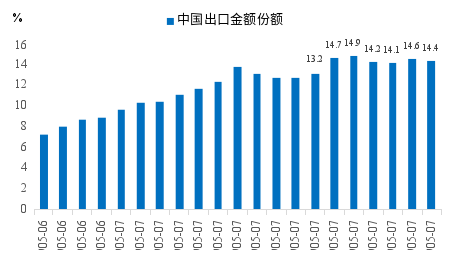
Group 1 - The core viewpoint of the article emphasizes the importance of data analysis in understanding economic trends and correcting cognitive biases [1] - The article discusses the relationship between trade data and economic conditions, highlighting that China's export growth is not as robust as perceived, with a projected contribution of 32.7% to GDP growth by 2025 despite a decline in global export share [2][4] - It notes that the decline in China's export price index by approximately 19% from 2023 to 2025 indicates significant issues with overcapacity in the manufacturing sector [4][6] Group 2 - The article identifies a shift in China's trade partners, with increased export shares to emerging economies like ASEAN and Africa, while traditional partners like the US and EU see declines [8][9] - It highlights that Africa is becoming a significant market for Chinese exports, with a 26.3% growth in exports to Africa from January to November 2025, driven by a young population and urbanization potential [11] - The analysis of stock market data reveals stark differences between Chinese and US markets, with a high proportion of small-cap stocks in China and a low profitability ratio, indicating a speculative market environment [14][15] Group 3 - The article discusses the implications of AI on employment, noting that sectors like software and consulting are increasingly at risk of job displacement due to AI advancements [18] - It points out that China's labor force is shrinking, with a significant increase in the elderly population, leading to rising social security expenditures projected to reach 4.4 trillion yuan by 2025 [19][21] - The article suggests that the real estate market is facing challenges, with indicators such as rental yield and housing price trends signaling potential downturns [22][30] Group 4 - The article critiques the common belief that stock market performance directly stimulates consumer spending, presenting data that shows a lack of correlation between stock market gains and retail sales growth [34][35] - It emphasizes the need for a nuanced understanding of market dynamics, suggesting that real estate has a more significant wealth effect compared to stocks due to its dual role as both an investment and a consumption good [36] - The article concludes that understanding economic realities requires a comprehensive analysis of various data points, cautioning against oversimplified narratives [37]


李迅雷:透过交易数据看清表象背后的真实经济
Xin Lang Cai Jing· 2026-02-23 02:06
Group 1 - The article emphasizes the importance of accurate data analysis in understanding economic trends and correcting cognitive biases [1][2][3] - It discusses the distinction between real economy transactions (goods and services) and virtual economy transactions (currencies, securities, and derivatives) [1][2] - The author shares insights on how to derive unique conclusions from data analysis, highlighting the role of trade data in understanding economic conditions [1][2][3] Group 2 - The article points out that China's net export contribution to GDP growth is projected to reach 32.7% by 2025, despite a decline in export share compared to global figures [3][6][41] - It notes that the decline in China's export price index by approximately 19% from 2023 to 2025 has significantly impacted export performance [6][43] - The analysis indicates a strong external demand but weak internal demand, with a projected import growth rate of only 0.5% by 2025 [6][46] Group 3 - The article highlights the increasing importance of emerging markets, particularly Africa, in China's export strategy, with a 26.3% growth in exports to Africa from January to November 2025 [10][51] - It discusses the demographic advantages of Africa, such as a youthful population and low urbanization rates, which are expected to drive future investment demand [10][51] - The article contrasts Africa's potential with India's declining fertility rates, suggesting that investment in Africa may be a more rational choice for future growth [10][51] Group 4 - The article presents a comparison of stock market data between China and the US, revealing that 63.4% of A-share trading volume comes from companies with a market cap below 30 billion RMB, indicating a speculative market [15][53] - It highlights the disparity in profitability, with smaller A-share companies contributing only 13.2% to total profits, reflecting a lack of high-growth large tech firms in China [15][53] - The article notes that the largest US companies have significantly outperformed their Chinese counterparts in terms of market capitalization and returns over the past decade [15][54] Group 5 - The article discusses the widening wealth gap in the US, with the Gini coefficient reaching 0.488 in 2024, indicating increasing inequality [19][56] - It suggests that both the US and China will face significant employment challenges due to AI advancements, which may replace jobs in various sectors [19][57] - The article emphasizes the need for structural reforms in China to achieve high-quality development, given the current economic pressures [19][57] Group 6 - The article analyzes the real estate market, suggesting that rental yields are currently low, making buying less favorable than renting [23][61] - It discusses the correlation between luxury goods sales and real estate trends, indicating that changes in luxury consumption may serve as leading indicators for the housing market [27][65] - The article concludes that demographic trends and urbanization patterns will significantly influence future real estate dynamics in China [31][68]
透过交易数据看清表象背后的真实经济
李迅雷金融与投资· 2026-02-22 23:38
Core Insights - The article emphasizes the importance of data analysis in understanding economic trends and correcting cognitive biases, highlighting that market behavior can be categorized into real economy transactions and virtual economy transactions [1][2]. Group 1: Foreign Trade and Economic Insights - In 2025, China's net export contribution to GDP growth is projected to reach 32.7%, yet the export share of global markets is expected to decline compared to 2024, with the peak occurring in 2021 [3][5]. - The decline in China's export price index (in USD) by approximately 19% from 2023 to 2025, coupled with a stagnant PPI over the past 15 years, indicates a significant issue of overcapacity in the country [5][8]. - The anticipated 0.5% growth in imports by 2025 suggests a strong external demand but weak internal demand, reflecting a supply-demand imbalance in the economy [8]. Group 2: Investment Opportunities in Africa - From 2019 to 2025, China's export share to emerging economies like ASEAN and Africa has increased, with Africa showing a 26.3% growth in exports in the first 11 months of 2025, indicating strong demand [9][12]. - Africa's demographic advantage, with a youthful population and low urbanization rates, presents significant investment opportunities, contrasting with India's declining fertility rates [12]. Group 3: Stock Market Analysis - In 2024, 63.4% of A-share trading volume came from companies with a market cap below 30 billion RMB, while only 17.7% came from companies above 100 billion RMB, indicating a speculative nature in the A-share market [13][14]. - The disparity in return on equity (ROE) between U.S. and Chinese markets is notable, with U.S. companies averaging 9.96% ROE compared to 18.5% for Chinese companies from 2020 to 2024 [14][15]. - The concentration of wealth in the U.S. stock market is evident, with 12.5% of companies generating all net wealth growth, highlighting a significant disparity in wealth distribution [17][18]. Group 4: Real Estate Market Trends - The article discusses the correlation between luxury goods sales and real estate trends, suggesting that changes in luxury consumption may serve as leading indicators for the housing market [27][31]. - The decline in population mobility since 2015 indicates a slowdown in urbanization, negatively impacting the real estate market, with a shift from a broad bull market to a structural bull market [31][33]. - The article argues against the notion that rising second-hand home transaction volumes indicate a market bottom, emphasizing the need for a comprehensive analysis of valuation metrics like rental yield [33][34]. Group 5: Economic and Employment Challenges - The article highlights that while the labor force is declining, employment pressure remains high, with significant increases in social security and employment-related expenditures projected for the coming years [19][21]. - The rise of AI and its potential to replace jobs in various sectors poses a significant challenge for future employment, particularly in industries like software and consulting [18][19].




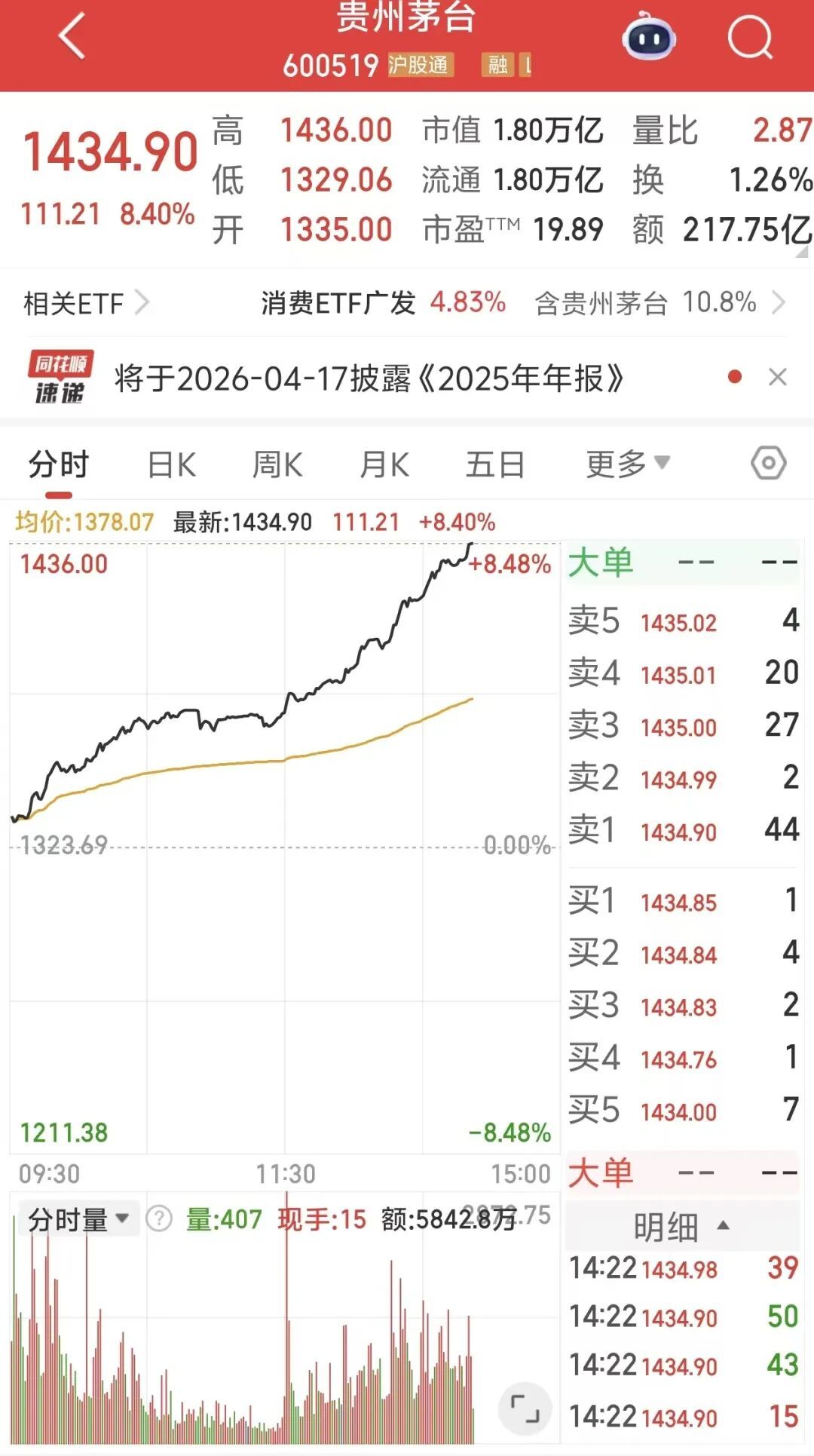
白酒股午后拉升,贵州茅台涨超8%
Feng Huang Wang Cai Jing· 2026-01-29 06:45
Group 1 - The price of Feitian Moutai has been experiencing a continuous increase, driven by preemptive stocking by liquor stores and Moutai's volume control strategy, despite no significant surge in market demand [3] - As of January 29, the price for a bottle of 2026 original box Moutai rose by 20 yuan to 1610 yuan, while the price for loose bottles remained at 1570 yuan, indicating a recovery above 1600 yuan [3] - The retail price of Moutai has rebounded to between 1570 yuan and 1600 yuan per bottle on various instant retail platforms in Beijing, with the 1499 yuan version being sold out for 29 consecutive days on the "i Moutai" platform [3] Group 2 - Current public fund holdings in the liquor sector are lower than those at the start of previous liquor cycles in 2009 and 2019, suggesting that the conditions for a new cycle are nearly met [4] - The food and beverage sector has been in continuous adjustment for nearly five years since early 2021, and historical data indicates that sectors experiencing a decline for 3-4 years often see a reversal [4] - Sectors such as non-ferrous metals, chemicals, power equipment, and biomedicine, which have led in growth in 2025, previously underwent adjustments exceeding three years [4]

贵州茅台20260118
2026-01-19 02:29
Summary of Guizhou Moutai Conference Call Company Overview - **Company**: Guizhou Moutai - **Industry**: Baijiu (Chinese liquor) Key Points Price Mechanism Adjustment - Guizhou Moutai has adjusted its pricing mechanism by canceling the distribution of high-value-added products and changing the suggested retail price to the actual retail price, resulting in a price drop of approximately 30% for most Moutai products [2][3][6] Product Launch and Sales Expectations - The "Ai Moutai" platform is expected to have a significant output, with daily releases of tens of tons, totaling several thousand tons for the year, which will contribute to the company's growth in 2026 [2][4] - The pricing for zodiac-themed liquor has been lowered, with daily releases also reaching tens of tons, although the opening rate is lower than that of regular Moutai [2][4][7] - The positioning of premium Moutai has been adjusted to take on the volume task of the "Ta Ya" product, aiming to become the second-largest product through core distributors [2][4][7] Market Dynamics and Industry Outlook - The baijiu industry is experiencing low expectations for the "opening red" sales, with no significant recovery in demand observed recently. Focus should be on leading and strong regional brands, which are expected to catalyze stock prices [5][12] - The overall sales performance in the baijiu industry for 2025 was poor, with many brands failing to meet annual collection targets. However, Moutai and Wuliangye showed more stable sales performance due to market reforms and price reductions [13][14] Market Transformation and Future Strategy - Moutai's market transformation is characterized by a strong commitment to reform, which includes changes in product systems, operational models, channel layouts, and pricing mechanisms [3][6][11] - The transformation aims to redistribute benefits and shift the channel dynamics from passive to active selling, enhancing customer service and meeting diverse consumer needs [11] Sales and Distribution Insights - As of January, payments for offline channels have been made, with February's payments ongoing. The distribution progress is consistent with previous years, with expectations for stable quotas for regular Moutai [9] - The adjustment in the self-operated pricing system has sparked debate, as the significant volume increase at the psychological price point of 1,499 yuan may affect the brand's scarcity and performance stability [10] Future Expectations - The overall expectation for the baijiu industry in 2026 is cautiously optimistic, with a reliance on the second half of the year for growth due to low baselines and gradually recovering demand [17][18] - Key observation points include the performance of strong brands and the potential for market recovery, which could lead to a positive shift in the entire industry [15][16]
线上秒光线下走访,茅台“下半场”改写渠道规则:经销商撕掉“高冷”标签
Hua Xia Shi Bao· 2026-01-08 13:38
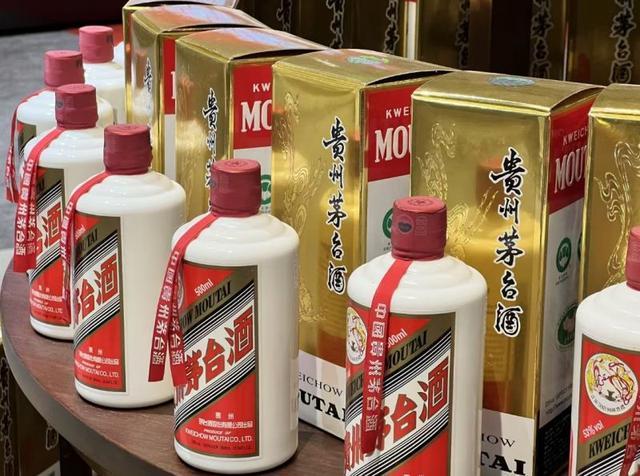
Core Viewpoint - The launch of the 53% vol 500ml Flying Moutai on the iMoutai platform marks a significant shift in Moutai's sales strategy, focusing on direct sales and consumer engagement, which is expected to stabilize prices and reshape market dynamics [2][5][6]. Group 1: Market Response and Pricing - Since the launch on January 1, 2026, the retail price of Flying Moutai has stabilized around 1600 yuan per bottle, reflecting a shift in the sales approach from passive to proactive customer service [2][3]. - The iMoutai platform has seen high demand, with stock selling out within half an hour despite limits on purchases, indicating strong consumer interest [2][3]. - Offline prices for Moutai products are generally stable, with a slight premium over the iMoutai official price, suggesting a rationalization of the pricing structure in the market [3][4]. Group 2: Distributor and Channel Dynamics - Distributors are facing pressure to adapt to a changing market, moving away from traditional sales methods to a more service-oriented approach as Moutai emphasizes direct sales [4][7]. - The shift in Moutai's strategy is seen as a response to the need for transparency and efficiency in the distribution process, reducing reliance on middlemen [5][6]. - The competitive landscape for high-end liquor is evolving, with Moutai's strategy serving as a bellwether for industry trends, indicating a move towards direct consumer engagement and pricing control [7][8]. Group 3: Long-term Strategic Implications - Moutai's recent actions are part of a broader marketing reform aimed at aligning product pricing with consumer value, enhancing market transparency and fairness [5][6]. - The year 2026 is viewed as a pivotal point in Moutai's business strategy, shifting focus from channel control to consumer experience and perception [6][7]. - Analysts predict that the increased supply of Flying Moutai will continue to drive market share growth, catering to a broader consumer base [7].
茅台给酒业带来了一份最实在的“开年礼”
Xin Lang Cai Jing· 2026-01-04 06:18
Core Viewpoint - The foundation of high-end consumption remains solid, with people's aspirations for a better life and the sense of ritual for important moments undiminished by the macroeconomic environment [4][9] Group 1: Market Dynamics - The white liquor industry is currently in a challenging adjustment period, characterized by channel inventory, price fluctuations, and a return to consumer rationality [4][10] - Guizhou Moutai's launch of "i Moutai" and the subsequent rush for purchases demonstrated that market demand is still robust, contrary to some perceptions [4][10] - Over three days, more than 100,000 real individual users placed orders, indicating a solid market presence and consumer engagement [4][10] Group 2: Consumer Engagement - Moutai's approach is seen as a critical pressure test for consumer demand, revealing that the desire for high-end products is still strong [4][11] - The company has implemented a purchase limit of six bottles per person per day to optimize distribution efficiency and promote fair consumption [11] - The "i Moutai" platform is not just another sales channel but a digital platform for consumer engagement, allowing the company to understand purchasing patterns and preferences [11][12] Group 3: Industry Insights - The recent sales data from New Year's confirmed a substantial demand pool, suggesting that the industry should focus on genuinely reaching out to consumers rather than merely complaining about market conditions [11][12] - The era of a "seller's market," driven by information asymmetry and channel influence, is shifting, and companies must adapt to a consumer-driven landscape [11][12] - Moutai's experience serves as a practical example for the entire liquor industry, providing a tangible roadmap for engaging with consumers effectively [12][13]

金银大涨至74美元、625亿元国补提前下达、雷军跨年直播推迟
3 6 Ke· 2025-12-31 06:30
Group 1: Market Trends - Gold and silver prices experienced significant fluctuations, with gold rising over 1% to $4,377.849 per ounce and silver surpassing $75 per ounce, marking a daily increase of over 4% [4]. - The Chinese government has allocated 62.5 billion yuan (approximately $9.1 billion) in advance for consumer subsidies to support the purchase of mobile phones, tablets, and home appliances, aiming to boost consumption during the New Year and Spring Festival [5]. Group 2: Company News - Xiaomi's founder Lei Jun announced the postponement of a New Year's live stream originally scheduled for December 31 to January 3 at 7 PM due to health issues [6]. - iMoutai plans to launch a new product priced at 1,499 yuan (approximately $215) starting January 1, allowing for subscription applications [8].
开盘:三大指数集体高开 教育板块涨幅居前
Xin Lang Cai Jing· 2025-12-31 02:11
Market Overview - The three major indices opened higher, with the education sector leading the gains. As of the market opening, the Shanghai Composite Index was at 3968.73, up 0.09%; the Shenzhen Component Index was at 13627.26, up 0.17%; and the ChiNext Index was at 3247.74, up 0.15% [1]. Policy Announcements - The National Development and Reform Commission and the Ministry of Finance have allocated 625 billion yuan in special long-term bonds to support the consumption of old goods in the first batch for 2026 [1]. - The Ministry of Finance and the State Taxation Administration announced a new policy on the value-added tax for individuals selling homes, with a 3% tax rate for properties held for less than two years and exemption for those held for two years or more [1]. - The Ministry of Industry and Information Technology, along with three other departments, issued a plan for the digital transformation of the automotive industry, promoting the large-scale application of intelligent robots in various manufacturing processes [1]. - The Ministry of Commerce and eight other departments released the implementation details for the 2026 vehicle trade-in subsidy, offering up to 20,000 yuan for scrapping eligible old vehicles and purchasing new energy vehicles [1][2]. Industry Developments - The National Development and Reform Commission and the Ministry of Finance announced a large-scale equipment update and trade-in policy for consumer goods, providing a 15% subsidy for energy-efficient home appliances and a maximum of 1,500 yuan per item [2]. - The Ministry of Education plans to advance artificial intelligence in education, with policies expected to be released next year to enhance AI education and applications [2]. Corporate Announcements - Aoyuan Ceiling announced a change in its actual controller to Shi Qiming, and its stock has resumed trading. Dongjie Intelligent has terminated its major asset restructuring plan, and its stock has also resumed trading [4]. - Salt Lake Co. plans to acquire a 51% stake in Minmetals Salt Lake for 4.605 billion yuan to accelerate the development of a world-class salt lake industry base. Shengxin Lithium Energy intends to acquire a 30% stake in Qicheng Mining for 2.08 billion yuan [4]. - China National Airlines plans to purchase 60 Airbus A320NEO aircraft, with a total catalog price of approximately 9.53 billion USD [6]. - Guotou Zhonglu intends to issue shares at a premium of 147.4% to acquire 100% of China Electronics Engineering Design Institute for 6.026 billion yuan [6]. Market Sentiment - Citic Securities reported an increase in expectations for the appreciation of the RMB, which is favorable for the performance of RMB-denominated equity assets. The central bank is expected to adopt more flexible policy tools, focusing on domestic demand [10].
谁主lululemon?丨消费参考
2 1 Shi Ji Jing Ji Bao Dao· 2025-12-31 01:57
Group 1 - Lululemon is facing a power struggle as founder Chip Wilson is attempting to reshape the company's board by nominating three candidates for board positions [1] - The nominated candidates include former executives from On, ESPN, and Activision, indicating Wilson's intent to influence the company's direction [1] - Calvin McDonald, the current CEO, is set to resign effective January 31, 2026, which has prompted Wilson to express dissatisfaction with both McDonald and the board [2][3] Group 2 - Wilson has criticized the board for failing to hold management accountable for product innovation and for losing touch with the brand's core market, leading to a decline in brand value [2] - Despite Wilson's efforts, he is not the largest shareholder, holding approximately 9% of Lululemon's shares, which raises questions about his ability to effect change [3] - Elliott Management, a well-known activist investor, holds over $1 billion in Lululemon shares and is also recommending candidates for the next CEO position [3] Group 3 - Lululemon's performance in the Americas has been struggling, with net revenue declining by 2% year-over-year to $1.7 billion, accounting for 68% of total revenue [4] - In contrast, the company has seen significant growth in the Chinese market, with net revenue increasing by 46% to $465.4 million, representing 18% of total revenue [5] - The company is experiencing a competitive landscape in China, which may require careful adjustments to its strategy [6][8]
