量化宽松

Search documents
美联储重启QE?RMP来了!市场想重温“2019年的美好回忆”
Hua Er Jie Jian Wen· 2025-12-11 01:39
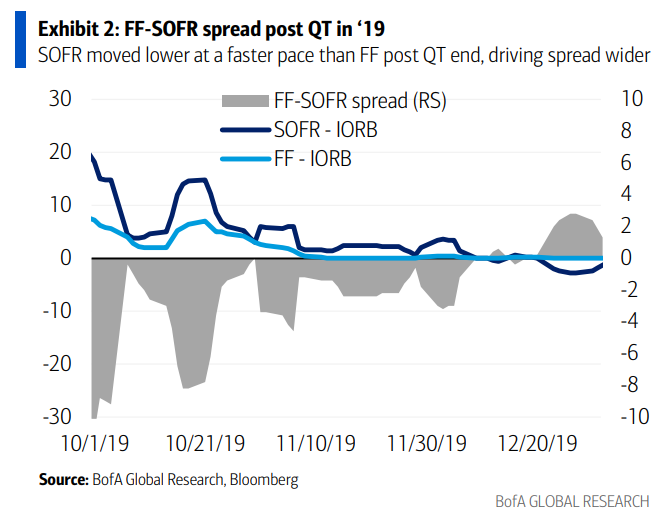
Core Viewpoint - The Federal Reserve has initiated the Reserve Management Purchase (RMP) program to inject liquidity into the market, following recent volatility in the $12 trillion repurchase market, despite emphasizing that this is not quantitative easing (QE) [1][4][5]. Group 1: RMP Program Details - The New York Fed announced a plan to purchase $40 billion in short-term Treasury securities over the next 30 days to maintain adequate reserve levels, marking a significant shift in the Fed's balance sheet management strategy [2][3]. - The RMP will adjust its purchasing scale based on expected trends in Fed liabilities and seasonal fluctuations, with the first plan to be published on December 11 [2][4]. - The Fed's statement indicates that reserve balances have fallen to adequate levels, prompting the need for short-term Treasury purchases [2][3]. Group 2: Market Reactions and Implications - Despite the Fed's insistence that RMP is not QE, the market has reacted as if it is, with increases in U.S. Treasuries, equities, Bitcoin, gold, and oil, while the dollar weakened [1][4]. - The liquidity injection is expected to quickly lower the Secured Overnight Financing Rate (SOFR), while the Federal Funds Rate (FF) will respond more slowly, creating significant arbitrage opportunities for investors [5][6]. - Historical context from 2019 suggests that similar liquidity injections led to rapid changes in SOFR, indicating that the current market may experience similar dynamics [6][9]. Group 3: Comparison with Historical Context - The RMP's scale is expected to be lower than in 2019, with anticipated monthly purchases around 0.15% of GDP, compared to 0.2-0.3% during the previous episode [9][10]. - The current liquidity situation is not as severe as in 2019, suggesting that the Fed's response may be less aggressive this time [9][10]. - The mechanism of cash injection leading to rapid SOFR changes while FF lags has been validated in previous instances, indicating a consistent pattern despite the differing contexts [10].

鲍威尔鹰声不及预期+“迷你QE”引爆市场!美元大跌 美债与贵金属齐飞
智通财经网· 2025-12-11 01:09
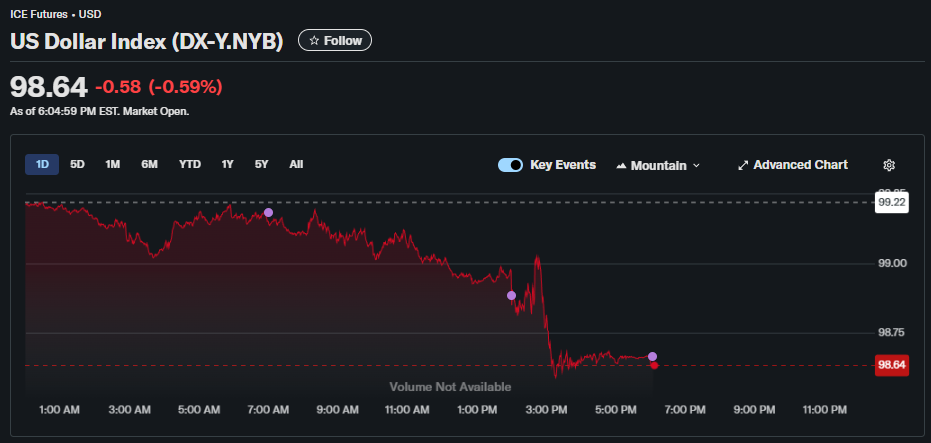
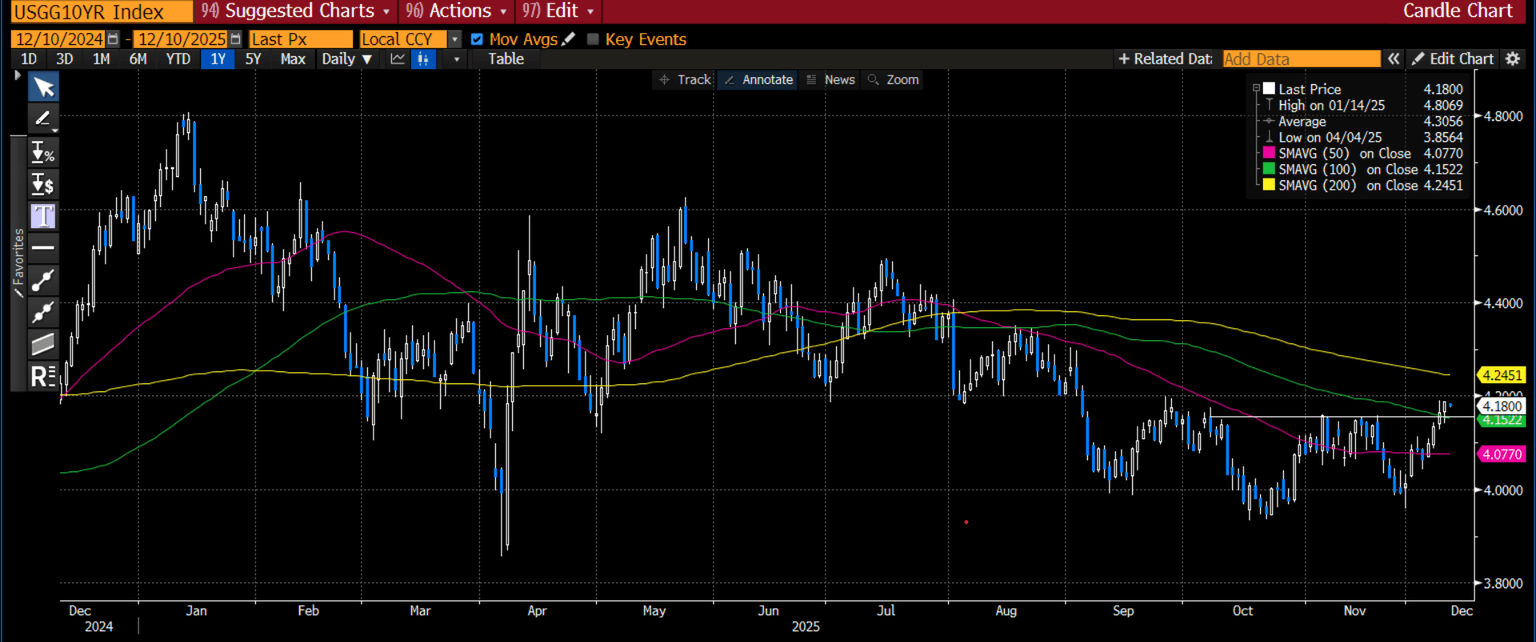
由于美联储主席鲍威尔在新闻发布会上的讲话并未像市场预期的那样鹰派、且美联储宣布自12月12日起每月购买400亿美元短期国债,美元下跌,美债及贵 金属则应声走高。 数据显示,美元指数(DXY)跌0.59%,报98.64;Bloomberg美元现货指数收跌0.4%,创9月16日以来最大单日跌幅。美债方面,各期限美债收益率全线下跌, 从数月高位回落。截至发稿,对美联储政策敏感的两年期美债收益率跌至3.524%,10年期美债收益率则跌至4.14%。随着美元和美债收益率走低,贵金属走 高。截至发稿,现货黄金小幅上涨至4232.90美元/盎司,现货白银涨至61.90美元/盎司。 美联储联邦公开市场委员会周三如期降息,以9比3的投票结果决定将联邦基金利率下调25个基点至3.5%-3.75%区间。该委员会还在声明中微调措辞,暗示对 未来降息时点的判断存在更大不确定性。 鲍威尔在利率决议公布后的新闻发布会上表示,目前的政策调整有助于稳定正在趋弱的劳动力市场,同时维持足够紧缩的条件以压制通胀。他表示:"随着 关税影响逐步消退,此次进一步政策正常化应能支撑就业,并让通胀重新向2%的目标回落。" 对于通胀,鲍威尔强调,目前通胀率超过 ...
连续第三次!美联储如期降息25基点 但内部分歧加剧 将每月购债400亿
智通财经网· 2025-12-10 22:26
Group 1 - The Federal Reserve announced its third consecutive interest rate cut this year, lowering the federal funds rate by 25 basis points to a range of 3.5%-3.75%, indicating increasing divergence among policymakers regarding future policy paths [1] - The FOMC's decision was made with a 9-3 vote, highlighting disagreements among officials about the balance between a weakening labor market and persistent inflation [1][2] - The Fed plans to purchase $40 billion in Treasury bills monthly starting December 12 to rebuild bank reserves that have declined significantly during the balance sheet reduction [2] Group 2 - Economic forecasts show that officials expect only one rate cut in both 2026 and 2027, with a split among officials on the necessity of further cuts, as seven officials favor maintaining rates while eight support at least two cuts [3] - The unemployment rate rose to 4.4% in September, up from 4.1% in June, while core inflation remains above target at 2.8%, contributing to policy uncertainty [2] - External political factors are influencing discussions, with President Trump indicating he will announce a successor for the Fed chair early next year, raising concerns about the independence of the central bank [3]
“新债王”冈拉克:今天可能是鲍威尔任内最后一次降息
Sou Hu Cai Jing· 2025-12-10 21:52
Core Viewpoint - The next Federal Reserve chair chosen by President Donald Trump is expected to be a dovish figure, leading to potential interest rate cuts after Powell's departure, which may weaken the dollar and not aid long-term rates [1] Group 1 - Gundlach believes that Powell's upcoming rate cut may be his last, as he appears more focused on rising unemployment [1] - Gundlach expresses skepticism about the need for quantitative easing, noting that the private credit market is absorbing a significant amount of supply [1] - Gundlach does not consider this a "hawkish rate cut" [1]
Bitcoin Swings Wildly as Fed's Powell Straddles Labor Market and Inflation Issues
Yahoo Finance· 2025-12-10 20:37
Market Reaction - Bitcoin (BTC) spiked above $94,000 before retreating to around $92,000 after Fed Chair Jerome Powell's comments on the labor market and inflation [1][2] - Ether (ETH) showed relative strength, rising about 1.1% to wobble above $3,300 during the same period [2] Federal Reserve Actions - The Federal Reserve cut the fed funds rate by 25 basis points and announced plans to purchase short-term Treasury bills, targeting around $40 billion in purchases over the next month [4] - Powell indicated that the Fed's policy is now within a neutral range and emphasized the need to wait for more data before making further adjustments [3][6] Analyst Insights - Analysts noted that the Fed's rate cut does not signal the start of an aggressive easing cycle, with future moves dependent on inflation and labor market data [6] - The communication from policymakers stressed caution amid signs of slowing economic momentum [6]
Fed Cuts Rates 25bps, But the Real Shock Is What Comes Next
Yahoo Finance· 2025-12-10 19:09
fed rate cut december, fed rate cut. Photo by BeInCrypto The Federal Reserve has lowered interest rates by 25 basis points to a target range of 3.50%–3.75%, delivering the cut markets overwhelmingly expected — but without offering clear momentum toward further easing. Today’s decision was non-unanimous, reinforcing the uncertainty that has dominated investor sentiment over the past week. Guidance Is the Market Focus, Not the Cut The FOMC acknowledged slowing job gains, a higher unemployment trend thro ...
IC Markets官网:美联储政策前瞻,降息之后会怎样?
Sou Hu Cai Jing· 2025-12-10 10:08
Group 1 - The Federal Reserve is expected to announce a 25 basis point rate cut tonight, with a 90% probability of this outcome, but future outlook remains uncertain [1] - Global expectations for rate cuts have been revised downwards, with Australia, New Zealand, and Canada also adjusting their rate cut forecasts, while the European Central Bank is seen as having ended its rate cut cycle [2] - The upcoming non-farm payroll report on December 16 is anticipated to have a greater impact on the dollar than the Federal Reserve's decision, with traders pricing in significant volatility following its release [3] Group 2 - There are internal divisions within the Federal Reserve regarding the rate cut, with some members likely to advocate for further cuts while others may adopt a cautious stance, potentially leading to dissenting votes based on inflation concerns [6] - The Federal Reserve may announce adjustments to its quantitative easing plan, which could include purchasing short-term government bonds to manage bank reserves and alleviate recent liquidity concerns in the financial system [9] - Market reactions are expected, with stock index futures showing mixed results and potential for significant volatility post-meeting, while the dollar is experiencing weakness against other currencies [10]
美联储前瞻:“鹰派降息”几乎板上钉钉,鲍威尔或意外“变相印钞”?
Xin Lang Cai Jing· 2025-12-10 07:26
金十数据 市场笃定美联储将在周四凌晨降息25个基点,但决策层正面临罕见分歧。流动性与资产负债表问题重回 视野,鲍威尔或为市场带来这一"节日惊喜"! 美联储将于周四凌晨03:00公布利率决议和经济预期摘要。在经历了9月和10月的连续降息后,市场普 遍预期联邦公开市场委员会(FOMC)将再次降息25个基点,将联邦基金利率目标区间降至 3.50%-3.75%。 然而,这可能是近年来不确定性最高的一次会议。由于政府停摆导致关键经济数据缺失,加之决策层内 部罕见的分歧,本次会议呈现出复杂的图景:一方面市场押注降息几乎"板上钉钉",另一方面美联储主 席鲍威尔或将不得不采取"鹰派降息"的策略,即在降息的同时释放更为谨慎的未来政策信号。 "鹰派"共识 尽管此前鲍威尔曾警告12月降息"远非定局",但近期一系列动向已让市场预期发生决定性转变。CME 的"美联储观察"工具显示,期货交易员认为降息25个基点的概率约为87%。 丹麦银行的分析指出,尽管自10月以来宏观数据缺乏决定性信号,但通胀预期的下降使得即使是鹰派成 员也更能接受再次降息。该行认为,实施一次"鹰派降息"已成为委员会的共识选择。这意味着鲍威尔虽 然会批准降息,但很可能 ...
美联储即将摊牌!今夜降息25个基点无悬念 但“鹰派”表态或成主旋律
智通财经网· 2025-12-10 00:51
智通财经APP获悉,美联储即将于北京时间周四凌晨3点公布最新利率决议。在经历了一段时间对于美 联储决策方向的明显犹豫之后,市场目前已基本确信,美联储将连续第三次降息25个基点,使联邦基金 利率降至3.5%-3.75%。 多重变量交织 梅里克预计,在本周的政策会议上很可能再次出现异议投票,并伴有其他多个"软性异议",这些异议将 在"点阵图"上体现不同的观点。"点阵图"以匿名方式展示了19位会议参与者(包括12位有投票权的成员) 各自对利率前景的展望。梅里克补充称,尽管有"充分的理由"支持美联储在本周的连续第三次降息,但 双方都有论据支持。 美联储前货币事务主管、现任耶鲁大学教授比尔·英格利希(Bill English)表示:"最有可能的结果是一种 鹰派降息——他们会降息,但在声明和新闻发布会上暗示,短期内可能已经完成降息周期。"他预计, 美联储传达的信息将是"他们已做出调整,对当前立场感到满意,并且认为只要经济形势大致符合预 期,近期无需采取更多行动"。 整个联邦公开市场委员会的立场将体现在会后声明以及美联储主席鲍威尔的新闻发布会上。华尔街经济 评论人士预计,声明措辞可能会回到一年前的表述,提及"进一步调整的幅 ...
What to Expect From Fed Decision on Wednesday
Youtube· 2025-12-09 14:39
分组1 - The Federal Reserve is expected to support a 25 basis point rate cut, with few changes to the DOT plot and median policy assumptions [1][2] - Chair Powell's communication will focus on assessing risks and the outlook for future cuts, balancing weak labor market signals against inflation concerns [2][4] - Historical context shows that dissents within the FOMC are not unusual, and the current environment may lead to fewer than four dissents [6][8] 分组2 - The potential next Fed chair, Kevin Hassett, is noted for his academic credentials, data expertise, and collegiality, which could enhance his effectiveness [11][12] - Discussions around Fed policy include not just rate cuts but also balance sheet management and quantitative easing, with expectations of expanding securities holdings starting in January [13][15] - The Fed may need to add liquidity to address tightening reserve balances, with potential purchases of T-bills starting at $40 billion a month [15][16] 分组3 - Forward inflation indicators are showing positive trends, which may alleviate concerns about the Fed's credibility and its approach to managing rates [21][23] - The labor market is facing challenges, with mixed consumer spending and weak investment, which could lead to a contraction if not addressed [25][26] - The Fed's approach to managing inflation and the labor market will be critical, especially if unemployment continues to rise [26][27]