高端化

Search documents
占全球35%市场!中国桥梁工程规模将破1.5万亿!
Xin Lang Cai Jing· 2025-12-30 08:48
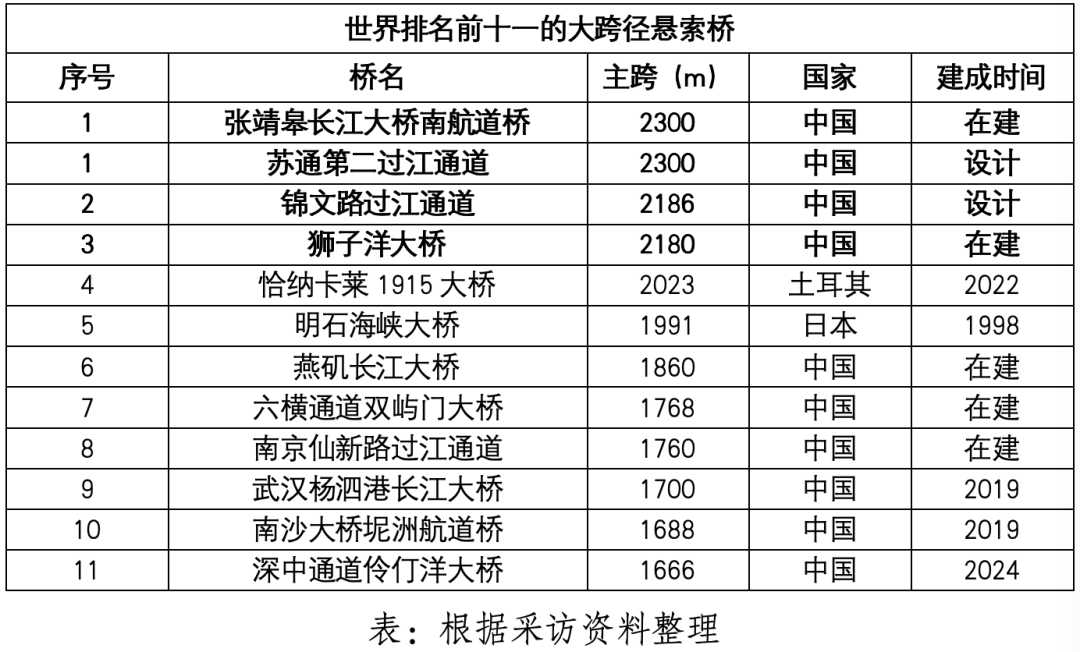
Core Viewpoint - In 2024, China's suspension bridge equipment industry achieved a total output value of 48.76 billion yuan, marking an 11.3% year-on-year growth, further solidifying its global leadership position [1]. Industry Performance - The number of large suspension bridges with main spans exceeding 1000 meters reached 19, ranking first in the world, with a continuous increase in domestic production rates and a clear acceleration in high-end, intelligent, and green transformation [1][2]. - The total number of bridges in China reached 191,400, with 11,300 being large bridges, reflecting a growth of 7.71% and 10.65% respectively compared to the previous year [3]. Market Outlook - The market size of China's bridge engineering industry is projected to reach 1.5 trillion yuan by 2025, accounting for 35% of the global market, with an expected growth rate of over 10% for large and extra-large bridge construction in the next five years [4]. - The manufacturing segment of structural components (mainly steel structures) contributed 21.58 billion yuan, accounting for 44.3% of the total output, while the cable system segment achieved an output of 15.62 billion yuan, representing 32.0% [4]. Technological Advancements - The proportion of high-strength cables used has reached 91.6%, with ultra-high-strength steel wire achieving engineering application, and the breaking force of a single main cable exceeding 100,000 tons [5]. - The adoption of intelligent construction methods is widespread, with BIM management coverage in large projects reaching 88% and prefabricated assembly application rates increasing to 67% [5]. International Expansion - In 2024, Chinese companies secured contracts for suspension bridge projects in Southeast Asia, Africa, and the Middle East totaling 12.86 billion USD, a year-on-year increase of 21.4%, with expectations for this figure to rise to 15.23 billion USD by 2025 [6]. - The export proportion of domestic equipment is expected to exceed 65%, with companies establishing overseas service centers and obtaining international certifications to deepen local engagement [6]. Future Trends - The development of suspension bridges is extending from crossing rivers and seas to complex terrains such as mountainous gorges, evolving from single-layer to double-layer multi-lane structures [8]. - The total industry output value is expected to reach 54.23 billion yuan by 2025, with an anticipated growth of 11.2% [8].

雷军跨年搞大事!12.31直播拆YU7,硬核聊2025,这场跨年太对味了
Sou Hu Cai Jing· 2025-12-30 06:55
Core Viewpoint - Xiaomi's upcoming New Year's Eve live stream on December 31 will feature a unique format, focusing on a live disassembly of the Xiaomi YU7 SUV, showcasing the company's confidence in its product quality and engaging with fans about the past year and future prospects [1][3][10]. Group 1: Live Stream Highlights - The live stream will not include traditional entertainment but will instead focus on a detailed disassembly of the YU7, responding to public demand for transparency regarding the vehicle's construction and materials [1][3]. - The YU7 has gained popularity for its strong safety features and high-quality materials, with the live disassembly serving as a demonstration of the company's commitment to quality [3][5]. Group 2: Product Features and Innovations - Previous third-party assessments of the YU7 revealed impressive specifications, such as a 74.4% aluminum alloy coverage in the front bumper for enhanced safety and the use of 2200 MPa ultra-high-strength steel in the A-pillar [5]. - The YU7's battery pack features 14 layers of protection, including a bulletproof coating, ensuring both safety and extended range [5]. Group 3: Yearly Review and Future Outlook - The live stream will reflect on significant achievements in 2025, including the successful launch of the Xiaomi 17 Ultra and the strong market performance of the Xiaomi automotive family, particularly the YU7 [7][10]. - Looking ahead to 2026, Xiaomi aims to further enhance its ecosystem, potentially introducing advanced vehicle connectivity technologies and new models to compete more effectively with brands like Apple and Huawei [10][12].


雷军这次赌赢了!7999元超高端小米17Ultra徕卡版,首销占比50%
Sou Hu Cai Jing· 2025-12-30 06:19
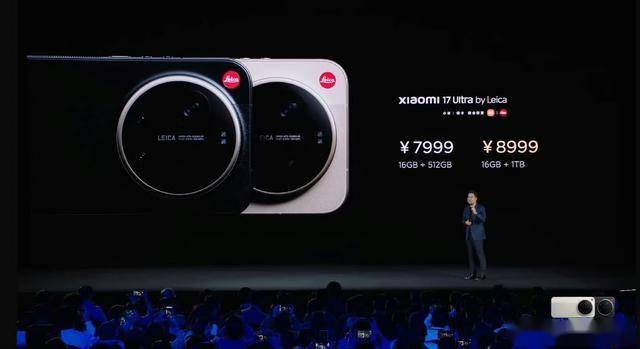
Core Insights - Xiaomi has successfully entered the ultra-high-end market with the launch of the Xiaomi 17 Ultra, achieving over 50% sales for the Leica version, priced at 7999 yuan, marking a significant step in its high-end strategy [1][7][12] Product Features - The Leica version of the Xiaomi 17 Ultra offers a unique user experience with features like a master zoom ring, Leica's instant mode for film-like quality, and a distinctive design that appeals to photography enthusiasts [3][5] - It is equipped with a 50MP 1-inch main camera and a 200MP periscope telephoto lens, achieving optical zoom without loss of quality, and has received Leica's APO optical certification [5][7] Market Positioning - Xiaomi's entry into the ultra-high-end market is notable as it challenges established brands like Apple and Huawei, which have dominated this segment for years [7][9] - The brand's rapid ascent from budget to premium pricing reflects a significant shift in market perception and consumer acceptance of Xiaomi as a high-end brand [7][9] Future Prospects - The integration of Xiaomi's smartphone and automotive ecosystems is expected to enhance brand loyalty and attract high-end users, further solidifying its position in the premium market [10][12] - The success of the Xiaomi 17 Ultra is seen as just the beginning, with expectations for a new market landscape as the automotive sector launches [12]
蒲洁能化丰富聚烯烃产品体系
Zhong Guo Hua Gong Bao· 2025-12-30 04:25
Core Insights - The company has developed a total of 44 new polyethylene grades and modified 20 products, establishing a distinctive polyethylene product system as of 2025 [1] - The company aims to transition from basic to high-end materials, focusing on specialized markets such as new energy vehicles, consumer electronics, biomedicine, and military industries [1] - A new project for ultra-high molecular weight polyethylene with a capacity of 40,000 tons per year has been completed, marking the first large-scale industrial project of its kind in Shaanxi Province [1] Product Development - The company plans to customize production based on downstream customer demands, with a focus on two new polypropylene grades, EP548S and EP548RF, to enhance product diversity [2] - A new halogen-free flame-retardant polypropylene product has been developed, featuring a thickness of only 0.8 mm and achieving V0 grade performance, which enhances application safety [2] - The new flame-retardant polypropylene product complies with strict environmental regulations such as the EU RoHS and is suitable for use in various fields including new energy vehicle battery bases, electronic appliances, automotive interiors, and construction materials [2]
智能手机惊变2025:固化的高端、流动的中场,与闯入门口的AI革命
3 6 Ke· 2025-12-29 13:44
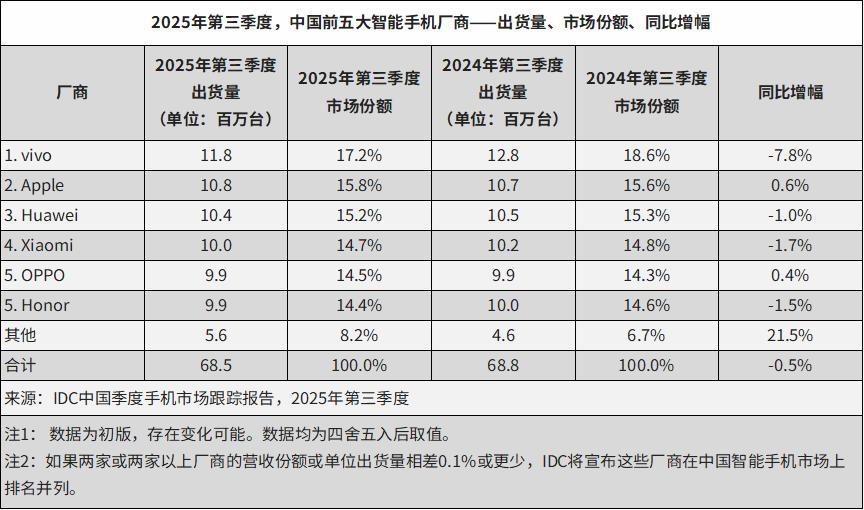
Core Insights - The Chinese smartphone industry is experiencing a silent "three-line war," characterized by fierce competition in the mid-range market, a duopoly in the high-end segment, and a push towards AI integration [1][2] Group 1: Market Dynamics - By 2025, the smartphone market is showing signs of a split narrative, with significant reshuffling among mainstream manufacturers in the mid-range segment while Apple and Huawei dominate the high-end market [2] - IDC data for Q3 2025 indicates that vivo leads the market with a 17.2% share, followed by Apple at 15.8%, Huawei at 15.2%, Xiaomi at 14.7%, and OPPO at 14.5% [3][4] - The total shipment volume for the top five manufacturers in Q3 2025 was 68.5 million units, a slight decline of 0.5% year-on-year [4] Group 2: Competitive Landscape - The mid-range market is marked by intense competition and strategic adjustments, with brands like Honor and Xiaomi struggling to maintain their positions [5][6] - Huawei faces challenges with its HarmonyOS ecosystem, particularly in app compatibility, which affects user experience [6] - The high-end market remains stable, with Apple and Huawei holding over 80% of the market share for devices priced above 6000 yuan [7][8] Group 3: AI Integration - The smartphone industry is transitioning to an AI 3.0 phase, where AI capabilities are becoming integral to the user experience rather than just additional features [10][11] - The introduction of advanced AI models is expected to redefine user interaction with smartphones, moving from hardware specifications to intelligent integration [12] - Companies are increasingly focusing on AI as a differentiator, with significant investments from major players like ByteDance in collaboration with hardware manufacturers [13] Group 4: New Entrants and Market Evolution - The entry of cross-industry players and the resurgence of previously overlooked brands are reshaping the competitive landscape [14][15] - The smartphone industry is evolving from hardware competition to ecosystem competition, emphasizing service differentiation [16] - The market is anticipated to undergo another round of reshuffling in 2026, with smaller manufacturers needing to leverage AI to avoid being sidelined [16]

高盛:小米集团-W(01810)持续推进高端化策略 评级“买入”
智通财经网· 2025-12-29 07:53
Core Viewpoint - Goldman Sachs has issued a report indicating that Xiaomi Group-W (01810) is accelerating its AI development this year, with expectations to integrate self-developed chipsets, the Surge OS, and the MiMo large language model into a potential AI-native consumer terminal expected to be released in 2026 [1] Group 1: AI Development and Product Strategy - Xiaomi is expected to continue its "human-vehicle-home ecosystem" strategy, which is still in the early stages of multi-year ecological expansion [1] - The company aims to enhance its competitiveness in the electric vehicle sector due to its robust balance sheet, strong ecosystem integration capabilities, and cost advantages from deep supply chain involvement [1] Group 2: Product Launch and Market Positioning - Goldman Sachs participated in Xiaomi's 2025 winter product launch, where the company unveiled the 17 Ultra smartphone series, reflecting its ongoing high-end strategy [1] - It is anticipated that high-end product development will remain Xiaomi's primary focus entering next year, with plans to penetrate the market for products priced above 6,000 RMB in China and accelerate the development of overseas high-end product markets [1]
李毅中:准确把握“高端化”,防止中低端产业盲目退出
Feng Huang Wang Cai Jing· 2025-12-29 06:13
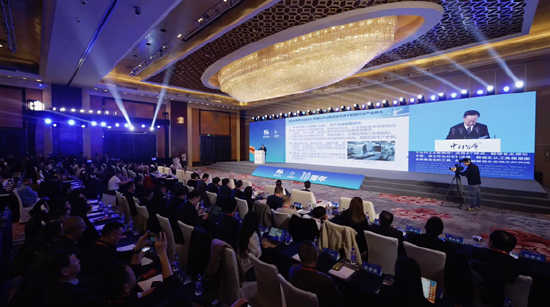
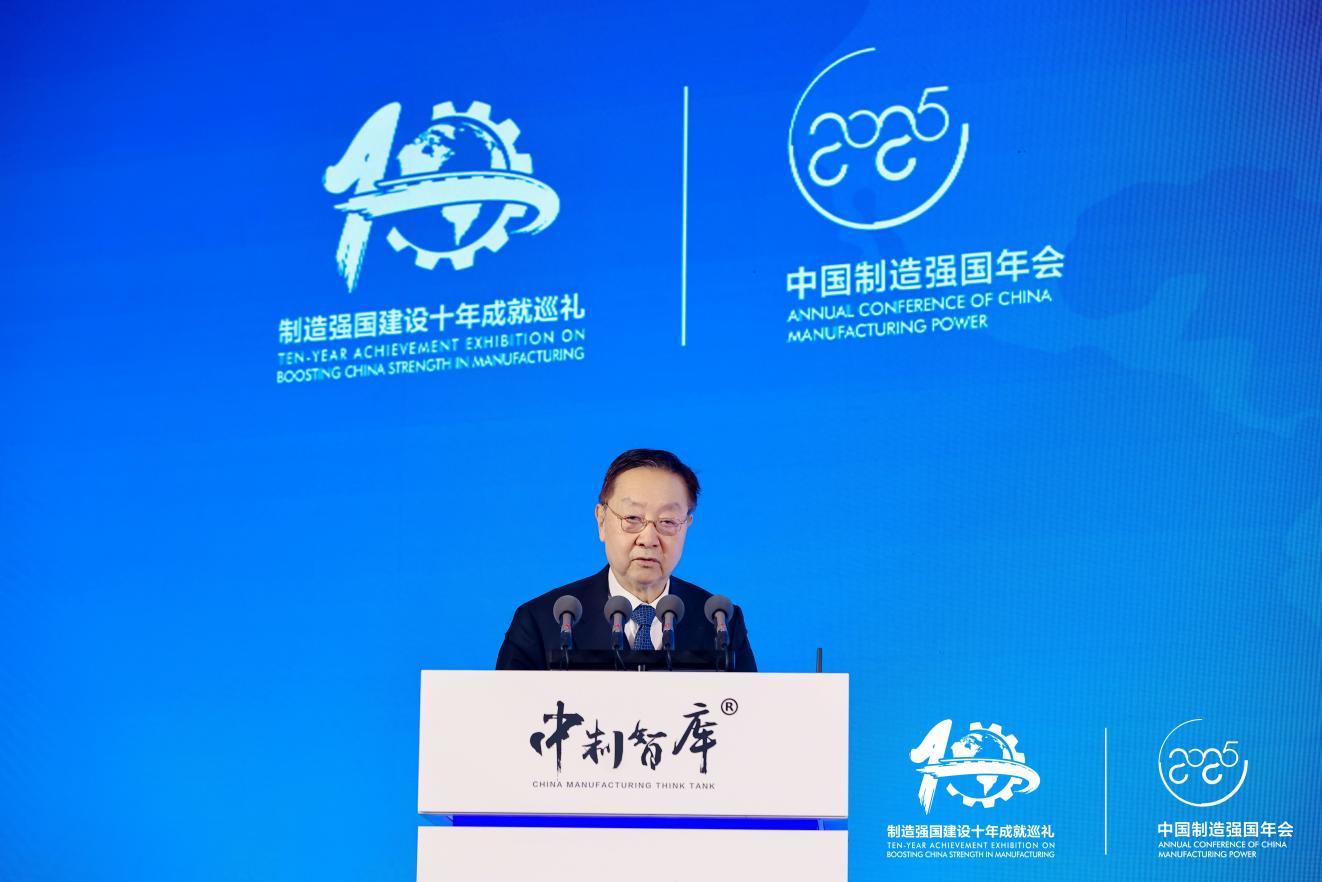
Group 1 - The 10th China Manufacturing Power Conference was successfully held in Beijing, focusing on the theme "Entity as the Root, Moving Towards New Directions" and discussing the high-quality development path of China's manufacturing industry during the 14th and 15th Five-Year Plans [1] - The conference emphasized the importance of transitioning to a modern industrial system supported by advanced manufacturing, highlighting the need for intelligent, green, and integrated approaches in industrialization [3] - The concept of "integration" was introduced, stressing the blurring lines between secondary and tertiary industries, and the necessity for multi-modal integration paths to enhance the modern industrial system [3] Group 2 - The importance of accurately understanding the connotation of "high-end" was highlighted, with a focus on technological innovation to optimize industrial and product structures, while ensuring the stability of supply chains and employment [4] - The need to integrate into global value chains, supply chains, and industrial chains was emphasized, advocating for a balanced approach to high-end industry development without blindly eliminating mid-to-low-end industries [4] - The goal for the 15th Five-Year Plan period is to achieve qualitative improvements and reasonable quantitative growth in the economy, addressing diverse economic and social needs [4]
中国家电巨头正扎堆去泰国
2 1 Shi Ji Jing Ji Bao Dao· 2025-12-29 05:49
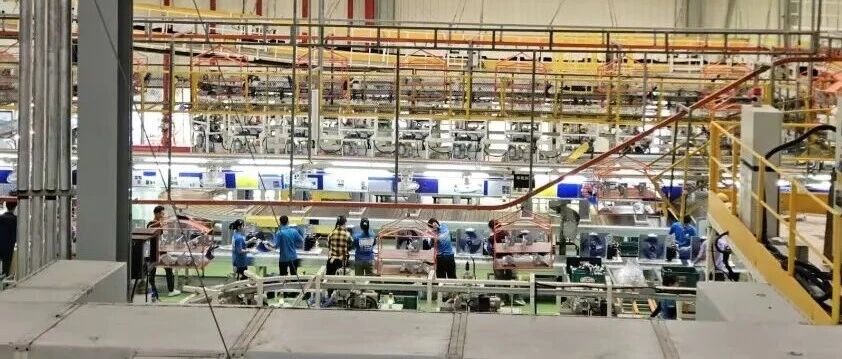
Core Viewpoint - Chinese home appliance companies are increasingly establishing production bases in Thailand, positioning it as a strategic hub for their international expansion, with significant growth in overseas revenue reported by major players like Midea and Haier [1][2][3]. Group 1: Market Expansion and Strategy - Midea's overseas revenue has significantly increased, with OBM revenue accounting for over 45% of its TO C business in 2025 [1]. - Haier's overseas market revenue reached 79.08 billion yuan in the first half of 2025, growing by 11.7% [1]. - Midea has established its largest overseas manufacturing base in Thailand and aims to make it its "second home market" after China [3][4]. Group 2: Reasons for Choosing Thailand - Thailand offers advantages in political stability, supply chain infrastructure, and population demographics, making it an attractive location for Chinese home appliance companies [4]. - The eastern economic corridor of Thailand, particularly in Chonburi and Rayong, is a strategic focus for many Chinese brands due to its proximity to major ports [4]. Group 3: Consumer Trends and Brand Positioning - The Thai home appliance market is experiencing a consumption upgrade, with consumers increasingly willing to invest in higher-end products [5][6]. - Chinese brands are gaining market share in Thailand, with Haier leading in air conditioning and Midea dominating in refrigerators and microwaves [6][7]. Group 4: Product Development and Innovation - Chinese home appliance companies are noted for their rapid product iteration and responsiveness to market demands, which contrasts with the slower innovation cycles of traditional Japanese and Korean brands [7]. - High-end product development is becoming a trend, with companies recognizing the need to move beyond low-cost competition to capture higher profit margins [8]. Group 5: Challenges and Opportunities - Despite significant market presence, Chinese brands still face challenges in brand recognition and consumer perception in Thailand [10][11]. - After-sales service is critical for success, with companies investing heavily in service networks to enhance customer satisfaction [11]. Group 6: Globalization and Regionalization - The concept of regionalization is emerging as a strategy to mitigate risks associated with global trade, allowing companies to leverage local production capabilities to support global operations [12]. - The home appliance industry is transitioning towards a comprehensive ecosystem approach, integrating R&D, supply chain, sales, and after-sales services in overseas markets [12].


中国家电巨头正扎堆去泰国
21世纪经济报道· 2025-12-29 05:40
Core Viewpoint - The article discusses the strategic expansion of Chinese home appliance companies, particularly Midea and Haier, in Thailand, highlighting the importance of the Thai market as a manufacturing and export hub for these companies aiming for global growth [1][3][4]. Group 1: Market Expansion and Strategy - Midea's overseas OBM revenue has significantly increased, accounting for over 45% of its TO C business in 2025 [3]. - Haier's overseas market revenue reached 79.08 billion yuan in the first half of 2025, growing by 11.7% [3]. - The article emphasizes that Chinese home appliance brands are increasingly establishing production bases in Thailand, with Midea planning to produce 6 million units by 2026 [1][4]. Group 2: Competitive Advantages in Thailand - Thailand is seen as a strategic location due to its political stability, supply chain infrastructure, and large market potential, making it an ideal base for Chinese companies [5][6]. - The proximity to major ports, such as Laem Chabang, enhances the export capabilities of these companies [6]. - The Thai market is experiencing a consumption upgrade, with consumers increasingly seeking high-quality products [7]. Group 3: Brand Positioning and Consumer Perception - Chinese brands are gaining market share in Thailand, with Haier leading in air conditioning and Midea dominating in refrigerators and microwaves [10][11]. - The article notes that while Chinese brands have improved their product offerings, there is still a perception challenge among Thai consumers who may prefer established Japanese brands [16]. - Localized marketing strategies, including celebrity endorsements, are being employed to enhance brand visibility and consumer acceptance [10][11]. Group 4: Product Development and Innovation - Chinese companies are noted for their rapid product iteration and responsiveness to market demands, which contrasts with the slower innovation cycles of traditional Japanese and Korean brands [11][13]. - The article highlights the importance of high-end product lines while maintaining mid-range offerings to cater to a broader consumer base [14]. Group 5: Challenges and Future Outlook - Despite the growth, there are challenges related to brand recognition and consumer loyalty, with some consumers still favoring established brands for high-value purchases [16]. - The article suggests that after establishing a presence in Thailand, companies must focus on enhancing after-sales service and operational efficiency to improve market share [17]. - The future of Chinese home appliance companies is seen as moving towards a comprehensive ecosystem that includes R&D, supply chain, sales, and after-sales services in international markets [19].
实体为根 向新而行丨第十届中国制造强国年会成功在京召开
Xin Lang Cai Jing· 2025-12-29 05:23
Core Viewpoint - The 10th China Manufacturing Power Conference emphasizes the importance of strengthening the foundation of the real economy and developing new quality productivity during the "14th Five-Year" and "15th Five-Year" planning periods, marking a critical juncture in the "China Manufacturing 2025" action plan [1][34]. Group 1: Authority and Themes - The conference gathered over 400 guests from government, industry, academia, and research to discuss the high-quality development path of China's manufacturing industry during the "15th Five-Year" period [1][34]. - The event was hosted by Dr. Xin Wang, a member of the "15th Five-Year" planning expert group from the Ministry of Industry and Information Technology [3][36]. - The conference adhered to a philosophy of high-end, professional, market-oriented, refined, and effective organization, aiming to consolidate manufacturing power and empower the real economy [4][37]. Group 2: Key Presentations - Minister Li Yizhong discussed the paths to new industrialization, emphasizing the need for "intelligent," "green," and "integrated" approaches to build a modern industrial system [6][39]. - Minister Su Bo highlighted that China has reached a manufacturing power development index of 128.85, indicating a shift from low-end to mid-high-end manufacturing, with a goal to reach a medium level among global manufacturing powers by 2035 [9][42]. - Minister Liu Lihua outlined four focus areas for the "15th Five-Year" period: solidifying industrial foundations, accelerating technological self-reliance, fostering new quality productivity, and formulating the next decade's manufacturing action plan [12][45]. Group 3: Innovations and Initiatives - Minister Cao Jianlin emphasized the importance of high-end equipment manufacturing as a key component of industrial strength, advocating for a collaborative approach to develop competitive high-end equipment industries [14][47]. - The conference introduced the "Innovation Development Index for Small and Medium Enterprises" to evaluate and support local industrial clusters, aiming to enhance their growth and innovation capabilities [21][54]. - The "Invisible Champion" program was launched to promote stories of successful manufacturing enterprises, aiming to instill national pride and foster a sense of patriotism among youth [28][61]. Group 4: Future Directions - The conference marked a decade of progress in China's manufacturing strategy, reflecting on achievements and setting the stage for future developments in the manufacturing sector [32][65]. - The ongoing transition from investment-driven to innovation-driven growth, and from a manufacturing power to a consumption power, is crucial for China's economic future [52][51].