先进制造

Search documents
重磅发布|36氪2025中国「十大未来产业」暨「最具影响力」产业投资机构
36氪· 2025-09-11 10:01
Core Viewpoint - In 2025, China and the world are at a critical juncture of a new "technology and capital-driven industrial revolution," with industry investors playing a pivotal role in advancing "technological innovation and industrial implementation" across future sectors such as embodied intelligence, artificial intelligence, advanced manufacturing, and life sciences [2] Summary by Relevant Sections Embodied Intelligence - The embodied intelligence sector is witnessing unprecedented attention and investment, with companies like Yushu, Zhiyuan, and Galaxy General Robotics leading the charge [3] - Significant investments have come from state-owned enterprises and major tech firms, including Meituan, CATL, BYD, and TCL, indicating a strong interest from both public and private sectors [3] - Market-oriented institutions such as Hillhouse Capital, CDH Investments, and Sequoia China have also been early and consistent investors in this space, showcasing a robust investment ecosystem [3] Financing Trends - In the first half of this year, there were 144 financing events in the domestic embodied intelligence industry, amounting to 19.5 billion yuan, with an average deal size of 135 million yuan [4] - The financing scale and pace in the embodied intelligence sector continue to expand, reflecting a broader trend of rapid change and innovation across technology-driven industries [4] Investment Institutions - A comprehensive list of influential investment institutions in China has been compiled, highlighting key players across various future industries, including embodied intelligence, artificial intelligence, advanced manufacturing, and more [5][6] - The report identifies 230 notable investment institutions in sectors such as new energy, new materials, and life sciences, emphasizing the diverse landscape of investment opportunities [6] Notable Investors - The report features a list of the top ten future industry investment institutions, showcasing active players in sectors like embodied intelligence, artificial intelligence, and advanced manufacturing [17] - A detailed list of active investors in each sector is provided, including prominent names such as Hillhouse Capital, Sequoia China, and IDG Capital, indicating a competitive investment environment [18][19][20][21][22][23][24][25][26][27]

36氪2025中国「十大未来产业」暨「最具影响力」产业投资机构|重磅发布
3 6 Ke· 2025-09-11 04:41
Core Viewpoint - The article highlights the significant investment and interest in the embodied intelligence sector in China, indicating a broader trend of technological and capital-driven industrial revolution globally, with various stakeholders including state funds, industry giants, and market investors actively participating in this new investment cycle [2][3]. Investment Landscape - In the first half of this year, there were 144 financing events in the domestic embodied intelligence industry, with a total financing amount reaching 19.5 billion yuan, averaging 135 million yuan per financing event [3]. - Major players in the embodied intelligence sector include companies like Yushu, Zhiyuan, and Galaxy General, which have attracted unprecedented attention and investment from both state-owned and private investors [2][3]. Key Investors - Notable early-stage investors in Zhiyuan Robotics include Hillhouse Capital, DCM, BlueRun Ventures, and Sequoia China, while Yushu Technology has received backing from Source Code Capital, Sequoia China, and Shunwei Capital [3]. - The article lists influential investment institutions across various future industries, including embodied intelligence, artificial intelligence, advanced manufacturing, and life sciences, showcasing a diverse range of active investors [4][8]. Future Industry Focus - The article emphasizes that the financing scale and pace in the embodied intelligence sector are continuing to expand, reflecting a broader trend of ongoing transformation and innovation in future industries [3].
顺为资本腾挪术:左手减持套现,右手押注新风口!
Sou Hu Cai Jing· 2025-09-11 04:06
Group 1 - Lei Jun, through Xiaomi Group and Shunwei Capital, has built a complex capital landscape, frequently reducing holdings while betting on new opportunities [2][3] - Shunwei Capital plans to reduce its stake in Longqi Technology by up to 19.19 million shares, accounting for 4.09% of the total share capital, due to the shareholder's funding needs [2][11] - In the past year, Shunwei Capital has frequently reduced its stakes in several companies, including QuSleep Technology, Nanchip Technology, and Stone Technology [2][11] Group 2 - Longqi Technology, primarily engaged in smart product R&D and manufacturing, has seen significant investment from Shunwei and Tianjin Jinmi, both controlled by Lei Jun [4][8] - The partnership between Longqi Technology and Xiaomi has evolved from independent design to original design manufacturing (ODM), making Xiaomi a key customer [11][12] - Longqi Technology's revenue heavily relies on smartphone OEM business, which constituted 77.9% of its revenue in 2024, but with a low gross margin of 4.92% [14][12] Group 3 - Shunwei Capital has invested in various sectors, focusing on advanced manufacturing, e-commerce, and artificial intelligence, with over 60% of its investments in these areas [30][25] - The firm has participated in 837 investment rounds, with a preference for early-stage investments, particularly in advanced manufacturing and AI [25][27] - The investment strategy emphasizes balancing high risks with high returns, leveraging Xiaomi's ecosystem for strategic support [34][25]



五年来,我国制造业“家底”更厚实
Ren Min Ri Bao· 2025-09-10 10:12
Group 1: Manufacturing Industry Overview - China's manufacturing industry has maintained the largest global scale for 15 consecutive years, with its value added accounting for nearly 30% of the global total [2] - In 2024, 64 manufacturing enterprises from China were included in the Fortune Global 500 list, indicating strong industrial performance [1] - The production of new energy vehicles is expected to exceed 13 million units in 2024, maintaining a global leadership position for 10 consecutive years [2] Group 2: Innovation and R&D - The proportion of R&D expenditure in revenue for large-scale manufacturing enterprises has surpassed 1.6%, with over 570 companies entering the global top 2500 in R&D investment [2] - The number of invention patent applications from industrial enterprises increased from 907,000 at the end of the 13th Five-Year Plan to 1,244,000 in 2024, with a rising share of 65% in total applications [4] - 33 national manufacturing innovation centers have been established, facilitating breakthroughs in nearly 700 key common technologies [4] Group 3: Digital Transformation and Infrastructure - China has built the world's largest and most extensive network infrastructure, with 4.598 million 5G base stations and over 100 million device connections on key industrial internet platforms [3] - The number of registered small and medium-sized enterprises has exceeded 60 million, with significant improvements in quality and efficiency [3] Group 4: Traditional and Emerging Industries - Traditional industries account for 80% of the manufacturing sector's main indicators, with significant support for technological upgrades and the establishment of over 230 intelligent factories [7] - Emerging industries such as new energy vehicles, photovoltaic, and lithium batteries are rapidly growing, with the production of new energy vehicles expected to be 9.5 times that of 2020 [7] Group 5: Future Industry Development - The development of future industries is being accelerated, with advancements in quantum computing, laser manufacturing technology, and bio-manufacturing technologies [7] - The Ministry of Industry and Information Technology plans to enhance the modern industrial system centered on advanced manufacturing and promote industrial upgrades [8]
A股资金温度计(第1期):各路资金协同聚力,流动性格局持续改善
Ping An Securities· 2025-09-10 07:31
Group 1: Institutional Funds - Institutional funds are showing collaborative strength with significant growth in various sectors. Public funds saw a notable increase in new stock fund issuance in July, with the number and scale rising by 32.8% and 97.5% respectively compared to June. The second quarter saw major increases in holdings in the banking and TMT sectors [4][9][10] - Private equity funds also experienced a surge, with 1,591 new stock private equity funds launched in July, marking a 20.7% increase from June. The stock position has risen for three consecutive months, reaching 62.8% in July [4][15] - Insurance funds accelerated their market entry, with a net inflow of over 640 billion yuan into A-shares in the first half of the year. The allocation to stocks reached 3.1 trillion yuan, with a net inflow of 2.5 trillion yuan in Q2 [4][20][21] Group 2: Retail Investors - Retail investor activity has increased, with 265,000 new accounts opened on the Shanghai Stock Exchange in August, a 35% increase from July. However, this remains moderate compared to the peak in October 2024 [4][31] - The margin financing balance reached 2.2 trillion yuan, surpassing the 2015 high, but the overall leverage ratio remains healthy at 2.4% of the A-share market capitalization [4][31] Group 3: Foreign Capital - Foreign capital is returning to A-shares, with over 100 billion yuan flowing back in Q2 2025. From August 14 to August 20, foreign capital saw a net inflow of 6.98 billion yuan, marking a shift towards net inflows for the first time since mid-October 2024 [4][6] - The foreign capital primarily increased holdings in defensive assets with stable cash flows, such as finance and public utilities, as well as high-growth sectors like communication and biomedicine [4][6] Group 4: Market Outlook - The mid-term outlook for A-shares indicates a continued emphasis on high-quality equity allocation. Despite short-term volatility, the accumulation of positive factors in the industry and the ongoing policy implementation suggest a favorable environment for investment [4][6] - Key investment themes include the AI industry chain, advanced manufacturing sectors with international competitiveness, and new consumption areas benefiting from domestic policy support [4][6]
广发新能源精选股票A:2025年上半年利润189.09万元 净值增长率1.96%
Sou Hu Cai Jing· 2025-09-08 02:27
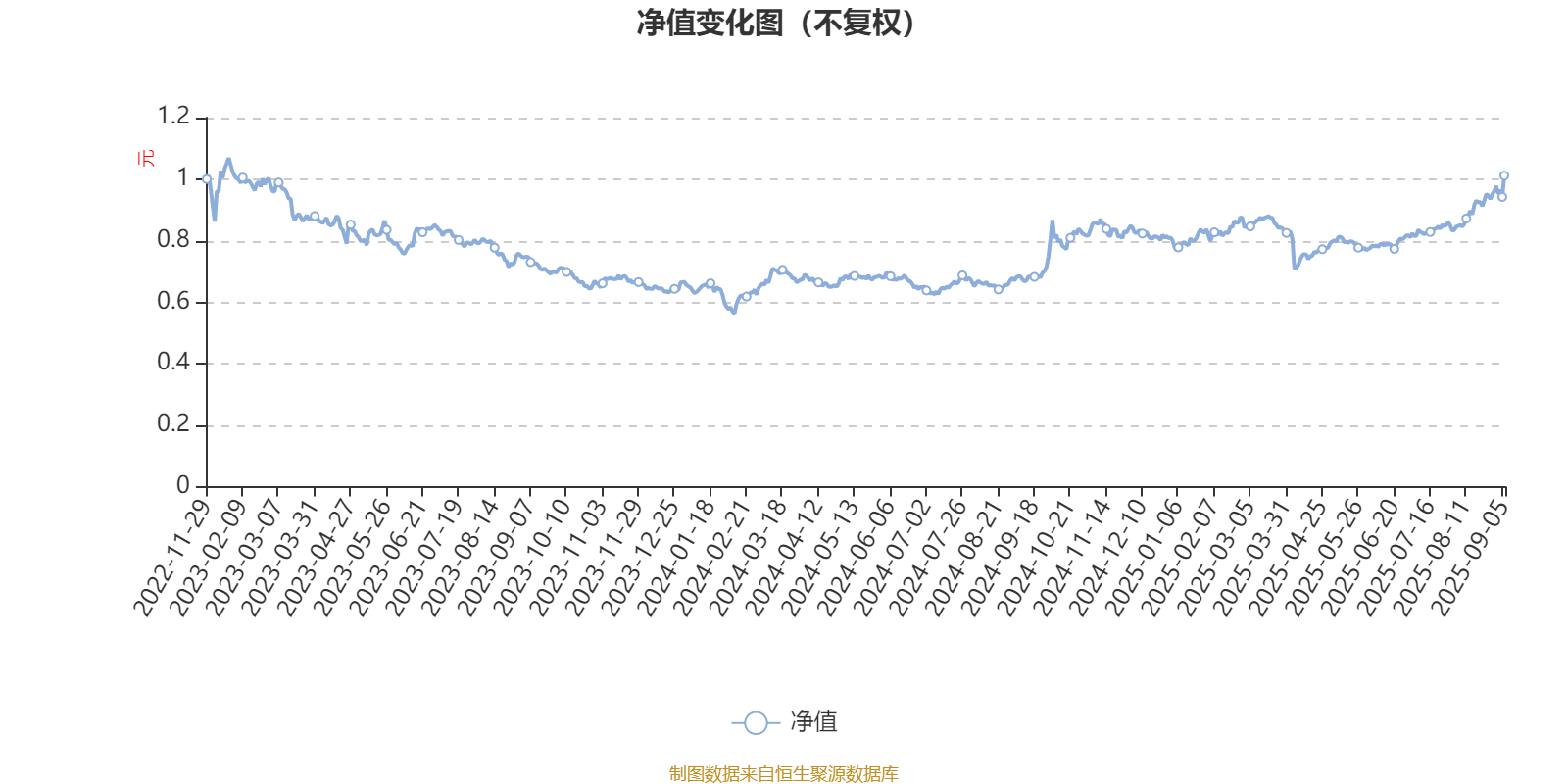
Core Viewpoint - The AI Fund Guangfa New Energy Select Stock A (015904) reported a profit of 1.89 million yuan for the first half of 2025, with a net value growth rate of 1.96% and a fund size of 379 million yuan as of the end of June 2025 [2][31]. Fund Performance - As of September 5, 2025, the fund's three-month net value growth rate was 28.93%, ranking 16th out of 44 comparable funds; the six-month growth rate was 19.48%, also ranking 16th; and the one-year growth rate was 47.86%, ranking 19th [4]. Valuation Metrics - As of June 30, 2025, the fund's weighted price-to-earnings ratio (TTM) was approximately 14.32 times, significantly lower than the industry average of 1550.21 times; the weighted price-to-book ratio (LF) was about 1.01 times, compared to the average of 2.74 times; and the weighted price-to-sales ratio (TTM) was around 0.64 times, against an average of 2.24 times [8]. Growth Metrics - For the first half of 2025, the weighted revenue growth rate (TTM) of the stocks held by the fund was 0.24%, while the weighted net profit growth rate (TTM) was 0.27%, with a weighted annualized return on equity of 0.07% [14]. Fund Composition - As of June 30, 2025, the fund had a total of 3,890 holders, with a total of 463 million shares held. Institutional investors accounted for 57.57% of the holdings, while individual investors made up 42.43% [34]. - The top ten holdings of the fund included Jin Feng Technology, Ningde Times, Guoneng Rixin, Sunshine Power, He望 Electric, Dongfang Cable, Zhongrong Electric, Farah Electronics, Siyuan Electric, and Yiwei Lithium Energy [38]. Trading Activity - The fund's turnover rate for the last six months was approximately 277.33%, consistently higher than the industry average [37].
助力高水平对外开放取得显著成效
Jin Rong Shi Bao· 2025-09-08 02:02
Core Viewpoint - The 25th China International Investment Trade Fair has commenced in Xiamen, emphasizing the importance of investment in driving economic growth and international cooperation, with a focus on the role of the Export-Import Bank of China in enhancing investment capabilities and supporting the Belt and Road Initiative [1] Group 1: Investment and Economic Growth - Investment is one of the three driving forces behind economic growth and a key factor in promoting international economic cooperation [1] - The Export-Import Bank has established 27 funds and investment companies, contributing over 1 trillion RMB, with investments spanning ASEAN, Eurasia, Central Asia, Africa, Latin America, and Central and Eastern Europe [1] Group 2: Belt and Road Initiative - The Export-Import Bank plays a crucial role in financing projects along the Belt and Road, having initiated or participated in multiple investment funds aimed at supporting this initiative [2] - The bank utilizes various financing tools to meet the diverse funding needs of related countries, providing long-term and stable funding sources for international economic cooperation projects [2] Group 3: Support for Domestic Economy - The Export-Import Bank has established the Jin Yin Infrastructure Fund to support domestic economic development, focusing on infrastructure, key livelihood projects, and new infrastructure [3] - In 2022, the bank invested nearly 70 billion RMB in over 100 major projects, facilitating total investments of nearly 1 trillion RMB [3] Group 4: Enhancing Investment Capabilities - The Export-Import Bank is improving its investment capabilities through refined management and risk control, with a professional investment team and optimized investment decision processes [4] - The bank is expanding bilateral cooperation with various international financial institutions to enhance investment collaboration and promote mutual understanding [4][5]
东湖高新:参与出资设立咸宁东高产业投资基金,总规模5亿元
Xin Lang Cai Jing· 2025-09-05 11:08
Core Viewpoint - The company is participating in the establishment of a new investment fund with a total scale of 500 million RMB, focusing on various high-potential sectors [1] Group 1: Fund Structure - The company will act as a limited partner, committing 200 million RMB, which represents 40% of the fund's total size [1] - The company's wholly-owned subsidiary, Donghu Investment, will serve as the general partner, contributing 50 million RMB, accounting for 10% of the fund [1] - Other limited partners include Xianning Capital and Xianning Industry, each contributing 125 million RMB, which is 25% of the fund's total size [1] Group 2: Investment Focus - The fund will primarily invest in high-quality enterprises in sectors such as new materials, advanced manufacturing, health and wellness, biomedicine, and electronic information [1]

银华多元机遇混合:2025年上半年利润5299.81万元 净值增长率9.87%
Sou Hu Cai Jing· 2025-09-05 04:20
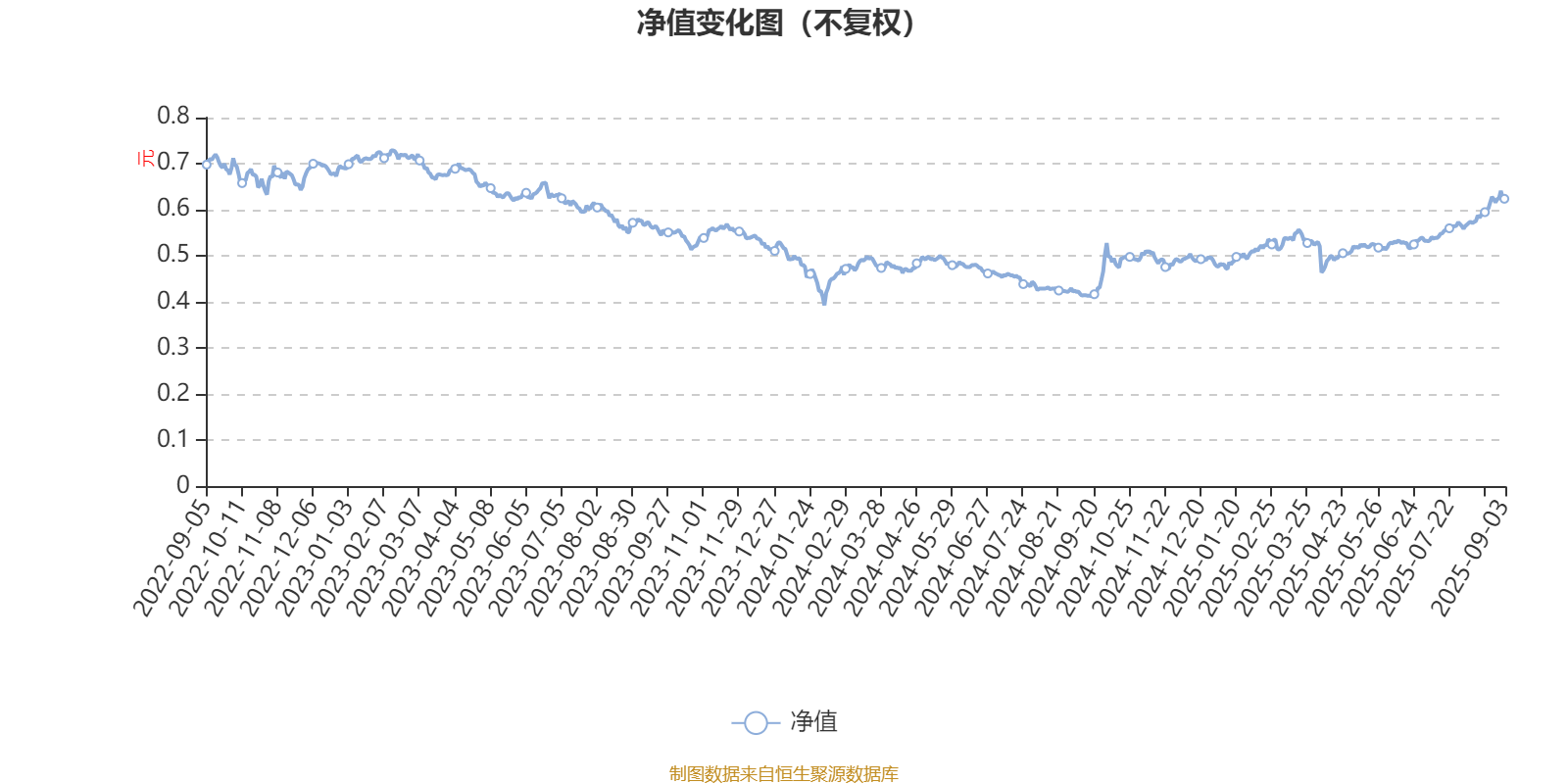
Core Viewpoint - The AI Fund Yinhua Multi-Opportunity Mixed Fund (009960) reported a profit of 52.9981 million yuan for the first half of 2025, with a net value growth rate of 9.87% and a fund size of 569 million yuan as of the end of June 2025 [2]. Group 1: Fund Performance - The fund's weighted average profit per share for the reporting period was 0.0487 yuan [2]. - As of September 3, the fund's unit net value was 0.624 yuan [2]. - The fund's net value growth rates for the past three months, six months, and one year were 20.52%, 21.41%, and 47.00%, respectively, ranking 127/256, 96/256, and 104/256 among comparable funds [6]. Group 2: Investment Outlook - The fund management anticipates upward risks in the technology sector, focusing on the implications of the major power technology competition and the guidance of the 14th Five-Year Plan [2]. - There is optimism regarding the acceleration of overseas AI industry trends and the potential for domestic AI to catch up [2]. - The report suggests that despite weak demand in traditional advanced manufacturing industries, supply-side control measures are increasing, making the downside risks manageable [2]. Group 3: Consumer Sector Insights - High-frequency data indicates a further decline in consumer sentiment, with no immediate upward trends expected, leading to a forecast of bottom oscillation in the near term [2]. - Structural opportunities exist in new consumption sectors, particularly in trendy toys and gold jewelry, with a notable surge in emotional, experiential, and social consumption recognized by the market [2]. Group 4: Valuation Metrics - As of June 30, 2025, the fund's weighted average price-to-earnings (P/E) ratio was approximately 14.79 times, significantly lower than the industry average of 26.16 times [12]. - The fund's weighted average price-to-book (P/B) ratio was about 1.68 times, compared to the industry average of 2.38 times [12]. - The weighted average price-to-sales (P/S) ratio was approximately 1.83 times, while the industry average was 2.05 times [12]. Group 5: Growth Metrics - For the first half of 2025, the fund's weighted average revenue growth rate was 0.09%, and the weighted average net profit growth rate was 0.1% [20]. - The weighted annualized return on equity was 0.11% [20]. Group 6: Fund Composition and Holdings - As of June 30, 2025, the fund had a total of 19,200 holders, with individual investors holding 99.05% of the shares [37]. - The top ten holdings included Tencent Holdings, Alibaba-W, and other notable companies, indicating a diversified portfolio [43].
四次牛市逻辑分析及本轮探讨
集思录· 2025-09-03 14:33
Core Viewpoint - The article discusses the evolution of China's stock market and its correlation with economic trends since 2000, highlighting different bull markets driven by various factors, with a focus on the upcoming "engineer dividend bull market" in 2024. Group 1: Historical Bull Markets - The 2007 bull market was driven by demographic dividends and widespread growth in resource sectors, particularly metals, aligned with large-scale infrastructure projects post-reform [1]. - The 2015 bull market was characterized by structural features, primarily driven by major mergers, with the North-South Car merger marking its conclusion, while many blue-chip stocks did not see corresponding gains [2]. - The 2021 bull market, represented by advanced manufacturing sectors like solar energy and electric vehicles, was also structural, leading to overcapacity and a mixed performance among stocks, with pharmaceuticals benefiting temporarily from the pandemic [3]. Group 2: Future Market Predictions - The anticipated 2024 bull market is termed the "engineer dividend bull market," focusing on talent-intensive industries such as AI, robotics, and innovative pharmaceuticals, driven by breakthroughs in technology and a critical mass of skilled engineers in China [4]. - This upcoming market is expected to be structurally driven, with a focus on high-intelligence, high-investment sectors, suggesting that talent concentration will determine industry leadership [4]. - The current market environment is different from previous bull markets, as traditional investment vehicles like real estate and wealth management products have diminished, making the stock market the primary outlet for capital [4]. Group 3: Market Dynamics - The article emphasizes that the stock market is experiencing a structural trend where consensus on sectors (like technology) leads to fund concentration and subsequent distribution, often leaving many stocks without significant movement [5]. - The low-risk return environment, with bank deposit rates below 2%, has driven capital into the stock market, creating a cycle of rising stock prices and increased investor participation [9].