
全球化

Search documents
突发特讯!外媒通告全球:中方已从加拿大下了一份大约6万吨油菜籽的大单,引发全球高度关注
Sou Hu Cai Jing· 2026-01-20 10:47
Core Viewpoint - The recent order of approximately 60,000 tons of Canadian canola seeds marks a significant thaw in trade relations between Canada and China, following a suspension of imports since October last year, indicating a potential reduction in tariffs and a pragmatic approach to bilateral trade [1][2]. Group 1: Pragmatic Cooperation - The timing of the order closely follows the Canadian Prime Minister's visit to China, suggesting a calculated exchange of interests where Canada seeks tariff reductions on canola, while China aims for market access for its electric vehicles [2][6]. - This transaction reflects a mature economic relationship where both parties prioritize specific goods and quotas over vague promises, demonstrating a problem-oriented approach to trade negotiations [2][6]. Group 2: Market Dynamics - The absence of Canadian canola in the Chinese market did not halt demand, as Australian canola quickly filled the gap, showcasing the resilience and diversity of global supply chains [5]. - The return of Canadian products to the Chinese market will lead to a dynamic adjustment in the distribution of market shares, driven by factors such as cost-effectiveness and reliability of supply [5]. Group 3: Global Trade Context - The agreement between Canada and China amidst a backdrop of rising protectionism and unilateralism highlights the potential for dialogue and cooperation between major economies, even in the face of disagreements [6][9]. - This development serves as a reminder that despite challenges to globalization, the intrinsic demand for complementary industries and mutual benefits remains strong [6][9]. Group 4: Broader Implications - The transaction is not merely about canola seeds; it represents a routine operation under international trade rules and a practical demonstration of rationality and cooperation between two nations in a complex global environment [9]. - The successful exchange of goods symbolizes a shift towards mutual benefit rather than zero-sum competition, emphasizing the importance of collaboration in the current economic climate [9].


TCL电子拟与索尼成立合资公司,持股51%、承接索尼家庭娱乐业务
Xin Lang Cai Jing· 2026-01-20 10:09
Group 1 - TCL Electronics has signed a memorandum of understanding with Sony Corporation to potentially establish a joint venture for Sony's home entertainment business, with TCL holding 51% and Sony 49% [1] - The joint venture will cover integrated business operations including product development, design, manufacturing, sales, logistics, and customer service for products like televisions and home audio systems [1] - This strategic move aligns with TCL's goals of globalization and upgrading its brand and business competitiveness [1] Group 2 - TCL Electronics has issued a profit forecast for the fiscal year 2025, expecting adjusted net profit to be between HKD 2.33 billion and HKD 2.57 billion, representing a year-on-year growth of approximately 45% to 60% [2] - The strong performance of TCL's Mini LED products has contributed significantly to this growth, with global TV shipments reaching 21.08 million units in the first three quarters of 2025, a 5.3% increase year-on-year [2] - Mini LED TV shipments surged by 153.3% year-on-year, reaching 2.24 million units, driving an 8.7% increase in TV sales revenue [2] Group 3 - In the international market, TCL has strengthened partnerships with mid-to-high-end channels, resulting in a 7.9% year-on-year increase in TV shipments [4] - Shipments of TCL televisions sized 65 inches and above grew by 44.6%, while those sized 75 inches and above increased by 61.8% [4] - TCL's Mini LED TV shipments in international markets saw a remarkable growth of 235.4% year-on-year [4] Group 4 - In North America, TCL has increased the proportion of mid-to-high-end channel shipments, leading to a more than 15% year-on-year increase in average selling prices for TCL televisions [4] - Shipments of TCL televisions sized 65 inches and above rose by 29.1%, while those sized 75 inches and above increased by 34.1% [4] - Mini LED TV shipments in North America experienced a staggering growth of 384.5%, with their market share increasing by 7.1 percentage points to 8.7% [4] Group 5 - At CES this year, TCL launched two flagship SQD-Mini LED televisions, the Q10M Pro and Q10M, starting at a price of 9,999 yuan, further expanding its overseas market presence [5]

2025,谁笑到最后?这8家车企销量超百万!特斯拉排第十
Nan Fang Du Shi Bao· 2026-01-20 08:47
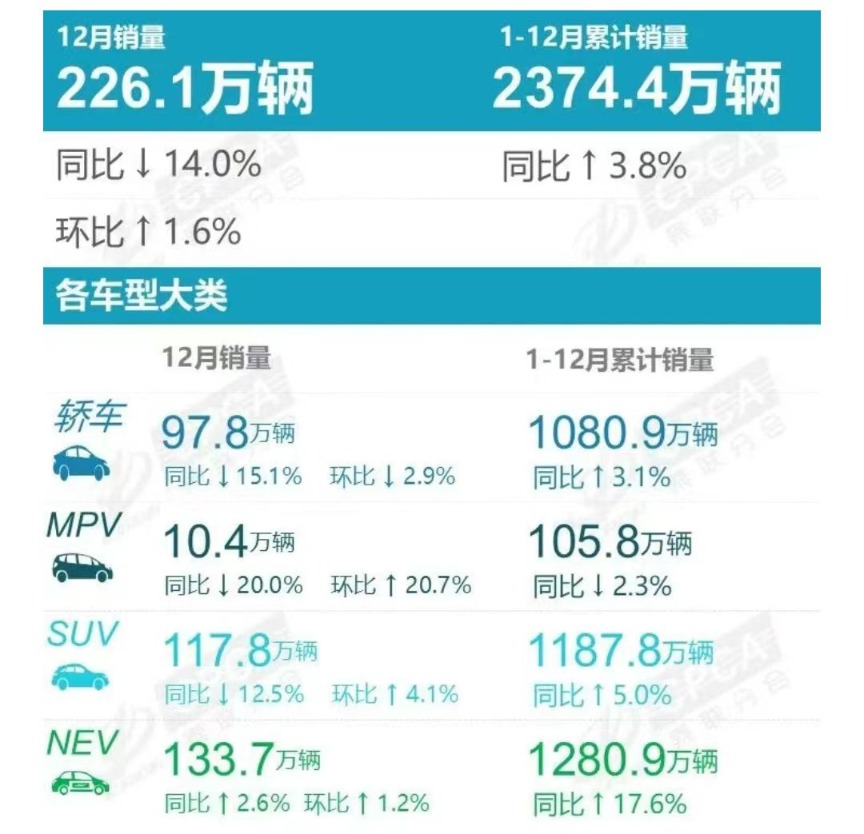
Core Insights - The automotive market in 2025 has seen a shift in competitive dynamics, with domestic brands leveraging their electric vehicle (EV) advantages to dominate the market, significantly squeezing the space for joint venture brands [1][3] - The focus of competition is evolving from mere sales and electrification to intelligence, globalization, and high-quality growth [1] - BYD remains the market leader, but its domestic retail sales have declined, while its international sales have surged, maintaining a significant lead overall [1][7] Sales Performance - In 2025, total vehicle sales reached 23.744 million units, a year-on-year increase of 3.8%, with new energy vehicles (NEVs) accounting for 12.809 million units, up 17.6% [3] - The sales breakdown shows that sedan sales were 10.809 million units (up 3.1%), SUV sales were 11.878 million units (up 5%), and MPV sales were 1.058 million units (down 2.3%) [3] - BYD's retail sales were 3.485 million units, down 6.3%, while its wholesale sales reached 4.545 million units, up 6.9%, with exports exceeding 1 million units, doubling from the previous year [7][8] Competitive Landscape - The top ten automotive manufacturers in terms of sales include BYD, Geely, Chery, and Changan, with Geely showing the most significant growth at 39% [8][10] - Geely's retail sales reached 1.688 million units, marking an 81.3% increase, making it the only other company besides BYD to exceed 1 million units in NEV sales [9][10] - Tesla has fallen out of the top three in NEV sales, ranking fifth, with a 4.8% decline in domestic sales [11][13] Export Growth - In 2025, automotive exports reached 7.098 million units, a 21.1% increase, with passenger car exports at 6.038 million units, up 21.9% [16] - BYD led the industry with 1.05 million units of NEV exports, while SAIC Group followed with 950,000 units, maintaining a strong presence in ASEAN and South American markets [16][15] - Geely's exports doubled to 420,000 units, showcasing significant growth in Southeast Asia [16]




2025智驾平权加速-2026智驾-机器人-全球化共振
2026-01-20 01:50
Summary of Key Points from the Conference Call Industry Overview - The automotive industry outlook for 2026 anticipates a continued support for basic demand through vehicle trade-in policies, with wholesale sales expected to grow by 1.0% to 30.3 million units [1][3] - The demand for smart electric components is expected to outperform traditional components, particularly in the field of intelligent robotics, which shows significant growth potential [1] Core Insights and Arguments - Investment strategies are focused on the transformation towards smart electric vehicles and the reshaping of competitive landscapes, with optimism towards domestic brands like Geely and BYD, as well as new players like Huawei and Xiaomi [1] - Chinese automotive parts manufacturers are expected to expand globally, leveraging overseas production capacity and cost advantages, despite facing increased competition from automakers [1][5] - The smart and aftermarket sectors are experiencing significant revenue growth, driven by increased penetration rates and rising demand in Europe and the US [1][8] - Continued subsidy policies are projected to support basic demand and drive positive growth in new energy vehicle wholesale sales [9] Financial Performance - In 2025, domestic wholesale sales are projected to increase by 13.3%, leading to an 8.3% revenue growth in the automotive parts sector, although net profits may see a slight decline due to increased pressure from domestic brands [2] Challenges and Opportunities - The globalization of the automotive parts industry presents challenges such as increased competition from automakers, but also opportunities for new customer acquisition [7][11] - Rising aluminum prices pose cost pressures, while declines in steel and lithium carbonate prices alleviate some cost transmission pressures for automakers [7] Trends in Sub-sectors - The intelligent and aftermarket sectors are seeing significant revenue increases, with the intelligent sector benefiting from rising penetration rates and the aftermarket driven by demand growth in Europe and the US [8] - The tire industry is negatively impacted by tariffs, but other sub-sectors are achieving positive profit growth [8] Policy Impacts - Ongoing subsidy policies are expected to support basic demand and drive approximately 13% growth in new energy vehicle wholesale sales [9] - The US has imposed a 25% tariff on tire exports from China, negatively affecting profits in that sector, while other sectors remain less impacted [9] Future Growth Potential - The single vehicle value metric is crucial for assessing the automotive parts sector, with revenue driven by sales volume and pricing, and industry valuations typically ranging from 15 to 20 times earnings, potentially exceeding 30 times in high-growth scenarios [10] Key Players and Recommendations - Recommended domestic brands include Geely and BYD, along with new players like Huawei and Xiaomi [5] - Notable companies in the intelligent driving sector include Berteli, Horizon Robotics, and Desay SV [6] Robotics Sector Developments - The robotics sector is expected to enter a mass production phase in 2026, with Tesla's Optimus V3 anticipated to significantly impact the market [16] - The integration of VLA technology in autonomous driving is seen as a core improvement, enhancing system intelligence through the incorporation of large language models [17] Conclusion - The automotive parts industry is poised for growth driven by technological advancements, supportive policies, and strategic global expansions, while also facing challenges from competition and cost pressures.

在分化中前行:荣耀重新走向世界
第一财经· 2026-01-19 15:18
Core Viewpoint - The article discusses Honor's strategic transformation and product diversification, highlighting its significant growth in overseas markets and the shift towards a dual-market focus, emphasizing the importance of brand positioning and product structure in a competitive smartphone industry [3][8][9]. Group 1: Product Launch and Market Positioning - Honor launched three distinct products at the "Design Night" event, showcasing its understanding of youth culture and emotional connection with consumers [1][3]. - The global smartphone market is experiencing structural differentiation, with Honor's overseas shipments increasing by approximately 55% year-on-year in the first three quarters of 2025, marking it as a standout performer among Chinese manufacturers [3][5][8]. Group 2: Structural Changes in the Smartphone Market - The competition in the smartphone market has shifted from volume-driven sales to maintaining stability in higher value segments, with many brands being squeezed out [7][8]. - Honor's global shipments surpassed 71 million units in 2025, with overseas sales accounting for over 50% of total shipments, indicating a transition to a "dual-main market" strategy [8][9]. Group 3: Regional and Product Structure - Honor's overseas market shows a clear segmentation, with Latin America and the Middle East contributing significantly to volume, while Southeast Asia is rapidly growing, and Europe is becoming a key market for high-end products [9][11]. - In 2025, Honor's shipments in the $300–499 price range accounted for about 23%, the highest among major Chinese manufacturers, reflecting a strategic shift towards mid-to-high-end products [11][12]. Group 4: Technological Advancements - 2025 marked a year of significant technological advancements for Honor, with innovations such as the "blade battery" and improved display technologies enhancing user experience [13][14]. - The focus on technology is not just for breakthroughs but aims to translate into user experiences that consumers are willing to pay for, contributing to structural improvements and price elevation [13][14]. Group 5: Organizational and Strategic Adjustments - Under a new management team, Honor has established a long-term direction towards an AI terminal ecosystem, making systematic adjustments in governance, R&D investment, and global organizational capabilities [15][16]. - The brand is increasingly engaging with younger consumers, transforming its relationship with users from a one-way output to a more interactive experience [16][18]. Group 6: Future Opportunities and Challenges - The smartphone market is entering a complex phase, with longer replacement cycles and heightened competition, necessitating a focus on stability and long-term growth strategies [21][22]. - Honor's ability to build localized capabilities in overseas markets may become a crucial asset, as these investments will determine the company's resilience in a challenging environment [25][26].

涌入非洲带货的中国人,恐怕已暴富
创业邦· 2026-01-19 10:41
Core Viewpoint - The article discusses how Chinese takeaway bags, often discarded in China, have found a new life as everyday items in Africa, highlighting the impact of globalization and the adaptability of products in different markets [5][7][20]. Group 1: Chinese Takeaway Bags in Africa - Chinese takeaway bags are being repurposed as everyday carry bags in various African countries, showcasing a transformation from waste to utility [11][13]. - The durability and functionality of these bags, designed for the food industry, make them appealing to African consumers, especially in light of local plastic bag bans [16][18]. - The cost-effectiveness of these bags, with a production cost of around 0.2-0.3 RMB (approximately 0.03-0.05 USD), allows them to be sold in Africa for about 1 RMB (approximately 0.15 USD), making them an attractive option for local households [18][20][33]. Group 2: Second-hand Clothing and Goods - Second-hand clothing from China, including uniforms and sports jerseys, is popular in Africa due to its affordability and quality compared to local alternatives [21][25]. - The second-hand market in Africa is thriving, with a significant portion of clothing being sourced from China, reflecting a demand for durable and visually appealing garments [27][30]. - The process of sorting and distributing second-hand goods is rigorous, ensuring that only quality items reach the market, which supports the local economy and meets consumer needs [29][35]. Group 3: Globalization and Market Dynamics - The phenomenon of Chinese products, such as takeaway bags and second-hand clothing, entering African markets illustrates a grassroots form of globalization driven by market demand and supply chain efficiency [37][39]. - The article emphasizes that the success of these products in Africa is not merely a result of "dumping" waste but rather a reflection of China's advanced manufacturing capabilities and the effective recycling and distribution systems in place [33][43]. - The exchange of goods between China and Africa represents a pragmatic approach to globalization, where everyday needs are met through innovative supply chains, fostering a sense of connection between distant markets [45][46].

恒者蓬勃!第18届创业邦年会暨创业邦100未来独角兽大会圆满举办
Sou Hu Cai Jing· 2026-01-19 10:37
Group 1: Event Overview - The 18th Entrepreneurial Conference and the Future Unicorn Conference were successfully held in Beijing, focusing on the theme "Only the Timeless Thrive" [1] - The conference released the "2025 Global Unicorn Enterprises Observation Report" and the "2025 China Corporate Venture Capital Development Report" [1] - The "2025 Entrepreneurial 100 Future Unicorn" list was unveiled, highlighting 100 high-potential tech companies valued between $100 million and $1 billion [1] Group 2: Unicorn Growth Insights - It is projected that 120 new unicorns will emerge globally in 2025, a 9.1% increase year-on-year, with the U.S. contributing 73 and China 22 [2] - By the end of 2025, there will be 1,949 existing unicorns globally, with 903 in the U.S. and 509 in China [2] - The AI sector continues to lead in new unicorn development, with 53 AI unicorns globally, accounting for 44.2% of the total [2] Group 3: Investment Trends and Predictions - The investment environment is shifting from U.S.-led to state-owned capital dominance, but opportunities for innovation will continue to attract capital [5] - The Chinese capital market is expected to experience a significant influx of funds in 2026, with a shift in investment logic towards hard technology and scientific entrepreneurs [5] - The Hong Kong stock market is anticipated to become a primary financing avenue for startups, supported by recent regulatory innovations [11] Group 4: Industry Challenges and Strategies - Companies are encouraged to focus on customer value and sustainable growth rather than merely chasing valuations [7] - The semiconductor industry is characterized by high investment and long cycles, requiring investors to have a strong belief in the industry [9] - The medical sector emphasizes a long-term mindset, focusing on core technologies and clinical value to drive innovation [24] Group 5: Global Expansion and Localization - Chinese tech companies are transitioning from exporting goods to expanding production tools and manufacturing overseas, facing challenges such as compliance and talent shortages [22] - Companies should leverage domestic advantages and pursue localized operations to navigate global markets effectively [22] Group 6: Future Unicorn Evaluation - The "2025 Entrepreneurial 100 Future Unicorn" list evaluates companies based on long-term growth potential across five dimensions, revealing a significant increase in AI companies [16] - The average valuation of listed companies reached 2.57 billion, with 61% having completed five or more funding rounds [16] Group 7: Capital and Innovation Dynamics - The report indicates a significant drop in new CVC fund registrations, with a concentration of investment activities in major cities [28] - CVCs participated in 40% of large investment events, with a notable success rate in IPO exits [28] - The focus on hard technology and robust cash flow management is essential for navigating the evolving investment landscape [28]


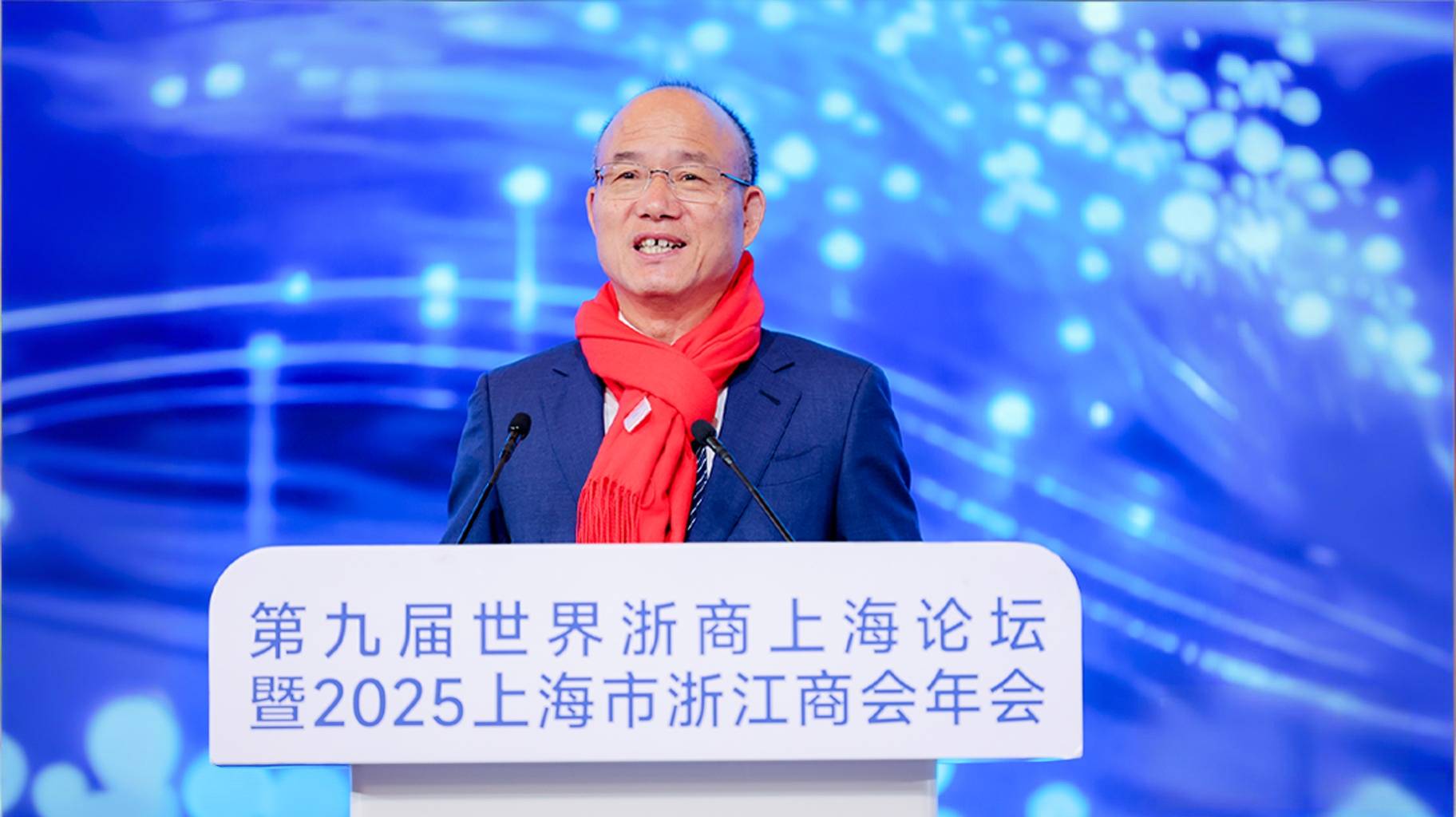
郭广昌:机会始终存在,复星将坚定创新与全球化之路
Sou Hu Cai Jing· 2026-01-19 03:57
Core Insights - The forum emphasized the resilience, innovation, and aspirations of Zhejiang merchants amidst the waves of the Chinese economy, with notable discussions on macroeconomic trends and opportunities for private enterprises [1] - Guo Guangchang expressed optimism for 2026, highlighting the gradual digestion of negative factors and the inherent resilience of the Chinese economy [1] Economic Resilience and Innovation - Guo noted that the current economic climate is warmer compared to the previous year, indicating a recovery in both weather and economic conditions [1] - He emphasized the importance of private enterprises, particularly in technology, showcasing their global competitiveness in emerging industries like AI, robotics, and biomedicine [3] - The success of Fosun's biopharmaceutical platform, including the global breakthroughs of its products, illustrates the potential for significant market opportunities, with several products having a global market potential of billions [3] Globalization and Market Strategy - Guo highlighted the competitive landscape between the US and China, asserting that the two economies are interconnected, which provides opportunities for collaboration despite competition [3] - Fosun's global strategy includes significant partnerships, such as the agreement with Pfizer for a GLP-1 drug, with a potential total value exceeding $2 billion, and a collaboration with Clavis Bio worth up to $7.25 billion [4] - The company aims to leverage China's market size and efficiency advantages to enhance its global presence, with overseas revenue reaching 46.67 billion yuan in the first half of 2025, accounting for 53% of total revenue [9] Consumer Market and Product Development - The focus on product strength and innovation is crucial for capturing opportunities in China's vast consumer market, which remains robust despite economic challenges [7] - Fosun's ventures in tourism and consumer goods have shown positive market responses, with high occupancy rates in hotels and successful product launches in the consumer sector [7][8] - New products from Fosun's ecosystem, such as the "Old Beijing Fresh Milk" and "Shede Zizai" liquor, have gained popularity, demonstrating the effectiveness of product innovation [8]

海尔智家董事长李华刚:2025年海尔沙特销售收入同比增长39%,增速远超行业平均水平
Xin Lang Cai Jing· 2026-01-19 03:47
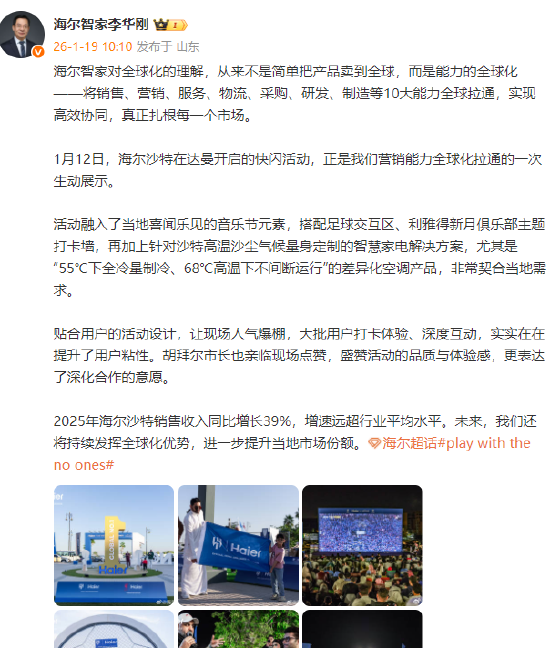
1月19日消息,海尔智家董事长兼总裁李华刚发微博表示,2025年海尔沙特销售收入同比增长39%,增 速远超行业平均水平。未来,我们还将持续发挥全球化优势,进一步提升当地市场份额。 以下为微博原文: 海尔智家对全球化的理解,从来不是简单把产品卖到全球,而是能力的全球化——将销售、营销、服 务、物流、采购、研发、制造等10大能力全球拉通,实现高效协同,真正扎根每一个市场。 1月12日,海尔沙特在达曼开启的快闪活动,正是我们营销能力全球化拉通的一次生动展示。 活动融入了当地喜闻乐见的音乐节元素,搭配足球交互区、利雅得新月俱乐部主题打卡墙,再加上针对 沙特高温沙尘气候量身定制的智慧家电解决方案,尤其是"55℃下全冷量制冷、68℃高温下不间断运 行"的差异化空调产品,非常契合当地需求。 贴合用户的活动设计,让现场人气爆棚,大批用户打卡体验、深度互动,实实在在提升了用户粘性。胡 拜尔市长也亲临现场点赞,盛赞活动的品质与体验感,更表达了深化合作的意愿。 2025年海尔沙特销售收入同比增长39%,增速远超行业平均水平。未来,我们还将持续发挥全球化优 势,进一步提升当地市场份额。 责任编辑:李思阳 1月19日消息,海尔智家董事 ...

转型升级中迈向行业引领
Zhong Guo Jing Ji Wang· 2026-01-19 03:01
Core Insights - The Chinese injection molding machine industry is experiencing significant transformation driven by "China Intelligent Manufacturing" and global green transition, with a steady increase in market size and optimization of internal structure [1] Group 1: Market Overview - In 2024, the domestic injection molding machine market reached 25.21 billion RMB, a year-on-year increase of 8.2%, with vertical machines holding approximately 38% market share [2] - The market size is expected to stabilize between 27 billion to 30 billion RMB in 2025, with vertical injection molding machine market size projected to reach 9.67 billion RMB [2] - The growth is supported by continuous demand from various sectors, including automotive, home appliances, packaging, consumer electronics, and healthcare, particularly driven by the rapid development of the new energy vehicle industry [2] Group 2: Data Focus - The vertical injection molding machine market is showing strong growth, with total production expected to reach 187,200 units in 2025, a year-on-year increase of 10.71% [4] - Sales are projected at 184,500 units, with a year-on-year growth of 11.03%, indicating a healthy supply-demand balance [4] - China’s production of vertical injection molding machines accounted for 65% of global output in 2024, with an expected increase in this leading position in 2025 [4] Group 3: Technological Upgrades - The market growth is accompanied by significant technological advancements, with the penetration rate of servo energy-saving and all-electric vertical injection molding machines exceeding 42% in 2024 [5] - The market share of IoT-enabled high-speed precision models increased from 12% in 2023 to 24% in 2025, contributing to a 35% increase in overall industry profit margins [5] Group 4: Competitive Landscape - The industry is characterized by a competitive landscape where specialized companies are emerging, with Guangdong Baizan Intelligent Equipment Co., Ltd. being a notable example [6] - Baizan focuses on the vertical injection molding machine sector, investing in R&D to develop all-electric intelligent machines with high precision, achieving a tolerance of 0.01mm [6][7] - In 2025, Baizan is expected to hold approximately 16% market share in the IoT-enabled high-speed precision segment, ranking among the top three in the national market [7] Group 5: Future Outlook - The future of the Chinese injection molding machine industry will revolve around three core trends: deep integration of intelligence, accelerated globalization, and continuous emphasis on green manufacturing [8] - By 2025, the export value of Chinese vertical injection molding machines is projected to reach 1.28 billion USD, a year-on-year increase of 19.6% [8] - The "dual carbon" goals necessitate that manufacturing equipment be highly energy-efficient and capable of processing new eco-friendly materials, making green manufacturing capabilities a core competitive advantage [8]