关税

Search documents
Tariffs catch up to resurgent Build-A-Bear, overshadowing financial performance
Yahoo Finance· 2025-12-04 17:37
Core Insights - Build-A-Bear Workshop experienced a strong quarter but faced challenges due to tariffs from the ongoing trade war, which are expected to impact performance into 2026 [1][2] - The company reported earnings of $8.1 million, or 62 cents per share, which was lower than the previous year's $9.9 million, or 73 cents per share, but exceeded analyst expectations of 59 cents per share [3] - Revenue increased by nearly 3% to $122.7 million, although it fell short of Wall Street's expectation of $124 million [3] Financial Performance - Build-A-Bear anticipates fiscal 2025 revenue growth in the mid-to-high single-digit percentage range [4] - The first nine months of the fiscal year have been the most profitable in the company's history, with shares closing at $57.40, a significant increase from under $3 five years ago [5] Market Dynamics - The company has benefited from a growing social media presence and a trend among "kidults," who are returning to purchase products they enjoyed in childhood [4] - CFO Voin Todorovic indicated that while the company has managed to mitigate some tariff impacts, the elevated level of impact is expected to continue into the next fiscal year [2]
美国财长贝森特称特朗普改变了他对关税的看法
Xin Lang Cai Jing· 2025-12-03 16:33
Core Viewpoint - The U.S. Treasury Secretary has indicated a shift in President Trump's perspective on tariffs, stating that they are inflationary and do not help boost U.S. industry [1][1]. Tariffs - The Treasury Secretary criticized Costco for seeking refunds related to tariffs, questioning what refunds they should receive if foreign manufacturers lower prices [1][1]. - The Secretary plans to wait for the Supreme Court's decision on the tariff case before considering the use of additional revenue from tariffs for income tax cuts [1][1]. Interest Rates - Some economic sectors are weakening but may benefit from potential interest rate cuts, with a specific mention of the real estate market showing signs of weakness [1][1]. Political Commentary - The Treasury Secretary refuted a recent report suggesting signs of fatigue in Trump's second term, labeling it as completely false [1][1].
X @外汇交易员
外汇交易员· 2025-12-03 14:27
Trade Policy & Tariffs - US Treasury Secretary Bessen believes Trump has normalized tariffs of 15% to 20% [1] - The Treasury Secretary's view on tariffs has changed, now not considering them a tax [1] - The Treasury Secretary believes Trump's view on tariffs is correct and his risk tolerance is higher [1]
我的税收第一课|税种见面会
蓝色柳林财税室· 2025-12-03 13:31
Taxation Overview - The article discusses various types of taxes in China, including value-added tax (VAT), consumption tax, customs duties, vehicle purchase tax, income tax, property and behavior taxes, and their implications for government revenue and consumer behavior [4][6][7]. Value-Added Tax (VAT) - VAT is levied on goods that undergo multiple production stages, with value added at each stage, leading to tax obligations for businesses [4]. - Certain special goods are subject to both VAT and consumption tax to promote rational consumption and reduce waste [4]. Consumption Tax - Consumption tax is aimed at discouraging excessive consumption of non-essential luxury goods, thereby promoting healthier consumption habits [4]. Customs Duties - Customs duties are imposed on imported and exported goods, serving to increase national revenue and regulate trade [5]. Vehicle Purchase Tax - A one-time vehicle purchase tax is applicable when buying a new car for personal use, while second-hand cars that have already paid this tax are exempt [5]. Income Tax - Income tax includes personal income tax and corporate income tax, where higher income levels result in higher tax rates, promoting fairness [6]. - Corporate income tax is generally fixed but may have exceptions for high-tech industries that receive tax incentives [6]. Property and Behavior Taxes - This category encompasses various taxes related to property and specific behaviors, such as property tax, contract tax, and environmental protection tax [7]. - Taxes are used to guide public behavior, such as reducing smoking through tobacco taxes and minimizing pollution through environmental taxes [7]. Export Tax Policies - Export enterprises are exempt from VAT on exported goods, with the corresponding input tax refunded. If the exported goods are subject to consumption tax, it is also refunded [16][18]. - Conditions for tax exemption include proper registration and documentation for export activities [20][22].


《农产品》日报-20251203
Guang Fa Qi Huo· 2025-12-03 03:20
Report Industry Investment Ratings - No information provided regarding industry investment ratings in the given reports. Core Views Fats and Oils - Malaysian palm oil may end its rebound and weaken due to potential inventory growth at the end of November. Domestic Dalian palm oil futures are expected to strengthen to 8800 yuan in the short - term. The long - term demand for soy oil depends on the US EPA's decision on 2026 biofuel blending obligations, and currently, the domestic demand for soy oil is weak, but the basis is expected to remain stable due to oil mills' price - holding psychology [1]. Hogs - The pig market supply and demand are basically balanced. Pig prices are expected to be weak and volatile in December. The strategy of inter - month reverse spreads can be maintained, and the single - side market is expected to bottom out [4]. Meal Products - The US soybean is supported by the drought risk in the Argentine production area and the interest - rate cut expectation, but is affected by tariffs and Brazilian soybean exports. The domestic soybean meal market is expected to be in a sideways trend with support for the basis due to expected supply decline [8]. Corn - The short - term corn market is firm due to tight supply, but price increases are limited because of unsold pressure. Attention should be paid to the rhythm of corn supply and procurement changes [10]. Sugar - The global raw sugar remains weak. The domestic Zhengzhou sugar is expected to remain in a bottom - sideways pattern, and the market may rebound after the pre - sold sugar is sold out [14][15]. Cotton - The ICE cotton futures are stabilizing. The domestic Zhengzhou cotton futures are expected to be range - bound, with strong support at the bottom and continued hedging pressure [16]. Eggs - The supply pressure of eggs has been relieved, but the terminal demand is weak. Egg futures prices are expected to remain in a bottom - sideways pattern [18]. Summary by Related Catalogs Fats and Oils - **Price Changes**: On December 2, the price of Dalian palm oil futures rose, with the P2601 contract up 0.79%. The price of soy oil futures (Y2601) was flat, and the price of rapeseed oil futures (Ol601) fell 0.26% [1]. - **Market Analysis**: For palm oil, the production decline in Malaysia and the rise in US soy oil support the price in the short - term, but the expected inventory increase is a potential negative factor. For soy oil, the US biofuel policy affects long - term demand, and currently, domestic demand is weak [1]. Hogs - **Price Changes**: On December 2, the price of the live hog 2605 contract rose 0.21%, and the 2601 contract fell 0.35%. The slaughter volume increased 0.39%, and the breeding profit decreased [4]. - **Market Analysis**: The market supply and demand are balanced, with an expected increase in December supply. The price is expected to be weak and volatile, and the basis of the main contract decreased [4]. Meal Products - **Price Changes**: On December 2, the price of soy meal futures (M2601) rose 0.20%, and the price of rapeseed meal futures (RM2601) was flat. The import crushing profit of Brazilian soybeans and Canadian rapeseed increased [8]. - **Market Analysis**: The US soybean is affected by multiple factors. The domestic soybean meal market is in a loose pattern, and the basis is supported by expected supply decline [8]. Corn - **Price Changes**: On December 2, the price of the corn 2601 contract rose 0.31%, and the price of corn starch 2601 rose 0.16%. The import cost increased, and the import profit decreased [10]. - **Market Analysis**: The supply in the northeast and north China is tight, and the demand from deep - processing enterprises and feed enterprises is different. The short - term price is firm, but the increase is limited [10]. Sugar - **Price Changes**: On December 2, the price of the sugar 2601 contract fell 0.43%, and the ICE raw sugar rose 1.56%. The domestic sugar production and sales increased year - on - year, and the inventory decreased [14]. - **Market Analysis**: The global raw sugar is weak, and the domestic sugar market is expected to remain in a bottom - sideways pattern, with a possible rebound after the pre - sold sugar is sold out [14][15]. Cotton - **Price Changes**: On December 2, the price of the cotton 2605 contract rose 0.22%, and the ICE US cotton fell 0.05%. The domestic cotton spot price rose, and the commercial inventory increased [16]. - **Market Analysis**: The ICE cotton is stabilizing, and the domestic cotton is affected by hedging pressure and demand. The price is expected to be range - bound [16]. Eggs - **Price Changes**: On December 2, the price of the egg 01 contract fell slightly, and the 02 contract rose 0.89%. The egg price in the production area fell 0.20%, and the breeding profit decreased [18]. - **Market Analysis**: The supply pressure is relieved, but the demand is weak. The egg futures price is expected to remain in a bottom - sideways pattern [18].
印度卢比跌至新低,印央行“走钢丝”
Huan Qiu Shi Bao· 2025-12-02 22:55
Core Insights - The Indian Rupee has depreciated to a historic low against the US Dollar, reaching 89.78 Rupees per Dollar, despite optimistic GDP growth data [2][3] - The depreciation is attributed to a combination of high tariffs imposed by the US on Indian exports and a lack of favorable trade agreements, leading to a significant outflow of foreign investment from the Indian market [3][5] Economic Performance - India recorded its strongest economic growth in six quarters, yet the Rupee continues to weaken, indicating a disconnect between economic performance and currency stability [1][2] - The Indian economy faces challenges due to high tariffs on exports, particularly in the context of US-India trade relations, which have worsened since July [3][5] Currency Trends - The Rupee has experienced its most severe monthly decline since 2022, driven by external pressures and domestic economic concerns [3] - The Reserve Bank of India has reportedly sold over $30 billion in foreign exchange assets to stabilize the Rupee, but the currency continues to face downward pressure [4] Foreign Investment - Foreign investors have withdrawn nearly $16.3 billion from the Indian stock market this year, approaching record outflow levels from 2022, exacerbating the Rupee's depreciation [3][5] - The lack of confidence in India's economic outlook and the high tariffs have led to a significant reduction in foreign investment, impacting the overall market sentiment [5] Trade Relations - The high tariffs imposed by the US on Indian goods have created a challenging environment for Indian exporters, particularly those reliant on the US market [3][5] - The ongoing trade tensions and lack of agreements with the US have raised concerns about India's international balance of payments and economic performance [5][6] Comparative Analysis - The Indian Rupee's performance is notably weaker compared to other emerging market currencies, as many Southeast Asian countries face less tariff pressure from the US [6] - The persistent current account deficit in India, where imports exceed exports, further diminishes demand for the Rupee compared to countries with current account surpluses [6]
邦达亚洲:日本央行行长发表鹰派言论 美元日元刷新10日低位
Xin Lang Cai Jing· 2025-12-02 09:26
12月2日,日本央行行长植田和男周一表示,央行将权衡加息利弊并做出适当决策。他在名古屋指出, 实现央行经济前景的可能性正在上升,且即便政策利率上调,金融环境仍将保持宽松。这相当于"松开 油门"而非"踩下刹车"。他说,央行在加息时机的选择上必须不早不晚,以确保通胀顺利实现2%的目 标。植田和男称:"推迟加息太久可能会导致严重的通货膨胀,迫使我们快速调整政策。我希望在我们 将利率提高至0.75%后,再进一步阐述未来加息路径。"植田对美国关税的经济影响持乐观态度,称企 业利润仍处于高位,国内增长前景的不确定性正在减小。随着关税影响担忧的消退,央行经济和物价预 测得以实现的可能性正在增加,植田表示,这暗示着加息的条件正在逐步具备。 另外,周一,美国供应管理协会(ISM)公布的数据显示,美国11月工厂活动萎缩幅度创四个月最大, 新订单走弱,显示制造商仍难摆脱长期低迷。美国11月ISM制造业PMI指数48.2,不及预期的49,前值 为48.7。50为荣枯分界线。该指数已连续九个月低于50的荣枯线,意味着制造业持续收缩。今年的大部 分时间里,美国ISM制造业PMI都维持在一个较窄的区间内。ISM制造业商业调查委员会主席Su ...
美国制造业11月萎缩幅度创四个月新高 支付价格指数五个月来首次回升
智通财经网· 2025-12-01 16:06
Core Insights - The US manufacturing sector shows signs of continued weakness in November, with the manufacturing index falling to 48.2, marking the largest contraction in four months and remaining below the neutral level of 50 for nine consecutive months [1][2] Group 1: Manufacturing Index and Economic Conditions - The ISM manufacturing index decreased by 0.5 points to 48.2, indicating ongoing challenges in the sector due to weak demand and cost pressures [1] - The "prices paid index" rose for the first time in five months, indicating a resurgence in raw material cost pressures, up approximately 8 points year-over-year [1] - New orders index experienced its fastest contraction since July, while backlog orders saw the largest decline in seven months [1] Group 2: Employment and Labor Market - About 25% of manufacturing firms reported job reductions in November, the highest proportion since mid-2020 [1] - Although the production index rebounded to its fastest expansion in four months, overall output remains volatile, unable to offset the pressures from declining orders and employment [1] Group 3: Industry Performance - In November, 11 manufacturing industries contracted, including apparel, wood, paper products, and textiles, while only four industries, such as computers and electronics, experienced growth, marking the lowest number in nearly a year [2] - The machinery sector reported extended import transportation times and customer demands for earlier deliveries due to tariff impacts [2] - The transportation equipment sector is undergoing structural adjustments, including layoffs and shifts to overseas production, in response to the tariff environment [2] Group 4: Supply Chain and Inventory - Supplier delivery times accelerated for the first time in four months, indicating some relief in supply chain pressures [2] - Manufacturers and customers continue to reduce inventory levels, although the rate of decline has slowed compared to October [2] - Overall, the US manufacturing sector is facing a "triple pressure" of weak demand, rising costs, and policy uncertainty, making a substantial turnaround unlikely in the short term [2]
Copper Prices Are at a Record High on Supply Stress, Mine Disruptions
Youtube· 2025-12-01 09:31
Supply Concerns - Ongoing concerns regarding copper supply have been prevalent for several years and are now intensifying in the market [1][2] - Mine supply has decreased this year, leading to insufficient availability for new smelters globally [2] Market Dynamics - Anticipation of tariffs on refined copper by the US government is contributing to a significant influx of metal into the US, potentially leaving less for the rest of the world [3] - A prominent copper trader has expressed a bullish outlook, predicting substantial price increases for copper in the coming year [3] Price Trends - A combination of supply issues and tariff expectations is driving copper prices to record highs [4] - Similar supply constraints are affecting silver, with a notable influx into the US due to market pressures and tariff expectations [4][5] - The global market for metals, particularly outside the US, is experiencing tight conditions, making it susceptible to price spikes [5]

ATFX:褐皮书增强12月降息信号,美股在感恩节前乐观连涨
Jin Rong Jie· 2025-11-27 08:41
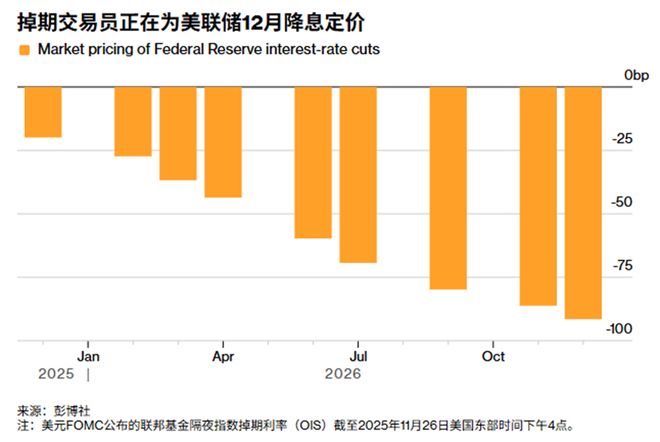
Core Insights - The recent Federal Reserve Beige Book indicates that U.S. economic activity has remained relatively stable, with about half of the 12 Federal Reserve districts reporting weakening employment and declining consumer spending, raising concerns about a soft labor market as the next interest rate decision approaches [1][2] Economic Activity - Economic activity has not changed significantly since the last report, with two districts reporting slight declines and one district reporting slight growth [1] - The report, compiled during the government shutdown that ended on November 12, highlights negative impacts on consumer spending due to the shutdown [1] Labor Market - There has been an increase in layoff announcements, but more regions are opting for strategies like hiring freezes and natural attrition rather than direct layoffs [1] - The unemployment rate in September was reported at 4.4%, with a slowdown in job growth compared to previous levels [2] Consumer Spending - Consumer spending is showing signs of decline, influenced by high prices that have led households to be more cautious [2] - Retailers have noted that the government shutdown negatively affected consumer behavior [1] Manufacturing Sector - The manufacturing sector is still in contraction, with the October PMI around 48.7, indicating ongoing challenges [2] - Companies are facing weak demand and rising costs related to tariffs, particularly in manufacturing and retail [1][2] Interest Rate Expectations - The Beige Book maintains a cautious tone, with increasing risks of economic activity slowing in the coming months [2] - Market expectations for a Federal Reserve rate cut in December are high, with the probability now around 80% [2] Market Reactions - Global stock markets have rebounded due to expectations of a Fed rate cut, recovering from a sell-off triggered by concerns over high valuations in the AI sector [5] - The U.S. stock market has shown a four-day rally leading up to Thanksgiving, reflecting a historically optimistic trend during this period [5]