资产配置

Search documents
交易退潮 配置当道:债市薄利让中小银行被迫转身
Zhong Guo Zheng Quan Bao· 2026-01-29 20:59
Core Insights - The bond investment strategies of small and medium-sized banks are shifting from capital gains to a focus on stable coupon income due to narrowing yields and limited risk management tools [1][2][3] - Banks are adopting a strategy of shortening duration, controlling positions, and focusing on short-term bonds, which reflects a broader trend affecting the entire bond market's funding structure [1][2] Group 1: Investment Strategy Adjustments - Many banks are strictly limiting long-duration trades and primarily investing in short-duration bonds while selectively using leverage [2] - Some banks have maintained their duration but reduced trading volumes, opting for other assets like deposits and interbank certificates during periods of inactivity [2] - The overall strategy has shifted towards a balanced approach due to internal profit pressures and market volatility, with state-owned banks enhancing trading attributes while rural commercial banks significantly reduce bond market allocations [2][3] Group 2: Market Conditions and Challenges - The bond market is characterized by limited returns, with the ten-year government bond yield expected to fluctuate within a narrow range of 30 basis points in 2025, leading to reduced coupon income [3] - Most small and medium-sized banks lack risk hedging tools, making them vulnerable to market fluctuations, as they do not have the qualifications for derivative trading [3][4] - The reliance on adjusting cash positions rather than utilizing sophisticated risk management tools has led to a cycle of forced selling during downturns and missed opportunities during upswings [4] Group 3: Asset Allocation Trends - There is a clear stratification in bond asset allocation among different types of banks, with state-owned banks being the primary holders of government bonds, reflecting their focus on asset safety and liquidity [6] - Joint-stock banks and city commercial banks have similar holding structures, primarily investing in government and local bonds, while rural commercial banks maintain a higher proportion of financial and credit bonds in pursuit of better yields [6] - The pressure to achieve profit targets often leads to a shift of funds into financial markets when credit lending falls short, but the subdued bond market limits the potential returns on these investments [6] Group 4: Future Outlook - The ten-year government bond yield has decreased from approximately 2.82% at the beginning of 2023 to 1.68% by the end of 2024, resulting in significant floating profits for banks [7] - As net interest margins continue to narrow and bond risk-reward ratios decline, banks are increasingly pressured to realize floating profits to secure returns [7] - If a rate cut window opens in 2026, the pressure to realize floating profits may ease as the bond market enters a phase of declining interest rates [7]
超30万亿高息存款年内到期 资金流向何方?
Guo Ji Jin Rong Bao· 2026-01-29 15:18
随着银行存款利率持续下行,中长期存款的利率水平已经从3%以上降至"1"字头。今年,大批收益较高 的存款即将迎来"到期潮",资金去向再度引发市场关注。 《国际金融报》记者注意到,当前市场观点普遍认为,不必过度担心"存款搬家"入市的问题,基于居民 风险偏好并未出现实质性变化,大多数存款仍将留在银行体系内。与此同时,低风险投资者面临到期资 金如何配置的问题,记者咨询发现,银行客户经理大多给出分散配置的建议,而分红险也成为近期的热 推产品之一。 受访专家指出,释放的资金预计将呈现"多元分散、偏重安全"的配置格局,而非集中涌入单一市场。低 风险偏好的投资者则应坚持"稳定配置、理性择品"策略,规避盲目跟风与不切实际的高收益预期。 到期存款大量入市可能性低 "银行理财成为核心承接阵地,其中低波动的固收类及'固收+'产品因收益略高于定存且风险可控,将吸 纳大量资金。部分资金会借道'固收+'基金、权益类基金间接入市,为股市带来边际增量,但受制于居 民整体风险偏好,资金大规模直接入市的可能性较低。"朱润康分析说。 东方证券分析师刘姜枫更是在研报中直言,所谓"天量"存款到期催化的"存款搬家",以及长期累积的外 汇顺差集中结汇,通过 ...
中国投资者去年买走全球近十分之一黄金
2 1 Shi Ji Jing Ji Bao Dao· 2026-01-29 15:17
国际金价连续两年上涨之后,近期再度强势攀升。 1月29日,现货黄金价格首次突破5500美元/盎司,短短四天内接连突破六道整百关口,刷新历史纪录。然而,面对屡创新高的金价,投资者心态却出现分 化。 | W | | | 伦敦金现 | | | | | | | --- | --- | --- | --- | --- | --- | --- | --- | --- | | | | | SPTAUUSDOZ.IDC | | | | | | | 5513.036 | | 昨结 | 5417.747 | | 总量 | | | 0 | | +95.289 | +1.76% 开盘 | | 5416.334 | | 现手 | | | 0 | | 最高价 | 5598.750 | 持 仓 | | 0 | 外 盘 | | | 0 | | 最低价 | 5416.260 | 墙 仓 | 0 | | 内 | 물 | | 0 | | 分时 | 五日 | 目K | 園K | | 月K | | 更多 (0) | | | | | 叠加 设均线 MA5:4786.980↑ 10:4552.370↑ 20:4269.153↑ | | | | | | | ...

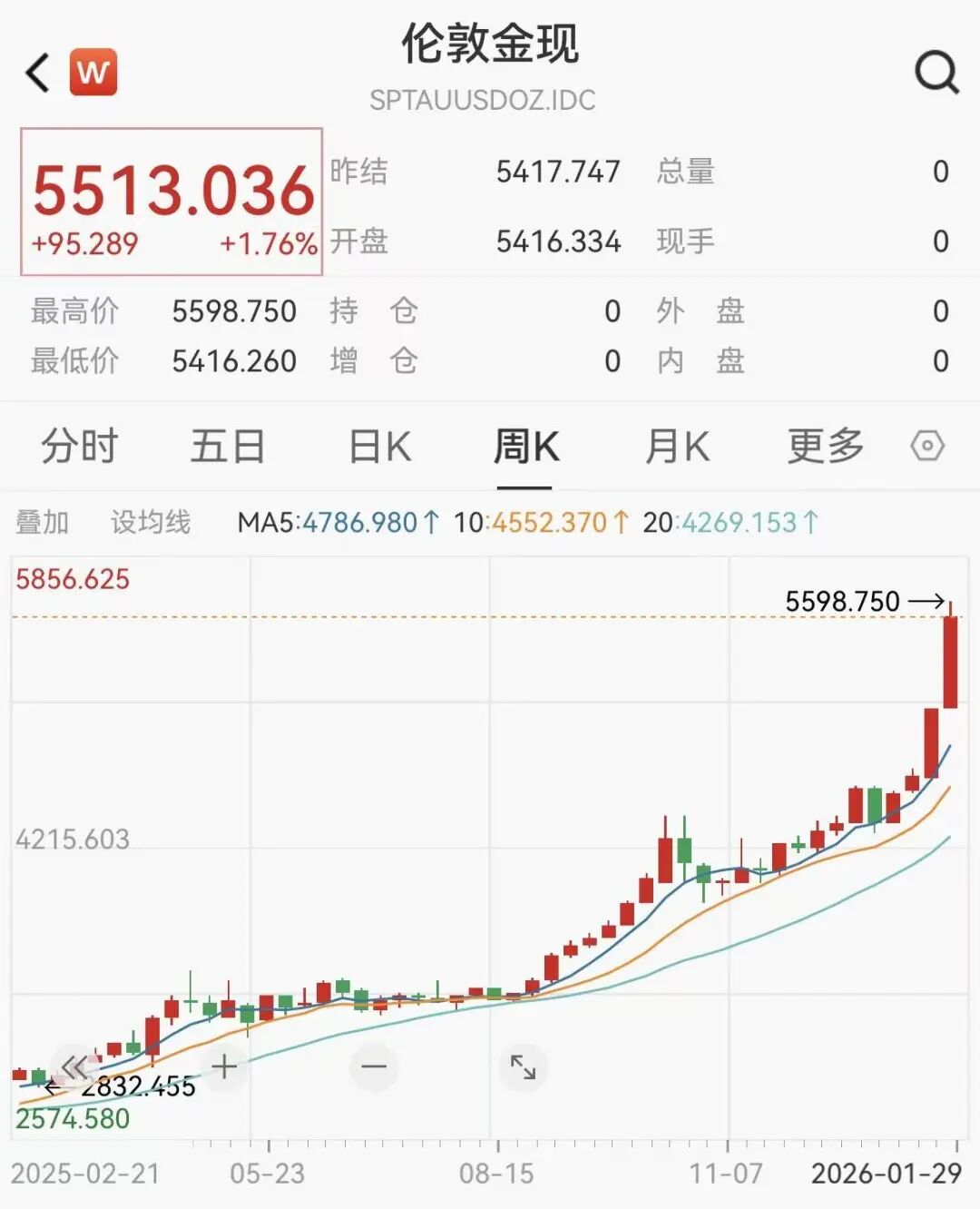
中国投资者去年买走全球近十分之一黄金
21世纪经济报道· 2026-01-29 15:14
Core Viewpoint - The article discusses the recent surge in gold prices, with spot gold prices surpassing $5,500 per ounce, leading to a divided sentiment among investors regarding the future of gold investments [1][3]. Group 1: Market Sentiment and Investor Behavior - Investors are experiencing mixed feelings about entering the gold market, with some expressing regret for not investing earlier as prices have risen significantly [3]. - Professional investors are also divided, with notable figures like Li Bei liquidating all gold positions due to high opportunity costs, suggesting a potential shift towards cyclical blue-chip stocks in China [3]. - The CEO of the World Gold Council's China division emphasizes the diversity of investor perspectives and the normalcy of differing risk appetites and strategies in the market [4]. Group 2: Gold Demand and Future Projections - The World Gold Council's report predicts global gold demand will reach a record high of 5,002 tons in 2025, driven primarily by investment demand, which is expected to hit 2,175 tons [7]. - Factors such as geopolitical risks, a weakening dollar, and high stock valuations are identified as key drivers for gold investment demand in 2025 [7]. - The report highlights a significant increase in gold ETF holdings, particularly in North America and Asia, with China's gold ETF holdings doubling to 133 tons, marking a historic high [9]. Group 3: Investment Strategies and Recommendations - The article advises investors to choose reliable channels for gold investment, such as through licensed financial institutions or the Shanghai Gold Exchange, to mitigate risks associated with unregulated platforms [12]. - Various investment methods are discussed, including physical gold, gold ETFs, and gold stocks, with recommendations for ordinary investors to consider non-leveraged options for long-term holding [12][13]. - Experts suggest that ordinary investors should limit their gold investments to no more than 20% of their total assets and consider a gradual investment approach to manage costs effectively [13].

超30万亿高息存款年内到期,资金流向何方?
Guo Ji Jin Rong Bao· 2026-01-29 15:12
Core Viewpoint - The article discusses the anticipated influx of matured deposits into the market, highlighting that concerns over a significant "deposit migration" are largely unfounded due to stable risk preferences among residents and a tendency to keep funds within the banking system [1][3]. Group 1: Deposit Maturity and Market Impact - A significant amount of long-term deposits, estimated at 32 trillion yuan, will mature by 2026, with 61% expected to mature in the first quarter of this year, indicating an earlier maturity rhythm compared to previous years [2]. - Analysts suggest that the actual outflow of high-interest deposits is limited, with a marginal increase of only 1.9 trillion yuan in high-interest deposits maturing in 2026 [2][3]. - The prevailing view is that the release of funds will lead to a diversified and safety-oriented allocation rather than a concentrated influx into a single market [3][4]. Group 2: Investment Strategies for Low-Risk Investors - Low-risk investors are advised to adopt a strategy of stable allocation and rational selection, avoiding impulsive decisions and unrealistic high-return expectations [5][6]. - Financial advisors recommend diversifying investments into short-term wealth management products or low-risk "fixed income+" products, especially for those with lower return expectations [5][6]. - Insurance products, particularly dividend-paying whole life insurance, are gaining popularity as they offer higher overall rates and capital protection, albeit with potential variability in dividend payouts [6].

银行理财市场研究(2025年四季度)
Sou Hu Cai Jing· 2026-01-29 14:28
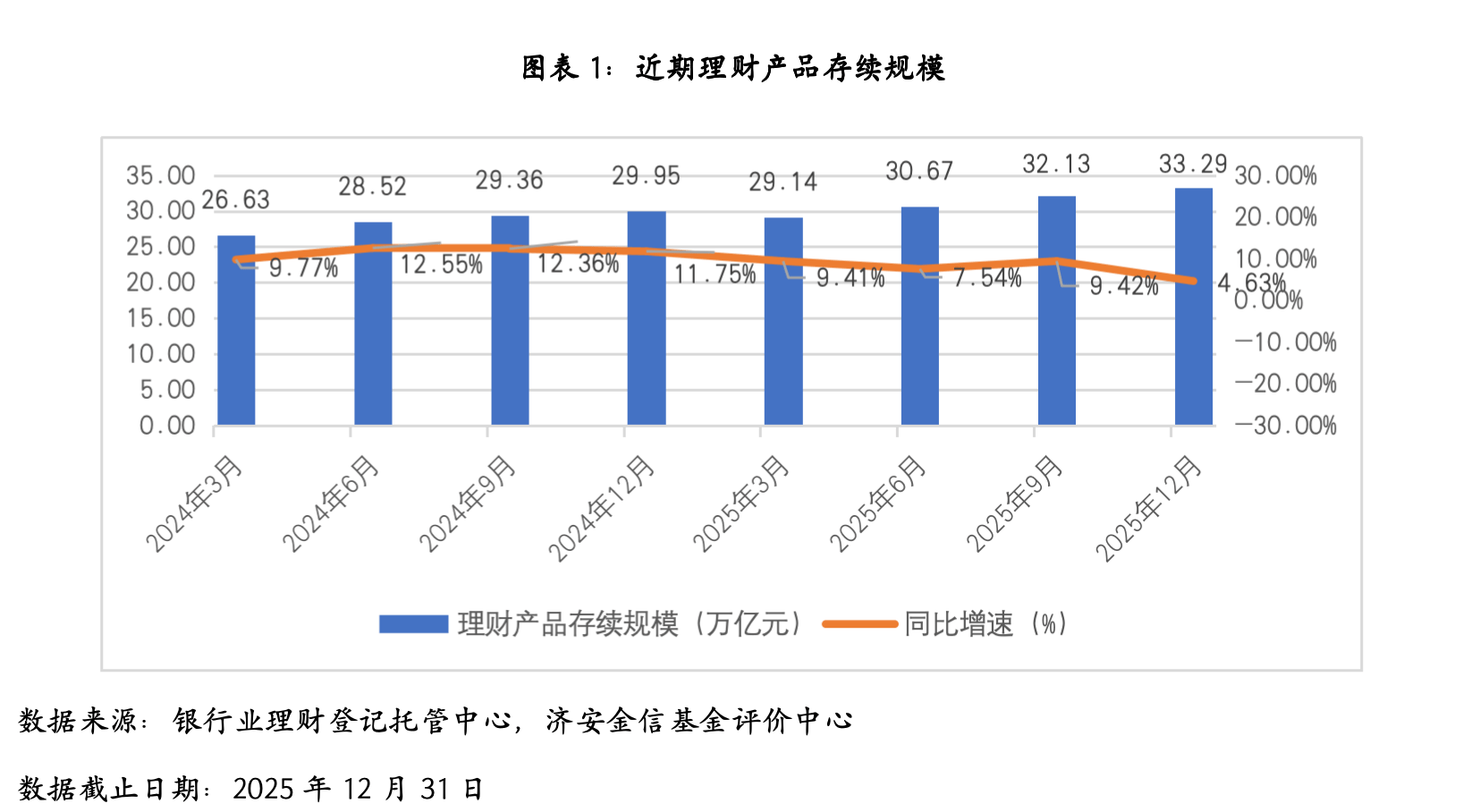
Group 1: Overall Market Performance - As of the end of 2025, the total outstanding scale of wealth management products reached 33.29 trillion yuan, an increase of 11.15% year-on-year, with wealth management companies accounting for 92.25% of the market share [17] - The number of outstanding wealth management products increased to 46,300, a year-on-year growth of 14.89% [1] Group 2: Institutional Breakdown - By the end of 2025, banks had 12,600 outstanding products with a scale of 2.58 trillion yuan, a decrease of 29.12% year-on-year, while wealth management companies had 33,700 products with a scale of 30.71 trillion yuan, an increase of 16.72% [4] Group 3: Product Characteristics - Fixed income products accounted for 97.09% of the total outstanding scale, amounting to 32.32 trillion yuan, a slight decrease of 0.24 percentage points year-on-year [6] - Open-ended wealth management products made up 79.87% of the total scale, with a size of 26.59 trillion yuan, a decrease of 0.93 percentage points year-on-year [8] - Products rated at level two (medium-low risk) and below constituted 95.73% of the total scale, amounting to 31.87 trillion yuan [11] Group 4: Asset Allocation - The asset allocation of wealth management products was primarily in fixed income, with bonds, cash and bank deposits, interbank certificates of deposit, and other assets making up 39.7%, 28.2%, 12.2%, and smaller percentages respectively [13] - The structure of bank wealth management assets has been optimized, focusing on low-volatility, high-liquidity standardized assets, with cash and bank deposits increasing by 4.9 percentage points [15] Group 5: Economic Impact - Wealth management funds injected approximately 2.1 trillion yuan into the real economy through various investments, including over 380 billion yuan in green bonds, supporting green and low-carbon development [15] - The funds also provided nearly 5.4 trillion yuan directly to small and micro enterprises, effectively alleviating financing challenges [15] Group 6: Future Outlook - The bank wealth management market is expected to continue on a path of high-quality development, with wealth management companies strengthening their professional advantages and expanding product systems around national strategies such as technology finance and green finance [17]
香港首只可兑换实物黄金ETF挂牌
Xin Hua Wang· 2026-01-29 12:17
Core Viewpoint - The launch of the Hang Seng Gold ETF marks a significant development in Hong Kong's financial market, providing a new avenue for investors to access physical gold through an ETF product [1]. Group 1: Product Launch - The Hang Seng Gold ETF was listed on the Hong Kong Stock Exchange on the 29th, becoming the first ETF in Hong Kong that can be redeemed for physical gold [1]. - This launch is seen as a pivotal moment for the financial market in Hong Kong, reflecting the increasing demand for diversified reserves and asset allocation among sovereign nations and investors [1]. Group 2: Government and Regulatory Support - The Financial Secretary of the Hong Kong Special Administrative Region, Xu Zhengyu, highlighted the importance of the ETF's launch and the signing of a cooperation agreement with the Shanghai Gold Exchange, which lays a solid foundation for connecting Hong Kong's gold central clearing system with the mainland market [1]. - The Hong Kong Securities and Futures Commission (SFC) Chairman, Huang Tianyou, expressed support for more innovations to expand market participation and enhance market resilience, indicating a commitment to responsible innovation in the financial sector [1]. Group 3: Market Implications - The market is expected to see more gold-themed ETFs launched in the near future, providing investors with a wider range of precious metal-related products [1]. - The SFC aims to utilize cutting-edge tools like blockchain to prepare the Hong Kong market for future developments, indicating a forward-looking approach to market evolution [1].
不要把黄金作为短期投机工具
Guo Ji Jin Rong Bao· 2026-01-29 11:48
1月29日,黄金价格继续上涨。COMEX黄金盘中一度突破5600美元,达5626.8美元/盎司,伦敦金现逼 近5600美元,两大核心品种双双刷新历史纪录。 世界黄金协会中国区CEO王立新在接受《国际金融报》记者采访时表示,金价涨幅虽快,但历史上也曾 出现过这样的涨势,存在即合理。 世界黄金协会亚太区(除印度)研究负责人兼中国区行业拓展副总监贾舒畅指出,当前黄金价格主要受两 大因素驱动:一是地缘政治与贸易风险等系统性风险的避险需求,投资者进行"真实风险"的预防性配 置;二是金价显著的涨幅吸引了趋势投资者的加入,进一步加强了金价的涨势。与此同时,也观察到资 产配置结构的战略性转移:相较于实物金条、黄金ETF等长期战略性配置,期货市场相对表现平淡。 王立新呼吁,投资者应以长期战略配置心态参与,不要将黄金作为短期投机工具,防止在非理性状态下 超越自身风险承受能力进行交易。 根据世界黄金协会发布的2025年全年《全球黄金需求趋势报告》,全球黄金投资需求增至2175吨的里程 碑水平,成为推动2025年黄金总需求刷新历史纪录的主要驱动力。全球范围内,寻求避险和资产多元化 的投资者大量涌入黄金ETF,全年净增801吨。同时, ...
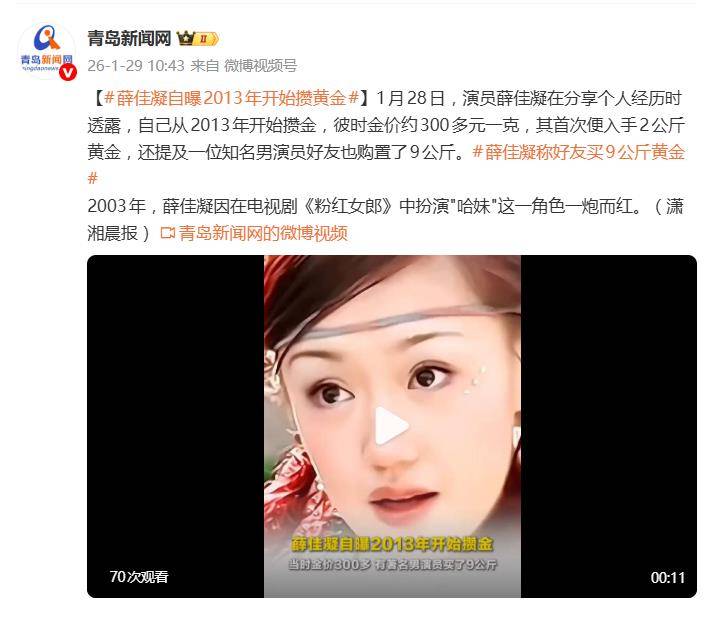
薛佳凝自曝2013年开始攒黄金,首次便入手2公斤,有男演员买了九公斤
Sou Hu Cai Jing· 2026-01-29 10:33
Core Viewpoint - The article highlights actress Xue Jiaying's investment strategy in gold, showcasing her foresight and financial acumen since 2013, which has garnered significant attention from the public [10]. Investment Strategy - Xue Jiaying began investing in gold in 2013 when the price was around 300 yuan per gram, purchasing two kilograms initially, indicating a substantial investment approach [1][7]. - A notable male actor, a friend of Xue, invested nine kilograms of gold at that time, demonstrating a trend among celebrities to invest in precious metals [1][7]. Market Insight - The current gold price has nearly doubled since 2013, reflecting the effectiveness of Xue's long-term investment strategy compared to others who opted for short-term gains [10]. - Xue Jiaying's choice to hold onto her gold investments rather than sell during price increases illustrates a more stable asset allocation strategy, contrasting with her friend's decision to cash out when prices rose above 400 yuan [10]. Financial Wisdom - The article emphasizes the wisdom of a "saving" rather than "speculating" mindset in today's volatile investment market, positioning gold as a traditional safe-haven asset that has proven its value over time [21]. - Xue Jiaying's approach to investing in gold is presented as a rational and strategic decision, highlighting the importance of financial planning and foresight beyond the celebrity image [21].
国际金价再创历史新高!将如何影响汽车业?
Zhong Guo Qi Che Bao Wang· 2026-01-29 08:36
Core Viewpoint - The recent surge in gold prices, which has seen spot gold exceed $5,500 per ounce, is significantly impacting the automotive industry through various channels, including raw material costs and supply chain stability [3][4]. Group 1: Gold Price Surge and Its Drivers - Analysts attribute the rise in gold prices to expectations of interest rate cuts by the Federal Reserve, increased gold purchases by global central banks, and heightened geopolitical risks, which enhance gold's appeal as a safe-haven asset [4]. - Over the past year, gold prices have increased by approximately 30%, while copper and aluminum prices have risen by nearly 20% and over 15%, respectively, indicating a strong correlation between gold and other industrial metals [5]. Group 2: Impact on Automotive Manufacturing Costs - The increase in gold prices is leading to a significant rise in the costs of essential metals like copper and aluminum, which are critical in automotive manufacturing [6]. - The automotive industry faces challenges from rising raw material costs, which may force companies to either absorb costs, reducing profit margins, or pass costs onto consumers, potentially harming market competitiveness [6]. Group 3: Supply Chain and Component Costs - The volatility in metal prices is creating instability for automotive parts suppliers, complicating supply chain management and increasing operational costs [7]. - The rising prices of precious metals like palladium and rhodium, essential for catalytic converters, further exacerbate cost pressures in the automotive sector [6]. Group 4: Strategies for Cost Optimization - Companies are exploring technological innovations to optimize costs, such as reducing the use of metals through lightweighting strategies [8]. - Some automotive firms are considering incorporating gold into their asset portfolios as a hedge against rising material costs, utilizing financial instruments like gold futures and ETFs [8]. Group 5: Pricing Strategies and Consumer Demand - Automotive companies are advised to adjust product pricing carefully to avoid alienating consumers while managing cost pressures [9]. - Strategies such as offering financial incentives, low-interest loans, and trade-in programs are being implemented to stimulate consumer demand and maintain market activity [9]. Group 6: Long-term Industry Implications - The ongoing rise in international gold prices may reflect broader changes in the global economic landscape, suggesting that automotive companies need to adopt a multifaceted approach to navigate external pressures and drive transformation [9].