
高性能计算

Search documents
这颗芯片,还有机会吗?
半导体行业观察· 2025-09-05 01:07
Core Viewpoint - The article discusses the evolution and significance of high-performance computing (HPC) and AI accelerators, particularly focusing on Pezy Computing's advancements in mathematical accelerators that rival GPUs in performance and energy efficiency [1][2][32]. Group 1: High-Performance Computing and AI Accelerators - The global system expenditure is now dominated by AI servers filled with accelerators, with GPUs being the preferred choice due to their design for high-throughput vector processing and support for various workloads [1]. - Pezy Computing has developed a series of mathematical accelerators over 15 years, aiming to maximize energy efficiency while performing similar tasks as GPUs [2][8]. - The Pezy-SC series of accelerators has shown significant performance improvements over the years, with the latest Pezy-SC4s expected to deliver 24.9% higher floating-point throughput compared to its predecessor [7][8]. Group 2: Technical Specifications and Performance Metrics - The Pezy-SC4s chip, set to launch in 2026, will feature 2,048 cores, a clock speed of 1.5 GHz, and 96 GB of HBM3 memory with a bandwidth of 3.2 TB/s [8][30]. - The performance metrics of Pezy chips have improved significantly, with the Pezy-SC3 achieving 19.7 TFLOPS in double precision and the upcoming SC4s expected to reach 24.6 TFLOPS [4][8]. - The architecture of Pezy chips allows for efficient memory usage and high throughput, with the SC4s chip designed to support multiple precision formats including FP64, FP32, and FP16 [8][12]. Group 3: Market Position and Future Outlook - Pezy Computing's advancements position it as a competitive alternative to Nvidia GPUs, particularly in high-precision floating-point operations, which are crucial for HPC and AI workloads [30][31]. - The Japanese government’s investment in Pezy Computing is seen as a strategic move to maintain expertise in mathematical accelerator design, ensuring a backup option in case of GPU supply constraints [32]. - The anticipated performance of the Pezy-SC4 in genomic analysis tasks suggests it could outperform Nvidia's H100 GPUs, indicating a strong potential for market adoption [29][30].

AMD202509004
2025-09-04 14:36
Summary of AMD Conference Call Company Overview - **Company**: AMD (Advanced Micro Devices) - **Industry**: Semiconductor and AI technology Key Points and Arguments Financial Performance - **Q2 Revenue**: AMD reported core business revenue of $3.2 billion, a 14% year-over-year increase despite sales restrictions in the Chinese market [2][3] - **Data Center Revenue**: Expected to achieve double-digit growth in Q3, primarily driven by the mass production of the Mi350 [2][3] - **AI Business Growth**: In Q2, AI business revenue reached $7.7 billion, a 32% year-over-year increase, with Q3 projected to reach $8.7 billion, a 28% increase [3] Product Development and Strategy - **Future Product Launches**: AMD plans to launch Mi400 and Mi500 models in 2026 and 2027, respectively, to further enhance its AI business [2][3] - **AI Chip Model Strategy**: AMD aims to support various model sizes through CPU, GPU, and adaptive computing, aligning with long-term strategic goals [2][7] Market Dynamics - **Customer Base**: Growth driven by existing clients like Microsoft, Meta, and Oracle, along with new clients such as Tesla [6] - **Cloud Computing Growth**: Significant growth in the cloud computing sector is noted, with increasing demand for large-scale models [6] Supply Chain Management - **Supply Chain Bottlenecks**: AMD is addressing supply chain challenges, including tight wafer capacity and HBM supply, by collaborating closely with partners like TSMC [2][8] - **AITM Model**: The AITM model, which has surpassed $50 billion, reflects the growing demand for high-performance computing resources [4][8] Market Opportunities - **Sovereign Wealth Funds**: AMD sees substantial market opportunities from sovereign wealth funds, particularly in engaging highly skilled clients [4][11] - **AI Regulatory Environment**: The regulatory landscape for AI is becoming clearer, which is expected to facilitate further progress in 2026 [4][11] Challenges and Risks - **Impact of Export Restrictions**: The inability to sell products in China led to an $800 million inventory write-off, affecting AI business performance in the first half of 2025 [12][13] - **Profit Margin Concerns**: AI and data center GPU business margins are below the company average due to a focus on market share and total cost of ownership (TCO) [14][16] Long-term Outlook - **Customer Concentration**: While the customer base is expected to diversify, billing clients may remain concentrated due to significant capital investments [15] - **Pricing Strategy**: AMD aims to increase average selling prices (ASP) while providing value to customers, ensuring sufficient margins to support future investments [16] Industry Trends - **Market Share Dynamics**: The total addressable market (TAM) is expanding, with a significant portion expected to be served by programmable systems, while ASICs will cater to specific workloads [17][18] - **AI Adoption**: The early stages of AI adoption are noted, with potential for significant changes in productivity and operational efficiency [20] Conclusion - AMD is strategically positioned to capitalize on the growing AI market, with a focus on product innovation, supply chain optimization, and expanding its customer base while navigating challenges related to market dynamics and regulatory environments.

AI加持+绑定英伟达,胜宏科技赴港上市能否再度「起跳」?
Sou Hu Cai Jing· 2025-09-02 13:53
Core Viewpoint - Shenghong Technology (300476.SZ) has seen its market capitalization double within 56 trading days, driven by a surge in AI demand, with its stock price increasing over 572% this year, reaching a peak of 293.6 yuan and a market cap of approximately 233.3 billion yuan [2][4]. Group 1: Financial Performance - Shenghong Technology's revenue is expected to exceed 10 billion yuan for the first time in 2024, with a year-on-year increase of 35.3%, and net profit expected to grow by 71.9% [5]. - For the first half of 2025, the company reported revenue of 9.031 billion yuan, a year-on-year increase of 86.0%, and a net profit of 2.143 billion yuan, a staggering increase of 366.89% [5][7]. - The revenue growth is attributed to the large-scale shipment of high-end PCB products related to AI and an optimized product mix, with multi-layer boards (MLPCB) contributing 61.73 billion yuan, accounting for 57.5% of total revenue in 2024 [5][7]. Group 2: IPO and Fundraising - Shenghong Technology has submitted its prospectus to the Hong Kong Stock Exchange for an IPO, aiming to raise approximately 1 billion USD, which would make it one of the largest PCB fundraising efforts in recent years [4]. - The funds raised will primarily be used for capacity expansion and technology research and development, with a total financing target of about 9 billion yuan if both the IPO and a previous private placement are successful [4]. Group 3: Market Position and Client Base - The company has become a key supplier for NVIDIA, with over 70% of its orders linked to NVIDIA-related products, capturing about 50% of the global market for PCB used in NVIDIA's data centers [11][12]. - Shenghong Technology's client base includes major companies such as Foxconn, Gigabyte, Hikvision, and Xiaomi, with a significant portion of its revenue now coming from overseas markets, which accounted for 78.4% of its main revenue in the first quarter of 2025 [12][13]. Group 4: Management and Strategic Development - The company's growth is attributed to its founder, Chen Tao, who has strategically positioned Shenghong Technology in the high-density interconnect (HDI) PCB market, which is crucial for AI applications [10][11]. - The establishment of the HDI division in 2019 has allowed Shenghong Technology to meet the increasing demands of AI hardware, leading to its recognition as a core supplier for NVIDIA [10][11]. Group 5: Industry Outlook - The global PCB market is projected to grow, with an estimated value of approximately 73.57 billion USD in 2024, reflecting a year-on-year increase of 5.8%, and expected to reach 94.66 billion USD by 2029 [16]. - Government initiatives to promote domestic production of high-end PCBs and investments in digital infrastructure are expected to benefit companies like Shenghong Technology [16].



华峰测控(688200):公司信息更新报告:单季度营收创历史新高,终端市场、下游封测厂商景气向上
KAIYUAN SECURITIES· 2025-09-02 12:08
Investment Rating - The investment rating for the company is "Buy" (maintained) [1] Core Views - The company achieved a record high quarterly revenue of 534 million yuan in H1 2025, representing a year-over-year increase of 40.99%. This growth is attributed to the recovery of the global semiconductor industry and the company's technological advantages [4][5] - The gross margin for H1 2025 was 74.70%, a slight decline of 1.15 percentage points year-over-year. The net profit attributable to the parent company reached 196 million yuan, up 74.04% year-over-year, driven by economies of scale in sales and management expenses [4][5] - The company is expected to maintain strong revenue growth, with projected revenues of 1.18 billion yuan, 1.42 billion yuan, and 1.81 billion yuan for 2025, 2026, and 2027, respectively [5][8] Financial Performance Summary - In Q2 2025, the company reported revenue of 337 million yuan, a year-over-year increase of 39.03% and a quarter-over-quarter increase of 70.40%. The gross margin for Q2 was 74.34%, with a net profit of 134 million yuan, reflecting a year-over-year increase of 50.30% and a quarter-over-quarter increase of 116.13% [4][5] - The company’s financial projections indicate a recovery in revenue and profit margins, with expected net profits of 434 million yuan, 548 million yuan, and 742 million yuan for 2025, 2026, and 2027, respectively [8][10] Market Outlook - The semiconductor market is experiencing strong growth, with the global semiconductor market size reaching 346 billion USD in H1 2025, a year-over-year increase of 18.9%. Key growth drivers include AI data centers and high-performance computing [6] - The automotive and industrial markets are also showing signs of recovery, which is expected to boost demand for the company's products. The company is expanding its market presence and has launched the STS 8600 platform for digital chip testing, which is currently in the customer validation phase [5][6][7]

先进封装,最新预测
半导体行业观察· 2025-09-02 01:11
Core Insights - The global advanced chip packaging market is projected to reach USD 50.38 billion by 2025 and USD 79.85 billion by 2032, with a compound annual growth rate (CAGR) of 6.8% from 2025 to 2032 [2][3] - The growth is driven by increasing demand for smaller, faster, and more efficient electronic devices, alongside the expansion of high-performance computing, 5G networks, and the Internet of Things (IoT) [2][3][4] - Advanced packaging technologies such as 2.5D and 3D packaging are expected to significantly boost market growth during the forecast period [2][3] Market Dynamics - Fan-out wafer-level packaging (FOWLP) is the most widely used type of advanced packaging, expected to account for 58.6% of the global market share by 2025 [2] - The Asia-Pacific region is anticipated to dominate the market with a share of 53.2% by 2025, while North America is expected to achieve the fastest growth, capturing 29.3% of the global market share by 2025 [3] Technological Trends - The demand for high-performance and miniaturized electronic devices is a key growth driver, with advanced packaging technologies being favored for their ability to support heterogeneous integration [3][5] - Emerging technologies such as artificial intelligence, IoT, 5G, and high-performance computing are creating substantial growth opportunities for advanced chip packaging companies [4][5] Industry Applications - Rapid expansion in sectors like automotive, medical devices, and industrial electronics is likely to increase the demand for advanced chip packaging, as these industries require reliable, compact, and high-performance packaging solutions [5] - The rise of electric vehicles and advanced driver-assistance systems (ADAS) is driving the need for robust semiconductor components, with advanced packaging technologies enhancing power efficiency and thermal management [5]
混合键合与TCB,先进封装两大热门
半导体行业观察· 2025-08-31 04:36
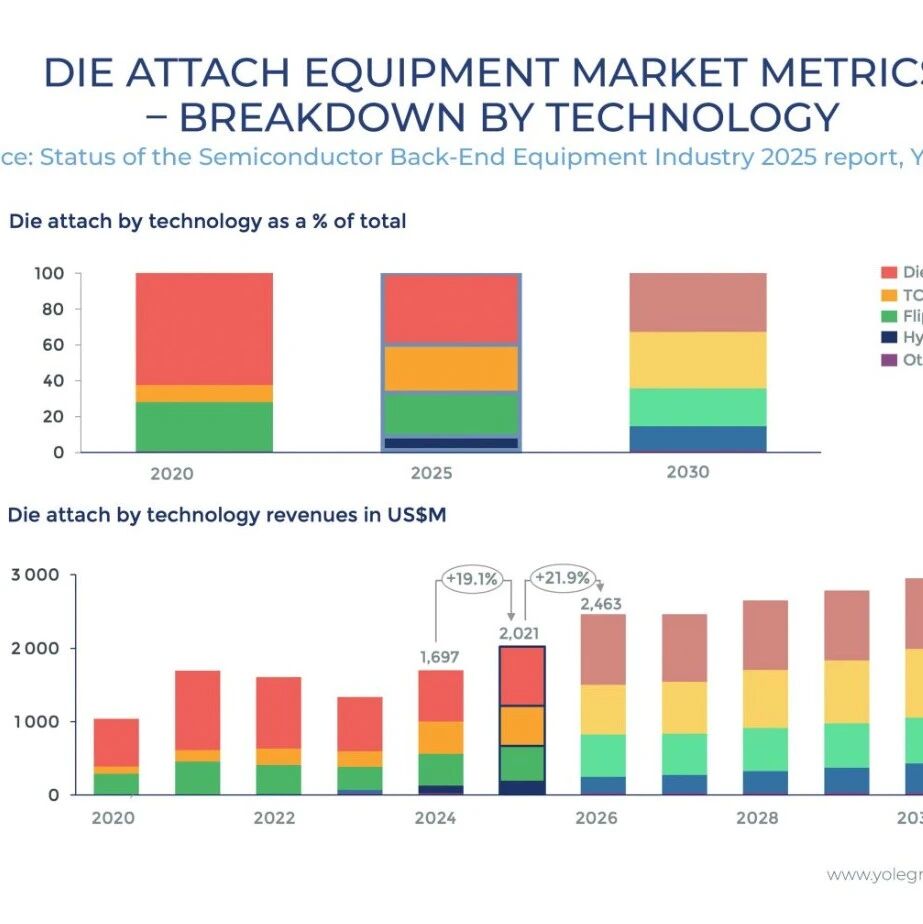
Core Insights - Advanced packaging is becoming a key driver for the growth of the back-end equipment market, with total revenue expected to reach approximately $6.9 billion in 2025 and grow to $9.2 billion by 2030, reflecting a compound annual growth rate (CAGR) of 5.8% [2] - The growth is primarily driven by technologies used for building HBM stacks, chiplet modules, and high I/O substrates, reshaping the supply chain and market dynamics for foundries, IDMs, and OSATs [2][3] - The demand for high bandwidth, proximity, and power efficiency in AI and high-performance computing is pushing the need for advanced packaging solutions [3] Back-End Equipment Market Overview - The back-end equipment market is experiencing strong growth due to advanced packaging, AI acceleration, and heterogeneous integration [2] - The market is expected to see significant contributions from high-precision bonding machines, thermal compression bonding (TCB), and hybrid bonding technologies [3][6] Thermal Compression Bonding (TCB) - TCB is currently the leading technology, with revenue projected to grow from approximately $542 million in 2025 to about $936 million by 2030, representing a CAGR of 11.6% [6] - Major players in TCB include Hanmi, ASMPT, and others, with significant orders tracking the ramp-up of HBM3E capacity [6][11] Hybrid Bonding - Hybrid bonding is identified as a strategic driver for future chiplet and HBM generations, with revenue expected to rise from about $152 million in 2025 to approximately $397 million by 2030, showing a CAGR of 21.1% [11] - The technology is gaining traction due to its potential in logic-to-memory stacking, although its application is still limited by material and process maturity [11][12] Flip Chip Bonding - The flip chip bonding market is projected to grow from approximately $492 million in 2025 to $622 million by 2030, driven by demand from AI accelerators and large network ASICs [17] - The technology is evolving towards no flux processes to enhance reliability and reduce residues [17] Wafer Thinning and Preparation - The wafer thinning market is expected to reach about $582 million in 2025 and grow to approximately $845 million by 2030, driven by the adoption of TSV and ultra-thin die in memory and logic stacking [19] - Key players in this segment include DISCO and ACCRETECH, with challenges related to precision and stress management [19] Structural Changes in Packaging - The packaging process is becoming integral to system performance, with bandwidth and energy consumption targets being addressed at the interposer and stack levels [21] - The integration of front-end process control into packaging production is creating a clear growth hierarchy, with traditional bonding machines experiencing low single-digit CAGR while TCB and hybrid bonding show steep growth curves [22]
通富微电2025年中报简析:营收净利润同比双双增长,盈利能力上升
Zheng Quan Zhi Xing· 2025-08-29 22:42
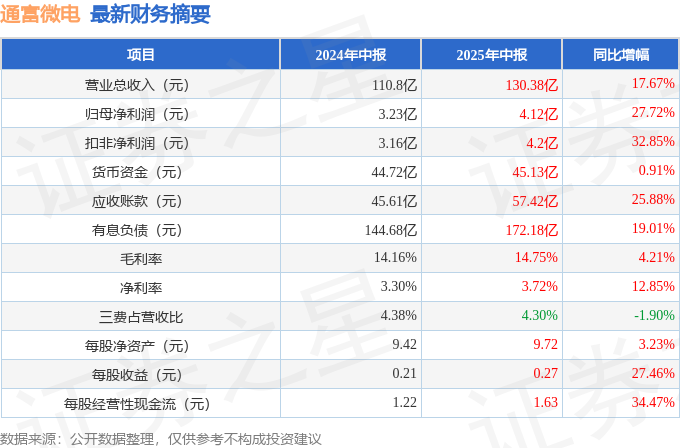
Financial Performance - Company reported a total revenue of 13.038 billion yuan for the first half of 2025, an increase of 17.67% year-on-year [1] - Net profit attributable to shareholders reached 412 million yuan, up 27.72% year-on-year [1] - In Q2 2025, total revenue was 6.946 billion yuan, reflecting a 19.8% increase year-on-year, while net profit was 311 million yuan, up 38.6% year-on-year [1] - Gross margin improved to 14.75%, a year-on-year increase of 4.21%, and net margin rose to 3.72%, up 12.85% year-on-year [1] Operational Metrics - Total operating expenses (sales, management, and financial expenses) amounted to 561 million yuan, accounting for 4.3% of revenue, a decrease of 1.9% year-on-year [1] - Earnings per share (EPS) increased to 0.27 yuan, a rise of 27.46% year-on-year [1] - Operating cash flow per share was 1.63 yuan, reflecting a significant increase of 34.47% year-on-year [1] Business Model and Market Position - Company operates as an integrated circuit packaging and testing service provider, focusing on high-value products in sectors such as AI, high-performance computing, and automotive electronics [5][6] - The company has established strong partnerships with leading research institutions and universities, enhancing its R&D capabilities [5] - In 2024, the company achieved significant growth in various sectors, including a 46% increase in mobile SOC and over 200% growth in automotive products [6][7] Strategic Initiatives - Company plans to invest a total of 6 billion yuan in capital expenditures for 2025, focusing on facility construction, production equipment, and technology R&D [9] - Major investments include 2.5 billion yuan for new factory construction and 3.5 billion yuan for upgrading existing products to meet market demands [9] Shareholder Insights - The largest fund holding in the company is from Chuangjin Hexin New Energy Vehicle Stock A, which has reduced its holdings [4] - Other funds have shown varied movements, with some increasing their positions in the company [4]

深科技2025年上半年净利润同比增长25.39% 存储半导体与高端制造双轮驱动
Zheng Quan Ri Bao· 2025-08-29 01:49
Core Insights - Shenzhen Changcheng Development Technology Co., Ltd. (Deep Technology) reported a total revenue of 7.74 billion yuan for the first half of 2025, representing a year-on-year growth of 9.71% [2] - The net profit attributable to shareholders reached 452 million yuan, an increase of 25.39% year-on-year [2] - The net cash flow from operating activities was 1.456 billion yuan, up 7.58% compared to the previous year [2] Business Performance - The growth in performance is primarily attributed to the significant recovery in the storage semiconductor industry and the company's ongoing deepening in high-end manufacturing [2] - Emerging technologies such as generative artificial intelligence, high-performance computing, and new energy vehicles have driven strong demand for storage products, maintaining robust growth in the storage business [2] - Innovations in semiconductor packaging and testing technology have further supported steady growth in this sector [2] Strategic Focus - In the high-end manufacturing sector, the company focuses on industries such as medical health and automotive electronics, enhancing production efficiency and market competitiveness through digital transformation [2] - The integration of flexible manufacturing platforms with digital technologies has significantly improved the company's market responsiveness and lean management capabilities [2] - The metering intelligent terminal business benefits from the global energy system transformation, with stable growth in demand for smart meters and related products [2] Business Structure - The company's business structure is stable, focusing on three main areas: storage semiconductors, high-end manufacturing, and metering intelligent terminals [3] - This diversified business structure helps the company effectively withstand cyclical fluctuations in different industries and provides multiple growth points for performance [3] - Analysts believe that the company's performance in the first half of the year reflects its competitiveness in core business areas and the effectiveness of its strategic execution [3]

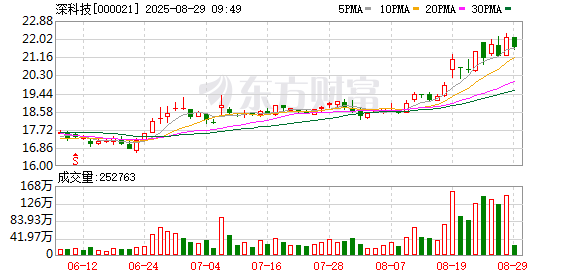
2025晶圆代工产业格局、技术突破与中国力量
材料汇· 2025-08-28 15:29
Core Viewpoint - The wafer foundry industry is a crucial segment of the semiconductor sector, characterized by its capital and technology intensity, and is experiencing significant growth driven by AI and automotive electronics demand [1][11]. Group 1: What is Wafer Foundry? - Wafer foundry refers to the specialized manufacturing of semiconductor wafers, accepting orders from integrated circuit (IC) design companies without engaging in design itself [1][14]. - The wafer foundry industry consists of an upstream segment involving semiconductor materials and equipment, a midstream segment for wafer processing services, and a downstream segment for packaging and testing [1][18]. - Manufacturing processes are categorized into advanced logic processes and specialty processes, with advanced processes defined as those below 14nm and mature processes as those at 28nm and above [1][27]. Group 2: Advantages and Challenges of Wafer Foundry - The wafer foundry industry shows a clear trend towards domestic production, with increasing market demand and government support for the semiconductor industry [2][37]. - Challenges include geopolitical instability, significant first-mover advantages held by leading companies, reliance on key materials, and yield issues [2][42]. Group 3: Current Market Status - The semiconductor industry is currently in a favorable economic cycle, with global wafer production capacity expected to grow from 31.5 million wafers per month in 2024 to 33.7 million in 2025, representing growth rates of 6% and 7% respectively [3][47]. - Global semiconductor sales are projected to exceed $1 trillion by 2030, with a compound annual growth rate (CAGR) of 9% from 2025 to 2030 [4][50]. - The competitive landscape is characterized by a "one strong, many strong" structure, with TSMC holding a 60% market share, while China is expected to dominate mature processes by 2027 [4][54]. Group 4: Major Companies in Mainland China - Major players in China's wafer foundry sector include SMIC, Hua Hong Semiconductor, and Jinghe Integrated [5][60]. - SMIC is recognized as a leading integrated circuit wafer foundry in China, achieving significant revenue growth and technological advancements in logic and specialty processes [6][62]. - Hua Hong Semiconductor is noted for its comprehensive specialty process platform and has consistently expanded its revenue, ranking fifth globally among pure wafer foundry companies [7][64]. - Jinghe Integrated has achieved the top market share in the liquid crystal panel driver chip foundry sector and has shown substantial revenue growth [8][67]. Group 5: Technology Development Trends - The global wafer foundry capacity is expanding, with advanced processes like 3nm and 2nm becoming increasingly competitive, driven by the rise of AI and high-performance computing (HPC) demands [10][29]. - The investment required for advanced processes has significantly increased, with estimates suggesting that 2nm technology may require close to $28 billion in investment [30][30]. - The concept of "Wafer Foundry 2.0" has emerged, encompassing not only wafer manufacturing but also packaging, testing, and other integrated services [32][32].



短期技术性调整,中期仍处于慢牛行情,对持仓进行动态优化
British Securities· 2025-08-28 07:50
Core Viewpoints - The report indicates that the recent market decline is a short-term technical adjustment due to profit-taking from previous highs, rather than the beginning of a trend adjustment, with limited expected downside and likely support for recovery [2][10] - The macroeconomic recovery and policy support provide a solid fundamental backing for the market, suggesting that the A-share market remains in a slow bull market under policy guidance [2][10] - The report advises dynamic optimization of holdings, suggesting to reduce positions in recently high-performing stocks and to consider buying undervalued stocks with strong fundamentals [2][10] Market Overview - On the day of the report, the three major indices in the A-share market opened higher and showed strong performance in sectors such as semiconductor and optical communication modules, but experienced a sharp decline in the afternoon due to a sell-off in bank stocks, leading to an overall drop in indices [4][5] - The trading volume was significant, with a total turnover of 31,656 billion, indicating active market participation despite the decline [5] Sector Analysis - The semiconductor sector remains active, with a long-term positive outlook supported by national policy and increasing global demand for AI and high-performance computing, with expectations of over 15% growth in the global semiconductor market by 2025 [6][10] - The optical communication module sector is also highlighted as being in a high prosperity cycle, driven by advancements in AI computing and data center upgrades, suggesting investment opportunities in leading companies within this space [7][10]