
高端化

Search documents
航民股份:公司聚焦纺织印染和黄金饰品两大主业升级
Zheng Quan Ri Bao Wang· 2025-12-18 09:43
Core Viewpoint - The company is focusing on upgrading its two main businesses, textile printing and dyeing, and gold jewelry, by moving towards "high-end, intelligent, green, and integrated" directions, leveraging technological innovation as a key driver [1] Group 1: Business Strategy - The company aims to enhance its operations through technological innovation [1] - The focus is on two primary sectors: textile printing and dyeing, and gold jewelry [1] Group 2: Industry Coordination - The company is coordinating industries such as thermal power and wastewater treatment to promote quality improvement and efficiency [1]

张兴海:问界用“五高”标准打造高端汽车
Zhong Guo Zheng Quan Bao· 2025-12-18 08:41
Core Viewpoint - The discussion highlights the growth journey of the AITO brand, emphasizing high standards in safety, reliability, performance, quality, and value as key pillars of the brand's philosophy [1] Group 1: Company Achievements - AITO has achieved cumulative deliveries exceeding 900,000 units, with over 50,000 units delivered in November alone, setting a new monthly delivery record [2] - The average transaction price for the entire AITO lineup is 400,000 yuan, with the AITO M9 model alone surpassing 260,000 cumulative deliveries and being recognized as the sales champion in the 500,000-unit category for 20 consecutive months [2] - AITO is the first and only domestic brand to exceed traditional luxury brands in both monthly sales and average transaction price [2] Group 2: Customer Engagement and Innovation - AITO has introduced a unique delivery model called "user approval before vehicle delivery," allowing customers to participate in the testing and acceptance of new vehicles [2] - The company emphasizes a customer-centric approach, gathering user feedback to enhance research and development, ensuring that vehicles meet customer expectations [2] - The founder has actively engaged with users across multiple cities to listen to their suggestions, reinforcing the brand's commitment to customer satisfaction and trust [2] Group 3: Industry Context - By 2025, it is projected that the sales share of new energy vehicles in China will exceed 50%, marking a significant turning point in the automotive industry [1] - The transformation towards digitalization, electrification, and green initiatives is reshaping the automotive landscape, with AITO positioning itself as a leader in this evolution [1] - The company aims to build a globally influential high-end brand, contributing to China's goal of becoming a strong automotive nation [1]

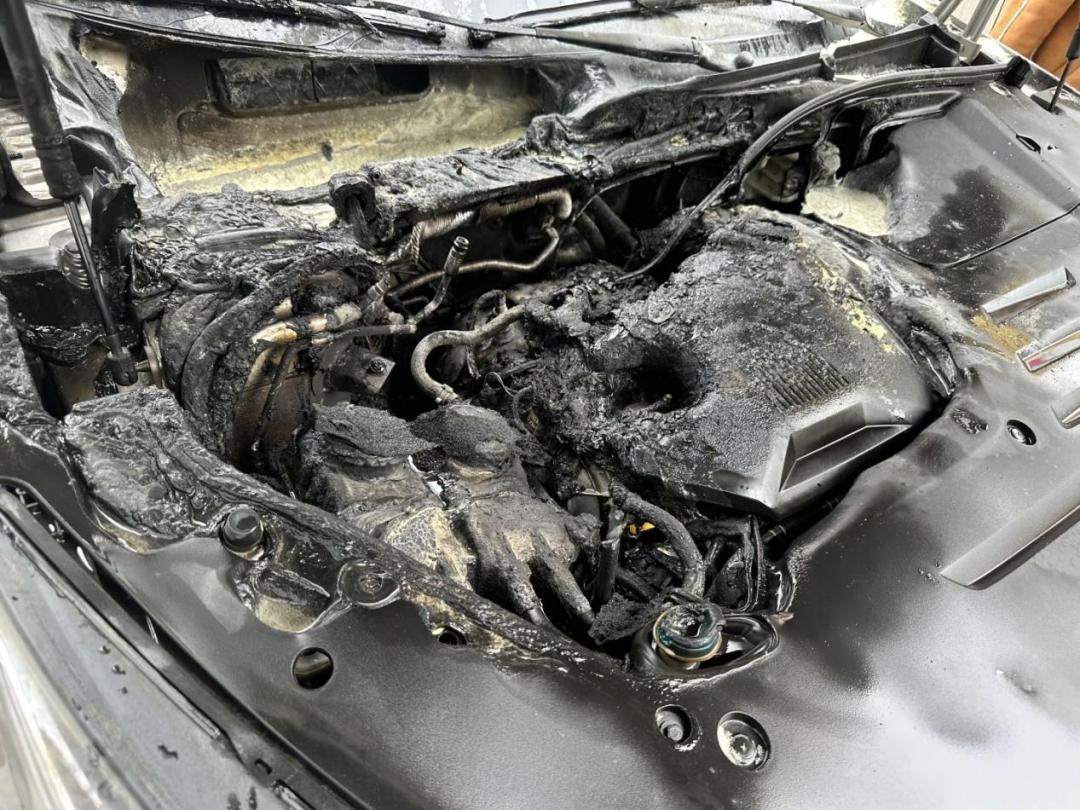
上汽荣威行驶途中自燃,曾宣传「让灭火器失业」,消防认定「不排除发动机故障」
3 6 Ke· 2025-12-18 03:31
Core Viewpoint - The promotional claim of "zero self-ignition" by Roewe is being challenged due to recent incidents of vehicle fires, raising concerns about the reliability of their vehicles and the company's response to such issues [1][7][11]. Group 1: Incidents of Vehicle Fires - A Roewe RX5 vehicle caught fire while being driven, with the cause attributed to potential mechanical failure in the engine compartment, as per the fire department's report [5][6]. - Another incident involved a Roewe RX5 that ignited while parked at a shopping mall, with the owner expressing dissatisfaction over the company's handling of the situation and compensation offered [2][6]. - Additional reports indicate that a Roewe Ei5 caught fire at a charging station, affecting surrounding vehicles, and another Roewe electric vehicle ignited in Chengdu, with both incidents not linked to external factors [9][11]. Group 2: Company Response and Policies - Roewe's official response to the incidents has been criticized as dismissive, with compensation offered based on second-hand vehicle prices, which the affected owners find unacceptable [6][12]. - The company's "zero ignition guarantee" policy, which promises a replacement vehicle under certain conditions, appears to be limited to specific electric and hybrid models, excluding fuel vehicles like the RX5 [9][12]. - Despite high safety ratings and previous claims of reliability, the recent self-ignition events have undermined consumer trust in the brand [11][12]. Group 3: Sales and Marketing Challenges - Roewe's sales have significantly declined, dropping from over 460,000 units in 2018 to just 139,000 units in 2024, falling short of the company's sales targets [14]. - The brand's marketing strategies have faced backlash, with accusations of "crawling" on competitors' promotional activities, leading to negative public perception [15]. - The merger of Roewe and another brand, Feifan, indicates a failure in Roewe's high-end market strategy, further complicating its market position [14].


第十八届中国工业论坛在京召开
Zhong Guo Jing Ji Wang· 2025-12-18 02:22
Group 1 - The 18th China Industrial Forum emphasizes "integrated innovation" as a key driver for industrial upgrading and new competitive advantages, focusing on intelligent, green, and integrated development [1] - The forum highlights the importance of deep interaction and restructuring among different fields and elements to foster new technologies, business models, and systemic changes in production and organization [1] - Achieving a strong industrial base relies on core capabilities, quality branding, innovation capacity, green content, and international competitiveness, all driven by "integrated innovation" [1] Group 2 - The mechanical industry faces challenges such as the need for stronger foundational research and the enhancement of supply chain resilience and security, necessitating a focus on technological self-reliance and innovation [2] - The importance of technology innovation as a core driver for both traditional industry transformation and the growth of emerging industries is emphasized, alongside the need for deep integration of technology and industry [2] - The call for reform to break down barriers and activate internal dynamics for integration, as well as the need for a collaborative ecosystem to foster innovation and talent development, is highlighted [2] Group 3 - Recommendations include advancing artificial intelligence applications, enhancing foundational capabilities in data, networks, and algorithms, and promoting the scale development of emerging industries [3] - The necessity for a green low-carbon transition is stressed, with specific goals for carbon peak by the end of the 14th Five-Year Plan, and the promotion of green factories and low-carbon parks [3] - The integration of technological and industrial innovation is crucial, with an emphasis on converting scientific achievements into productive forces and enhancing effective supply across the industry [3] Group 4 - Manufacturing is identified as the core of building a modern industrial system and solidifying the foundation of the real economy, with an increasing share of Chinese manufacturing firms in the global top 500 [4] - The focus on intelligent manufacturing and the enabling role of technologies like AI and IoT for traditional industry upgrades is emphasized, alongside the need for collaboration across the industrial chain [4] - The "2025 New Quality Productivity Trends and Practices Report" indicates significant improvements in various aspects of productivity but also highlights challenges such as cognitive biases and insufficient foundational research [4]
上汽荣威行驶途中自燃! 曾宣传“让灭火器失业”,消防认定“不排除发动机故障”
Xin Lang Cai Jing· 2025-12-18 00:35
Core Viewpoint - The promotional claim of "zero self-ignition" by SAIC Roewe faces backlash after incidents of vehicle fires, raising concerns about the brand's reliability and customer trust [2][3][12] Group 1: Incidents of Vehicle Fires - A Roewe RX5 owner reported a fire incident after only one year of ownership, with the cause linked to potential mechanical failure in the engine compartment [3][10] - The local fire department's report indicated that external factors like lightning or electrical faults were ruled out, suggesting a mechanical issue within the vehicle [10][30] - Other incidents involving Roewe vehicles, including a fire during charging and another in Chengdu, have also been reported, with authorities stating that these were not caused by accidents [4][16][36] Group 2: Company Response and Customer Dissatisfaction - The Roewe official response to the fire incident was deemed unsatisfactory, offering compensation based on the vehicle's second-hand value rather than the original purchase price [10][30] - The affected owner expressed frustration over the lack of accountability and the dismissive attitude from the Roewe service center [10][30] - The company's high-profile "zero self-ignition" campaign is contradicted by these incidents, undermining customer confidence [12][37] Group 3: Marketing and Sales Challenges - Roewe's ambitious marketing strategies, including the "Super Safety Commitment" and "zero ignition guarantee," have been criticized for not covering fuel vehicles, only electric and hybrid models [12][34] - The brand's sales have significantly declined from over 460,000 units in 2018 to just 139,000 units in 2024, falling short of the 200,000 unit target set by management [38][39] - The company has faced accusations of "marketing opportunism" in response to competitors, further damaging its reputation [41]
重庆啤酒20251217
2025-12-17 15:50
Summary of the Conference Call for Chongqing Brewery Industry Overview - The beer industry is experiencing stable consumption in Q4 2025, slightly better than the low point of the previous year, but with minimal impact on the overall annual performance [2][3] - Major brands like Carlsberg, Lebao, Fenghua Xueyue, and Wusu saw sales growth in the first three quarters of 2025, while Chongqing and Dali brands experienced a decline [2][4] Key Points and Arguments - **Sales Performance**: Q4 typically accounts for only 10-11% of annual sales, making its impact on overall performance limited. The current year's Q4 performance is slightly better than last year's low point, but overall changes are minimal [3] - **Product Pricing Strategy**: The company is focusing on the 8-10 RMB price range due to consumer preference for cost-effective products, leading to a reduction in higher-priced beer offerings [2][8] - **Cost Management**: Rising aluminum prices have increased the cost of two-piece cans, but overall costs are manageable. A forecast for 2026 indicates an improvement in comprehensive costs compared to 2025 [5][15] - **Product Innovation**: The introduction of new products, such as 500ml Wusu and various one-liter packaging, has contributed positively to the average selling price (ASP) [6][16] - **Market Expansion**: The company plans to expand into non-direct drinking channels, including new retail and instant retail, to capture untapped markets [2][11] - **Channel Dynamics**: As of Q3 2025, sales from direct channels accounted for approximately 44%, while non-direct channels made up about 56%. This reflects a shift in consumer purchasing behavior [11][12] Additional Important Insights - **Brand Influence**: In non-direct channels, brand influence and trust are crucial for consumer repurchase. The expansion of national modern retail platforms presents new opportunities [12] - **Production Adjustments**: The company is optimizing production layouts to address supply chain challenges, including converting factories for small-batch craft beer production [5][16] - **Regional Performance**: Growth has been noted in the northwest and southern regions, while competition remains fierce in the central market, leading to declines in sales in Sichuan and Yunnan [17] - **Future Strategies**: In markets with high market share, the company aims to optimize resources and enhance operational efficiency through innovative products and marketing strategies [18] - **Beverage Business Outlook**: The beverage sector is competitive, and the company is not rushing to expand but rather focusing on improving overall capacity utilization and profit margins through strategic product launches [19] - **Craft Beer Development**: The craft beer brand Jing A is expanding its product line and business in Beijing, with plans for gradual nationwide promotion [20] This summary encapsulates the key insights and strategic directions discussed during the conference call, highlighting the company's current performance, market strategies, and future outlook in the beer industry.

第十八届中国工业论坛在京举办 多维探讨工业发展融合创新之路
Zhong Zheng Wang· 2025-12-17 12:36
Group 1 - The 18th China Industrial Forum emphasized the need for industrial development to focus on intelligence, greenness, and integration, with a strong push for AI capabilities and new product development [1] - The mechanical industry saw a year-on-year increase of 8.7% in added value for the first three quarters, outperforming the national industrial average, indicating robust support for industrial economic stability [2] - The proportion of Chinese manufacturing enterprises in the global Fortune 500 continues to rise, showcasing solid strength and highlighting the importance of smart manufacturing and AI in traditional industry transformation [3] Group 2 - Challenges in the mechanical industry include the need for enhanced basic research, overcoming reliance on foreign core technologies, and improving supply chain resilience and security [2] - The establishment of a "government-industry-academia-research-application-finance" integration mechanism is suggested to support the development of the low-altitude economy, emphasizing the importance of an open low-altitude airspace [3] - The China Industrial Forum serves as a high-level dialogue platform for discussing industrial reform and innovation, having successfully held 17 previous sessions since its inception in 2005 [4]
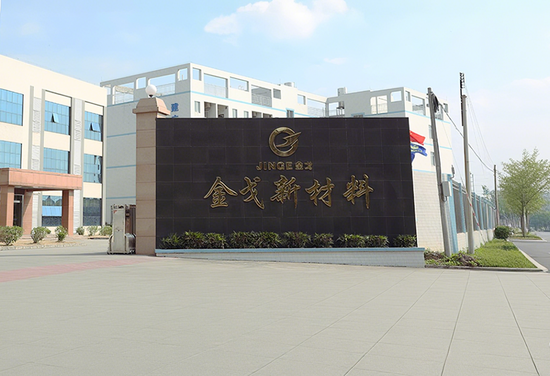
“材料组装厂”金戈新材IPO来了:核心技术是用5万块买来的,核心原材料竟也是从“友商”买来的!
Xin Lang Cai Jing· 2025-12-17 10:12
Group 1 - The core focus of Guangdong Jinge New Materials Co., Ltd. is on thermal interface materials, specifically in the field of thermal conductive fillers, which are essential for improving heat transfer efficiency in electronic devices [3][4] - The company is preparing for an IPO on the Beijing Stock Exchange, with CICC as the sponsor [3][4] - Jinge New Materials' product range includes thermal conductive powders, flame retardant powders, and wave-absorbing powders, with thermal conductive powders being the most significant contributor to revenue [4][6] Group 2 - In 2024, the company expects to achieve revenue of 320 million yuan from thermal conductive powders, accounting for 68.4% of total revenue, with a gross profit margin of 83.5% [6][40] - The revenue from flame retardant powders is projected at 129 million yuan, representing 27.7% of total revenue, but with a low gross margin of 6.8% [6][40] - The revenue from wave-absorbing powders is limited, expected to be only 17.81 million yuan in 2024 [6][41] Group 3 - The company primarily focuses on aluminum oxide as its thermal conductive filler, which, while not as effective as advanced materials like aluminum nitride or silicon carbide, is favored for its cost-effectiveness [10][45] - The main application areas for Jinge's products include consumer electronics, new energy vehicles, and 5G communication bases, which collectively contribute over 80% of revenue [12][46] Group 4 - In 2024, Jinge New Materials achieved a revenue of 467 million yuan, a year-on-year increase of 21.6%, with a net profit of 47.39 million yuan, up 14.8% [13][48] - The company has been facing a decline in product prices across all categories, particularly thermal conductive powders, which saw a price drop from 15,600 yuan per ton in 2022 to 12,900 yuan in the first half of 2025 [14][50] - To counteract declining prices, the company has increased its production capacity from 28,600 tons per year to 56,400 tons, effectively doubling its output [17][51] Group 5 - The IPO plans to raise 205 million yuan, primarily for expanding production capacity, with an expected addition of 30,000 tons [18][53] - Jinge's strategy contrasts with competitors like Lianrui New Materials, which focuses on high-end products and has maintained higher gross margins [20][55] - Jinge's R&D expenditure has been low, with a rate below 5%, and a further decline to 3.6% in the first three quarters of 2025, indicating a lack of investment in innovation [21][58] Group 6 - The company relies heavily on external suppliers for key raw materials, particularly spherical aluminum oxide, with 90% of its procurement coming from competitors [29][32] - This dependency on suppliers poses a significant risk to Jinge's business model, as it may affect the company's ability to maintain competitive pricing and profitability [32][34] - The company's workforce includes a significant number of employees without relevant academic backgrounds in materials science, raising concerns about its R&D capabilities [61][62]
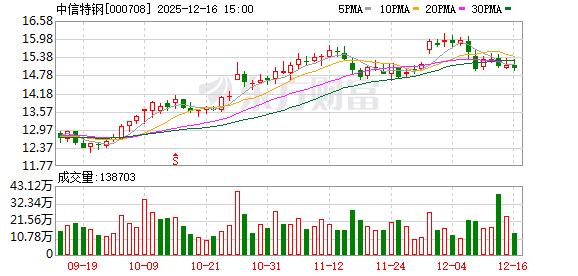
中信特钢:公司高度关注钢铁出口许可证新政的实施
Zheng Quan Ri Bao· 2025-12-16 12:41
证券日报网讯 12月16日,中信特钢在互动平台回答投资者提问时表示,公司高度关注钢铁出口许可证 新政的实施,该政策通过强化质量检验证明等要求,引导行业从规模扩张转向质量提升,有利于减少低 附加值产品出口,推动高端化、差异化产品发展。公司已全面启动许可证申请准备工作,当前出口业务 运行平稳,未来公司将继续依托高端产品优势,助推产业链高质量发展。 (文章来源:证券日报) ...

碳酸酯行业转型升级路在何方?
Zhong Guo Hua Gong Bao· 2025-12-16 04:28
Core Viewpoint - The carbonate industry is urged to enhance green low-carbon processes and expand into high-end applications to improve lithium battery electrolyte performance and drive industry development [1] Group 1: Development of Green Low-Carbon Processes - Carbonate, as a low-toxicity and environmentally friendly chemical, is widely used in lithium battery electrolytes, polycarbonate, and coatings. The industry focuses on overcoming high energy consumption and separation difficulties [2] - A team led by a professor from Hebei University of Technology has developed various carbonate derivatives and green energy-saving processes, addressing catalyst separation and high material energy consumption issues [2] - Innovations in energy-saving technologies have been introduced by a research team from Shanghai Jiao Tong University, achieving a 50%-70% reduction in energy consumption for separation processes compared to traditional methods [2][3] Group 2: Expansion into High-End Application Areas - The carbonate industry faces challenges such as oversupply and shrinking profits in lithium battery electrolyte solvents, necessitating a shift towards high-end and differentiated development [4] - New applications for special polycarbonates containing silicon and polycarbonate diols are being explored to empower industries like pharmaceuticals and pesticides, with promising prospects in automotive, medical, electronics, 5G, and new energy sectors [4] - A company has developed dibutyl carbonate for use in coatings and electronic cleaning agents, creating new economic growth points [4] Group 3: Enhancing Electrolyte Material Performance - The rapid development of new energy vehicles has prompted domestic automakers and battery companies to focus on solid-state lithium batteries, with semi-solid batteries entering vehicle testing [5] - Key issues with lithium battery electrolytes include increased viscosity and low ionic conductivity at low temperatures, with proposed solutions involving the optimization of weak solvents [5] - Future developments in lithium battery electrolytes will focus on high energy density, high power, wide temperature range, long lifespan, and high safety, with fluorinated solvents and carboxylic ester solvents becoming research hotspots [6]