银河M9

Search documents
吉利汽车2025增收不增利:低端放量高端滞涨、出口增0.4%垫底 高管“智驾年内超特斯拉FSD”言论受质疑
Xin Lang Cai Jing· 2026-03-20 10:01
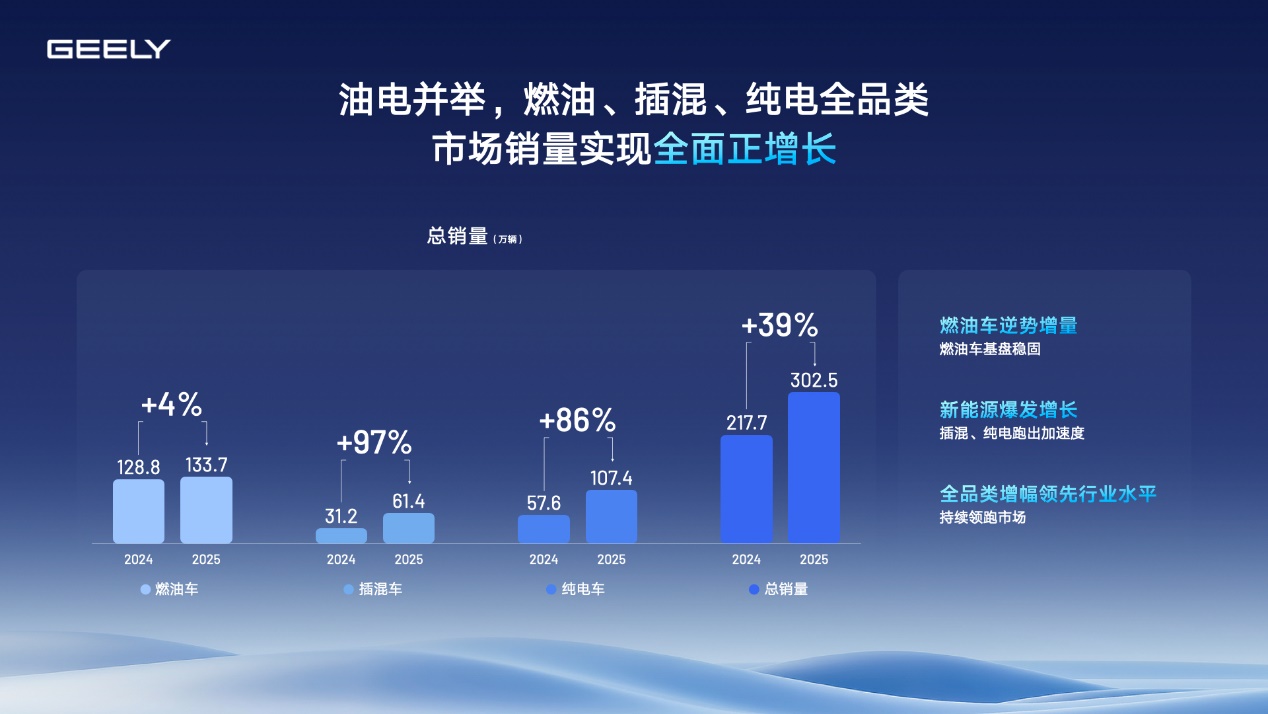
Core Viewpoint - Geely Auto reported a significant increase in revenue but faced challenges with net profit growth, indicating a trend of revenue growth without corresponding profit increase [2][4][14]. Financial Performance - In 2025, Geely achieved revenue of 345.23 billion, a year-on-year increase of 43.73%, while net profit was 16.85 billion, up only 1.32% [2][4][15]. - The total sales volume reached 3.02 million units, reflecting a 39% increase year-on-year [4][15]. Market Competition - Geely's product structure has deteriorated, with low-priced models like the Geely Galaxy seeing a 150% increase in sales, while high-priced models like Zeekr stagnated with only a 1% increase [7][17]. - The competitive landscape is intensifying, leading to a price war among automakers, which has pressured Geely's market position [14][20]. Export Performance - Geely's export growth was only 0.4%, placing it at the bottom among leading automakers, while the overall export of Chinese passenger cars grew by 21.1% [9][20]. - In 2025, Geely exported 420,000 units, significantly lower than competitors like Chery and BYD, which exceeded one million units [10][21]. R&D Investment - Geely increased its R&D spending to 17.62 billion, a 69% increase year-on-year, indicating a strong commitment to innovation [10][22]. - The CEO expressed ambitions for Geely's smart driving technology to surpass Tesla's FSD within the year, a statement that has drawn skepticism from the market [9][22][24]. Sales Targets - For 2026, Geely set a sales target of 3.45 million units, a 14% increase from 2025, but faced a challenging start with only a 1% growth in the first two months of the year [3][11][24].


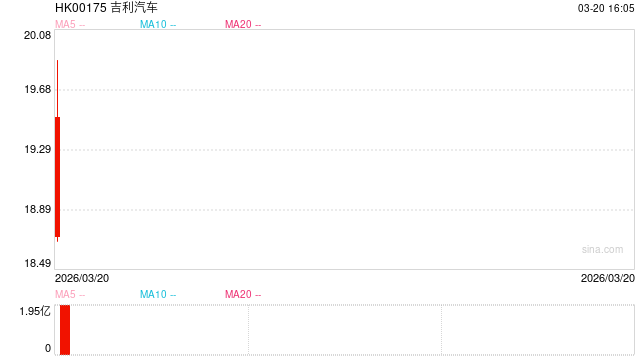
吉利汽车(00175.HK):2025业绩稳健收官 新能源表现亮眼
Ge Long Hui· 2026-03-19 23:21
Core Viewpoint - The company reported a strong performance in 2025, with revenue growth driven by multiple brands and a significant increase in electric vehicle sales, indicating robust future growth potential [1][2]. Performance Review - In 2025, the company's total revenue increased by 44% year-on-year to 345.2 billion yuan, while net profit attributable to shareholders rose by 1% to 16.85 billion yuan. The fourth quarter saw revenue of 105.8 billion yuan, up 46% year-on-year, and net profit of 3.74 billion yuan, reflecting a 5% increase year-on-year [1]. - The total vehicle sales for the year reached 3.0246 million units, a 39% increase, with electric vehicle sales surging by 90% to 1.6878 million units, accounting for 56% of total sales [1]. Development Trends - The revenue growth was primarily driven by strong sales across multiple brands, with notable increases in sales for Geely Galaxy (+150%), Lynk & Co (+23%), and Zeekr (+1%) [1]. - The company is making steady progress in global expansion, with total export sales increasing by 1% to 420,000 units, and a higher growth rate in electric vehicle exports across various regions [1]. Profitability and Forecast - The core net profit, excluding one-time gains from asset sales in 2024, is expected to rise by 36% year-on-year to 14.41 billion yuan in 2025. The gross margin improved by 0.71 percentage points to 16.6%, benefiting from economies of scale and the introduction of high-end products [2]. - The company is focusing on smart technology integration, launching new driving assistance systems and enhancing overall value chain efficiency through its "One Geely" strategy [2]. Profit Forecast and Valuation - Due to increased R&D investments, the net profit forecast for 2026 has been reduced by 5.9% to 20.2 billion yuan, while the 2027 profit forecast remains largely unchanged. The current stock price corresponds to 8.7 times and 6.9 times P/E for 2026 and 2027, respectively, with a target price adjustment of 6.2% down to 24.40 HKD, indicating a potential upside of 34.4% [2].
吉利汽车:看好“高端化+出海”双轮驱动-20260319
HTSC· 2026-03-19 02:50
Investment Rating - The report maintains a "Buy" rating for the company [7][5]. Core Views - The company achieved a revenue of 345.2 billion yuan in 2025, a year-on-year increase of 25%, and a net profit attributable to shareholders of 16.85 billion yuan, up 2.2% year-on-year. The core net profit reached 14.4 billion yuan, reflecting a significant increase of 36% year-on-year [1][5]. - The company is expected to benefit from the launch of high-end models like the Zeekr 8X and an accelerated global expansion strategy, which will enhance product structure and create additional growth opportunities [1][5]. - The company sold 3.025 million new vehicles in 2025, exceeding its annual target of 3 million units, marking a historical high in sales and a domestic market share surpassing 10% for the first time [2][5]. - The gross margin improved by 0.3 percentage points quarter-on-quarter in Q4 2025, driven by the introduction of high-priced new models and effective supply chain management [2][5]. - The Zeekr 8X has begun pre-sales with a price range of 376,800 to 516,800 yuan, achieving over 10,000 orders within 38 minutes of its launch, indicating strong market interest [3][5]. - Exports in January and February 2026 doubled year-on-year, with total exports expected to exceed 750,000 units for the year, supported by the establishment of local production facilities in regions like the Middle East and Southeast Asia [4][5]. - The profit forecast for 2026 and 2027 is maintained at 19.2 billion yuan and 24 billion yuan respectively, with an estimated target price adjusted to 26.04 HKD [5][7].
吉利汽车2025年实现高质量发展,全年营收3452亿元,核心归母净利润劲增36%
Zhong Guo Qi Che Bao Wang· 2026-03-18 06:12
Core Insights - Geely Automobile Holdings Limited reported a record total revenue of 345.2 billion yuan for 2025, marking a 25% year-on-year increase, with core net profit rising 36% to 14.41 billion yuan, indicating high-quality growth [1] - The company plans to increase its dividend by 51.5% to 0.5 HKD per share, totaling 5.39 billion HKD, reflecting its commitment to sharing growth with shareholders [1] - Geely's total sales reached 3.025 million units in 2025, a 39% increase, with new energy vehicle sales exceeding 1.68 million units, up 90%, solidifying its position in the industry [1] Financial Performance - Total revenue for 2025 was 345.2 billion yuan, a 25% increase year-on-year [1] - Core net profit reached 14.41 billion yuan, reflecting a 36% growth [1] - Total cash reserves increased by 46% to 68.2 billion yuan, indicating strong liquidity [1] Sales and Market Position - Geely's total sales for 2025 were 3.025 million units, exceeding the adjusted target of 3 million units [1] - New energy vehicle sales reached 1.68 million units, marking a 90% increase and positioning Geely among the top players in the sector [1] - In the first two months of 2026, Geely maintained its industry-leading position with sales of 476,000 units [1] Strategic Developments - The "One Geely" strategy was further deepened in 2025, integrating Zeekr to create a comprehensive brand portfolio across mainstream, high-end, and luxury markets [3] - The Zeekr brand achieved sales of 224,000 units in 2025, with significant monthly sales milestones [4] - Lynk & Co maintained a growth trajectory with annual sales of 350,000 units, a 23% increase [6] Technological Advancements - Geely launched its first comprehensive AI technology system in 2025, enhancing its capabilities in smart and electric vehicle technology [12] - The company achieved significant advancements in battery technology, including the ShenDun JinZhuan battery and the upcoming all-solid-state battery [16] - Geely's AI-assisted driving system has gained global recognition, with successful deployments and partnerships [14] Global Expansion - Geely's overseas sales reached 420,000 units in 2025, with over 120,000 units being new energy vehicles, reflecting a strong international presence [20] - The company entered 13 new markets in 2025, expanding its global footprint significantly [22] - Geely's global manufacturing capabilities were enhanced with the launch of new plants in Egypt and Indonesia [22] Sustainability and ESG Initiatives - Geely was included in the S&P Global "Global Sustainability Yearbook 2026," highlighting its leadership in ESG practices [25] - The company achieved a 25.5% reduction in carbon emissions per vehicle compared to 2020, exceeding its carbon reduction targets [25] - Geely aims to launch multiple new products in 2026, targeting a total sales goal of 3.45 million units [25]
六座SUV行业深度研究报告:六座SUV的蓝海机遇与红海竞争
Huachuang Securities· 2026-02-27 13:06
Investment Rating - The report maintains a recommendation for the six-seat SUV industry, highlighting both blue ocean opportunities and red ocean competition [2] Core Insights - The six-seat SUV market is expected to see the launch of five new models priced around 200,000 yuan in 2026, with top models potentially achieving monthly sales of 10,000 to 20,000 units [2][22] - The high-end six-seat SUV market is experiencing intense competition, with a significant increase in supply expected in 2026, outpacing market expansion [2][6] - The 200,000 yuan segment remains a potential blue ocean market, as current models often fail to meet consumer demands due to size and pricing issues [6][24] Summary by Sections Total Market Overview - The six-seat SUV market is projected to grow, with an estimated total of 150,000 units sold in 2025, reflecting a year-on-year increase of 21,000 units [13] - The market is expected to continue expanding with the introduction of new models, particularly in the 200,000 yuan segment [6][10] Blue Ocean Opportunities - The 200,000 yuan segment for six-seat SUVs is identified as a significant market opportunity, with current models not meeting consumer expectations in terms of size and pricing [6][22] - The report notes that the proportion of six-seat SUVs priced below 250,000 yuan is only 4.9%, compared to 28% for those above this price point, indicating room for growth [24] Red Ocean Competition - The high-end six-seat SUV market is set to intensify with 22 new models expected to launch in 2026, leading to fierce competition [2][6] - The report highlights a shift in product strategy from size combinations to price combinations, indicating evolving consumer preferences [2][10] Investment Recommendations - The report suggests focusing on companies like Leap Motor and Great Wall Motors, with specific models expected to drive significant sales growth [7][10] - Geely is also recommended due to its ongoing product cycle contributing to sales and profit increases [7][10]





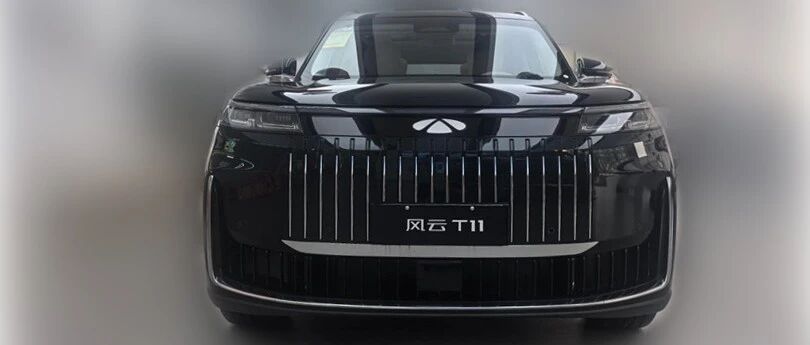
风云T11:上市后带动客流上涨,对比最多的是银河M9
车fans· 2026-02-04 00:30
Sales Performance - The T11 model has seen a significant increase in foot traffic at dealerships, with daily visits rising from about 4 groups to 10-12 groups on weekends [2] - Sales for the T11 reached over 20 units in November and December, but experienced a slowdown in January due to the introduction of purchase tax [3] - The most popular configurations are the 220 rear-drive and four-wheel drive dual IMAX cinema versions, priced at ¥209,900 and ¥229,900 respectively, with preferred colors being Aurora Green and Obsidian Black [4] Customer Demographics - The typical customer age ranges from 35 to 60 years, including teachers, state-owned enterprise employees, civil servants, and small business owners [5] - A notable portion of buyers are existing Chery owners looking to upgrade [5] Consumer Preferences - Key reasons for purchasing the T11 include Chery's strong technical foundation and the vehicle's spacious, aesthetically pleasing design at a competitive price [10] - The most frequently compared model is the Geely Galaxy M9, with customers favoring the latter for its brand recognition and superior driver assistance features [13] Customer Feedback - Common complaints from customers include concerns about the electric range being too short and the vehicle's infotainment and voice control systems lacking intelligence [19] Promotional Offers - Current promotional offers include a ¥10,000 purchase tax subsidy and various limited-time benefits such as free upgrades and financing options [22][23]
车企低息战火力全开
Zhong Guo Qi Che Bao Wang· 2026-02-02 12:29
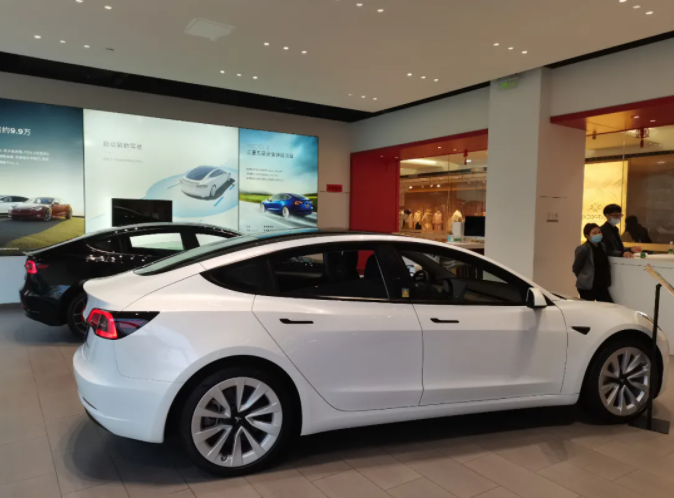
Group 1 - The core strategy of automakers has shifted to offering 7-year ultra-low interest loans, marking a new phase in market competition [2][4] - Tesla initiated this trend with a unique 7-year loan plan, offering monthly payments as low as 1,800 yuan for the Model 3 and 2,200 yuan for the Model Y, significantly easing the financial burden on families [3][4] - Other automakers like Xiaomi, Li Auto, and Xpeng quickly followed suit, introducing similar financing options, which has intensified the competition in the market [4][5] Group 2 - Traditional brands are also participating in this financial strategy, with companies like Dongfeng and Geely launching their own 7-year low-interest plans to attract consumers [5][8] - The aggressive reduction of monthly payments aims to stimulate sales, although the effectiveness of this approach remains uncertain [5][8] - The financial strategies employed by leading automakers leverage their strong cash reserves and profitability, allowing them to offer such low-interest loans [7][8] Group 3 - The competitive landscape is shifting, with larger companies able to absorb the costs of low-interest loans, while smaller firms may struggle to keep up without incurring losses [8][9] - The financial tactics being used are seen as a response to market pressures and technological advancements, with a potential shift from price competition to a focus on technology [9][10] - The long-term implications of these financing strategies could lead to market saturation and affect the second-hand car market, as consumers perceive new cars as more affordable [8][9]


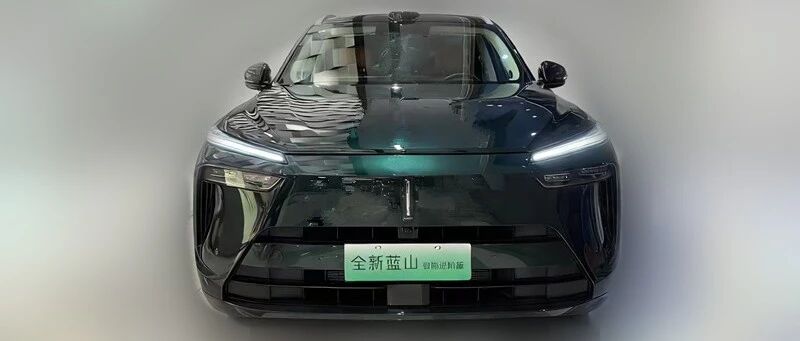
魏牌蓝山:标配四驱Max版销量占九成,客户看中空间和大电视
车fans· 2026-01-30 00:55
Core Viewpoint - The article discusses the sales performance and customer demographics of the new Wei brand SUV, the Blue Mountain Intelligent Upgrade Version, highlighting its market positioning and customer preferences. Sales Performance - The dealership has seen a decline in customer traffic, likely due to the new energy vehicle purchase tax being implemented, leading some customers to delay their purchases [2] - The dealership sold over 30 vehicles last month, with 5 units of the Blue Mountain sold, amidst confusion regarding commission structures due to the new model launch [4] - The average daily effective customer flow is 7-8 groups, with 3 out of every 10 groups specifically interested in the Blue Mountain [3] Customer Demographics - The primary customer base consists of males aged 30-50, often with larger families needing spacious SUVs that can accommodate 4-6 passengers [6] - A specific customer, Mr. Tan, delayed his purchase of the Blue Mountain due to anticipated price changes and subsidies, illustrating the cautious approach of potential buyers [7] Competitive Landscape - The Blue Mountain is compared with several competitors, including the Galaxy M9 and the Lynk & Co 900, with the latter being the most frequently compared model, accounting for 30% of comparisons [10] Configuration and Pricing - The most popular configuration is the Max version, with 9 out of 10 sales being this model due to its competitive pricing compared to higher configurations that offer minimal additional benefits [12] - The Max version has a guide price of 299,800 yuan, with total discounts amounting to 24,000 yuan, bringing the net price to 275,800 yuan [14] Financing Options - The most popular financing option is "5 years loan with 2 years interest-free," which offers low monthly payments and is well-received by customers [15] Customer Feedback and Maintenance - Currently, there are no significant complaints from customers, although some feel the vehicle's exterior design lacks a sense of grandeur [17] - Maintenance costs are reasonable, with the first two services included and subsequent services costing around 500 yuan [17] Promotional Activities - A promotional activity allows customers to place a small deposit of 2,000 yuan, which can offset 8,000 yuan of the final payment, providing an additional discount opportunity until January 31 [19][20]
小米、理想、小鹏、吉利,跟进“七年免息”
新华网财经· 2026-01-26 07:53
Core Viewpoint - The automotive market is experiencing a competitive focus on "seven-year low-interest" financing options, initiated by Tesla and quickly adopted by other companies like Xiaomi, Li Auto, Xpeng, and Geely, aiming to stimulate sales and manage inventory during a seasonal downturn [2][3]. Group 1: Financing Strategies - Tesla was the first to introduce a seven-year low-interest financing plan, prompting other automakers to extend loan periods from the traditional three years to seven years [2]. - Xiaomi's CEO Lei Jun announced a financing plan for the YU7 model, allowing a minimum down payment of 49,900 yuan and monthly payments starting at 2,593 yuan, effective from January 16 [3]. - Li Auto joined the financing competition on January 20, offering a down payment starting at 32,500 yuan and monthly payments as low as 2,578 yuan [3]. Group 2: Market Dynamics - The introduction of low-interest financing is aimed at attracting budget-conscious consumers and those looking to upgrade their vehicles, thereby boosting sales and alleviating inventory pressure for automakers [3]. - The automotive industry is facing sales pressure and technological advancements, with new tax policies on electric vehicles set to change from full exemption to a 50% reduction in 2026 and 2027 [4][5]. - Data from the China Passenger Car Association indicates that retail sales from January 1 to 18 totaled 679,000 units, a 28% year-on-year decline, with electric vehicle sales at 312,000 units, down 16% year-on-year [5]. Group 3: Competitive Landscape - Major automakers with strong financial backing can absorb the costs of interest subsidies, potentially solidifying their market share, while smaller companies may struggle with tighter profit margins and increased operational pressures [5].

小米、理想、小鹏、吉利,跟进“七年免息”
财联社· 2026-01-26 06:31
Group 1 - The core focus of the automotive market at the beginning of the year is the "seven-year low-interest" financing options, initiated by Tesla and quickly adopted by other automakers like Xiaomi, Li Auto, Xpeng, and Geely [1][2] - Tesla launched a seven-year low-interest plan for its Model 3, Model Y, and Model YL, with an example showing a monthly payment of 1918 yuan and an annualized interest rate of 0.98%, significantly lower than the market average of 4%-8% [1] - The introduction of low-interest financing is expected to reduce the financial burden on consumers, particularly targeting young buyers and those with limited budgets, thereby boosting sales and helping automakers manage inventory [1][3] Group 2 - Xiaomi's CEO Lei Jun announced a similar seven-year low-interest plan for the YU7 model, with a minimum down payment of 49,900 yuan and monthly payments starting at 2,593 yuan [2] - Li Auto and Xpeng also joined the financing competition, with Li Auto offering a down payment as low as 32,500 yuan and monthly payments starting at 2,578 yuan, while Xpeng promoted a six to seven-year low-interest plan across its entire lineup [2] - The aggressive financial strategies by automakers are driven by sales pressures and technological advancements, with a notable decline in retail sales of new energy vehicles in January, down 28% year-on-year [3] Group 3 - The current tax policy for new energy vehicles is set to change, with tax exemptions being reduced starting in 2026, which may further shift the industry focus from price competition to technological competition [3] - Despite the short-term benefits of low-interest financing, the long-term effects remain uncertain, particularly for smaller automakers that may struggle with the costs associated with these financing options [3]