
高端化战略

Search documents
小米创下史上最强单季度业绩 推进全品类高端化
Zheng Quan Ri Bao· 2025-05-27 16:16
Core Insights - Xiaomi Group reported a record-breaking Q1 2025 performance with revenue of 111.3 billion yuan, a year-on-year increase of 47.4%, and adjusted net profit exceeding 10 billion yuan, reaching 10.7 billion yuan, up 64.5% [1] - The company emphasized that all business lines are performing well, supported by continuous R&D investment and a successful high-end product strategy [1][2] - Xiaomi's automotive sector showed strong growth, with the SU7 series delivering 75869 units in Q1 and a total of 258,000 units since launch, aiming for an annual delivery target of 350,000 units [1][2] Business Performance - The revenue from Xiaomi's home appliance segment doubled in Q1, with air conditioner shipments exceeding 1.1 million units, a growth of over 65% [2] - Xiaomi aims to rank among the top three in the Chinese retail market for air conditioners by 2030, having completed its full product line and achieved self-research in technology [2] - The average selling price (ASP) of Xiaomi's global smartphones reached a historical high of 1211 yuan, reflecting a 5.8% year-on-year increase [2] Strategic Initiatives - Xiaomi's high-end strategy, initiated five years ago, is transitioning from exploration to systematic planning, with a focus on expanding from high-end to ultra-high-end products and from China to overseas markets [3] - The company's R&D investment in Q1 was 6.7 billion yuan, a 30.1% increase, with an expected total R&D expenditure of 30 billion yuan for the year [3] - Over the next five years, Xiaomi plans to invest 200 billion yuan in R&D, indicating a strong commitment to innovation and product development [3]
小米总裁卢伟冰回应手机大盘变动
第一财经· 2025-05-27 15:51
Core Viewpoint - Xiaomi Group reported strong financial results for Q1 2025, with significant year-on-year growth in revenue and adjusted net profit, indicating robust performance across its major business segments [1][2]. Financial Performance - Total revenue reached 111.29 billion RMB, a 47.4% increase year-on-year - Adjusted net profit was 10.68 billion RMB, up 64.5% year-on-year - Overall gross margin improved to 22.8%, an increase of 0.5% year-on-year [1] Business Segments - Revenue from the mobile and AIoT segments was 92.71 billion RMB, a 22.8% increase, accounting for 83.3% of total revenue - Smart electric vehicles and AI innovation business generated 18.6 billion RMB, with smart vehicle revenue at 18.1 billion RMB [1] - Mobile business revenue was 50.61 billion RMB, an 8.9% increase, with average selling price (ASP) rising 5.8% to 1211 RMB [1] Market Dynamics - The global smartphone market showed varied performance, with a projected growth of approximately 1.2% and some regions, like Western Europe, experiencing negative growth - The Chinese market is expected to grow by about 3% due to government subsidies [2] - Xiaomi plans to focus on improving product structure rather than solely on sales volume, particularly in Western Europe and emerging markets [2] High-End Strategy - Xiaomi's high-end product market share remains low, particularly for products priced above 6000 RMB - Future strategies will aim to expand high-end offerings from China to international markets across all product categories [2] IoT and Home Appliances - Revenue from IoT and consumer products reached 32.34 billion RMB, a 58.7% increase, with a gross margin of 25.2% - Major appliances revenue grew by 113.8%, with air conditioning products seeing over 65% growth and shipments exceeding 1.1 million units [2] Competitive Landscape - Increased competition in the AIoT sector, with some appliance manufacturers launching products targeting Xiaomi - Xiaomi's home appliance products are still facing supply shortages, and the company acknowledges the need for further development in this area [3] R&D Investment - R&D expenditure for the quarter was 6.7 billion RMB, a 30.1% increase, with the number of R&D personnel reaching a record high of 21,731, making up 47.7% of total employees - The company is in the early stages of developing its own high-end chips, with a long-term view of achieving a sustainable financial model [4]

小米卢伟冰:自研芯片只会应用在旗舰产品上,今年大概1/4研发费用会投向AI
Mei Ri Jing Ji Xin Wen· 2025-05-27 12:47
Group 1 - The core strategy of Xiaomi includes technological hardening, brand premiumization, global market expansion, and ecological business model transformation [1] - Xiaomi's current high-end smartphone offerings are primarily in the 4000-6000 yuan price range, with plans to expand into the ultra-high-end market [1] - The company aims to transition from China to overseas markets and extend high-end strategies across all product categories, not just smartphones and automobiles [1] Group 2 - Xiaomi emphasizes the importance of self-developed SoC chips, stating that mastering core chip capabilities is essential for long-term differentiated product experiences [2] - The chip business is a long-term strategy for Xiaomi, with plans to focus on flagship products initially, while expanding product lines in the future [2] - Approximately 25% of the 30 billion yuan R&D budget for the year will be allocated to AI, leveraging a strong user base to generate valuable data for AI training [2]

小米集团-W(01810.HK):发布YU7及玄戒芯片等新品 继续看好“人车家”全生态齐头并进
Ge Long Hui· 2025-05-26 17:44
Group 1 - The company held a strategic product launch event celebrating its 15th anniversary, introducing multiple new products including the YU7 SUV, 15S Pro smartphone, and 7 Ultra tablet [1] - The YU7 SUV is positioned as a mid-to-large luxury high-performance electric vehicle, expected to launch in May 2025, featuring impressive specifications such as a maximum power of 690PS and a range of 835km [1] - The company has achieved significant sales milestones with its SU7 model, delivering over 258,000 units by May 2025, indicating strong demand in the over 200,000 price segment [1] Group 2 - The company has developed its own mobile SoC, the玄戒O1, which will debut in the 15S Pro smartphone and 7 Ultra tablet, making it the fourth global company to design a 3nm process mobile SoC [2] - The玄戒O1 chip integrates 19 billion transistors and has a main frequency of 3.9GHz, while the玄戒T1 chip includes a self-developed 4G baseband [2] - The company has invested over 13.5 billion yuan in chip research and development, with plans to invest over 60 billion yuan by 2025 and 200 billion yuan from 2026 to 2030 [2] Group 3 - The company experienced a 15.7% year-on-year increase in total smartphone shipments in 2024, reaching 168.5 million units, with improved market share in various regions [3] - The high-end smartphone segment has seen growth, with the domestic high-end smart device shipment proportion increasing by 3.0 percentage points to 23.3% in 2024 [3] - The company plans to expand its retail presence internationally, aiming to open approximately 10,000 new Xiaomi stores overseas in the next five years [3]
古越龙山马川:黄酒行业规模有所萎缩两极分化 坚持高端化发展战略
Zheng Quan Shi Bao Wang· 2025-05-26 11:28
Core Viewpoint - The company acknowledges challenges in the yellow wine industry due to shrinking demand and intense competition, but sees growth opportunities driven by cultural heritage and product characteristics [1] Financial Performance - In 2024, the company achieved revenue of 1.936 billion yuan, a year-on-year increase of 8.55%, while net profit was 206 million yuan, a decline of 48.17%. The net profit after deducting non-recurring items was 198 million yuan, an increase of 3.52% [2] - In Q1 2025, the company reported revenue of 539 million yuan, a year-on-year decrease of 4.9%, and net profit of 59.01 million yuan, down 4.82%. The net profit after deducting non-recurring items was 57.05 million yuan, a decline of 6.43% [2] Strategic Focus - The company is committed to a high-end strategy, with a focus on product optimization and adjustments in 2025. This includes implementing a controlled quantity and price policy to highlight product scarcity, optimizing market layout, and promoting high-acceptance products in key areas [4][6] - The company plans to stop online sales of the "Qinghua Zui" series by the end of May to boost online growth and enhance offline performance [4] Young Consumer Engagement - The company is targeting younger consumers through innovative products like coffee yellow wine and yellow wine ice cream, and by creating a youthful drinking atmosphere in its taverns [5] Competitive Landscape - Compared to its competitor Kuaijishan, which reported stable performance, the company recognizes its strong brand heritage and market share but acknowledges the need for improved market strategy flexibility [3][7] Industry Outlook - The company believes that leading enterprises will continue to explore new directions and maintain growth despite industry challenges. It sees opportunities for national expansion and diversification of wine products, supported by favorable policies [8] - In 2025, the company will implement a regional focus strategy, targeting central regions like Zhengzhou and expanding into Hebei and Northeast markets, while also developing the western market through tasting halls [8]

在舆论漩涡中的小米雷军、格力董明珠,走出至暗时刻?
Sou Hu Cai Jing· 2025-05-25 19:02
Core Viewpoint - Xiaomi is facing a significant trust crisis following a series of negative events, including a car accident and subsequent issues related to its automotive technology, which have raised doubts about its brand reputation and product quality [1][5][12]. Group 1: Product Development and Technology - Xiaomi introduced its self-developed 3nm SoC chip, Xuanjie O1, and the highly anticipated YU7 model during a recent product launch, marking a critical step in its strategy to regain public trust [1][6]. - The introduction of the Xuanjie chip positions Xiaomi as the only Chinese company capable of self-developing a 3nm SoC chip after Huawei's sanctions, potentially shifting public focus from past controversies to its technological capabilities [6][9]. Group 2: Brand Reputation and Public Trust - The recent incidents have severely damaged Xiaomi's brand reputation, with public skepticism about its product quality and marketing claims resurfacing [5][12]. - The company is attempting to rebuild trust through a dual approach of emotional engagement and technical transparency, including public apologies and data disclosures related to the incidents [12][17]. Group 3: Crisis Management Strategies - Xiaomi's crisis response strategy involves a "three-layer response" model, focusing on emotional resonance, factual transparency, and third-party validation to restore trust [14][20]. - In contrast to Gree's approach of diverting attention from its crisis, Xiaomi's strategy emphasizes accountability and long-term commitment to transparency, which aligns with its identity as a technology-driven company [17][20].

小米集团-W(01810.HK):发布SUVYU7等战略新品 3NM旗舰SOC及4G基带彰显芯片硬实力
Ge Long Hui· 2025-05-25 01:43
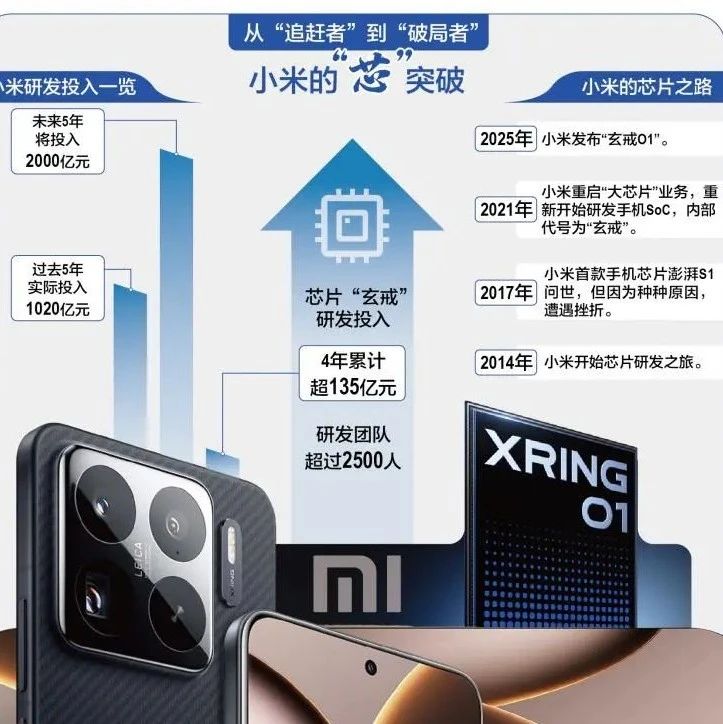
Group 1 - Xiaomi Group reaffirms its R&D investment guidance of 30 billion yuan by 2025 and 200 billion yuan from 2026 to 2030 [1] - The company launched its first SUV YU7, 3nm flagship SoC Xuanjie O1, and integrated self-developed 4G baseband Xuanjie T1, along with several flagship products [1][2] - YU7 is positioned as a "luxury high-performance SUV" with a body size of 4999/1996/1600mm and a wheelbase of 3000mm, featuring laser radar and NVIDIA Thor [1][2] Group 2 - The 3nm flagship SoC Xuanjie O1 features 19 billion transistors and a chip area of only 109 square millimeters, with a CPU configuration of 10 cores [2] - The GPU is a 16-core Immortalis-G925, supporting dynamic performance scheduling, and the self-developed ISP has reached its fourth generation [2] - The Xuanjie T1 SoC integrates a self-developed 4G baseband, marking a significant breakthrough in communication technology for Xiaomi [3] Group 3 - Xiaomi's chip development strategy has evolved since 2014, with a focus on peripheral functional chips, leading to the establishment of the Xuanjie project in early 2021 [3] - The company has invested 13.5 billion yuan in R&D as of April 2025, with a projected budget of over 6 billion yuan for 2025 [3] - The high-end strategy is expected to enhance product strength, profit margins, and valuation, maintaining a buy rating [3][4] Group 4 - The release of YU7 and the Xuanjie O1/T1 signifies a continued strengthening of the product portfolio and a solidification of the technological moat [4] - Xiaomi possesses a unique "human-vehicle-home" ecosystem and competitive advantages [4] - Revenue forecasts for 2025-2027 are set at 469.4 billion, 572 billion, and 684.4 billion yuan, with adjusted net profits of 37.6 billion, 45.7 billion, and 55.8 billion yuan respectively [4]
雷军再砸2000亿,一文回顾小米造芯路
21世纪经济报道· 2025-05-24 07:14
Core Viewpoint - The article highlights Xiaomi's significant advancement in chip development with the launch of its first 3nm flagship processor, "Xuanjie O1," marking it as the first in mainland China and the fourth globally to achieve this milestone, indicating a strategic shift towards self-reliance in high-end chip technology [1][4][6]. Group 1: Chip Development - Xiaomi has invested over 13.5 billion yuan in chip research and development over the past four years, with plans to invest an additional 200 billion yuan in the next five years [1][5][10]. - The "Xuanjie O1" chip integrates 19 billion transistors in a compact area of 109mm², featuring a 10-core CPU and a 16-core GPU, positioning it among the industry's top performers [4][5]. - The introduction of the "Xuanjie O1" chip is expected to reduce Xiaomi's reliance on Qualcomm, enhance AI computing capabilities, and improve cost control in the long term [6][10]. Group 2: Strategic Vision - Xiaomi's strategy includes a comprehensive "human-vehicle-home" ecosystem, with the self-developed chips playing a crucial role in this integration [6][8]. - The company aims to establish itself as a leading hard-tech firm, emphasizing the necessity of chip development as a fundamental challenge to overcome [5][6]. - Xiaomi's long-term goal is to enhance its product differentiation and competitiveness through self-developed chips, which are essential for its high-end market strategy [10]. Group 3: Market Position and Future Outlook - The launch of the "Xuanjie O1" and "Xuanjie T1" chips signifies a new phase in Xiaomi's SoC strategy, with the latter being a 4G smartwatch chip that includes Xiaomi's first 4G baseband [5][6]. - Xiaomi's revenue is projected to grow by over 30% this year, with a significant increase in high-end smartphone sales expected to reach 35% by Q4 2024 [10]. - The company has outlined a clear path for its next decade, focusing on substantial investments in core technologies to become a global leader in hard-tech [9][10].
“双子星”战略遭市场冷遇?水井坊七次换帅难进高端局
3 6 Ke· 2025-05-24 01:21
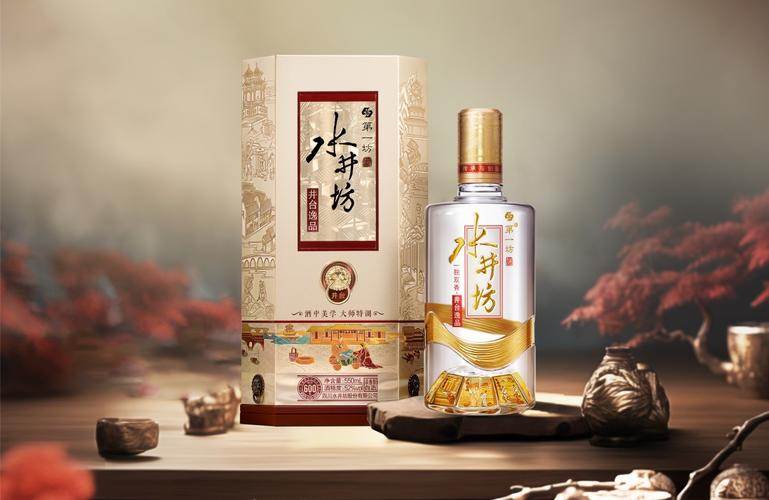
Core Viewpoint - Water Jiufang, the only foreign-controlled liquor company among 19 A-share listed liquor enterprises, is struggling to establish a strong position in the high-end market while lacking a solid presence in the lower-end market, leading to a passive situation of being unable to compete effectively in either segment [2][10]. Financial Performance - In 2024, Water Jiufang reported a revenue of 5.217 billion yuan, a year-on-year increase of 5.32%, and a net profit of 1.341 billion yuan, up 5.69% year-on-year [3][5]. - Despite the growth, the company has been experiencing a significant gap compared to first and second-tier liquor companies, with a net profit margin of only 15.1% in Q4 2024, the lowest in five years [5][12]. - In Q1 2025, revenue continued to slow, reaching 959 million yuan, a year-on-year increase of 2.74%, while net profit was 190 million yuan, up 2.15% [6][7]. Cash Flow Concerns - The company's operating cash flow dropped sharply from 1.734 billion yuan in 2023 to 744 million yuan in 2024, a decline of 57% [8]. - In Q1 2025, the cash flow turned negative at -576 million yuan, a staggering year-on-year decrease of 463.2% [6][8]. Product Structure and Market Position - The product "Zhenniang No. 8," priced at 428 yuan, is a key contributor to Water Jiufang's revenue, with expected sales of around 3 billion yuan in 2024 [9]. - High-end liquor accounted for 91.32% of total revenue in 2024, but growth in this segment is slowing, with only a 1.99% increase year-on-year [9][14]. - The company has been focusing on the next high-end market (300-800 yuan), but faces challenges from both high-end brands and low-end competitors [10][15]. Strategic Challenges - Water Jiufang's high-end strategy has not yielded expected results, with significant issues in brand recognition and market competition [12][14]. - The company has a limited number of distributors and a concentrated geographic presence, making it difficult to compete effectively in the mid-to-low-end market [16]. - Inventory issues are becoming critical, with stock levels reaching 2.939 billion yuan in 2024, a 21% increase, and a turnover period of 180 days [17]. Internationalization Efforts - Water Jiufang's international strategy has not translated into significant growth, with overseas revenue of 57.82 million yuan in 2024, but a sharp decline of 84.35% in Q1 2025 [18]. - The company lacks a robust global distribution system and has not effectively penetrated local markets, limiting its international growth potential [18][19].

小米集团-W(01810):发布SUVYU7等战略新品,3nm旗舰SoC及4G基带彰显芯片硬实力
Shenwan Hongyuan Securities· 2025-05-23 12:42
Investment Rating - The investment rating for the company is "Buy" (maintained) [1][6] Core Insights - The company has reaffirmed its guidance for R&D investment of 30 billion RMB in 2025 and 200 billion RMB from 2026 to 2030, alongside the launch of strategic new products including the SUV YU7 and 3nm flagship SoC [6][7] - The YU7 SUV features advanced technology such as laser radar and NVIDIA Thor, positioning it as a luxury high-performance SUV with a leading range in its category [6][7] - The 3nm flagship SoC, known as玄戒 O1, is designed with a high transistor count and advanced architecture, enhancing the company's technological capabilities [6][7] - The company aims to strengthen its brand positioning through in-house chip development, which has been a long-term strategy since 2014 [6][7] - The high-end strategy is expected to translate into enhanced product strength, improved profit margins, and increased valuation [6][7] Financial Data Summary - Revenue projections for 2023 to 2027 are as follows: 270,970 million RMB in 2023, 365,906 million RMB in 2024, 469,359 million RMB in 2025, 572,035 million RMB in 2026, and 684,427 million RMB in 2027, with growth rates of -3%, 35%, 28%, 22%, and 20% respectively [2][7] - Net profit estimates for the same period are: 19,274 million RMB in 2023, 27,314 million RMB in 2024, 37,624 million RMB in 2025, 45,739 million RMB in 2026, and 55,769 million RMB in 2027, with growth rates of 127%, 42%, 38%, 22%, and 22% respectively [2][7] - The projected earnings per share (EPS) are 0.76 RMB in 2023, 1.07 RMB in 2024, 1.48 RMB in 2025, 1.79 RMB in 2026, and 2.19 RMB in 2027 [2][7] - The company’s price-to-earnings (PE) ratio is expected to decrease from 66 in 2023 to 23 in 2027, indicating a potential increase in valuation [2][7]