个性化定制

Search documents
中国西服行业专业化发展白皮书
艾瑞咨询· 2025-10-24 00:06
Core Insights - The Chinese suit industry is undergoing a deep transformation from scale competition to specialized competition driven by consumption upgrades and personalized demands [1][2][16] - The report aims to provide authoritative information for industry enterprises, practitioners, and consumers, promoting the high-quality development of Chinese suit brands [1] Industry Development History - Since the reform and opening up, the Chinese suit industry has transitioned from scale expansion to category reconstruction, with domestic brands rapidly expanding in the 1980s [2][4] - The industry is now in a phase of category reconstruction, driven by technological innovation and the growth of personalized customization demands [2][4] Brand Innovation and Market Dynamics - Leading domestic brands have continuously innovated over the past 40 years, helping the industry break through development bottlenecks [4][6] - The market is now characterized by stock competition and structural recovery, focusing on value cultivation and breakthroughs in niche markets [6][7] Consumer Demand Trends - There is a shift in consumer focus from basic wear to quality experience, with over half of consumers wanting suits that reflect personal style and fashion [9][12] - The suit market is evolving from a single business scenario to diversified applications, with a significant rise in casual suits expected to increase from 25% market share in 2025 to 40% by 2030 [12][20] Supply-Side Innovations - Intelligent manufacturing technologies are driving a transformation in the supply side, with the custom suit market growing at over 20% annually [14][67] - The use of AI, 3D virtual samples, and digital twin technologies is reshaping the production process, significantly reducing customization cycles [14] Professionalization of the Industry - The industry is transitioning from scale competition to professional competition, with 82% of consumers indicating that brand professionalism significantly influences their purchasing decisions [16][33] - The establishment of a six-dimensional quality evaluation standard for suits aims to enhance consumer decision-making and promote industry transparency [41][44] Cultural and Sustainable Development - The industry is facing environmental challenges, with leading brands like Baoxiniro exploring sustainable practices and materials [67][69] - The integration of traditional cultural elements into modern suit designs is enhancing the cultural value and market competitiveness of Chinese brands [70] Future Outlook - The high-quality development of the Chinese suit industry requires open collaboration and strategic alignment among industry players [76] - A focus on innovation supply and quality demand will help reshape the core competitiveness and global value chain position of the Chinese suit industry [76]



2025年中国瑜伽用品行业发展背景、产业链、市场规模、重点品牌及未来前景展望:居民健康意识显著提升,带动瑜伽用品规模增长至285亿元[图]
Chan Ye Xin Xi Wang· 2025-10-21 01:23
Core Insights - The yoga products market in China is experiencing significant growth, driven by increased health awareness and consumer demand for high-quality products. The market size is projected to grow from 82 billion yuan in 2016 to 248 billion yuan by 2024, with a compound annual growth rate (CAGR) of 14.84% [1][9][10] - The industry is evolving towards product diversification and quality enhancement, with a focus on design aesthetics, technological integration, and user experience [1][9][10] - Future growth is expected to be supported by innovations in smart technology, material experiences, and personalized customization, with the market size anticipated to reach 285 billion yuan by 2025 [1][9][10] Industry Overview - Yoga products are designed to enhance the comfort, safety, and effectiveness of yoga practice, including items like yoga mats, clothing, bricks, straps, balls, wheels, and blankets [3][9] - The rise of yoga as a popular low-intensity, high-flexibility exercise has led to a booming market for yoga products in China [1][9] Market Dynamics - The Chinese yoga industry market size is projected to grow from 198 billion yuan in 2016 to 600 billion yuan by 2024, with a CAGR of 14.86% [5][6] - The expanding consumer base and the increasing demand for specialized and diversified products are driving steady growth in product demand [6] Industry Chain - The yoga products industry chain consists of upstream raw materials (synthetic and natural fibers), midstream manufacturing, and downstream sales channels (supermarkets, specialty stores, e-commerce) [6][9] Key Product Segments - The yoga mat market is particularly thriving, with its size expected to grow from 35 billion yuan in 2020 to 62.5 billion yuan by 2024, reflecting a CAGR of 15.6% [11] Competitive Landscape - The market is highly competitive, with both international brands (e.g., Lululemon, Manduka) and domestic brands (e.g., Keep, Decathlon) vying for market share [12][15] - Domestic brands leverage price advantages and localized strategies to capture market segments [15] Future Trends - The future of yoga products will focus on deep integration of smart technology, enhancing user experience through real-time feedback and personalized training [15][16] - Innovations in materials will prioritize functionality, sustainability, and user comfort, with a shift towards eco-friendly and adaptive materials [16] - There will be a trend towards personalized customization, allowing consumers to tailor products to their specific needs and preferences [17]


声控 LED 腕带产业化机遇:2025-2031年全球市场格局
QYResearch· 2025-10-20 09:23
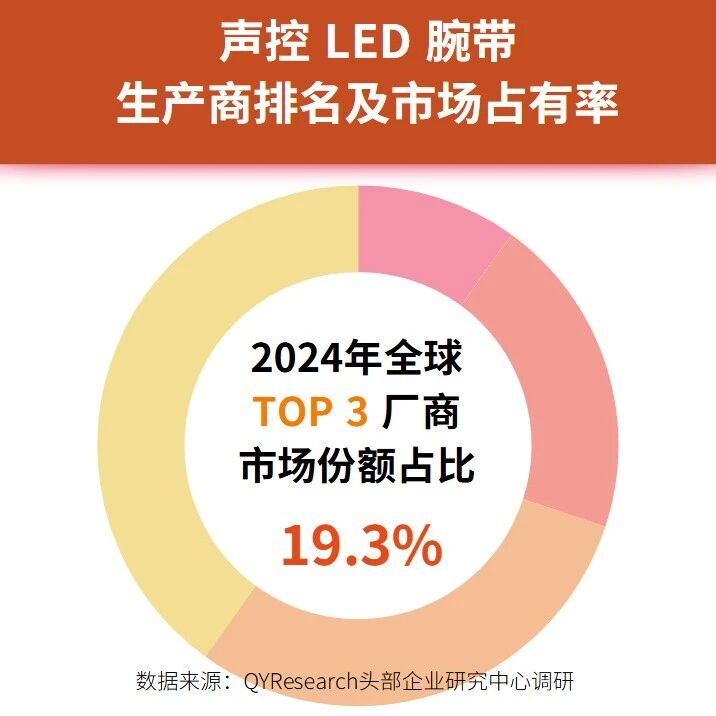
Core Insights - The article discusses the sound-activated LED wristband market, highlighting its expected growth and key players in the industry. The market is projected to reach $13.28 million by 2031, with a compound annual growth rate (CAGR) of 4.5% from 2025 to 2031 [1]. Market Overview - The global sound-activated LED wristband market is experiencing growth, driven by demand in entertainment and fitness sectors [2]. - The top three manufacturers, Nordic wristbands, synometrix, and GFLAI, hold approximately 19.3% of the market share as of 2024 [6]. Industry Chain Analysis - The industry chain includes upstream suppliers of electronic components, materials, and manufacturing equipment, as well as downstream distributors and retail channels [7]. Policy Analysis - Key policies affecting the industry include product safety certifications (CE, FCC, CCC), environmental regulations (RoHS), and incentives for innovation and R&D [8]. Development Trends - The industry is witnessing trends such as integration with IoT, sustainability initiatives, advancements in sensor and LED technology, and increasing demand for personalized services [9]. Opportunities for Growth - Opportunities in the market include the recovery of the entertainment industry post-pandemic, integration with smart wearable devices, B2B customization, and a focus on sustainability [10]. Challenges and Barriers - The industry faces challenges such as intense market competition, technological and standardization issues, supply chain disruptions, and regulatory pressures [11][12].
研判2025!中国救生服行业发展历程、产业链、市场规模、重点企业及未来前景:专业防护需求持续释放,推动救生服规模扩大至58.6亿元[图]
Chan Ye Xin Xi Wang· 2025-10-10 01:20
Core Insights - The core viewpoint of the article emphasizes the growth and development of the survival suit industry in China, driven by increasing safety requirements in maritime operations and the implementation of the "Marine Power" strategy [1][11]. Industry Overview - The survival suit industry focuses on designing, producing, and selling protective gear for maritime operations, emergency rescue, and related fields, primarily aimed at preventing drowning and ensuring safety [1][11]. - The market size of China's survival suit industry is projected to grow from 3.2 billion yuan in 2017 to 5.218 billion yuan in 2024, with a compound annual growth rate (CAGR) of 7.23% [1][11]. - By 2025, the market size is expected to reach 5.86 billion yuan, driven by advancements in materials, smart sensor technology, and the expansion of marine economic activities [1][11]. Industry Development History - The survival suit industry has evolved from simple rescue tools in ancient times to more sophisticated designs, with significant advancements occurring during the 17th century when regulations began to emerge in Europe [6]. - The transition from canvas to rubber materials in the late 19th and early 20th centuries marked a significant development phase, enhancing the durability and functionality of survival suits [6]. Industry Value Chain - The upstream of the survival suit industry includes raw materials and components such as polyester, TPU, neoprene, and various hardware [8]. - The midstream involves the manufacturing processes of survival suits, while the downstream encompasses various usage scenarios, including fisheries, shipping, polar scientific research, offshore oil platforms, and military applications [8]. Current Market Trends - The polyester industry, crucial for survival suit production, is experiencing growth, with production expected to rise from 39.34 million tons in 2017 to 62.26 million tons in 2024, reflecting a CAGR of 6.78% [10]. - Innovations in materials and technology are expected to enhance the performance and comfort of survival suits, with a shift towards lightweight and multifunctional designs [15][16]. Future Development Trends - Material innovation will drive performance upgrades, with a focus on developing multifunctional composite materials that enhance waterproofing, breathability, and insulation [15]. - The integration of smart technology into survival suits is anticipated, allowing for real-time monitoring of vital signs and automatic distress signaling [16]. - The market will see a shift towards personalized and customized designs to meet the diverse needs of different user groups and specific professional fields [17].

2025年中国西服行业发展历程、产业链、市场现状、竞争格局及发展趋势研判:个性化定制是行业发展方向,需求不断增加[图]
Chan Ye Xin Xi Wang· 2025-10-09 01:37
Core Insights - The production and demand for suits in China have been declining due to decreased industry prosperity, widespread market saturation, and increased competition from foreign markets. In 2015, the production of suit sets was 594 million pieces, while it is projected to be approximately 165 million pieces by 2024 [1][5]. Industry Overview - Suits, also known as western-style clothing, are characterized by features such as lapels and pockets, and are typically worn in formal settings. They can be categorized by gender, occasion, production process, and button style [2][3]. Current Industry Status - The suit industry in China is experiencing a downward trend in both production and demand. The production of suit sets is expected to decline by 8.61% year-on-year in the first half of 2025 [5][6]. Consumer Demand - There is a growing demand for personalized and comfortable suits, particularly among younger consumers, especially Generation Z. Key preferences include unique styles (53%), body-shaping designs (51%), and high-quality fabrics (48%) [6][7]. Customization Trend - Personalized customization is identified as the future direction of the suit industry, with the high-end custom suit market expected to reach 6.8 billion yuan in 2024 and potentially 8 billion yuan in 2025 [7][11]. Industry Chain - The upstream of the suit industry includes raw materials like cotton, viscose, and wool, while the midstream involves manufacturing. The downstream consists of retail and customization channels, serving consumers through both online and offline methods [8][9]. Historical Development - The suit entered China in 1911 and has evolved from a single style to a diverse range of options, reflecting cultural shifts. The industry is currently transitioning from scale expansion to category restructuring, driven by technological innovation [9][10]. Competitive Landscape - The Chinese suit industry has shifted from OEM production for foreign brands to developing independent brands with advanced technology. The market is competitive, with major players including HLA, Hongdou, Youngor, and Kute Intelligent [10][11]. Future Trends - The demand for suits is expanding beyond business professionals to the general public, with a focus on quality. Future trends include high-end, eco-friendly, and customized products, supported by advancements in smart manufacturing technology [10][11].


改善风向变了!国庆热势印证高端居住新逻辑
Sou Hu Cai Jing· 2025-10-06 23:32
Core Viewpoint - The current real estate market in China is stabilizing, with high-end purchasing power shifting towards a more selective "value migration" despite general market caution [1][5][32] Group 1: Market Trends - In the first eight months of this year, cities like Beijing, Shanghai, Chengdu, and Hangzhou saw an increase in the number and proportion of new homes sold for over 10 million yuan [1] - During the National Day holiday, high-end projects by Yuexiu Property in Guangzhou showed strong sales, indicating a shift in high-net-worth individuals' purchasing logic from "having a home" to "selecting quality living" [1][5] - The global interest rate decline is leading to a rotation of funds between stocks and real estate, with a focus on high-end residential markets in core cities [5][27] Group 2: Product Transformation - The high-end improvement market is transitioning from standardized production to personalized customization, with a focus on unique product offerings [1][14][32] - Yuexiu Property has invested 14.3 billion yuan in acquiring land in the World Grand View area, aiming to create low-density, interconnected developments that redefine high-end living in Guangzhou [14][15] - The introduction of innovative design concepts, such as "vertical zoning," enhances privacy and exclusivity in residential projects [19][21] Group 3: Value Proposition - The value of high-end properties is increasingly tied to their location and product uniqueness, with a focus on "scarcity" as a key investment criterion [11][14] - Properties located in prime areas, such as those near the Pazhou Digital Economy Pilot Zone, are establishing a solid value foundation due to their unique geographical advantages [11] - The competitive landscape for high-end products is shifting towards creating unique experiences and services that differentiate them from standardized offerings [14][25] Group 4: Community and Lifestyle - High-end properties are fostering social networks among residents, enhancing the perceived value of the asset through community engagement and shared experiences [25][26] - Yuexiu Property's projects are designed to cater to affluent lifestyles, incorporating high-quality amenities and community spaces that promote social interaction [26][30] - The focus on privacy and personalized living experiences is becoming a standard in high-end residential design, reflecting the evolving needs of high-net-worth individuals [17][21][23]

当「悦己」走入汽车市场,小米定制服务想要玩点不一样的
36氪· 2025-09-27 13:34
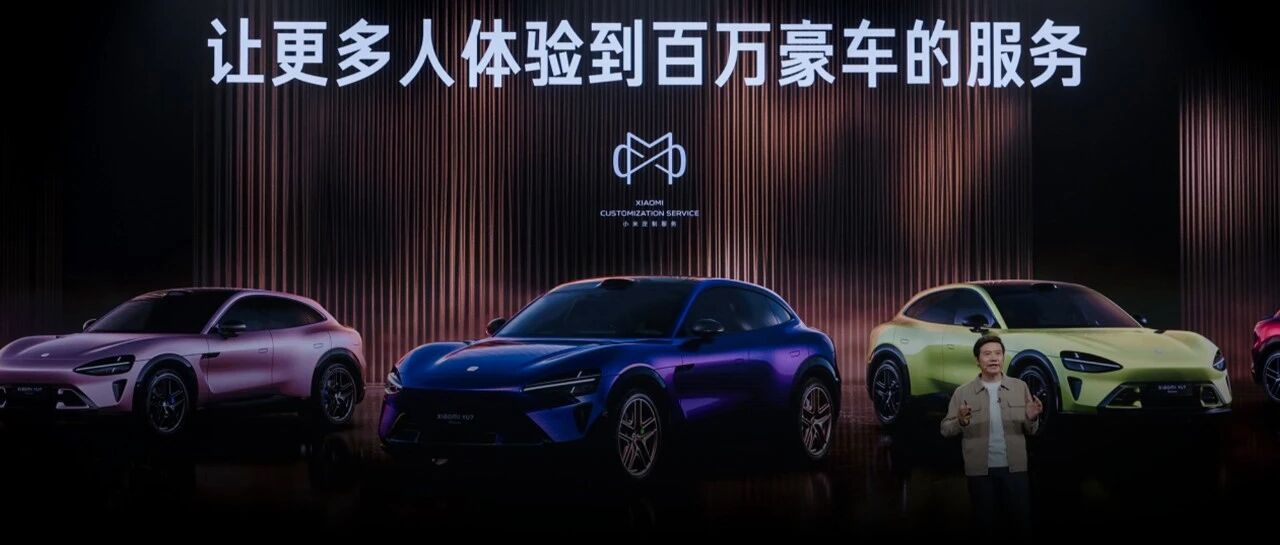
Core Viewpoint - The article emphasizes that Xiaomi is breaking the traditional barriers of the automotive industry by introducing personalized customization services in the mid-range market, which were previously exclusive to ultra-luxury brands [5][15][54]. Group 1: Market Dynamics - The mainstream automotive market, particularly in the 300,000 to 400,000 yuan price range, is becoming increasingly competitive, leading to a focus on efficiency and standardized offerings [2][3]. - Traditional automotive manufacturers prioritize cost control and rapid delivery, often limiting customization options to a few standard colors and features [4][12]. - The demand for personalized vehicles has been largely unmet in the sub-million yuan market, with customization services typically reserved for high-end brands like Porsche and Ferrari [14][12]. Group 2: Xiaomi's Strategy - Xiaomi aims to not only increase sales but also to drive a transformation in the Chinese automotive market through innovative business models [6][52]. - The company has launched a "Xiaomi Customization Service," offering 26 personalized options, including unique paint colors and interior materials, which were previously unavailable in this price segment [5][25]. - Xiaomi's approach challenges the traditional automotive industry's focus on efficiency, instead prioritizing consumer desires for individuality and aesthetic appeal [40][56]. Group 3: Challenges and Innovations - The development of customized paint colors involves significant costs and complexities, with a single color potentially exceeding 2 million yuan in development expenses [18][19]. - Xiaomi's customization service requires a flexible production model, which poses challenges to traditional assembly line efficiency [26][27]. - The company has successfully introduced new paint options, such as the "Purple Crystal" finish, which involves intricate production processes and extensive manual labor [20][21]. Group 4: Consumer Trends - The article notes a shift in consumer decision-making from practicality to emotional value and personal expression, indicating a growing demand for personalized products [32][33]. - Xiaomi's success in the automotive sector reflects a broader trend where consumers are willing to pay for emotional and aesthetic value, not just functional benefits [53][55]. - The introduction of customization services aligns with the emerging "color economy," where individual expression through color choices is becoming increasingly important in consumer preferences [41][44].

轻工企业数字化研发工具普及率超八成
Ren Min Ri Bao· 2025-09-26 21:45
Core Insights - The digital R&D tool penetration rate among light industry enterprises has increased to 86.2% as of the first half of this year, while the digital management penetration rate reached 82.3%, indicating a solid foundation for intelligent manufacturing in the sector [1] - By 2024, the proportion of networked collaborative enterprises in the light industry is expected to be 47.2%, and the share of personalized customization enterprises is projected to be 18.3%, both exceeding the national average by 2.0 and 2.8 percentage points respectively [1] - Significant advancements in AI technologies such as visual inspection and intelligent sorting are being widely adopted in industries like home appliances, food, and sewing machinery, leading to notable improvements in quality and efficiency [1] - A total of 1,260 5G factories have been established in China, with the light industry accounting for 13%, or 167 factories, showcasing the sector's leading position in intelligent manufacturing [1]
中国西服行业专业化发展白皮书
艾瑞咨询· 2025-09-24 00:07
Core Insights - The Chinese suit industry is undergoing a deep transformation from scale competition to specialization competition driven by consumption upgrades and personalized demands [1][16] - The report aims to provide authoritative information for industry enterprises, practitioners, and consumers, promoting the high-quality development of Chinese suit brands [1] Group 1: Industry Development History - Since the reform and opening up, the Chinese suit industry has transitioned from scale expansion to category reconstruction, with a shift from a supply-driven seller's market to a demand-driven buyer's market post-2020 [2][4] - The industry has experienced continuous innovation from leading domestic brands, breaking through development bottlenecks and evolving from imitation to innovation [4] Group 2: Market Dynamics - The market is entering a phase dominated by stock competition and structural recovery, focusing on value cultivation and breakthroughs in niche markets [6][7] - High-end markets, personalized customization, and segmented scenarios are showing significant growth, indicating a structural recovery in the domestic suit market [7] Group 3: Consumer Demand Trends - Consumer focus has shifted from basic wear to quality experience, with over half of consumers desiring suits that reflect personal style and fashion [9][12] - The suit market is evolving from a single business scenario to diversified applications, with casual suits growing at a 15% annual rate, expected to increase market share from 25% in 2025 to 40% by 2030 [12] Group 4: Supply-Side Innovations - Intelligent manufacturing technologies are driving a transformation in the supply side, with the annual growth rate of customized suits exceeding 20% [14] - The customization cycle has been reduced from 4-6 weeks to 72 hours, with fabric utilization rates improving by 15% [14] Group 5: Professionalization and Standards - The industry is transitioning from scale competition to professional competition, with 82% of consumers indicating that brand professionalism significantly influences their purchasing decisions [16][41] - The introduction of a six-dimensional industry standard by leading brand Baoxiniu aims to enhance market transparency and standardization [41][42] Group 6: Cultural and Sustainable Development - The industry faces environmental challenges, with leading brands like Baoxiniu exploring sustainable practices and innovations in green manufacturing [67][69] - The integration of traditional cultural elements into modern suit designs is enhancing the cultural value and market competitiveness of Chinese suit brands [70] Group 7: Future Outlook - The high-quality development of the Chinese suit industry requires open collaboration and strategic synergy among industry players to build a robust industry ecosystem [76][78]

新华财经|满足不同场景消费需求 南山智尚融合发展全产业链
Xin Hua She· 2025-09-23 05:30
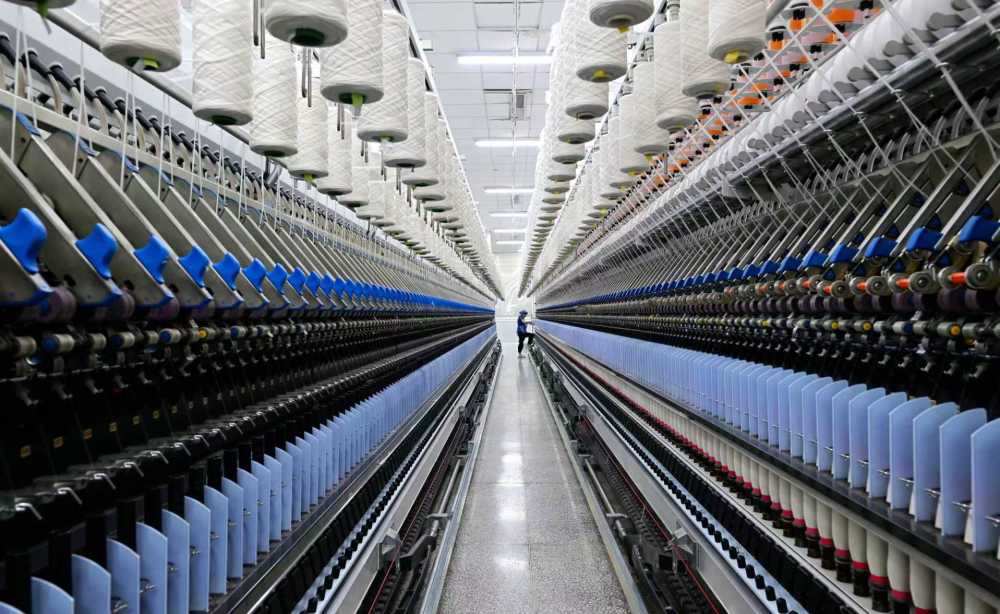
Core Insights - The company South Mountain Zhishang has established a complete industrial chain from wool processing to high-end custom clothing production, showcasing the integration of wool apparel and new materials [1][2]. Group 1: Wool Apparel Industry Chain - South Mountain Zhishang produces 16 million meters of high-end worsted wool fabric and 750,000 suits annually [2]. - The company has seen a year-on-year increase in order volume since 2020, indicating a growing demand for customized clothing [2]. - Customized clothing, while having a higher overall cost and price, offers a relatively good profit margin compared to the generally low gross margins in the textile and apparel industry [2]. Group 2: New Materials Industry Chain - The company has achieved full production capacity of 3,600 tons of ultra-high molecular weight polyethylene fiber, with an 80,000-ton nylon project entering the market phase [2]. - The nylon fiber developed by the company is characterized by high strength, wear resistance, and comfort, making it suitable for various consumer applications [5]. - The integration of wool and nylon in the company's sportswear line combines durability and moisture-wicking properties, reflecting the synergy between the two industrial chains [5]. Group 3: Product Development and Market Reach - South Mountain Zhishang is exploring the feasibility of integrating ultra-high molecular weight polyethylene fibers into outdoor products, such as hiking shoes, which are gaining popularity due to their wear-resistant and cut-resistant features [5][7]. - The company focuses on health, comfort, personalized customization, and low-carbon environmental trends in its product development, with high-performance differentiated nylon products being exported to Southeast Asia, Europe, and the Americas [5][7]. - The ultra-high molecular weight polyethylene fiber is recognized as a third-generation high-performance fiber, with applications in special protection, marine ropes, and robotic transmission systems [7].